
History of Archaeology Pt 2 Beginnings of Modern
History of Archaeology- Pt. 2
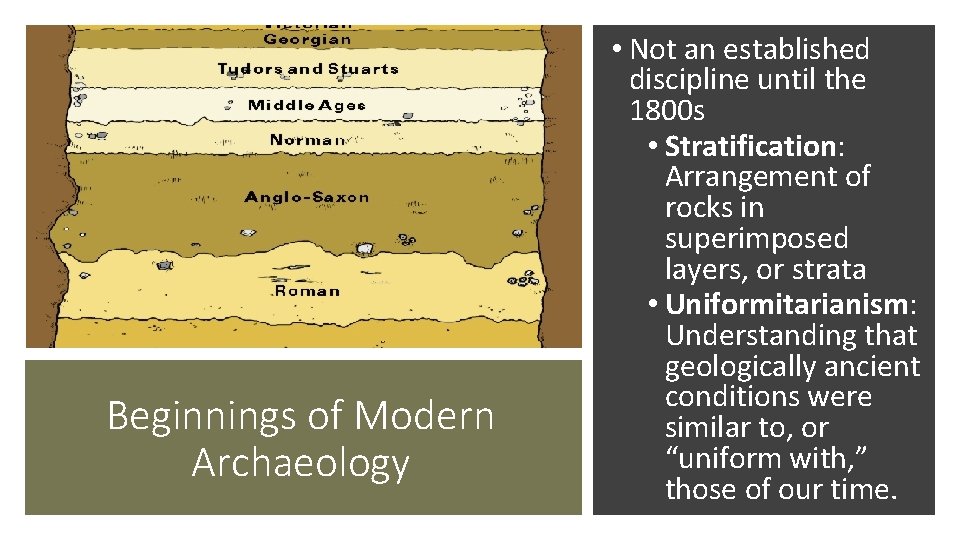
Beginnings of Modern Archaeology • Not an established discipline until the 1800 s • Stratification: Arrangement of rocks in superimposed layers, or strata • Uniformitarianism: Understanding that geologically ancient conditions were similar to, or “uniform with, ” those of our time.
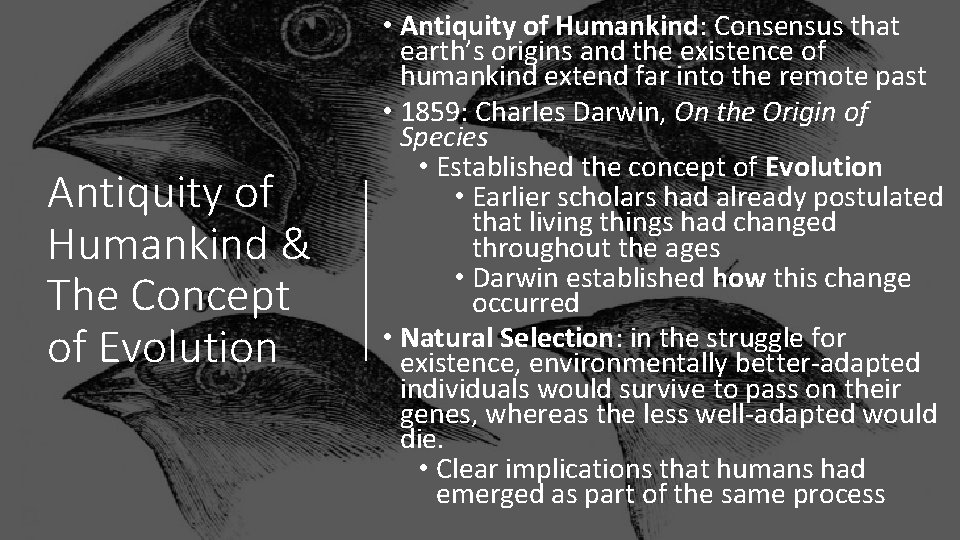
Antiquity of Humankind & The Concept of Evolution • Antiquity of Humankind: Consensus that earth’s origins and the existence of humankind extend far into the remote past • 1859: Charles Darwin, On the Origin of Species • Established the concept of Evolution • Earlier scholars had already postulated that living things had changed throughout the ages • Darwin established how this change occurred • Natural Selection: in the struggle for existence, environmentally better-adapted individuals would survive to pass on their genes, whereas the less well-adapted would die. • Clear implications that humans had emerged as part of the same process
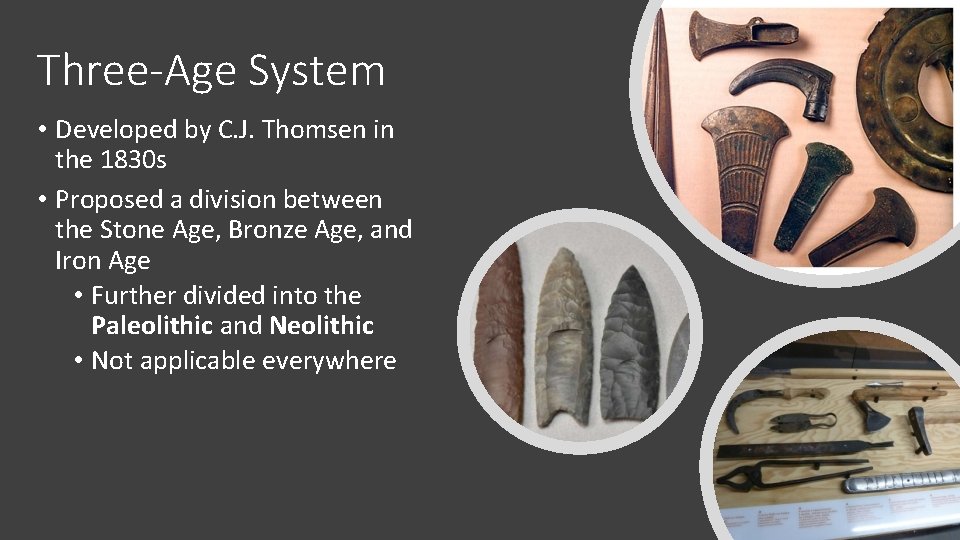
Three-Age System • Developed by C. J. Thomsen in the 1830 s • Proposed a division between the Stone Age, Bronze Age, and Iron Age • Further divided into the Paleolithic and Neolithic • Not applicable everywhere
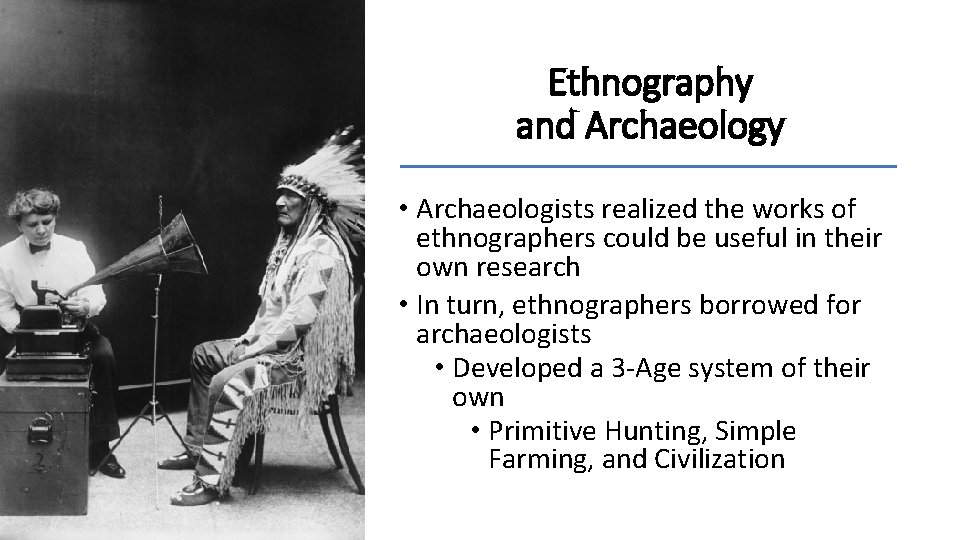
Ethnography and Archaeology • Archaeologists realized the works of ethnographers could be useful in their own research • In turn, ethnographers borrowed for archaeologists • Developed a 3 -Age system of their own • Primitive Hunting, Simple Farming, and Civilization

Discovering Early Civilizations • Many modern archaeological practices established by 1880 • Egypt earns great fame and social attention • Rosetta Stone allows for decoding of hieroglyphics • Mesopotamian Cuneiform decoded in 1822 • Maya ruins attributed to same Native Americans as existed during the time of the Spanish conquest
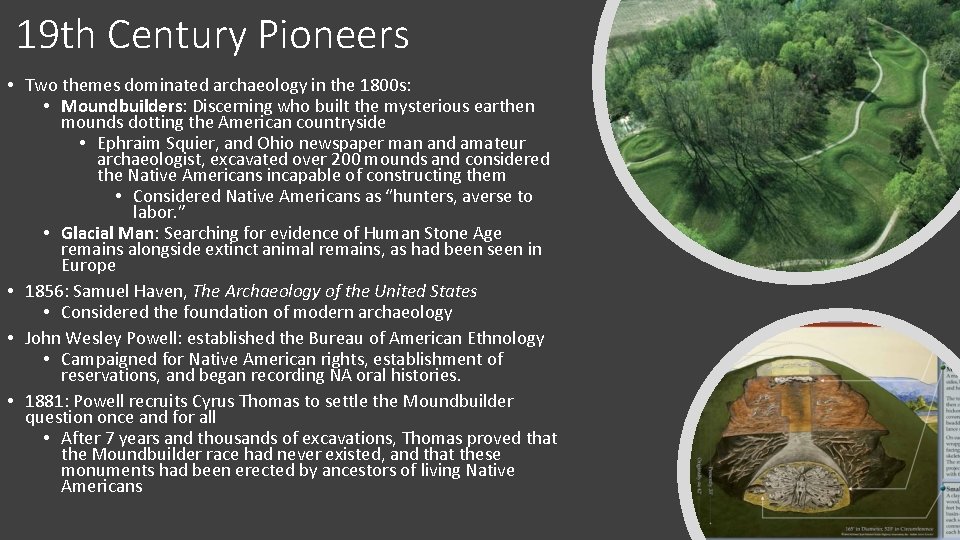
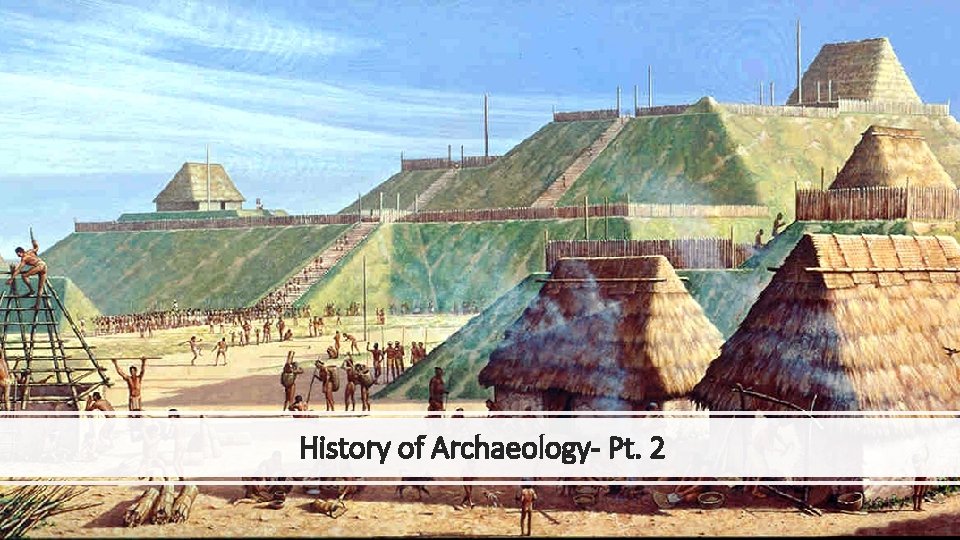
19 th Century Pioneers • Two themes dominated archaeology in the 1800 s: • Moundbuilders: Discerning who built the mysterious earthen mounds dotting the American countryside • Ephraim Squier, and Ohio newspaper man and amateur archaeologist, excavated over 200 mounds and considered the Native Americans incapable of constructing them • Considered Native Americans as “hunters, averse to labor. ” • Glacial Man: Searching for evidence of Human Stone Age remains alongside extinct animal remains, as had been seen in Europe • 1856: Samuel Haven, The Archaeology of the United States • Considered the foundation of modern archaeology • John Wesley Powell: established the Bureau of American Ethnology • Campaigned for Native American rights, establishment of reservations, and began recording NA oral histories. • 1881: Powell recruits Cyrus Thomas to settle the Moundbuilder question once and for all • After 7 years and thousands of excavations, Thomas proved that the Moundbuilder race had never existed, and that these monuments had been erected by ancestors of living Native Americans
- Slides: 7