
History Iwanowski and Beijernick 1890s Worked on Tobacco
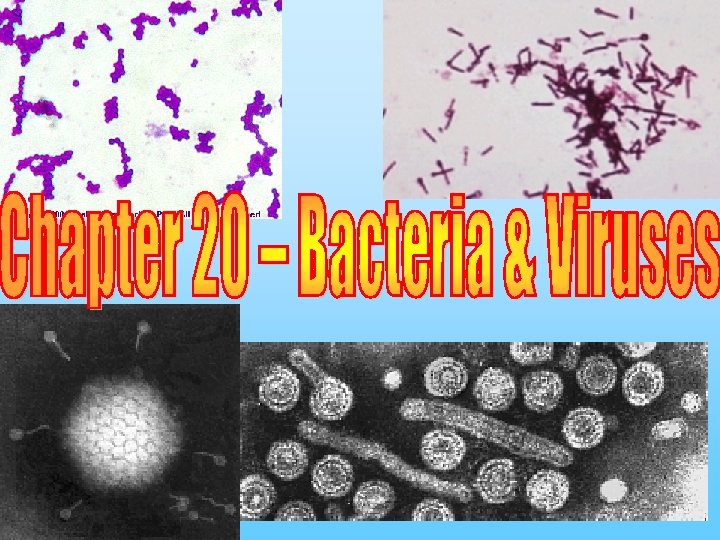
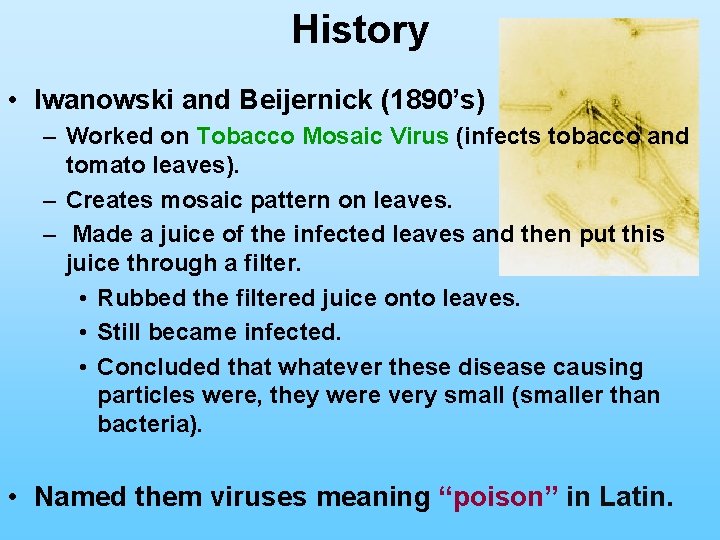
History • Iwanowski and Beijernick (1890’s) – Worked on Tobacco Mosaic Virus (infects tobacco and tomato leaves). – Creates mosaic pattern on leaves. – Made a juice of the infected leaves and then put this juice through a filter. • Rubbed the filtered juice onto leaves. • Still became infected. • Concluded that whatever these disease causing particles were, they were very small (smaller than bacteria). • Named them viruses meaning “poison” in Latin.
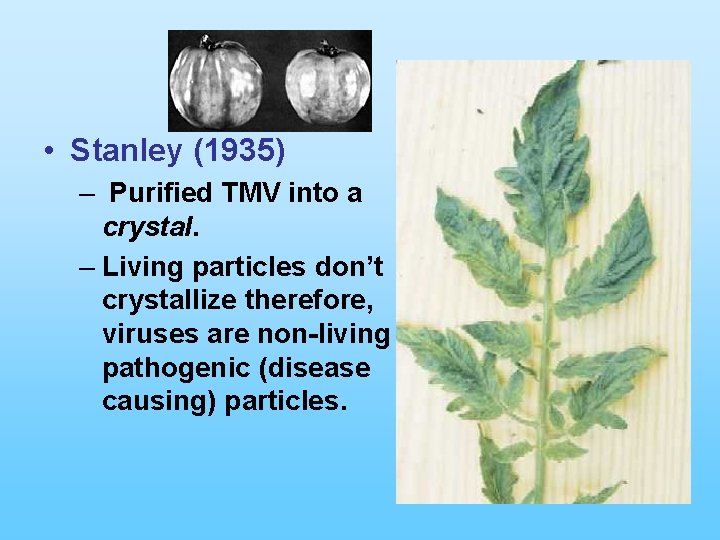
• Stanley (1935) – Purified TMV into a crystal. – Living particles don’t crystallize therefore, viruses are non-living pathogenic (disease causing) particles.
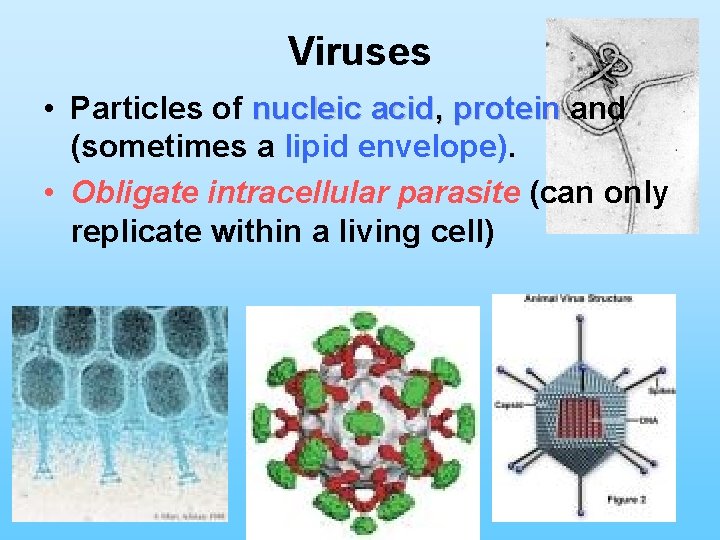
Viruses • Particles of nucleic acid, protein and (sometimes a lipid envelope). • Obligate intracellular parasite (can only replicate within a living cell)
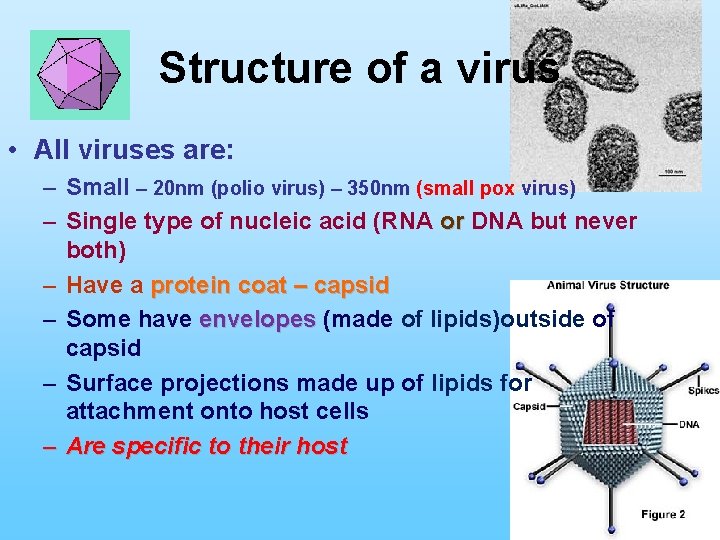
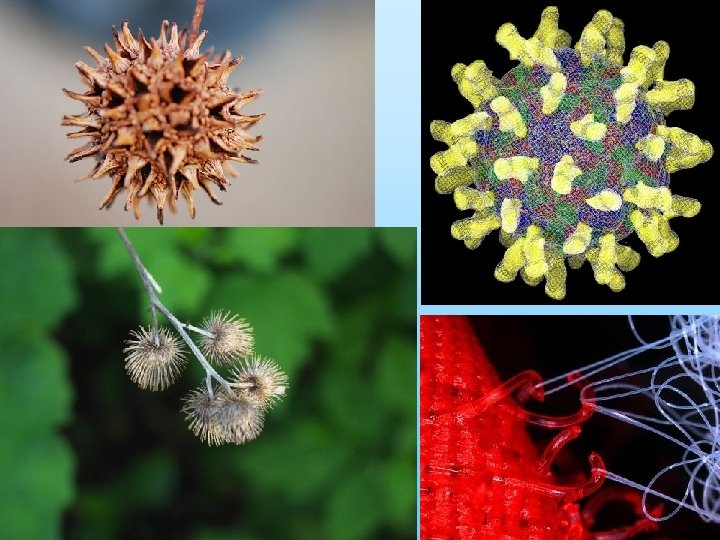
Structure of a virus • All viruses are: – Small – 20 nm (polio virus) – 350 nm (small pox virus) – Single type of nucleic acid (RNA or DNA but never or both) – Have a protein coat – capsid – Some have envelopes (made of lipids)outside of envelopes capsid – Surface projections made up of lipids for attachment onto host cells – Are specific to their host
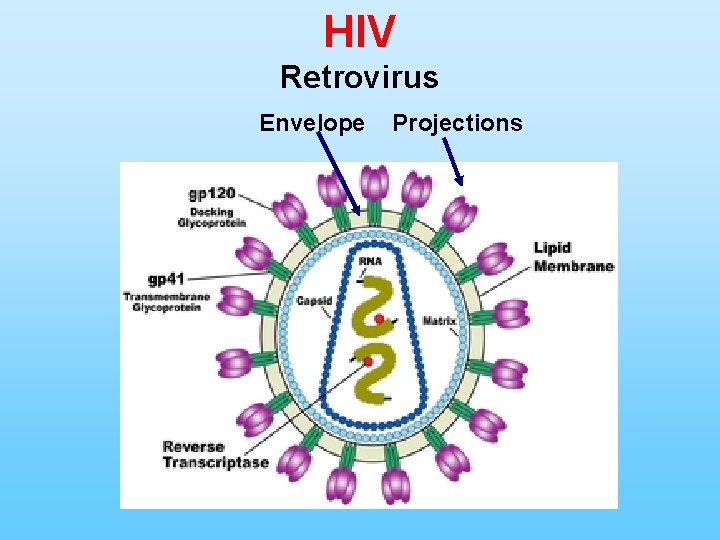
HIV Retrovirus Envelope Projections
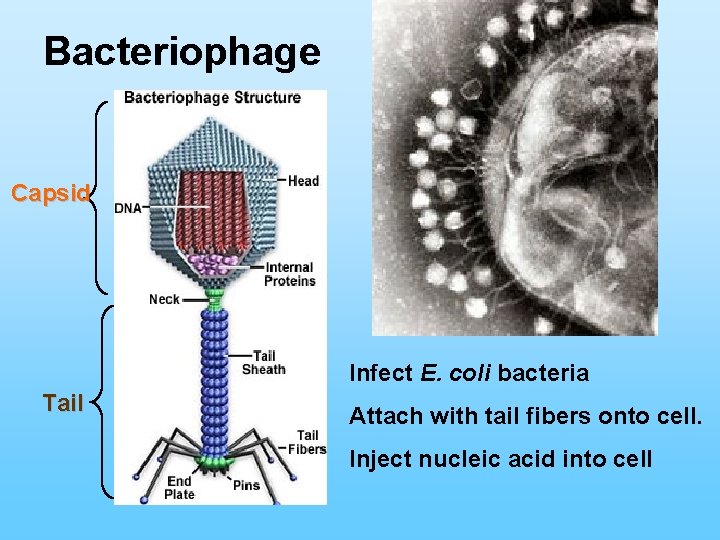
Bacteriophage Capsid Infect E. coli bacteria Tail Attach with tail fibers onto cell. Inject nucleic acid into cell
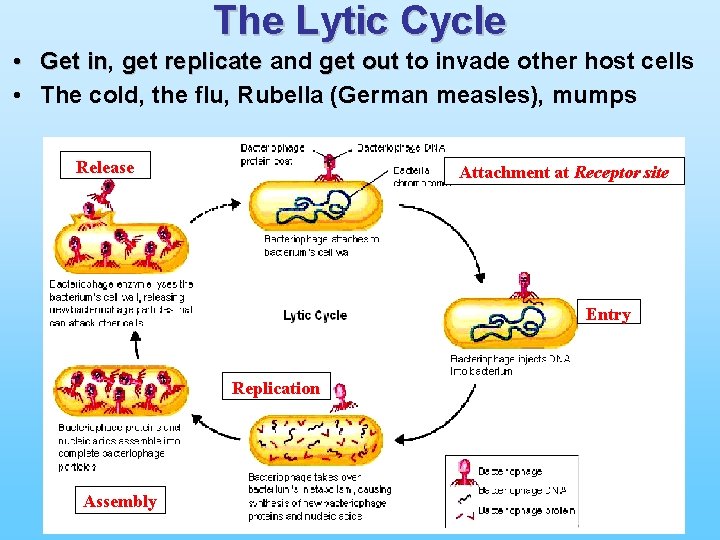
The Lytic Cycle • Get in, get out to invade other host cells Get in get replicate and get replicate get out • The cold, the flu, Rubella (German measles), mumps Release Attachment at Receptor site Entry Replication Assembly
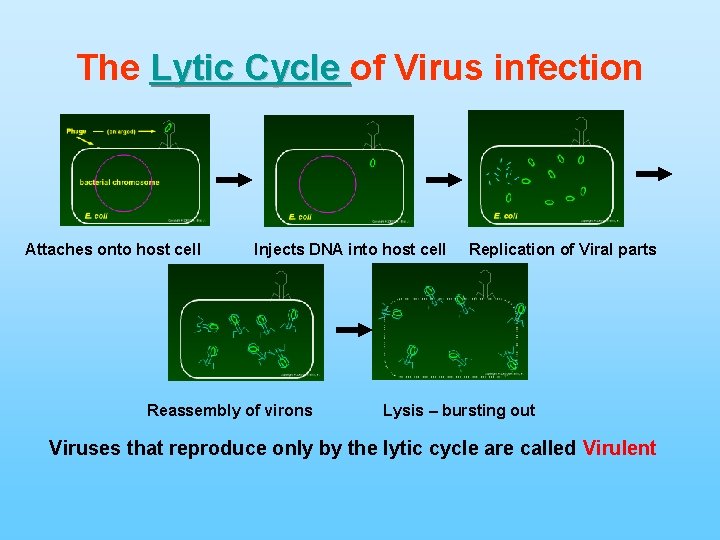
The Lytic Cycle of Virus infection Attaches onto host cell Injects DNA into host cell Replication of Viral parts Reassembly of virons Lysis – bursting out Viruses that reproduce only by the lytic cycle are called Virulent
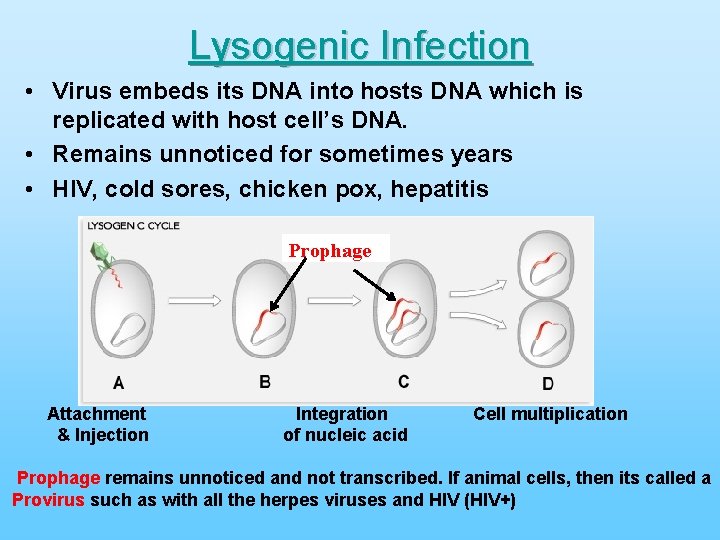
Lysogenic Infection • Virus embeds its DNA into hosts DNA which is replicated with host cell’s DNA. • Remains unnoticed for sometimes years • HIV, cold sores, chicken pox, hepatitis Prophage Attachment Integration Cell multiplication & Injection of nucleic acid Prophage remains unnoticed and not transcribed. If animal cells, then its called a Provirus such as with all the herpes viruses and HIV (HIV+)
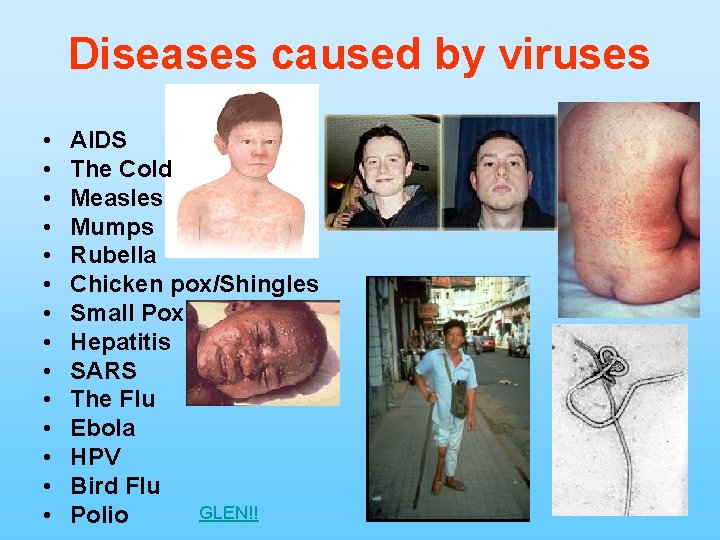
Diseases caused by viruses • • • • AIDS The Cold Measles Mumps Rubella Chicken pox/Shingles Small Pox Hepatitis SARS The Flu Ebola HPV Bird Flu GLEN!! Polio
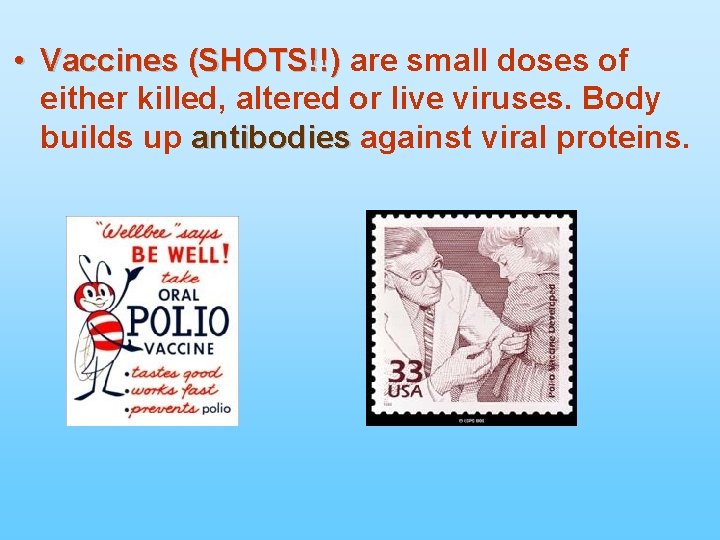
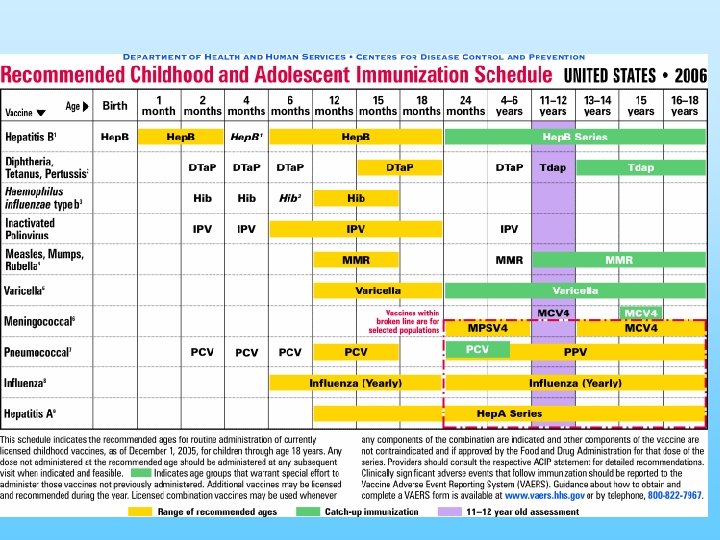
• Vaccines (SHOTS!!) are small doses of Vaccines (SHOTS!!) either killed, altered or live viruses. Body builds up antibodies against viral proteins. antibodies
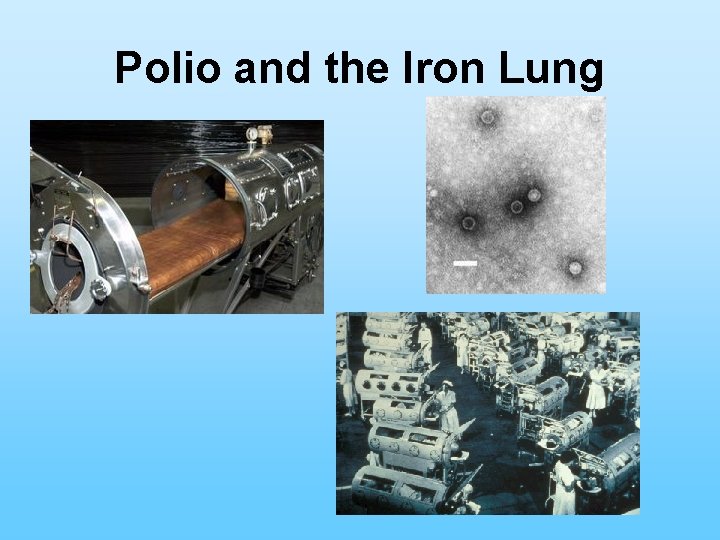
Polio and the Iron Lung
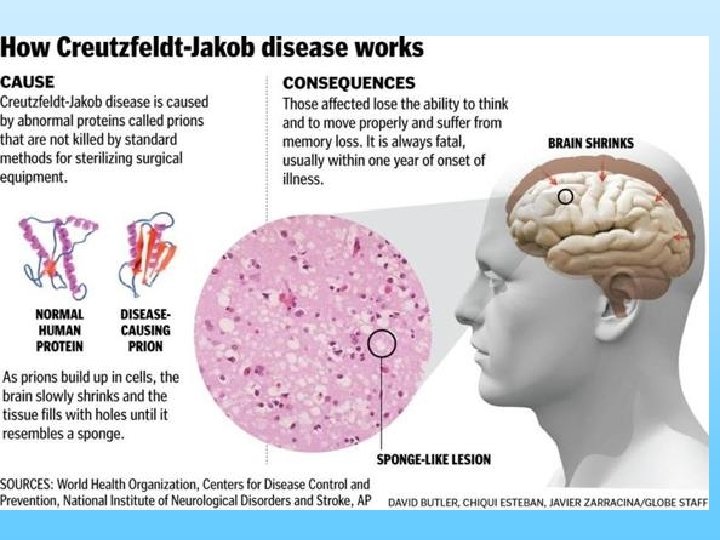
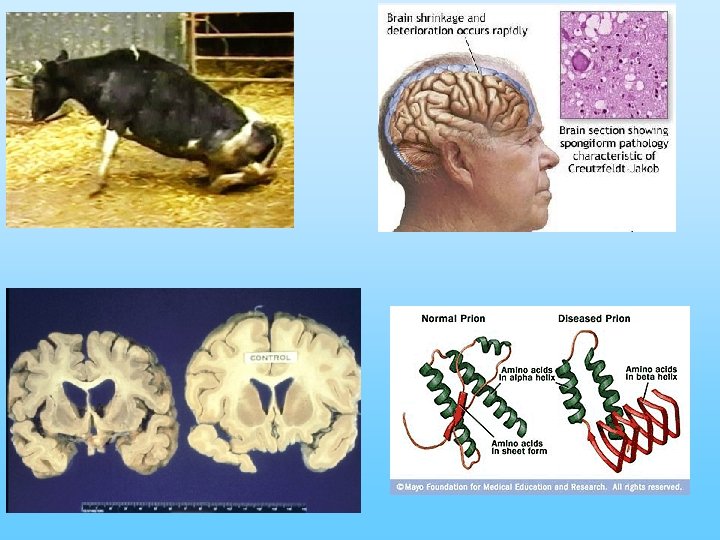
The Different forms of Viruses • Retroviruses – HIV. Contains RNA instead of DNA. Retroviruses Contains RNA Goes from RNA to RNA DNA to DNA RNA to RNA protein. Normal protein is DNA to DNA RNA to RNA protein • Prion – Prion viral proteins that cause diseases. Scrapie viral proteins in sheep degrades nervous system. Mad Cow disease (Bovine spongiform encephalopathy) in cows – puts holes into brain. – In humans, its Creutzfeld-Jakob disease & Kuru.
Bacteria
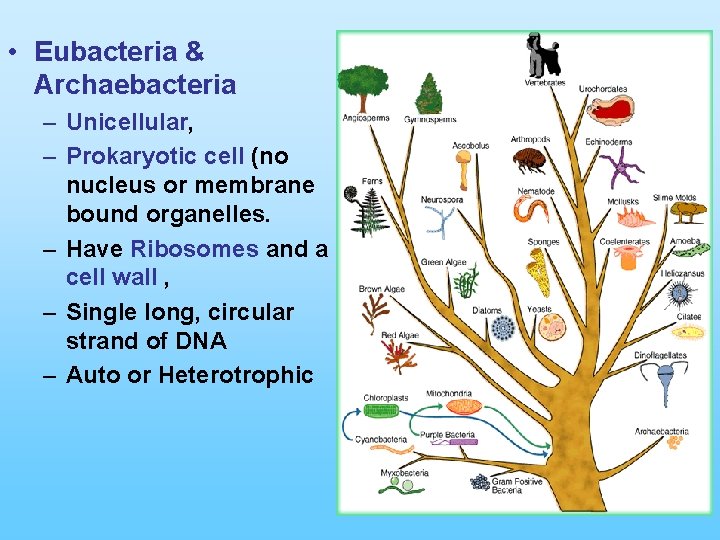
• Eubacteria & Archaebacteria – Unicellular, – Prokaryotic cell (no nucleus or membrane bound organelles. – Have Ribosomes and a cell wall , – Single long, circular strand of DNA – Auto or Heterotrophic
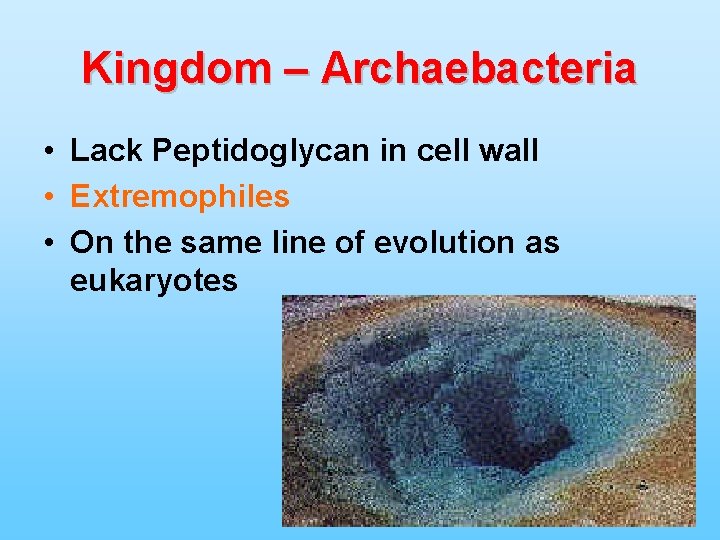
Kingdom – Archaebacteria • Lack Peptidoglycan in cell wall • Extremophiles • On the same line of evolution as eukaryotes
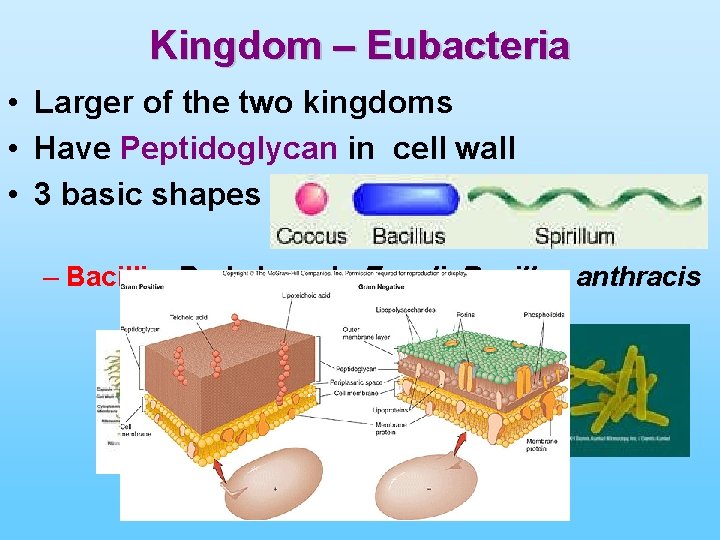
Kingdom – Eubacteria • Larger of the two kingdoms • Have Peptidoglycan in cell wall • 3 basic shapes – Bacilli – Rod shaped. E. coli, Bacillus anthracis
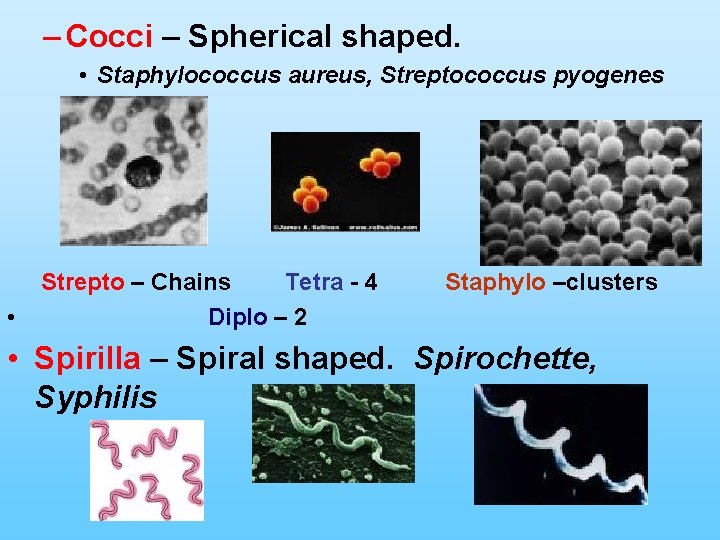
– Cocci – Spherical shaped. • Staphylococcus aureus, Streptococcus pyogenes Strepto – Chains Tetra - 4 Staphylo –clusters • Diplo – 2 • Spirilla – Spiral shaped. Spirochette, Syphilis
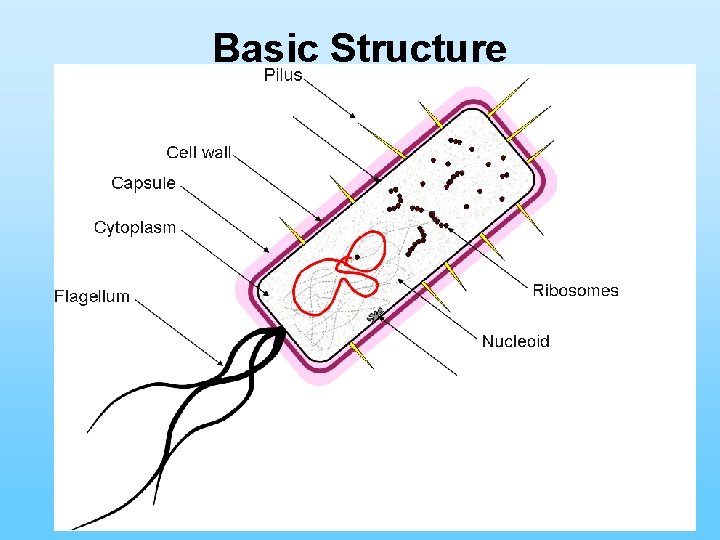
Basic Structure
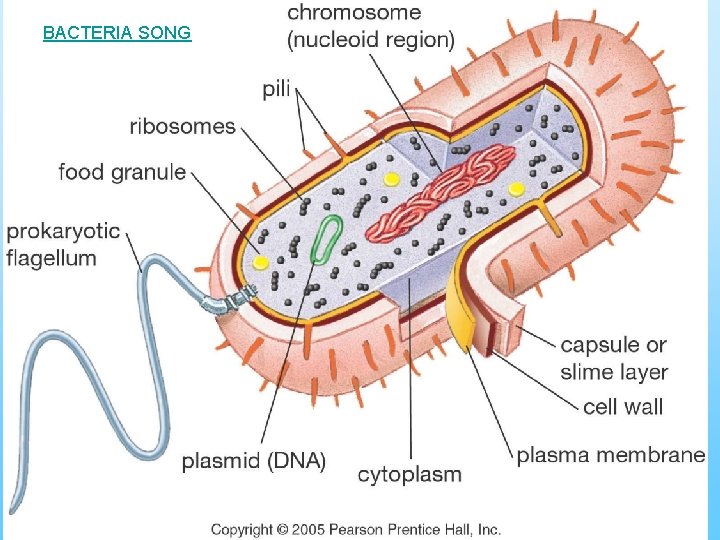
BACTERIA SONG
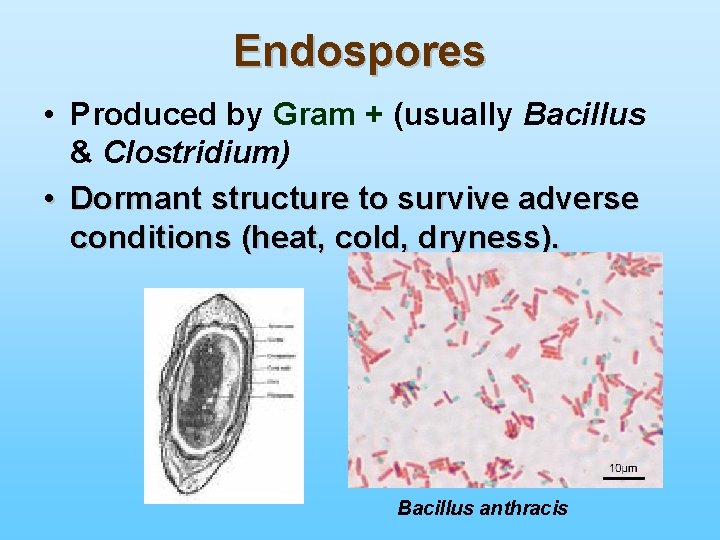
Endospores • Produced by Gram + (usually Bacillus & Clostridium) • Dormant structure to survive adverse conditions (heat, cold, dryness). Bacillus anthracis
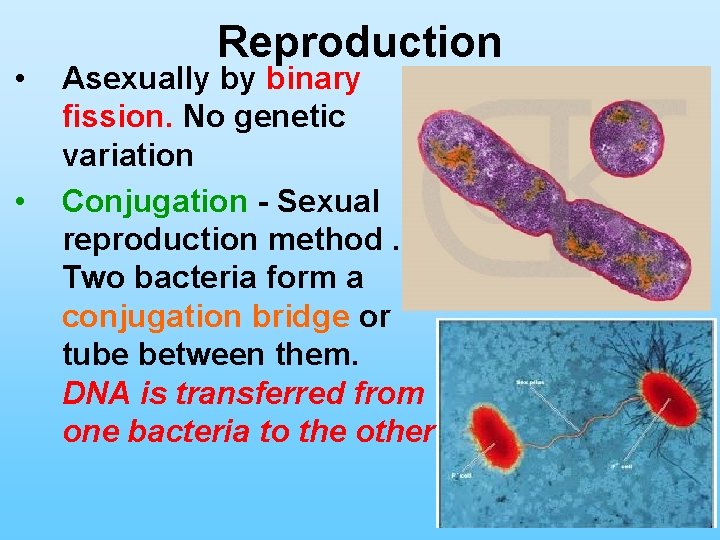
• • Reproduction Asexually by binary fission. No genetic variation Conjugation - Sexual reproduction method. Two bacteria form a conjugation bridge or tube between them. DNA is transferred from one bacteria to the other
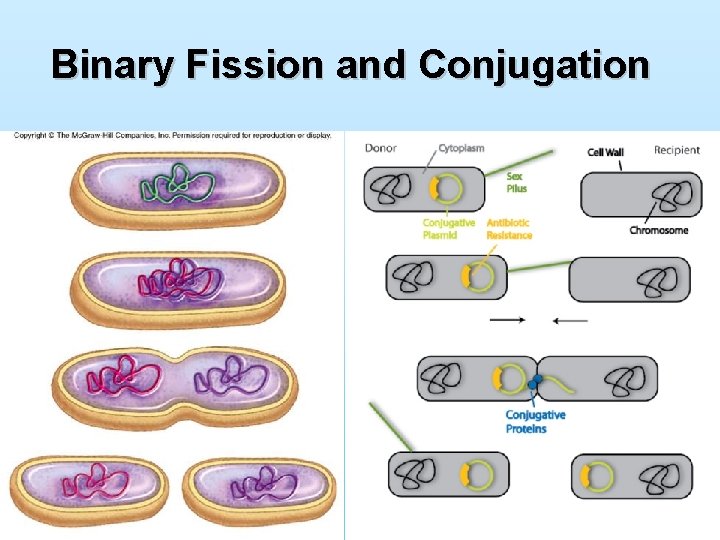
Binary Fission and Conjugation
Bacteria and Humans • Pathogens – disease causing agents (Pathology – science of studying diseases) • Can produce poisonous toxins (poisons) like the botulism toxin • Destroy food crops • Food poisoning
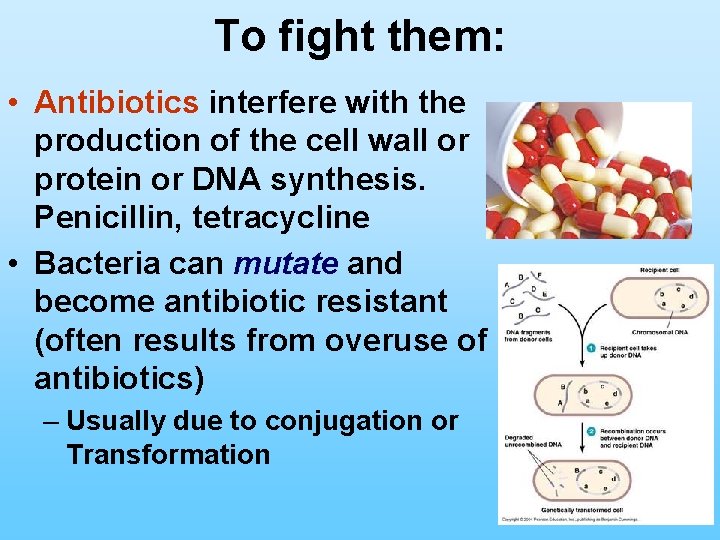
To fight them: • Antibiotics interfere with the production of the cell wall or protein or DNA synthesis. Penicillin, tetracycline • Bacteria can mutate and become antibiotic resistant (often results from overuse of antibiotics) – Usually due to conjugation or Transformation
Partners Area tested # of colonies # of varieties
Partners Area tested # of colonies # of varieties
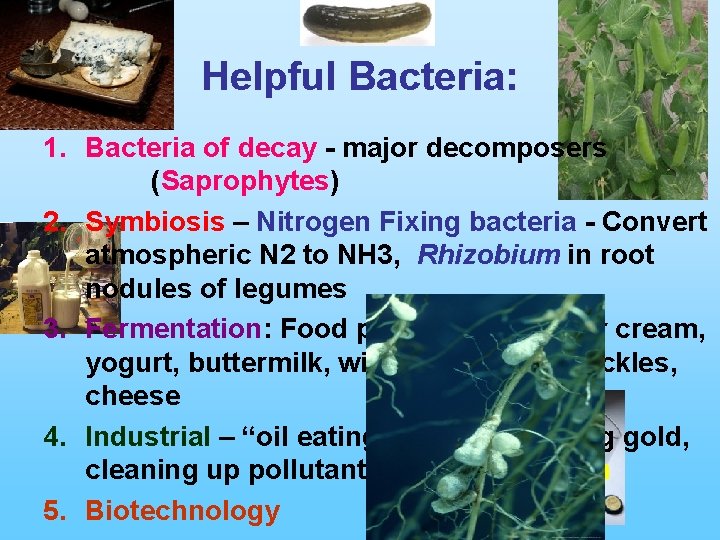
Helpful Bacteria: 1. Bacteria of decay - major decomposers (Saprophytes) 2. Symbiosis – Nitrogen Fixing bacteria - Convert atmospheric N 2 to NH 3, Rhizobium in root nodules of legumes 3. Fermentation: Food processing of sour cream, yogurt, buttermilk, wine, sauerkraut, pickles, cheese 4. Industrial – “oil eating bacteria”, mining gold, cleaning up pollutants - Bioremediation 5. Biotechnology
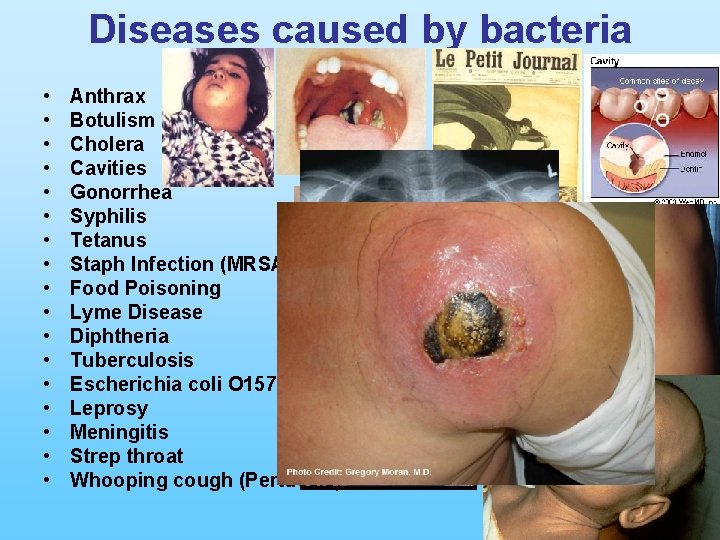
Diseases caused by bacteria • • • • • Anthrax Botulism Cholera Cavities Gonorrhea Syphilis Tetanus Staph Infection (MRSA) Food Poisoning Lyme Disease Diphtheria Tuberculosis Escherichia coli O 157: H 7 Leprosy Meningitis Strep throat Whooping cough (Pertussis)
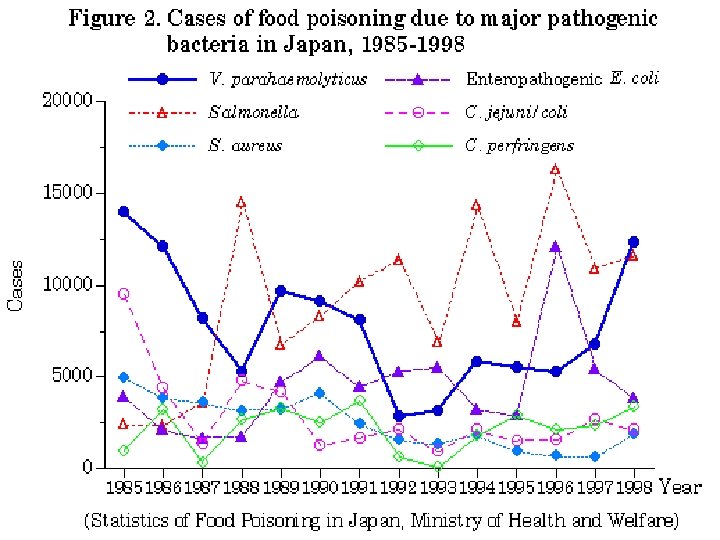
Food poisoning • Results from decay of foods and production of toxins • 33 million people/yr get “stomach flu” • Seafood accounts for 20 – 25% of cases • 33% of all raw poultry tests + for Staphylococcus • 1 in every 200 eggs has Salmonella
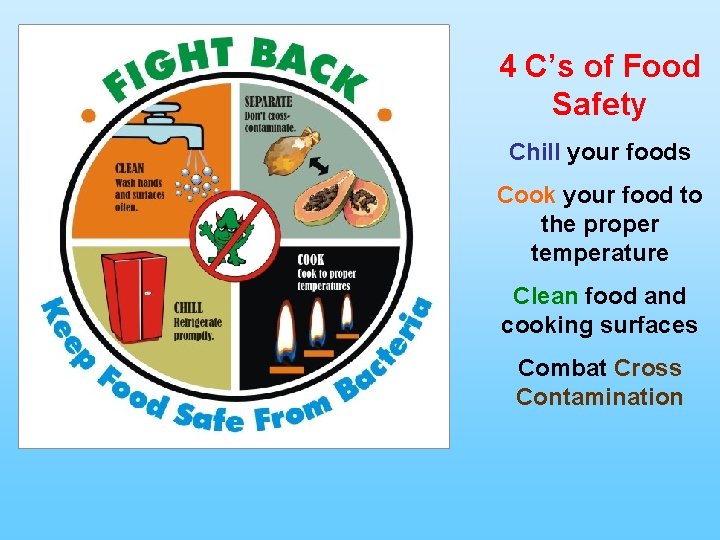
4 C’s of Food Safety Chill your foods Cook your food to the proper temperature Clean food and cooking surfaces Combat Cross Contamination
- Slides: 38