
History and political system of the USA The



- Slides: 27
History and political system of the USA
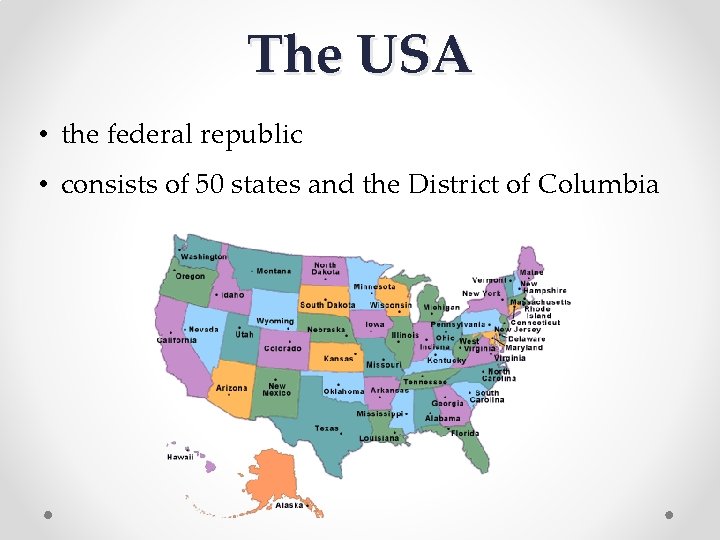
The USA • the federal republic • consists of 50 states and the District of Columbia
The USA • each state has its own government, laws, customs, education, taxes, traffic regulations, etc. • each state government has to keep to the Constitution, which was officially adopted in 1790 by the original 13 states • the federal government is responsible only for matters concerning the country as a whole: foreign affairs, defence and finance
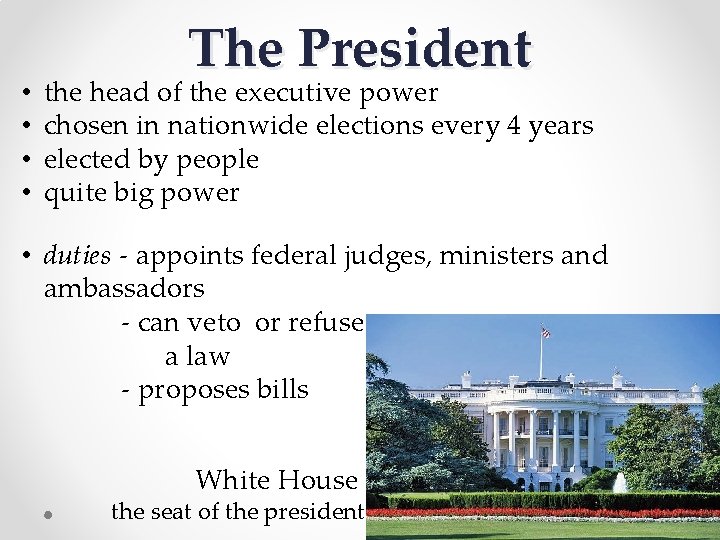
• • The President the head of the executive power chosen in nationwide elections every 4 years elected by people quite big power • duties - appoints federal judges, ministers and ambassadors - can veto or refuse a law - proposes bills White House the seat of the president
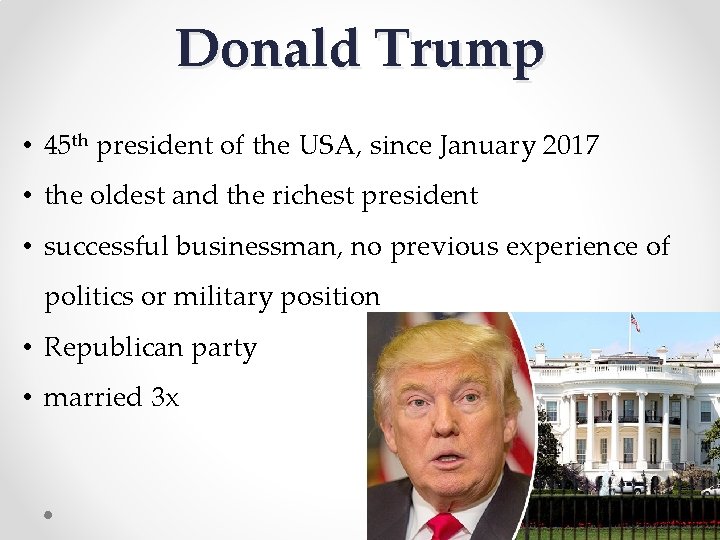
Donald Trump • 45 th president of the USA, since January 2017 • the oldest and the richest president • successful businessman, no previous experience of politics or military position • Republican party • married 3 x
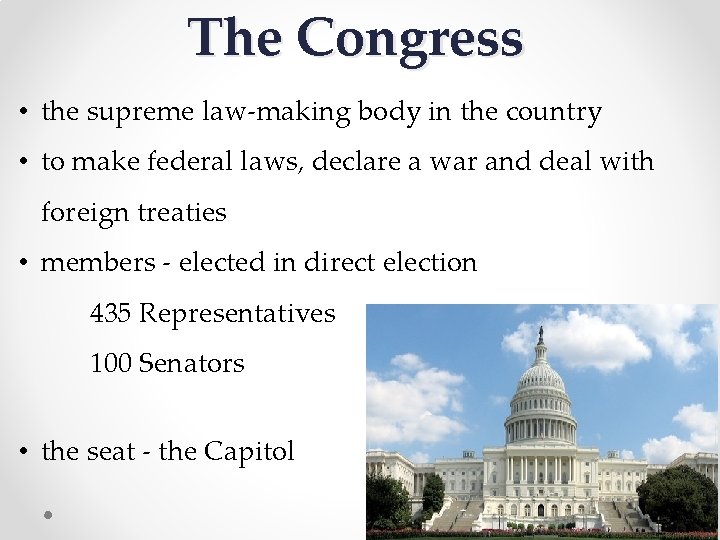
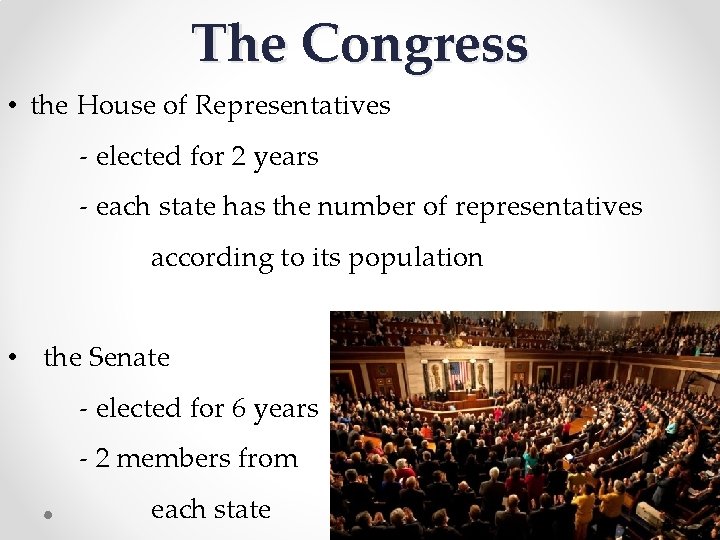
The Congress • the supreme law-making body in the country • to make federal laws, declare a war and deal with foreign treaties • members - elected in direct election 435 Representatives 100 Senators • the seat - the Capitol
The Congress • the House of Representatives - elected for 2 years - each state has the number of representatives according to its population • the Senate - elected for 6 years - 2 members from each state
Political parties • two leading parties Republican Party (logo) the Democrats the Republicans Democratic Party (logo) • only rarely – 3 rd party or independent representatives
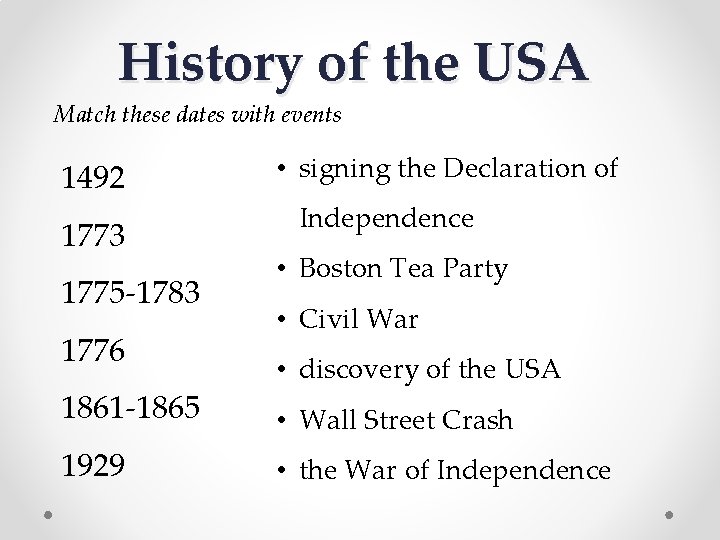
History of the USA Match these dates with events 1492 1773 1775 -1783 1776 1861 -1865 1929 • signing the Declaration of Independence • Boston Tea Party • Civil War • discovery of the USA • Wall Street Crash • the War of Independence
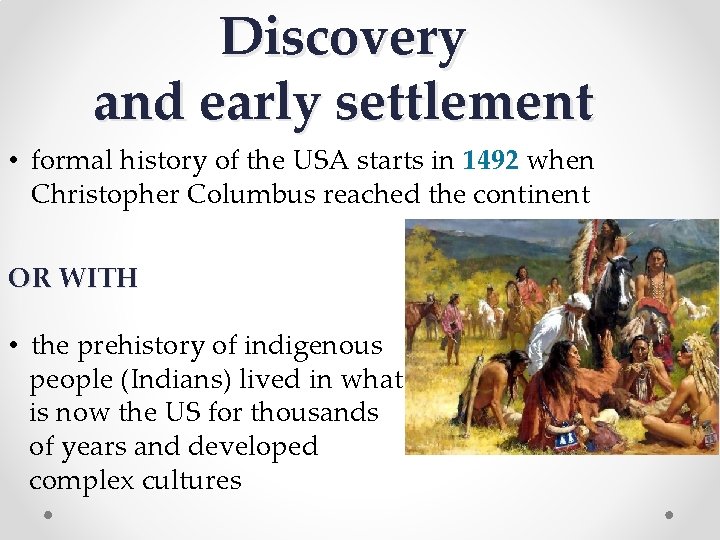
Discovery and early settlement • formal history of the USA starts in 1492 when Christopher Columbus reached the continent OR WITH • the prehistory of indigenous people (Indians) lived in what is now the US for thousands of years and developed complex cultures
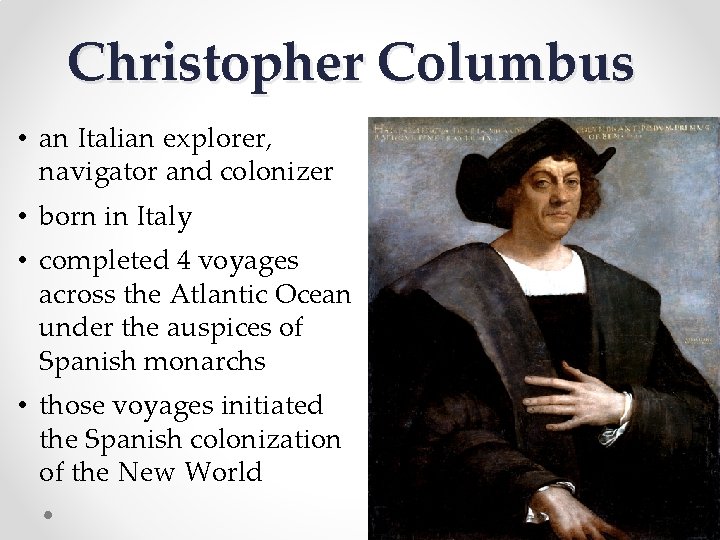
Christopher Columbus • an Italian explorer, navigator and colonizer • born in Italy • completed 4 voyages across the Atlantic Ocean under the auspices of Spanish monarchs • those voyages initiated the Spanish colonization of the New World
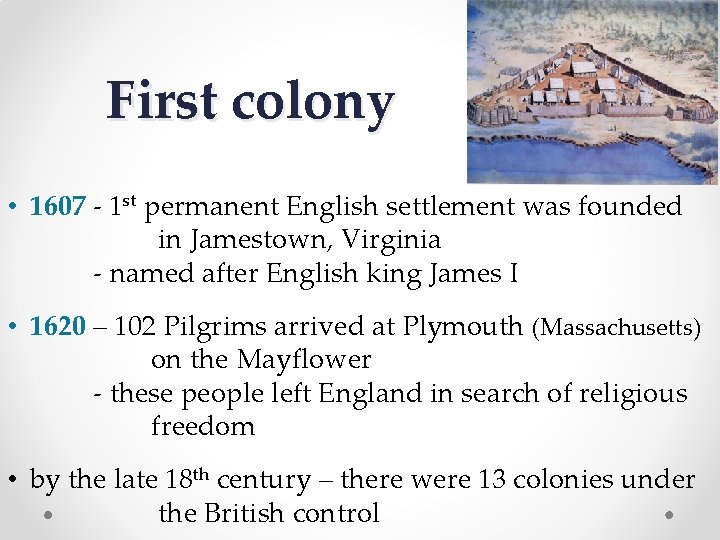
First colony • 1607 - 1 st permanent English settlement was founded in Jamestown, Virginia - named after English king James I • 1620 – 102 Pilgrims arrived at Plymouth (Massachusetts) on the Mayflower - these people left England in search of religious freedom • by the late 18 th century – there were 13 colonies under the British control
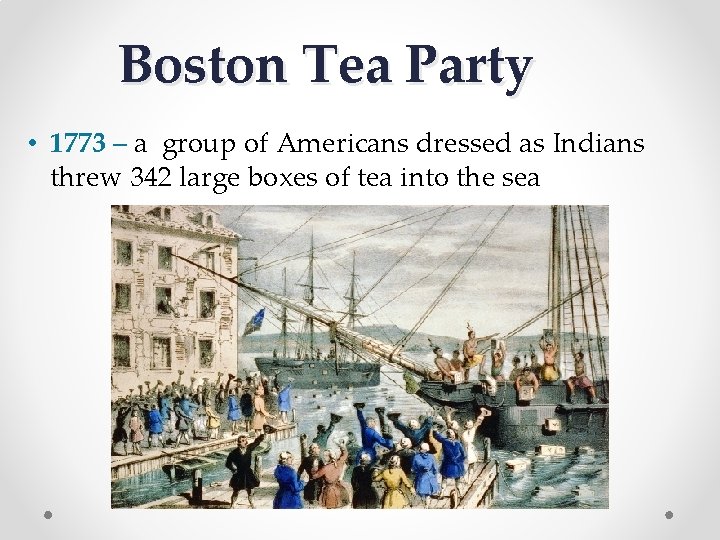
Boston Tea Party • 1773 – a group of Americans dressed as Indians threw 342 large boxes of tea into the sea
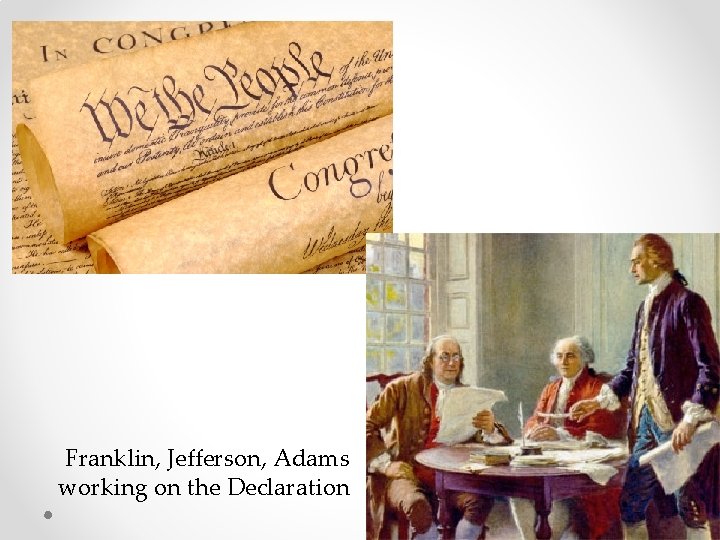
The War of Independence • 1775 – 1783 • all 13 colonies united in a Congress that led to armed conflict • 4 th July 1776 the Congress adopted the Declaration of Independence which was written by Thomas Jefferson • it explained the reasons for wanting to be separate from Britain and officially denied colonial obligations to England • it’s considered as the beginning of the USA
Franklin, Jefferson, Adams working on the Declaration
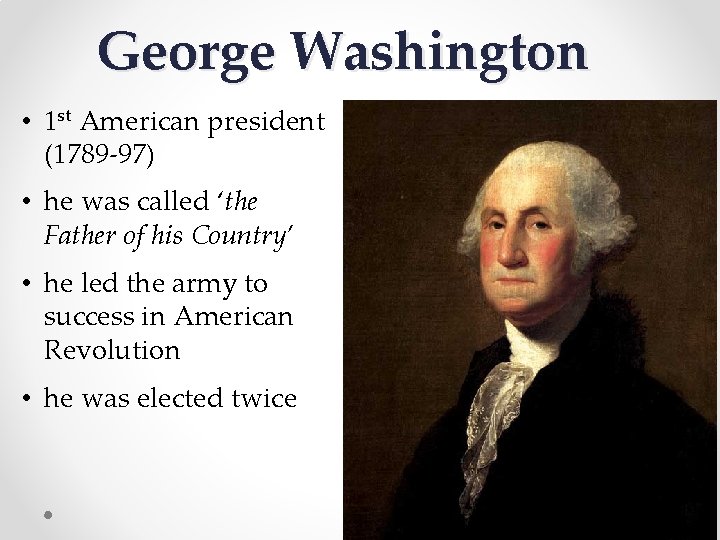
George Washington • 1 st American president (1789 -97) • he was called ‘the Father of his Country’ • he led the army to success in American Revolution • he was elected twice
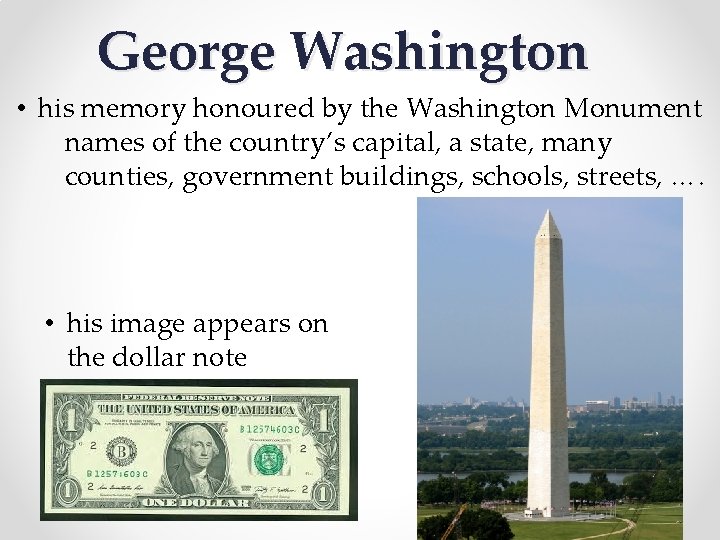
George Washington • his memory honoured by the Washington Monument names of the country’s capital, a state, many counties, government buildings, schools, streets, …. • his image appears on the dollar note
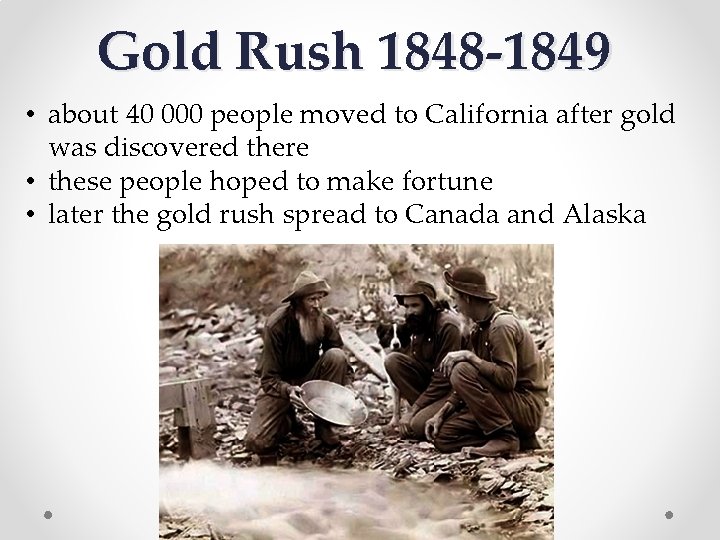
Gold Rush 1848 -1849 • about 40 000 people moved to California after gold was discovered there • these people hoped to make fortune • later the gold rush spread to Canada and Alaska
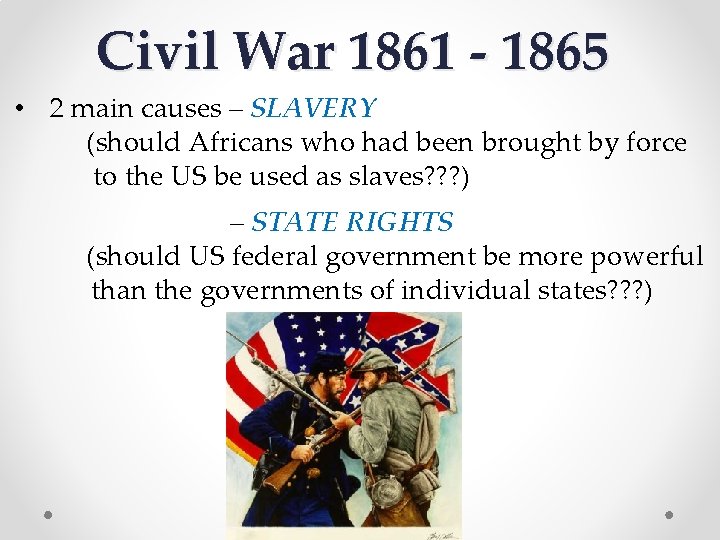
Civil War 1861 - 1865 • 2 main causes – SLAVERY (should Africans who had been brought by force to the US be used as slaves? ? ? ) – STATE RIGHTS (should US federal government be more powerful than the governments of individual states? ? ? )
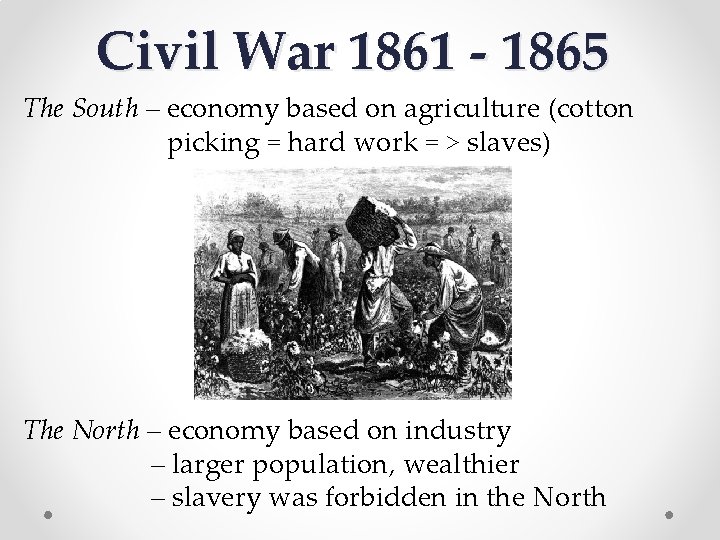
Civil War 1861 - 1865 The South – economy based on agriculture (cotton picking = hard work = > slaves) The North – economy based on industry – larger population, wealthier – slavery was forbidden in the North
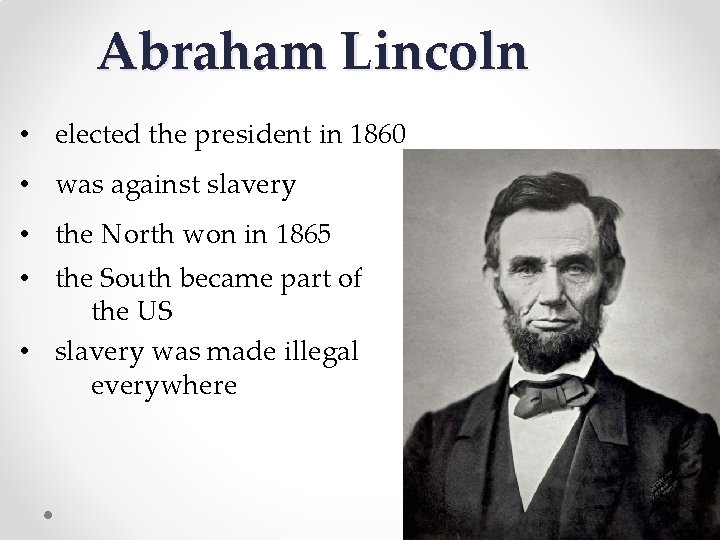
Abraham Lincoln • elected the president in 1860 • was against slavery • the North won in 1865 • the South became part of the US • slavery was made illegal everywhere
20 th century • the decade after World War I - the time of wealth and excess, later led to the crash • rural Americans migrated to cities hoping to find better and more prosperous lives, US industry expanded • buying shares became a ‘hobby’ for many Americans (not only for the rich ones; those who didn’t have money took loans from banks because they believed the stock market would rise forever) • in mid October 1929, some financial experts claimed the share overvalued and people started selling them • unfortunately there was nobody who would buy them => people lost their money (almost 11 mil. dollars suddenly disappeared)
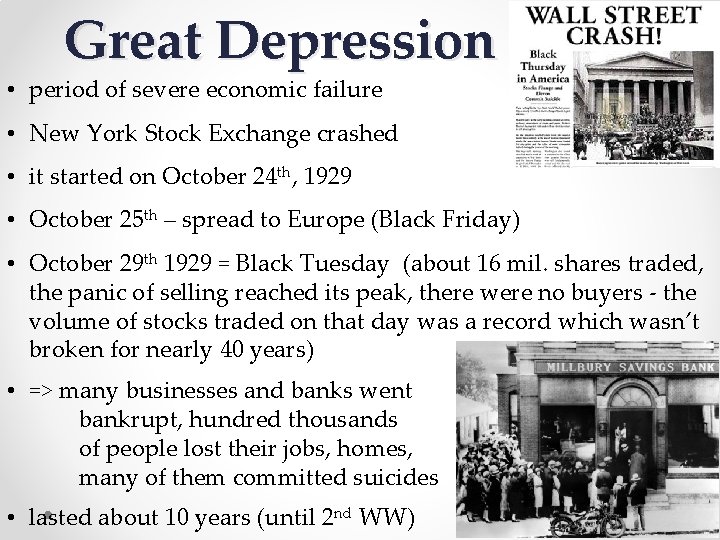
Great Depression • period of severe economic failure • New York Stock Exchange crashed • it started on October 24 th, 1929 • October 25 th – spread to Europe (Black Friday) • October 29 th 1929 = Black Tuesday (about 16 mil. shares traded, the panic of selling reached its peak, there were no buyers - the volume of stocks traded on that day was a record which wasn’t broken for nearly 40 years) • => many businesses and banks went bankrupt, hundred thousands of people lost their jobs, homes, many of them committed suicides • lasted about 10 years (until 2 nd WW)
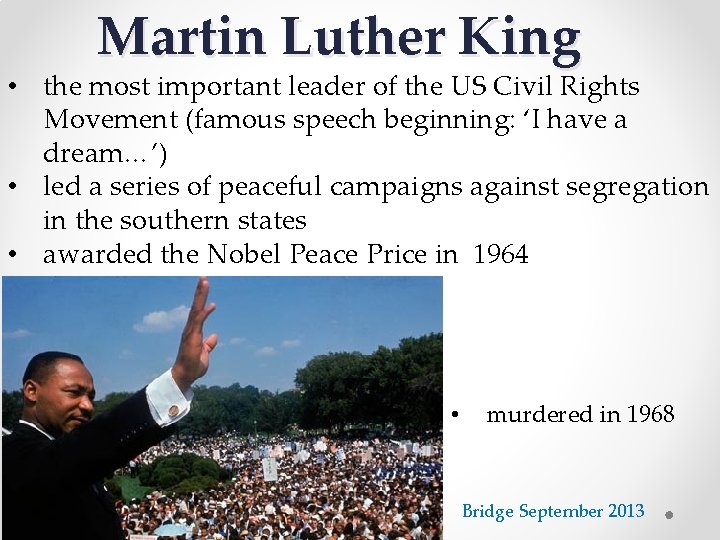
Martin Luther King • the most important leader of the US Civil Rights Movement (famous speech beginning: ‘I have a dream…’) • led a series of peaceful campaigns against segregation in the southern states • awarded the Nobel Peace Price in 1964 • murdered in 1968 Bridge September 2013
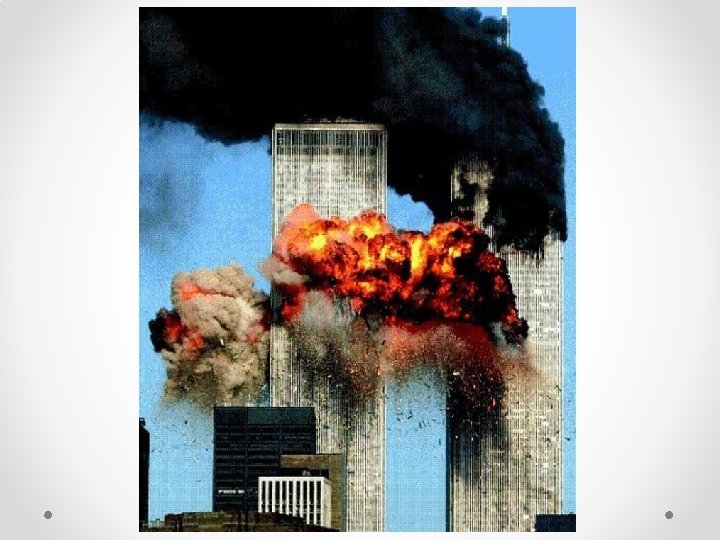
The USA and the terrorism 11 th September 2001 • series of suicide attacks by al-Qaeda upon the US • 4 commercial passenger jet planes hijacked • 2 crashed into the Twin Tower in New York City (WTC) – both towers collapsed within 2 hours • 1 crashed into the Pentagon • 1 crashed into a field in Pennsylvania (however the target was probably the Capitol or the White House) • nearly 3000 victims
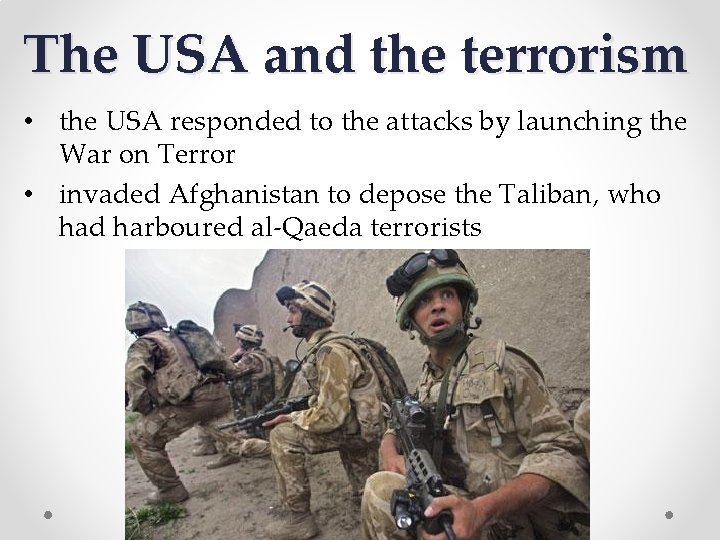
The USA and the terrorism • the USA responded to the attacks by launching the War on Terror • invaded Afghanistan to depose the Taliban, who had harboured al-Qaeda terrorists