
History and Physical exam for the urologic patient

- Slides: 39
History and Physical exam for the urologic patient Mohammad Al Omar, MD, FRCS (Canada) Assistant professor Consultant Urologist Endourologist, Laparoscopic and Robotic Urologist KKUH, KSU
Introduction Most diagnosis can be reached by a complete history, and a thorough physical examination n Challenges in History n n n Communication (anxiety, language, educational background ) Make the patient feel comfortable calm, caring, and competent image n Family member n
Introduction n Time n n sufficient to express their problems and the reasons for seeking your care Listen carefully n without distractions in order to obtain and interpret the clinical information provided by the patient
History n Major components Chief complaint n History of the present illness n Past medical history n Family history n Review of systems n Medications n Allergies n Social History n
Chief Complaint and Present Illness The chief complaint is a constant reminder as to why the patient initially sought care. n This issue must be addressed even if subsequent evaluation reveals a more serious or significant condition that requires n n Duration n Severity n Chronicity n Periodicity n Degree of disability
Pain n Can be severe n n n Inflammation of the GU tract is most severe when it involves the parenchyma of a GU organ n n urinary tract obstruction inflammation Pyelonephritis Prostatitis Epididymitis Inflammation of the mucosa of a hollow viscus usually produces discomfort n n Cystitis Urethritis
Pain n Tumors: n No pain unless n obstruction n extend beyond the primary organ to involve adjacent nerves
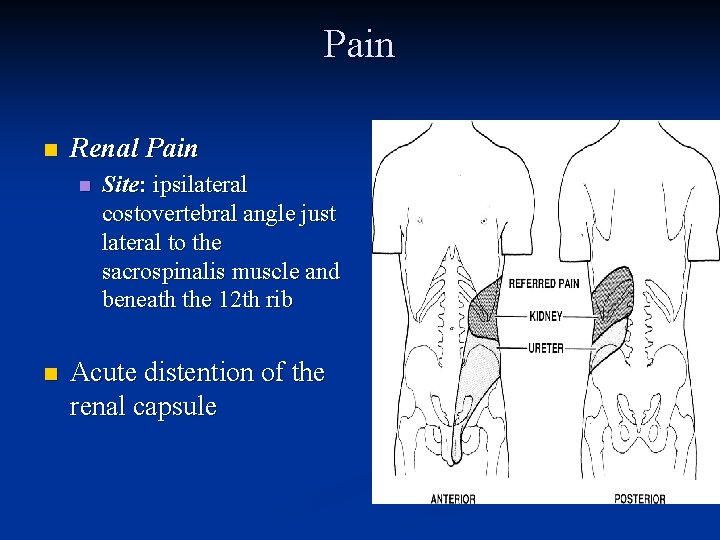
Pain n Renal Pain n n Site: ipsilateral costovertebral angle just lateral to the sacrospinalis muscle and beneath the 12 th rib Acute distention of the renal capsule
Pain n Associated symptoms n Gastrointestinal symptoms n Nausea n Vomiting n Ileus
Pain n Renal pain may also be confused with pain resulting from irritation of the costal nerves, most commonly T 10–T 12 which is: not colicky in nature. n Severity of radicular pain may be altered by changing position n
Ureteral pain n Usually acute and secondary to obstruction n n Midureter ( Rt side): referred to the right lower quadrant (Mc. Burney's point) and simulate appendicitis Midureter (Lt side) : referred over the left lower quadrant and resembles diverticulitis. Scrotum in the male or the labium in the female. Lower ureteral obstruction frequently produces symptoms of bladder irritability( frequency, urgency, and suprapubic discomfort)
Vesical Pain n Vesical pain is due n Overdistention n inflammation
Prostatic Pain n n Inflammation with secondary edema and distention of the prostatic capsule poorly localized n n n n lower abdominal Inguinal Perineal Lumbosacral rectal pain. irritative urinary symptoms ( frequency and dysuria) acute urinary retention.
Penile Pain in the erect penis is usually due to Peyronie's disease or priapism n Pain in the flaccid penis n usually secondary to inflammation in the bladder or urethra n referred pain that is maximally at the urethral meatus n n paraphimosis
Testicular Pain n Acute pain epididymitis n torsion of the testicle n n Chronic scrotal pain hydrocele n varicocele, n dull, heavy sensation that does not radiate n Referred pain: kidneys or retroperitoneum n
Hematuria n Hematuria : the presence of blood in the urine n In adults, should be regarded as a symptom of urologic malignancy until proved otherwise n n n Is the hematuria gross or microscopic? Timing: (beginning or end of stream or during entire stream)? Is it associated with pain? Is the patient passing clots? If the patient is passing clots, do the clots have a specific shape?
Hematuria n Initial hematuria: n n Total hematuria n n n usually arises from the urethra least common usually secondary to inflammation. most common bladder or upper urinary tracts. Terminal hematuria n n the end of micturition secondary to inflammation bladder neck or prostatic urethra.
Lower Urinary Tract Symptoms n Irritative Symptoms Urinary frequency n Nocturia n Frequency n Dysuria: painful urination n Incontinence n n Stress n Urge
Obstructive Symptoms Decreased force of urination n Urinary hesitancy n Intermittency n Post void dribbling n Straining n
Enuresis Urinary incontinence that occurs during sleep n Mostly in children up to 5 years n
Urethral Discharge n Urethral discharge is the most common symptom of venereal infection.
Fever and Chills n Usually in Pyelonephritis n Prostatitis n Epididymitis n
Past Medical History n Systemic diseases that may affect the GU system diabetes mellitus. n multiple sclerosis n TB n Schistosomiasis n
Family History prostate cancer n Stones( cystine) n Renal tumors (some types) n
Previous Surgical Procedures n it is worthwhile obtaining as much information as possible before any intended surgery, because most surprises that occur in the operating room are unhappy ones.
Smoking and Alcohol Use n Cigarette smoking urothelial carcinoma, mostly bladder cancer n Erectile dysfunction. n n Chronic alcoholism impaired urinary function n Sexual dysfunction. n testicular atrophy, and decreased libido. n
PHYSICAL EXAMINATION n General Observations visual inspection of the patient n Cachexia n n Malignancy, TB Jaundice or pallor n Gynecomastia n endocrinologic disease n alcoholism n hormonal therapy for prostate cancer n
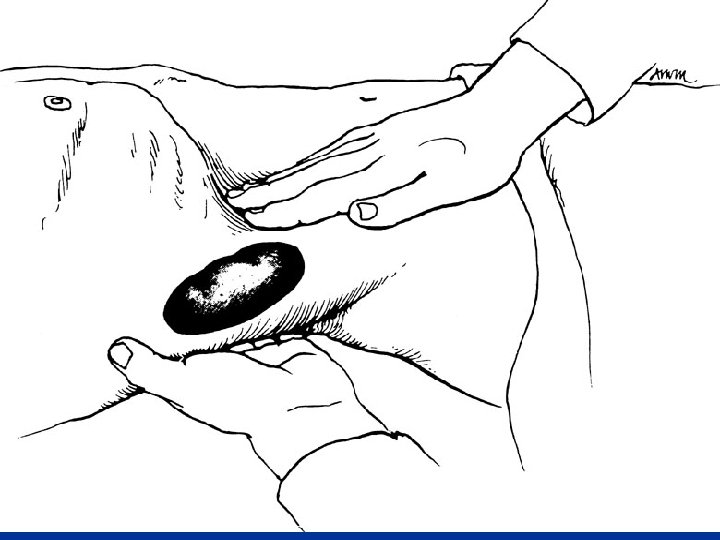
Kidneys n Palpation of the kidneys supine position n The kidney is lifted from behind with one hand in the costovertebral angle n In neonates, palpating of the flank between the thumb anteriorly and the fingers over the costovertebral angle posteriorly n
Kidneys n Auscultation : epigastrium for bruit renal artery stenosis n aneurysm. n renal arteriovenous fistula. n
Abnormal Physical Examination Findings—Kidneys The most common abnormality detected on examination of the kidneys is a mass n In neonates and younger children, the transillumination helps to distinction between cystic and solid n
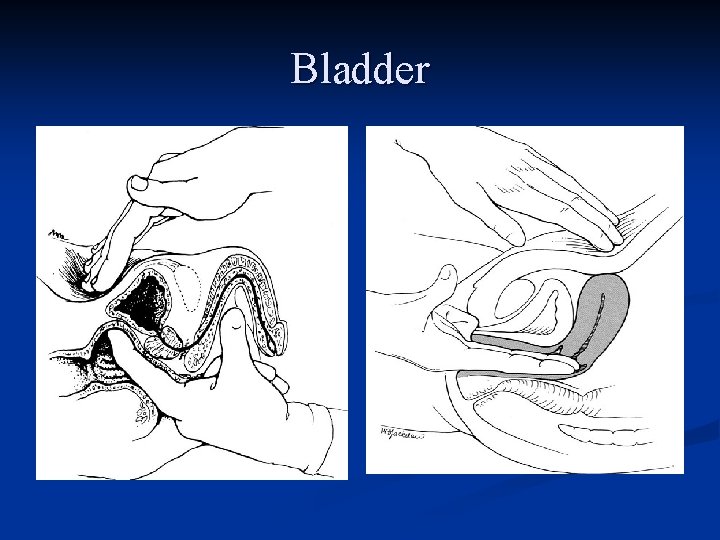
Bladder at least 150 ml of urine in it to be felt. n Percussion is better than palpation n A bimanual examination, best done under anesthesia, is very valuable to asses bladder tumor extension n
Bladder
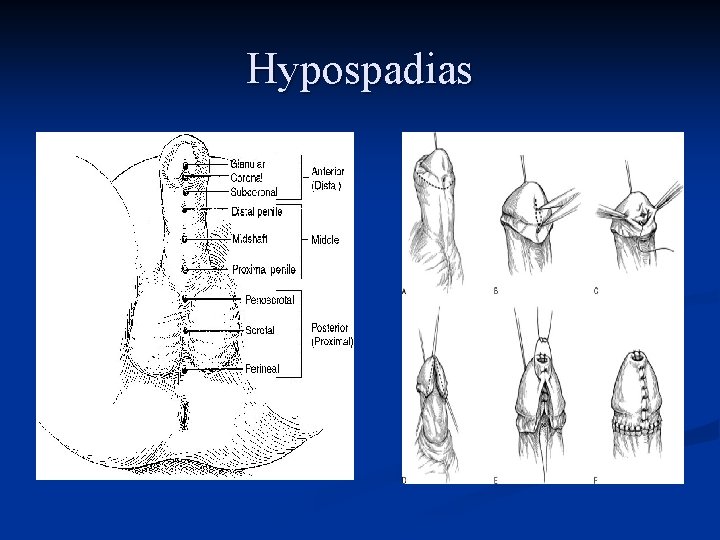
Penis The position of the urethral meatus n Priapism: sickle cell disease n
Hypospadias
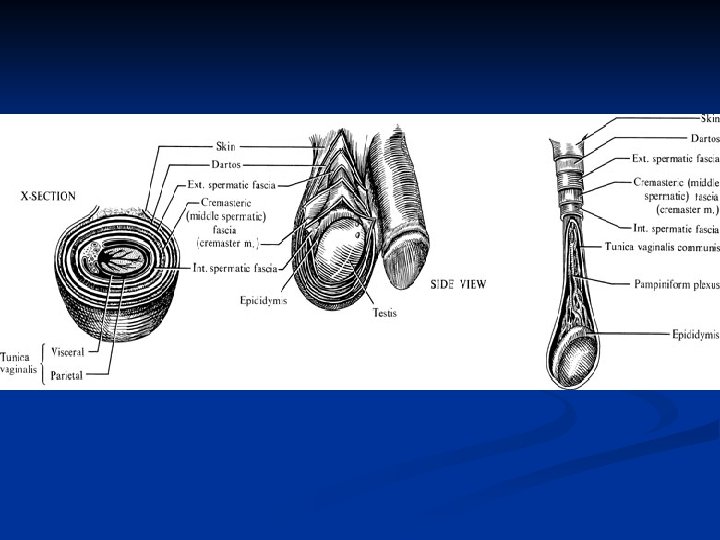
Scrotum and Contents n Painful n n n Painless n n n Torsion Epididymitis firm or hard area within the testis should be considered a malignant tumor until proved otherwise Spermatocele Hydrocele Varicocele Transillumination : Cystic vs. solid Painless solid testicular mass is tumor until proven otherwise
Rectal and Prostate Examination in the Male n Digital rectal examination (DRE) : n n every male after age 40 years Men of any age who present for urologic evaluation
Prostate Examination Acute Prostatitis n Benign Prostatic Hyperplasia n Carcinoma of the Prostate n