
History and Anatomy Early Beginnings Primitive humans spent
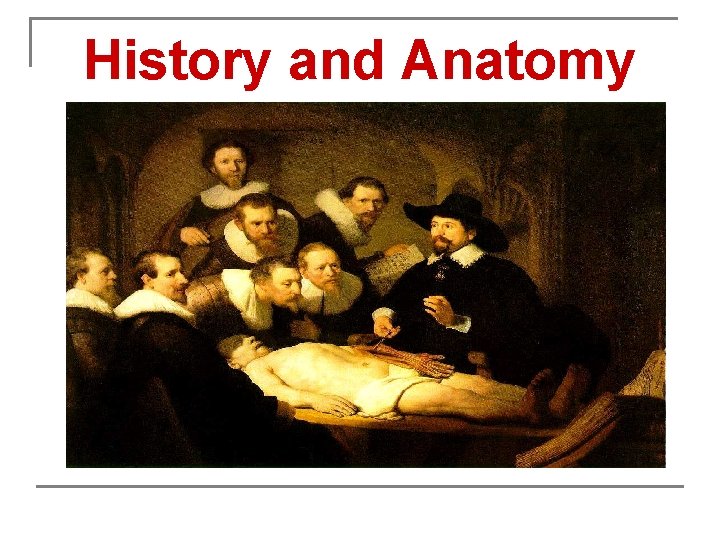
History and Anatomy

Early Beginnings Primitive humans spent time protecting themselves and hunting n Interest in anatomy is evidenced on cave walls n
Early Beginnings n Superstitious nature believing spirits caused illness and disease n “Doctors” performed exorcisms n Used herbs and plants to heal n Trepanation : sharp flint. .
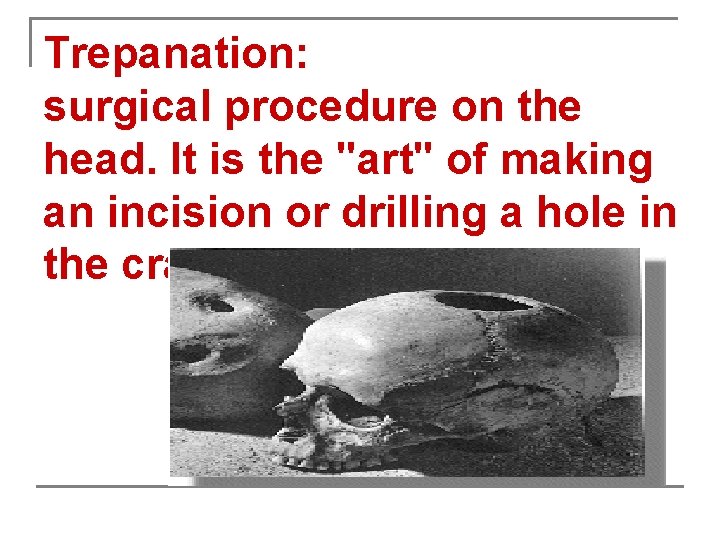
Trepanation: surgical procedure on the head. It is the "art" of making an incision or drilling a hole in the cranium (skull)
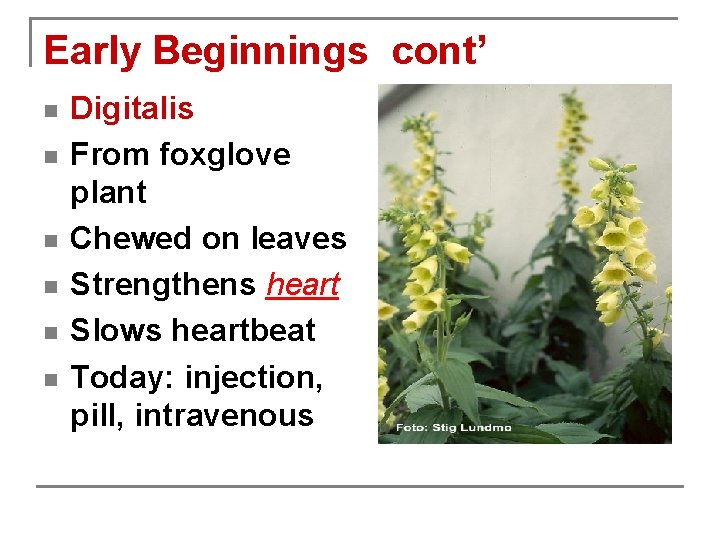
Early Beginnings cont’ n n n Digitalis From foxglove plant Chewed on leaves Strengthens heart Slows heartbeat Today: injection, pill, intravenous
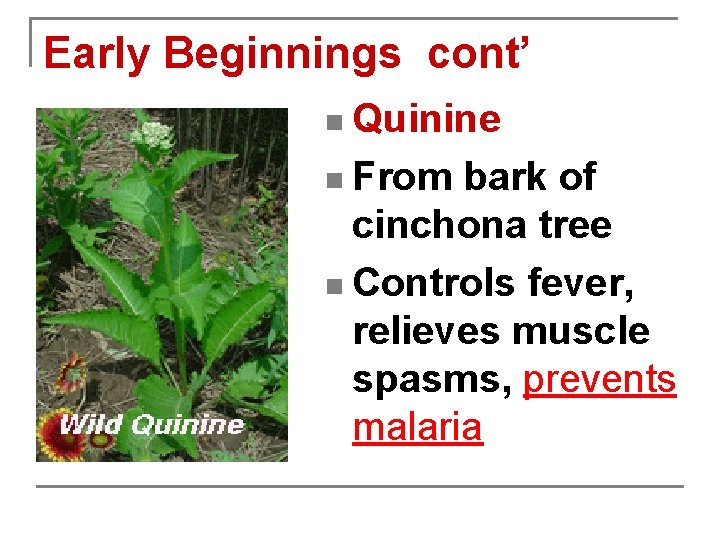
Early Beginnings cont’ n Quinine n From bark of cinchona tree n Controls fever, relieves muscle spasms, prevents malaria
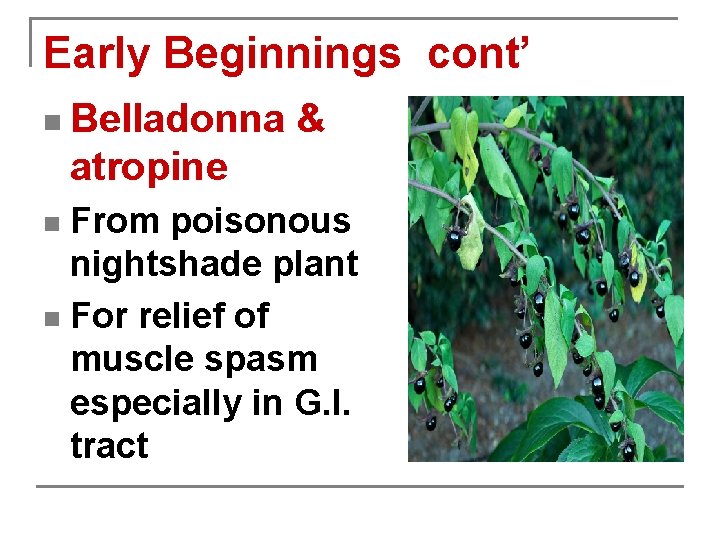
Early Beginnings cont’ n Belladonna & atropine From poisonous nightshade plant n For relief of muscle spasm especially in G. I. tract n
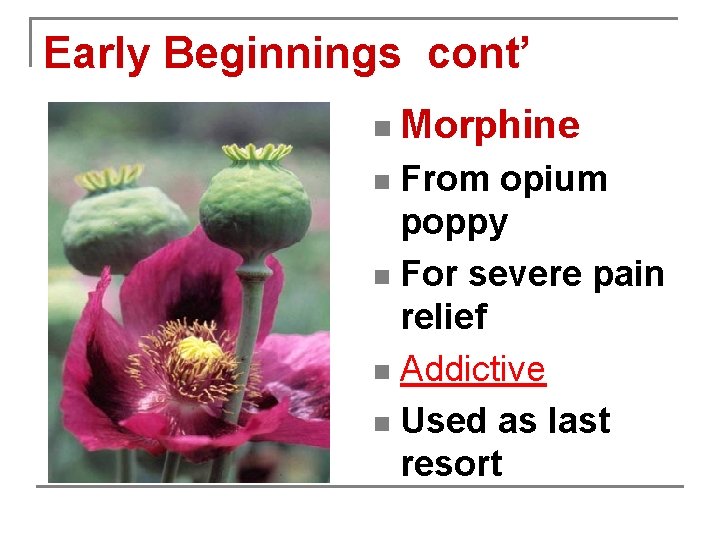
Early Beginnings cont’ n Morphine From opium poppy n For severe pain relief n Addictive n Used as last resort n
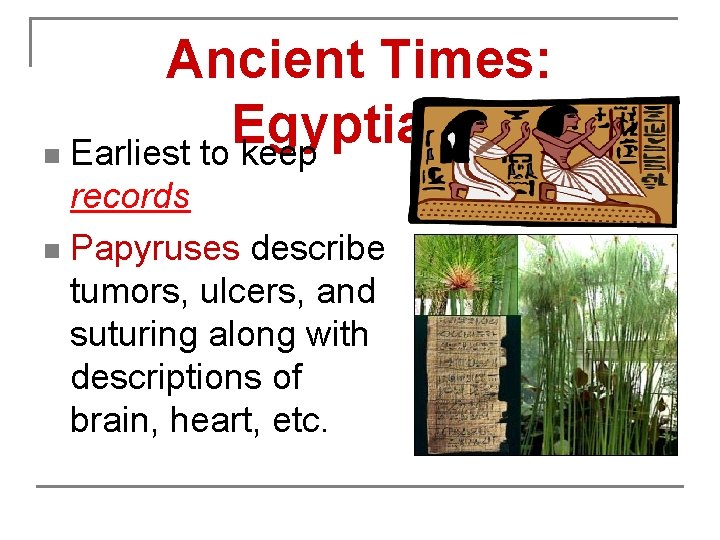
Ancient Times: Egyptians n Earliest to keep records n Papyruses describe tumors, ulcers, and suturing along with descriptions of brain, heart, etc.
Ancient Times: n Superstitious calling upon gods to Egyptians heal n Learned to identify certain diseases n Used “medicines” n Practiced embalming and mummification
Ancient Times: Greeks
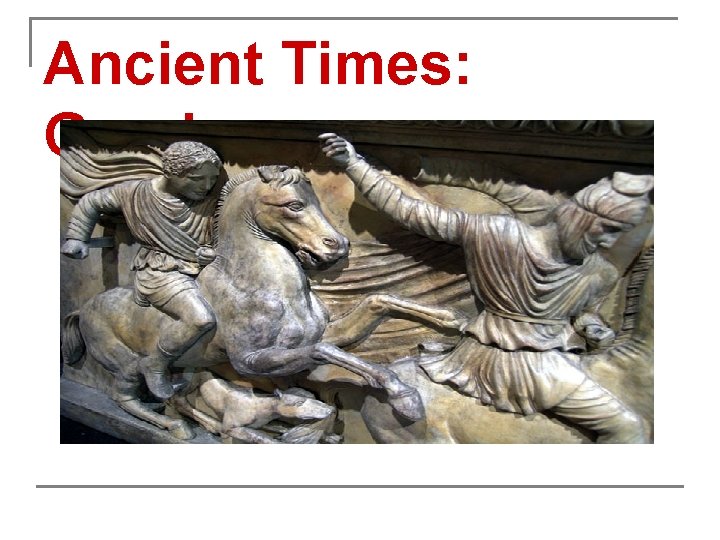
Ancient Times: Greeks n Studied causes of disease n Kept records, made observations, searched for new info n Religious custom didn’t allow for dissection
Greeks Hippocrates
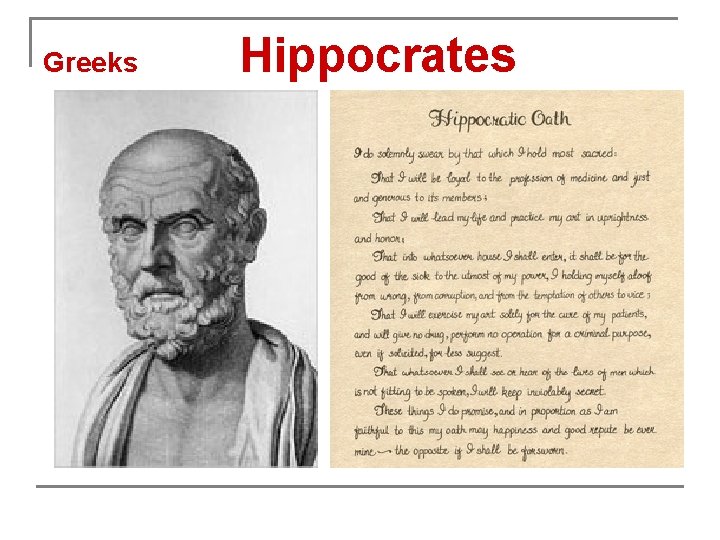
Ancient Times: Greeks cont’ Known as “Father of Medicine” n Ca 469 – 377 B. C. n Kept notes leading to elimination of idea of the supernatural causing disease n Some disease caused by lack of sanitation n “Hippocratic Oath” standard of ethics still taken by physicians n
Hippocratic Oath n n n I swear by Apollo the physician, and Asclepius, and Hygieia and Panacea and all the gods and goddesses as my witnesses, that, according to my ability and judgement, I will keep this Oath and this contract: To hold him who taught me this art equally dear to me as my parents, to be a partner in life with him, and to fulfill his needs when required; to look upon his offspring as equals to my own siblings, and to teach them this art, if they shall wish to learn it, without fee or contract; and that by the set rules, lectures, and every other mode of instruction, I will impart a knowledge of the art to my own sons, and those of my teachers, and to students bound by this contract and having sworn this Oath to the law of medicine, but to no others. I will use those dietary regimens which will benefit my patients according to my greatest ability and judgement, and I will do no harm or injustice to them. I will not give a lethal drug to anyone if I am asked, nor will I advise such a plan; and similarly I will not give a woman a pessary to cause an abortion. In purity and according to divine law will I carry out my life and my art. I will not use the knife, even upon those suffering from stones, but I will leave this to those who are trained in this craft. Into whatever homes I go, I will enter them for the benefit of the sick, avoiding any voluntary act of impropriety or corruption, including the seduction of women or men, whether they are free men or slaves. Whatever I see or hear in the lives of my patients, whether in connection with my professional practice or not, which ought not to be spoken of outside, I will keep secret, as considering all such things to be private. So long as I maintain this Oath faithfully and without corruption, may it be granted to me to partake of life fully and the practice of my art, gaining the respect of all men for all time. However, should I transgress this Oath and violate it, may the opposite be my fate. Translated by Michael North, U. S. National Library of Medicine, 2002
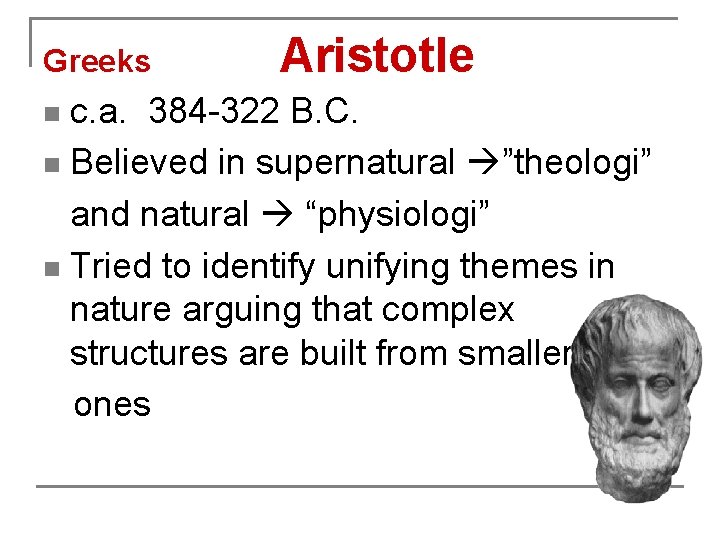
Greeks Aristotle c. a. 384 -322 B. C. n Believed in supernatural ”theologi” and natural “physiologi” n Tried to identify unifying themes in nature arguing that complex structures are built from smaller ones n
Greeks believed in 4 basic fluids or “body humors” ___black bile__ spleen ___phlegm____ brain ___yellow bile__ liver _____blood____ heart q associated with the seasons and personality n
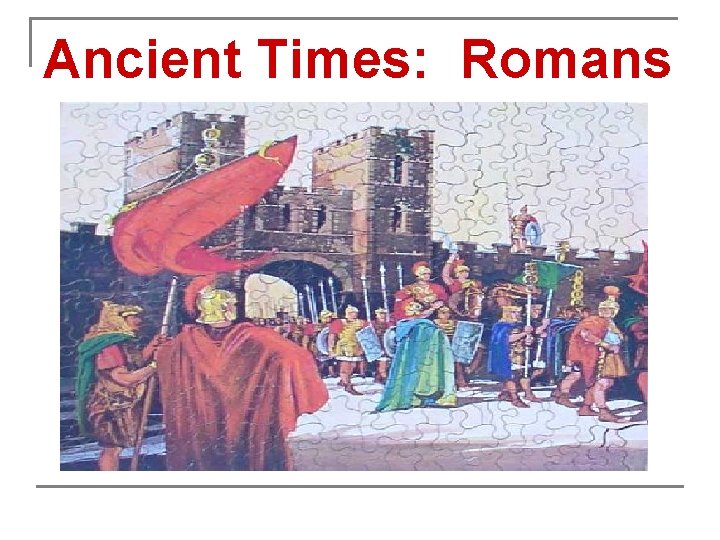
Ancient Times: Romans
Ancient Times: Romans n Developed first sanitation system to try to “cure” or “fix” disease n First to organize medical care n First hospitals
Galen Romans cont. ’ n Principal doctor for many of the professional gladiators n Dissected animals to find out how their bodies worked n Helped to improve techniques in surgery n Developed new instruments n Records show they were able to treat bladder stones, hernias, and cataracts
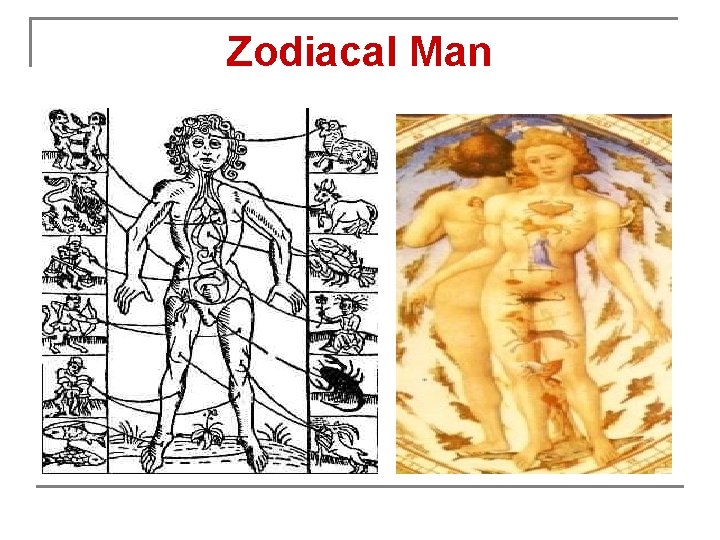
Zodiacal Man
Middle Ages A. D. 400 - 1400 Medicine stopped for about 1000 years when Roman Empire was conquered by the Huns n Did not seek cures n Based medicine on stars n Epidemics caused millions to die n Bubonic plague, smallpox, diphtheria, syphillis, TB n
Middle Ages cont’ Factors required for scientific advancement: ü willingness to accept new info ü curiosity & position to pursue ü technology n q ASTRONOMY DOMINATED ALONG WITH EMPHASIS ON THE “AFTER-LIFE”
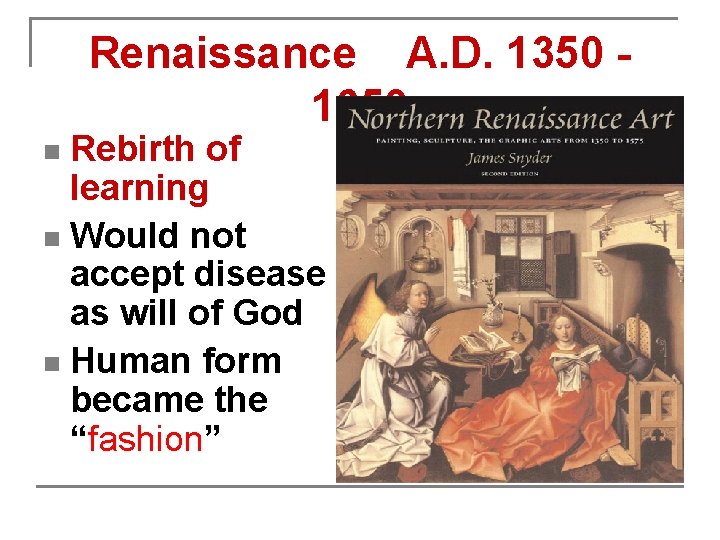
Renaissance A. D. 1350 1650 Rebirth of learning n Would not accept disease as will of God n Human form became the “fashion” n
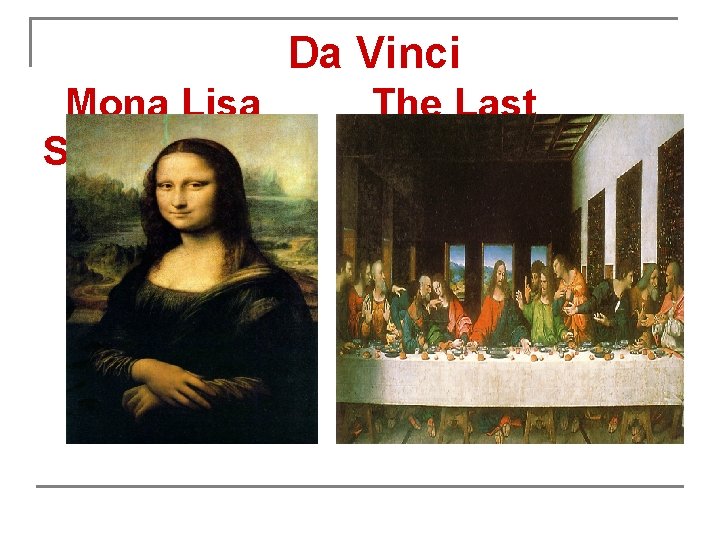
Da Vinci Mona Lisa Supper The Last
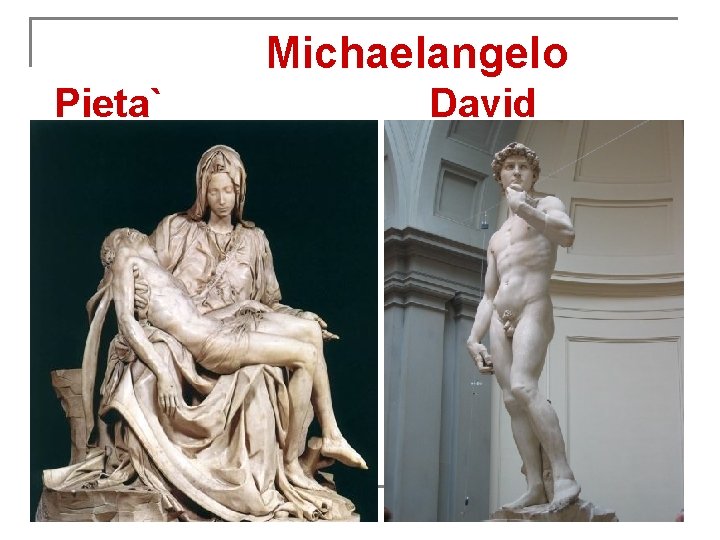
Michaelangelo Pieta` David
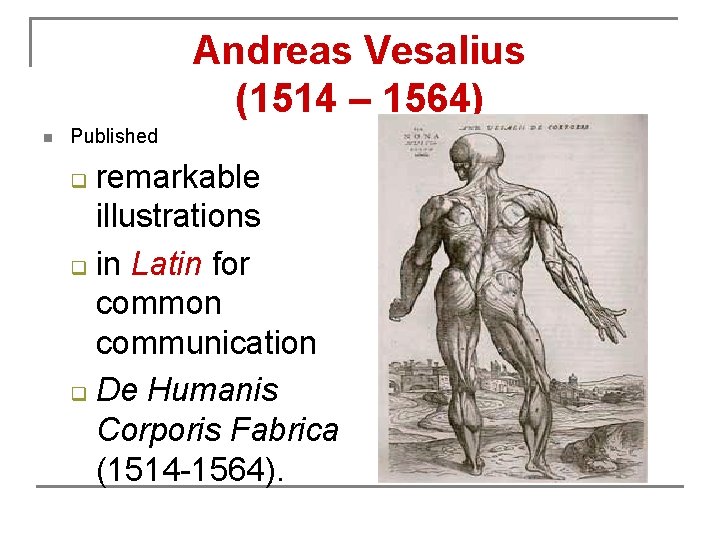
Andreas Vesalius (1514 – 1564) n Published remarkable illustrations q in Latin for common communication q De Humanis Corporis Fabrica (1514 -1564). q
William Harvey used the anatomy of the renaissance to understand physiology and was able to describe circulation of blood and the heart n Gabriele Fallopius: fallopian tubes n Bartolommeo Eustachio: eustachian tube n Antonie van Leeuvenhoek: microscope >>scraped teeth found bacteria n
Eighteenth & Nineteenth Centuries n Rene’ Laennec: stethoscope n John Priestly: oxygen n Ben Franklin: bifocals, virus transmission n Edward Jenner: smallpox vaccine
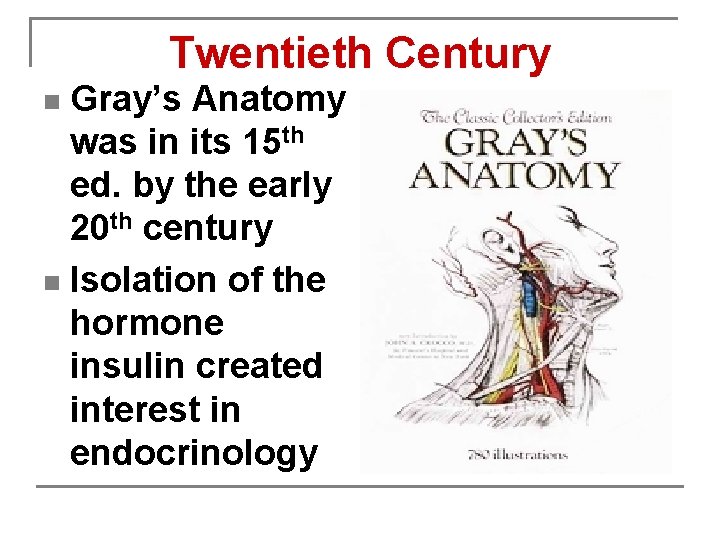
Twentieth Century Gray’s Anatomy was in its 15 th ed. by the early 20 th century n Isolation of the hormone insulin created interest in endocrinology n
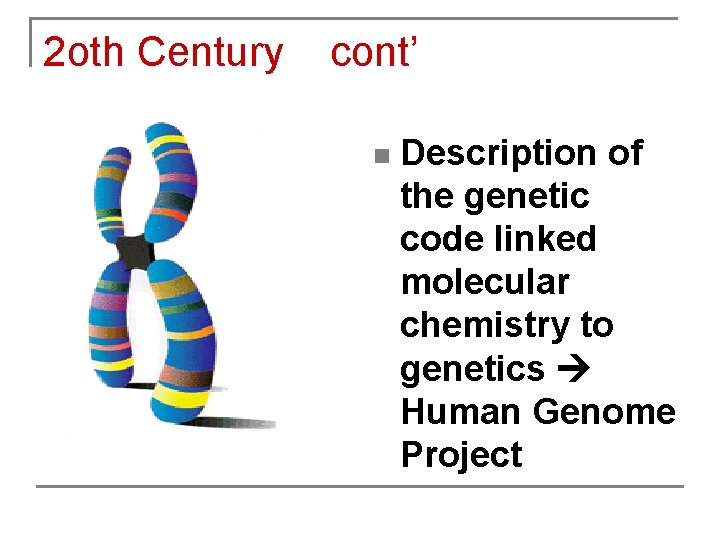
2 oth Century cont’ n Description of the genetic code linked molecular chemistry to genetics Human Genome Project
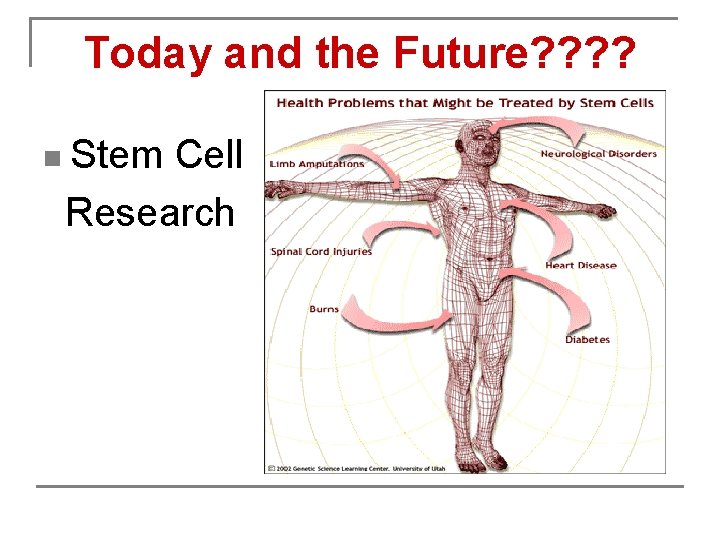
Today and the Future? ? n Stem Cell Research
The End.
- Slides: 33