
History and Accomplishments of the ConsumerSurvivorExpatient csx Movement
- Slides: 16
History and Accomplishments of the Consumer/Survivor/Ex-patient (c/s/x) Movement Developed by the National Mental Health Consumers’ Self-Help Clearinghouse http: //www. mhselfhelp. org 800 -553 -4539 1
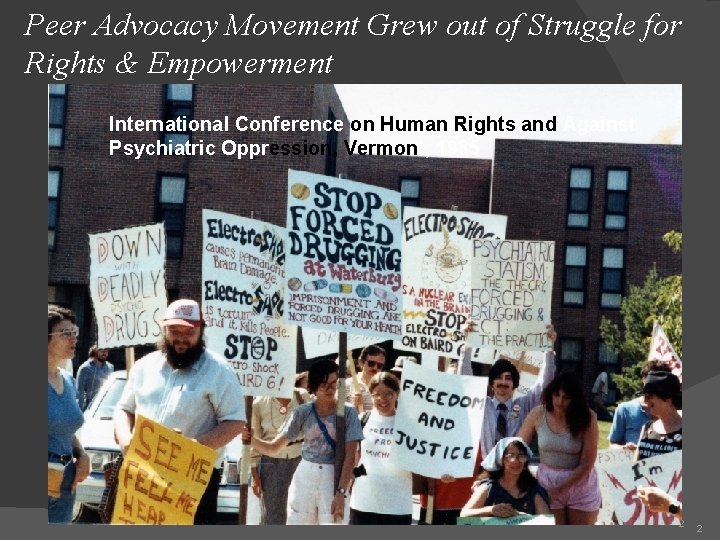
Peer Advocacy Movement Grew out of Struggle for Rights & Empowerment International Conference on Human Rights and Against Psychiatric Oppression, Vermont, 1985 2 2
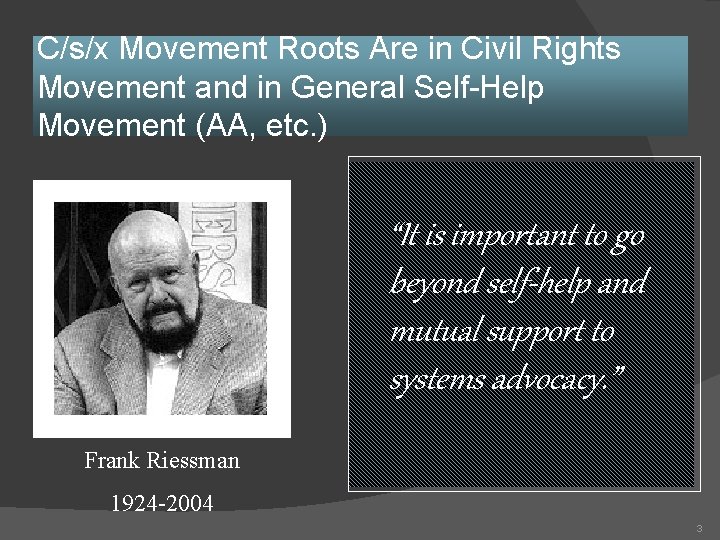
C/s/x Movement Roots Are in Civil Rights Movement and in General Self-Help Movement (AA, etc. ) “It is important to go beyond self-help and mutual support to systems advocacy. ” Frank Riessman 1924 -2004 3
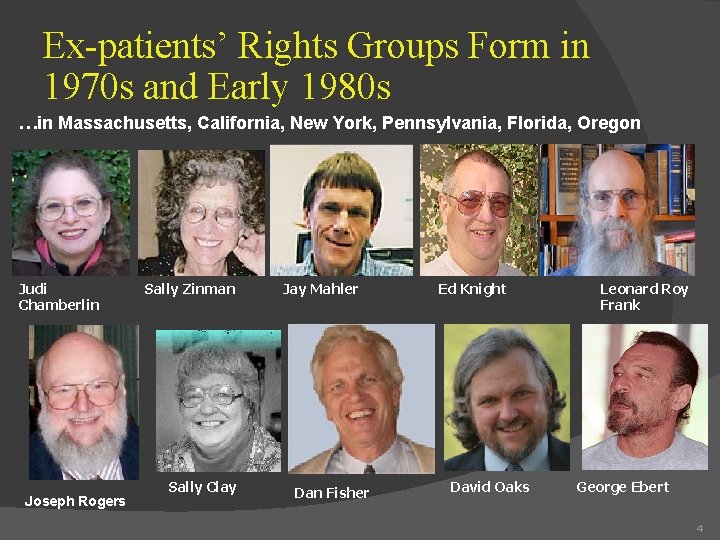
Ex-patients’ Rights Groups Form in 1970 s and Early 1980 s …in Massachusetts, California, New York, Pennsylvania, Florida, Oregon Judi Chamberlin Joseph Rogers Sally Zinman Sally Clay Jay Mahler Dan Fisher Ed Knight David Oaks Leonard Roy Frank George Ebert 4
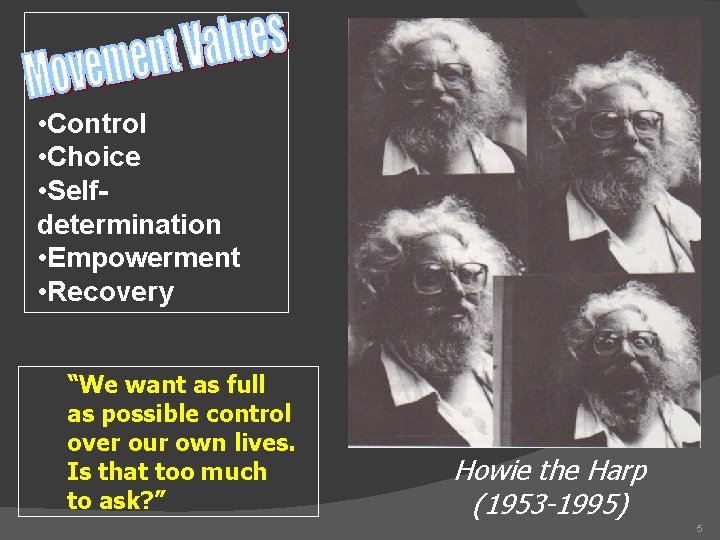
• Control • Choice • Selfdetermination • Empowerment • Recovery “We want as full as possible control over our own lives. Is that too much to ask? ” Howie the Harp (1953 -1995) 5
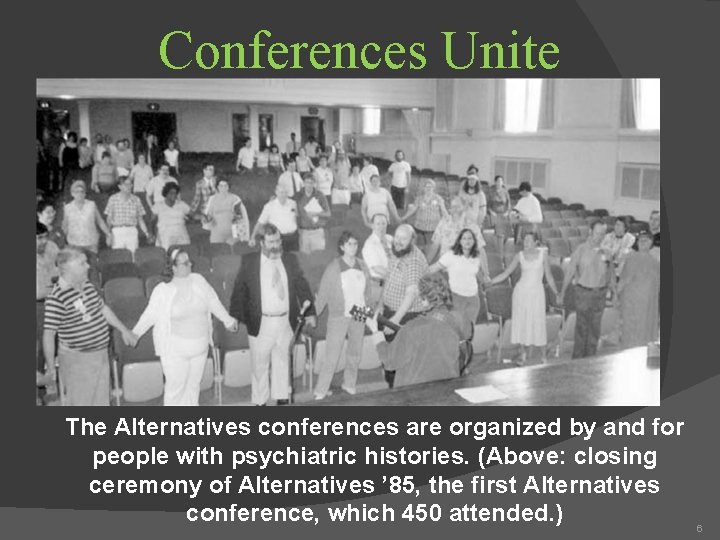
Conferences Unite Movement The Alternatives conferences are organized by and for people with psychiatric histories. (Above: closing ceremony of Alternatives ’ 85, the first Alternatives conference, which 450 attended. ) 6
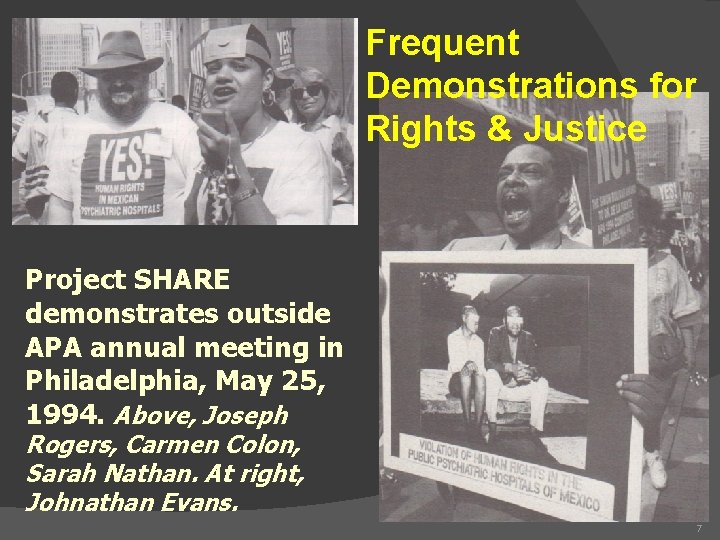
Frequent Demonstrations for Rights & Justice Project SHARE demonstrates outside APA annual meeting in Philadelphia, May 25, 1994. Above, Joseph Rogers, Carmen Colon, Sarah Nathan. At right, Johnathan Evans. 7
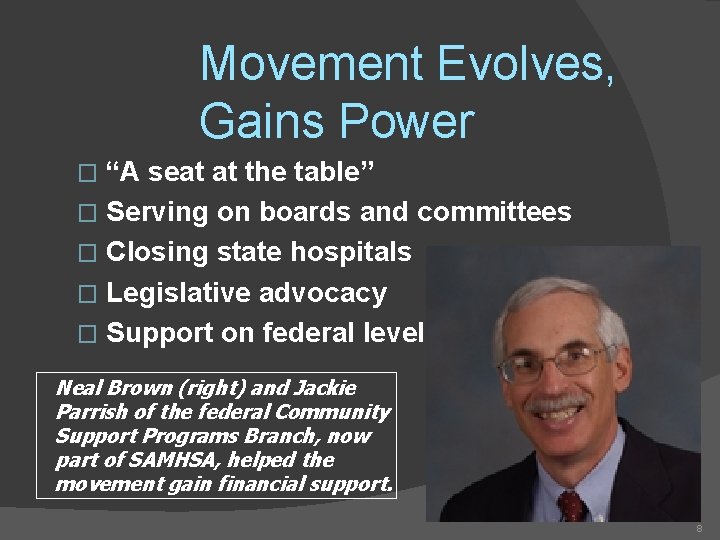
Movement Evolves, Gains Power “A seat at the table” � Serving on boards and committees � Closing state hospitals � Legislative advocacy � Support on federal level � Neal Brown (right) and Jackie Parrish of the federal Community Support Programs Branch, now part of SAMHSA, helped the movement gain financial support. 8
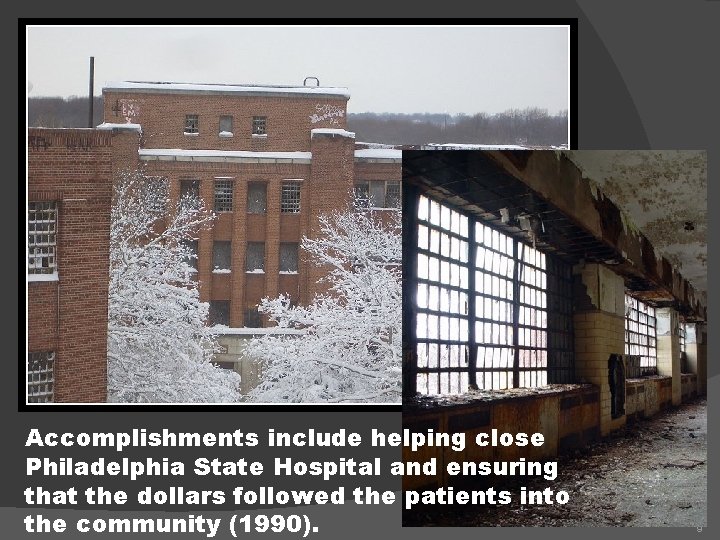
Accomplishments include helping close Philadelphia State Hospital and ensuring that the dollars followed the patients into the community (1990). 9
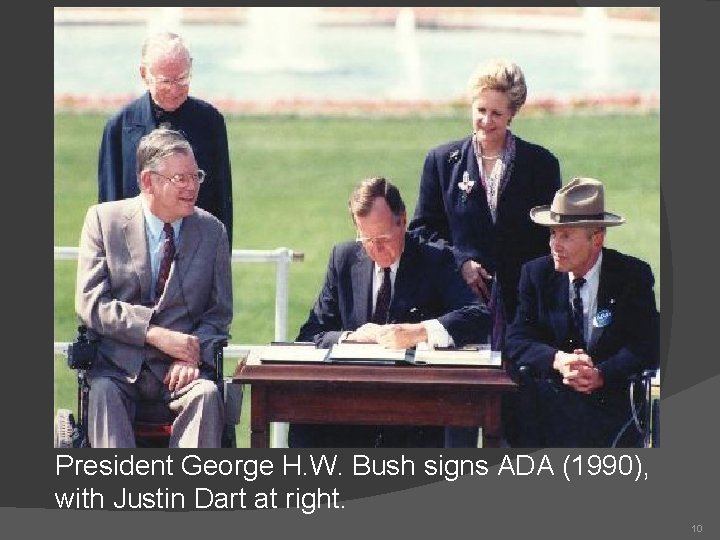
President George H. W. Bush signs ADA (1990), with Justin Dart at right. 10
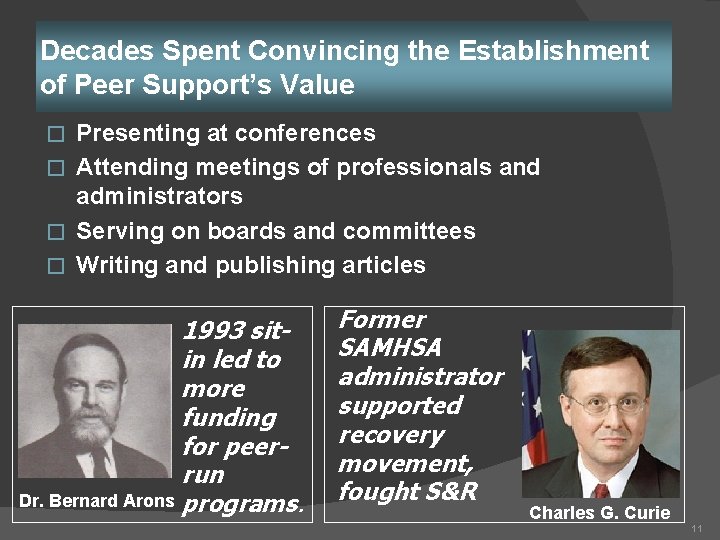
Decades Spent Convincing the Establishment of Peer Support’s Value Presenting at conferences � Attending meetings of professionals and administrators � Serving on boards and committees � Writing and publishing articles � 1993 sitin led to more funding for peerrun Dr. Bernard Arons programs. Former SAMHSA administrator supported recovery movement, fought S&R Charles G. Curie 11
5 National TACs Help Movement www. mhselfhelp. org Grow: www. cafetacenter. net www. power 2 u. org www. consumerstar. org www. peerlink. us 12 12
Other National Groups Support C/S/X Movement NARPA 13
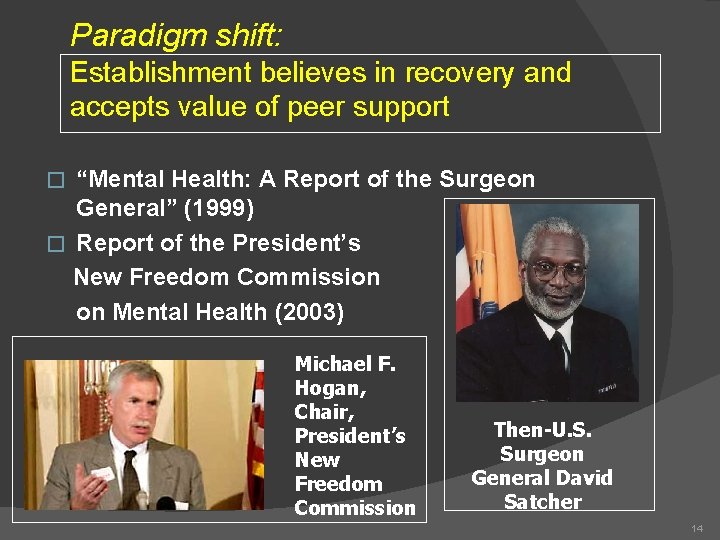
Paradigm shift: Establishment believes in recovery and accepts value of peer support “Mental Health: A Report of the Surgeon General” (1999) � Report of the President’s New Freedom Commission on Mental Health (2003) � Michael F. Hogan, Chair, President’s New Freedom Commission Then-U. S. Surgeon General David Satcher 14
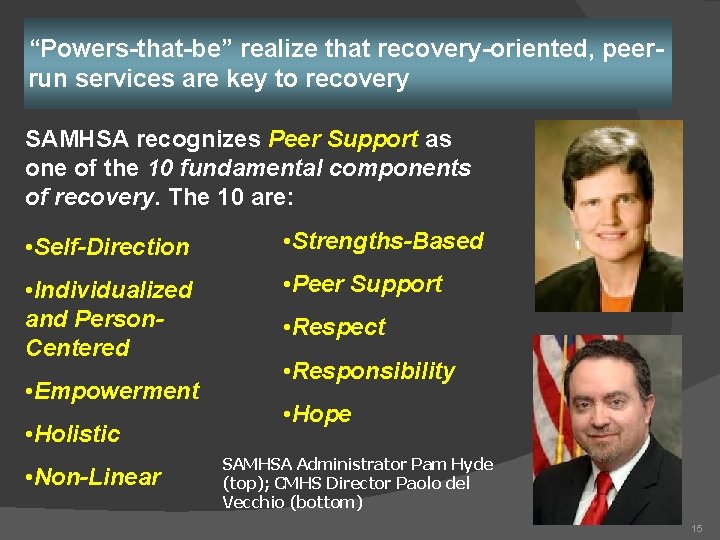
“Powers-that-be” realize that recovery-oriented, peerrun services are key to recovery SAMHSA recognizes Peer Support as one of the 10 fundamental components of recovery. The 10 are: • Self-Direction • Strengths-Based • Individualized and Person. Centered • Peer Support • Empowerment • Holistic • Non-Linear • Respect • Responsibility • Hope SAMHSA Administrator Pam Hyde (top); CMHS Director Paolo del Vecchio (bottom) 15
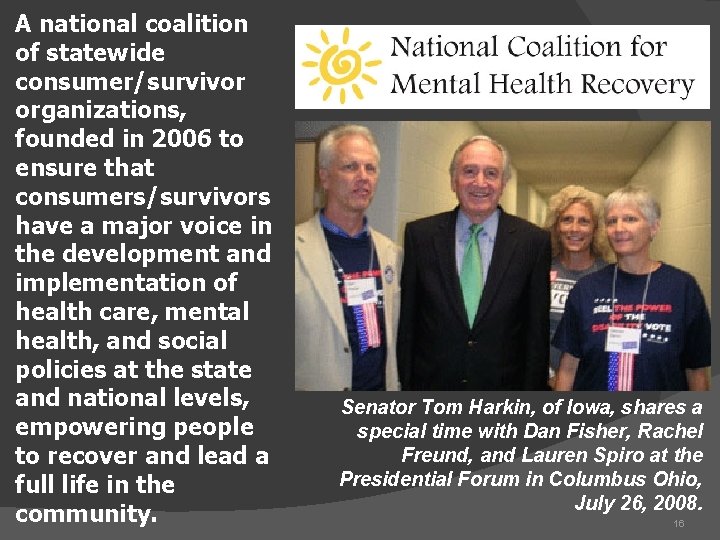
A national coalition of statewide consumer/survivor organizations, founded in 2006 to ensure that consumers/survivors have a major voice in the development and implementation of health care, mental health, and social policies at the state and national levels, empowering people to recover and lead a full life in the community. Senator Tom Harkin, of Iowa, shares a special time with Dan Fisher, Rachel Freund, and Lauren Spiro at the Presidential Forum in Columbus Ohio, July 26, 2008. 16