
History 1492 Lesson 4 of 4 The impact
- Slides: 9
History 1492 - Lesson 4 of 4 The impact of 1492 on world trade and empires Why have historians described 1492 as a ‘turning point’ in world history? Mr Wallace 1
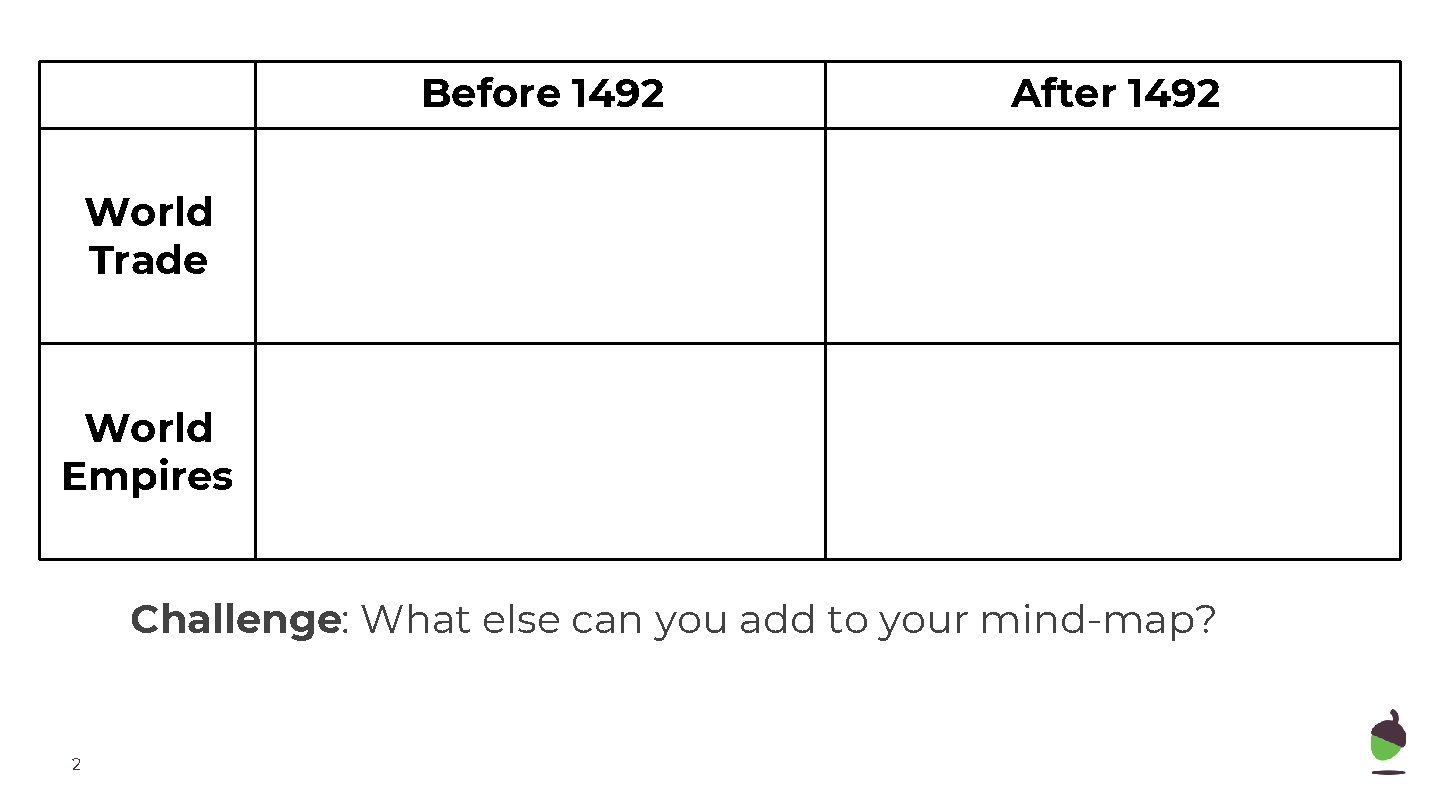
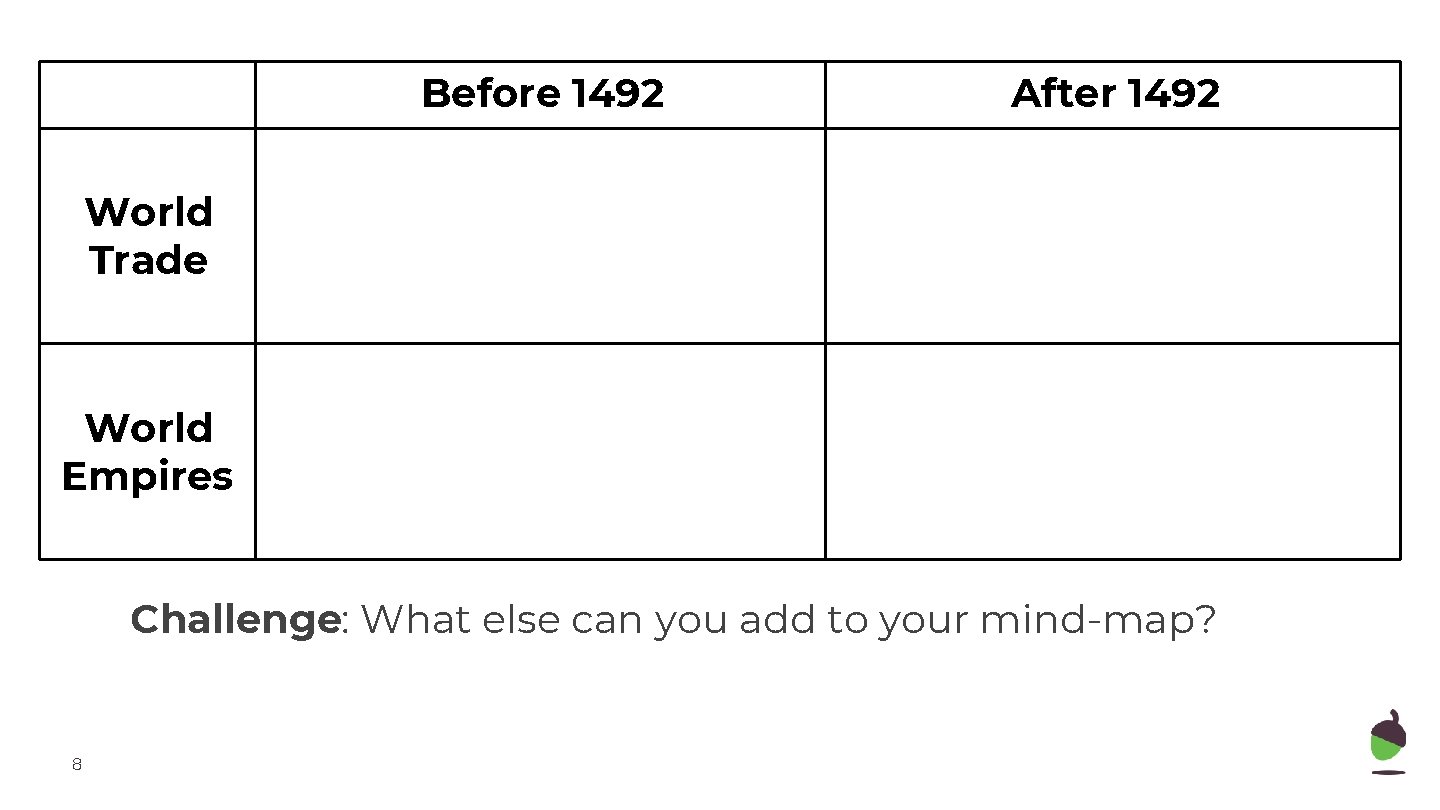
Before 1492 After 1492 World Trade World Empires Challenge: What else can you add to your mind-map? 2
Trade - The Silk Roads For centuries, world trade had focused on the Silk Roads that stretched across Asia. These routes connected China and India in the East, through Baghdad and the Islamic world, up to the edge of Europe. During the Middle Ages, no European nation was able to sail around Africa, so they were cut off trading directly with the east by sea. This meant that Europeans relied on the Silk Roads for access to luxury goods such as spices, silk or exotic foods. Control over the trade routes meant that different empires gained great wealth and power. One example of this is the Abbasid Dynasty, the Islamic empire which had Baghdad as its capital. This city was effectively at the crossroads of international trade. Merchants came through and business was done. Controlling trade routes made the Abbasid Empire wealthy and powerful. 3
Trade - The impact of the New World This was dramatically changed by the voyage to the New World. European nations which had coasts on the Atlantic Ocean, such as Spain and Portugal but eventually France and Great Britain too, were able to obtain vast resources from the Americas. Furthermore, by colonising land there, such as the islands in the Caribbean, Europeans could plant crops which would usually have cost a lot to buy from Asia, such as sugar and coffee. This meant that, for many products, they no longer needed to rely on the Silk Roads for trade. New colonies also meant new places to buy and sell goods. So European empires carried out more trade amongst themselves, and the power of overland trade declined. This was changed even more when a sea route around Africa was discovered, meaning worldwide trade could be done by ship. This was quicker and cheaper, which led to more profits and more money. 4
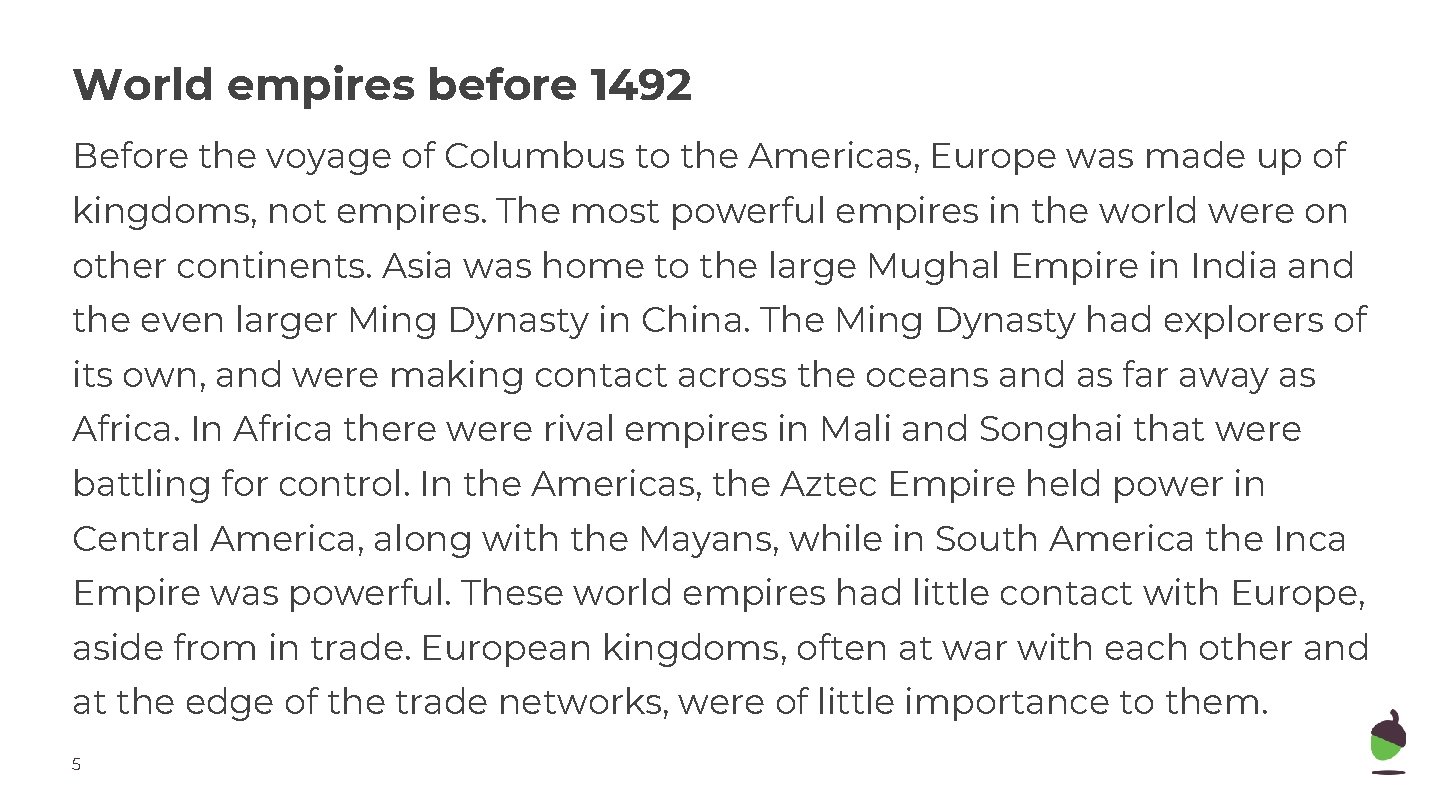
World empires before 1492 Before the voyage of Columbus to the Americas, Europe was made up of kingdoms, not empires. The most powerful empires in the world were on other continents. Asia was home to the large Mughal Empire in India and the even larger Ming Dynasty in China. The Ming Dynasty had explorers of its own, and were making contact across the oceans and as far away as Africa. In Africa there were rival empires in Mali and Songhai that were battling for control. In the Americas, the Aztec Empire held power in Central America, along with the Mayans, while in South America the Inca Empire was powerful. These world empires had little contact with Europe, aside from in trade. European kingdoms, often at war with each other and at the edge of the trade networks, were of little importance to them. 5
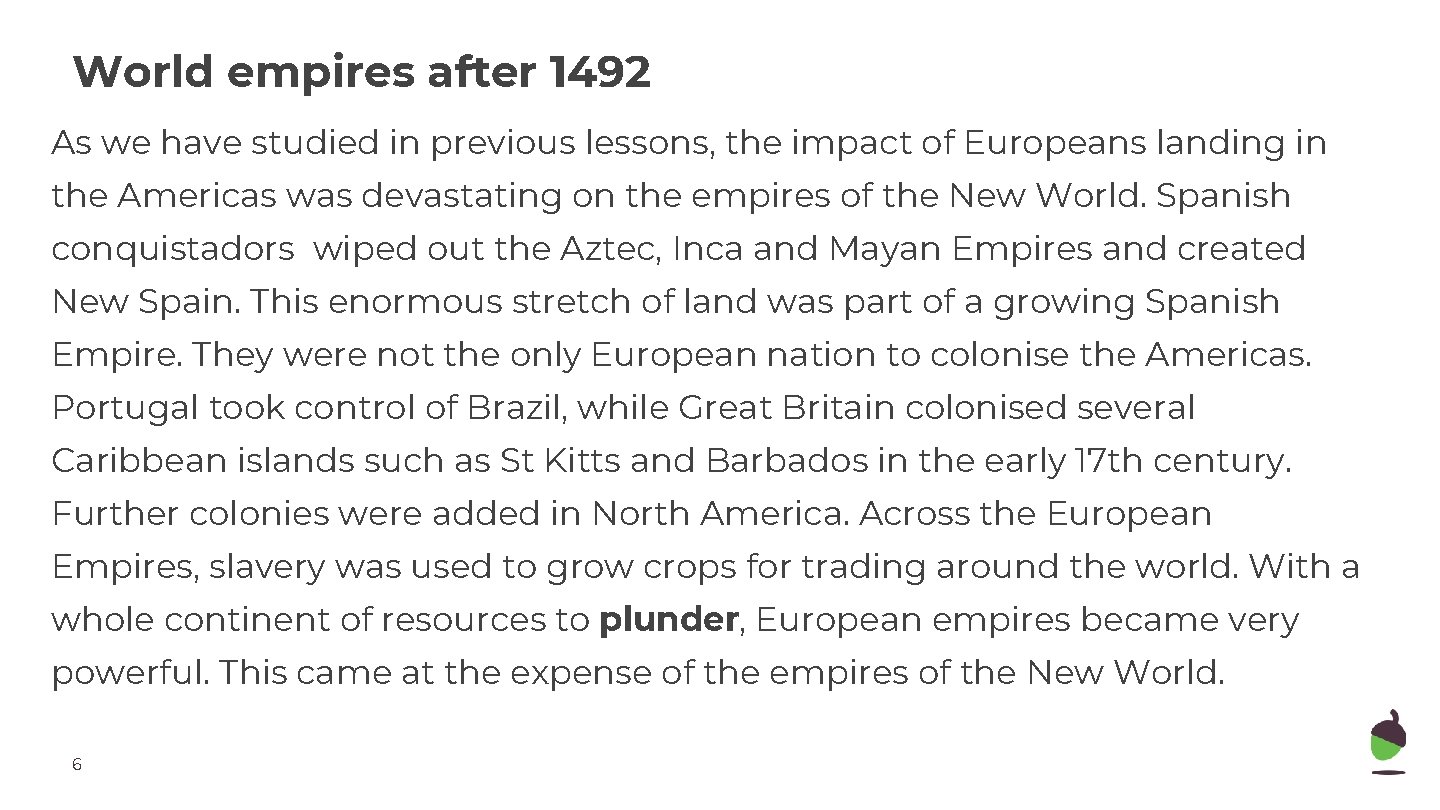
World empires after 1492 As we have studied in previous lessons, the impact of Europeans landing in the Americas was devastating on the empires of the New World. Spanish conquistadors wiped out the Aztec, Inca and Mayan Empires and created New Spain. This enormous stretch of land was part of a growing Spanish Empire. They were not the only European nation to colonise the Americas. Portugal took control of Brazil, while Great Britain colonised several Caribbean islands such as St Kitts and Barbados in the early 17 th century. Further colonies were added in North America. Across the European Empires, slavery was used to grow crops for trading around the world. With a whole continent of resources to plunder, European empires became very powerful. This came at the expense of the empires of the New World. 6
Glossary Colonise - when another country or empire takes control of land settles it with their own people Plunder - take or steal 7
Before 1492 After 1492 World Trade World Empires Challenge: What else can you add to your mind-map? 8
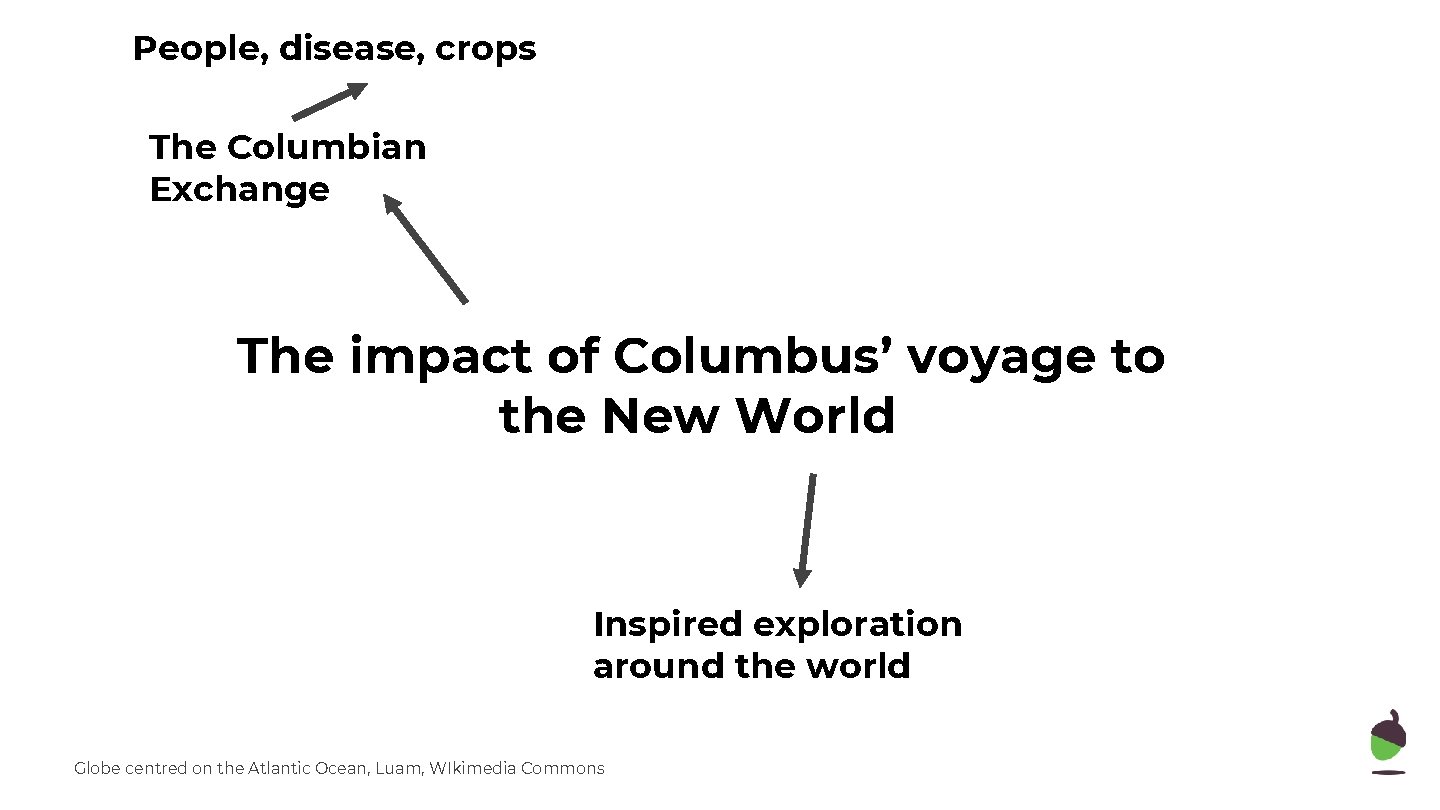
People, disease, crops The Columbian Exchange The impact of Columbus’ voyage to the New World Inspired exploration around the world Globe centred on the Atlantic Ocean, Luam, WIkimedia Commons