
Historicity of Jain Tirthankars JAINA Convention San Jose



- Slides: 30
Historicity of Jain Tirthankars JAINA Convention, San Jose July 2, 2005 Yashwant K. Malaiya 1
Historicity of Jain Tirthankars Antiquity of Jainism: Tradition and history n Tirthankaras in Brahmin and Buddhist books n The Shramana tradition n Historicity of Lord Neminath, Parshvanath &Mahavira n Archaeological evidence and Indus Valley Civilization n 2
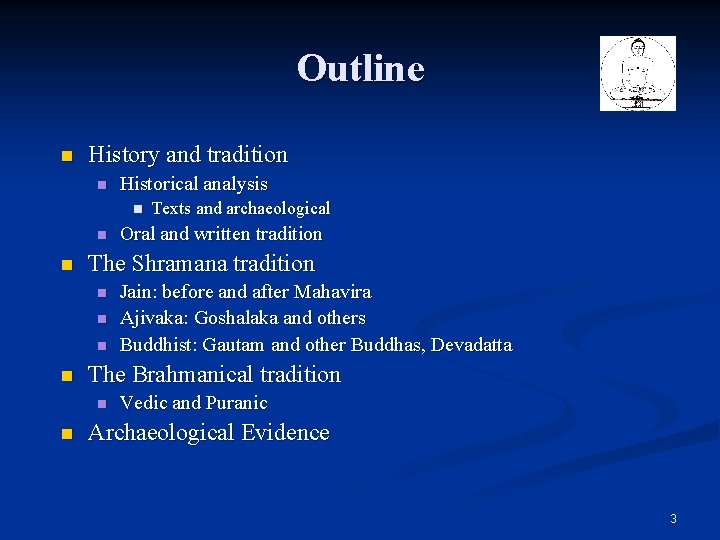
Outline n History and tradition n Historical analysis n n n Jain: before and after Mahavira Ajivaka: Goshalaka and others Buddhist: Gautam and other Buddhas, Devadatta The Brahmanical tradition n n Oral and written tradition The Shramana tradition n n Texts and archaeological Vedic and Puranic Archaeological Evidence 3
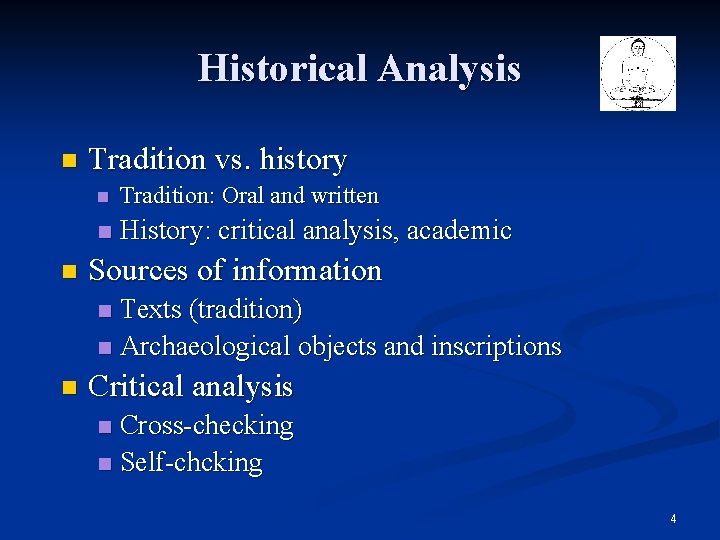
Historical Analysis n n Tradition vs. history n Tradition: Oral and written n History: critical analysis, academic Sources of information Texts (tradition) n Archaeological objects and inscriptions n n Critical analysis Cross-checking n Self-chcking n 4
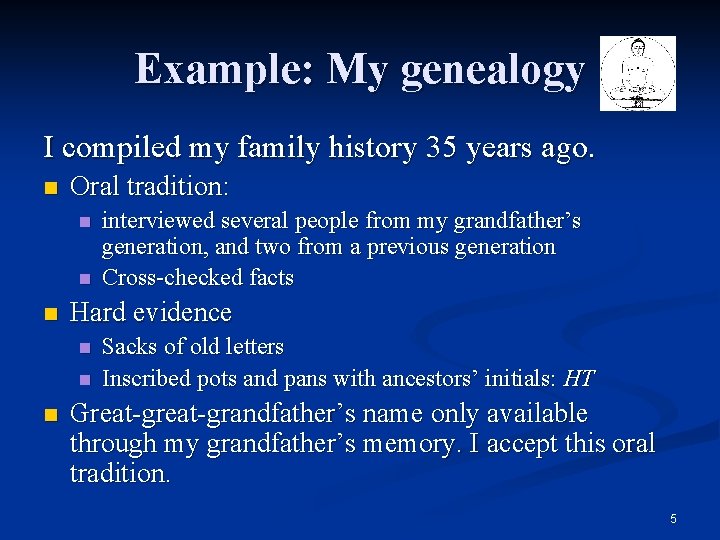
Example: My genealogy I compiled my family history 35 years ago. n Oral tradition: n n n Hard evidence n n n interviewed several people from my grandfather’s generation, and two from a previous generation Cross-checked facts Sacks of old letters Inscribed pots and pans with ancestors’ initials: HT Great-grandfather’s name only available through my grandfather’s memory. I accept this oral tradition. 5
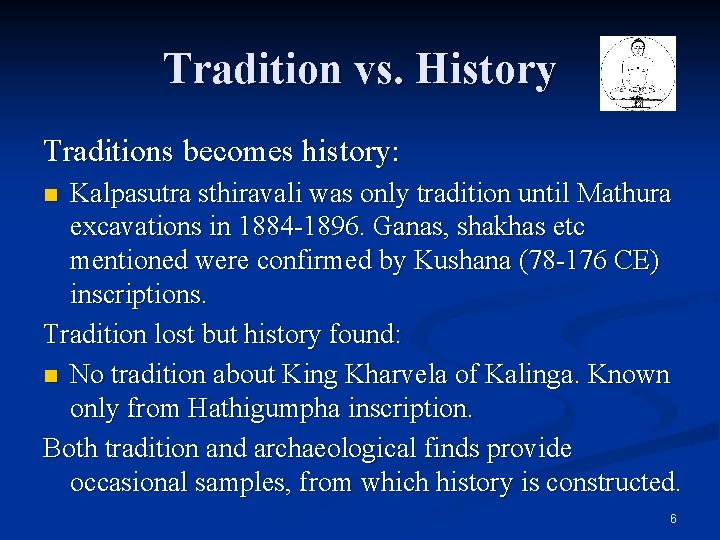
Tradition vs. History Traditions becomes history: Kalpasutra sthiravali was only tradition until Mathura excavations in 1884 -1896. Ganas, shakhas etc mentioned were confirmed by Kushana (78 -176 CE) inscriptions. Tradition lost but history found: n No tradition about King Kharvela of Kalinga. Known only from Hathigumpha inscription. Both tradition and archaeological finds provide occasional samples, from which history is constructed. n 6
The 24 Jinas Swetambara: Logassa Sutra (Avashyaka sutra) Digambara: Thossami Thudi (Tirthankara) 7
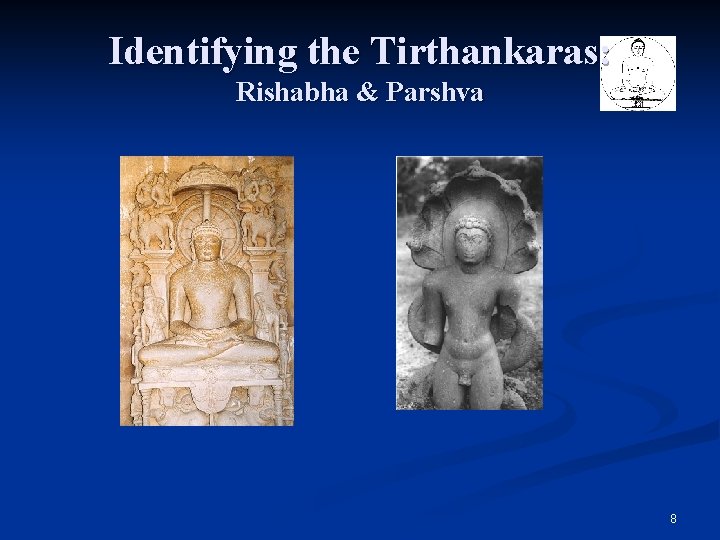
Identifying the Tirthankaras: Rishabha & Parshva 8
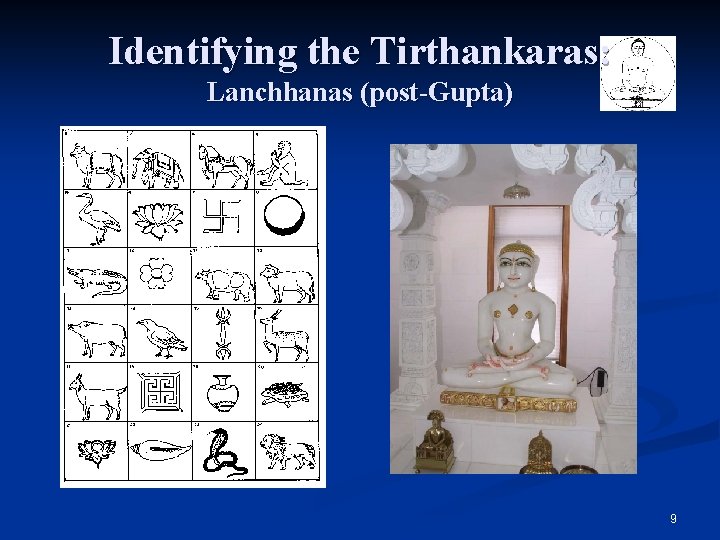
Identifying the Tirthankaras: Lanchhanas (post-Gupta) 9
Ancient Idols from Mathura Images identified using inscriptions & hair/hood: n Ayagapatta: Parshva n Panel: Diksha of Rishabha Kushana period (78 -176 CE): n Seated: Vardhamana, Sambhava, Suvrata, Rishabha, Arishtanemi, Parshva n Standing: Vardhamana, Arishtanemi, Parshva n 4 -sided: Parshva and Rishabha identifiable on most of them 10
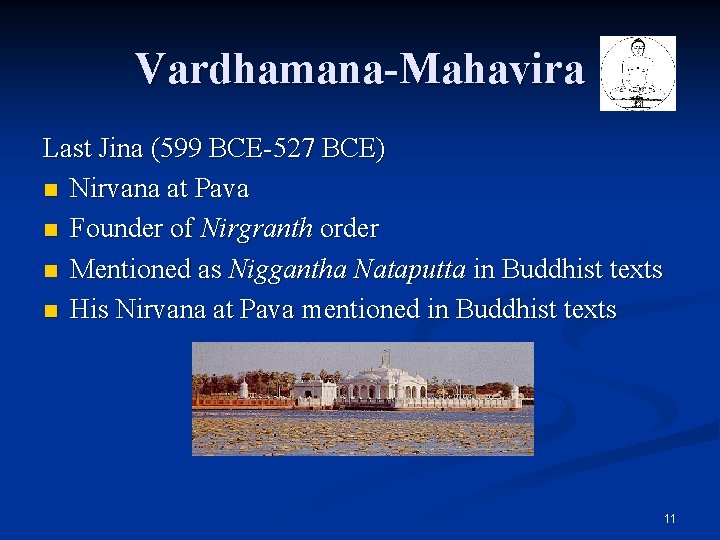
Vardhamana-Mahavira Last Jina (599 BCE-527 BCE) n Nirvana at Pava n Founder of Nirgranth order n Mentioned as Niggantha Nataputta in Buddhist texts n His Nirvana at Pava mentioned in Buddhist texts 11
The Parshva Tradition Parshva: 23 rd Jina (10 th cent BCE) n Keshi of Parshva tradition met Gautam, disciple of Mahavira and discussed differences in doctarines n Other accounts of Parshvatha monks in Lord Mahvira’s time n Historicity accepted 12
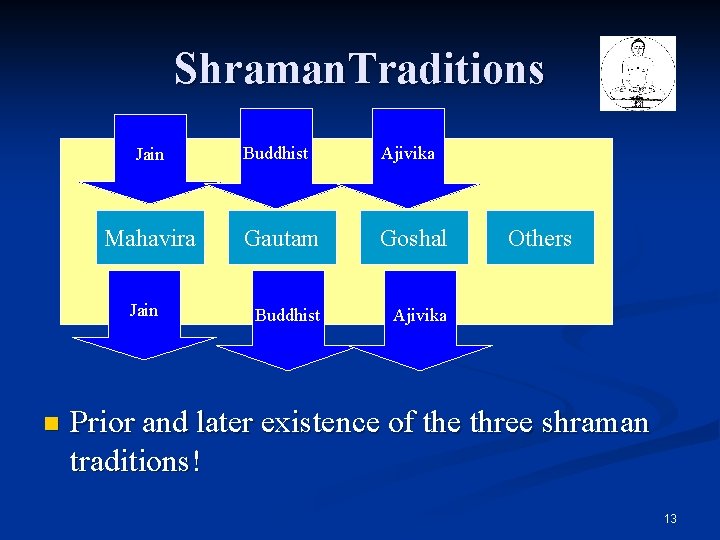
Shraman. Traditions Jain Mahavira Jain n Buddhist Ajivika Gautam Goshal Buddhist Ajivika Others Prior and later existence of the three shraman traditions! 13
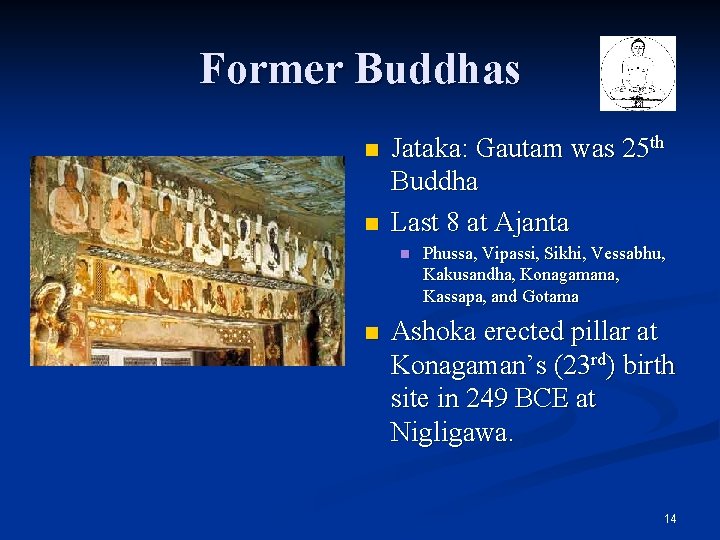
Former Buddhas n n Jataka: Gautam was 25 th Buddha Last 8 at Ajanta n n Phussa, Vipassi, Sikhi, Vessabhu, Kakusandha, Konagamana, Kassapa, and Gotama Ashoka erected pillar at Konagaman’s (23 rd) birth site in 249 BCE at Nigligawa. 14
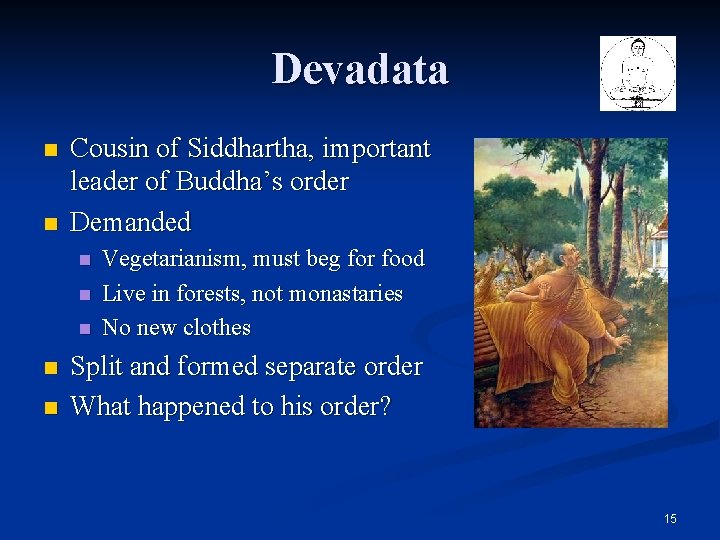
Devadata n n Cousin of Siddhartha, important leader of Buddha’s order Demanded n n n Vegetarianism, must beg for food Live in forests, not monastaries No new clothes Split and formed separate order What happened to his order? 15
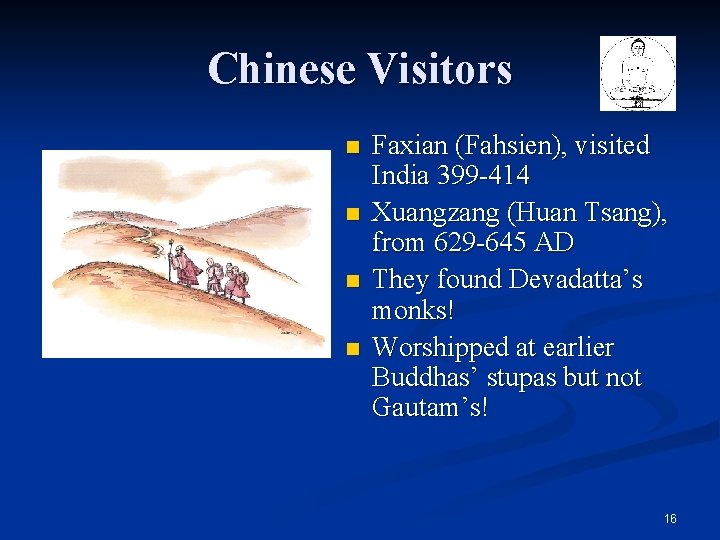
Chinese Visitors n n Faxian (Fahsien), visited India 399 -414 Xuangzang (Huan Tsang), from 629 -645 AD They found Devadatta’s monks! Worshipped at earlier Buddhas’ stupas but not Gautam’s! 16
Ajivikas: Makkhali Goshal Mentioned in Bhagavati Sutra, Avashyaka Sutra Churni, and Buddhist Samannaphala Sutta etc. n Follower of Mahavira for 6 years n Joined Ajivikas and became their leader n Ajivika order existed before him n Encounter with Gautam Buddha n Names of his predecessors available! n 17
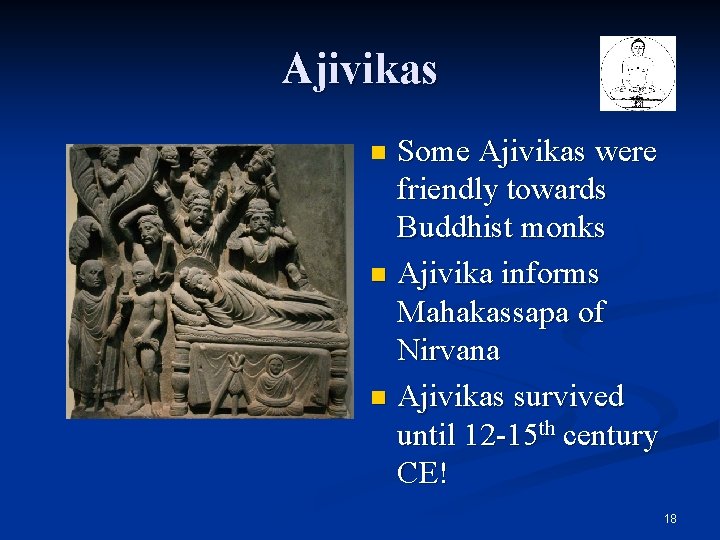
Ajivikas Some Ajivikas were friendly towards Buddhist monks n Ajivika informs Mahakassapa of Nirvana n Ajivikas survived until 12 -15 th century CE! n 18
Vedas/Upanishads/Puranas Vedic Sanskrit n Many passages directly or indirectly mention about Tirthankaras n Can be translated differently n All Brahmin Puranas mention Nabhi, Rishabha, Bharata. n Bhagavata Purana in most detail. n 19
Vedas n Ach. Hemachandra: Jinas mentioned in Vedas n n Dr. Radhakrishnan: n n Mentions misinterpreted or deleted Yajurveda: Rishabha, Ajit, Arishtanemi Rigveda: Vrashabha, Pashupati, Keshi Rishabha = Pashupati in vedic texts n Keshi: chief of Vatarashana munis =Rishabha n n TN Ramachandran: Shishnadeva =Rishabh 20
Srimat Bhagavat Canto 5 Chap 3: Rishabhadeva's Appearance in the Womb of Merudevî, the Wife of King Nâbhi Chap 4: The Characteristics of Rishabhadeva Thus. . most exalted in as well his bodily features as in having all the qualities as described by the poets, did the father thus give Him because of His strength, beauty, fame, . . , the name Rishabha, the best one. Of his sones was indeed the eldest, Bharata, a great practitioner of yoga; he had the best qualities and it was he of whom this land was called Bhârata-varsha by the people. 21
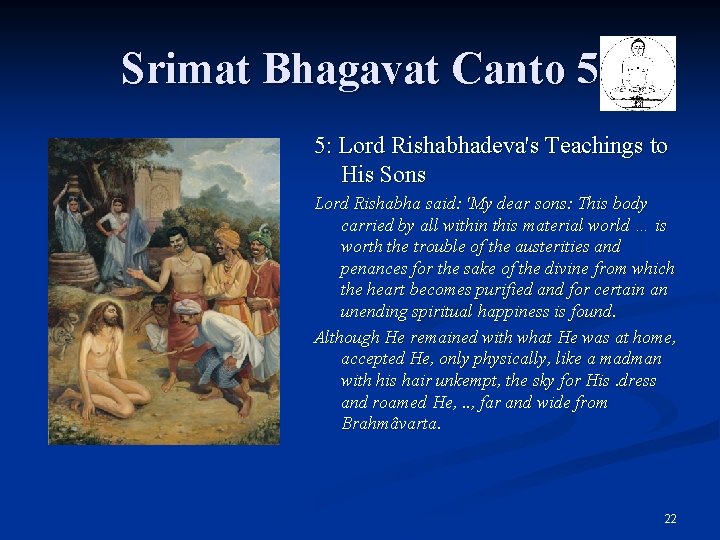
Srimat Bhagavat Canto 5 5: Lord Rishabhadeva's Teachings to His Sons Lord Rishabha said: 'My dear sons: This body carried by all within this material world … is worth the trouble of the austerities and penances for the sake of the divine from which the heart becomes purified and for certain an unending spiritual happiness is found. Although He remained with what He was at home, accepted He, only physically, like a madman with his hair unkempt, the sky for His. dress and roamed He, . . , far and wide from Brahmâvarta. 22
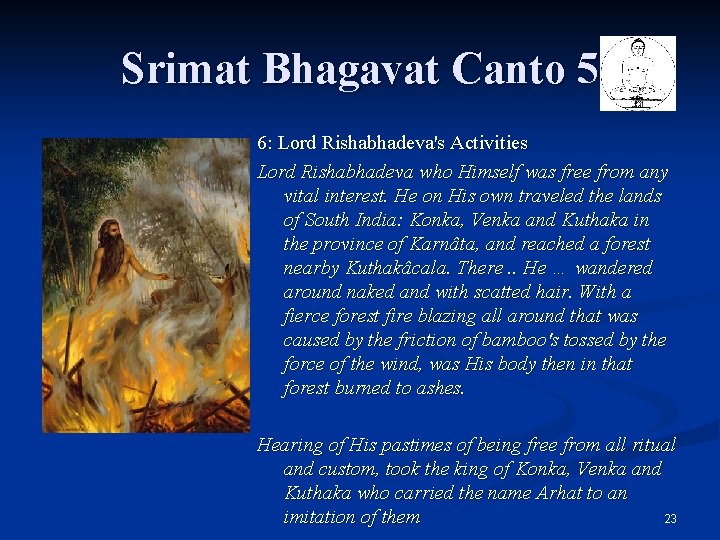
Srimat Bhagavat Canto 5 6: Lord Rishabhadeva's Activities Lord Rishabhadeva who Himself was free from any vital interest. He on His own traveled the lands of South India: Konka, Venka and Kuthaka in the province of Karnâta, and reached a forest nearby Kuthakâcala. There. . He … wandered around naked and with scatted hair. With a fierce forest fire blazing all around that was caused by the friction of bamboo's tossed by the force of the wind, was His body then in that forest burned to ashes. Hearing of His pastimes of being free from all ritual and custom, took the king of Konka, Venka and Kuthaka who carried the name Arhat to an 23 imitation of them
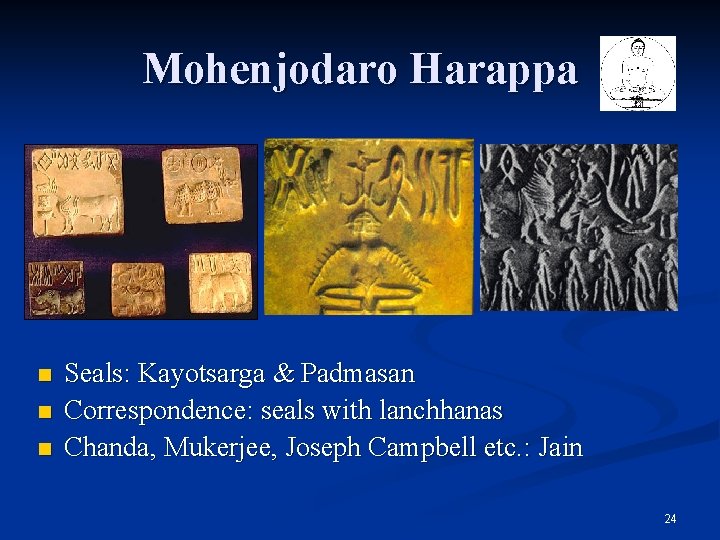
Mohenjodaro Harappa n n n Seals: Kayotsarga & Padmasan Correspondence: seals with lanchhanas Chanda, Mukerjee, Joseph Campbell etc. : Jain 24
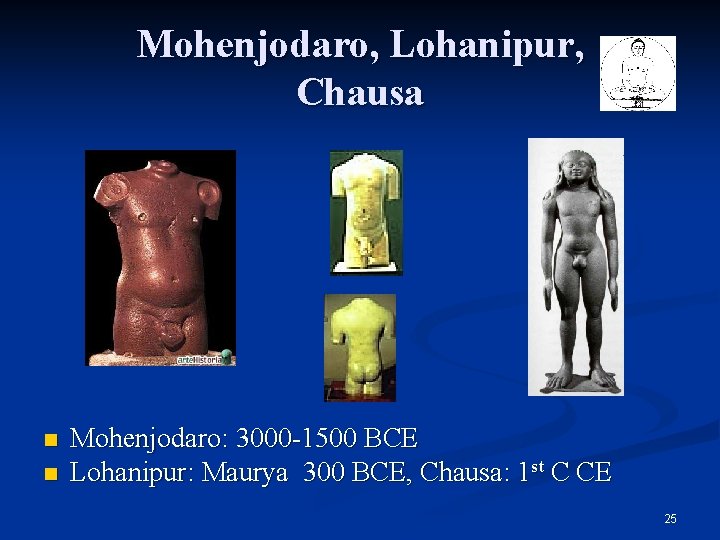
Mohenjodaro, Lohanipur, Chausa n n Mohenjodaro: 3000 -1500 BCE Lohanipur: Maurya 300 BCE, Chausa: 1 st C CE 25
Conclusions Tradition and Historicity: connected n Lord Mahavira was not the founder of Jainism. n Several branches of Sraman tradition existed before his time. n Existence of former Tirthankaras consistent with evidence n Future discoveries are possible! n 26
Questions Some of the questions asked by the audience: n Was one of the tirthankaras a cousin of Shri Krishna? n n Yes, Lord Neminath, the 22 nd tirthankara, was a cousin of Shri Krishna; both were born in the Yadu clan. Wasn’t one of the tirthankaras a woman? n According to Shvetamabara tradition, Lord Mallinath (19 th) was female. In Digambara tradition, Lord Mallinath is male. 27
Questions n Historically, when did Lord Rishabha live? n n In historical analysis, cross-checking is needed for establishing a date satisfactorily. Any cross-checking is not possible for events before Lord Mahavira. The Mahabharata war is perhaps the earliest event that we can attempt to date, about 1000 -1200 BCE; that corresponds to Lord Nemi, the 22 nd Tirthankara. What does the term “Shraman” mean? n A shraman is a wandering monk, the term is applicable to Jain and Buddhist monks. The shraman tradition includes Jain, Buddhist and other associated traditions, as opposed to the Vedic/Brahmanical tradition. 28
Questions n There is a view that Jainism represents the Dravidian culture as opposed to the Vedas which represent the Aryan culture. n n Indian culture is a synthesis of both Aryan and Dravidian cultures. Lord Rishabh and several of the other Tirthankaras were born in the well-known aryan Ikshvaku clan, and some of the acharyas are called Arya. Were the Tirthankaras married or unmarried? n Some of the Tirthankaras were not married, others were married. Lord Rishabh had two famous sons, Bharat Chakri and Lord Bahubali. 29
Discussion 30