
Historical Thinking Ms Cole Adapted from http historicalthinking
- Slides: 7
Historical Thinking Ms. Cole Adapted from: http: //historicalthinking. ca/sites/default/files/docs/G uideposts. pdf
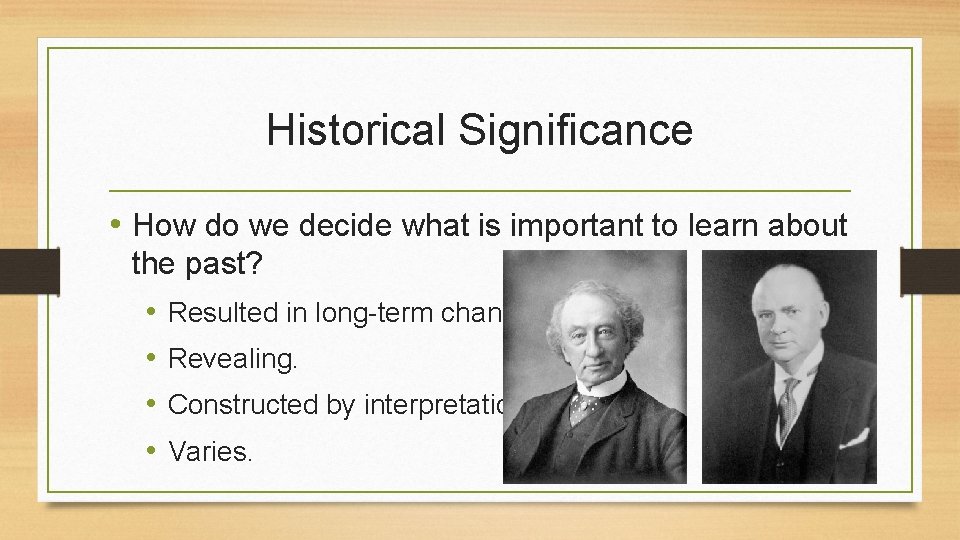
Historical Significance • How do we decide what is important to learn about the past? • Resulted in long-term change. • Revealing. • Constructed by interpretation. • Varies.
Evidence • How do we know what we know about the past? • Interpretation and inferences of primary sources. • Asking good questions: who wrote it? In what context? • Multiple sources for the same event.
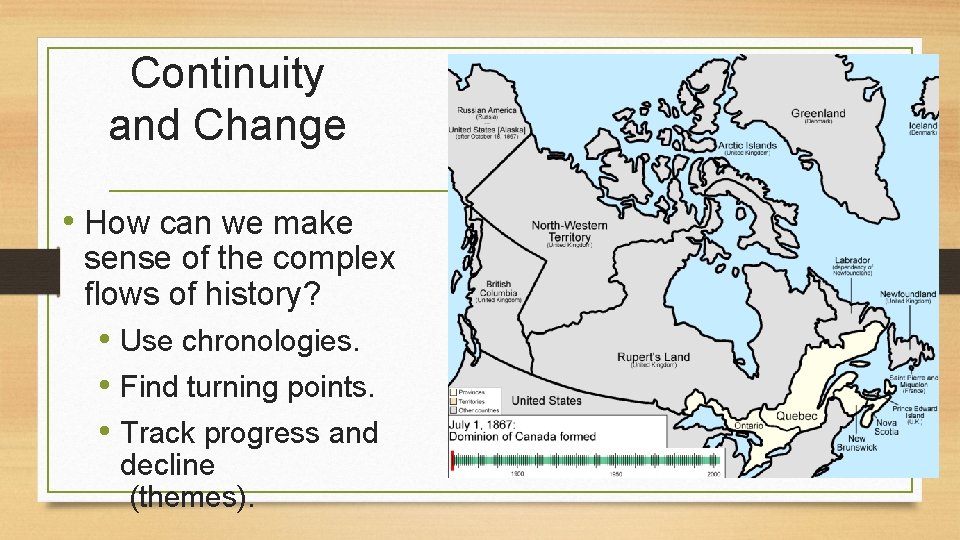
Continuity and Change • How can we make sense of the complex flows of history? • Use chronologies. • Find turning points. • Track progress and decline (themes).
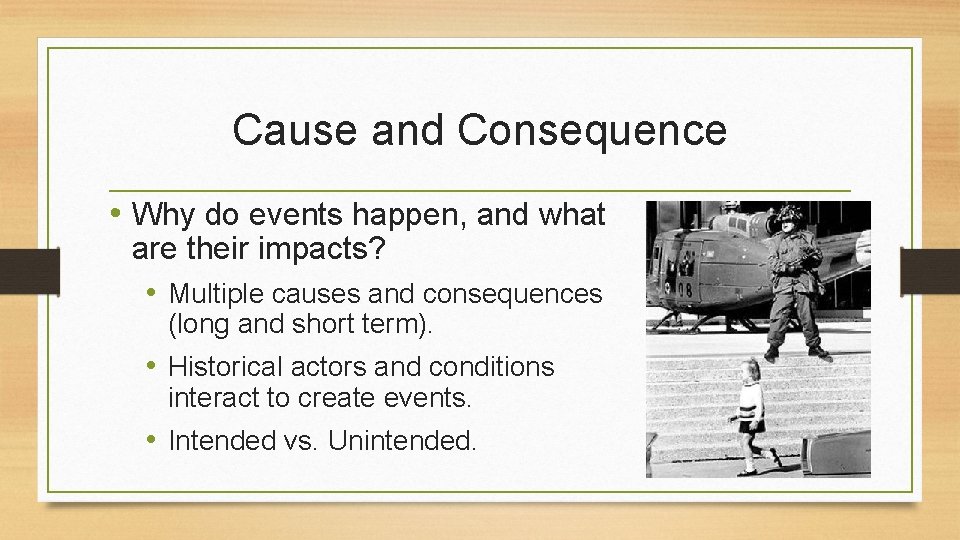
Cause and Consequence • Why do events happen, and what are their impacts? • Multiple causes and consequences (long and short term). • Historical actors and conditions interact to create events. • Intended vs. Unintended.
Historical Perspectives • How can we better understand the people of the past? • Consider context and worldviews different from your own. • Infer based on what you know about the period. Educated Guessing. • Diversity of perspectives on same event (consider a lunchroom brawl).
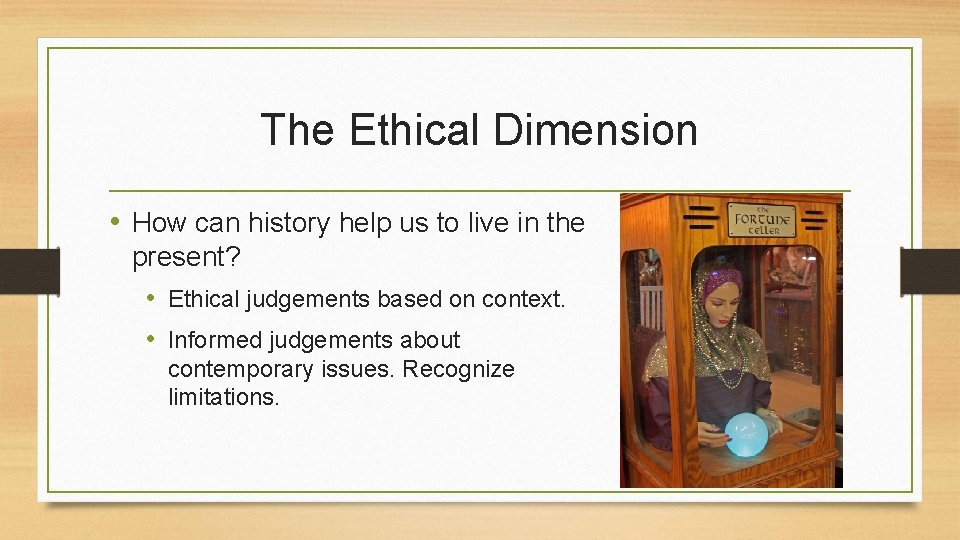
The Ethical Dimension • How can history help us to live in the present? • Ethical judgements based on context. • Informed judgements about contemporary issues. Recognize limitations.