
Historical Thinking Activity Cause and Consequence Follow the
- Slides: 24
Historical Thinking Activity: Cause and Consequence ▪ Follow the steps to fill out the your Cause and Consequence sheet ▪ Step 1 – Easy! In the chart under the first arrow write down where you are in the PRESENT ▪ Step 2 – In the chart under the second arrow write down the RESULT, meaning, what is likely to happen next. ▪ Step 3 – In the chart under the third arrow write down probable CONSEQUENCES of you being here and then moving to the next step. ▪ Step 4 – This is the fun part – What are some possible alternatives that MIGHT CHANGE THAT CONSEQUENCE? Write down reasonable possibilities only in the final box.
Historical Thinking Concept: Cause and Consequence ▪ Change is driven by multiple causes and can result in multiple consequences. These causes and consequences can be short term or long term ▪ The causes that lead to a particular historical event can vary in influence, with some being more important than others ▪ Events result from different types of factors: 1) Historical Actors – Individuals or groups who take action that cause events and 2) The conditions (social, political, economic, cultural) within which the actors operate ▪ Historical actors cannot always predict the effect of conditions, opposing actions, and unforeseen reactions. These are unintended consequences. ▪ The events of history were not inevitable, any more than those of the future are. Alter a single action or condition and any given event might have turned out differently.
Mind’s On – Quick Discuss ▪ Chat with your partner/group for 1 minute about what could start a potential war (past, present, future) ▪ Discuss briefly as a class
The Causes of WW 1 Big Question: #3 HTC: Cause and Consequence, Using Sources
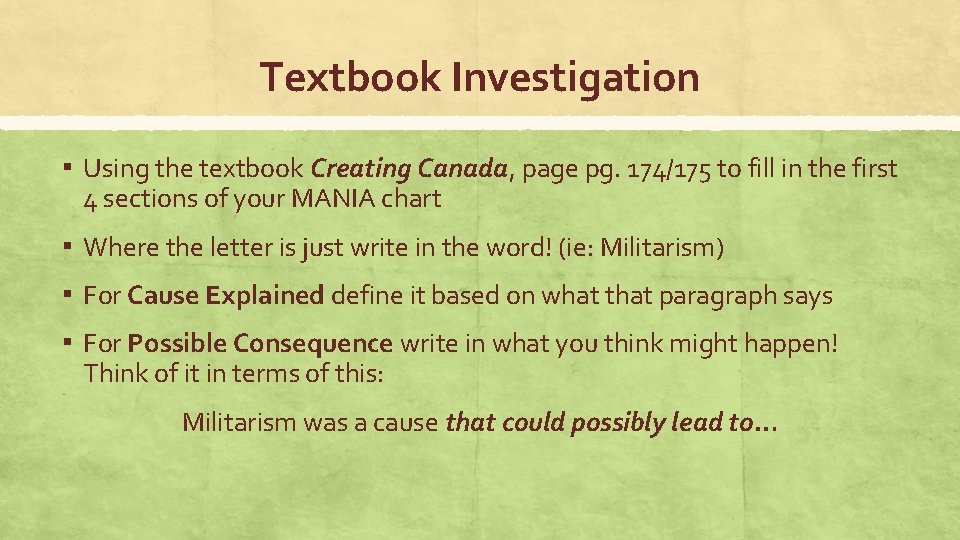
Textbook Investigation ▪ Using the textbook Creating Canada, page pg. 174/175 to fill in the first 4 sections of your MANIA chart ▪ Where the letter is just write in the word! (ie: Militarism) ▪ For Cause Explained define it based on what that paragraph says ▪ For Possible Consequence write in what you think might happen! Think of it in terms of this: Militarism was a cause that could possibly lead to…
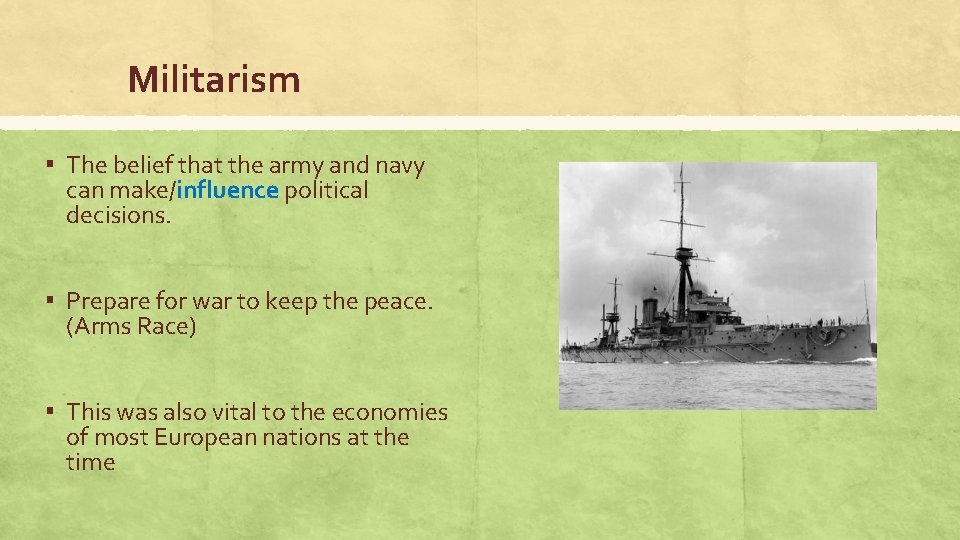
Militarism ▪ The belief that the army and navy can make/influence political decisions. ▪ Prepare for war to keep the peace. (Arms Race) ▪ This was also vital to the economies of most European nations at the time
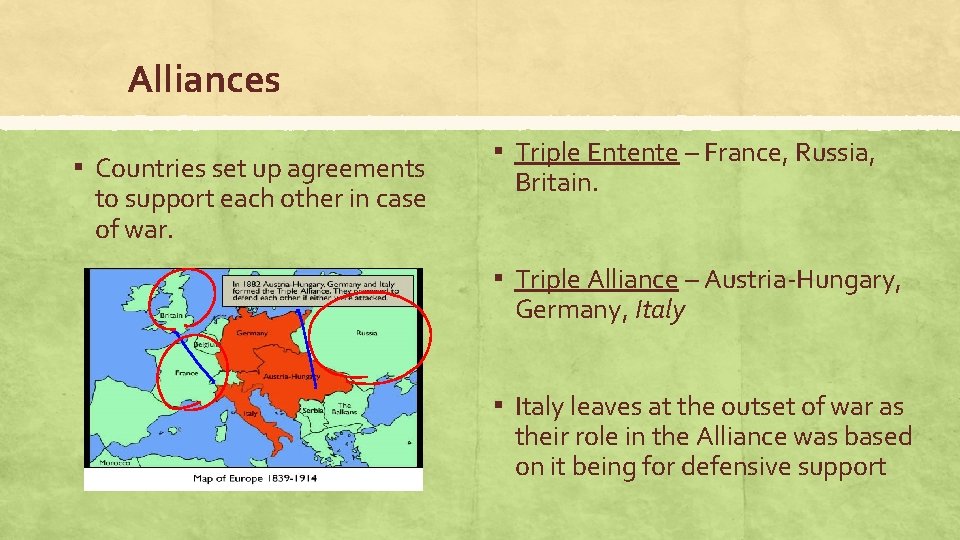
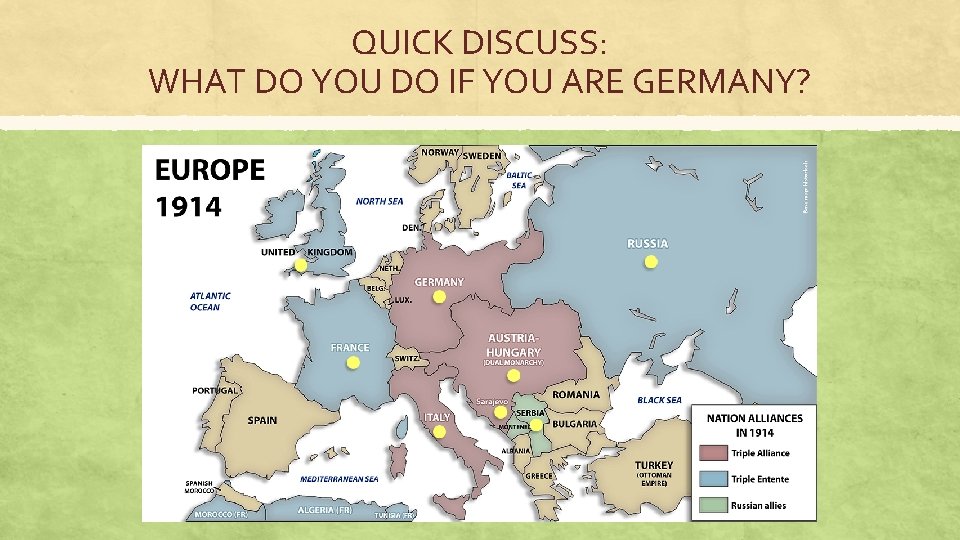
Alliances ▪ Countries set up agreements to support each other in case of war. ▪ Triple Entente – France, Russia, Britain. ▪ Triple Alliance – Austria-Hungary, Germany, Italy ▪ Italy leaves at the outset of war as their role in the Alliance was based on it being for defensive support
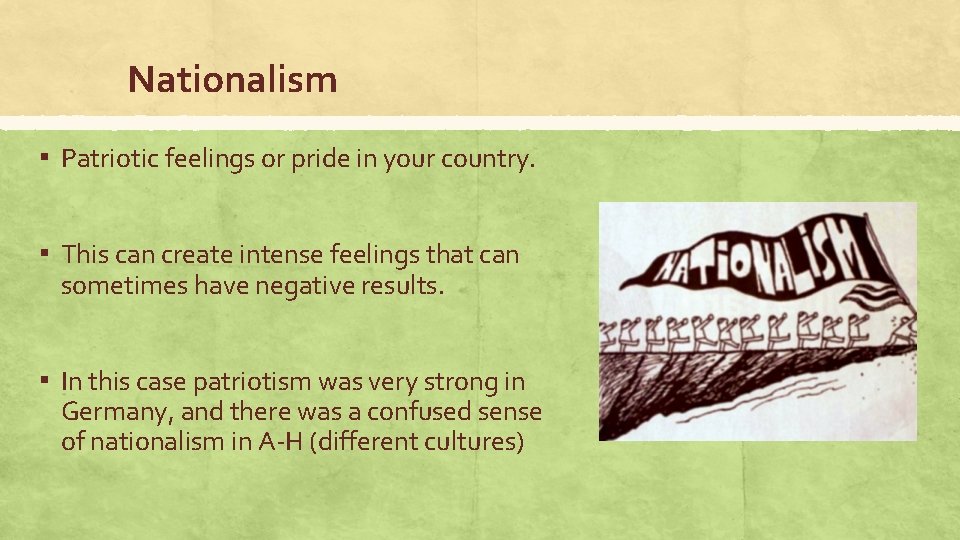
Nationalism ▪ Patriotic feelings or pride in your country. ▪ This can create intense feelings that can sometimes have negative results. ▪ In this case patriotism was very strong in Germany, and there was a confused sense of nationalism in A-H (different cultures)
Imperialism ▪ Countries have many colonies in other parts of the world. ▪ This reflects military and political control. (Also gives them resources, etc. ) ▪ The major powers of Europe were based on empires – A different form of government that we know
Minds On – Who’s MANI? ▪ Quick review (WITHOUT NOTES!) of the first 4 causes of war
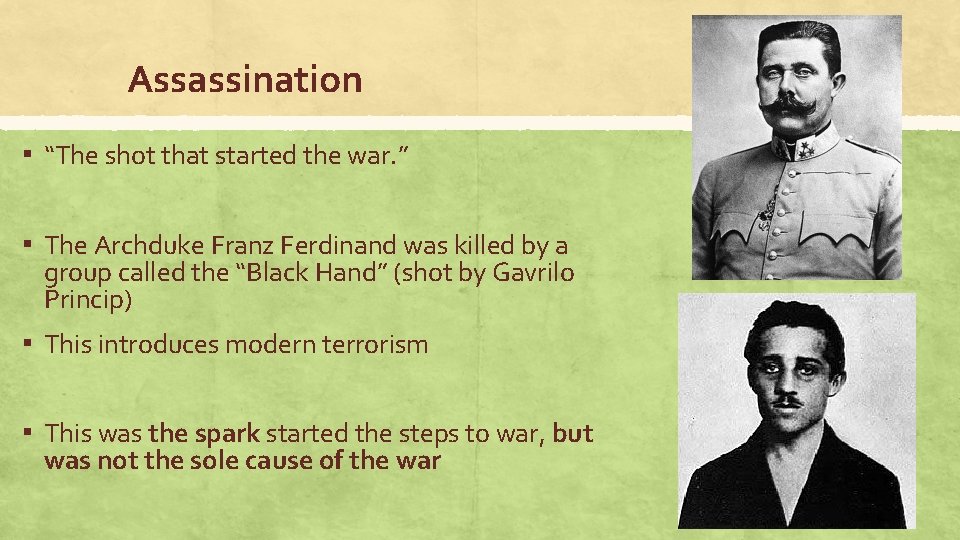
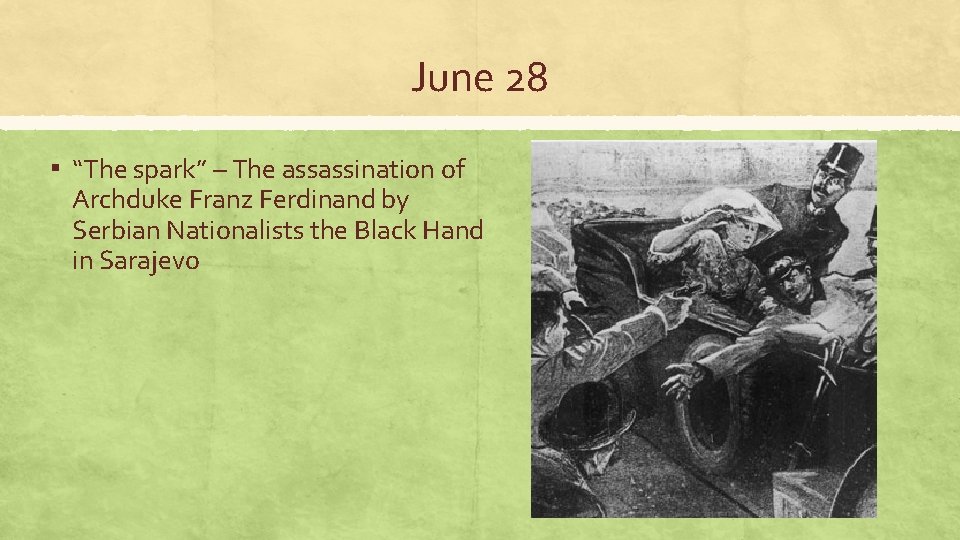
Assassination ▪ “The shot that started the war. ” ▪ The Archduke Franz Ferdinand was killed by a group called the “Black Hand” (shot by Gavrilo Princip) ▪ This introduces modern terrorism ▪ This was the spark started the steps to war, but was not the sole cause of the war
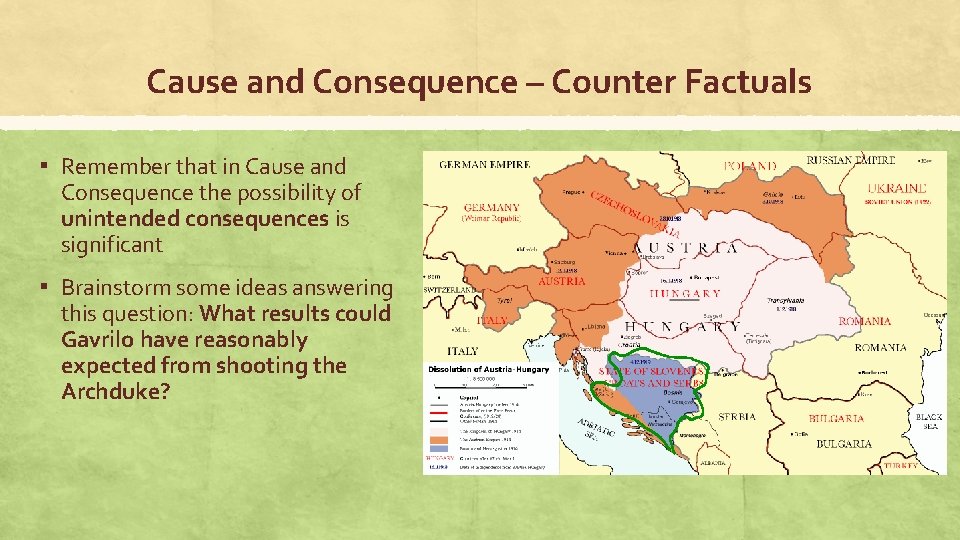
Cause and Consequence – Counter Factuals ▪ Remember that in Cause and Consequence the possibility of unintended consequences is significant ▪ Brainstorm some ideas answering this question: What results could Gavrilo have reasonably expected from shooting the Archduke?
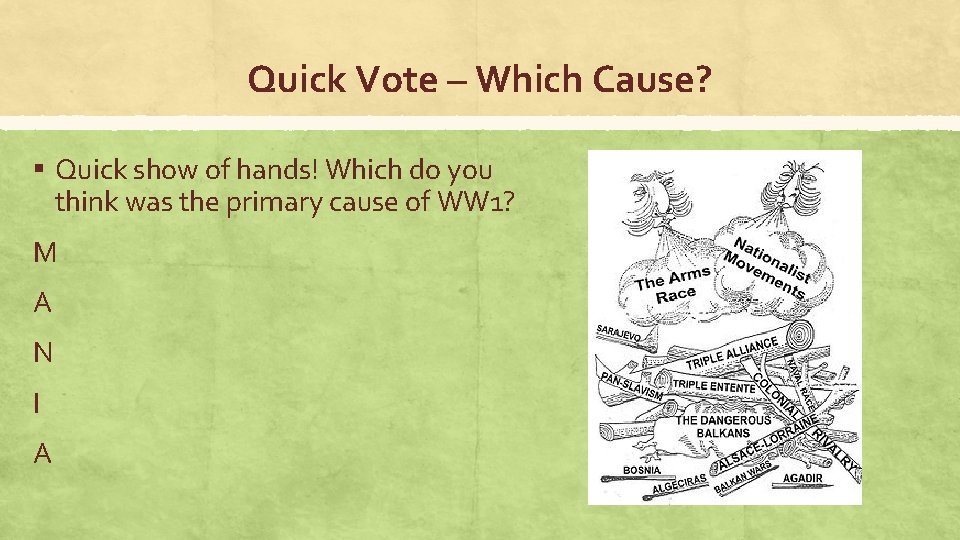
Quick Vote – Which Cause? ▪ Quick show of hands! Which do you think was the primary cause of WW 1? M A N I A
The Steps to WW 1: The Domino Effect Use the ‘Connections’ on pg. 175 to fill in the chart you have been given
June 28 ▪ “The spark” – The assassination of Archduke Franz Ferdinand by Serbian Nationalists the Black Hand in Sarajevo
July 23 • Austria sends ultimatum (list of demands) to Serbia • The demands were for Serbia to put down nationalist hatred toward Austria-Hungary and to punish the assassins • Also on the list was to allow Austria-Hungary into Serbia to crush the Black Hand
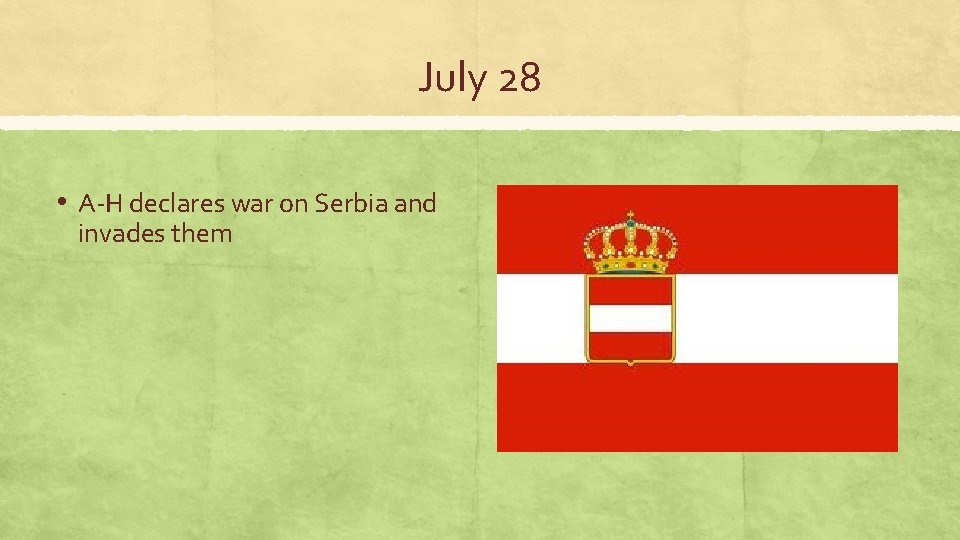
July 28 • A-H declares war on Serbia and invades them
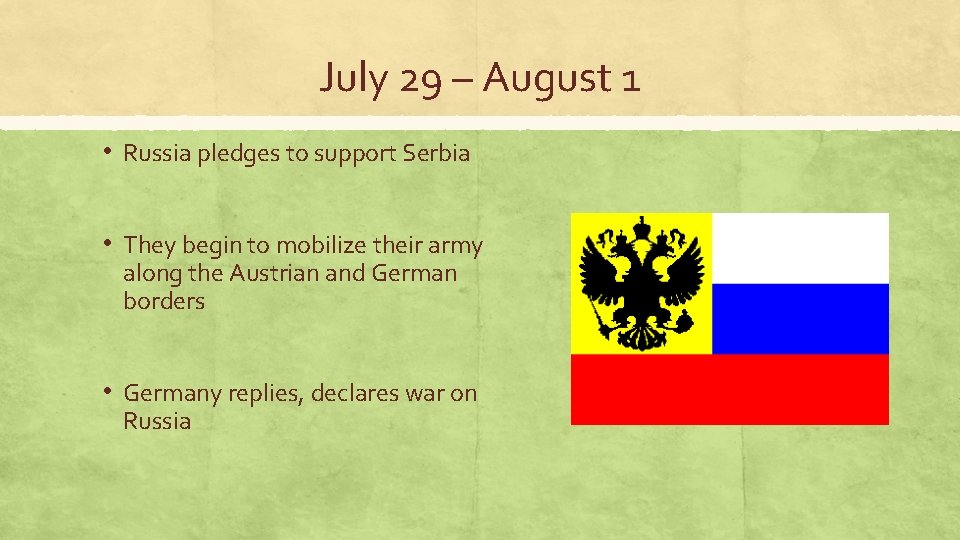
July 29 – August 1 • Russia pledges to support Serbia • They begin to mobilize their army along the Austrian and German borders • Germany replies, declares war on Russia
August 3 ▪ France pledges to support Russia ▪ Mobilizes their army against Germany ▪ Germany declares war on France
QUICK DISCUSS: WHAT DO YOU DO IF YOU ARE GERMANY?
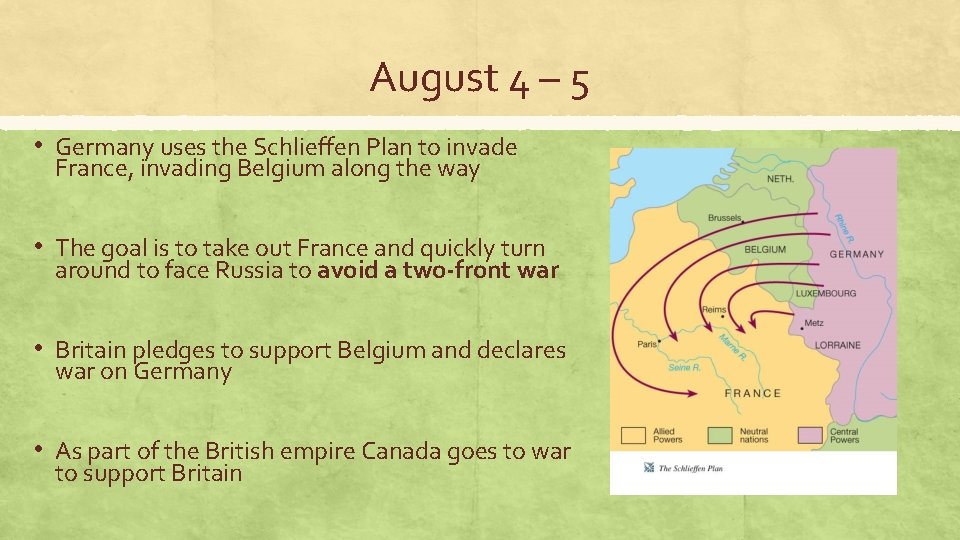
August 4 – 5 • Germany uses the Schlieffen Plan to invade France, invading Belgium along the way • The goal is to take out France and quickly turn around to face Russia to avoid a two-front war • Britain pledges to support Belgium and declares war on Germany • As part of the British empire Canada goes to war to support Britain
Failure of the Schlieffen Plan • The Belgian army resisted • The British mobilized quickly • The Russians mobilized in just 10 days and Germany was forced to withdraw troops to defend the east • The Germans did not complete their full swing to the west and attempted to move on Paris much earlier • They were then met by the French and both sides began to ‘dig in’ • BIG IDEA: The failure of the Schlieffen Plan defined the nature of WWI – Trench Warfare!
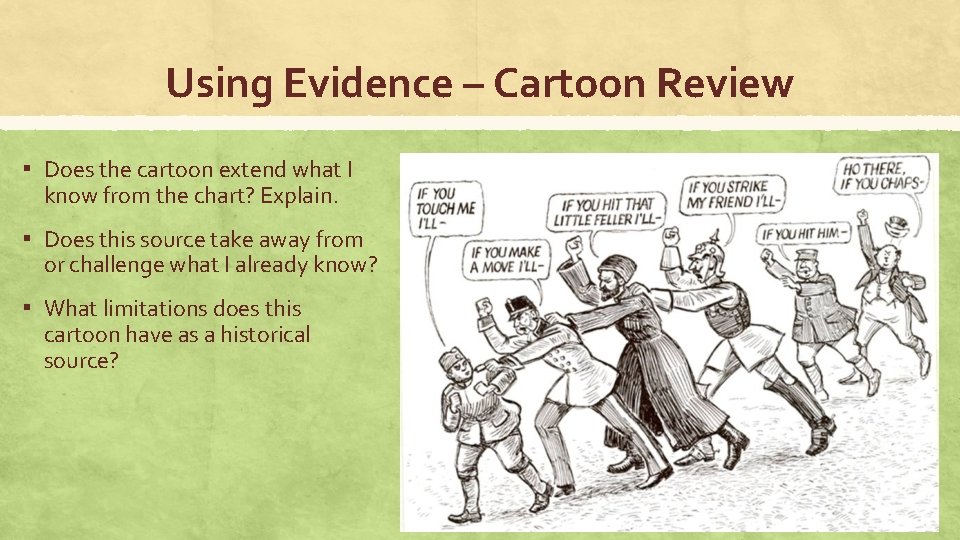
Using Evidence – Cartoon Review ▪ Does the cartoon extend what I know from the chart? Explain. ▪ Does this source take away from or challenge what I already know? ▪ What limitations does this cartoon have as a historical source?
Taking The Evidence Further • As the start of WW 1 was just over 100 years ago there is more information than ever about it • For years historians have been asking one simple question: Who started WW 1? • In this activity you and a small group will given the perspective of a noted historian regarding the start of WW 1 and you will analyze that source according to the following: • 1 st! Who do YOU think is responsible? • Who does this reading say is responsible and why? • How does your thinking change after reading this source? • What might this source not tell us?