
Historical Conceptions of Leadership Outline Overview of Historical
- Slides: 21
Historical Conceptions of Leadership
Outline • Overview of Historical Views Readings – – – – Carlyle Tolstoy Plato Aristotle Machiavelli Lao-Tzu Gandhi Du Bois • Continua exercise • Assignment 2
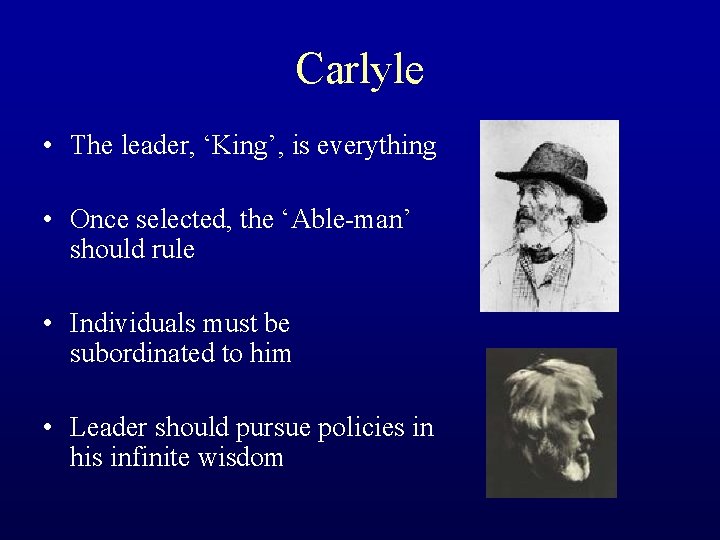
Carlyle • The leader, ‘King’, is everything • Once selected, the ‘Able-man’ should rule • Individuals must be subordinated to him • Leader should pursue policies in his infinite wisdom
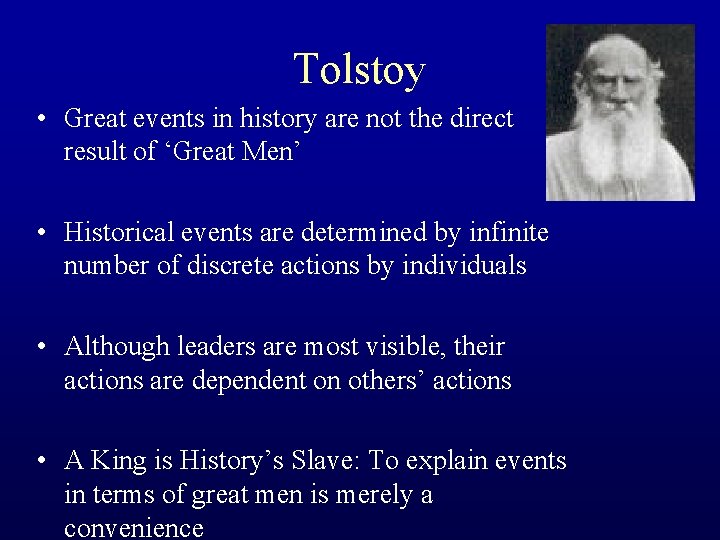
Tolstoy • Great events in history are not the direct result of ‘Great Men’ • Historical events are determined by infinite number of discrete actions by individuals • Although leaders are most visible, their actions are dependent on others’ actions • A King is History’s Slave: To explain events in terms of great men is merely a convenience
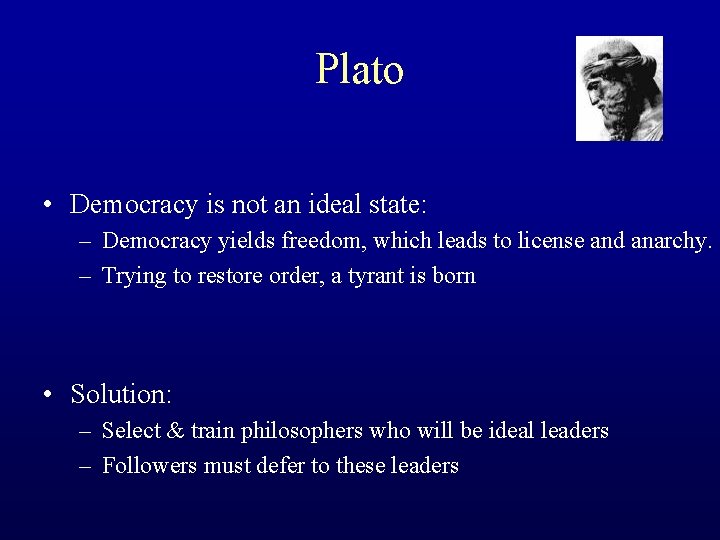
Plato • Democracy is not an ideal state: – Democracy yields freedom, which leads to license and anarchy. – Trying to restore order, a tyrant is born • Solution: – Select & train philosophers who will be ideal leaders – Followers must defer to these leaders
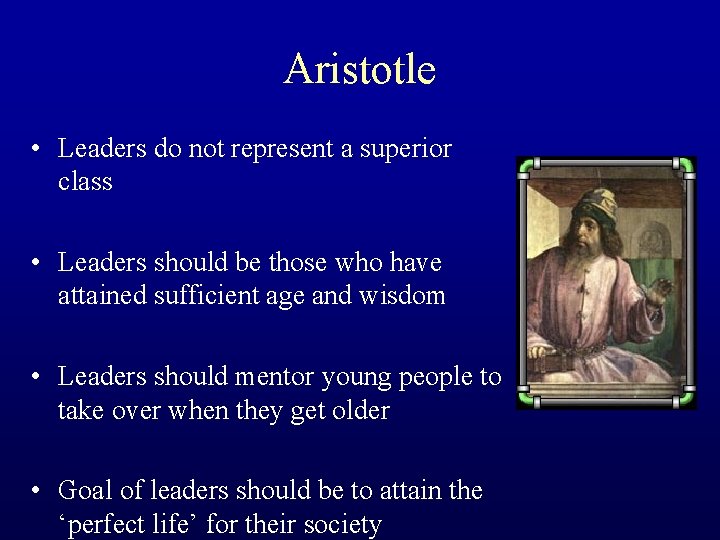
Aristotle • Leaders do not represent a superior class • Leaders should be those who have attained sufficient age and wisdom • Leaders should mentor young people to take over when they get older • Goal of leaders should be to attain the ‘perfect life’ for their society
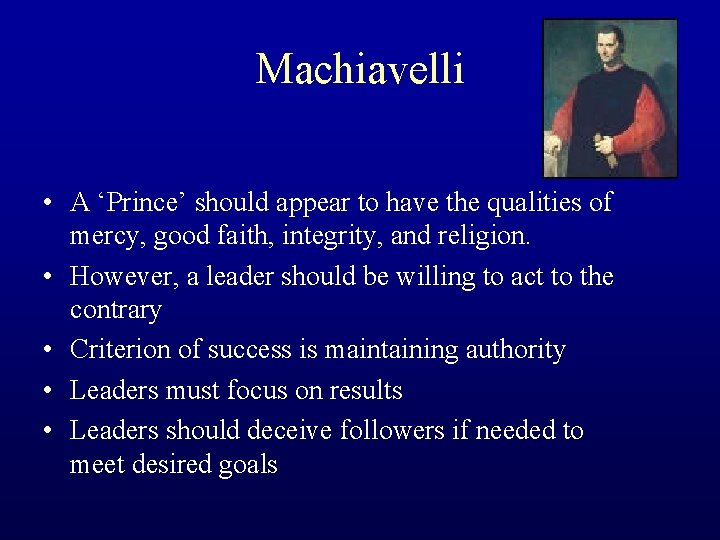
Machiavelli • A ‘Prince’ should appear to have the qualities of mercy, good faith, integrity, and religion. • However, a leader should be willing to act to the contrary • Criterion of success is maintaining authority • Leaders must focus on results • Leaders should deceive followers if needed to meet desired goals
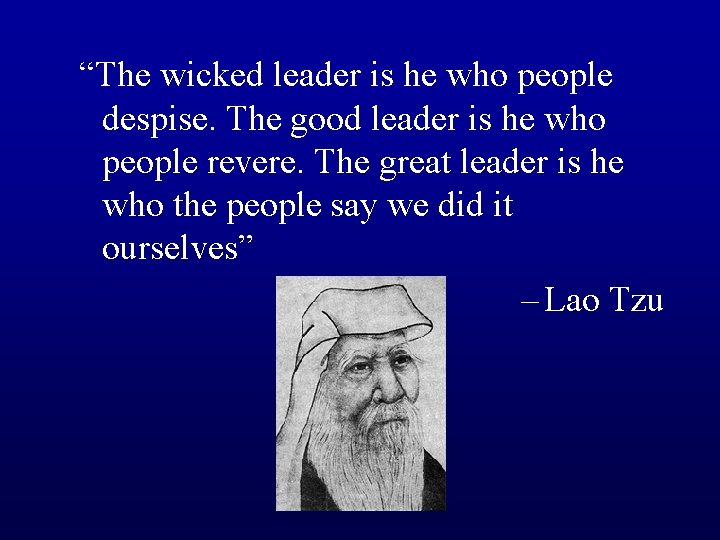
“The wicked leader is he who people despise. The good leader is he who people revere. The great leader is he who the people say we did it ourselves” – Lao Tzu
Lao Tzu • A leader should be selfless and should serve her/his followers • Leader should be supportive, act as mediator, and facilitate the group’s efforts • Midwife metaphor: – Helps the mother but acknowledges mother should get credit for giving birth
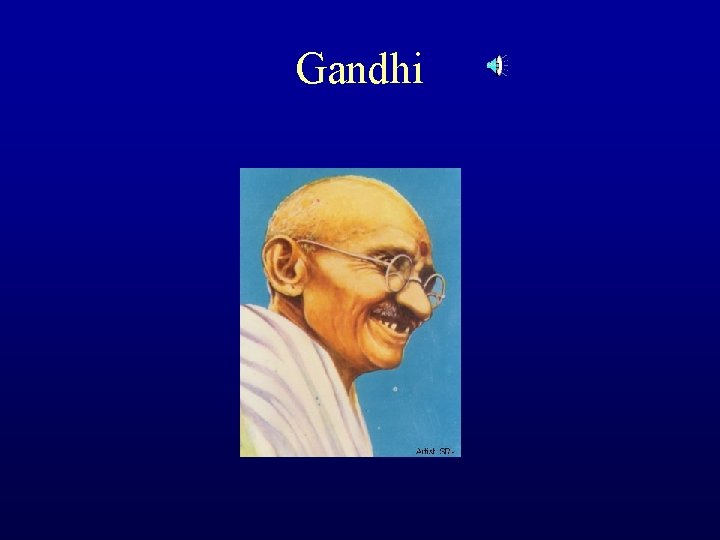
Gandhi
Gandhi • Satyagraha: Truth-force • Proper approach to social change was nonviolent, passive resistance • Traditional leaders unimportant- could only lead if masses permitted it • Satyagrahi: a leader who must mobilize public opinion against the evil • Passive resistance demands considerable courage
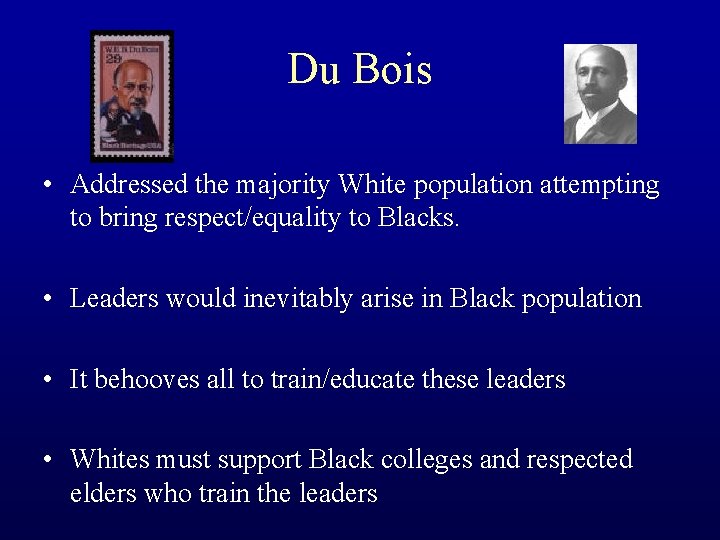
Du Bois • Addressed the majority White population attempting to bring respect/equality to Blacks. • Leaders would inevitably arise in Black population • It behooves all to train/educate these leaders • Whites must support Black colleges and respected elders who train the leaders
Leadership Continua • Your task: • Label both the continuum and the end-points
Carlyle and Tolstoy Continuum label here Carlyle Tolstoy Endpoint here
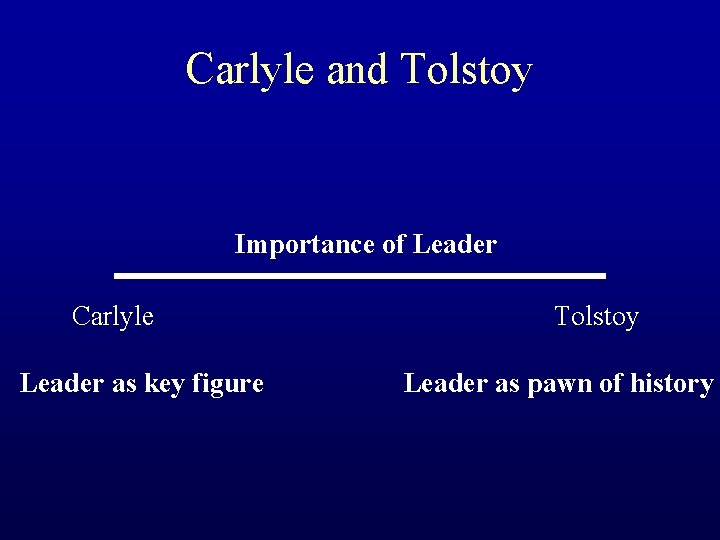
Carlyle and Tolstoy Importance of Leader Carlyle Leader as key figure Tolstoy Leader as pawn of history
Develop continua for: • Plato and Aristotle • Machiavelli and Lao-Tzu • Gandhi and Du Bois
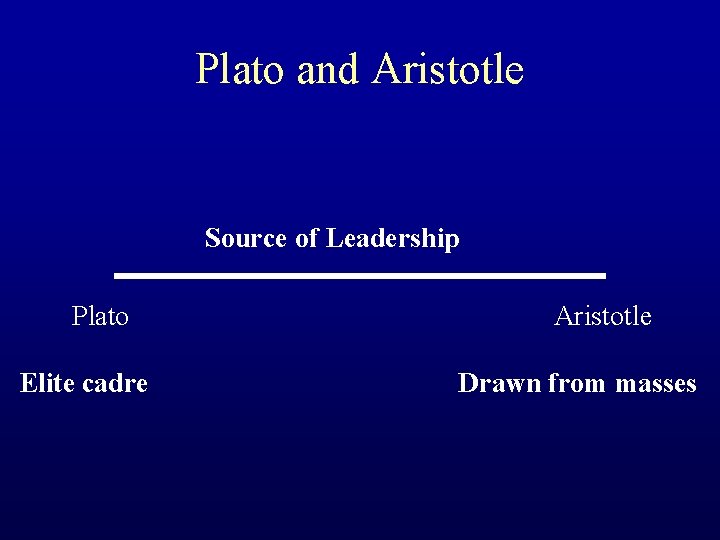
Plato and Aristotle Source of Leadership Plato Elite cadre Aristotle Drawn from masses
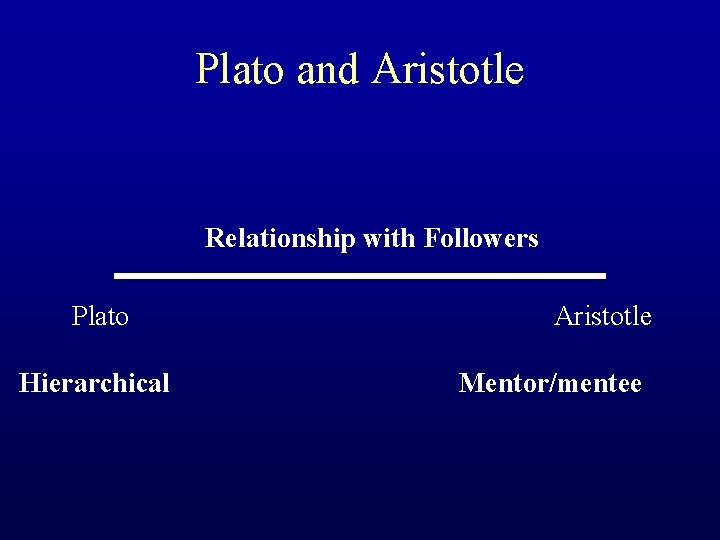
Plato and Aristotle Relationship with Followers Plato Hierarchical Aristotle Mentor/mentee
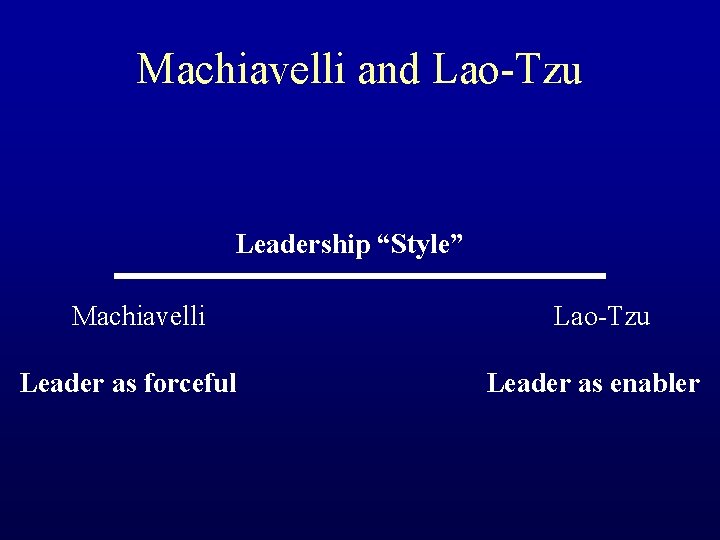
Machiavelli and Lao-Tzu Leadership “Style” Machiavelli Leader as forceful Lao-Tzu Leader as enabler
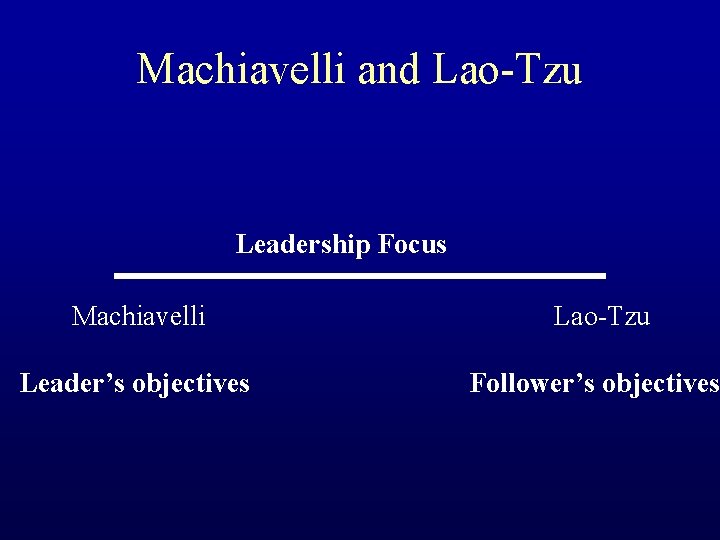
Machiavelli and Lao-Tzu Leadership Focus Machiavelli Lao-Tzu Leader’s objectives Follower’s objectives
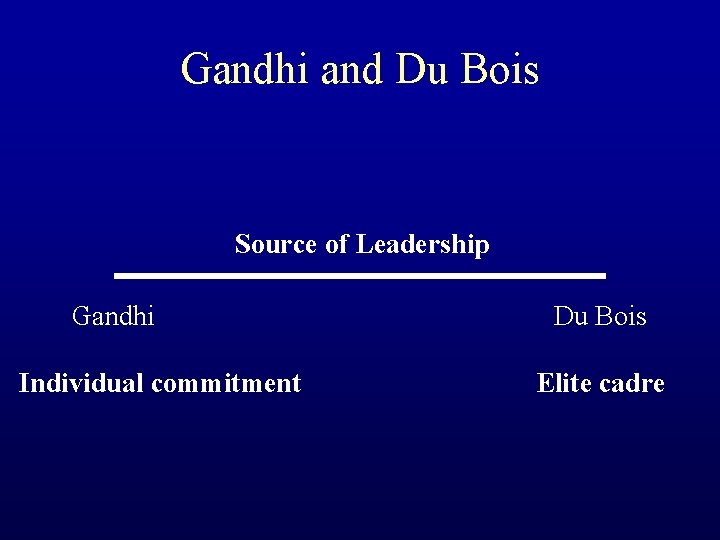
Gandhi and Du Bois Source of Leadership Gandhi Individual commitment Du Bois Elite cadre