
Historical Background of Genetics Prehistoric Times Between 8000

Historical Background of Genetics

Prehistoric Times �Between 8000 & 1000 BC Horses, camels, oxen were domesticated � 5000 BC Cultivation of plants like maize, wheat and rice Assyrian art depicts artificial pollination of the date palm (Babylonia)
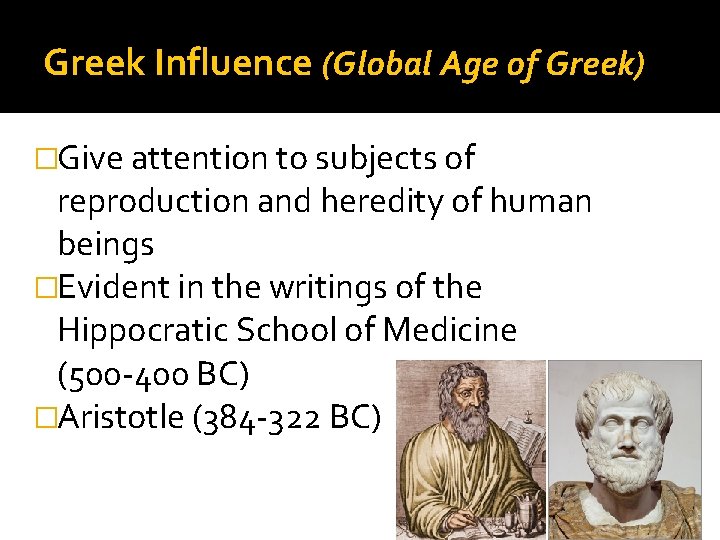
Greek Influence (Global Age of Greek) �Give attention to subjects of reproduction and heredity of human beings �Evident in the writings of the Hippocratic School of Medicine (500 -400 BC) �Aristotle (384 -322 BC)
Hippocrates (Treatise On The Seed) �Argues that male semen is formed in numerous parts of the body. �“Humors” act as the bearers of hereditary traits, diseased or healthy.
Aristotle �Male semen was formed from blood and that its generative power resides in a Vital Heat. �The Vital Heat has the capacity to produce offspring of the same form. �I generated offspring by cooking and shaping the menstrual blood produced by the female, which was the physical substance giving rise to an offspring.
Dawn of Modern Biology
William Harvey (1960) �Theory of epigenesist (organism is delivered from substances present in the egg) �New structures are not present initially but instead are formed de novo in the embryo.
Theory of Performation � 17 th Century �Sex cells contains complete miniature adult called homunculus
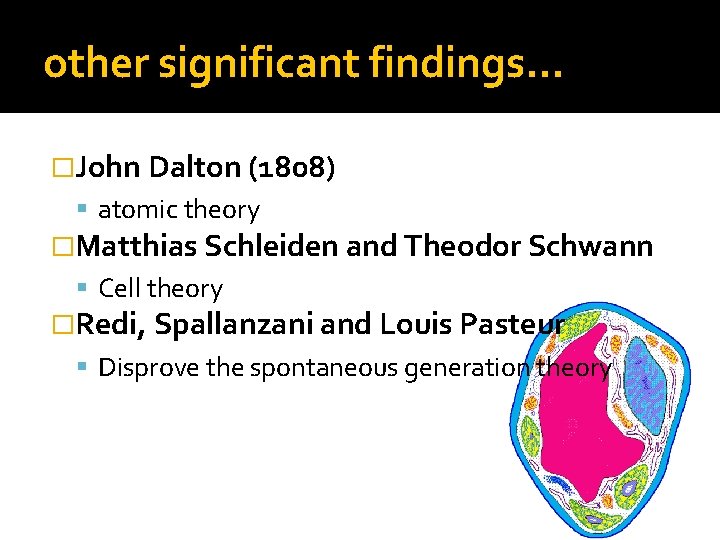
other significant findings… �John Dalton (1808) atomic theory �Matthias Schleiden and Theodor Schwann Cell theory �Redi, Spallanzani and Louis Pasteur Disprove the spontaneous generation theory
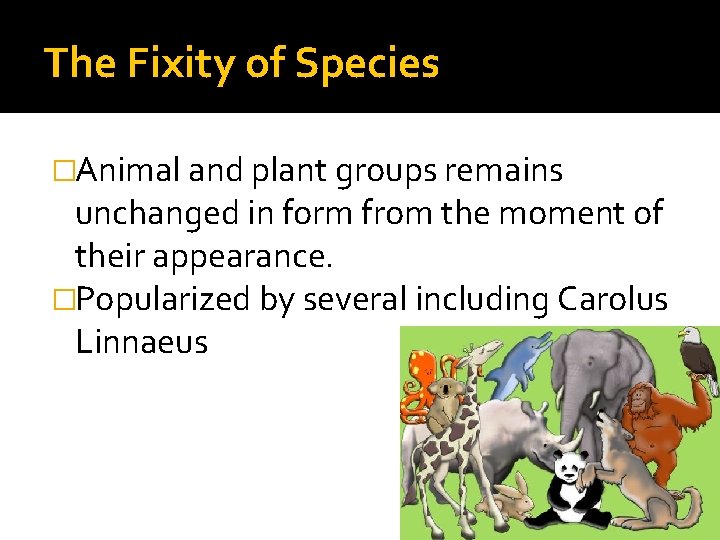
The Fixity of Species �Animal and plant groups remains unchanged in form from the moment of their appearance. �Popularized by several including Carolus Linnaeus
Darwin and Evolution �The origin of species in 1859 �Species arose from modifications �Theory of Natural Selection �Book on “Variations in Animals and Plants under Domestication” (explanation on how heritable variations arises gradually over time) Gemmules -physical units gathered by blood into the semen, subject to alternation
Discoveries in th 19 Century �Matters is composed of atoms. �Cells are the fundamental units of living organisms. �Nuclei somehow serve as the “life force” of the cell. �Chromosomes housed within the nuclei somehow play an important role in heredity.
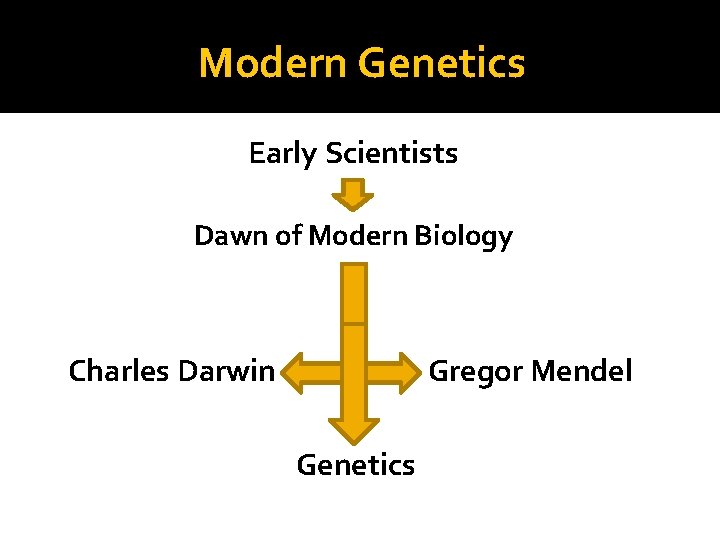
Modern Genetics Early Scientists Dawn of Modern Biology Charles Darwin Gregor Mendel Genetics
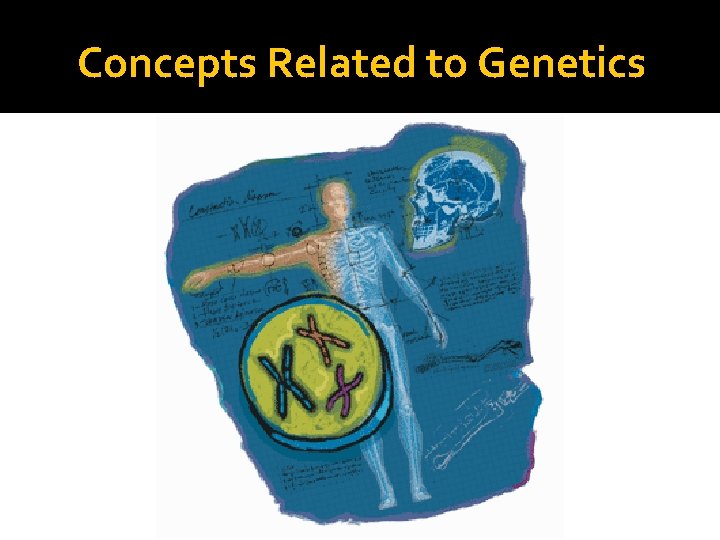
Concepts Related to Genetics




- Slides: 19