
Historical Astronomy Ancient World Early Humans questioned their
- Slides: 54
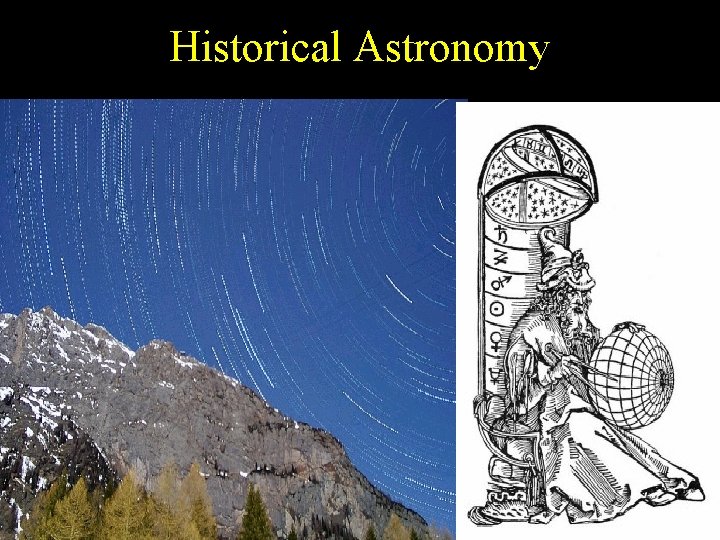
Historical Astronomy
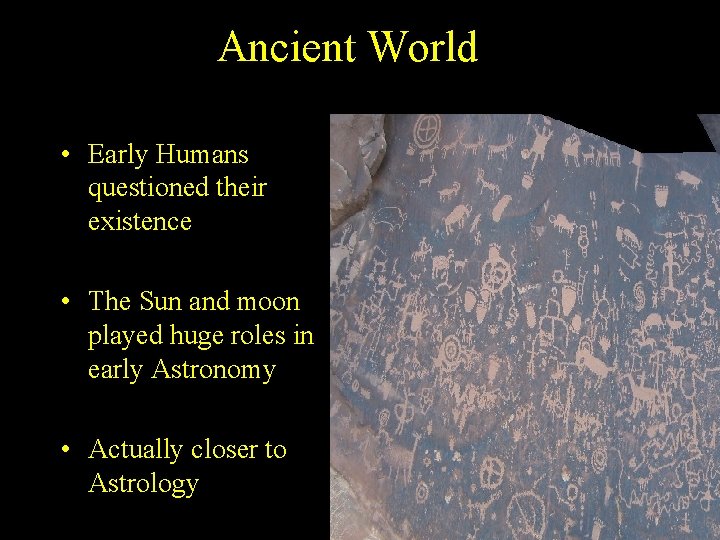
Ancient World • Early Humans questioned their existence • The Sun and moon played huge roles in early Astronomy • Actually closer to Astrology
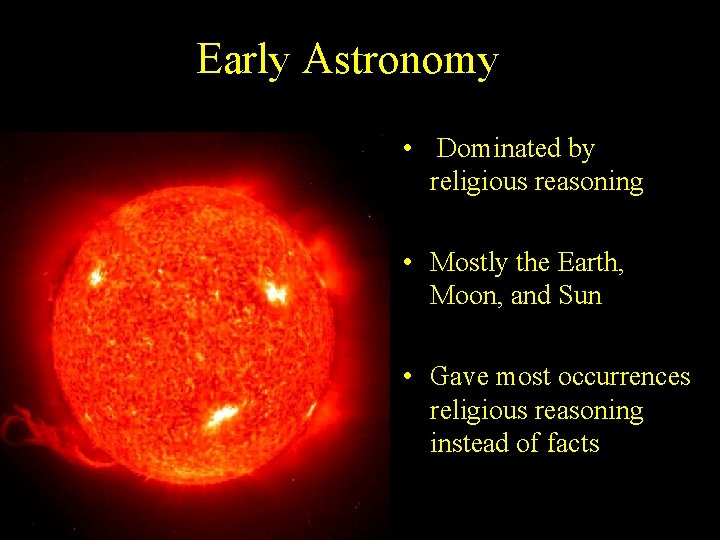
Early Astronomy • Dominated by religious reasoning • Mostly the Earth, Moon, and Sun • Gave most occurrences religious reasoning instead of facts
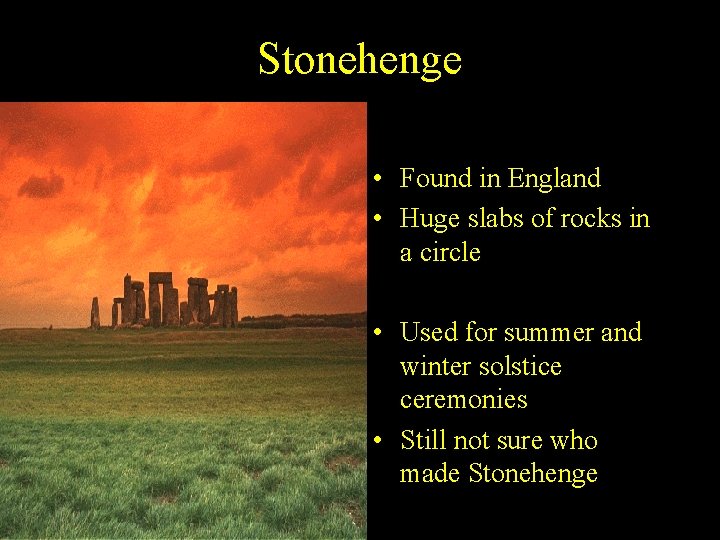
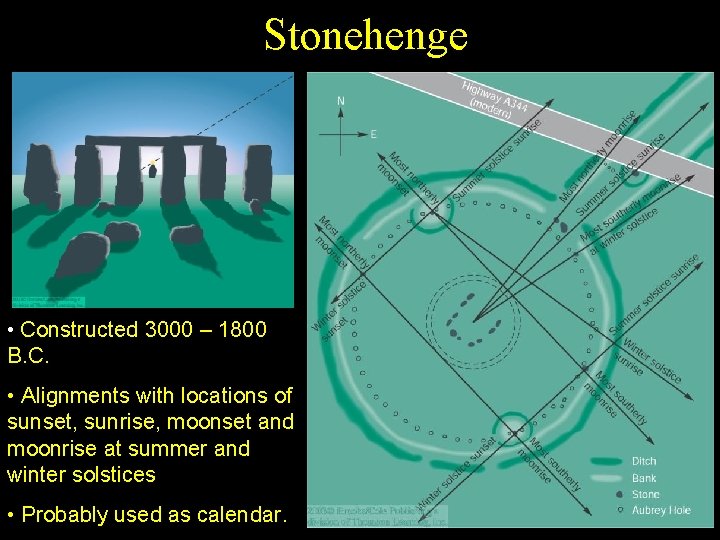
Stonehenge • Found in England • Huge slabs of rocks in a circle • Used for summer and winter solstice ceremonies • Still not sure who made Stonehenge
Stonehenge • Constructed 3000 – 1800 B. C. • Alignments with locations of sunset, sunrise, moonset and moonrise at summer and winter solstices • Probably used as calendar.
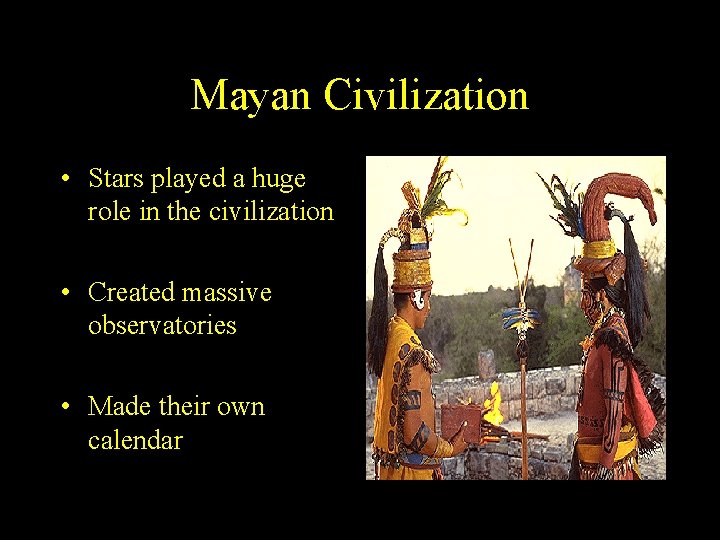
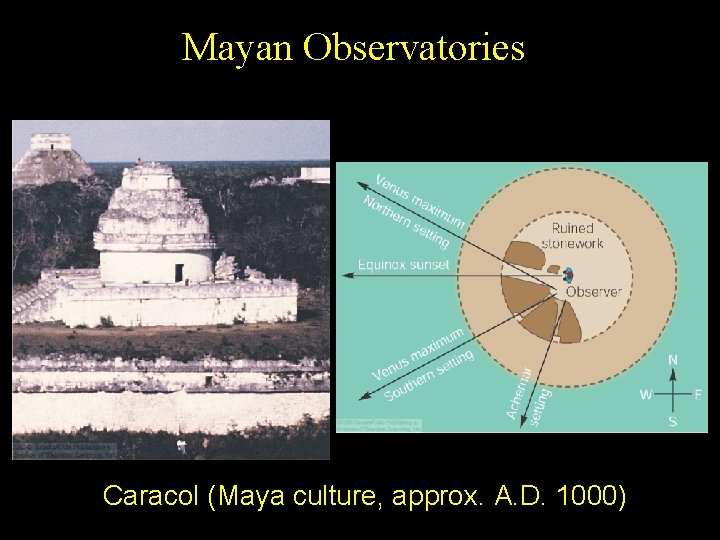
Mayan Civilization • Stars played a huge role in the civilization • Created massive observatories • Made their own calendar
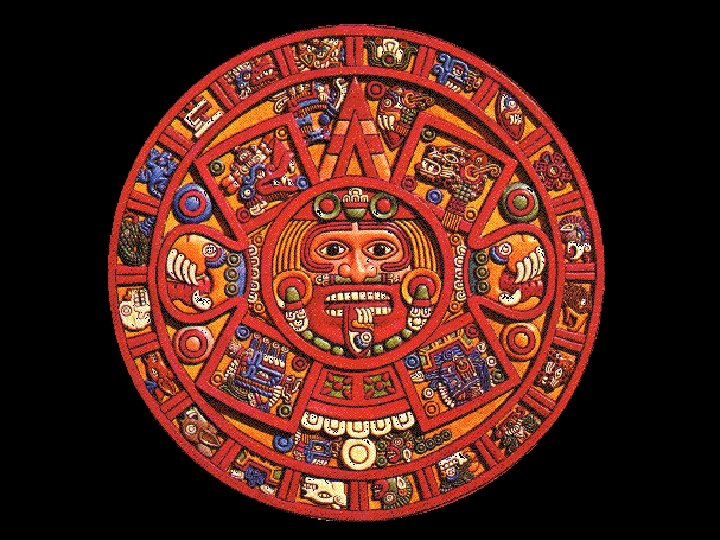
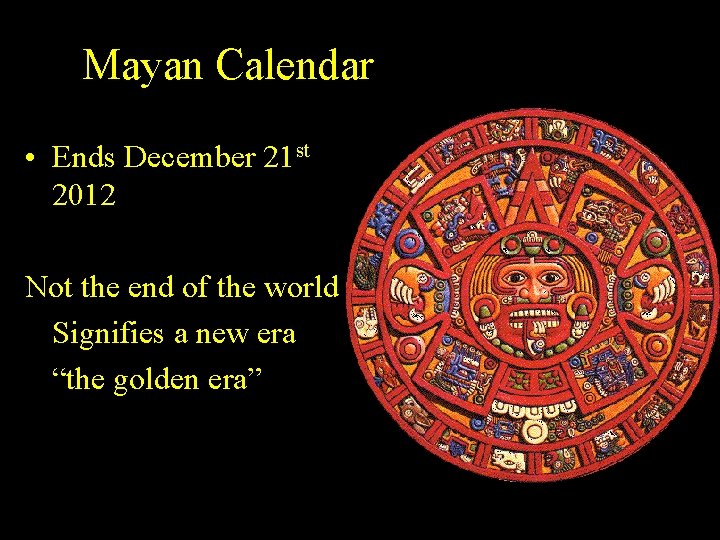
Mayan Calendar • Ends December 21 st 2012 Not the end of the world Signifies a new era “the golden era”
Mayan Observatories Caracol (Maya culture, approx. A. D. 1000)
Classical Astronomy
Catholic Church • Dominated Science during Europe’s early formation • Regulated what Astronomers studied
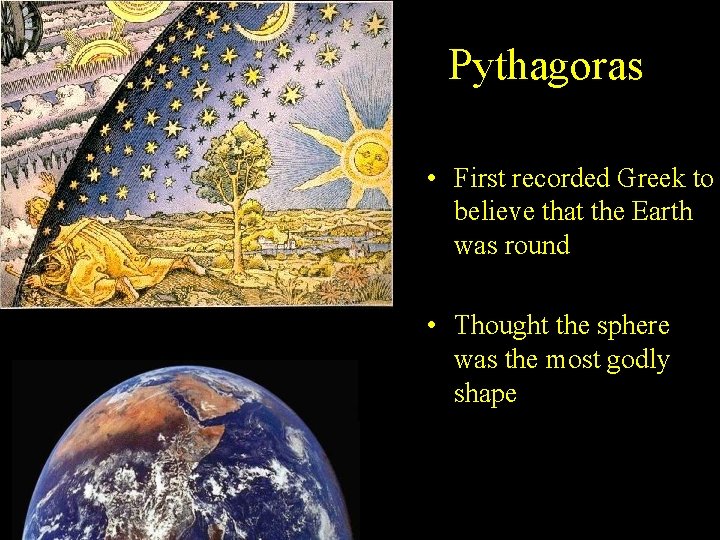
Pythagoras • First recorded Greek to believe that the Earth was round • Thought the sphere was the most godly shape
Aristotle • Aristotle’s universe was Geocentric – Geocentric means “Earth-centered” • The Earth is at rest – At the center of the Universe • It is surrounded by 56 spheres – rotating, perfect, concentric, crystalline – 55 spheres for the Planets, Sun, Moon – 1 sphere for the Stars
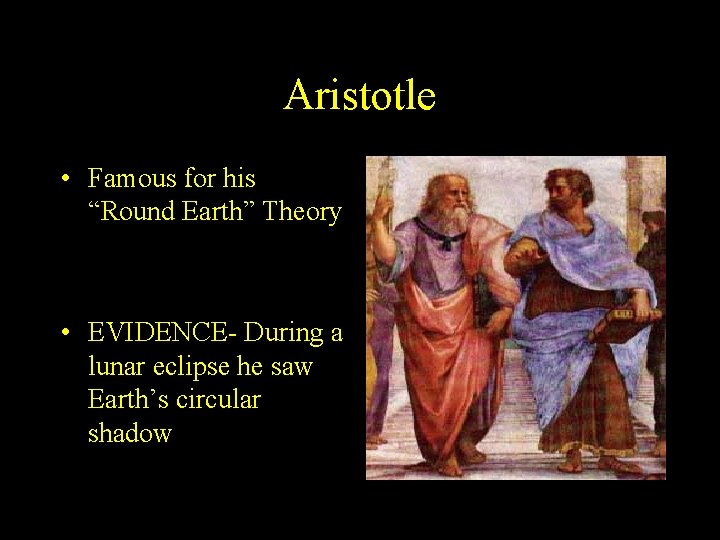
Aristotle • Famous for his “Round Earth” Theory • EVIDENCE- During a lunar eclipse he saw Earth’s circular shadow
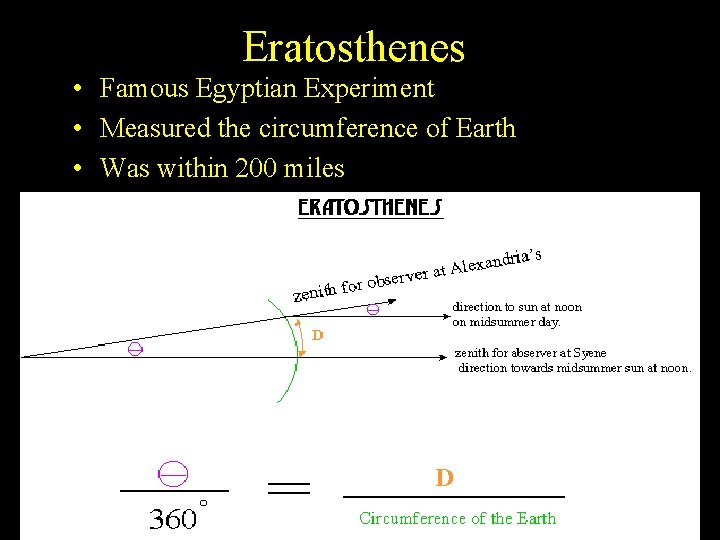
Eratosthenes • Famous Egyptian Experiment • Measured the circumference of Earth • Was within 200 miles
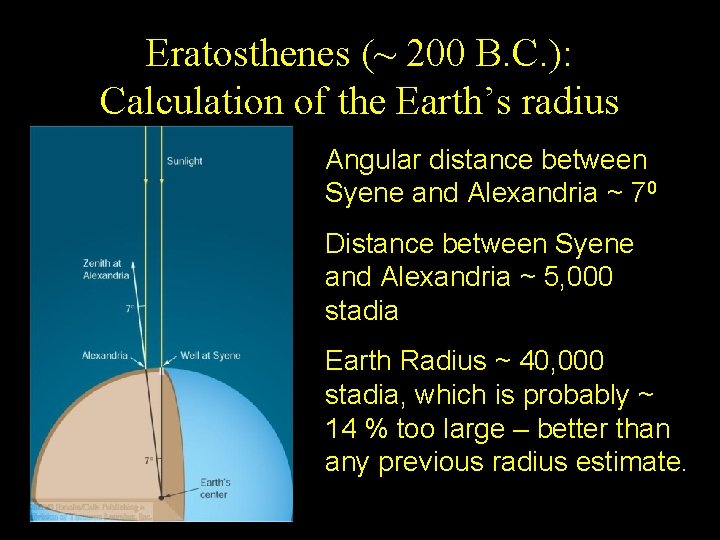
Eratosthenes (~ 200 B. C. ): Calculation of the Earth’s radius Angular distance between Syene and Alexandria ~ 70 Distance between Syene and Alexandria ~ 5, 000 stadia Earth Radius ~ 40, 000 stadia, which is probably ~ 14 % too large – better than any previous radius estimate.
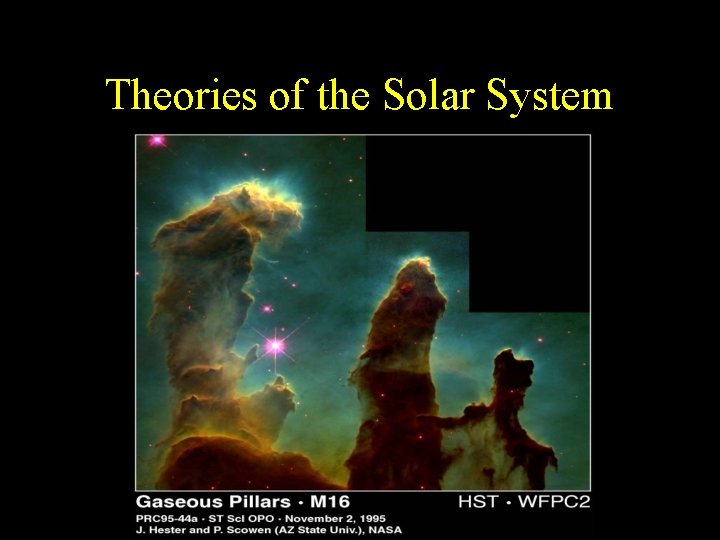
Theories of the Solar System
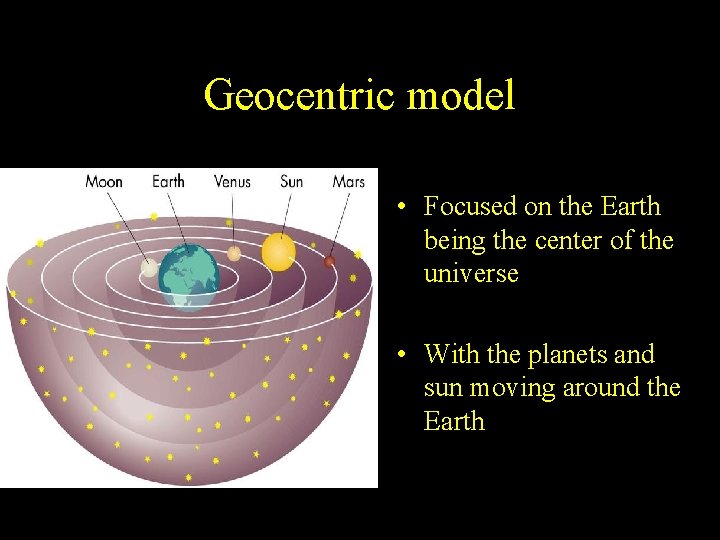
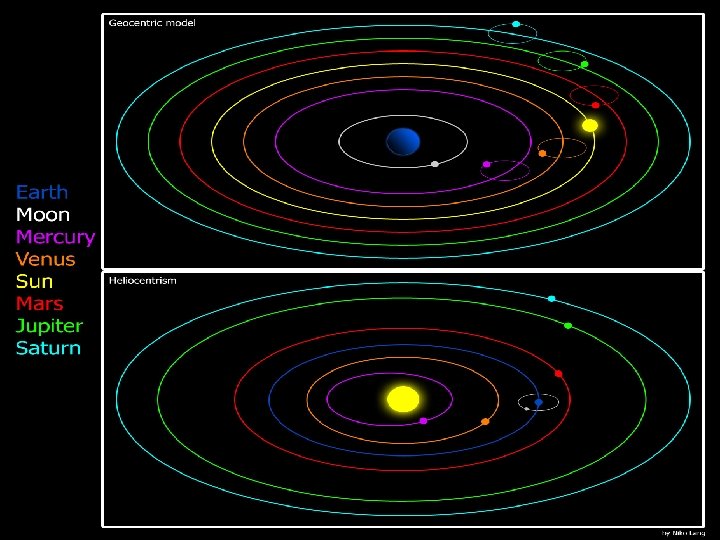
Geocentric model • Focused on the Earth being the center of the universe • With the planets and sun moving around the Earth
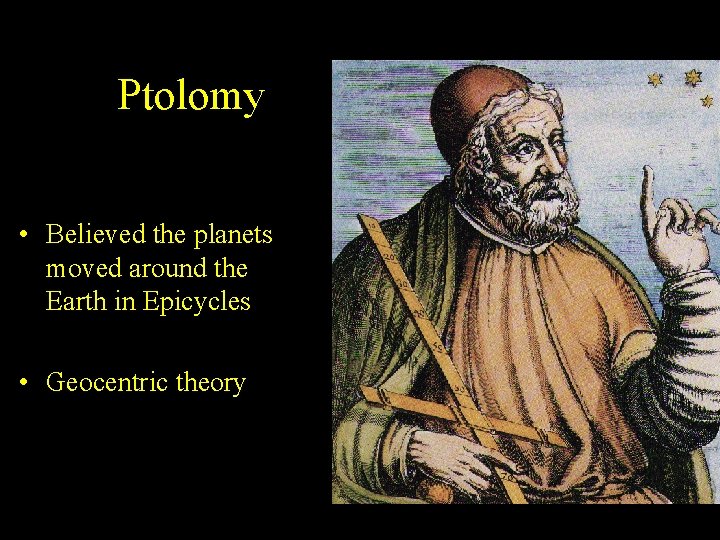
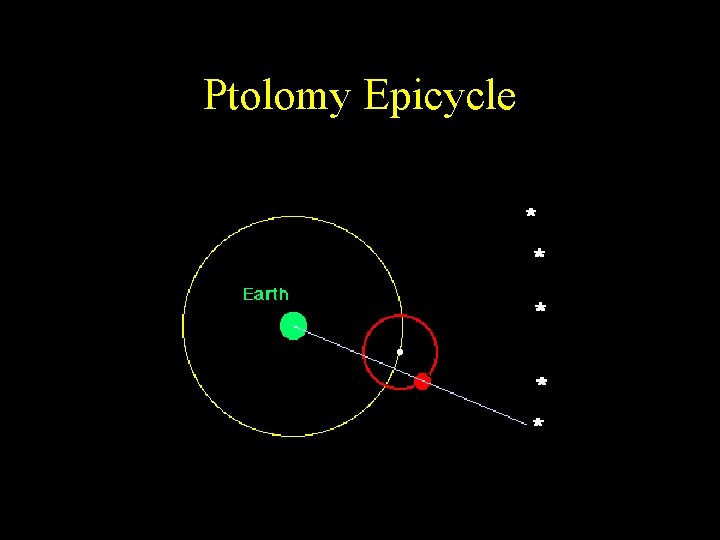
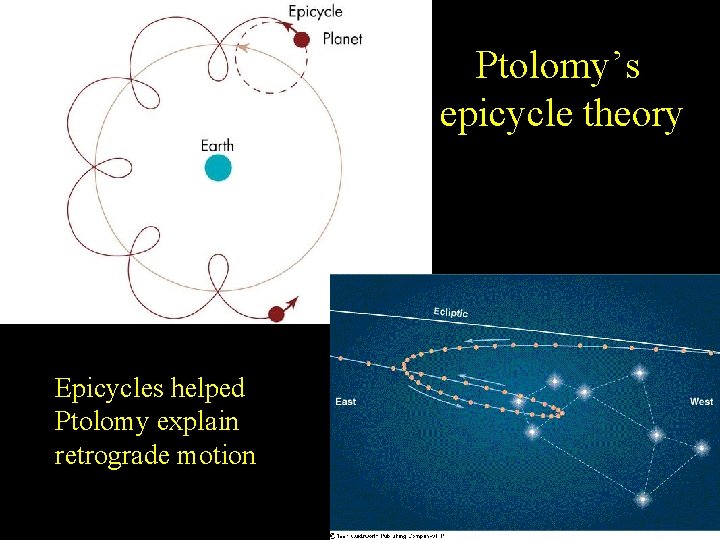
Ptolomy • Believed the planets moved around the Earth in Epicycles • Geocentric theory
Ptolomy Epicycle
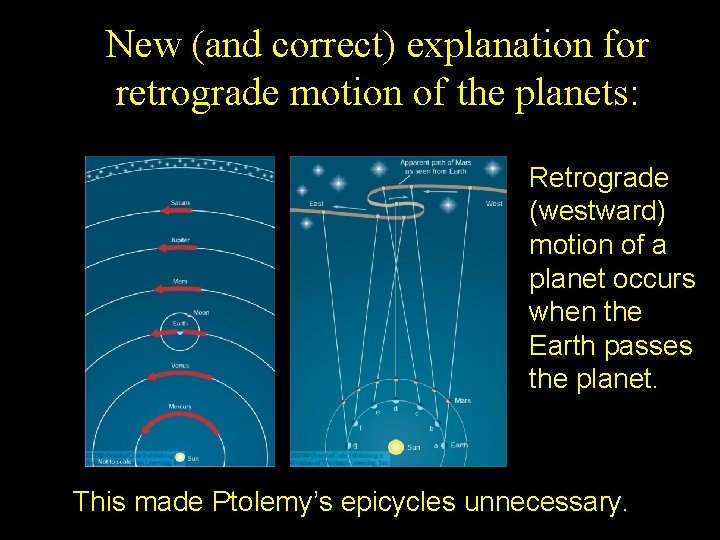
Ptolomy’s epicycle theory Epicycles helped Ptolomy explain retrograde motion
Heliocentric model
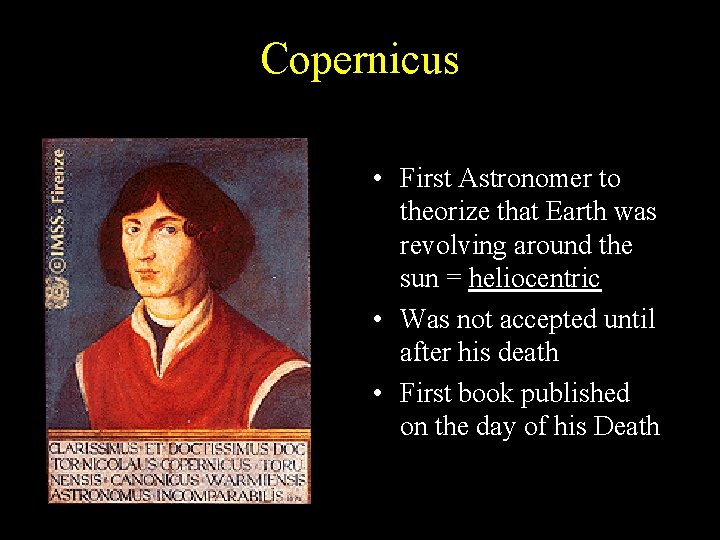
Copernicus • First Astronomer to theorize that Earth was revolving around the sun = heliocentric • Was not accepted until after his death • First book published on the day of his Death
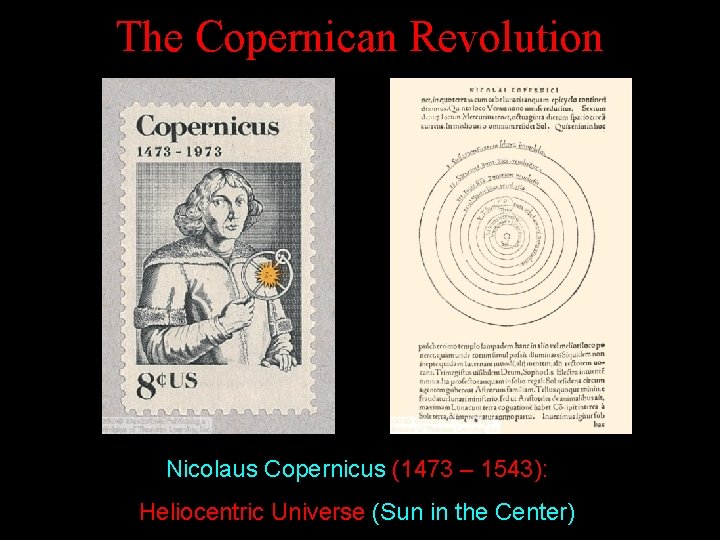
The Copernican Revolution Nicolaus Copernicus (1473 – 1543): Heliocentric Universe (Sun in the Center)
New (and correct) explanation for retrograde motion of the planets: Retrograde (westward) motion of a planet occurs when the Earth passes the planet. This made Ptolemy’s epicycles unnecessary.
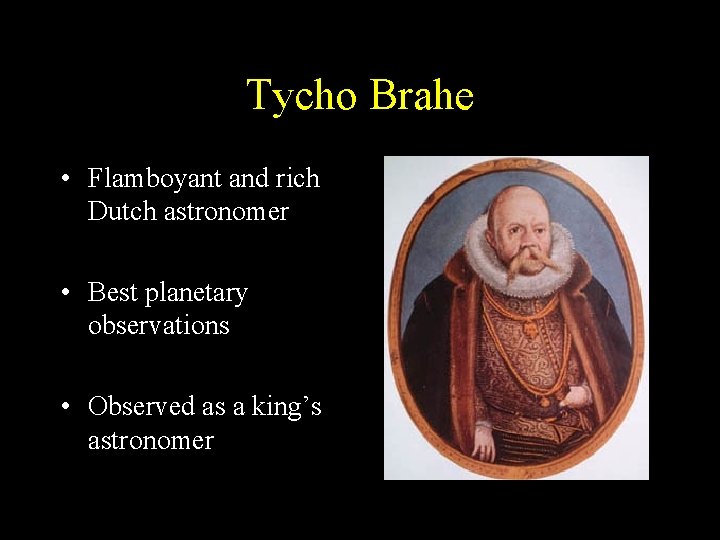
Tycho Brahe • Flamboyant and rich Dutch astronomer • Best planetary observations • Observed as a king’s astronomer
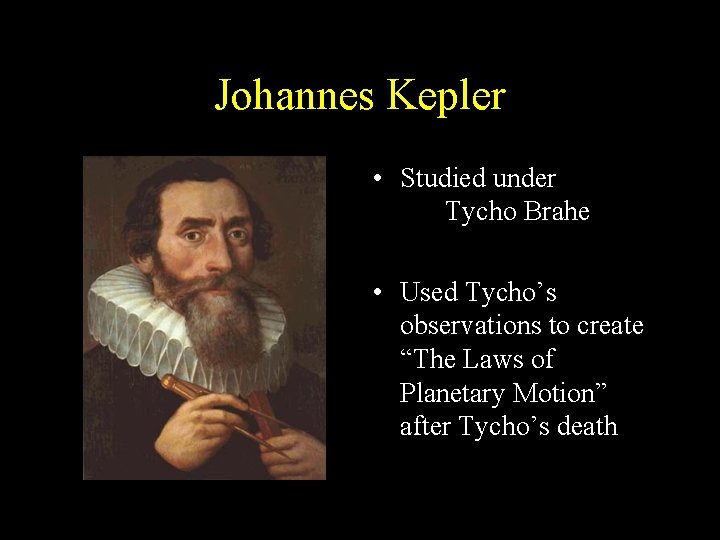
Johannes Kepler • Studied under Tycho Brahe • Used Tycho’s observations to create “The Laws of Planetary Motion” after Tycho’s death
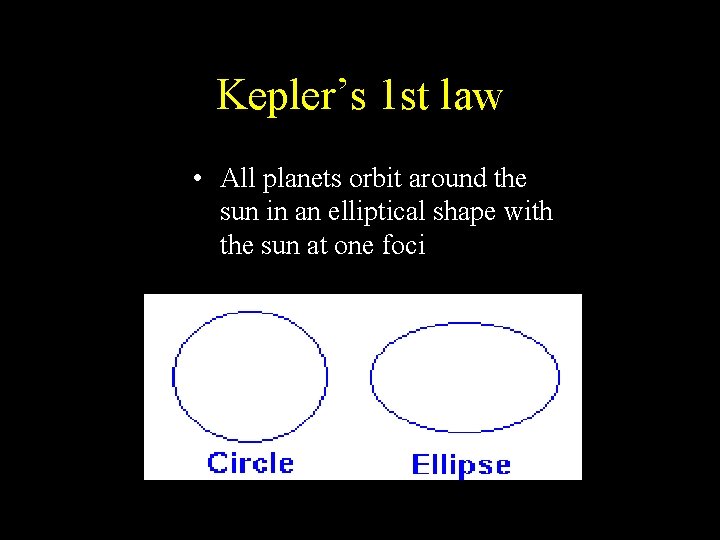
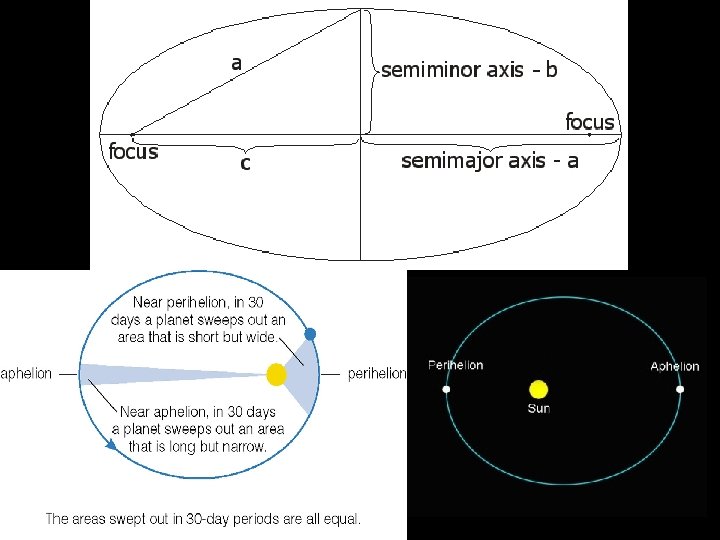
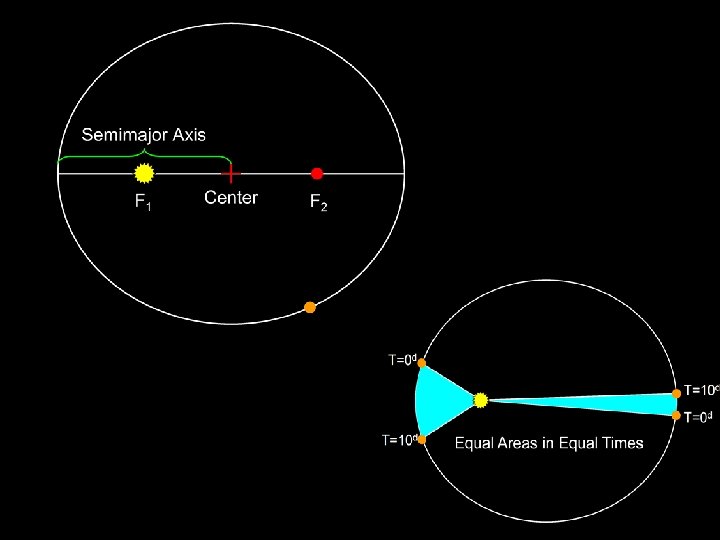
Kepler’s 1 st law • All planets orbit around the sun in an elliptical shape with the sun at one foci
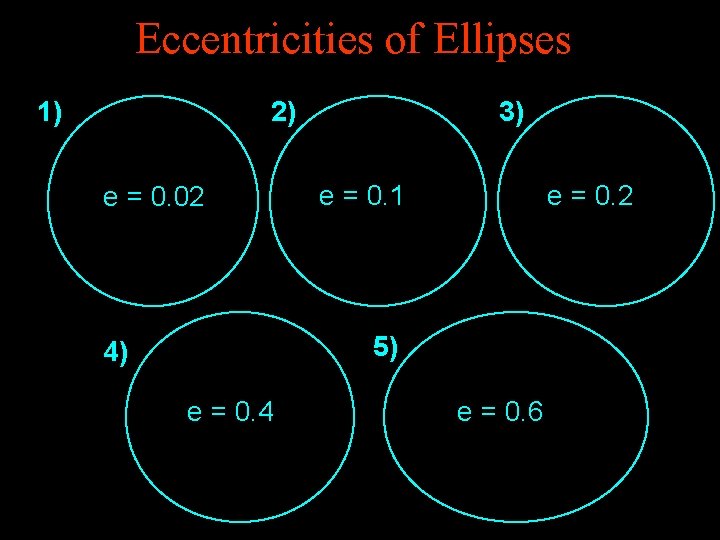
Eccentricities of Ellipses 1) 2) e = 0. 02 3) e = 0. 1 e = 0. 2 5) 4) e = 0. 4 e = 0. 6
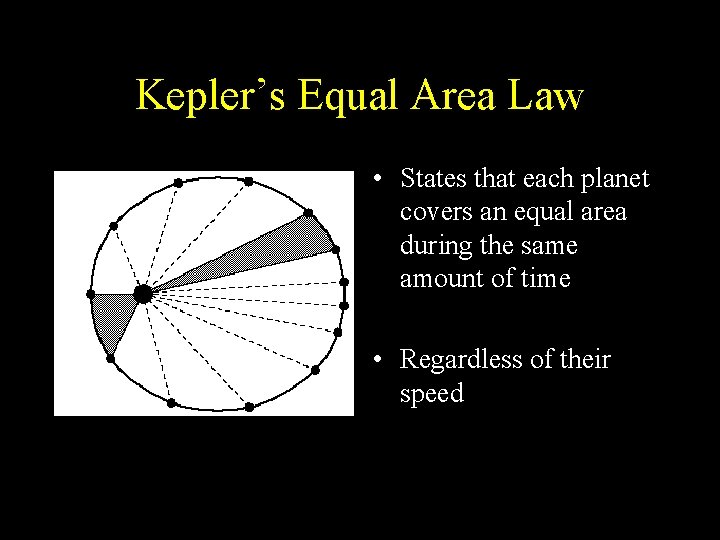
Kepler’s Equal Area Law • States that each planet covers an equal area during the same amount of time • Regardless of their speed
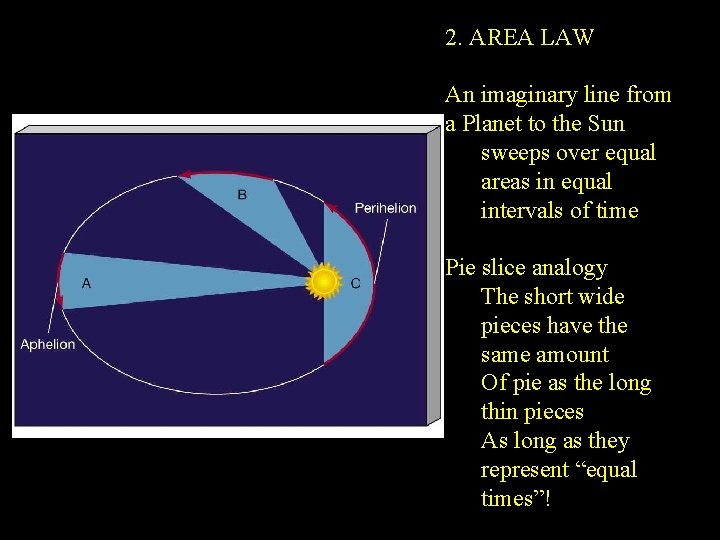
2. AREA LAW An imaginary line from a Planet to the Sun sweeps over equal areas in equal intervals of time Pie slice analogy The short wide pieces have the same amount Of pie as the long thin pieces As long as they represent “equal times”!
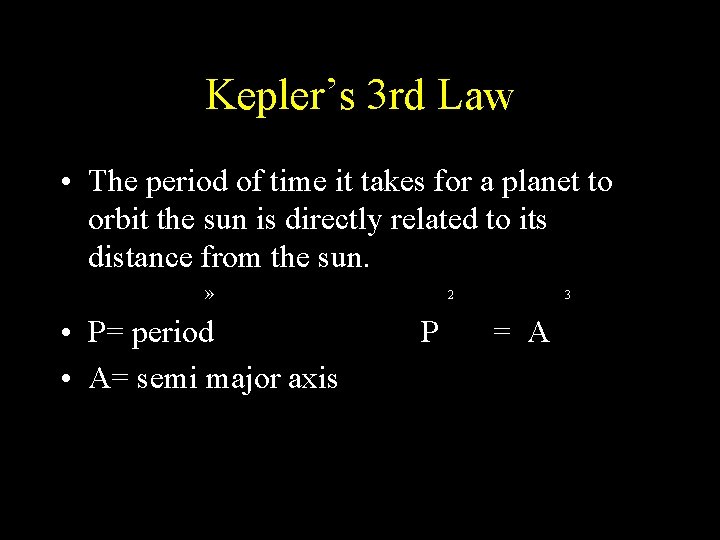
Kepler’s 3 rd Law • The period of time it takes for a planet to orbit the sun is directly related to its distance from the sun. » 2 • P= period • A= semi major axis P 3 = A
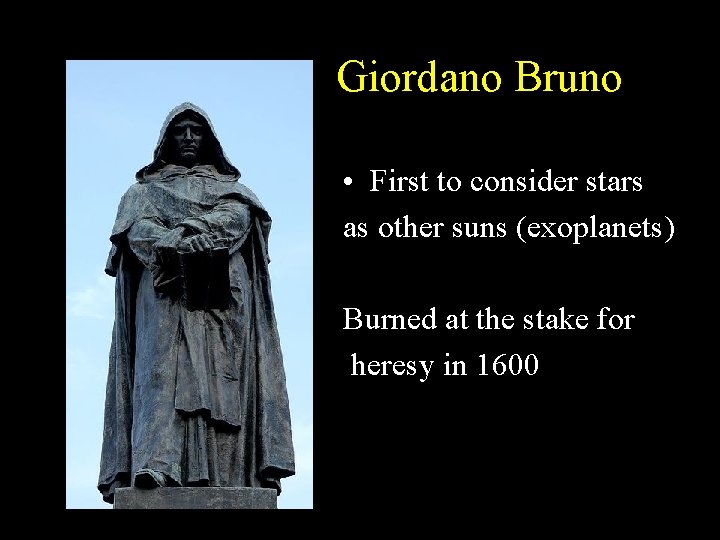
Giordano Bruno • First to consider stars as other suns (exoplanets) Burned at the stake for heresy in 1600
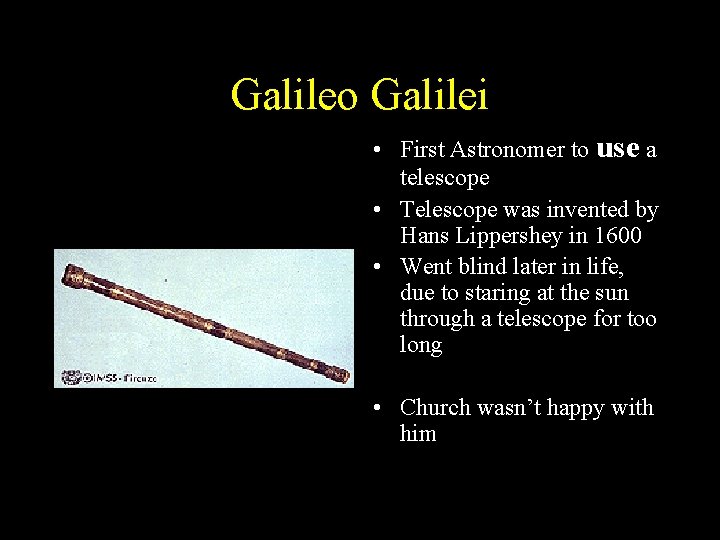
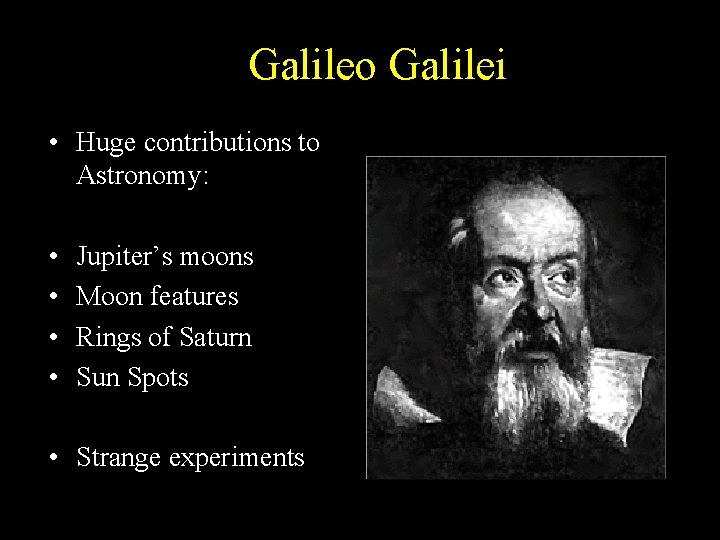
Galileo Galilei • First Astronomer to use a telescope • Telescope was invented by Hans Lippershey in 1600 • Went blind later in life, due to staring at the sun through a telescope for too long • Church wasn’t happy with him
Galileo Galilei • Huge contributions to Astronomy: • • Jupiter’s moons Moon features Rings of Saturn Sun Spots • Strange experiments
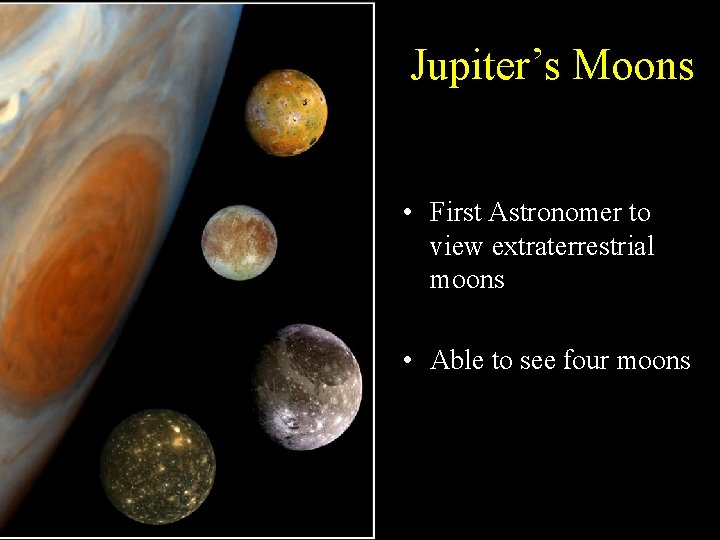
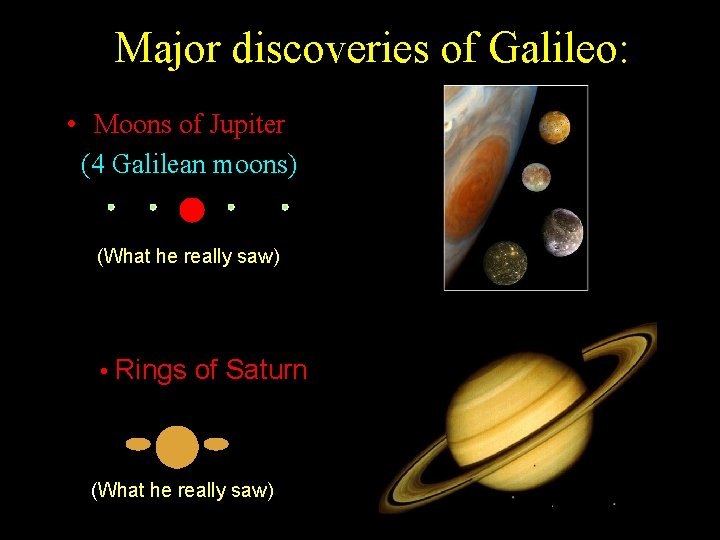
Jupiter’s Moons • First Astronomer to view extraterrestrial moons • Able to see four moons
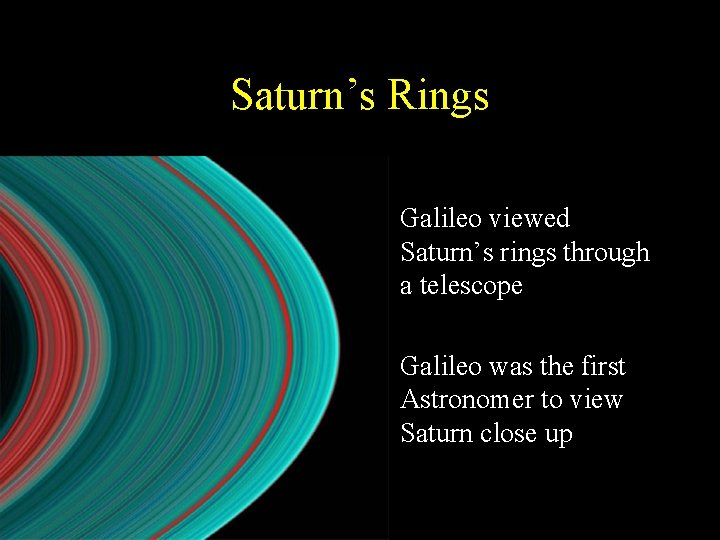
Saturn’s Rings • Galileo viewed Saturn’s rings through a telescope • Galileo was the first Astronomer to view Saturn close up
Major discoveries of Galileo: • Moons of Jupiter (4 Galilean moons) (What he really saw) • Rings of Saturn (What he really saw)
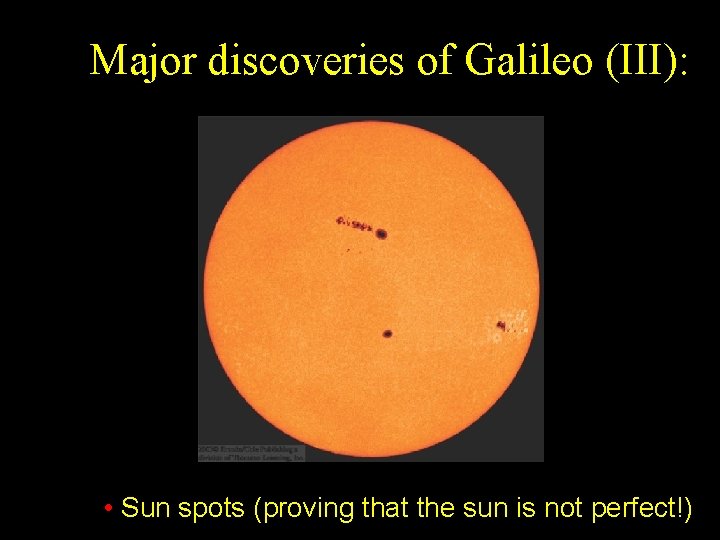
Major discoveries of Galileo (III): • Sun spots (proving that the sun is not perfect!)
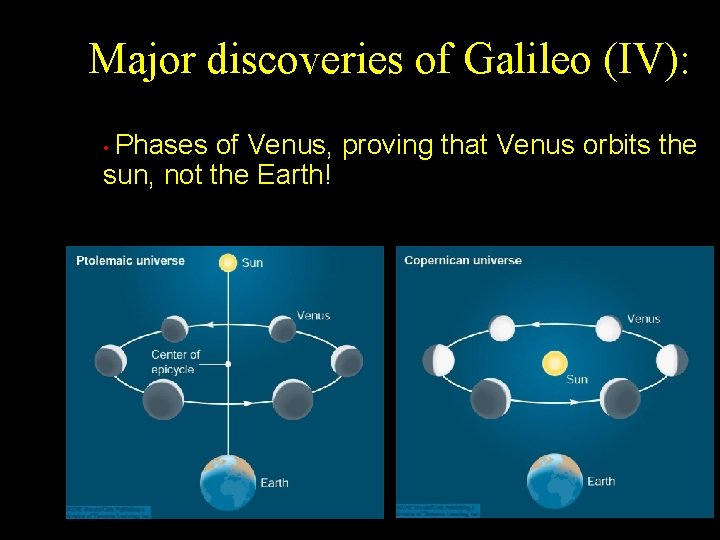
Major discoveries of Galileo (IV): • Phases of Venus, proving that Venus orbits the sun, not the Earth!
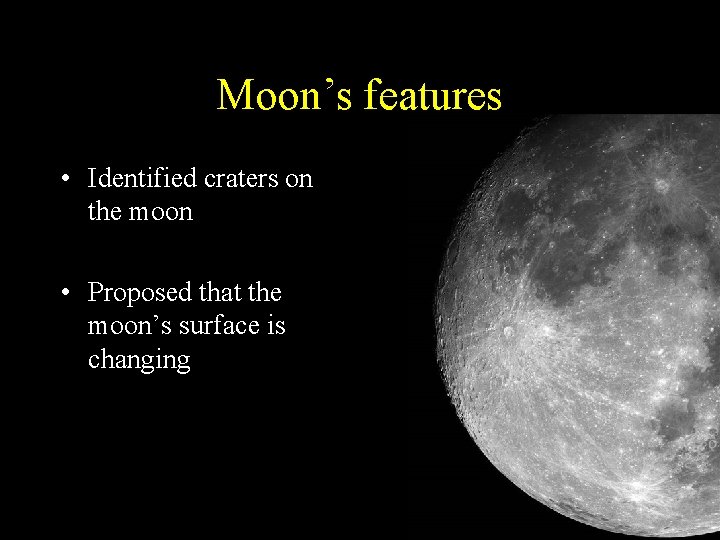
Moon’s features • Identified craters on the moon • Proposed that the moon’s surface is changing
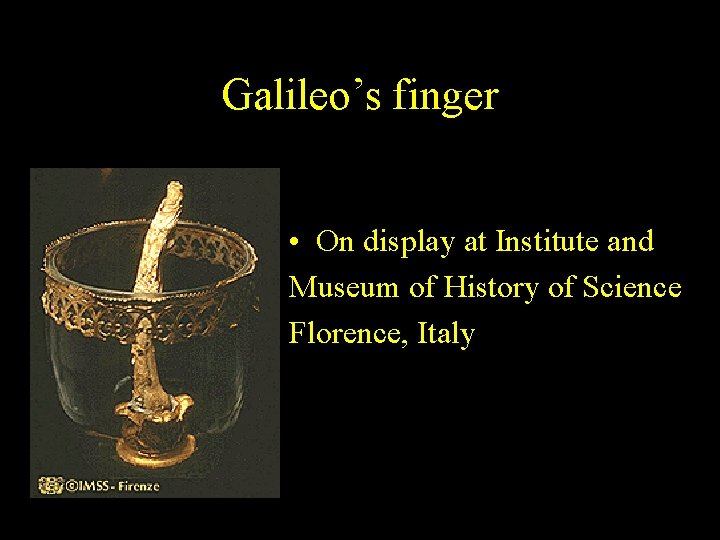
Galileo’s finger • On display at Institute and Museum of History of Science Florence, Italy
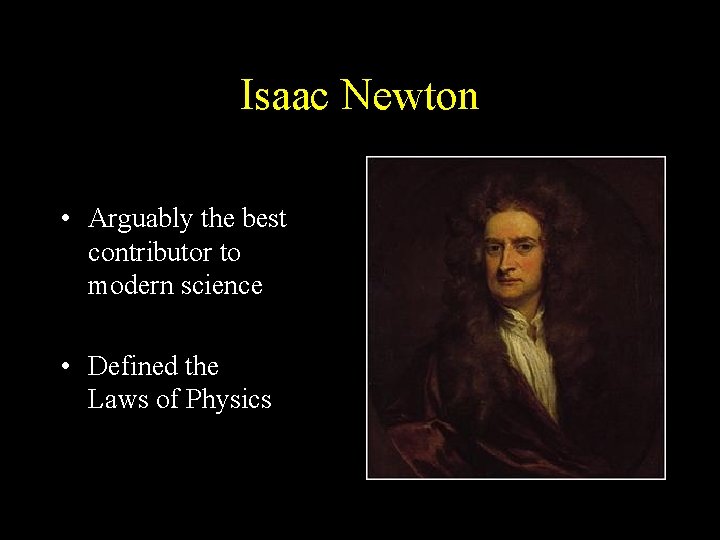
Isaac Newton • Arguably the best contributor to modern science • Defined the Laws of Physics
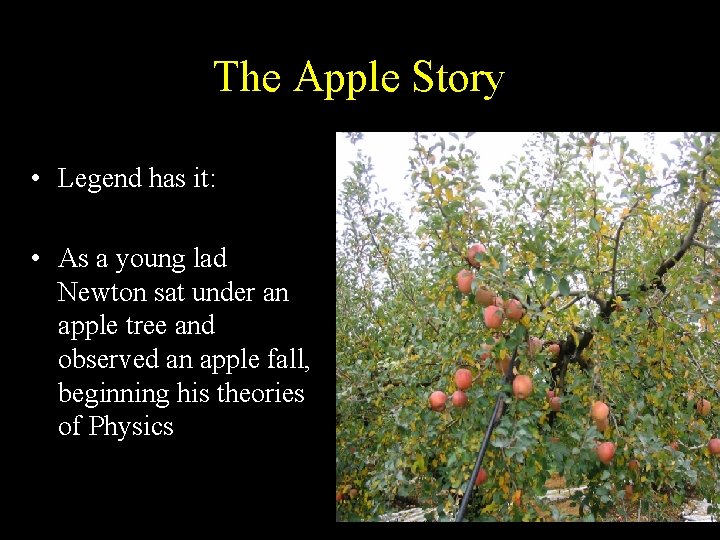
The Apple Story • Legend has it: • As a young lad Newton sat under an apple tree and observed an apple fall, beginning his theories of Physics
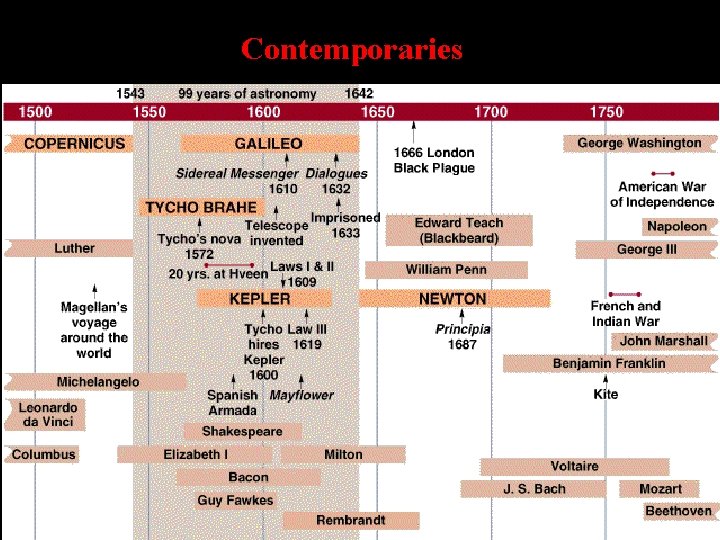
Contemporaries
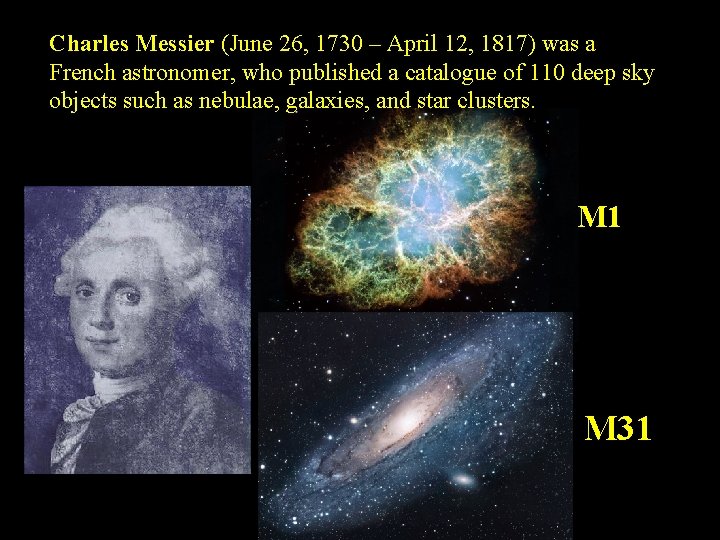
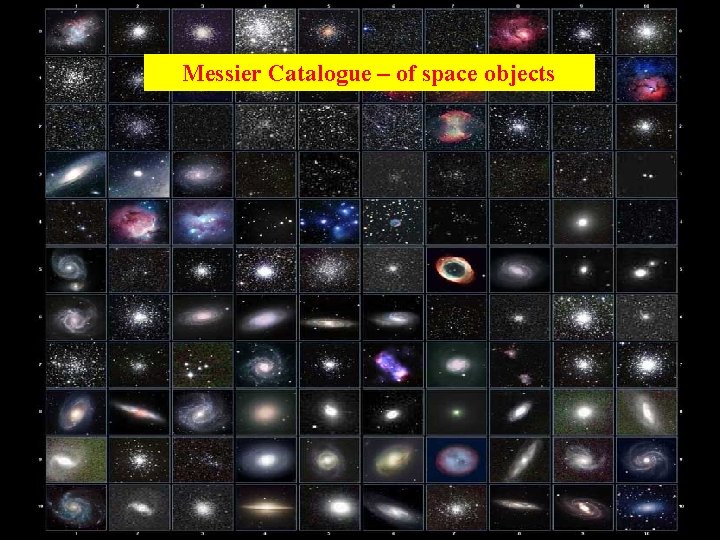
Charles Messier (June 26, 1730 – April 12, 1817) was a French astronomer, who published a catalogue of 110 deep sky objects such as nebulae, galaxies, and star clusters. M 1 M 31
Messier Catalogue – of space objects
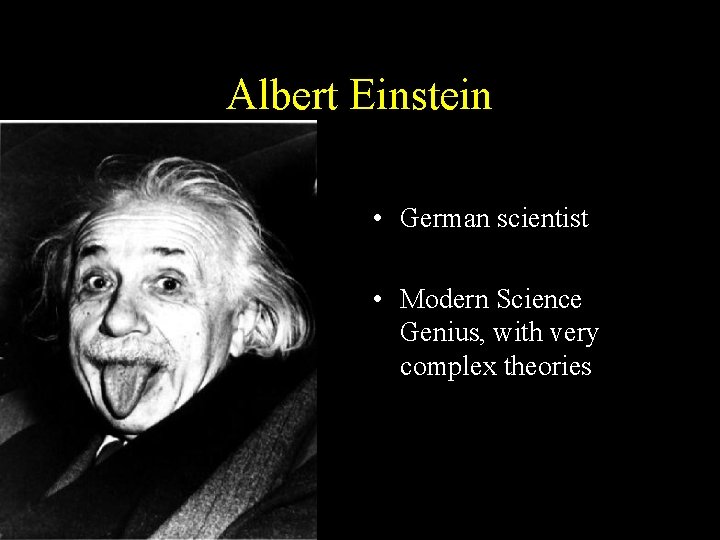
Albert Einstein • German scientist • Modern Science Genius, with very complex theories
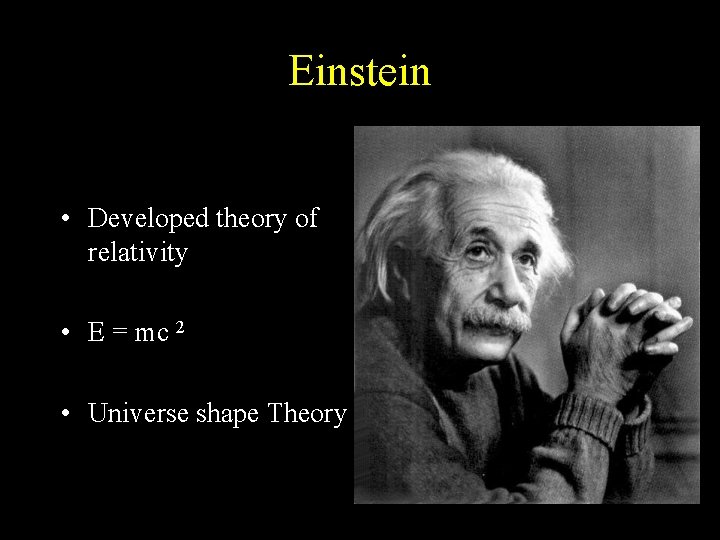
Einstein • Developed theory of relativity • E = mc 2 • Universe shape Theory
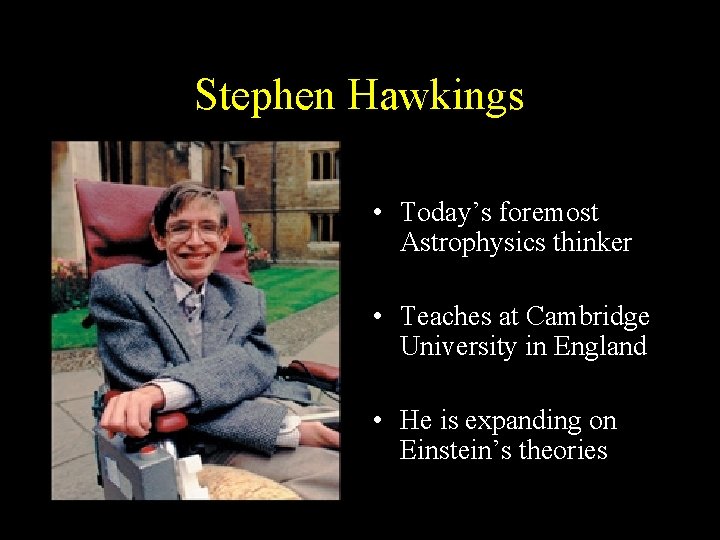
Stephen Hawkings • Today’s foremost Astrophysics thinker • Teaches at Cambridge University in England • He is expanding on Einstein’s theories
Soak it all in!