
Histology The Tissue Level of Organization Histology The
- Slides: 57
Histology The Tissue Level of Organization
Histology The study of tissues and how tissues are combined in various ways to form organs & membranes of the human body. n The human body contains four primary types of tissues: n n n Epithelial Connective Muscle Neural (nerve) tissue.
I. Epithelial Tissue Made of cells with little space between cells. n The cells are so tightly packed together that blood vessels can’t penetrate between them and is called avascular. n
Epithelial Tissue n In certain areas of the body epithelial tissue may perform the following functions: n Control Permeability: n Provide Sensitivity n Provide Physical Protection: n Produce Secretions:
Epithelial Tissue Two Types Covering & Lining and Glandular. 1. Covering & Lining Epithelia is classified based on the number of cell layers and the cell shape. 2. Glandular Epithelia is classified based on if the tissue secretes its product into a gland or not. n
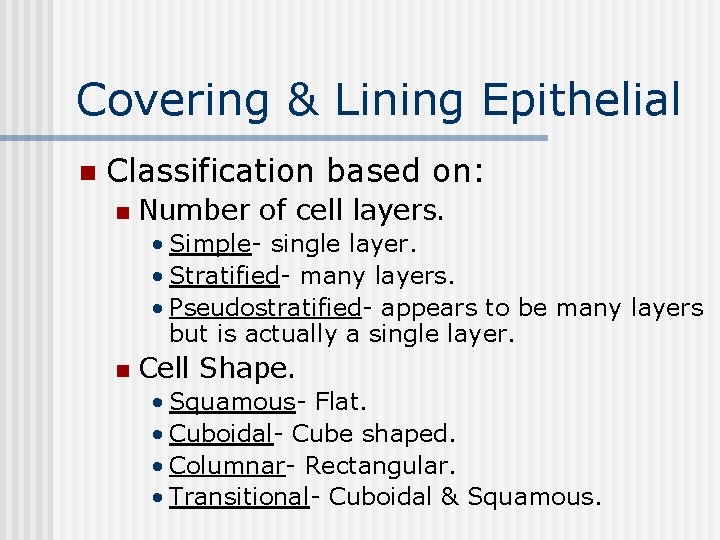
Covering & Lining Epithelial n Classification based on: n Number of cell layers. • Simple- single layer. • Stratified- many layers. • Pseudostratified- appears to be many layers but is actually a single layer. n Cell Shape. • Squamous- Flat. • Cuboidal- Cube shaped. • Columnar- Rectangular. • Transitional- Cuboidal & Squamous.
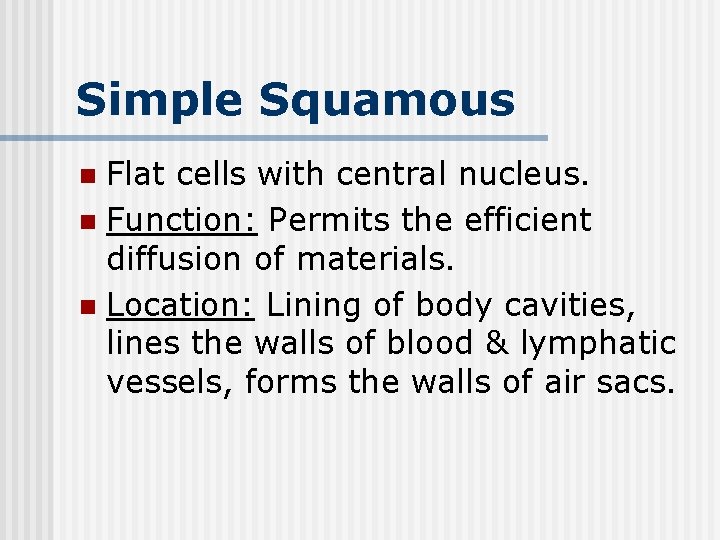
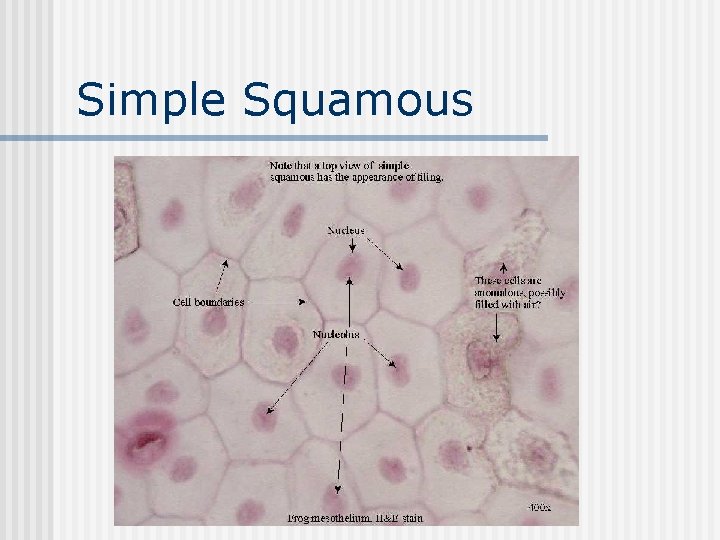
Simple Squamous Flat cells with central nucleus. n Function: Permits the efficient diffusion of materials. n Location: Lining of body cavities, lines the walls of blood & lymphatic vessels, forms the walls of air sacs. n
Simple Squamous
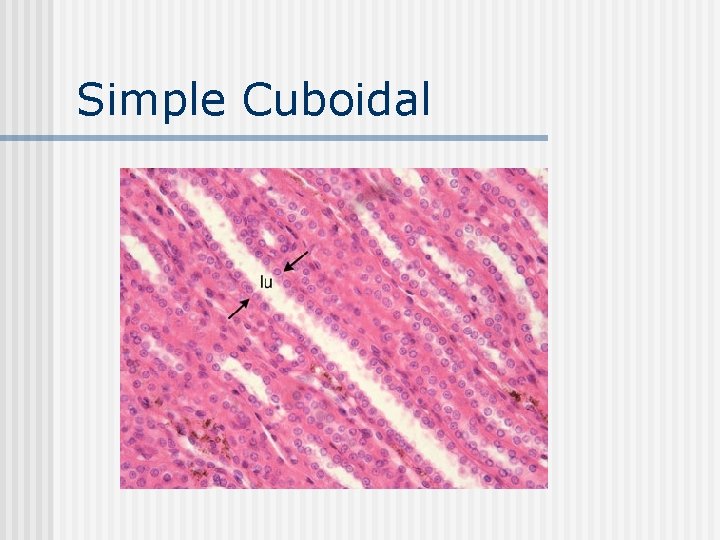
Simple Cuboidal Single layer of cube-shaped cells with central nucleus, often have cilia and/or microvili. n Function: Forms the walls of small ducts and tubes that carry secretions. n Location: Kidneys, Liver, Glands. n
Simple Cuboidal
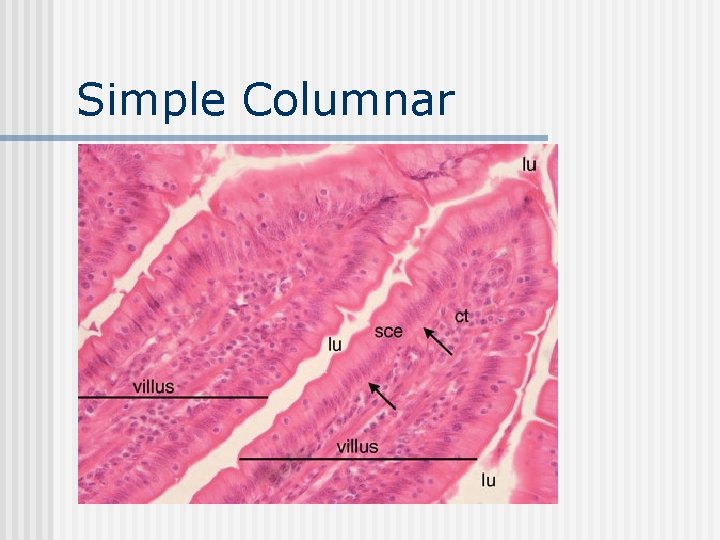
Simple Columnar Single layer of rectangle cells whose nuclei lie near the base (basal) of the cell. n Function: Absorb and secrete; mucus, enzymes, etc. n Location: Uterus, Stomach, Digestive Tract, Bronchi. n
Simple Columnar
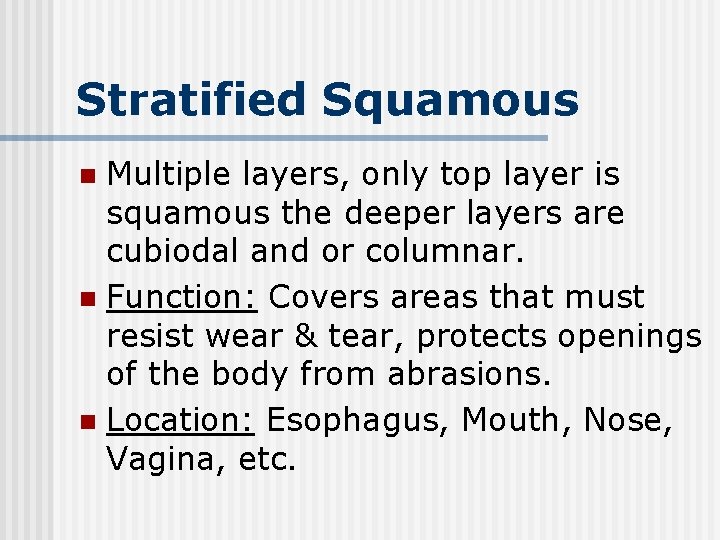
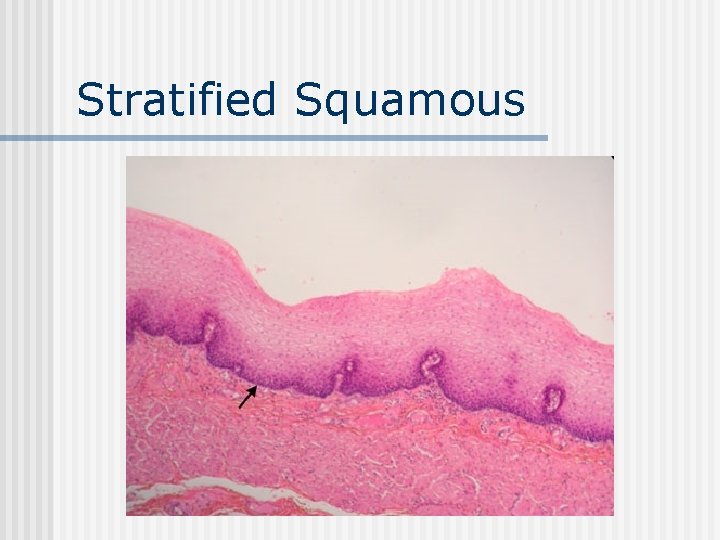
Stratified Squamous Multiple layers, only top layer is squamous the deeper layers are cubiodal and or columnar. n Function: Covers areas that must resist wear & tear, protects openings of the body from abrasions. n Location: Esophagus, Mouth, Nose, Vagina, etc. n
Stratified Squamous
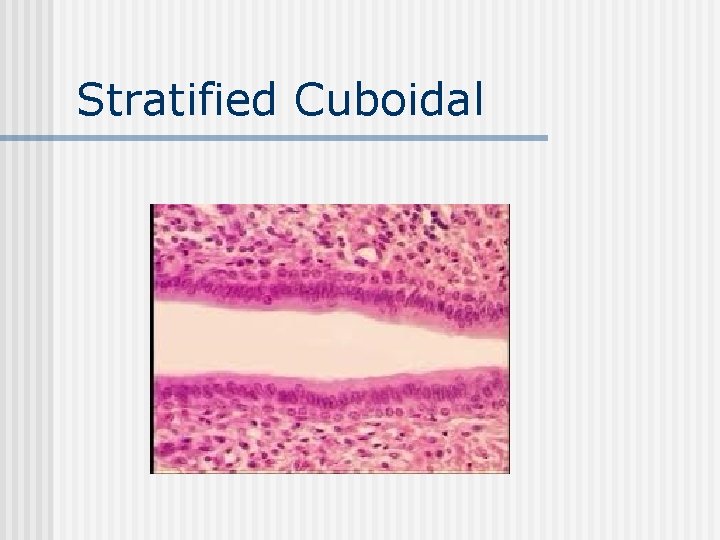
Stratified Cuboidal Function: Protection. n Location: Sweat Glands. Mammary Glands, Salivary Glands. n
Stratified Cuboidal
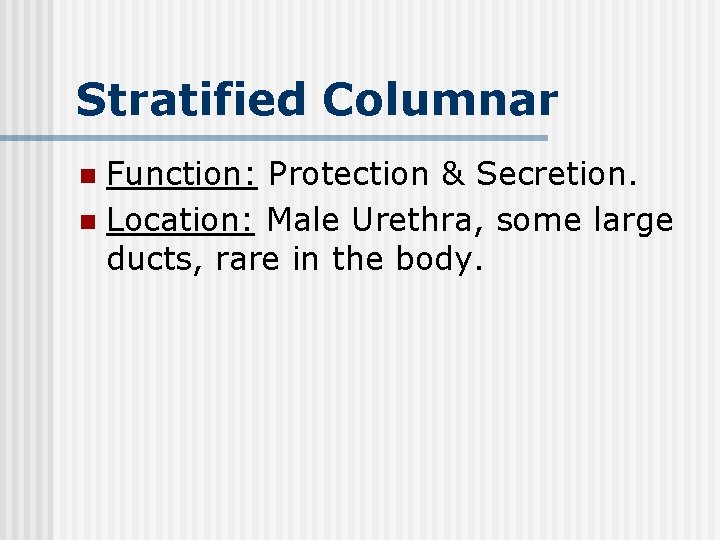
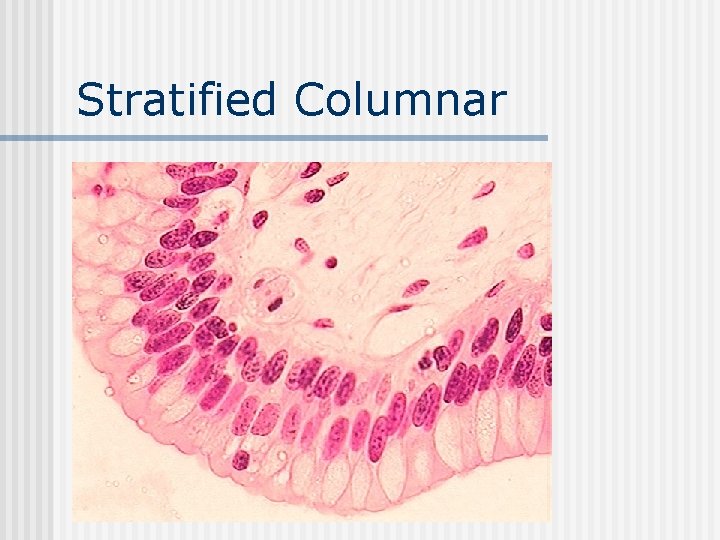
Stratified Columnar Function: Protection & Secretion. n Location: Male Urethra, some large ducts, rare in the body. n
Stratified Columnar
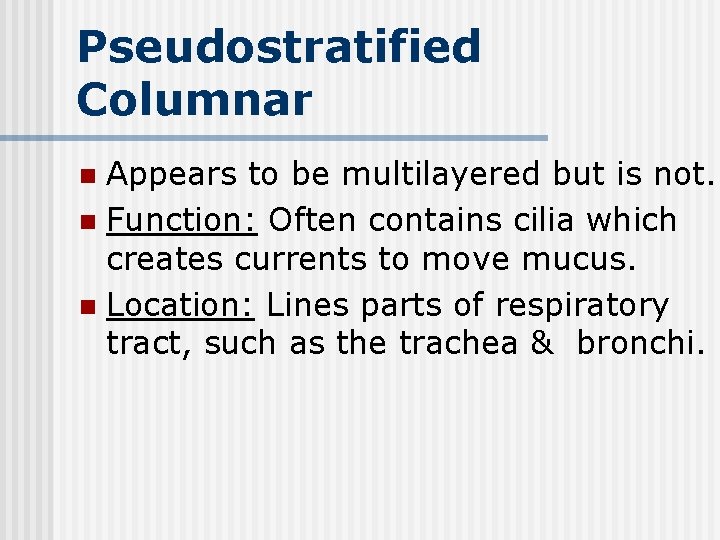
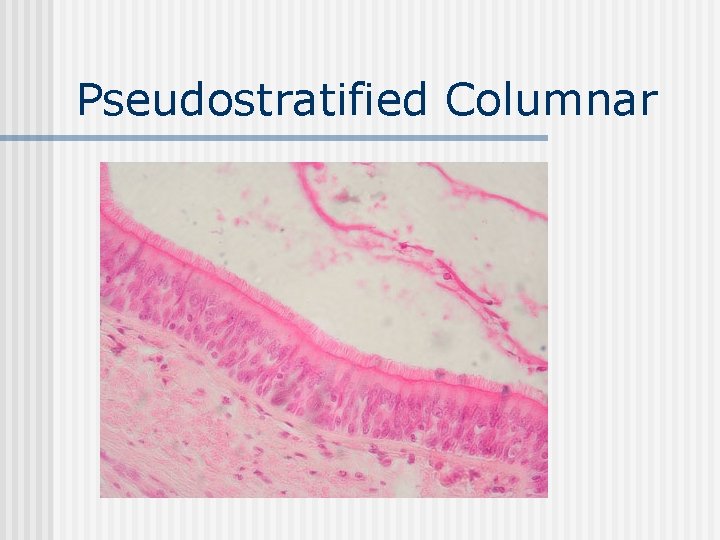
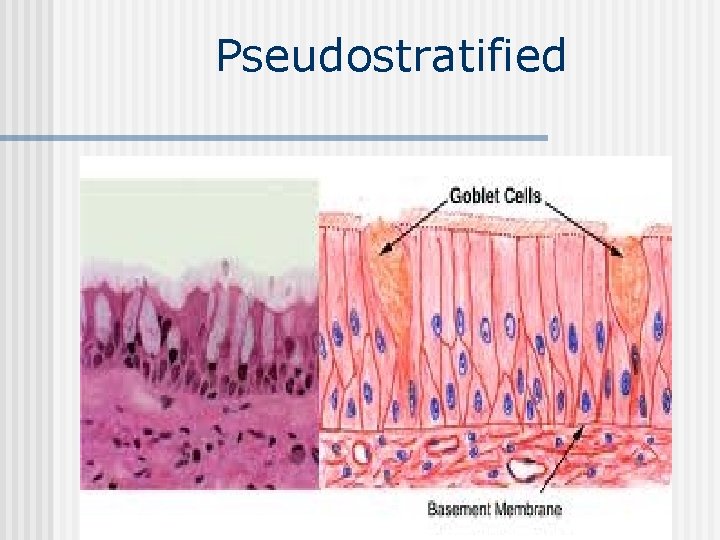
Pseudostratified Columnar Appears to be multilayered but is not. n Function: Often contains cilia which creates currents to move mucus. n Location: Lines parts of respiratory tract, such as the trachea & bronchi. n
Pseudostratified Columnar
Pseudostratified
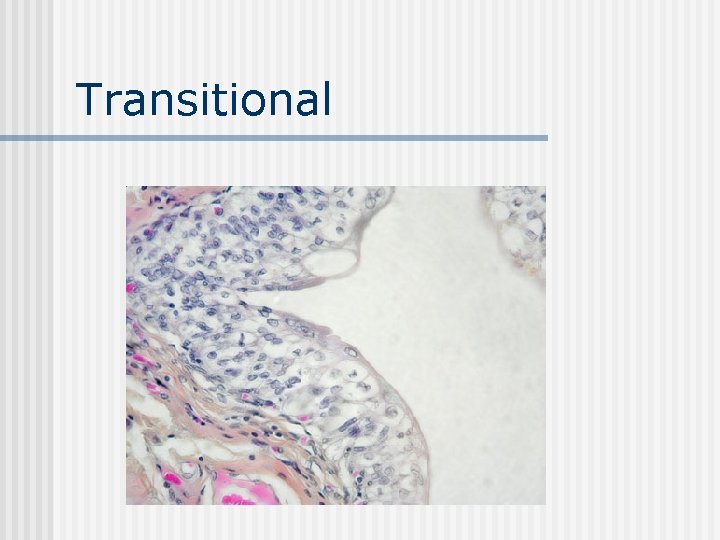
Transitional Multilayered cube-like cell shape. n Function: Can stretch(elasticity) and return to the original shape (extensibility). n Location: Lines Bladder, Urethra, Ureters. n
Transitional
Glandular Epithelium n n Tightly packed cells that specialize in manufacturing and secreting products. Two categories: n n Exocrine: Releases products into ducts. • sweat & oil glands, salivary, and mucus glands. Endocrine: Releases products into extracellular space (blood) • pituitary gland, thyroid gland, and adrenal gland.
II. Connective Tissue n n Is composed of scattered loosely packed cells that are within a large amount of nonliving intercellular material. It is vascular Its primary function is to hold other tissues and organs in place. Two categories of connective tissue n n Produces & Maintains-(matrix) Protects From Infection (white blood cells)
Connective Tissue n 4 Types of connective tissue • • A. Connective tissue proper B. Cartilage C. Bone D. Blood forming (spongy bone)
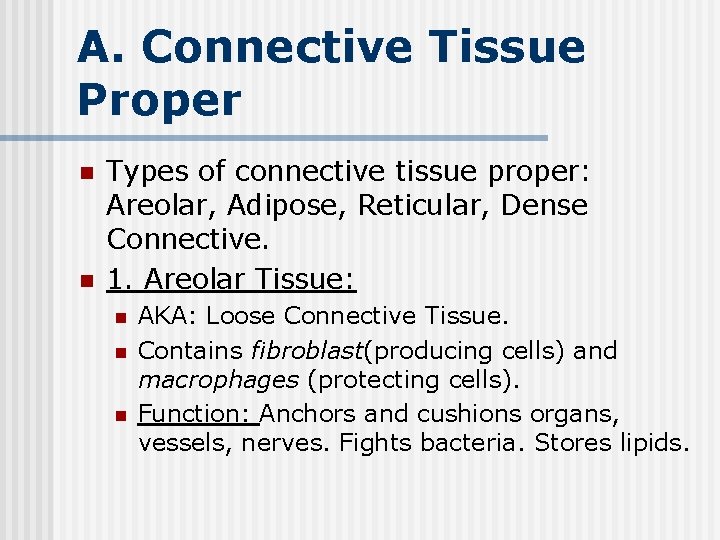
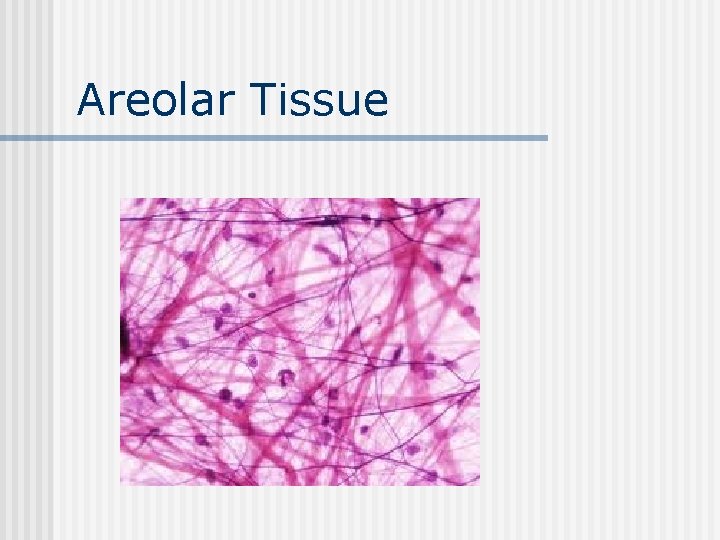
A. Connective Tissue Proper n n Types of connective tissue proper: Areolar, Adipose, Reticular, Dense Connective. 1. Areolar Tissue: n n n AKA: Loose Connective Tissue. Contains fibroblast(producing cells) and macrophages (protecting cells). Function: Anchors and cushions organs, vessels, nerves. Fights bacteria. Stores lipids.
Areolar Tissue
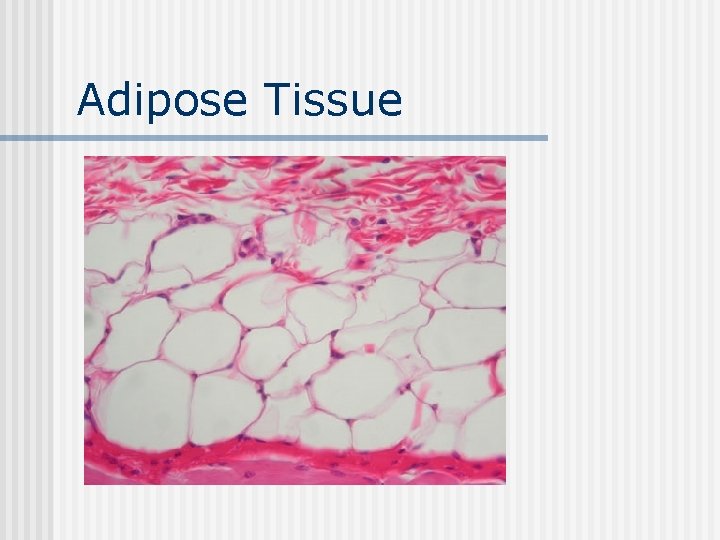
A. Connective Tissue Proper n 2. Adipose Tissue: Contains adipocytes (producing cells which contain deposits of fat). n Function: Provides reserve energy, insulates & protects organs. n
Adipose Tissue
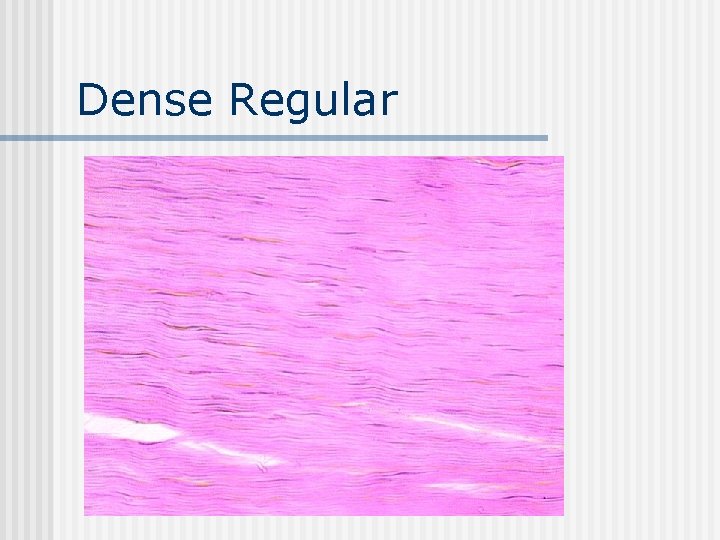
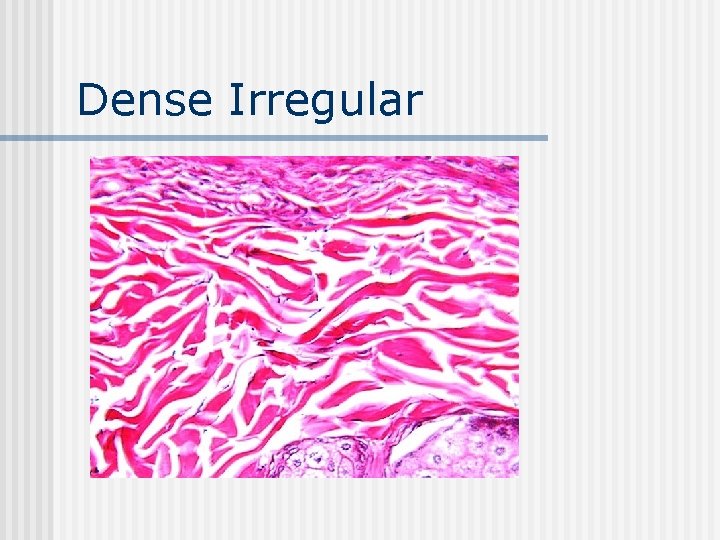
A. Connective Tissue Proper n 3. Dense Connective Tissue n Two Types: • Dense Regular- Fibers are arranged in parallel fashion. Extremely resistant to stress. • tendons (muscle to bone) • ligaments (bone to bone) • Dense Irregular- Fibers are arranged in an interwoven meshwork. Forms an external wrapping. • Location: Wrapped around bone, cartilage, kidneys, liver, spleen, and where the tendon connects to the bone.
Dense Regular
Dense Irregular
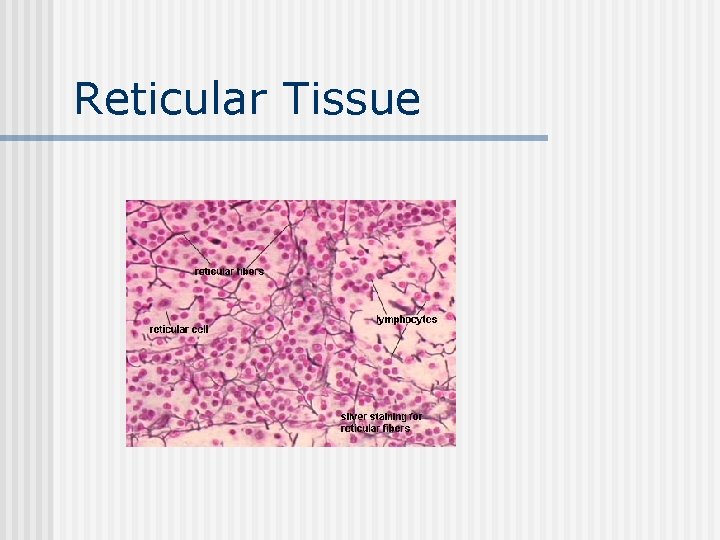
A. Connective Tissue Proper n 4. Reticular Location: Lymphoid organs n Function: Form a soft internal skeleton to support other tissues. n
Reticular Tissue
B. Cartilage Harder than connective tissue proper. n Contains chondrocytes (producing cells). n There are three types of cartilage: n n Hyaline, Elastic, Fibrocartilage.
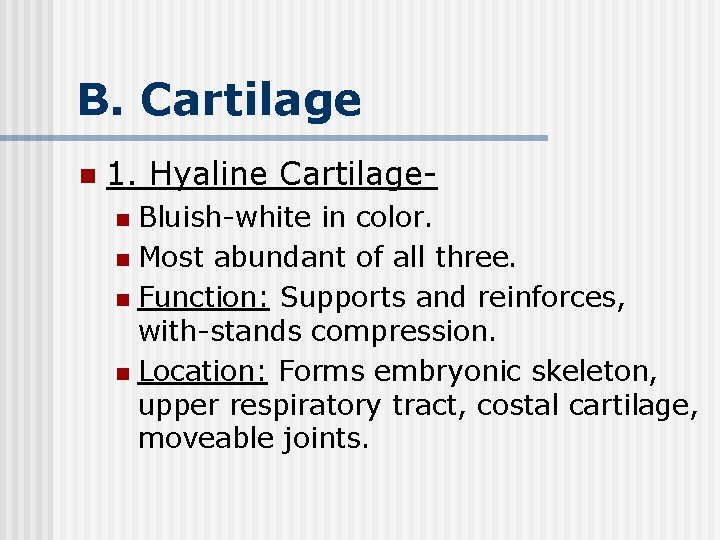
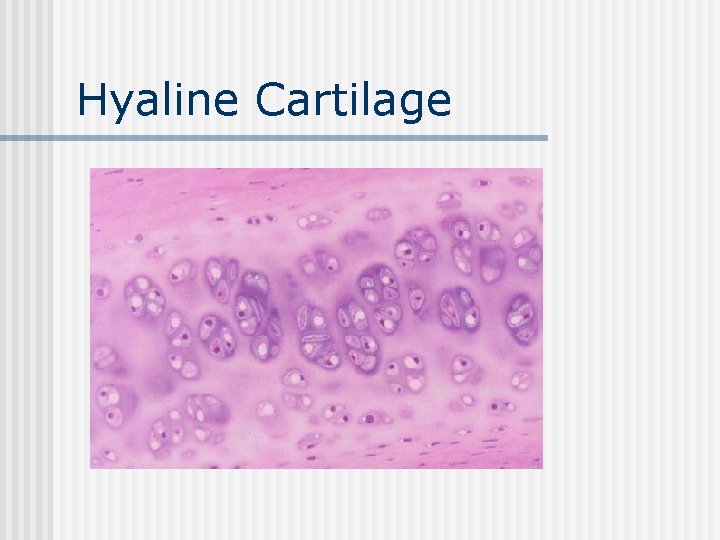
B. Cartilage n 1. Hyaline Cartilage. Bluish-white in color. n Most abundant of all three. n Function: Supports and reinforces, with-stands compression. n Location: Forms embryonic skeleton, upper respiratory tract, costal cartilage, moveable joints. n
Hyaline Cartilage
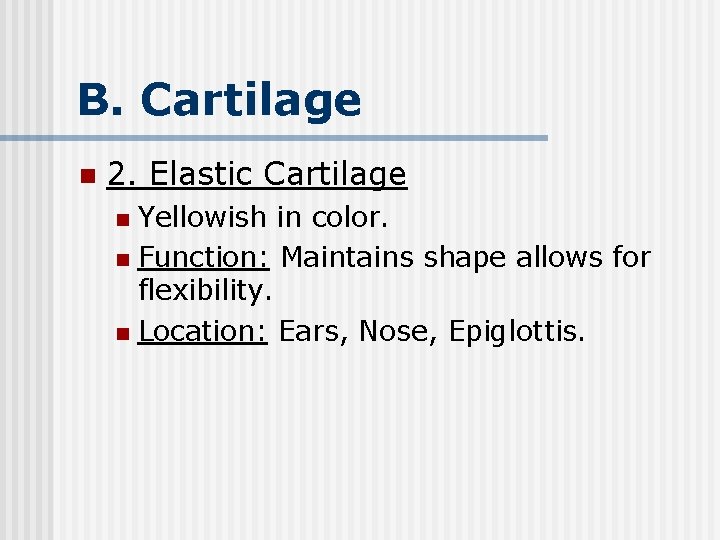
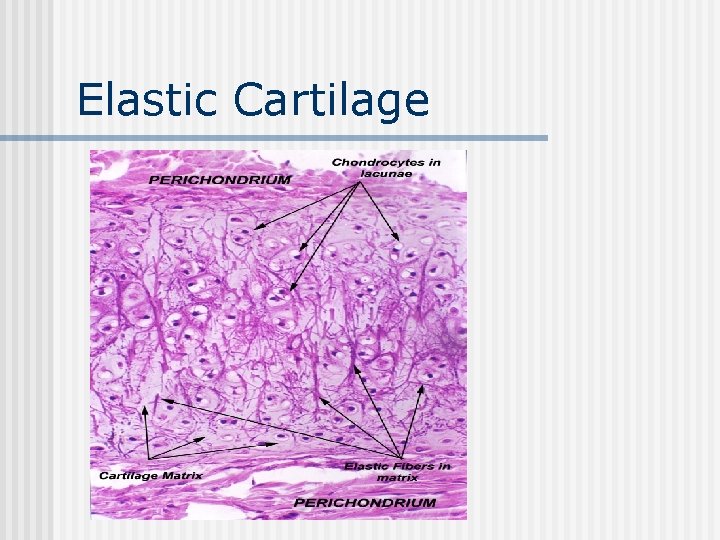
B. Cartilage n 2. Elastic Cartilage Yellowish in color. n Function: Maintains shape allows for flexibility. n Location: Ears, Nose, Epiglottis. n
Elastic Cartilage
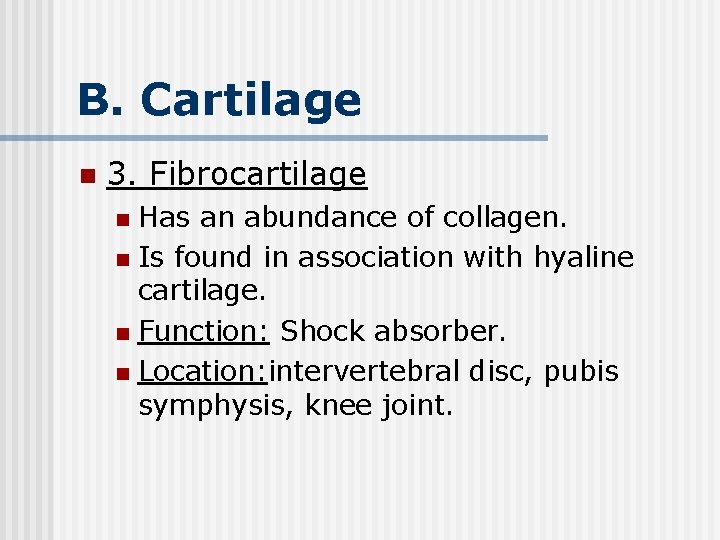
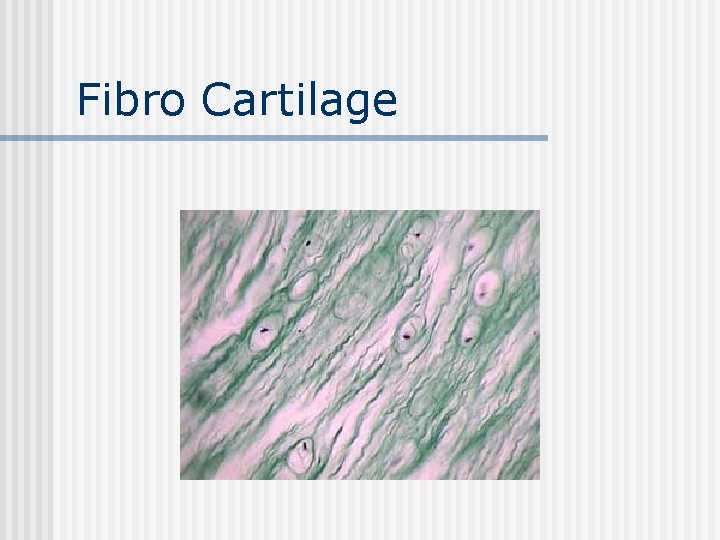
B. Cartilage n 3. Fibrocartilage Has an abundance of collagen. n Is found in association with hyaline cartilage. n Function: Shock absorber. n Location: intervertebral disc, pubis symphysis, knee joint. n
Fibro Cartilage
C. Bone Has dense intercellular material composed of mineral salts and collagenous fibers. n Made up of osteocytes n Also known as osseous tissue. n Two Types of Bone n n Compact and Spongy.
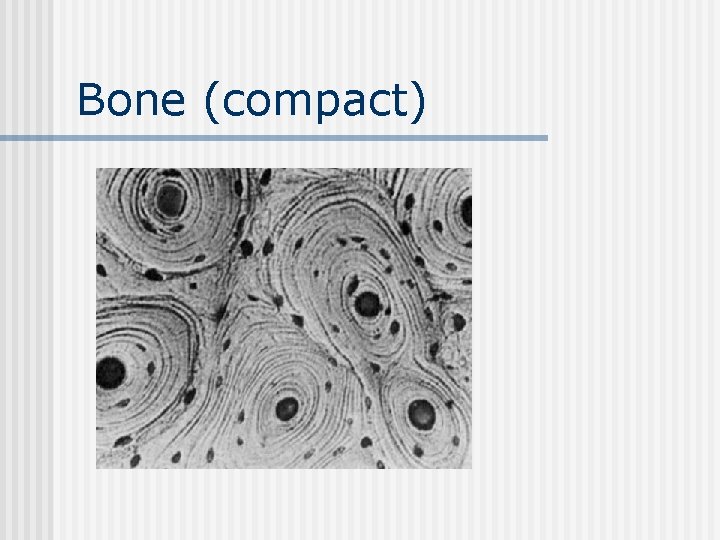
C. Bone n Compact Bone: Forms the bones of the skeletal system. Function: Provide structural support, stores calcium. n Location: All bones, the hard outside layer of bone. n
Bone (compact)
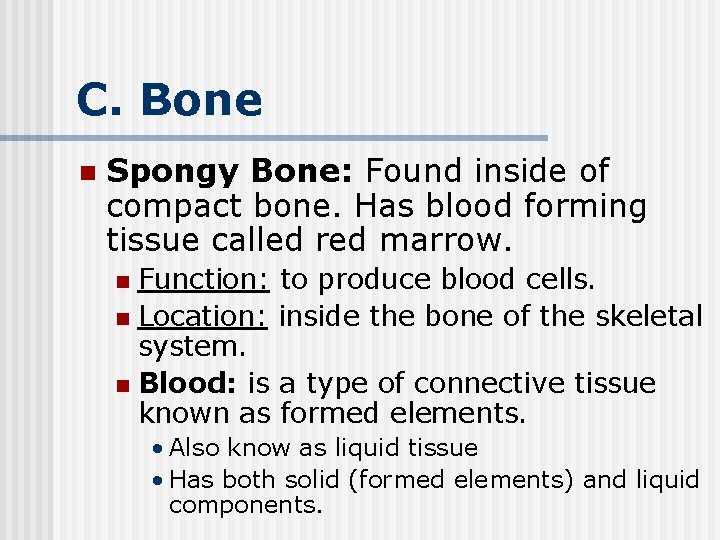
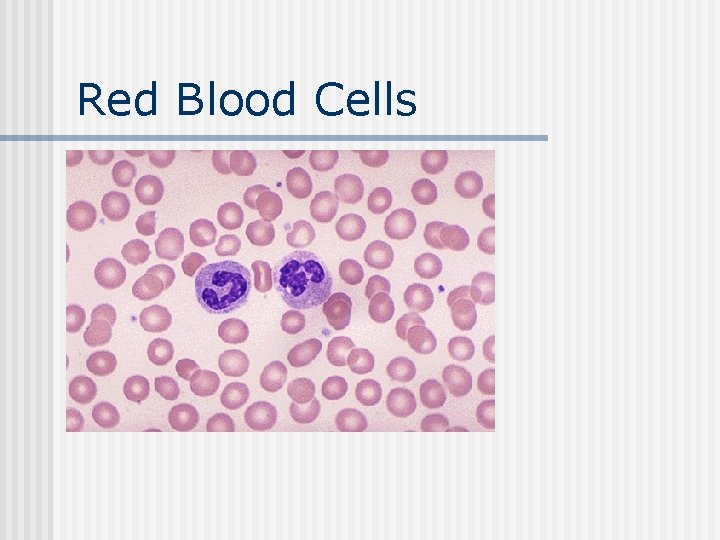
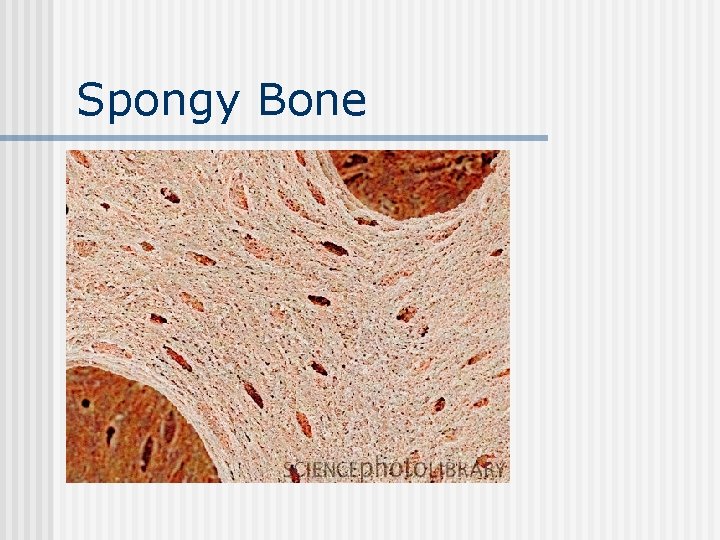
C. Bone n Spongy Bone: Found inside of compact bone. Has blood forming tissue called red marrow. Function: to produce blood cells. n Location: inside the bone of the skeletal system. n Blood: is a type of connective tissue known as formed elements. n • Also know as liquid tissue • Has both solid (formed elements) and liquid components.
Red Blood Cells
Spongy Bone
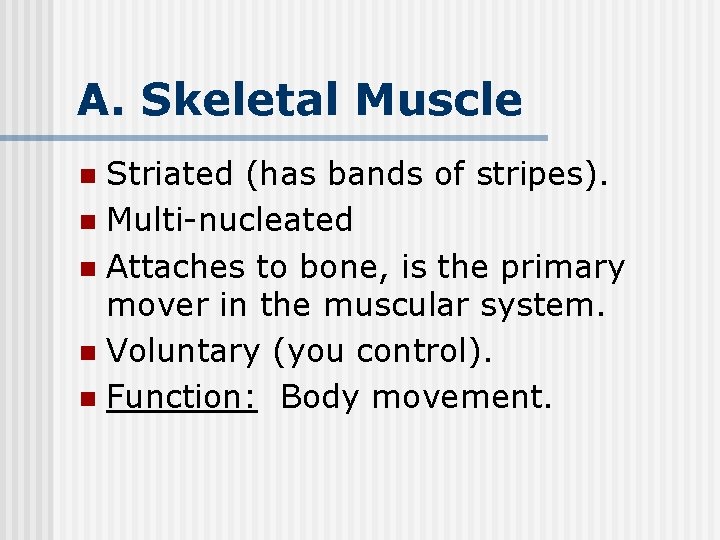
III. Muscle n n n Tissue made of specialized cells that contain protein filaments which allow the cells to contract. The protein fibers are arranged in parallel bundles. The Three types of muscle are: n Skeletal, Smooth, and Cardiac.
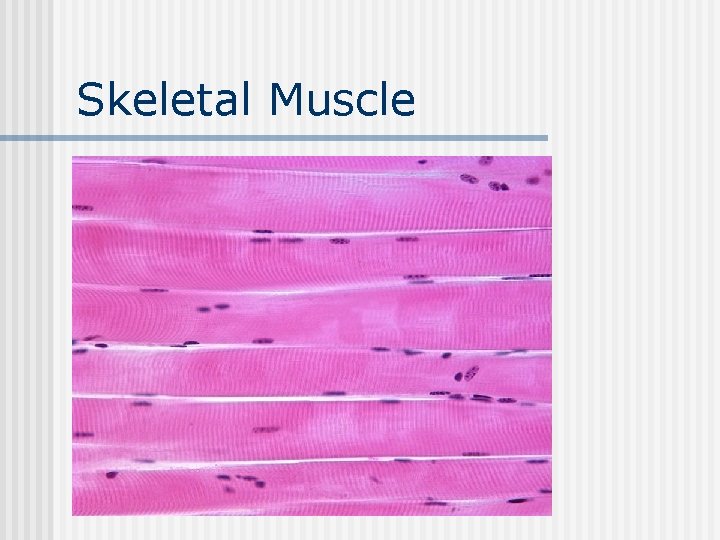
A. Skeletal Muscle Striated (has bands of stripes). n Multi-nucleated n Attaches to bone, is the primary mover in the muscular system. n Voluntary (you control). n Function: Body movement. n
Skeletal Muscle
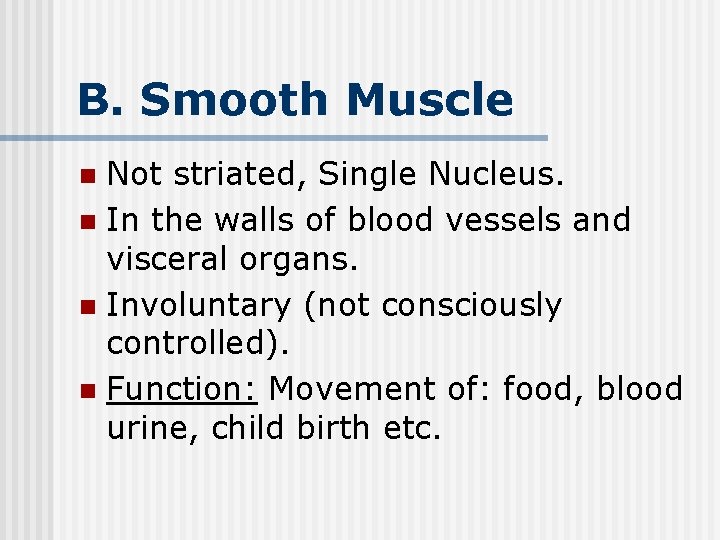
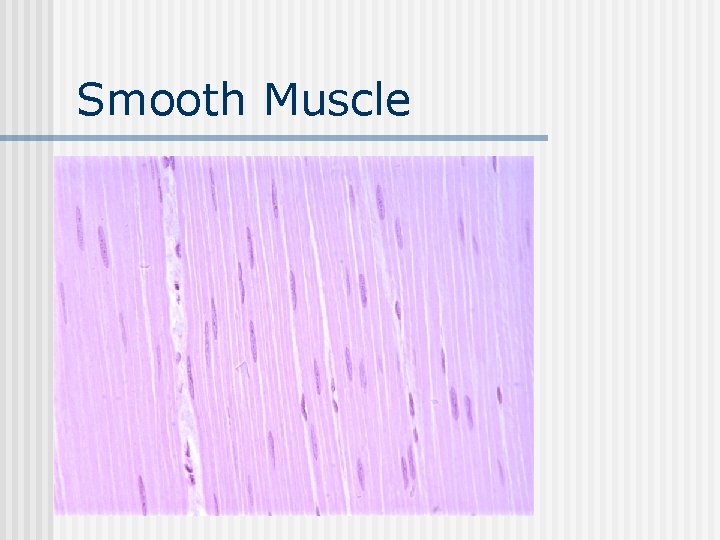
B. Smooth Muscle Not striated, Single Nucleus. n In the walls of blood vessels and visceral organs. n Involuntary (not consciously controlled). n Function: Movement of: food, blood urine, child birth etc. n
Smooth Muscle
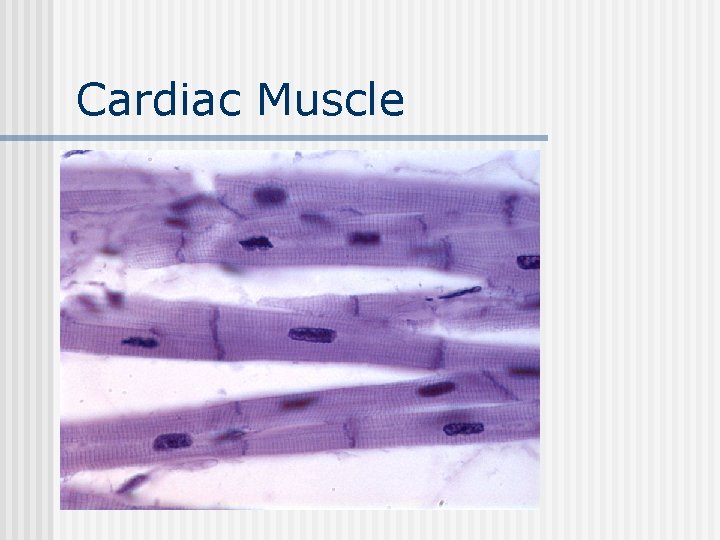
C. Cardiac Muscle Striated, Single Nucleus n Contains thick cell membranes called intercalated disks. n Found in the walls of the heart. n AKA myocardium. n Involuntary. n Function: move blood in the circulatory system. n
Cardiac Muscle
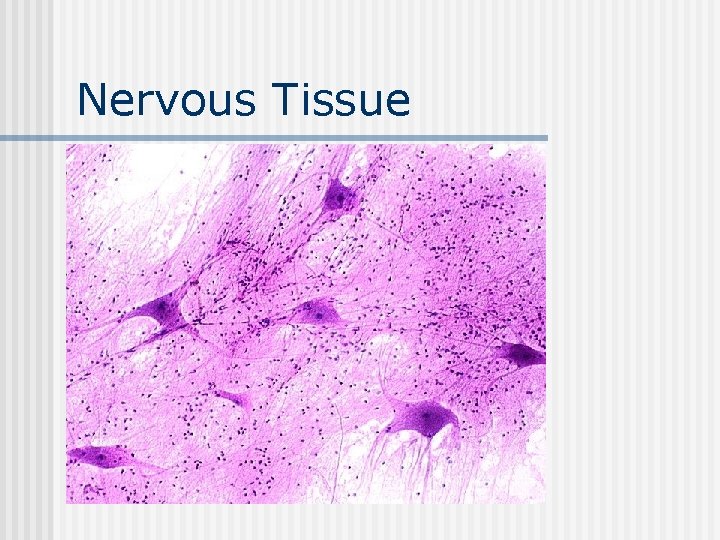
IV. Nervous Tissue n n n Has well developed properties of conductivity and excitability. Transmits electrochemical signals. Two Types of Nervous Tissue: n n Neurons-Basic functioning unit of nervous tissue conducts electrochemical messages. Neuroglia- Cells of the spinal cord and brain that maintain and support neurons.
Nervous Tissue