
Histology study of tissues History of the Microscope

- Slides: 73
Histology “study of tissues”
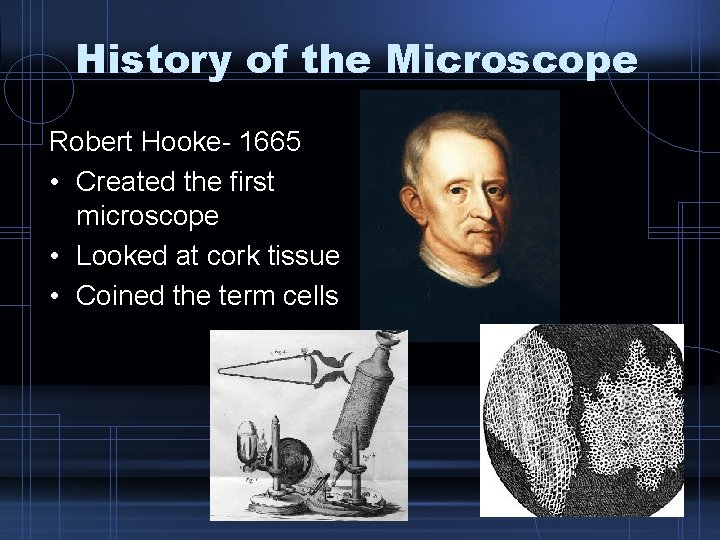
History of the Microscope Robert Hooke- 1665 • Created the first microscope • Looked at cork tissue • Coined the term cells
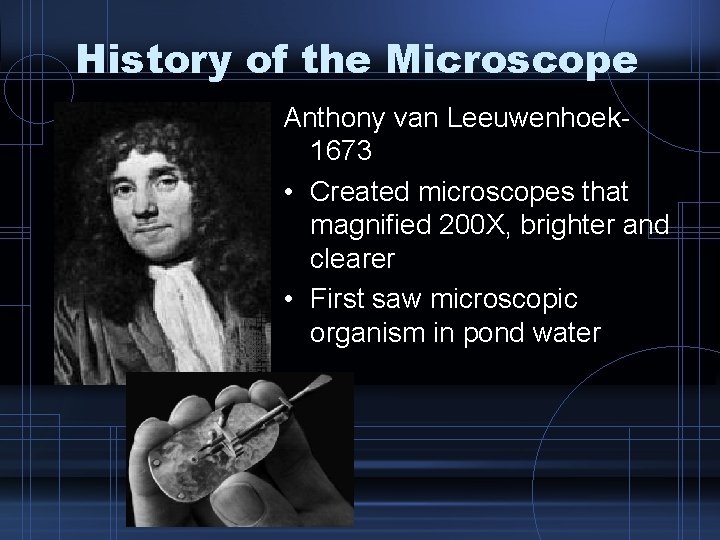
History of the Microscope Anthony van Leeuwenhoek 1673 • Created microscopes that magnified 200 X, brighter and clearer • First saw microscopic organism in pond water
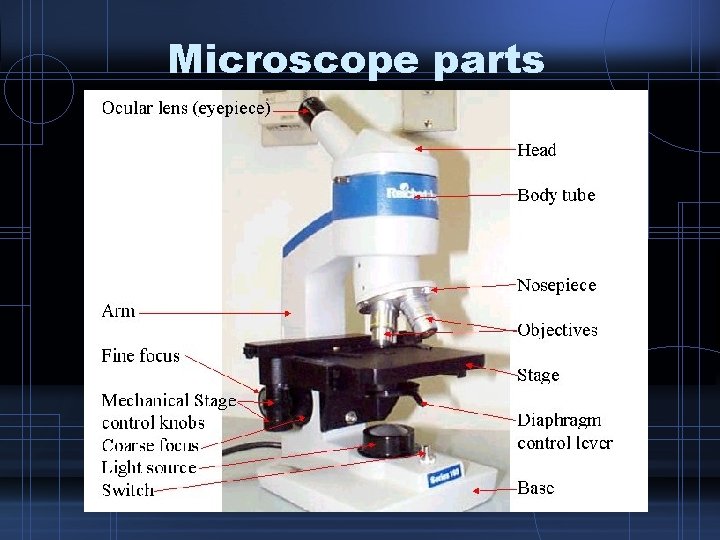
Microscope parts
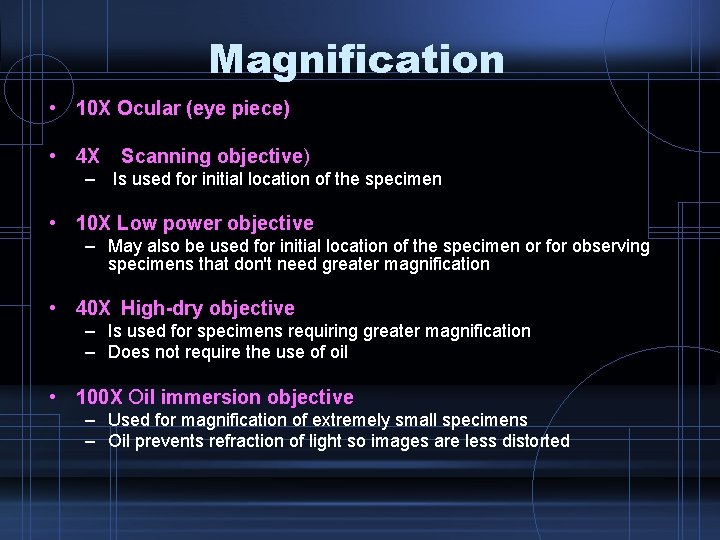
Magnification • 10 X Ocular (eye piece) • 4 X Scanning objective) – Is used for initial location of the specimen • 10 X Low power objective – May also be used for initial location of the specimen or for observing specimens that don't need greater magnification • 40 X High-dry objective – Is used for specimens requiring greater magnification – Does not require the use of oil • 100 X Oil immersion objective – Used for magnification of extremely small specimens – Oil prevents refraction of light so images are less distorted
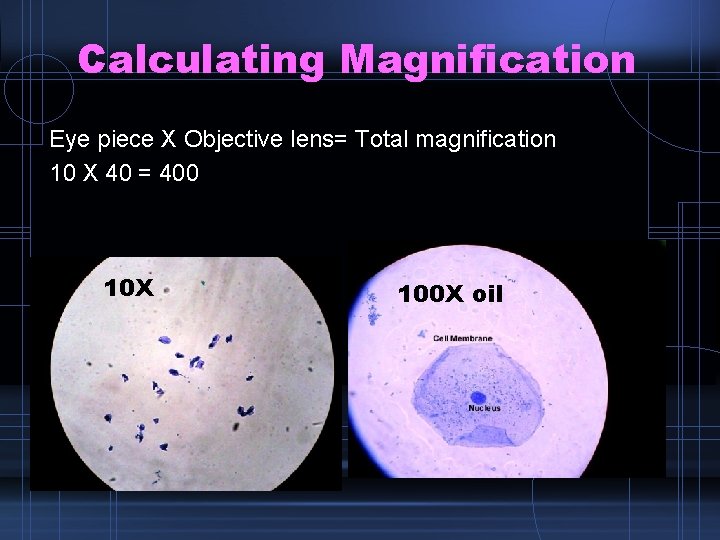
Calculating Magnification Eye piece X Objective lens= Total magnification 10 X 40 = 400 10 X 100 X oil
Functions • Stage- used to set slide on • Mechanical Stage- had adjustable brackets that move stage around • Condenser- between light source and stage, concentrates light • Diaphragm- controls amount of light coming in and out
Functions • Coarse adjustment knob- used first to locate specimen **never use in high-dry or oil immersion or you will crack the slide • Fine adjustment know- moves very little used to focus in high powers
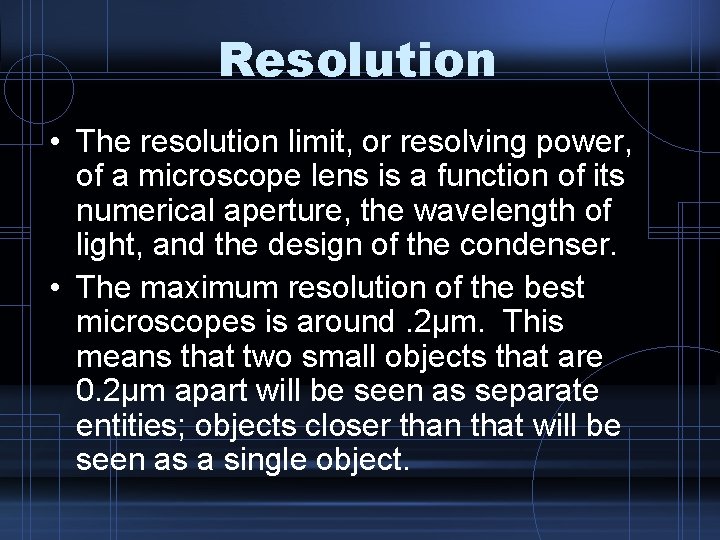
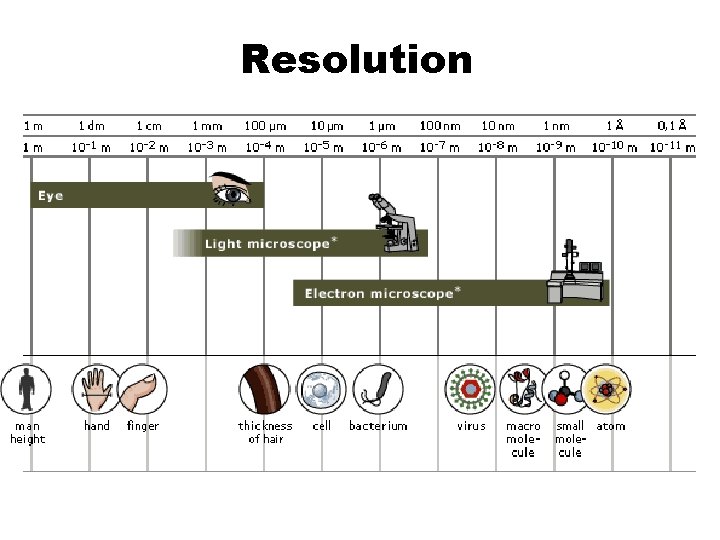
Resolution • The resolution limit, or resolving power, of a microscope lens is a function of its numerical aperture, the wavelength of light, and the design of the condenser. • The maximum resolution of the best microscopes is around. 2µm. This means that two small objects that are 0. 2µm apart will be seen as separate entities; objects closer than that will be seen as a single object.
Resolution
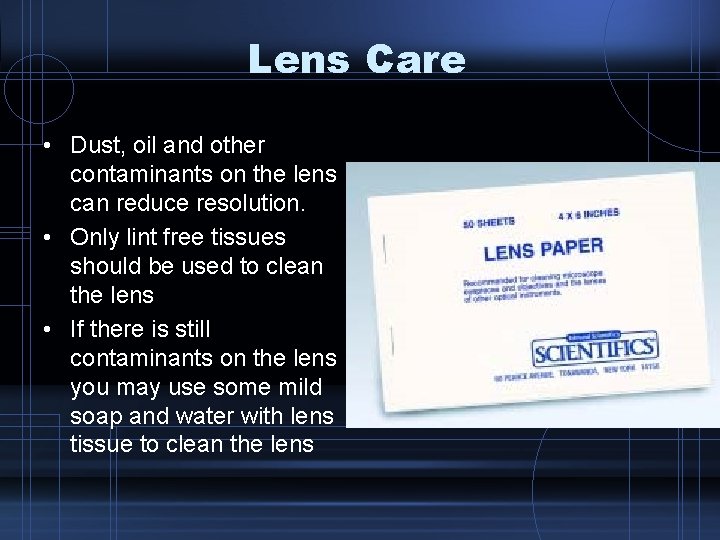
Lens Care • Dust, oil and other contaminants on the lens can reduce resolution. • Only lint free tissues should be used to clean the lens • If there is still contaminants on the lens you may use some mild soap and water with lens tissue to clean the lens
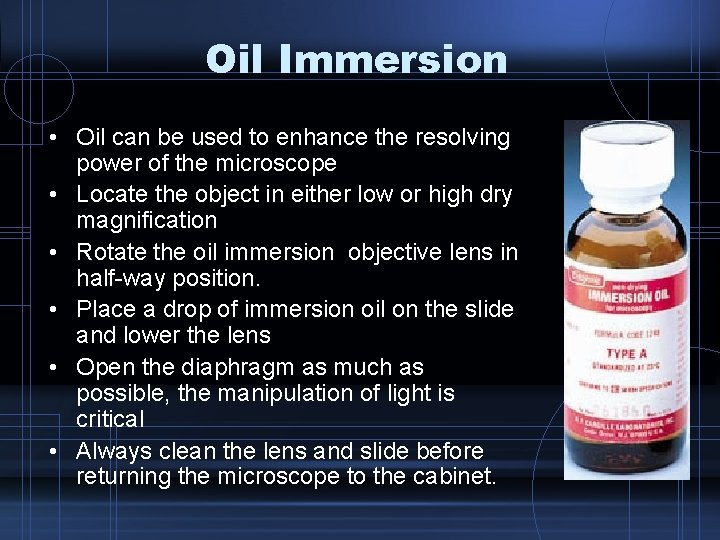
Oil Immersion • Oil can be used to enhance the resolving power of the microscope • Locate the object in either low or high dry magnification • Rotate the oil immersion objective lens in half-way position. • Place a drop of immersion oil on the slide and lower the lens • Open the diaphragm as much as possible, the manipulation of light is critical • Always clean the lens and slide before returning the microscope to the cabinet.
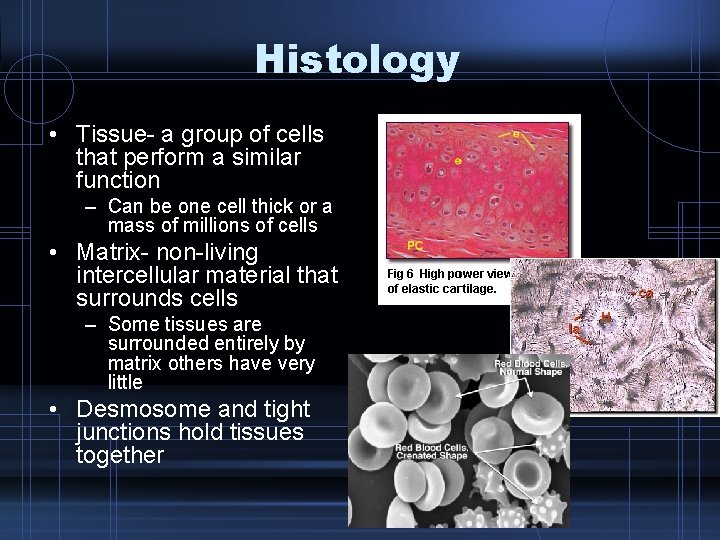
Histology • Tissue- a group of cells that perform a similar function – Can be one cell thick or a mass of millions of cells • Matrix- non-living intercellular material that surrounds cells – Some tissues are surrounded entirely by matrix others have very little • Desmosome and tight junctions hold tissues together
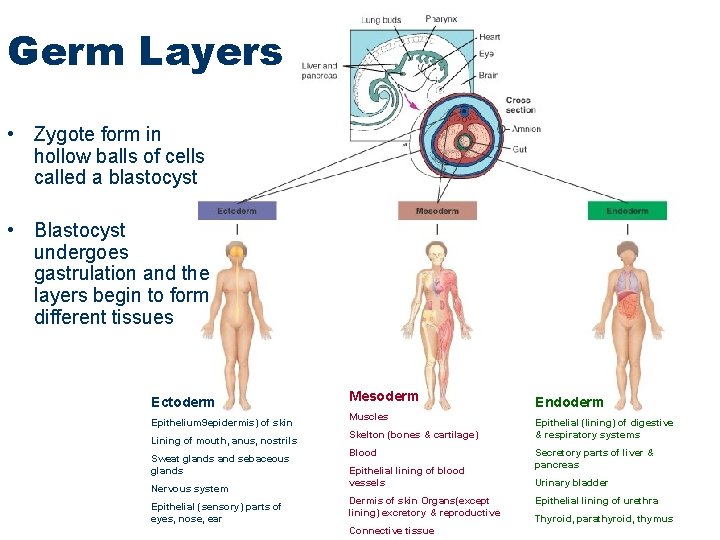
Germ Layers • Zygote form in hollow balls of cells called a blastocyst • Blastocyst undergoes gastrulation and the layers begin to form different tissues Ectoderm Epithelium 9 epidermis) of skin Lining of mouth, anus, nostrils Sweat glands and sebaceous glands Nervous system Epithelial (sensory) parts of eyes, nose, ear Mesoderm Muscles Skelton (bones & cartilage) Blood Epithelial lining of blood vessels Dermis of skin Organs(except lining) excretory & reproductive Connective tissue Endoderm Epithelial (lining) of digestive & respiratory systems Secretory parts of liver & pancreas Urinary bladder Epithelial lining of urethra Thyroid, parathyroid, thymus
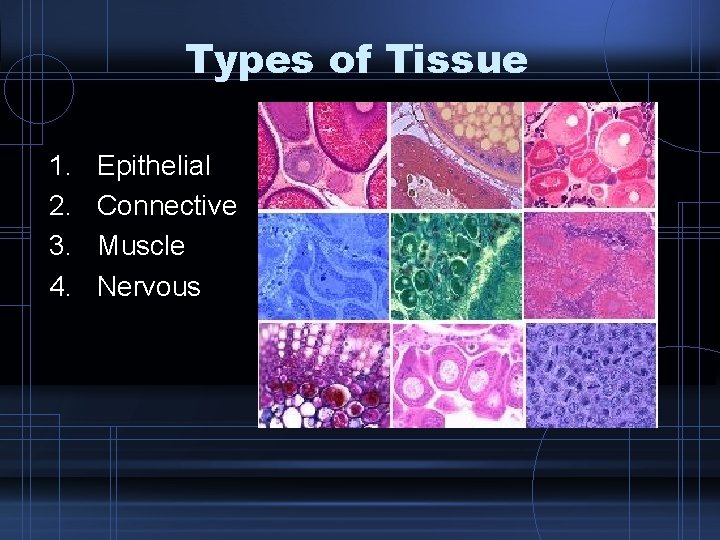
Types of Tissue 1. 2. 3. 4. Epithelial Connective Muscle Nervous
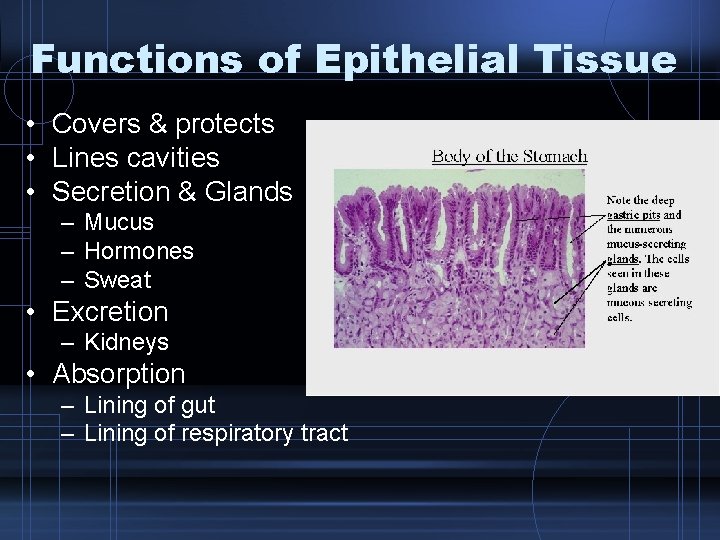
Functions of Epithelial Tissue • Covers & protects • Lines cavities • Secretion & Glands – Mucus – Hormones – Sweat • Excretion – Kidneys • Absorption – Lining of gut – Lining of respiratory tract
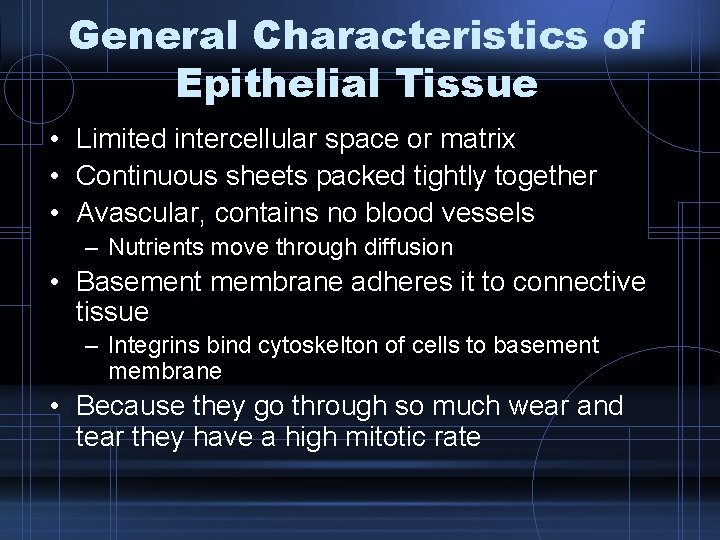
General Characteristics of Epithelial Tissue • Limited intercellular space or matrix • Continuous sheets packed tightly together • Avascular, contains no blood vessels – Nutrients move through diffusion • Basement membrane adheres it to connective tissue – Integrins bind cytoskelton of cells to basement membrane • Because they go through so much wear and tear they have a high mitotic rate
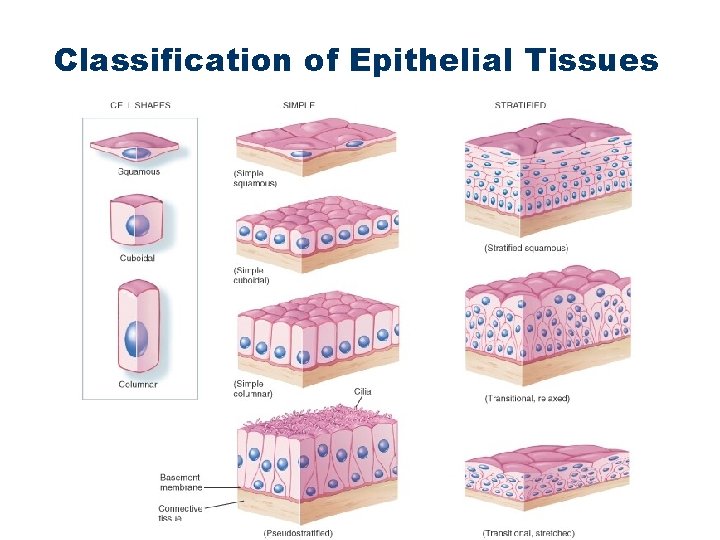
Classification of Epithelial Tissues
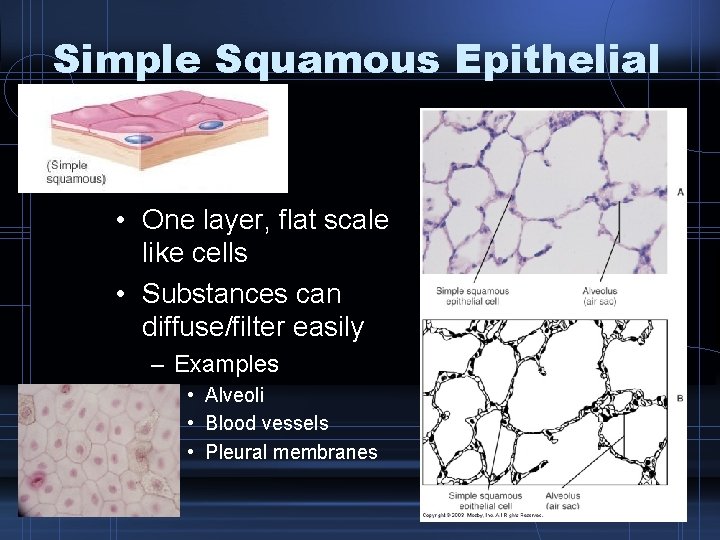
Simple Squamous Epithelial • One layer, flat scale like cells • Substances can diffuse/filter easily – Examples • Alveoli • Blood vessels • Pleural membranes
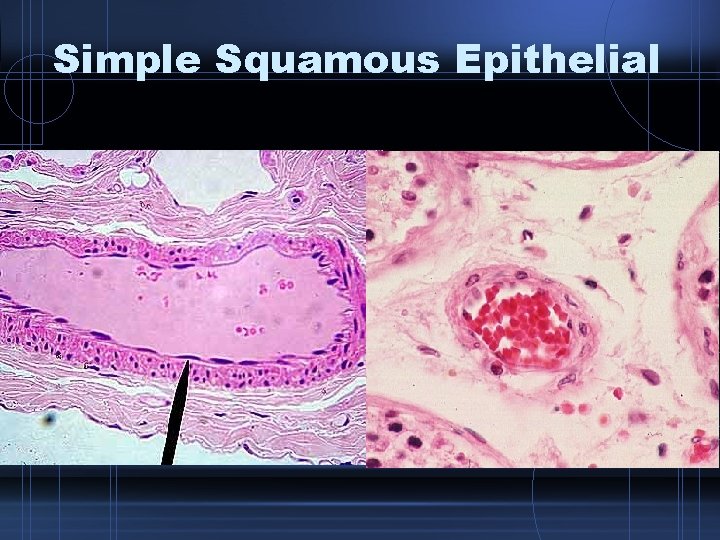
Simple Squamous Epithelial
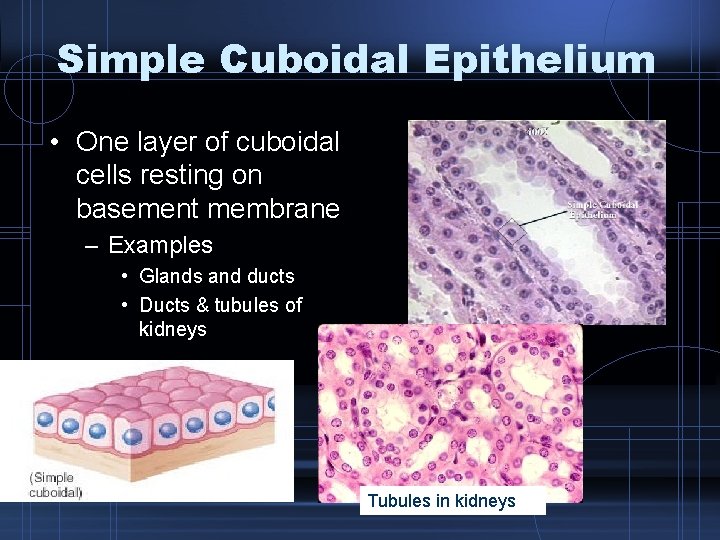
Simple Cuboidal Epithelium • One layer of cuboidal cells resting on basement membrane – Examples • Glands and ducts • Ducts & tubules of kidneys Tubules in kidneys
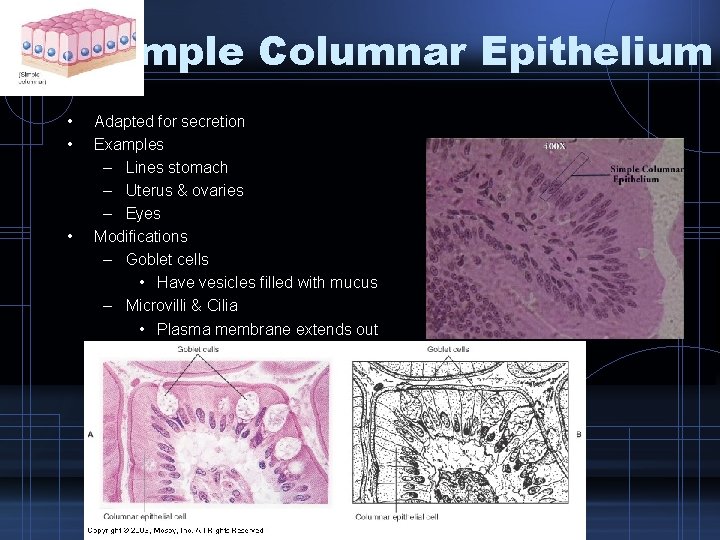
Simple Columnar Epithelium • • • Adapted for secretion Examples – Lines stomach – Uterus & ovaries – Eyes Modifications – Goblet cells • Have vesicles filled with mucus – Microvilli & Cilia • Plasma membrane extends out
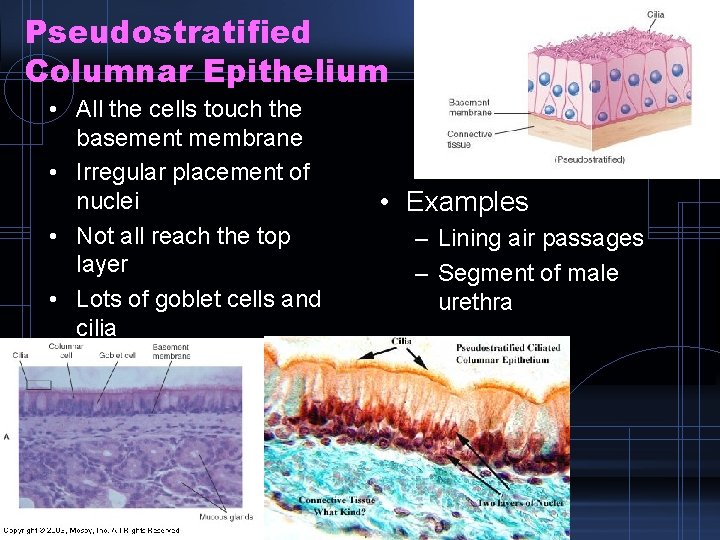
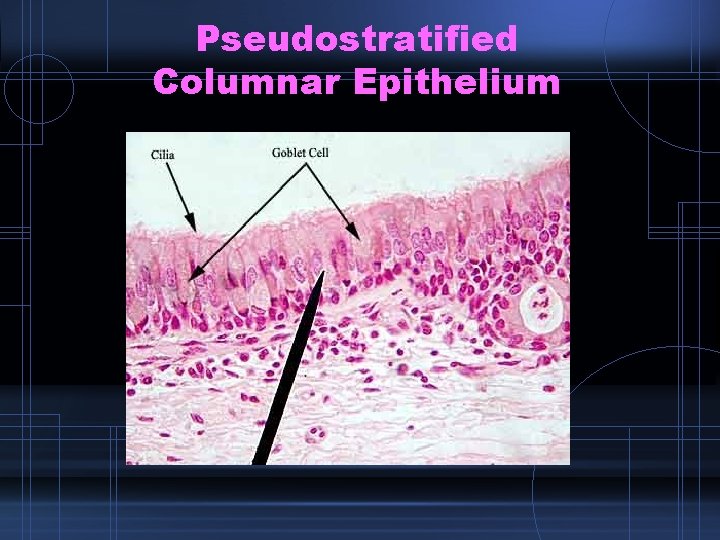
Pseudostratified Columnar Epithelium • All the cells touch the basement membrane • Irregular placement of nuclei • Not all reach the top layer • Lots of goblet cells and cilia • Examples – Lining air passages – Segment of male urethra
Pseudostratified Columnar Epithelium
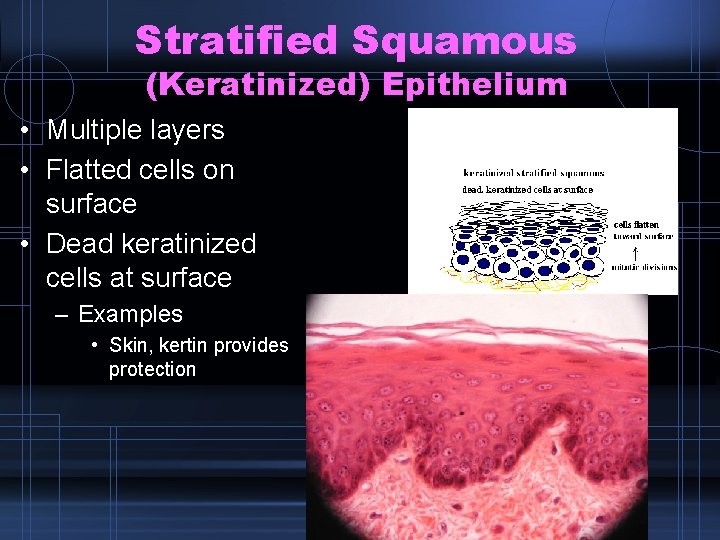
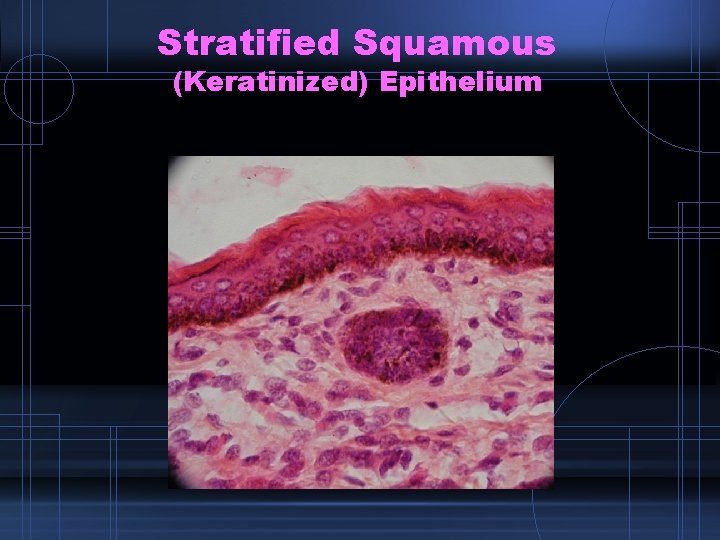
Stratified Squamous (Keratinized) Epithelium • Multiple layers • Flatted cells on surface • Dead keratinized cells at surface – Examples • Skin, kertin provides protection
Stratified Squamous (Keratinized) Epithelium
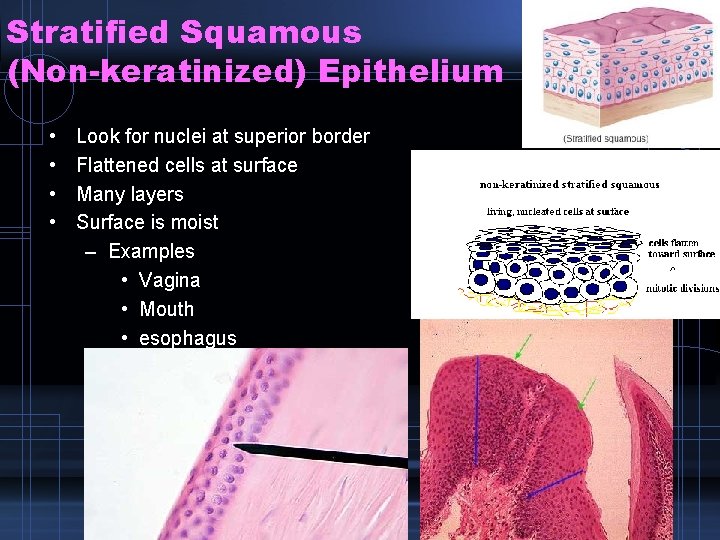
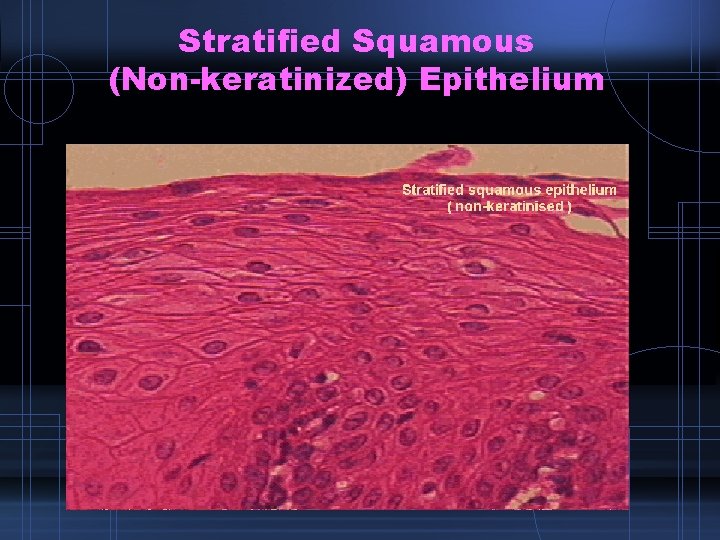
Stratified Squamous (Non-keratinized) Epithelium • • Look for nuclei at superior border Flattened cells at surface Many layers Surface is moist – Examples • Vagina • Mouth • esophagus
Stratified Squamous (Non-keratinized) Epithelium
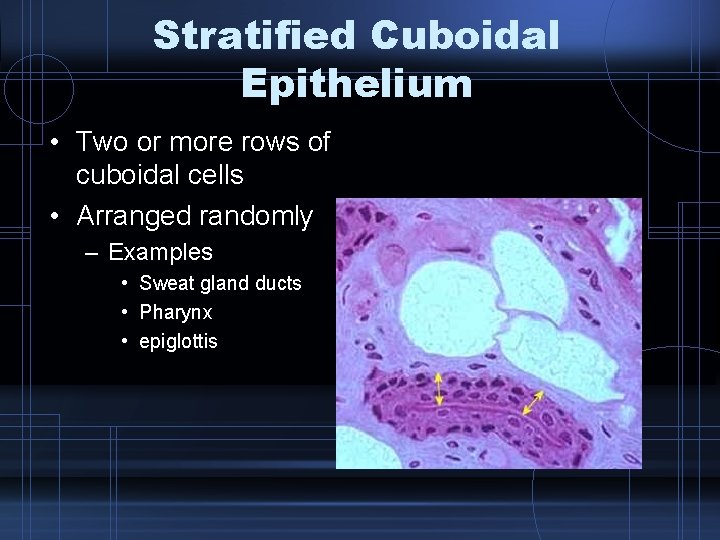
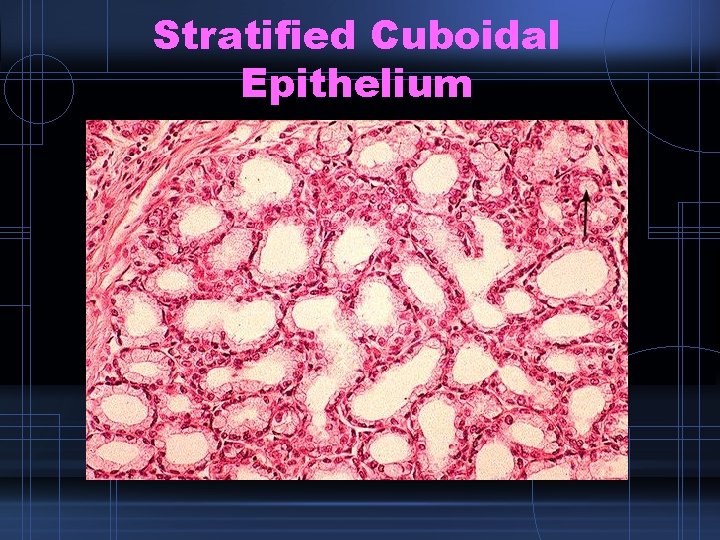
Stratified Cuboidal Epithelium • Two or more rows of cuboidal cells • Arranged randomly – Examples • Sweat gland ducts • Pharynx • epiglottis
Stratified Cuboidal Epithelium
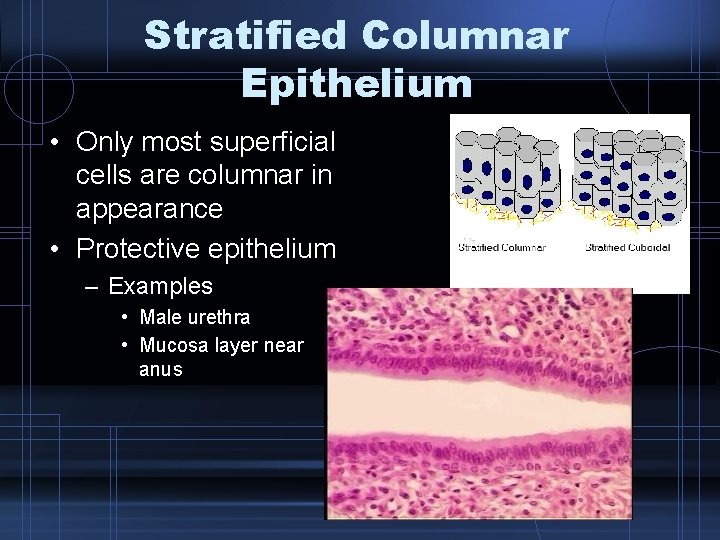
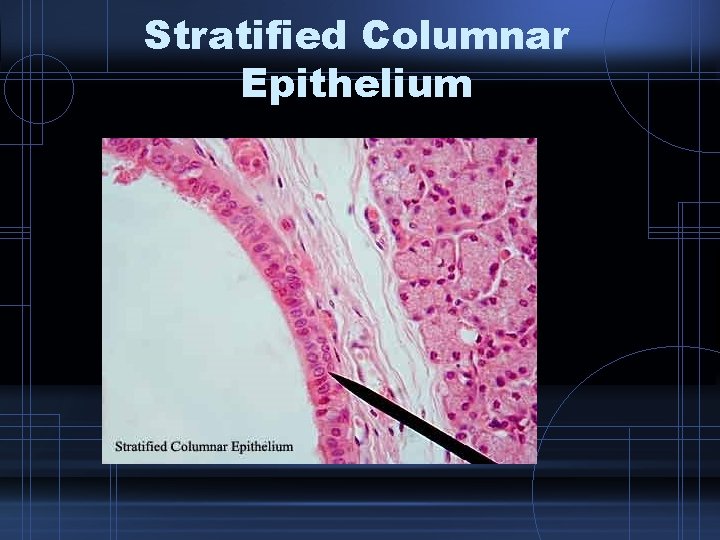
Stratified Columnar Epithelium • Only most superficial cells are columnar in appearance • Protective epithelium – Examples • Male urethra • Mucosa layer near anus
Stratified Columnar Epithelium
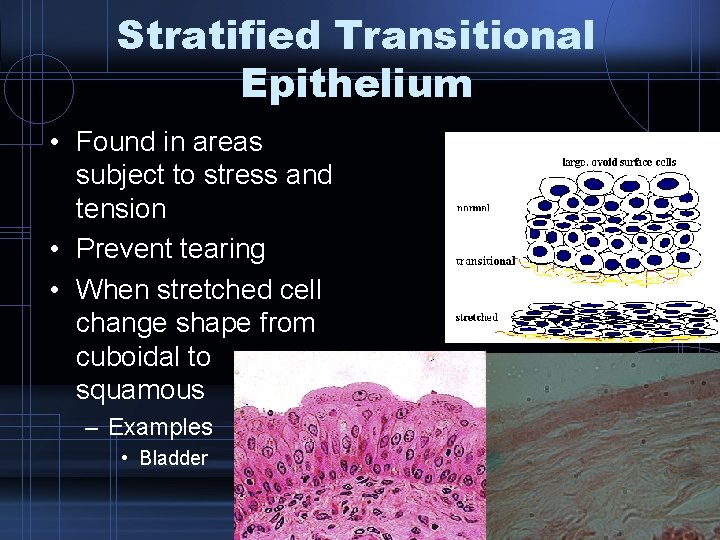
Stratified Transitional Epithelium • Found in areas subject to stress and tension • Prevent tearing • When stretched cell change shape from cuboidal to squamous – Examples • Bladder
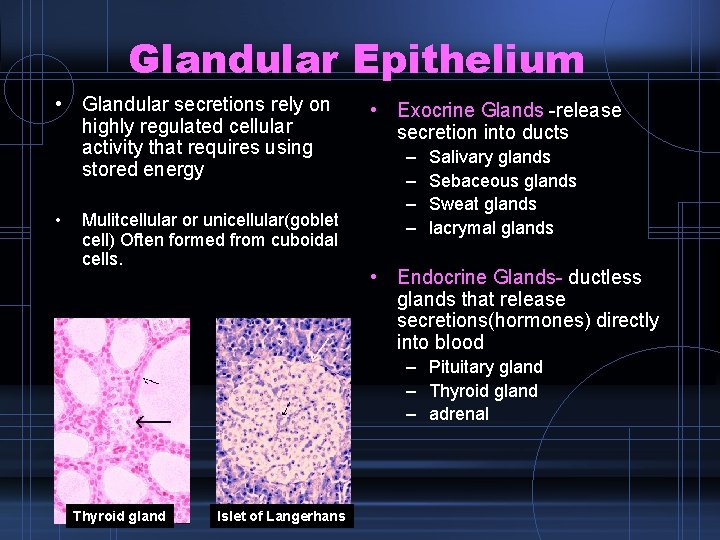
Glandular Epithelium • Glandular secretions rely on highly regulated cellular activity that requires using stored energy • Mulitcellular or unicellular(goblet cell) Often formed from cuboidal cells. • Exocrine Glands -release secretion into ducts – – Salivary glands Sebaceous glands Sweat glands lacrymal glands • Endocrine Glands- ductless glands that release secretions(hormones) directly into blood – Pituitary gland – Thyroid gland – adrenal Thyroid gland Islet of Langerhans
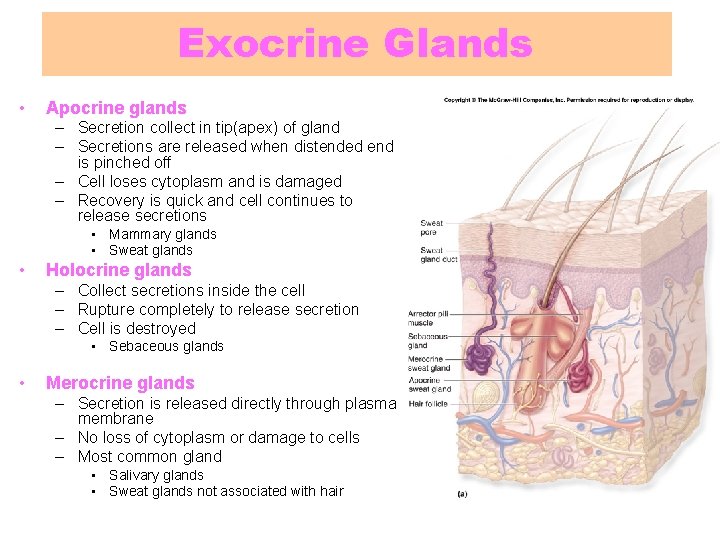
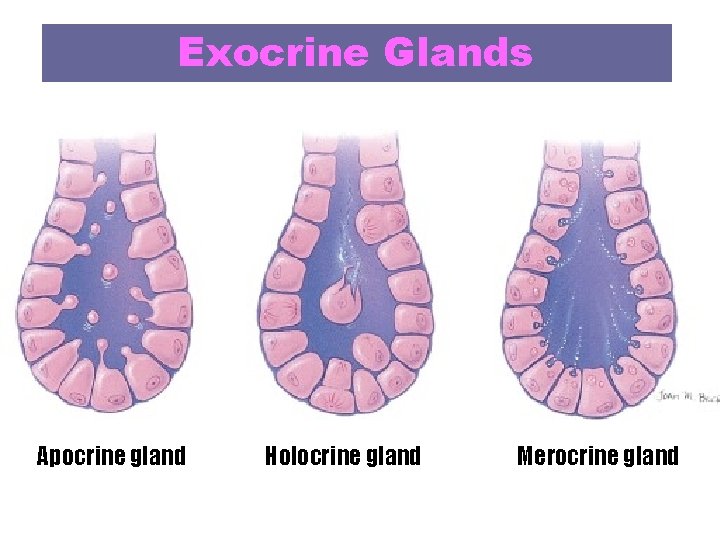
Exocrine Glands • Apocrine glands – Secretion collect in tip(apex) of gland – Secretions are released when distended end is pinched off – Cell loses cytoplasm and is damaged – Recovery is quick and cell continues to release secretions • Mammary glands • Sweat glands • Holocrine glands – Collect secretions inside the cell – Rupture completely to release secretion – Cell is destroyed • Sebaceous glands • Merocrine glands – Secretion is released directly through plasma membrane – No loss of cytoplasm or damage to cells – Most common gland • Salivary glands • Sweat glands not associated with hair
Exocrine Glands Apocrine gland Holocrine gland Merocrine gland
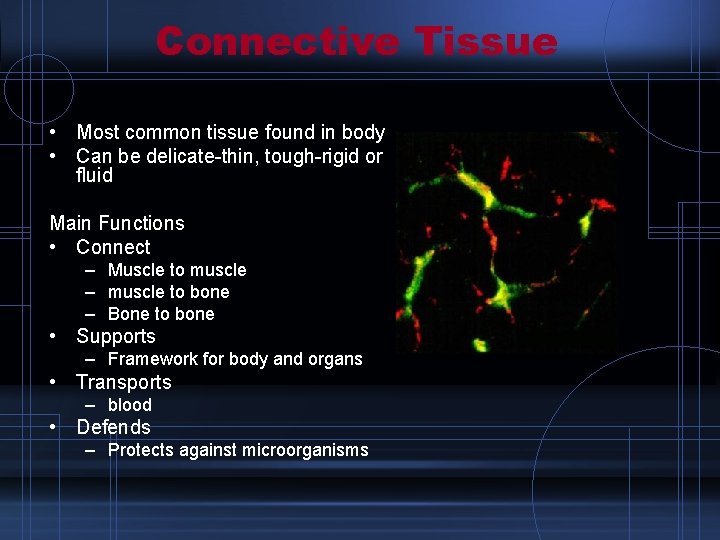
Connective Tissue • Most common tissue found in body • Can be delicate-thin, tough-rigid or fluid Main Functions • Connect – Muscle to muscle – muscle to bone – Bone to bone • Supports – Framework for body and organs • Transports – blood • Defends – Protects against microorganisms
Connective Tissue Characteristics • Matrix-intercellular material, fibers • Ground substance, provides medium for exchange of substances • components of matrix and ground tissue define the type of tissue • Highly vascular and innervated (not all) • Mesenchyme- tissue in embryo that all other connective tissue arises from
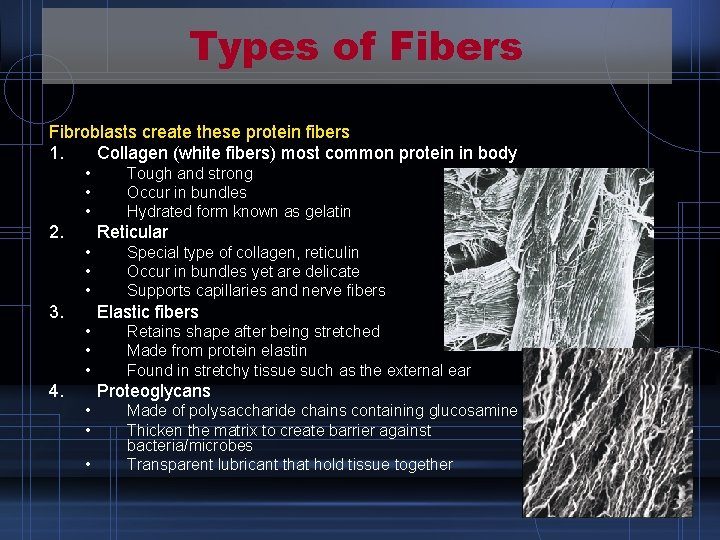
Types of Fibers Fibroblasts create these protein fibers 1. Collagen (white fibers) most common protein in body • • • 2. Tough and strong Occur in bundles Hydrated form known as gelatin Reticular • • • 3. Special type of collagen, reticulin Occur in bundles yet are delicate Supports capillaries and nerve fibers Elastic fibers • • • 4. Retains shape after being stretched Made from protein elastin Found in stretchy tissue such as the external ear Proteoglycans • • • Made of polysaccharide chains containing glucosamine Thicken the matrix to create barrier against bacteria/microbes Transparent lubricant that hold tissue together
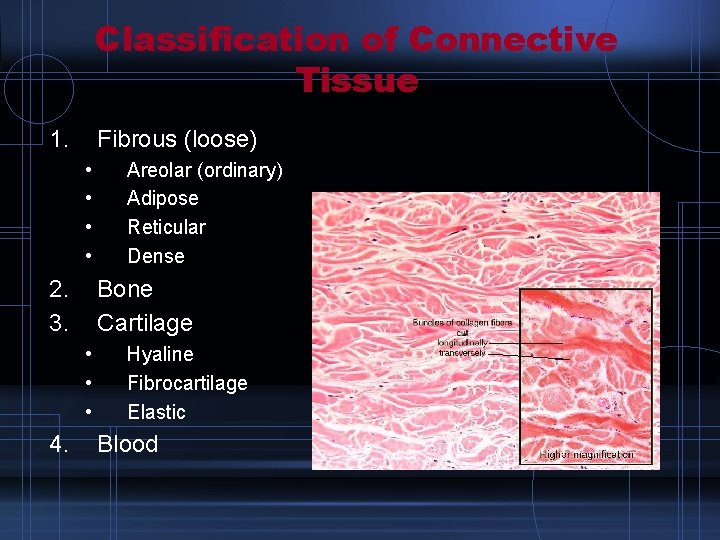
Classification of Connective Tissue 1. Fibrous (loose) • • 2. 3. Bone Cartilage • • • 4. Areolar (ordinary) Adipose Reticular Dense Hyaline Fibrocartilage Elastic Blood
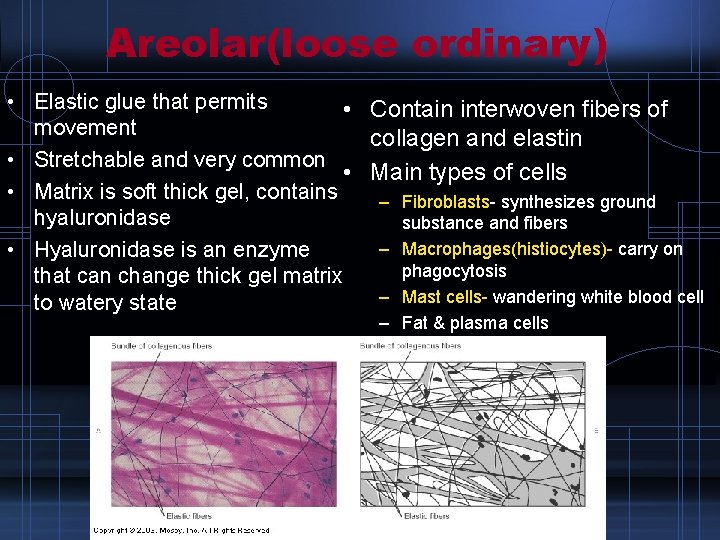
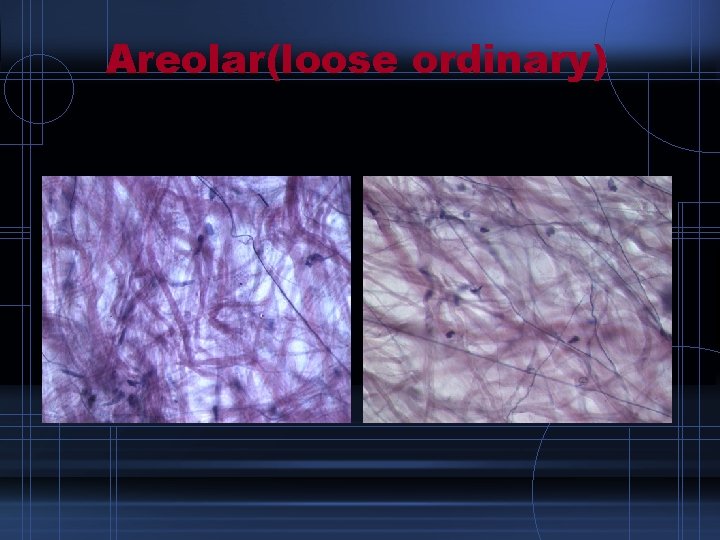
Areolar(loose ordinary) • Elastic glue that permits • Contain interwoven fibers of movement collagen and elastin • Stretchable and very common • Main types of cells • Matrix is soft thick gel, contains – Fibroblasts- synthesizes ground hyaluronidase substance and fibers – Macrophages(histiocytes)- carry on • Hyaluronidase is an enzyme phagocytosis that can change thick gel matrix – Mast cells- wandering white blood cell to watery state – Fat & plasma cells
Areolar(loose ordinary)
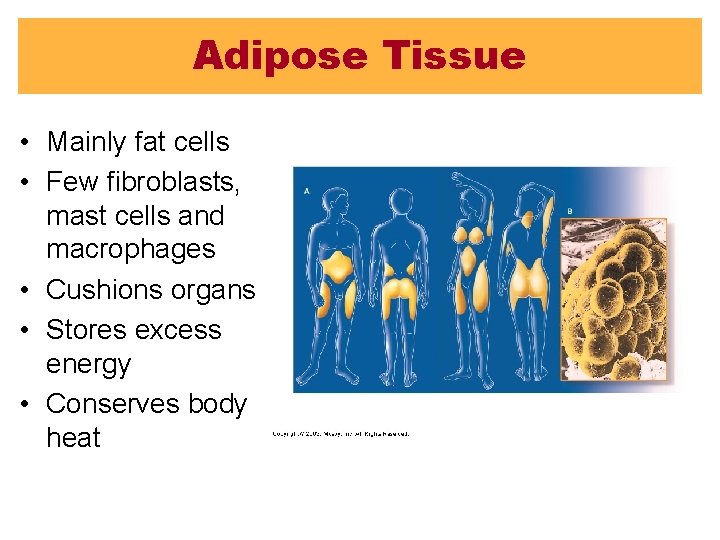
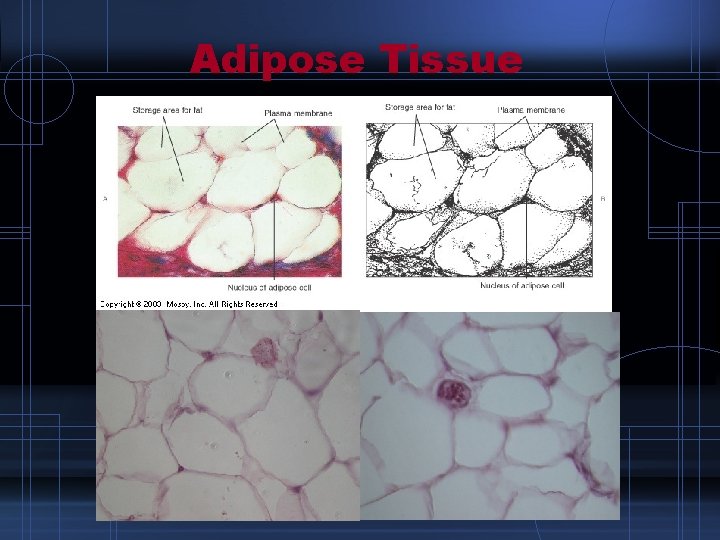
Adipose Tissue • Mainly fat cells • Few fibroblasts, mast cells and macrophages • Cushions organs • Stores excess energy • Conserves body heat
Adipose Tissue
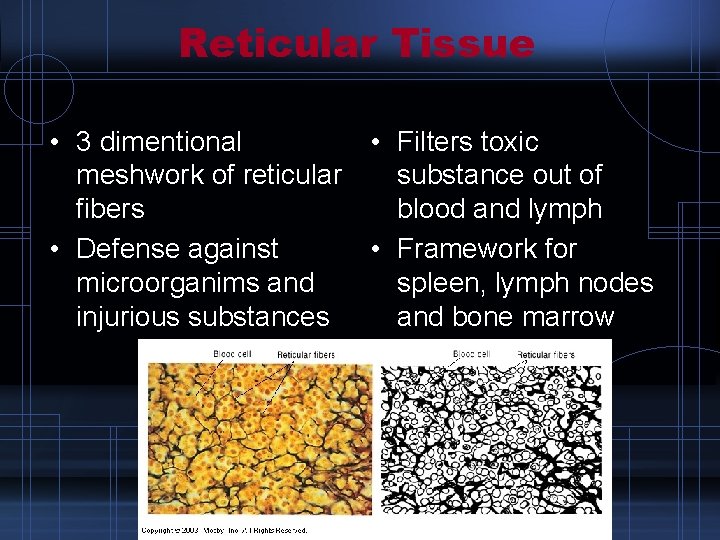
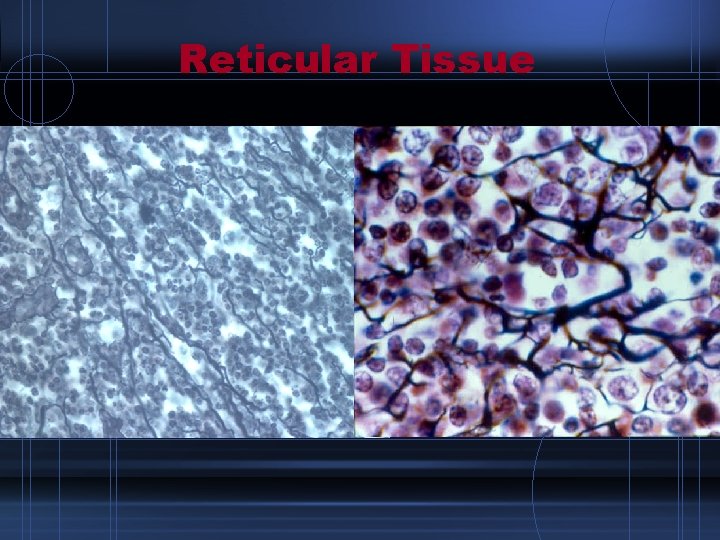
Reticular Tissue • 3 dimentional • Filters toxic meshwork of reticular substance out of fibers blood and lymph • Defense against • Framework for microorganims and spleen, lymph nodes injurious substances and bone marrow
Reticular Tissue
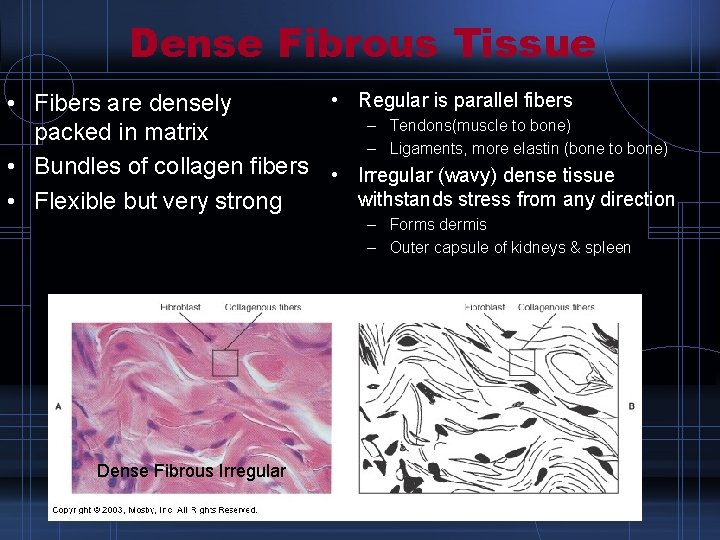
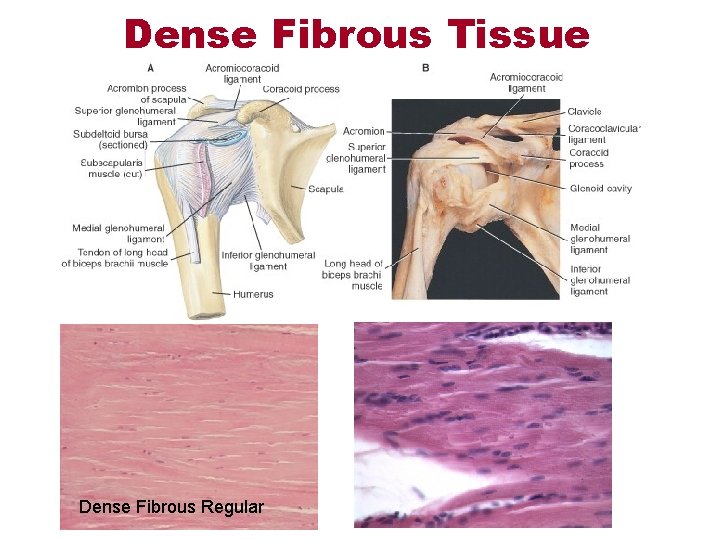
Dense Fibrous Tissue • Regular is parallel fibers • Fibers are densely – Tendons(muscle to bone) packed in matrix – Ligaments, more elastin (bone to bone) • Bundles of collagen fibers • Irregular (wavy) dense tissue withstands stress from any direction • Flexible but very strong – Forms dermis – Outer capsule of kidneys & spleen Dense Fibrous Irregular
Dense Fibrous Tissue Dense Fibrous Regular
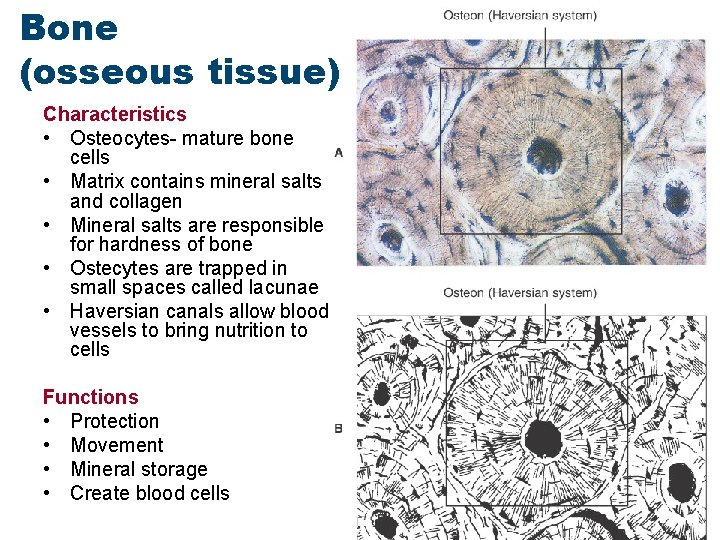
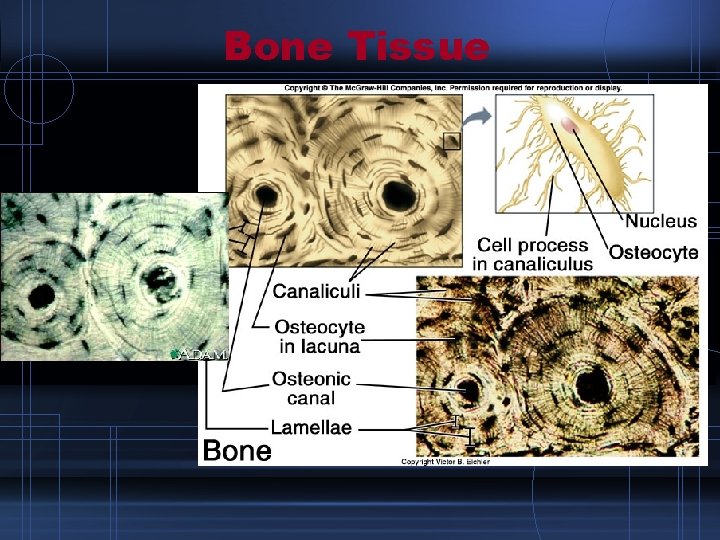
Bone (osseous tissue) Characteristics • Osteocytes- mature bone cells • Matrix contains mineral salts and collagen • Mineral salts are responsible for hardness of bone • Ostecytes are trapped in small spaces called lacunae • Haversian canals allow blood vessels to bring nutrition to cells Functions • Protection • Movement • Mineral storage • Create blood cells
Bone Tissue
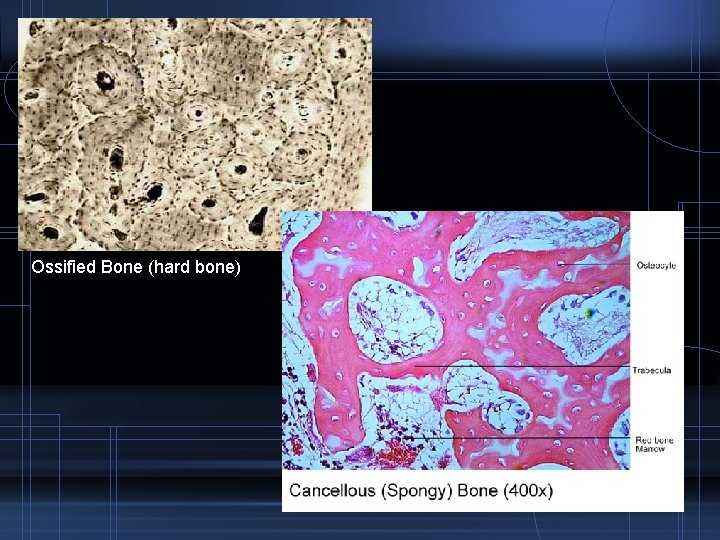
Cancellous Bone (spongy bone) Ossified Bone (hard bone)
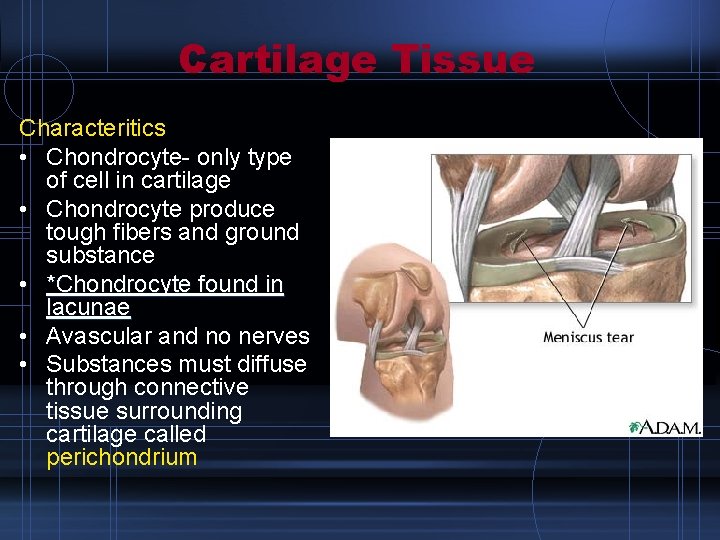
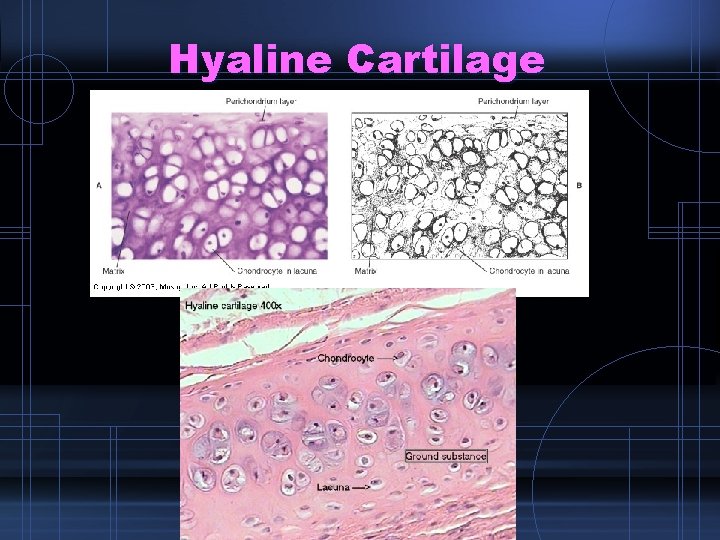
Cartilage Tissue Characteritics • Chondrocyte- only type of cell in cartilage • Chondrocyte produce tough fibers and ground substance • *Chondrocyte found in lacunae • Avascular and no nerves • Substances must diffuse through connective tissue surrounding cartilage called perichondrium
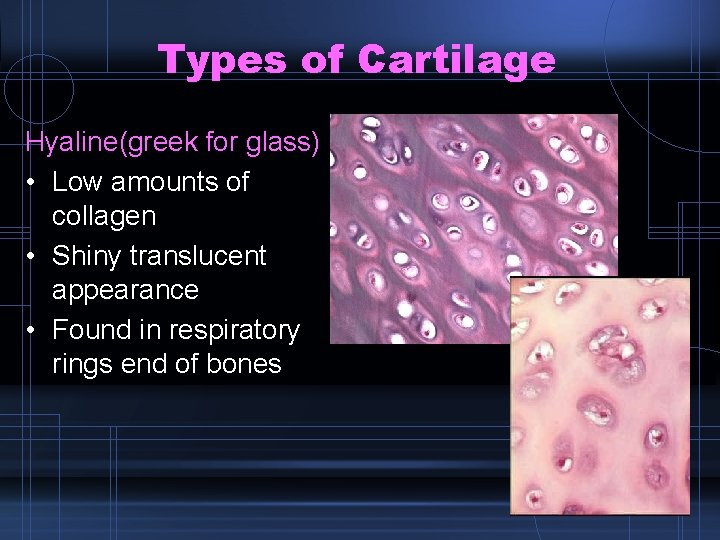
Types of Cartilage Hyaline(greek for glass) • Low amounts of collagen • Shiny translucent appearance • Found in respiratory rings end of bones
Hyaline Cartilage
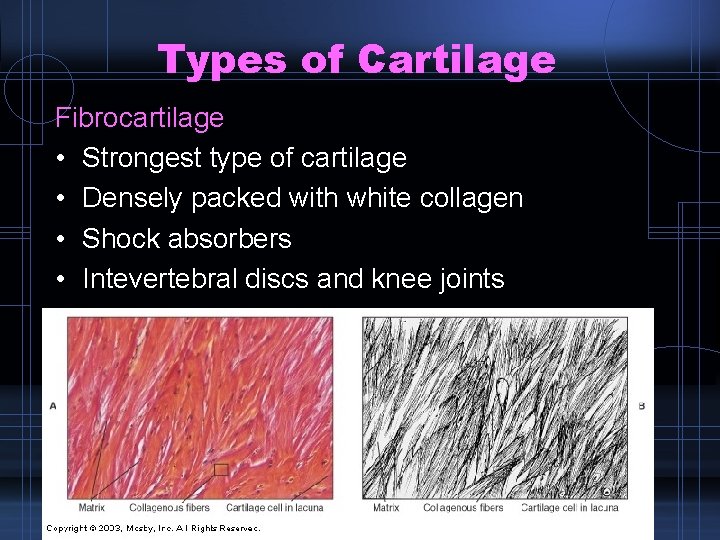
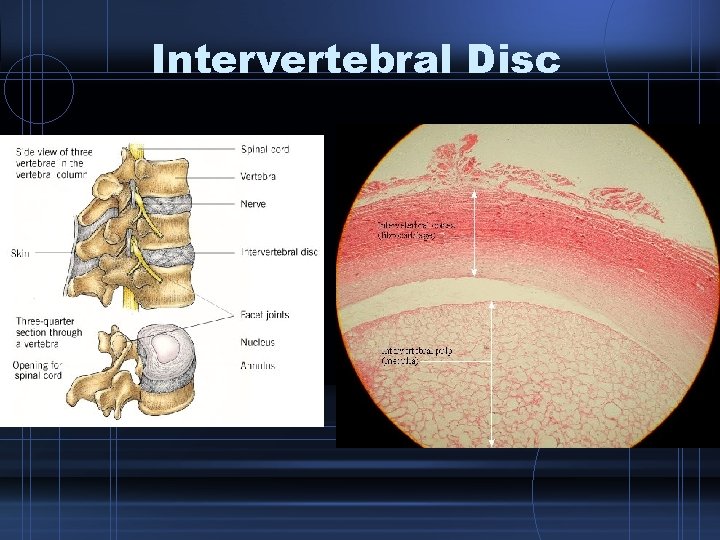
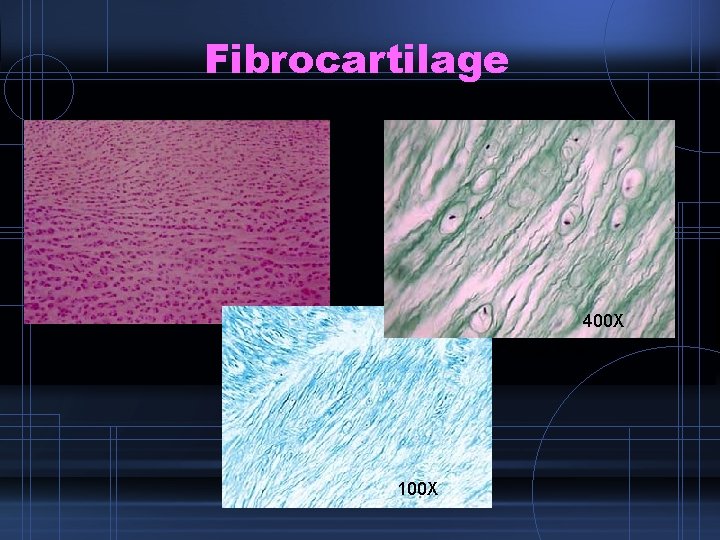
Types of Cartilage Fibrocartilage • Strongest type of cartilage • Densely packed with white collagen • Shock absorbers • Intevertebral discs and knee joints
Intervertebral Disc
Fibrocartilage 400 X Dense Fibrous Connective 100 X
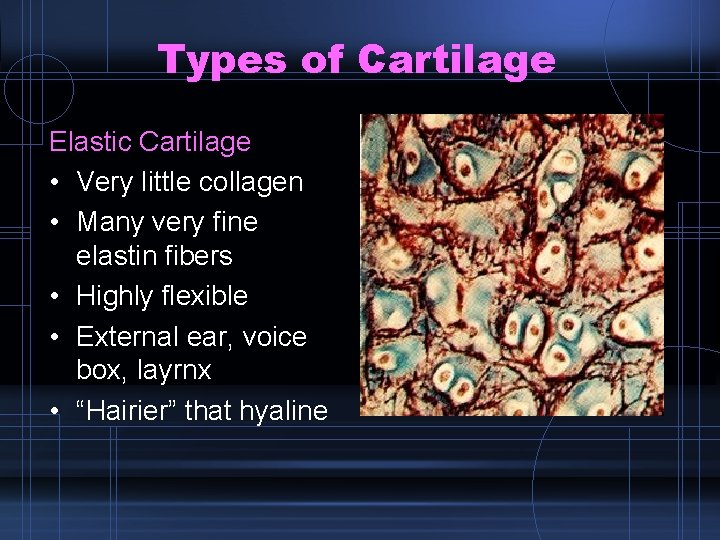
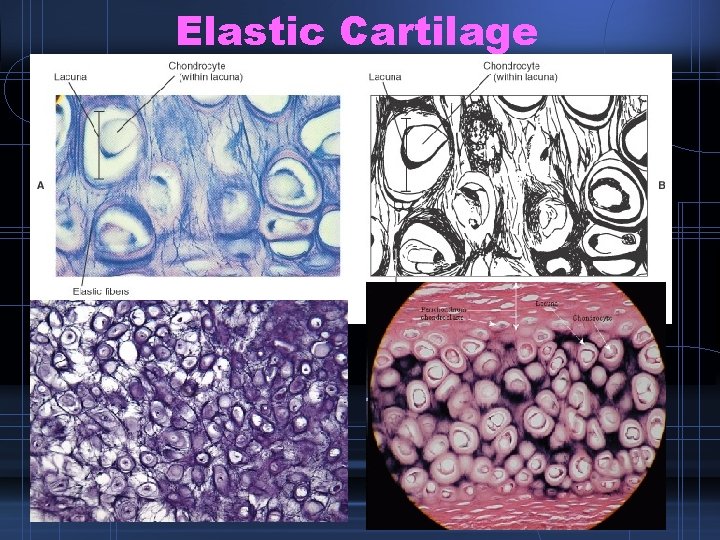
Types of Cartilage Elastic Cartilage • Very little collagen • Many very fine elastin fibers • Highly flexible • External ear, voice box, layrnx • “Hairier” that hyaline
Elastic Cartilage
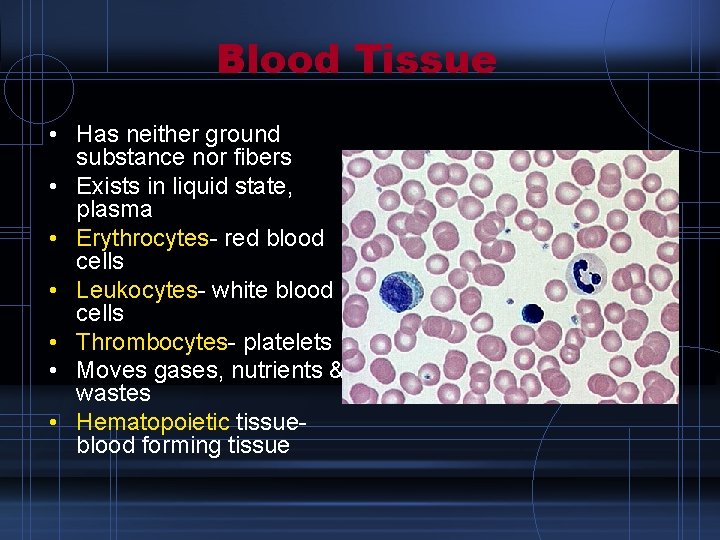
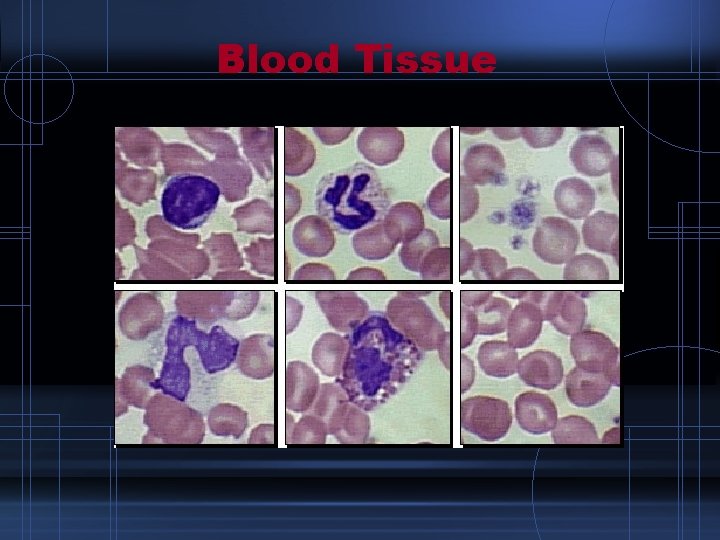
Blood Tissue • Has neither ground substance nor fibers • Exists in liquid state, plasma • Erythrocytes- red blood cells • Leukocytes- white blood cells • Thrombocytes- platelets • Moves gases, nutrients & wastes • Hematopoietic tissueblood forming tissue
Blood Tissue
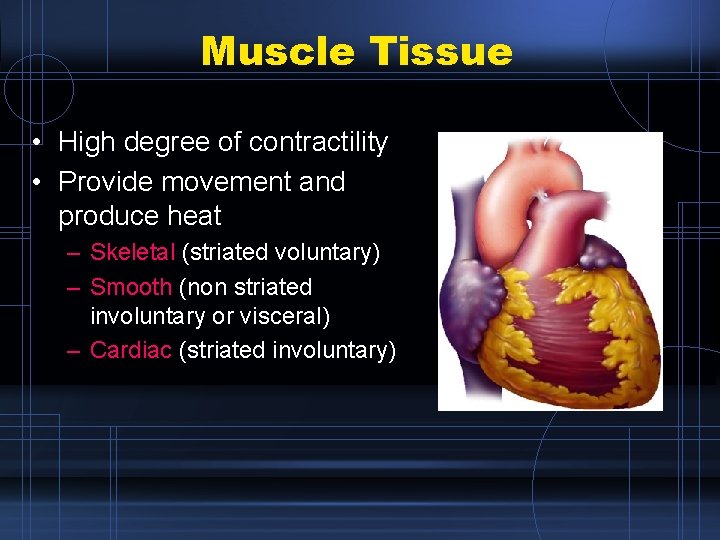
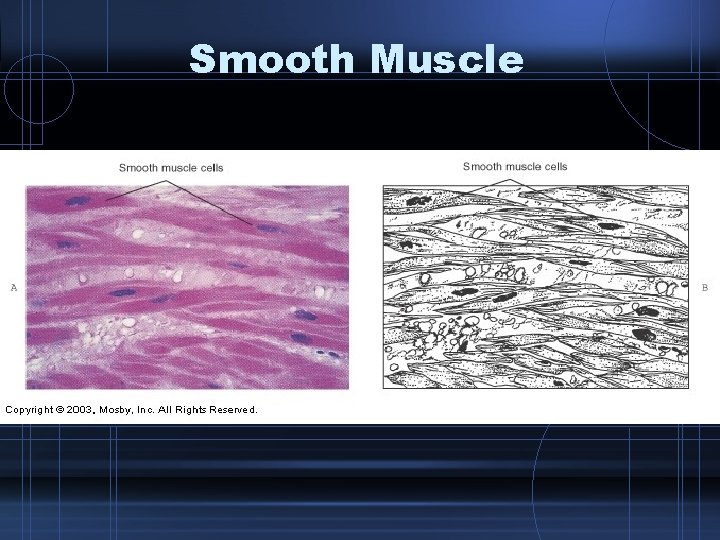
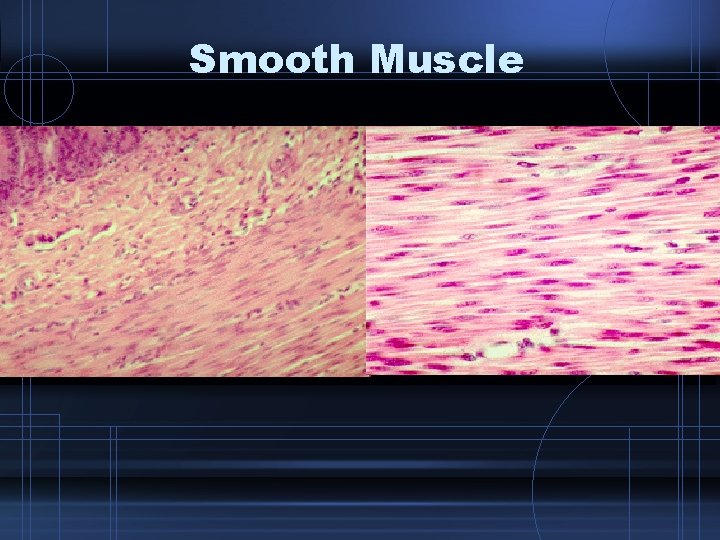
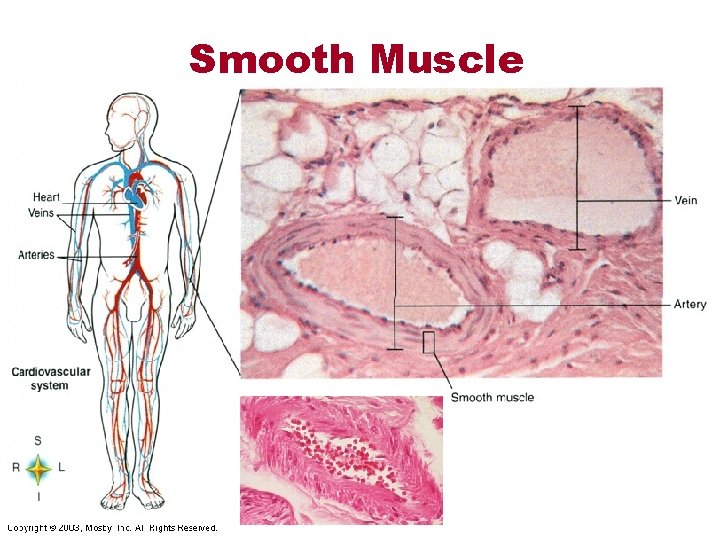
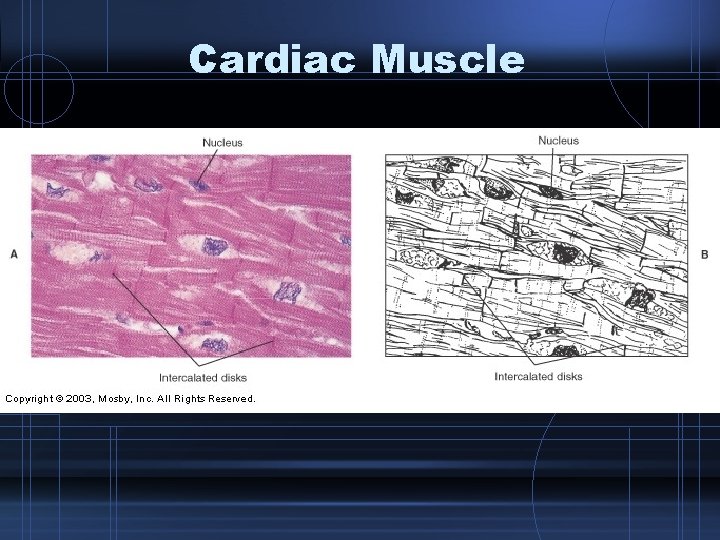
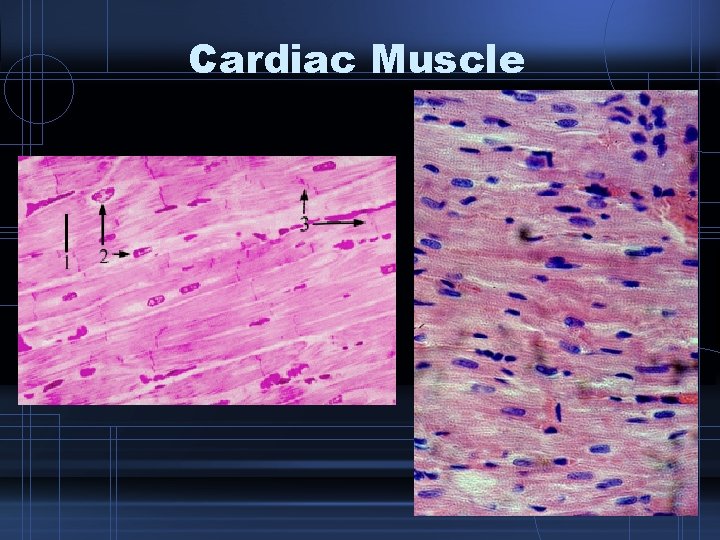
Muscle Tissue • High degree of contractility • Provide movement and produce heat – Skeletal (striated voluntary) – Smooth (non striated involuntary or visceral) – Cardiac (striated involuntary)
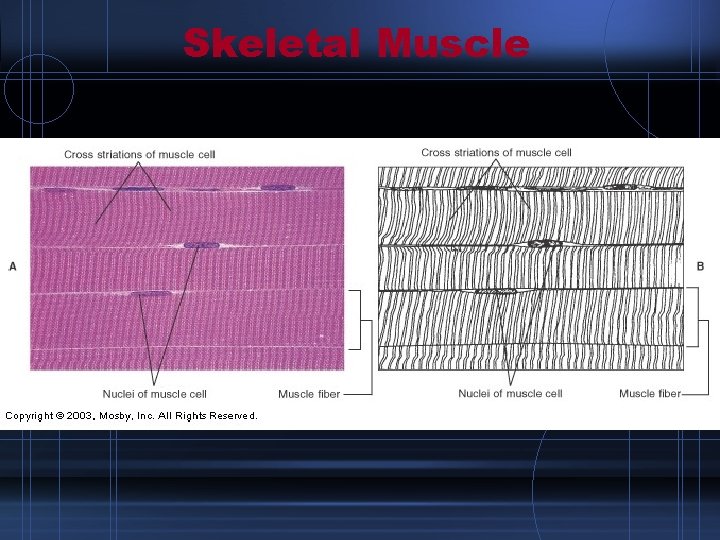
Skeletal Muscle
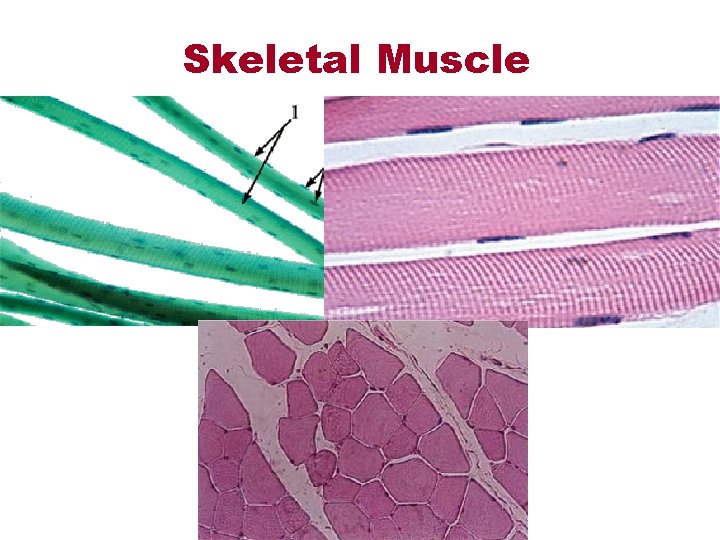
Skeletal Muscle
Smooth Muscle
Smooth Muscle
Smooth Muscle
Cardiac Muscle
Cardiac Muscle
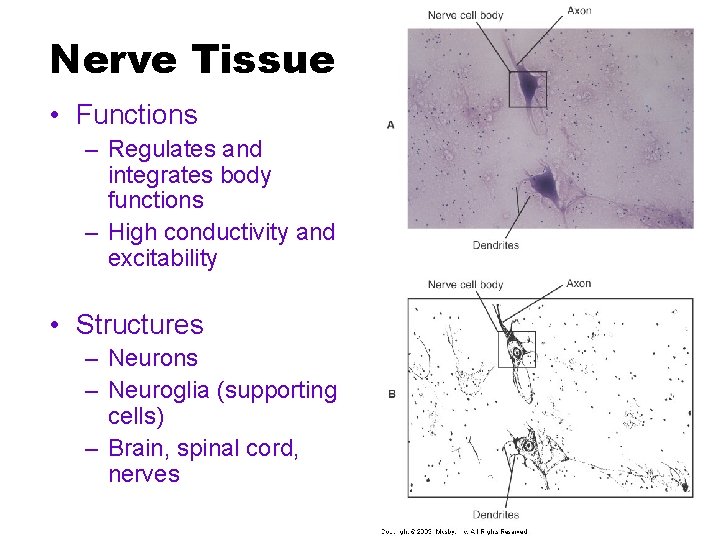
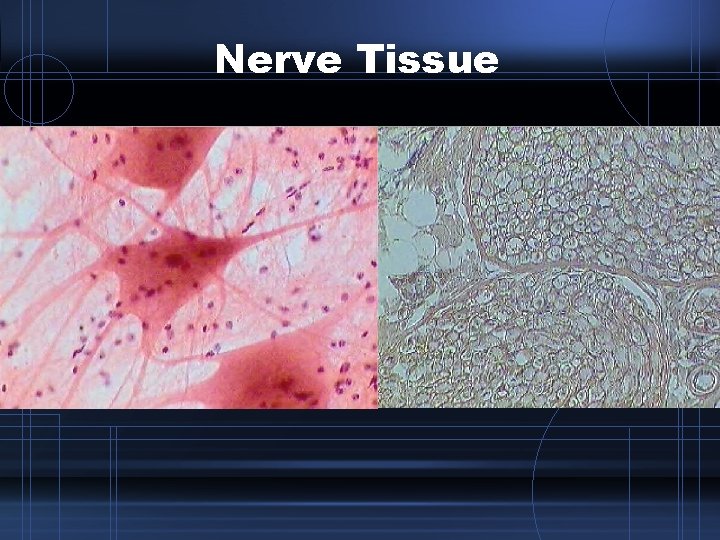
Nerve Tissue • Functions – Regulates and integrates body functions – High conductivity and excitability • Structures – Neurons – Neuroglia (supporting cells) – Brain, spinal cord, nerves
Nerve Tissue
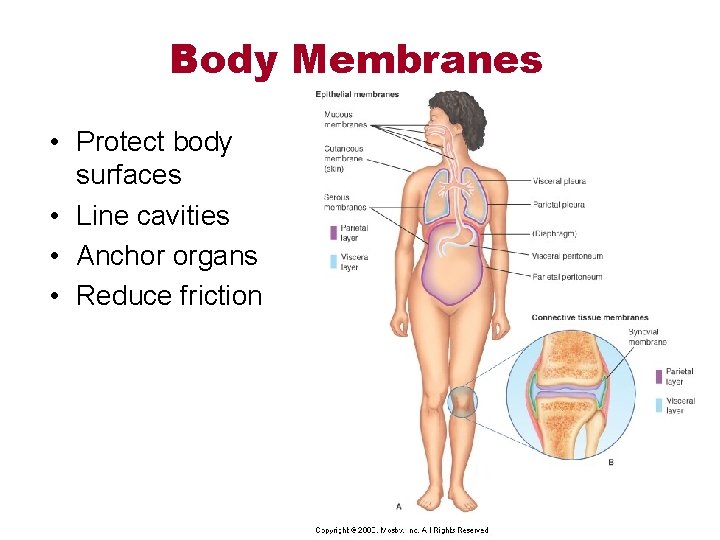
Body Membranes • Protect body surfaces • Line cavities • Anchor organs • Reduce friction
Histology Review Website • http: //www. histology-world. com • http: //www. histologyworld. com/audioslides/audio. htm