
Histology of the Esophagus and Stomach Dr Zita




- Slides: 42
Histology of the Esophagus and Stomach Dr. Zita Puskár EDI 02/03/2020
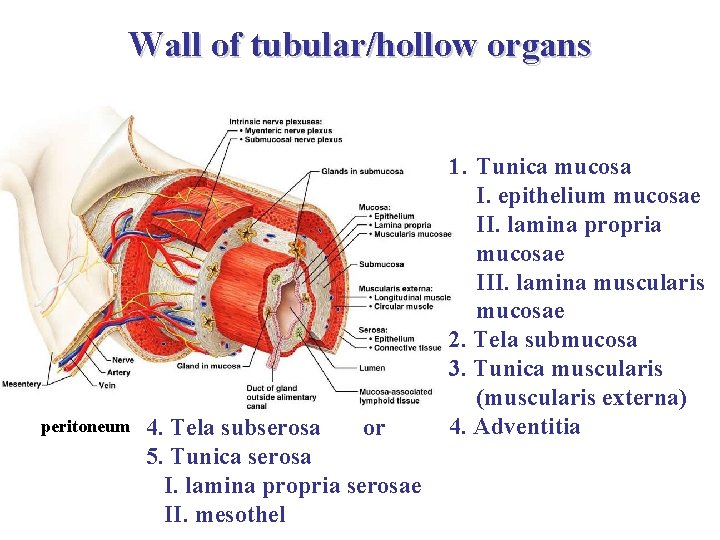
Wall of tubular/hollow organs peritoneum 4. Tela subserosa or 5. Tunica serosa I. lamina propria serosae II. mesothel 1. Tunica mucosa I. epithelium mucosae II. lamina propria mucosae III. lamina muscularis mucosae 2. Tela submucosa 3. Tunica muscularis (muscularis externa) 4. Adventitia
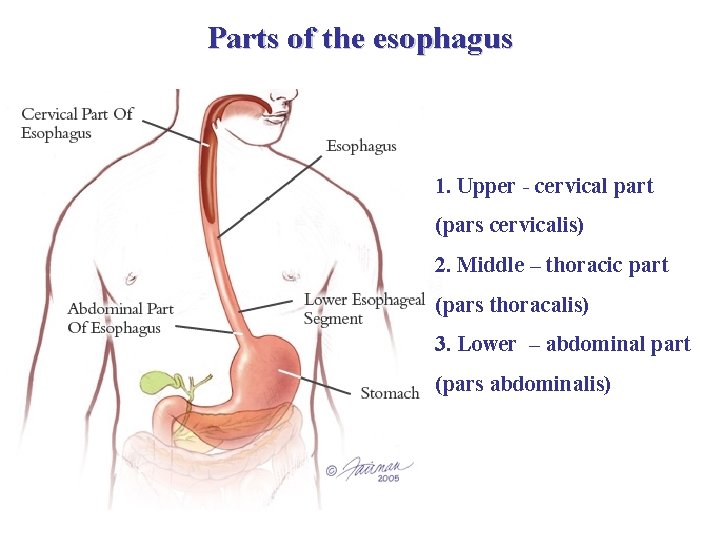
Parts of the esophagus 1. Upper - cervical part (pars cervicalis) 2. Middle – thoracic part (pars thoracalis) 3. Lower – abdominal part (pars abdominalis)
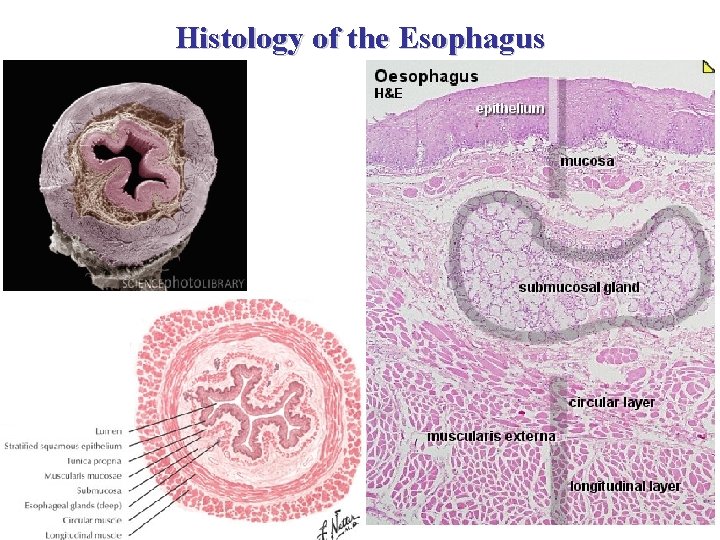
Histology of the Esophagus
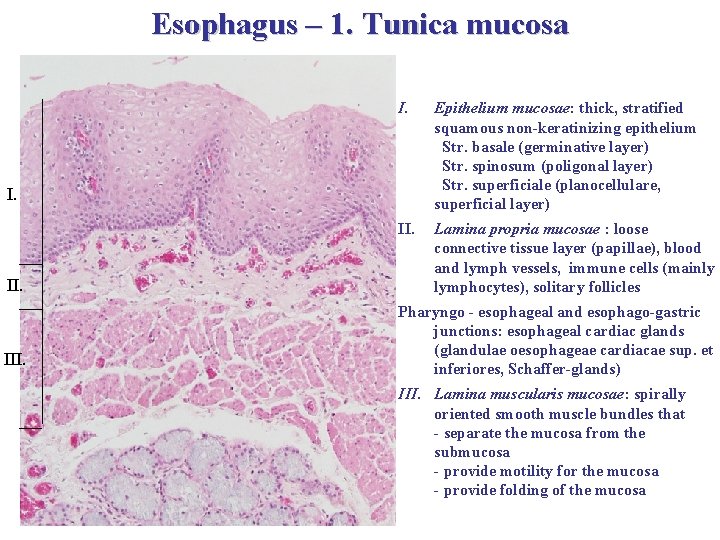
Esophagus – 1. Tunica mucosa I. Epithelium mucosae: thick, stratified squamous non-keratinizing epithelium Str. basale (germinative layer) Str. spinosum (poligonal layer) Str. superficiale (planocellulare, superficial layer) II. Lamina propria mucosae : loose connective tissue layer (papillae), blood and lymph vessels, immune cells (mainly lymphocytes), solitary follicles I. III. Pharyngo - esophageal and esophago-gastric junctions: esophageal cardiac glands (glandulae oesophageae cardiacae sup. et inferiores, Schaffer-glands) III. Lamina muscularis mucosae: spirally oriented smooth muscle bundles that - separate the mucosa from the submucosa - provide motility for the mucosa - provide folding of the mucosa
Solitary lymph follicle Lymph follicle. Part of the MALT (Mucosa Associated Limphatic Tissue). T- and Blymphocytes, plasma cells → Ig. A production.
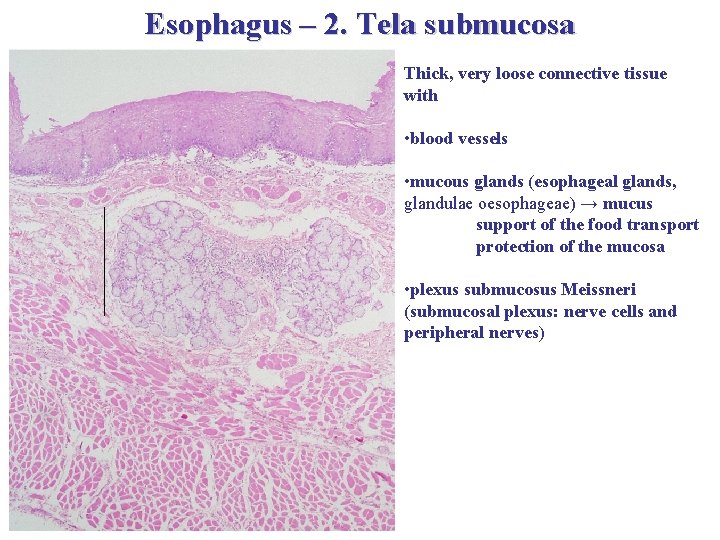
Esophagus – 2. Tela submucosa Thick, very loose connective tissue with • blood vessels • mucous glands (esophageal glands, glandulae oesophageae) → mucus support of the food transport protection of the mucosa • plexus submucosus Meissneri (submucosal plexus: nerve cells and peripheral nerves)
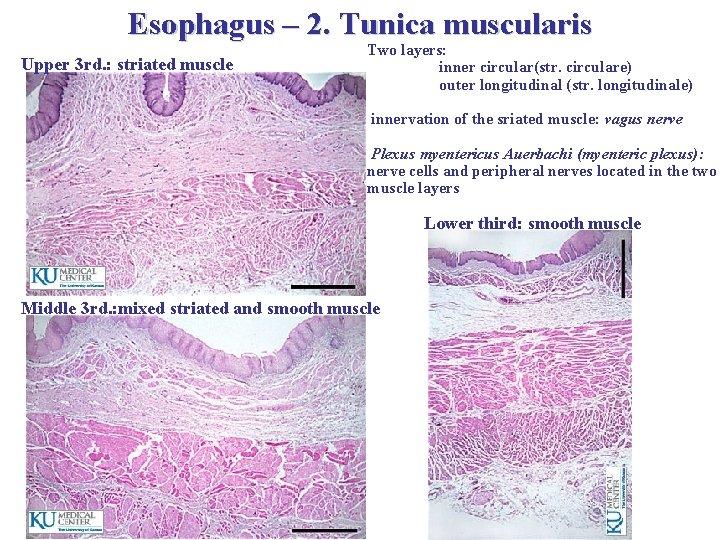
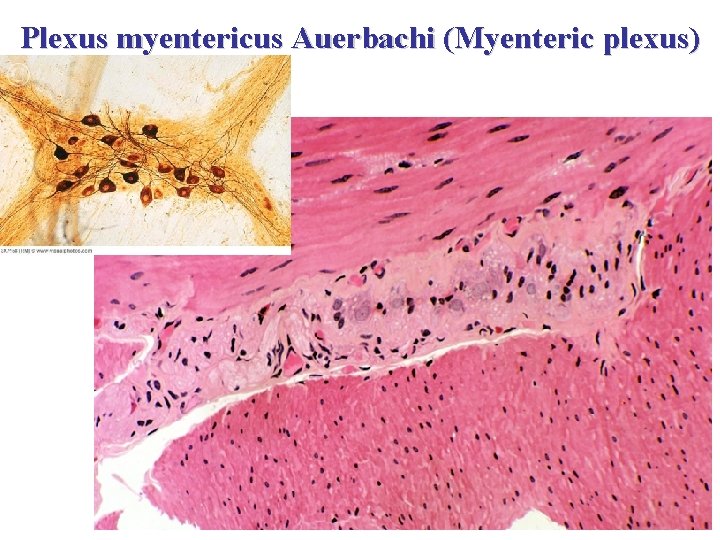
Esophagus – 2. Tunica muscularis Upper 3 rd. : striated muscle Two layers: inner circular(str. circulare) outer longitudinal (str. longitudinale) innervation of the sriated muscle: vagus nerve Plexus myentericus Auerbachi (myenteric plexus): nerve cells and peripheral nerves located in the two muscle layers Lower third: smooth muscle Middle 3 rd. : mixed striated and smooth muscle
Plexus myentericus Auerbachi (Myenteric plexus)
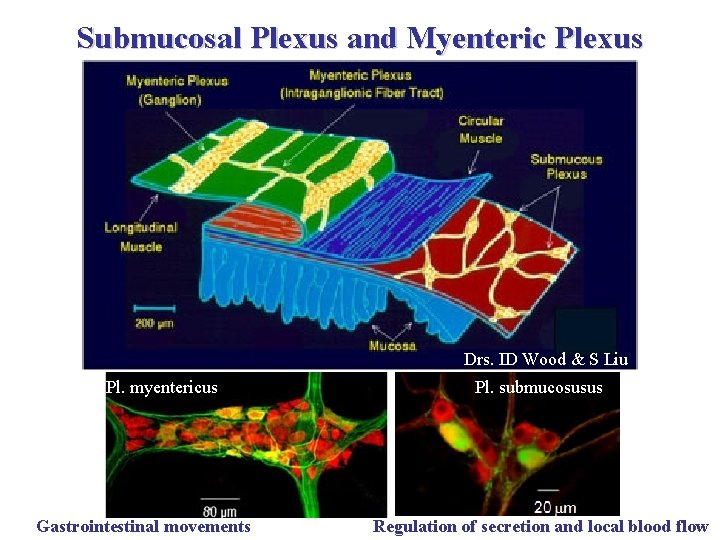
Submucosal Plexus and Myenteric Plexus Drs. ID Wood & S Liu Pl. myentericus Gastrointestinal movements Pl. submucosusus Regulation of secretion and local blood flow
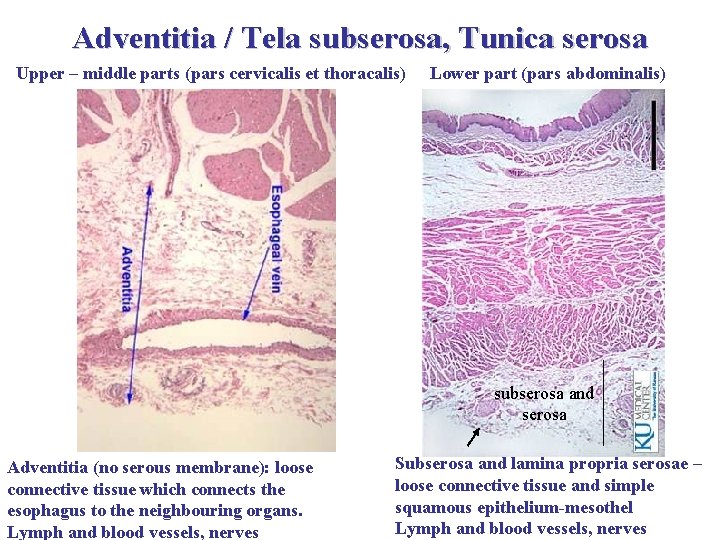
Adventitia / Tela subserosa, Tunica serosa Upper – middle parts (pars cervicalis et thoracalis) Lower part (pars abdominalis) subserosa and serosa Adventitia (no serous membrane): loose connective tissue which connects the esophagus to the neighbouring organs. Lymph and blood vessels, nerves Subserosa and lamina propria serosae – loose connective tissue and simple squamous epithelium-mesothel Lymph and blood vessels, nerves
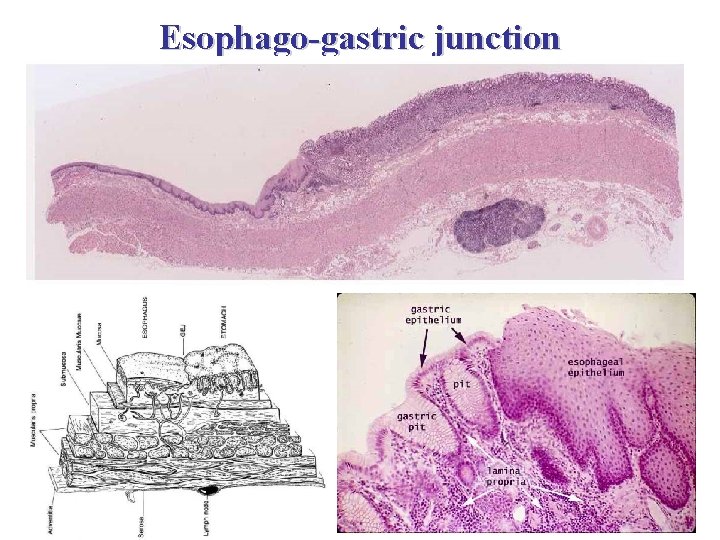
Esophago-gastric junction
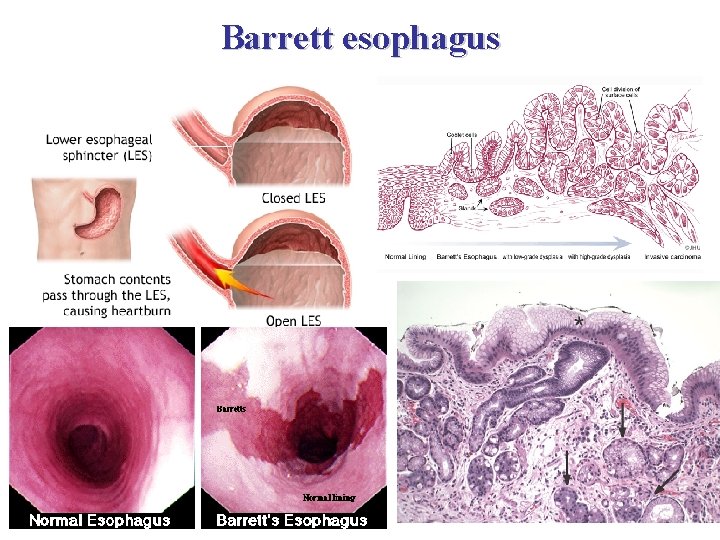
Barrett esophagus
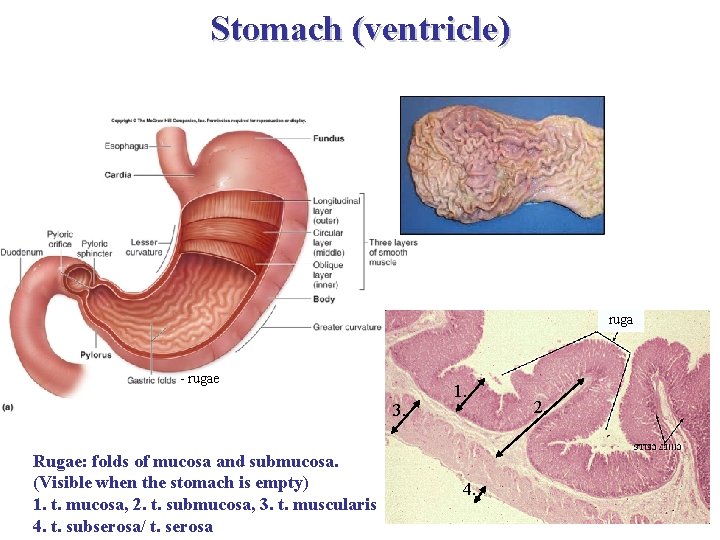
Stomach (ventricle) ruga - rugae 3. Rugae: folds of mucosa and submucosa. (Visible when the stomach is empty) 1. t. mucosa, 2. t. submucosa, 3. t. muscularis 4. t. subserosa/ t. serosa 1. 4. 2.
Stomach (ventricle) Stomach is a mixed exocrine and endocrine gland which digests food and secretes hormons. areolae gastricae foveolae gastric pits
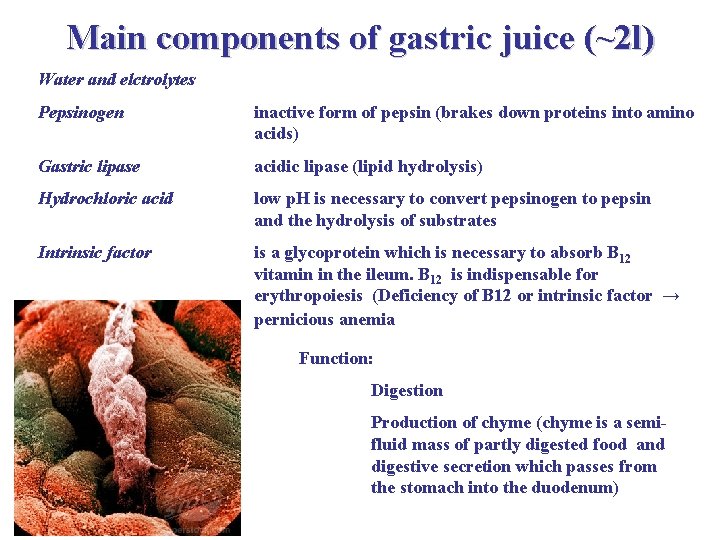
Main components of gastric juice (~2 l) Water and elctrolytes Pepsinogen inactive form of pepsin (brakes down proteins into amino acids) Gastric lipase acidic lipase (lipid hydrolysis) Hydrochloric acid low p. H is necessary to convert pepsinogen to pepsin and the hydrolysis of substrates Intrinsic factor is a glycoprotein which is necessary to absorb B 12 vitamin in the ileum. B 12 is indispensable for erythropoiesis (Deficiency of B 12 or intrinsic factor → pernicious anemia Function: Digestion Production of chyme (chyme is a semifluid mass of partly digested food and digestive secretion which passes from the stomach into the duodenum)
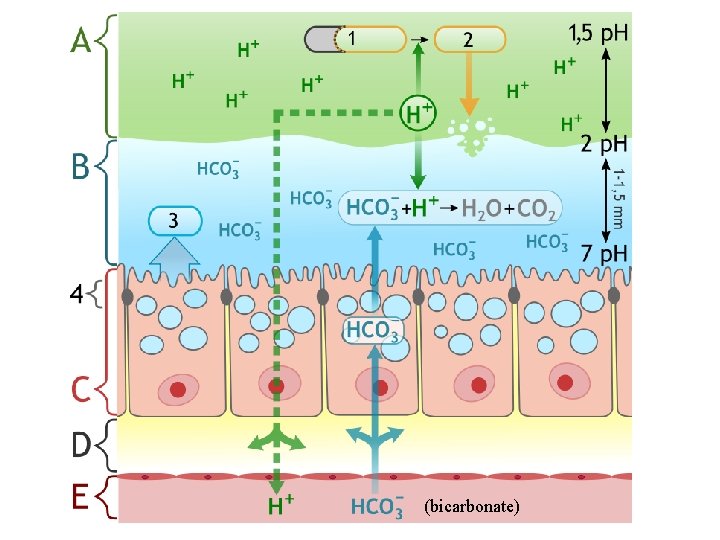
(bicarbonate)
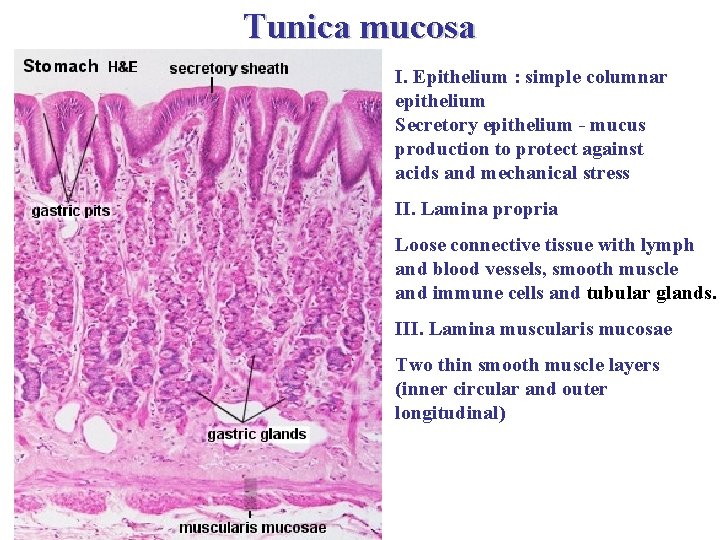
Tunica mucosa I. Epithelium : simple columnar epithelium Secretory epithelium - mucus production to protect against acids and mechanical stress II. Lamina propria Loose connective tissue with lymph and blood vessels, smooth muscle and immune cells and tubular glands. III. Lamina muscularis mucosae Two thin smooth muscle layers (inner circular and outer longitudinal)
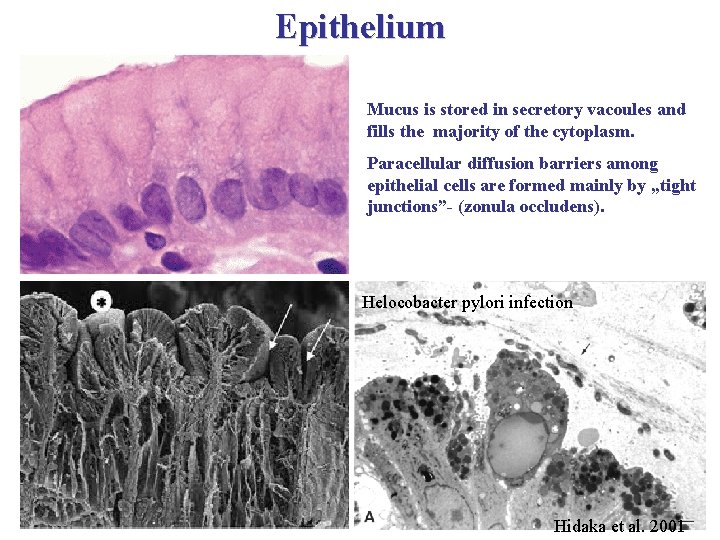
Epithelium Mucus is stored in secretory vacoules and fills the majority of the cytoplasm. Paracellular diffusion barriers among epithelial cells are formed mainly by „tight junctions”- (zonula occludens). Helocobacter pylori infection Hidaka et al. 2001
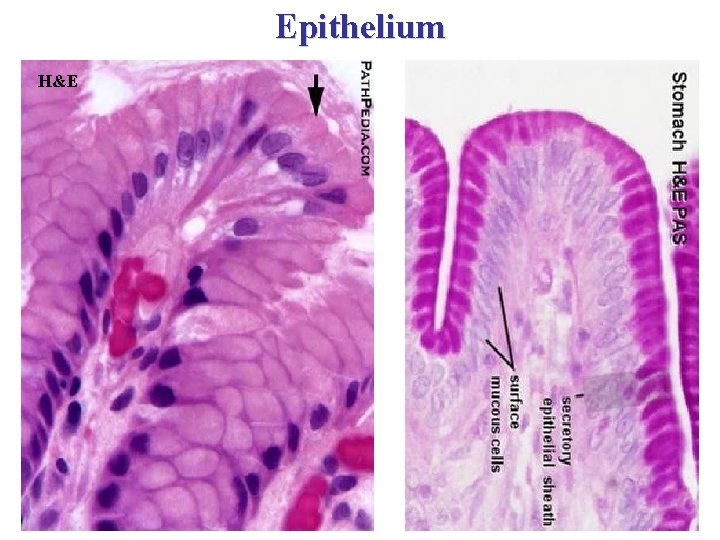
Epithelium H&E
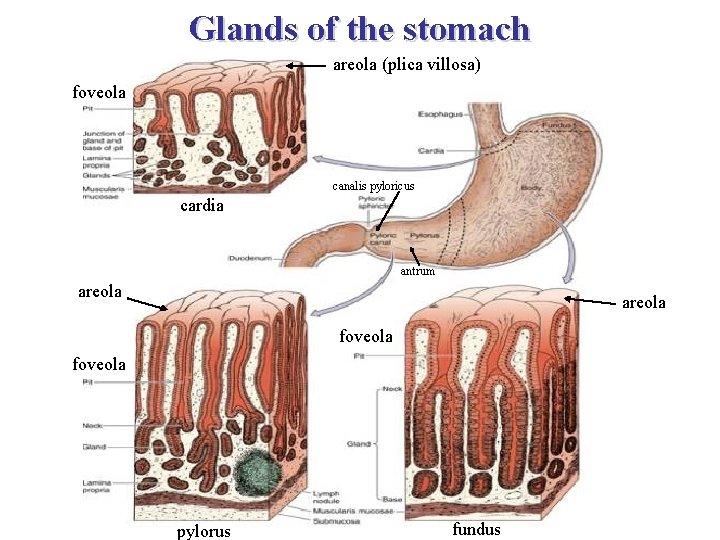
Glands of the stomach areola (plica villosa) foveola canalis pyloricus cardia antrum areola foveola pylorus fundus
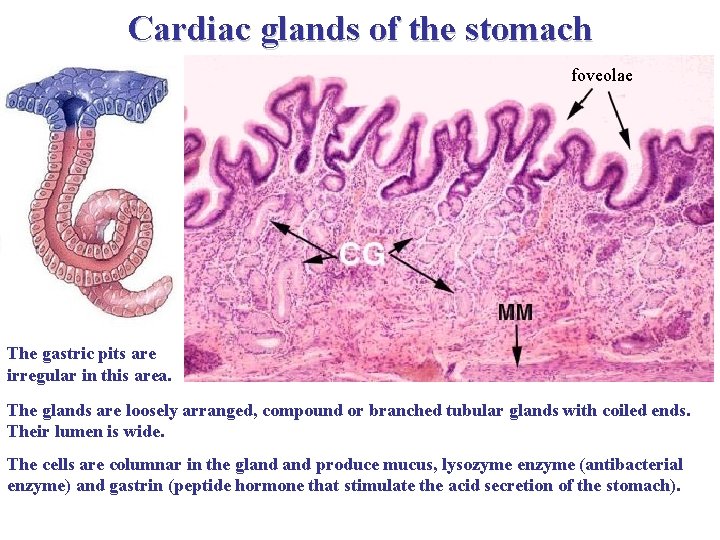
Cardiac glands of the stomach foveolae The gastric pits are irregular in this area. The glands are loosely arranged, compound or branched tubular glands with coiled ends. Their lumen is wide. The cells are columnar in the gland produce mucus, lysozyme enzyme (antibacterial enzyme) and gastrin (peptide hormone that stimulate the acid secretion of the stomach).
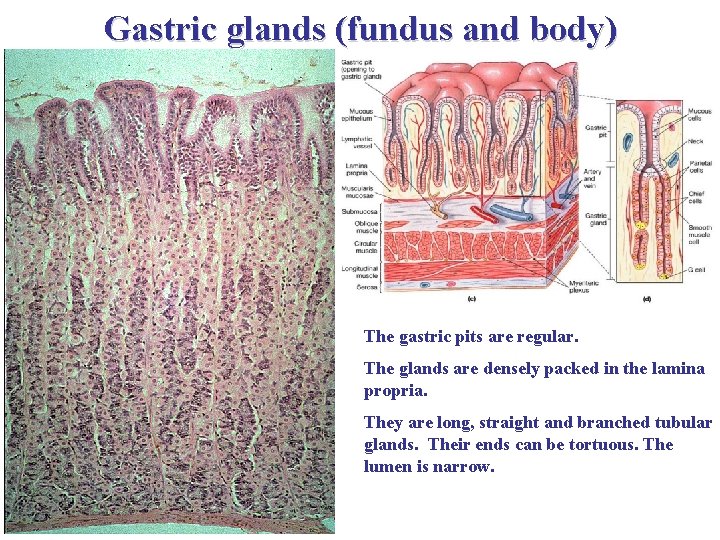
Gastric glands (fundus and body) The gastric pits are regular. The glands are densely packed in the lamina propria. They are long, straight and branched tubular glands. Their ends can be tortuous. The lumen is narrow.
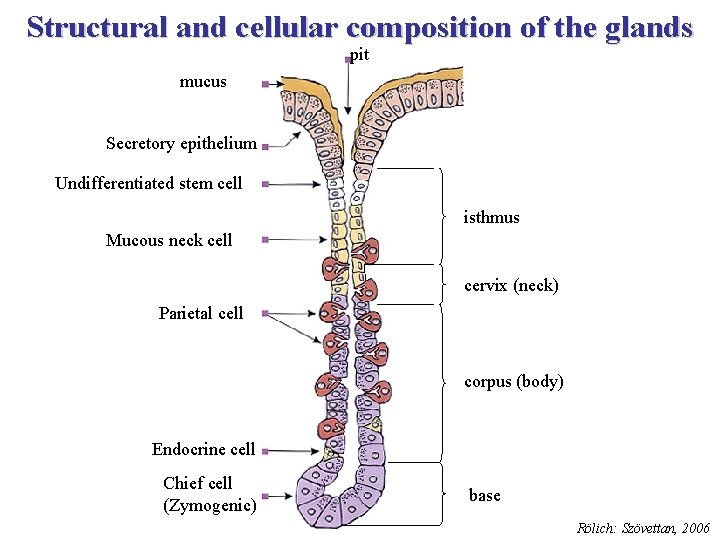
Structural and cellular composition of the glands pit mucus Secretory epithelium Undifferentiated stem cell isthmus Mucous neck cell cervix (neck) Parietal cell corpus (body) Endocrine cell Chief cell (Zymogenic) base Rölich: Szövettan, 2006
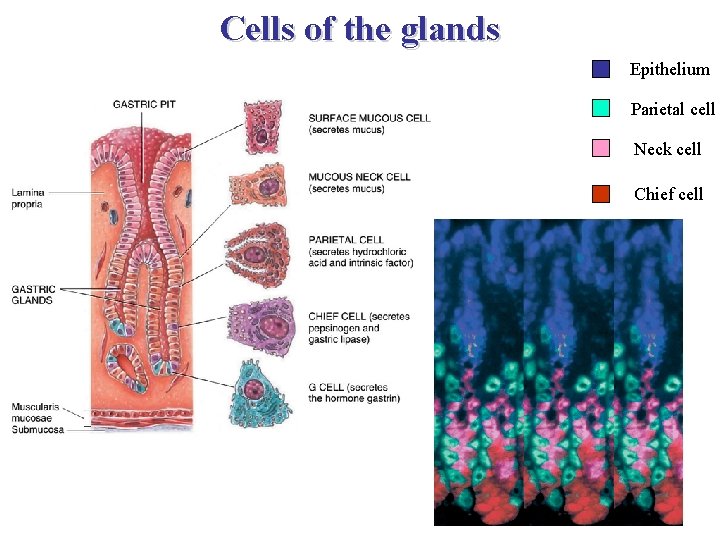
Cells of the glands Epithelium Parietal cell Neck cell Chief cell
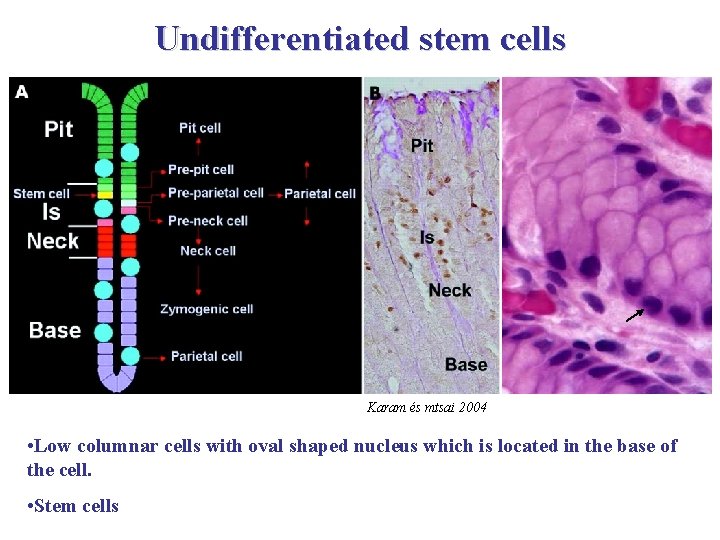
Undifferentiated stem cells Karam és mtsai 2004 • Low columnar cells with oval shaped nucleus which is located in the base of the cell. • Stem cells
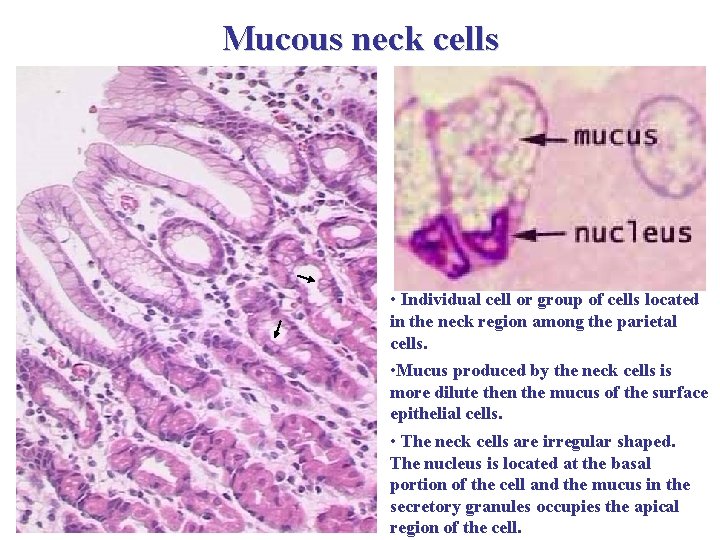
Mucous neck cells • Individual cell or group of cells located in the neck region among the parietal cells. • Mucus produced by the neck cells is more dilute then the mucus of the surface epithelial cells. • The neck cells are irregular shaped. The nucleus is located at the basal portion of the cell and the mucus in the secretory granules occupies the apical region of the cell.
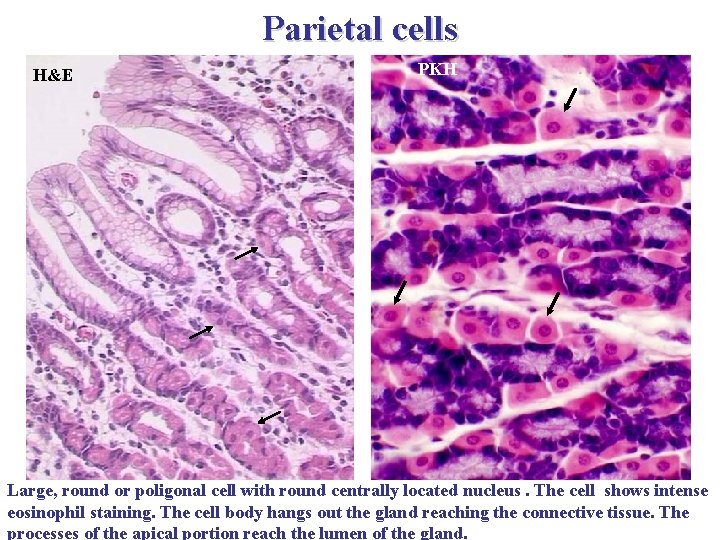
Parietal cells H&E PKH Large, round or poligonal cell with round centrally located nucleus. The cell shows intense eosinophil staining. The cell body hangs out the gland reaching the connective tissue. The processes of the apical portion reach the lumen of the gland.
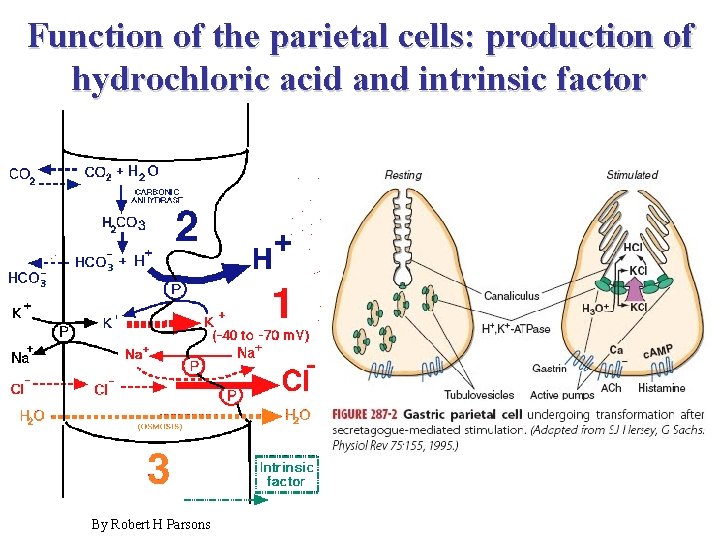
Function of the parietal cells: production of hydrochloric acid and intrinsic factor By Robert H Parsons
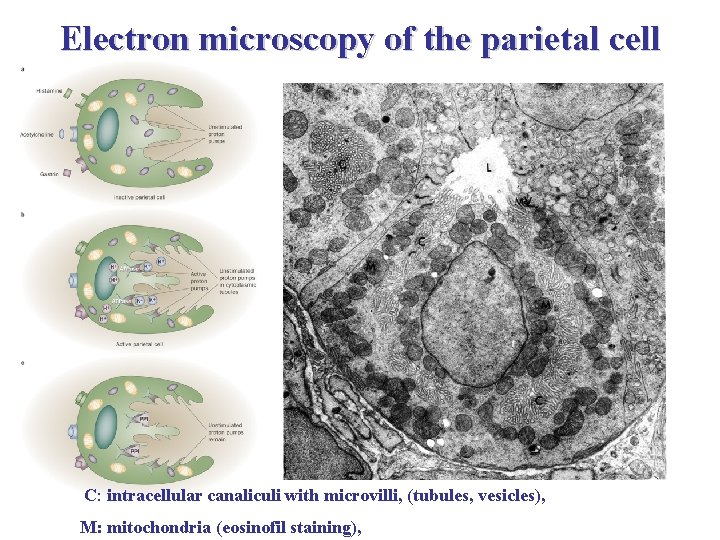
Electron microscopy of the parietal cell C: intracellular canaliculi with microvilli, (tubules, vesicles), M: mitochondria (eosinofil staining),
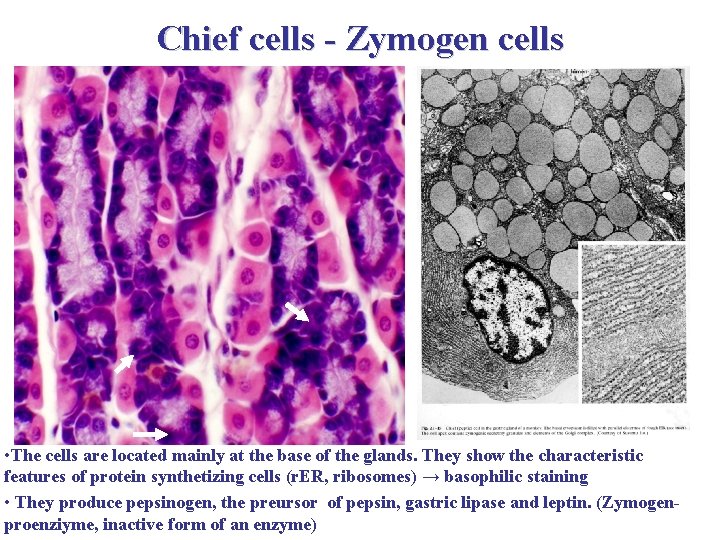
Chief cells - Zymogen cells • The cells are located mainly at the base of the glands. They show the characteristic features of protein synthetizing cells (r. ER, ribosomes) → basophilic staining • They produce pepsinogen, the preursor of pepsin, gastric lipase and leptin. (Zymogenproenziyme, inactive form of an enzyme)
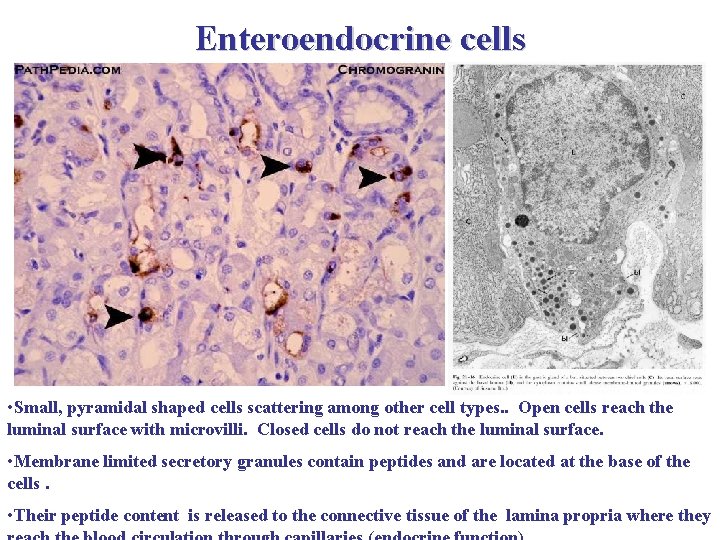
Enteroendocrine cells • Small, pyramidal shaped cells scattering among other cell types. . Open cells reach the luminal surface with microvilli. Closed cells do not reach the luminal surface. • Membrane limited secretory granules contain peptides and are located at the base of the cells. • Their peptide content is released to the connective tissue of the lamina propria where they
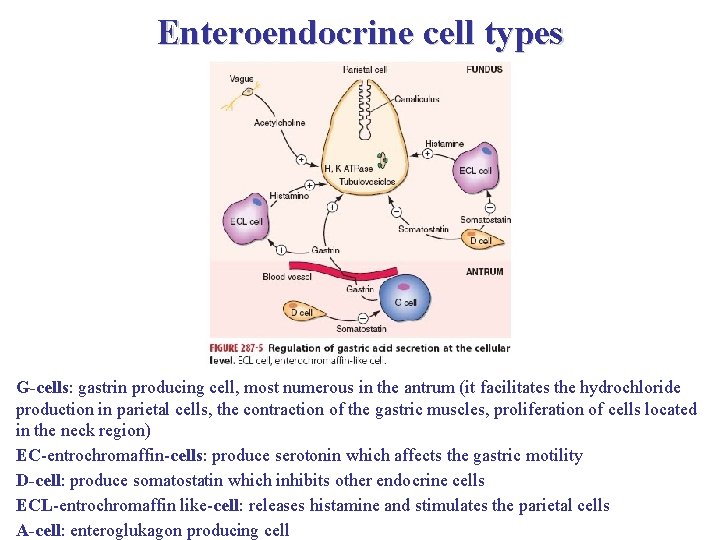
Enteroendocrine cell types G-cells: gastrin producing cell, most numerous in the antrum (it facilitates the hydrochloride production in parietal cells, the contraction of the gastric muscles, proliferation of cells located in the neck region) EC-entrochromaffin-cells: produce serotonin which affects the gastric motility D-cell: produce somatostatin which inhibits other endocrine cells ECL-entrochromaffin like-cell: releases histamine and stimulates the parietal cells A-cell: enteroglukagon producing cell
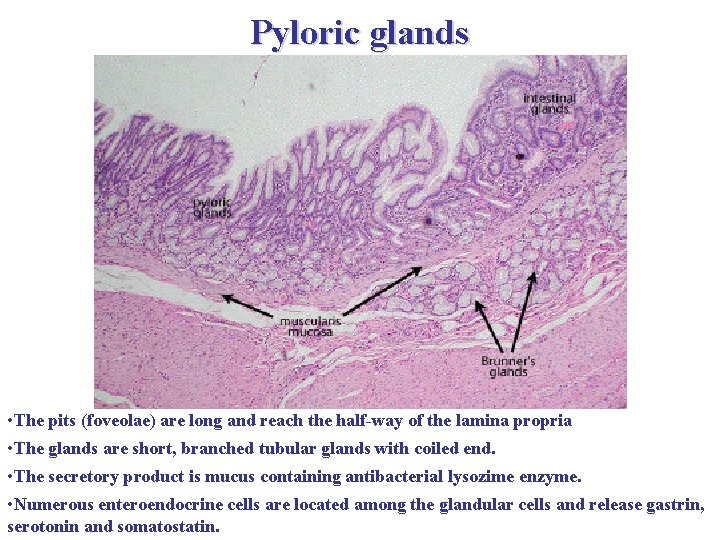
Pyloric glands • The pits (foveolae) are long and reach the half-way of the lamina propria • The glands are short, branched tubular glands with coiled end. • The secretory product is mucus containing antibacterial lysozime enzyme. • Numerous enteroendocrine cells are located among the glandular cells and release gastrin, serotonin and somatostatin.
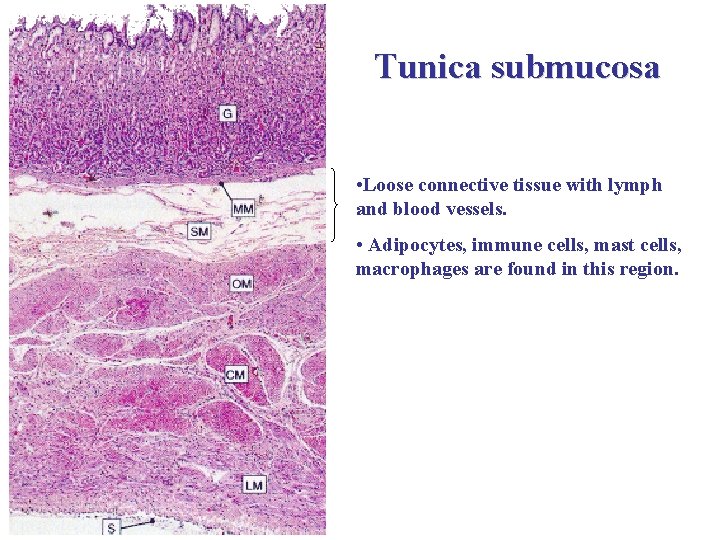
Tunica submucosa • Loose connective tissue with lymph and blood vessels. • Adipocytes, immune cells, mast cells, macrophages are found in this region.
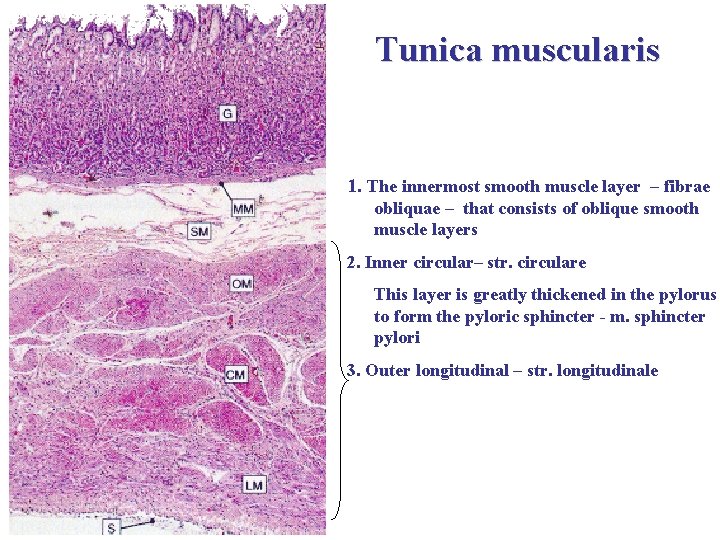
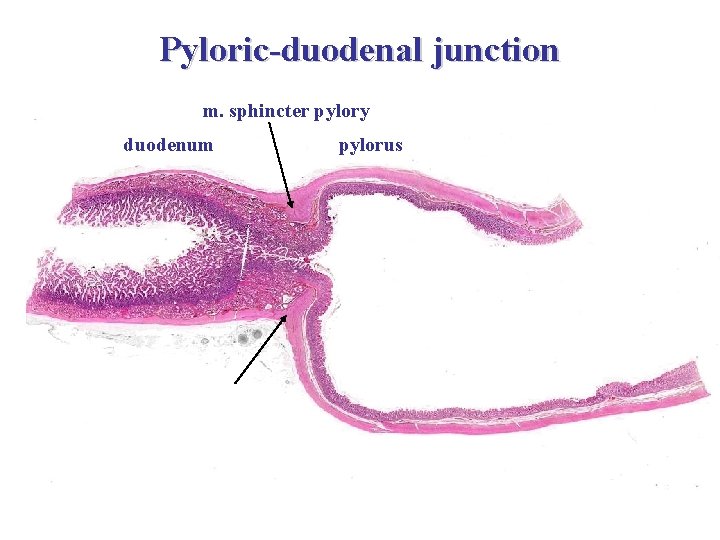
Tunica muscularis 1. The innermost smooth muscle layer – fibrae obliquae – that consists of oblique smooth muscle layers 2. Inner circular– str. circulare This layer is greatly thickened in the pylorus to form the pyloric sphincter - m. sphincter pylori 3. Outer longitudinal – str. longitudinale
Pyloric-duodenal junction m. sphincter pylory duodenum pylorus
Tela subserosa, serosa mesothel connective tissue Loose connective tissue containing lymph and blood vessels and nerves. Mesothel.
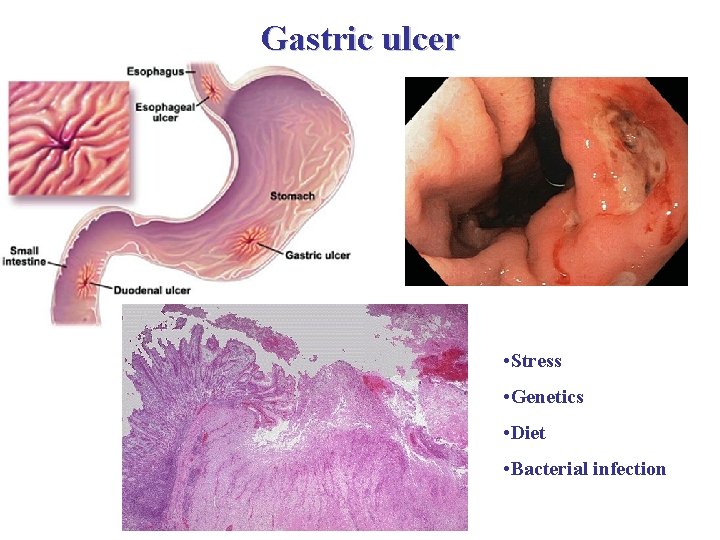
Gastric ulcer mesothel • Stress • Genetics • Diet kötőszövet • Bacterial infection
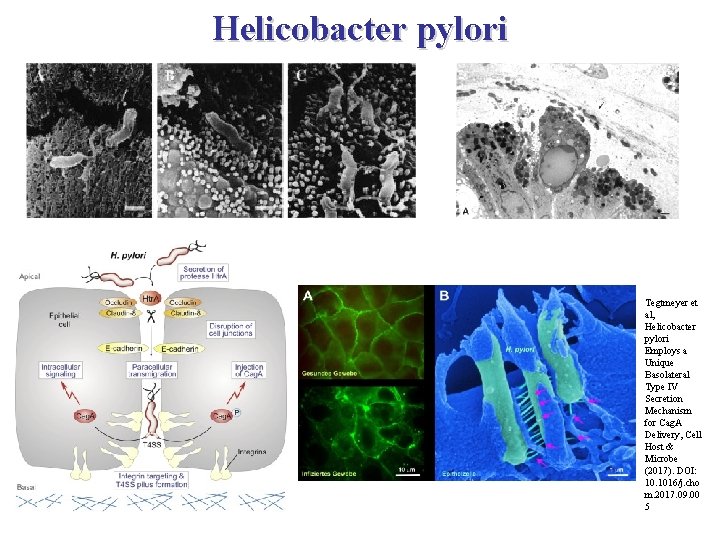
Helicobacter pylori mesothel kötőszövet Tegtmeyer et al, Helicobacter pylori Employs a Unique Basolateral Type IV Secretion Mechanism for Cag. A Delivery, Cell Host & Microbe (2017). DOI: 10. 1016/j. cho m. 2017. 09. 00 5
References: Röhlich Pál: Szövettan. Budapest, 2006 Anthony L. Mescher: Junqueira’s Basic Histology, New York, 2010 Michael Ross and Lynn J. Romrell: Histology, Baltimore, 1989 Kenneth R. De. Vault & Nicholas J. Talley: Insights into the future of gastric acid suppression. Nature Reviews Gastroenterology & Hepatology (2009) 6, 524 -532 E Hidaka, H Otaa, H Hidaka, M Hayama, K Matsuzawa, T Akamatsud, J Nakayama, T Katsuyama: Helicobacter pylori and two ultrastructurally distinct layers of gastric mucous cell mucins in the surface mucous gel layer. Gut (2001) 49: 474 -480 Tegtmeyer N, Wessler S, Necchi V, Rohde M, Harrer A, Rau TT, Asche CI, Boehm M, Loessner H, Figueiredo C, Naumann M, Palmisano R, Solcia E, Ricci V, Backert S: Helicobacter pylori Employs a Unique Basolateral Type IV Secretion Mechanism for Cag. A Delivery Cell Host Microbe. 2017 Oct 11; 22(4): 552 -560. e 5.