
HISTOLOGY OF STOMACH By Dr Sobia Ibrahim Assistant
HISTOLOGY OF STOMACH By Dr. Sobia Ibrahim Assistant Professor Anatomy, KEMU
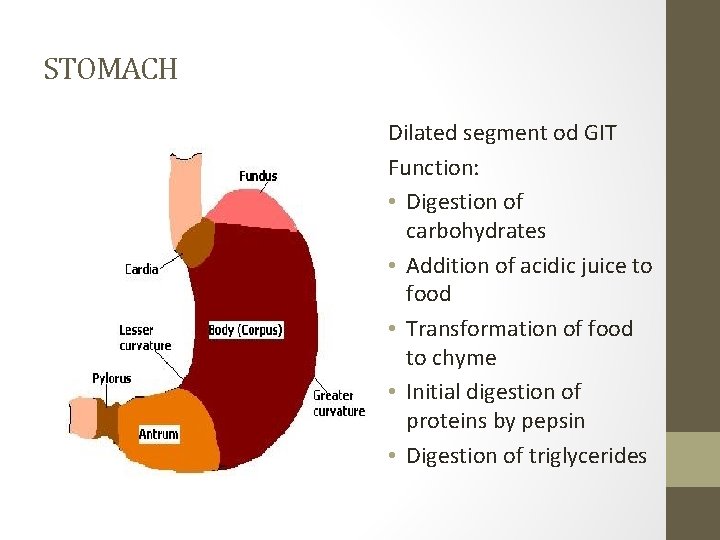
STOMACH Dilated segment od GIT Function: • Digestion of carbohydrates • Addition of acidic juice to food • Transformation of food to chyme • Initial digestion of proteins by pepsin • Digestion of triglycerides
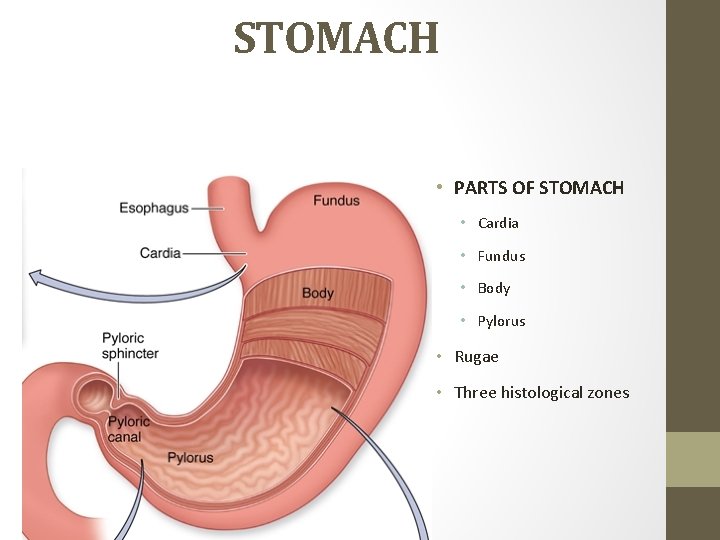
STOMACH • PARTS OF STOMACH • Cardia • Fundus • Body • Pylorus • Rugae • Three histological zones
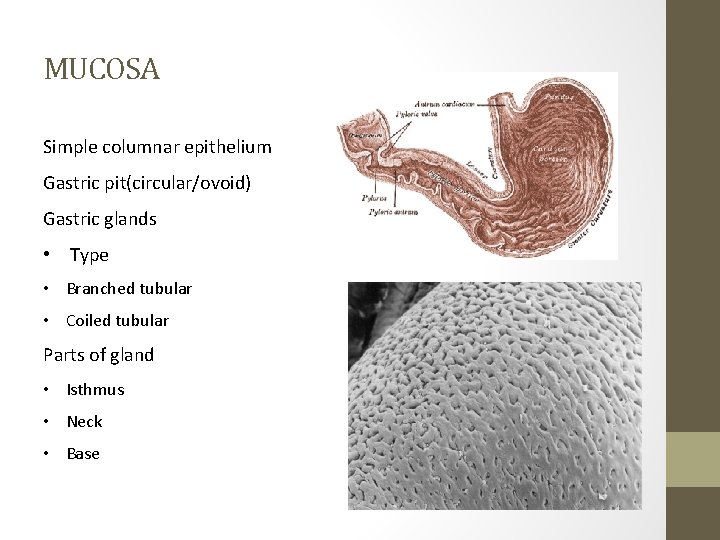
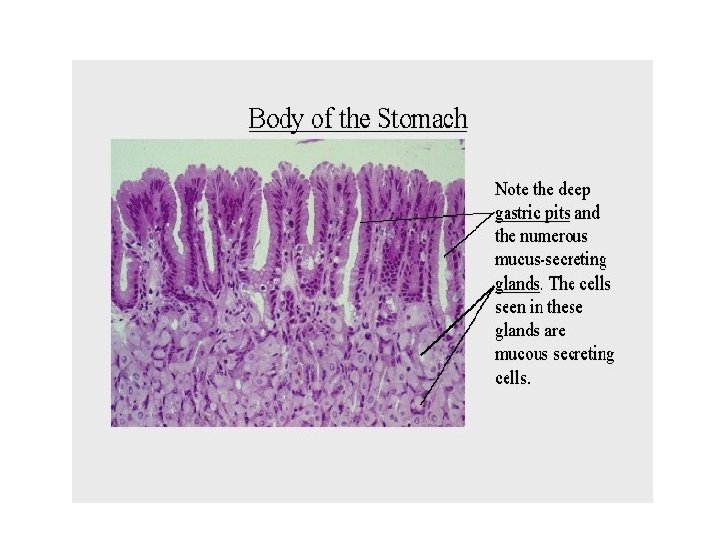
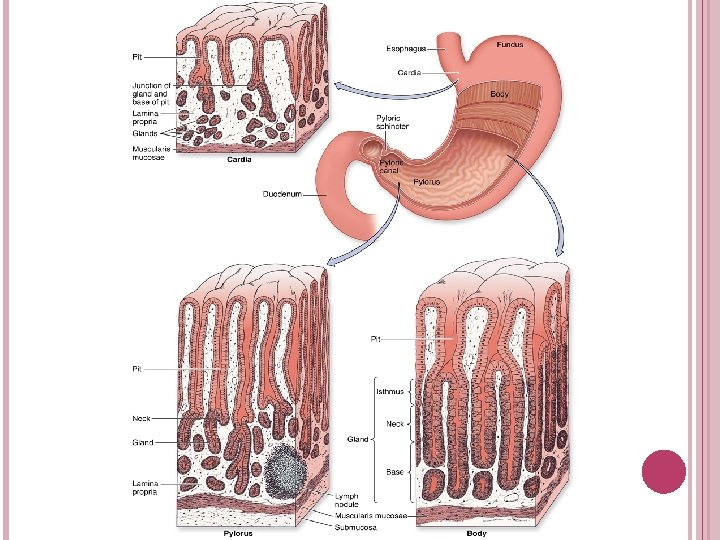
MUCOSA Simple columnar epithelium Gastric pit(circular/ovoid) Gastric glands • Type • Branched tubular • Coiled tubular Parts of gland • Isthmus • Neck • Base
MUCOSA • LAMINA PROPRIA • Consists of • • • Collagen & reticular fibers Lymphocytes – diffuse & nodules Fibroblasts Plasma cells Mast cells Few muscle cells • MUSCULARIS MUCOSAE • Two layers
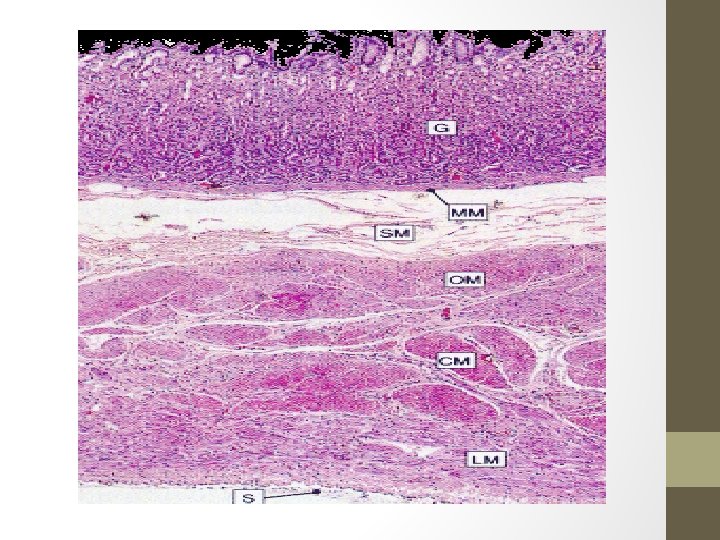
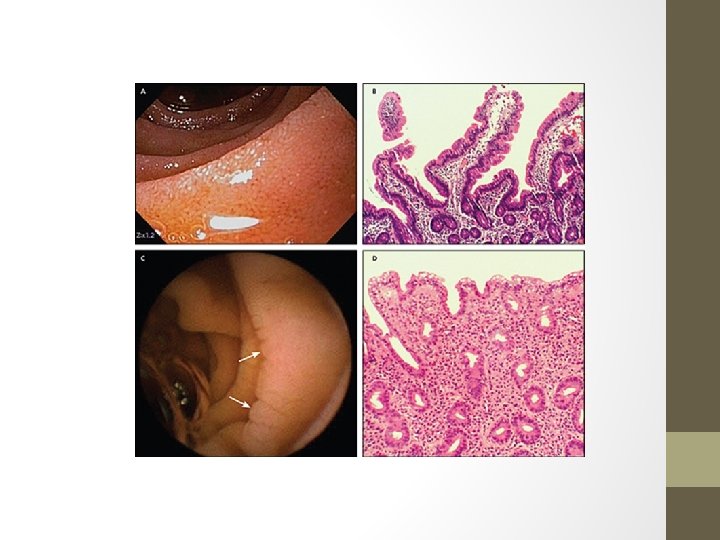
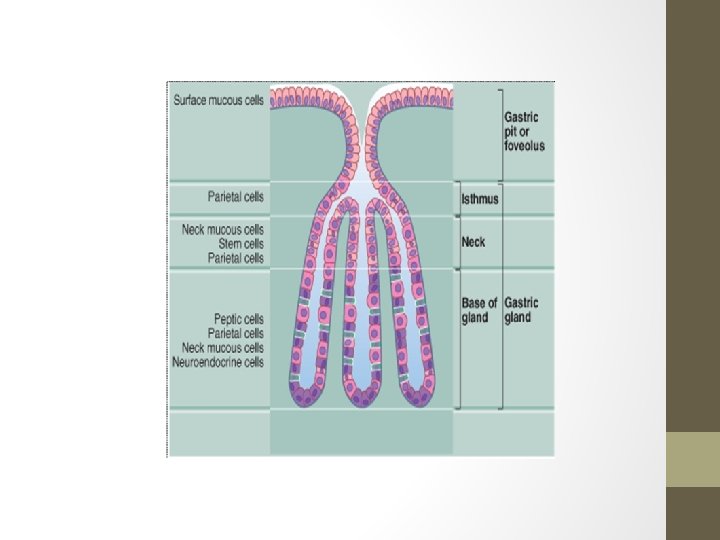
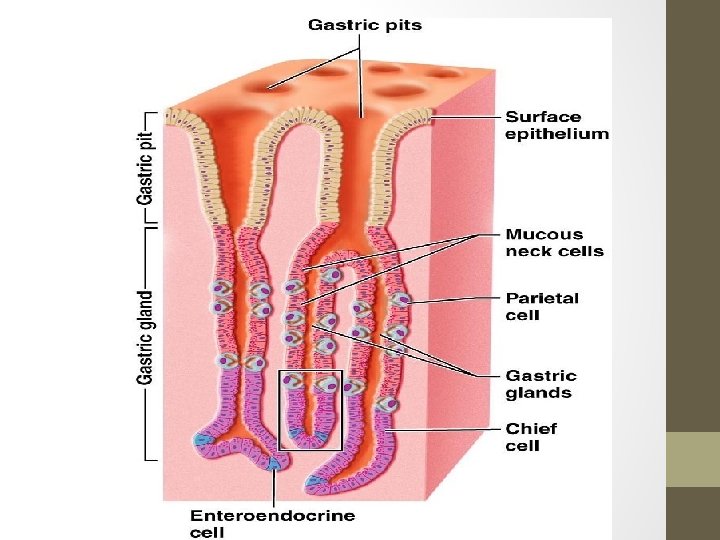
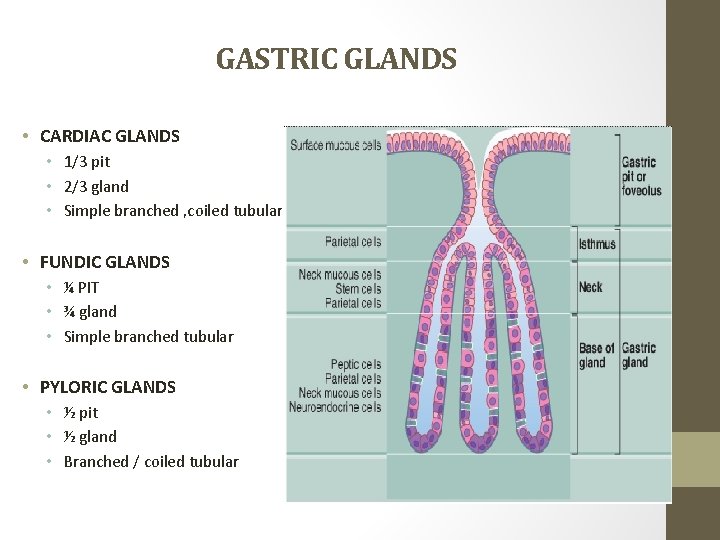
GASTRIC GLANDS • CARDIAC GLANDS • 1/3 pit • 2/3 gland • Simple branched , coiled tubular • FUNDIC GLANDS • ¼ PIT • ¾ gland • Simple branched tubular • PYLORIC GLANDS • ½ pit • ½ gland • Branched / coiled tubular
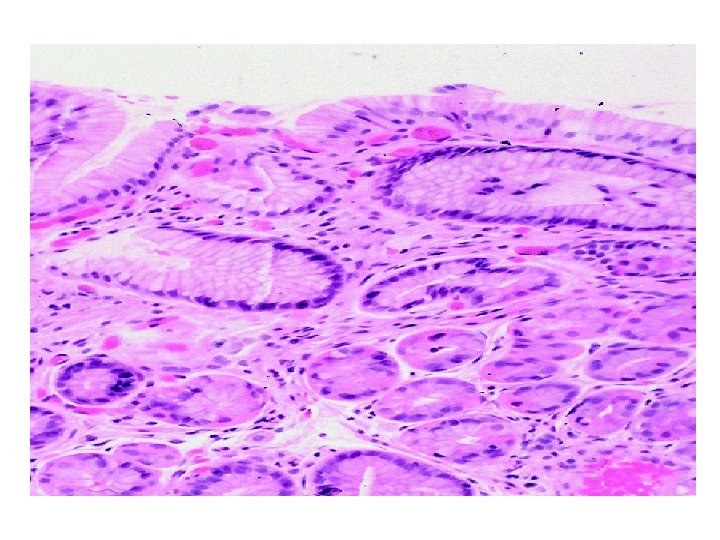
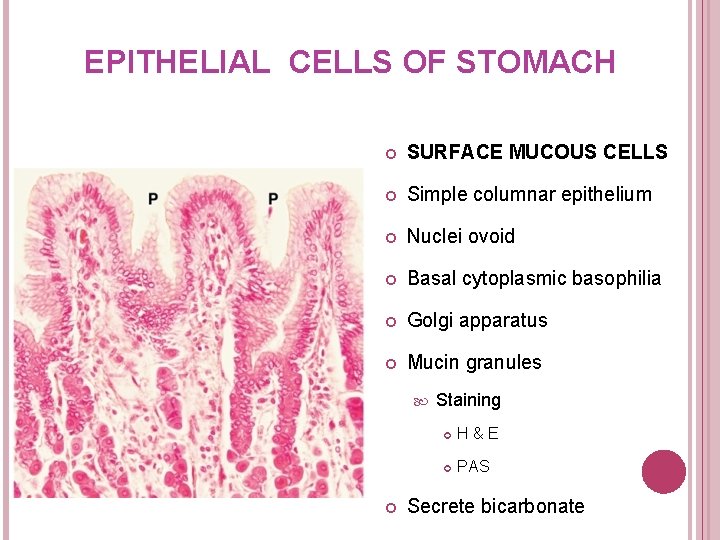
EPITHELIAL CELLS OF STOMACH SURFACE MUCOUS CELLS Simple columnar epithelium Nuclei ovoid Basal cytoplasmic basophilia Golgi apparatus Mucin granules Staining H&E PAS Secrete bicarbonate
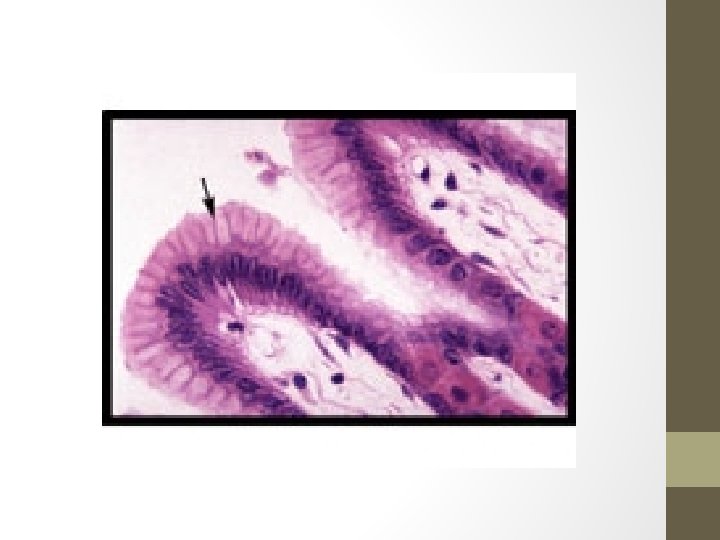
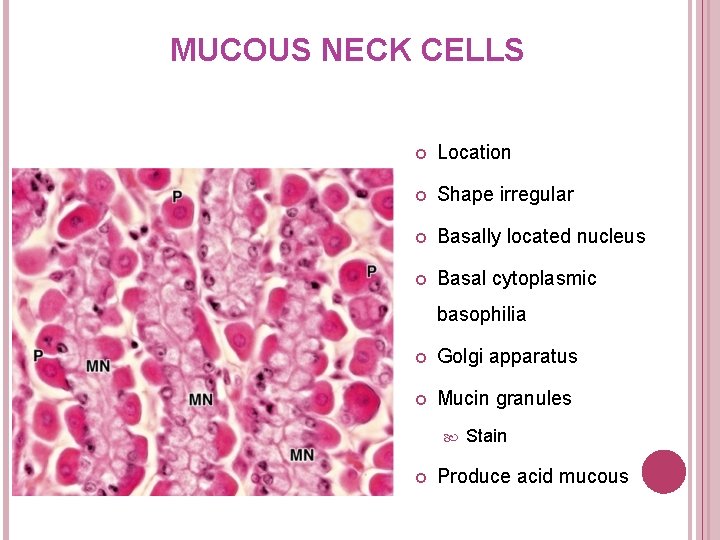
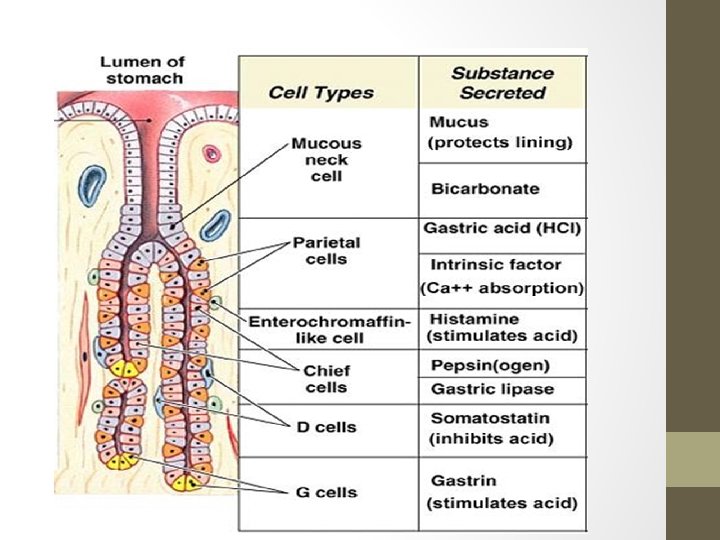
MUCOUS NECK CELLS Location Shape irregular Basally located nucleus Basal cytoplasmic basophilia Golgi apparatus Mucin granules Stain Produce acid mucous
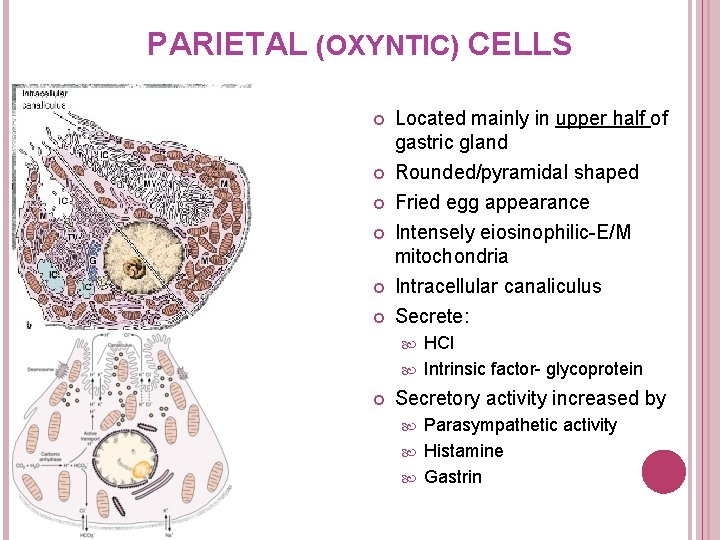
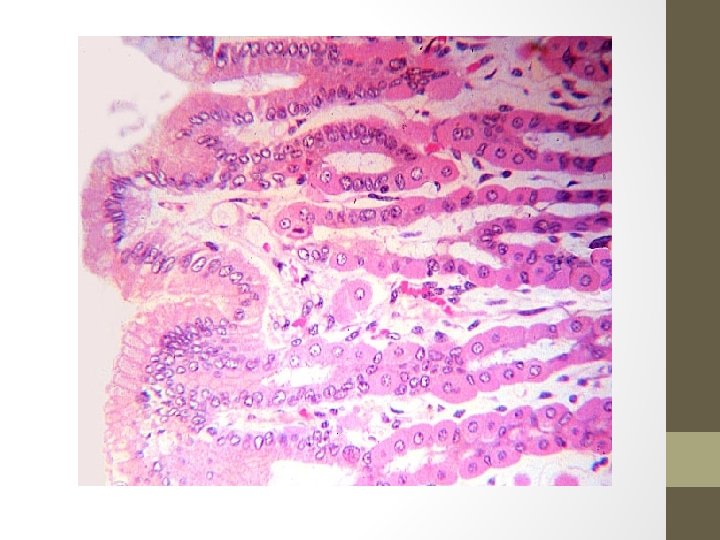
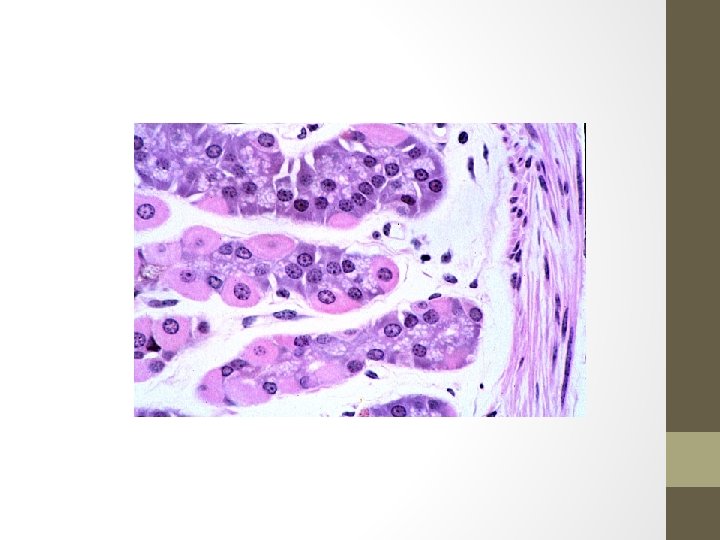
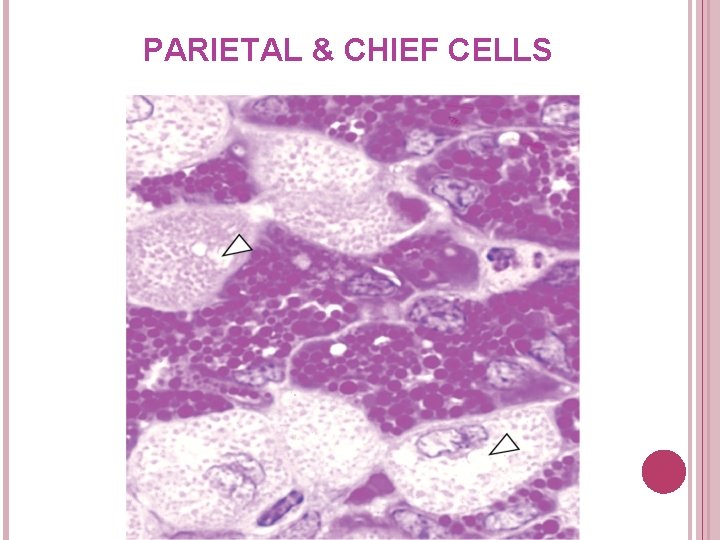
PARIETAL (OXYNTIC) CELLS Located mainly in upper half of gastric gland Rounded/pyramidal shaped Fried egg appearance Intensely eiosinophilic-E/M mitochondria Intracellular canaliculus Secrete: HCl Intrinsic factor- glycoprotein Secretory activity increased by Parasympathetic activity Histamine Gastrin
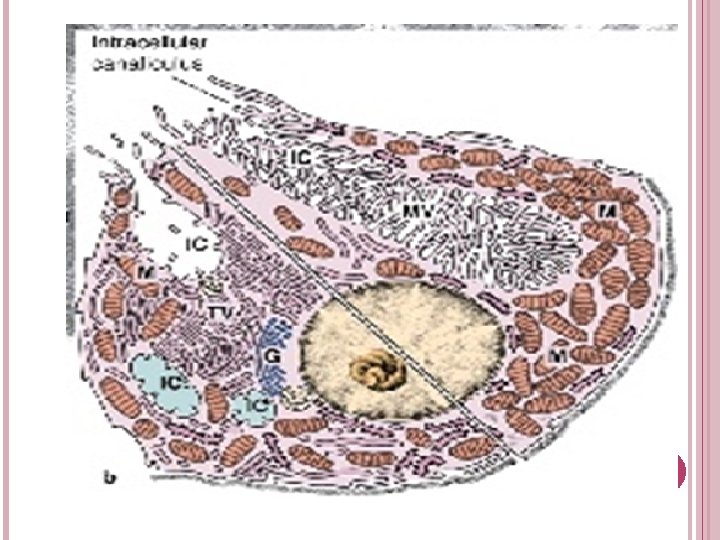
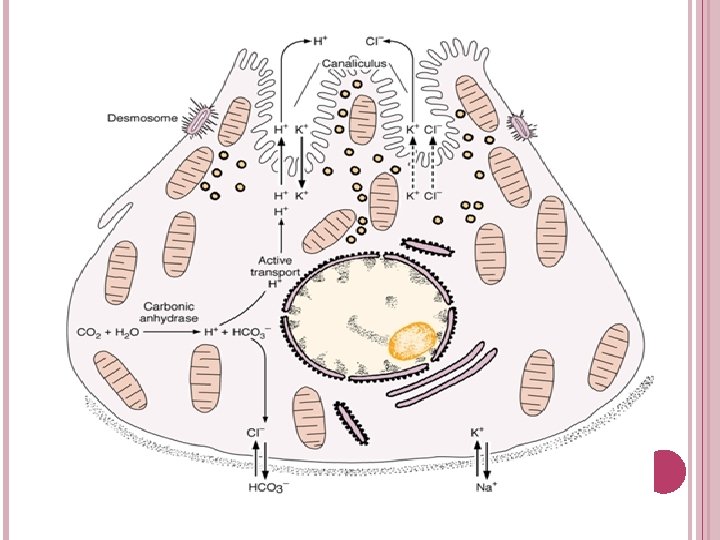
PARIETAL & CHIEF CELLS
MEDICAL APPLICATION Atrophic Gastritis a condition in which chief & parietal cells are less numerous Intrinsic factor bind to Vit B 12 Complex absorbed in Ileum Lack of Intrinsic factor leads to Vit. B 12 defficiency – PERNICIOUS ANAEMIA
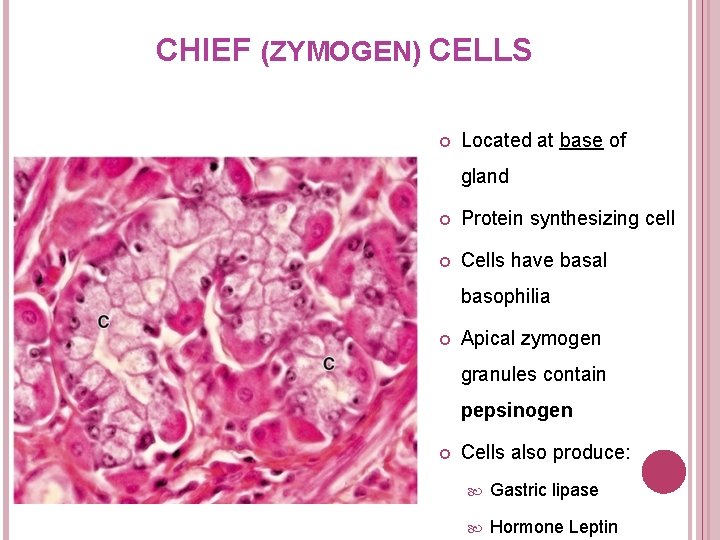
CHIEF (ZYMOGEN) CELLS Located at base of gland Protein synthesizing cell Cells have basal basophilia Apical zymogen granules contain pepsinogen Cells also produce: Gastric lipase Hormone Leptin
ENTEROENDOCRINE CELLS Present in base of gland- specially in pyloric antrum Small pyramidal cells with clear cytoplasm Are peptide secreting cells Stain with Silver stains- Argentaffin cells Potassium dichromate – enterochromaffin cells In fundus – secrete Serotonin In pylorus – G cells produce Gastrin STEM CELLS Found mainly in neck of gland Low columnar cells with basal oval nuclei High rate of mitosis Replace all kind of cells
MEDICAL APPLICATION CACINOID is a tumour of enterochromaffin cells Causes overproduction of serotinin Results in: Hypermotility of gut Mucosal vasoconstriction
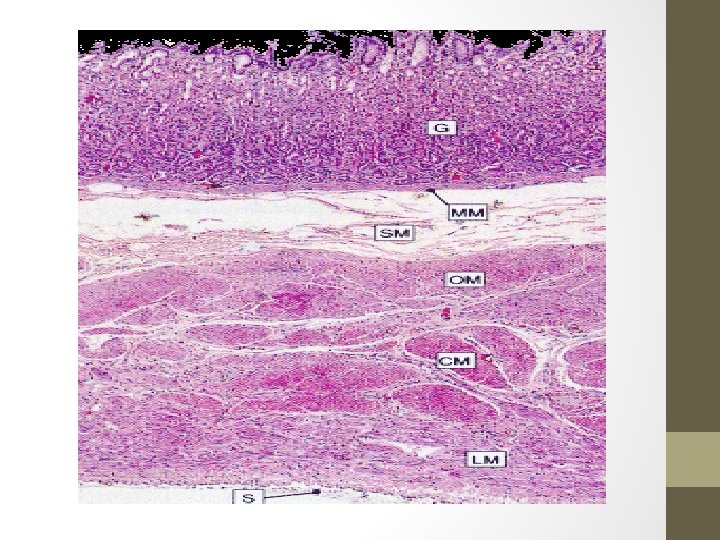
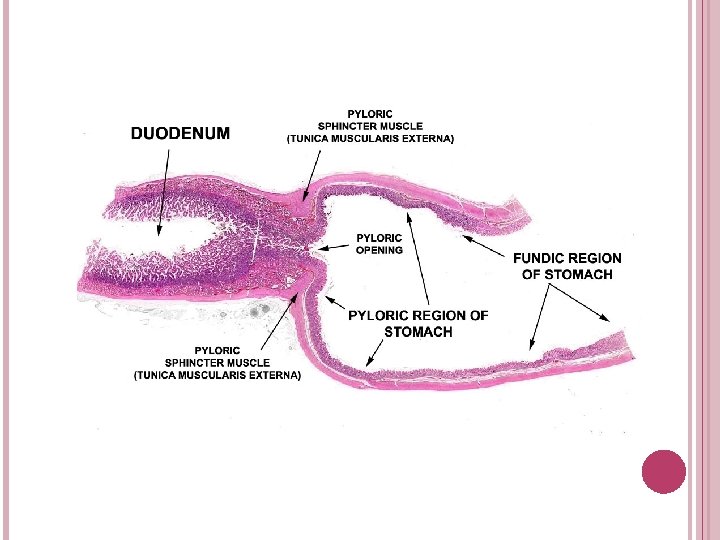
OTHER LAYERS OF STOMACH SUBMUCOSA Collagen & elastic fibers Fibroblasts, lymphocytes, plasma cells Blood vessels, lymph vessels, nerves, submucosal plexus MUSCULARIS EXTERNA Three layers: Innermost oblique Inner circular Outer longitudinal Circular layer well developed in Pylorus to form sphincter SEROSA Adipose cells Blood vessels, nerves etc.
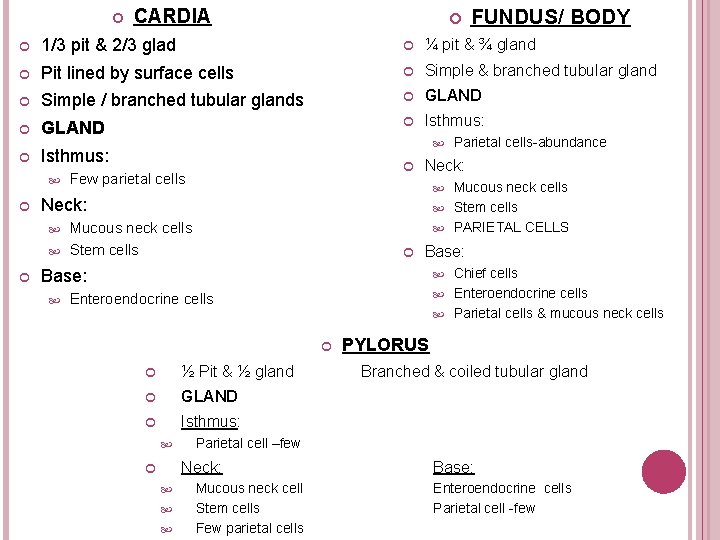
CARDIA FUNDUS/ BODY 1/3 pit & 2/3 glad ¼ pit & ¾ gland Pit lined by surface cells Simple & branched tubular gland Simple / branched tubular glands GLAND Isthmus: Parietal cells-abundance Few parietal cells Neck: Mucous neck cells Neck: Stem cells Mucous neck cells Stem cells PARIETAL CELLS Base: Chief cells Base: Enteroendocrine cells Parietal cells & mucous neck cells ½ Pit & ½ gland GLAND Isthmus: Branched & coiled tubular gland Parietal cell –few Neck: PYLORUS Mucous neck cell Stem cells Few parietal cells Base: Enteroendocrine cells Parietal cell -few
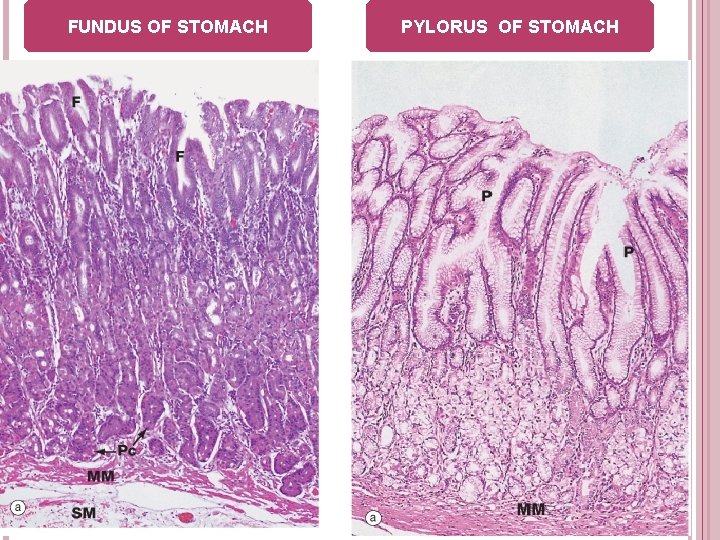
FUNDUS OF STOMACH PYLORUS OF STOMACH
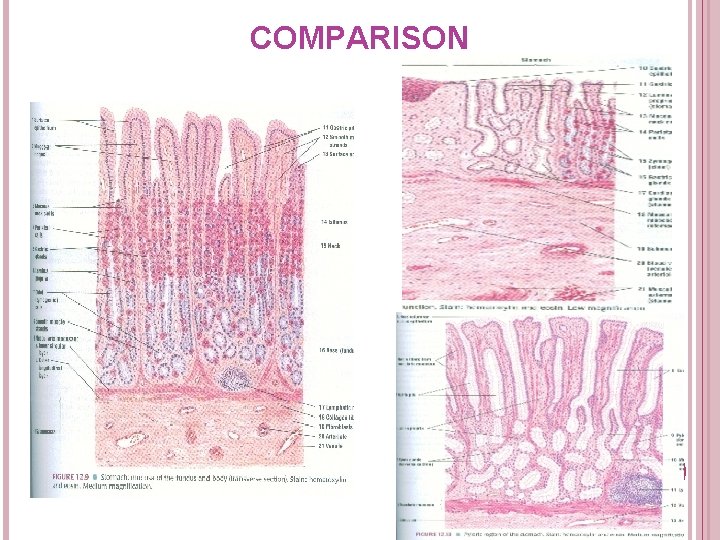
COMPARISON
MEDICAL APPLICATION o Disruption of epithelial layer leads to ULCERATION o Factors: o Stress o Drugs o Ethanol o H pylori o Superficial ulcers heal spontaneously o Imbalance between aggressive & protective factors leads to pathological alterations – PEPTIC ULCERS
Line of defence �Surface mucous �Tight intercellular junctions �Underlying circulatory bed
- Slides: 35