
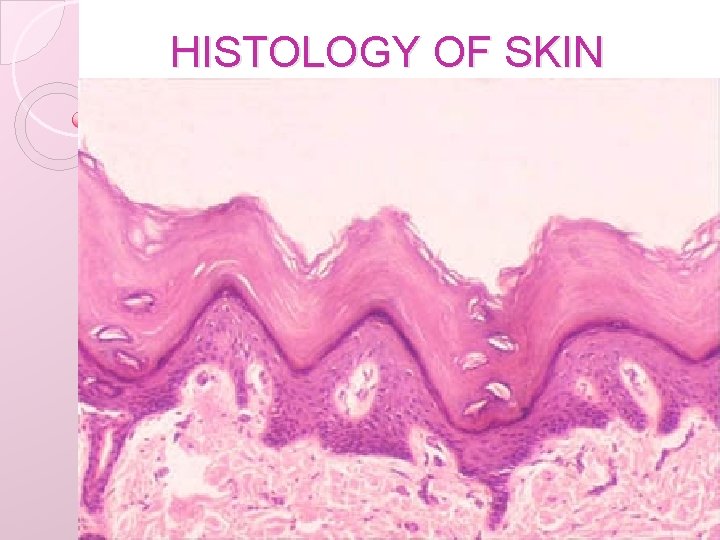
HISTOLOGY OF SKIN Structure Structure include 1 of



- Slides: 37
HISTOLOGY OF SKIN
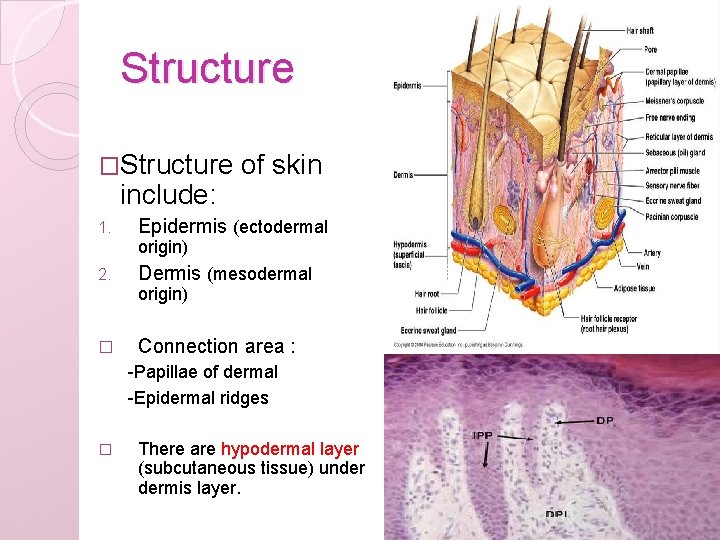
Structure �Structure include: 1. of skin Epidermis (ectodermal origin) 2. Dermis (mesodermal origin) � Connection area : -Papillae of dermal -Epidermal ridges � There are hypodermal layer (subcutaneous tissue) under dermis layer.
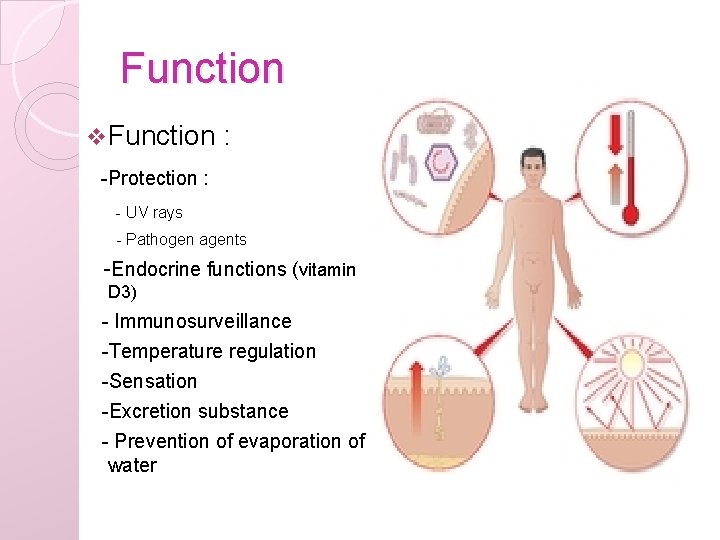
Function v Function : -Protection : - UV rays - Pathogen agents -Endocrine functions (vitamin D 3) - Immunosurveillance -Temperature regulation -Sensation -Excretion substance - Prevention of evaporation of water
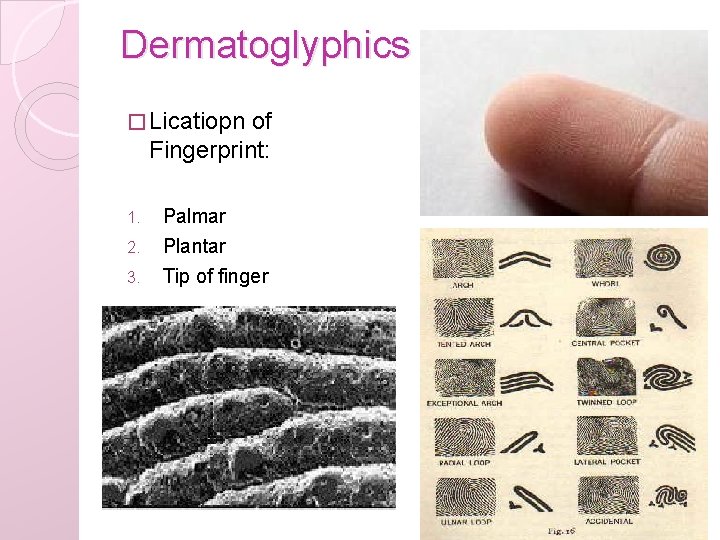
Dermatoglyphics � Licatiopn of Fingerprint: 1. 2. 3. Palmar Plantar Tip of finger
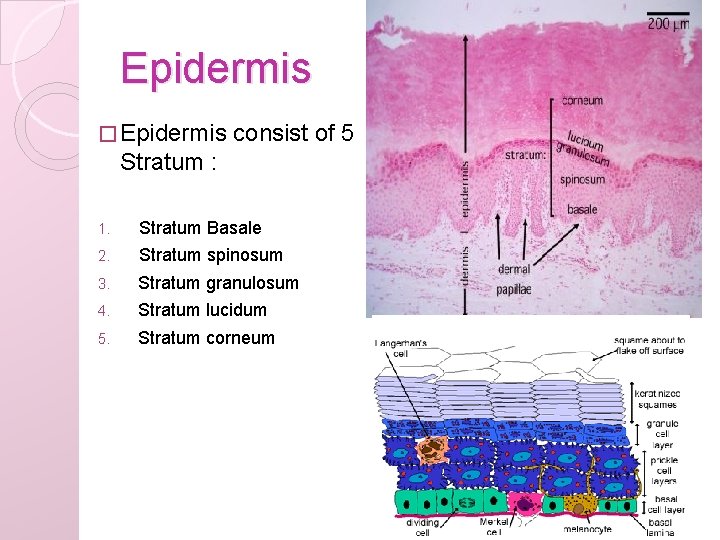
Epidermis � Epidermis consist of 5 Stratum : 1. Stratum Basale 2. Stratum spinosum 3. Stratum granulosum 4. Stratum lucidum 5. Stratum corneum
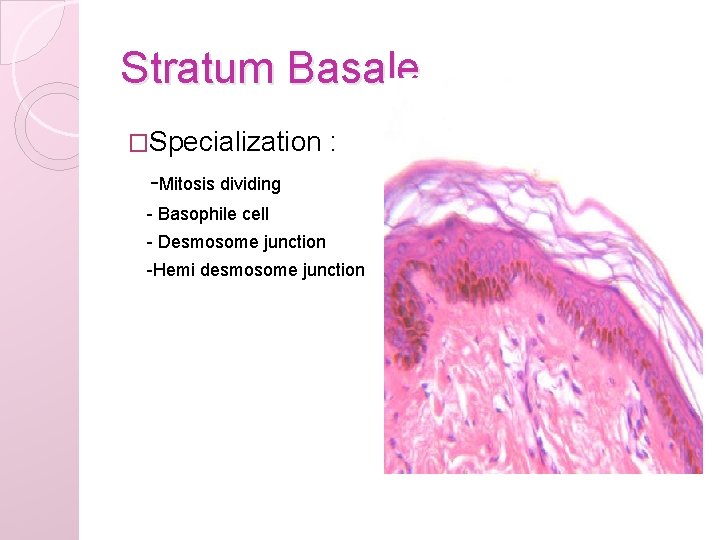
Stratum Basale �Specialization : -Mitosis dividing - Basophile cell - Desmosome junction -Hemi desmosome junction
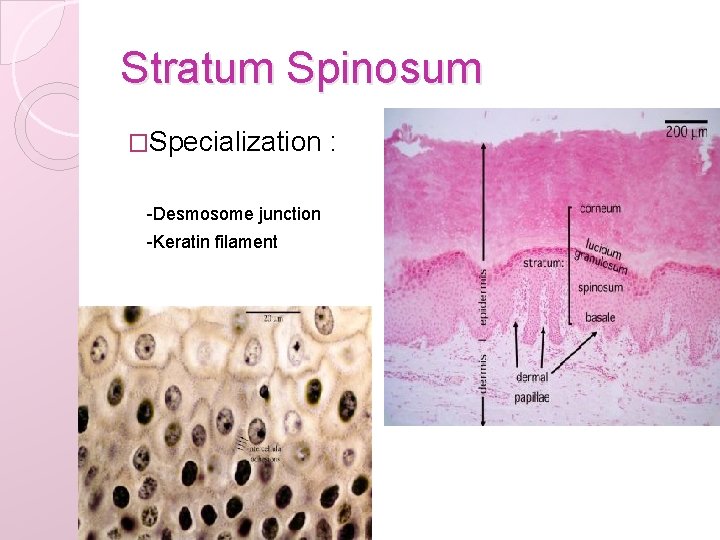
Stratum Spinosum �Specialization -Desmosome junction -Keratin filament :
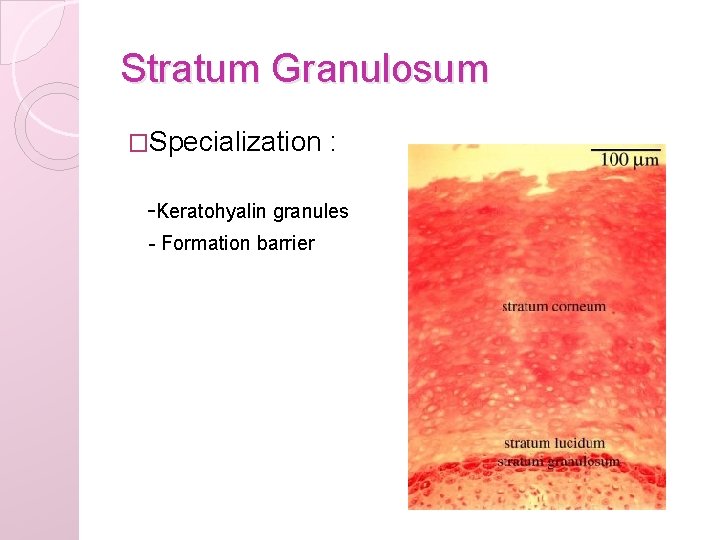
Stratum Granulosum �Specialization : -Keratohyalin granules - Formation barrier
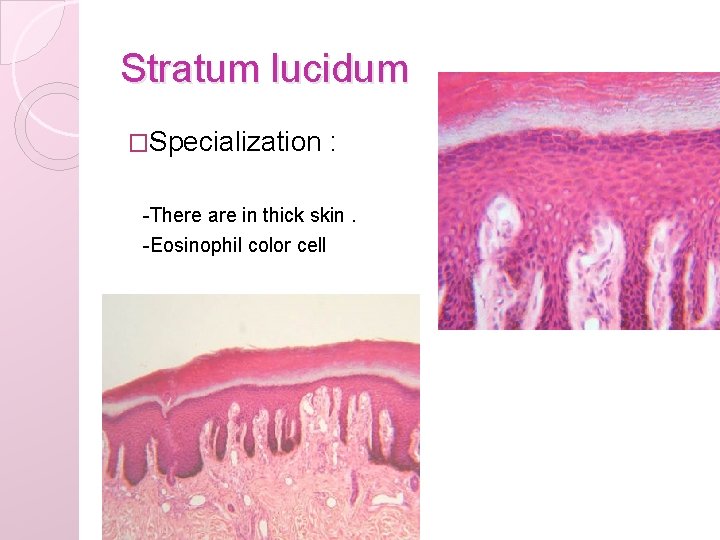
Stratum lucidum �Specialization : -There are in thick skin. -Eosinophil color cell
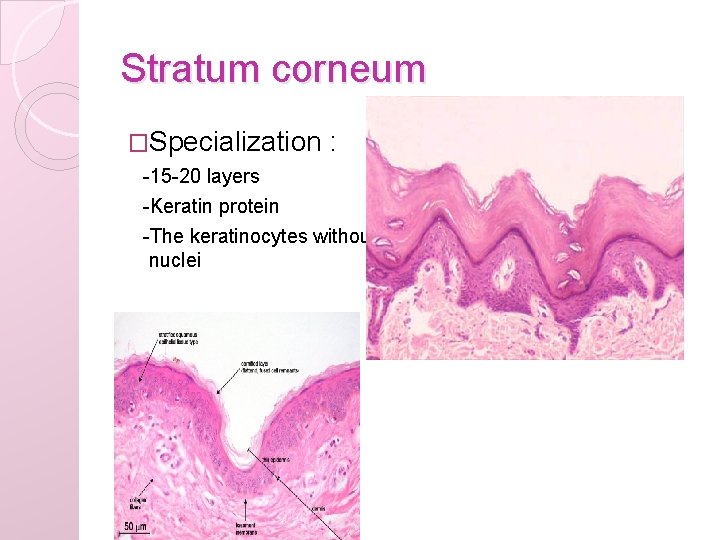
Stratum corneum �Specialization : -15 -20 layers -Keratin protein -The keratinocytes without nuclei
Epidermis �Types 1. 2. 3. of cells : Melanocyte Langerhans cell Merkel cell
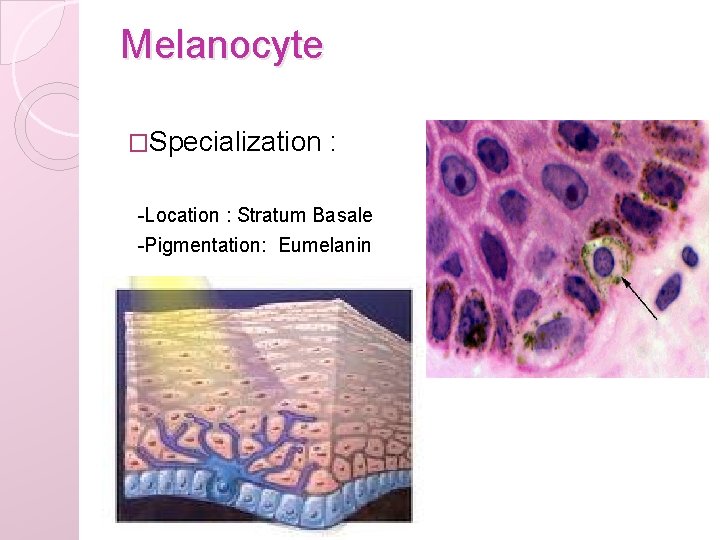
Melanocyte �Specialization : -Location : Stratum Basale -Pigmentation: Eumelanin
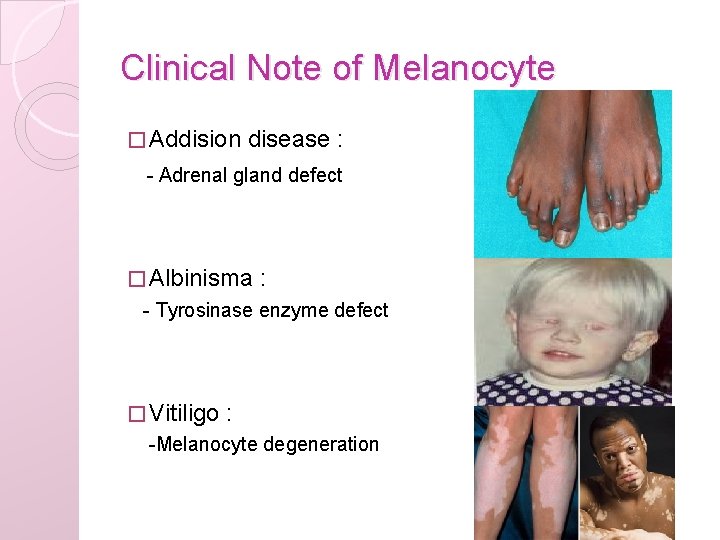
Clinical Note of Melanocyte � Addision disease : - Adrenal gland defect � Albinisma : - Tyrosinase enzyme defect � Vitiligo : -Melanocyte degeneration
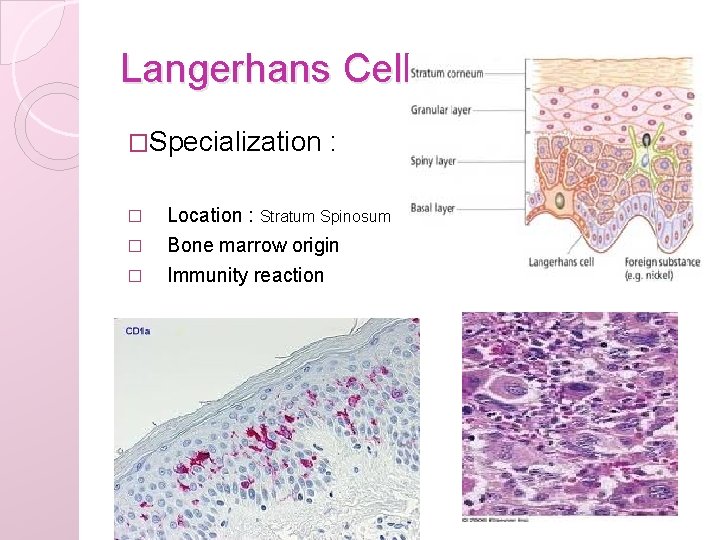
Langerhans Cell �Specialization � � � : Location : Stratum Spinosum Bone marrow origin Immunity reaction
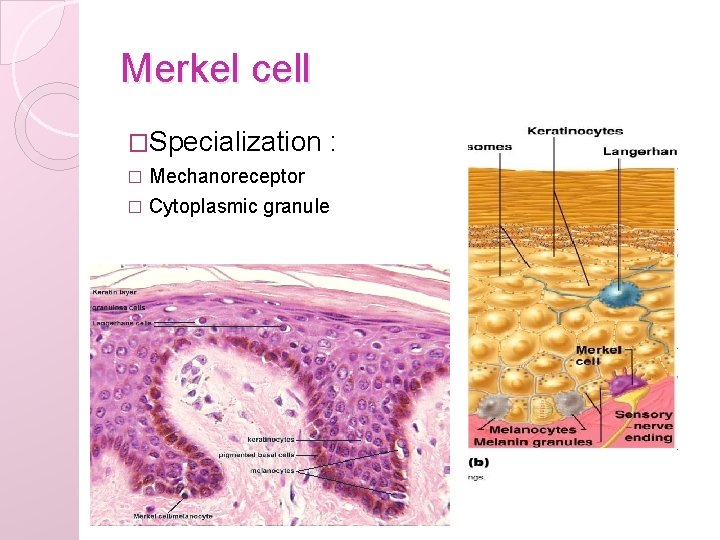
Merkel cell �Specialization : � Mechanoreceptor � Cytoplasmic granule
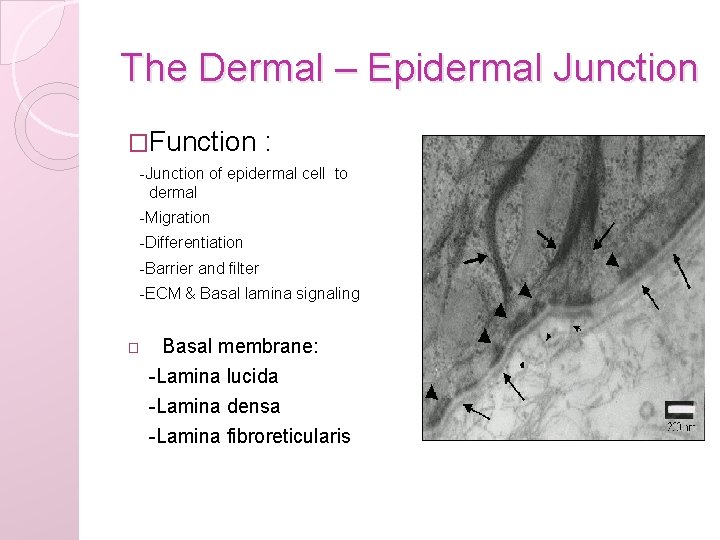
The Dermal – Epidermal Junction �Function : -Junction of epidermal cell to dermal -Migration -Differentiation -Barrier and filter -ECM & Basal lamina signaling � Basal membrane: -Lamina lucida -Lamina densa -Lamina fibroreticularis
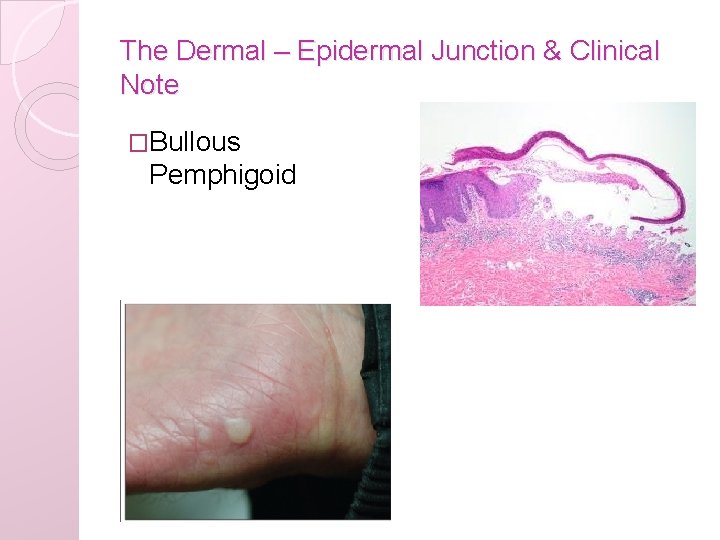
The Dermal – Epidermal Junction & Clinical Note �Bullous Pemphigoid
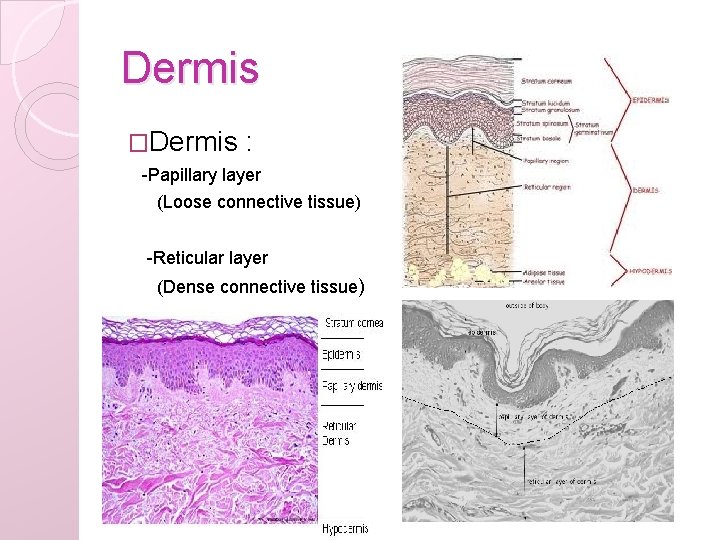
Dermis �Dermis : -Papillary layer (Loose connective tissue) -Reticular layer (Dense connective tissue)
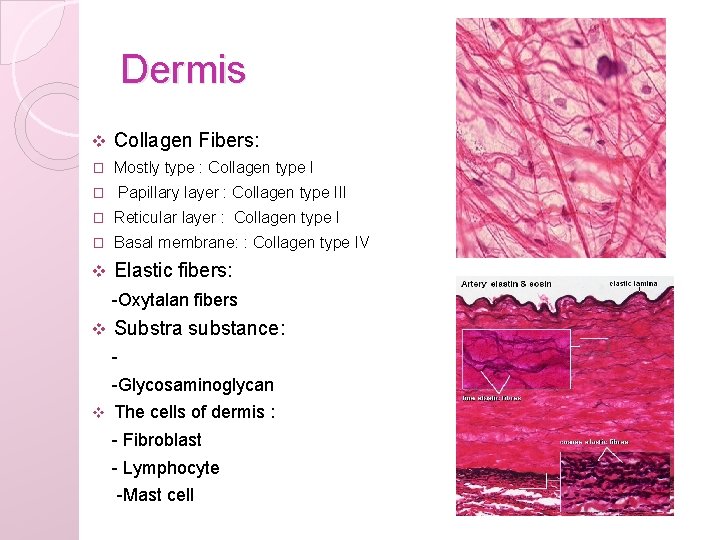
Dermis v Collagen Fibers: � Mostly type : Collagen type I Papillary layer : Collagen type III � � Reticular layer : Collagen type I � Basal membrane: : Collagen type IV v Elastic fibers: -Oxytalan fibers v Substra substance: -Glycosaminoglycan v The cells of dermis : - Fibroblast - Lymphocyte -Mast cell
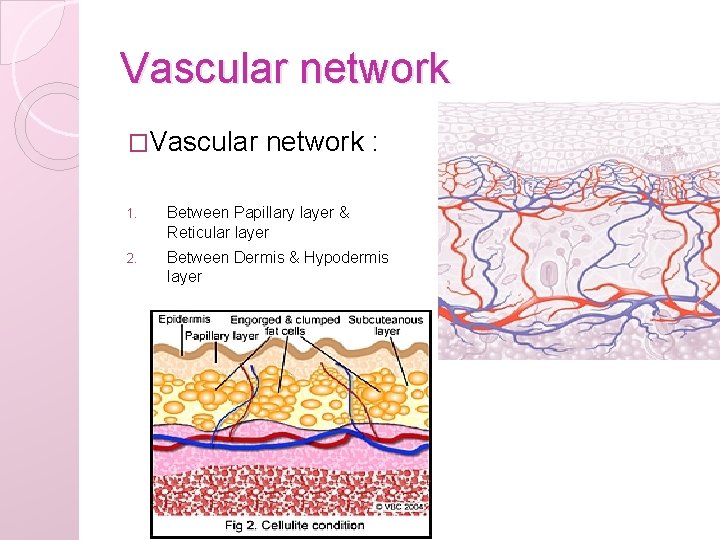
Vascular network �Vascular network : 1. Between Papillary layer & Reticular layer 2. Between Dermis & Hypodermis layer
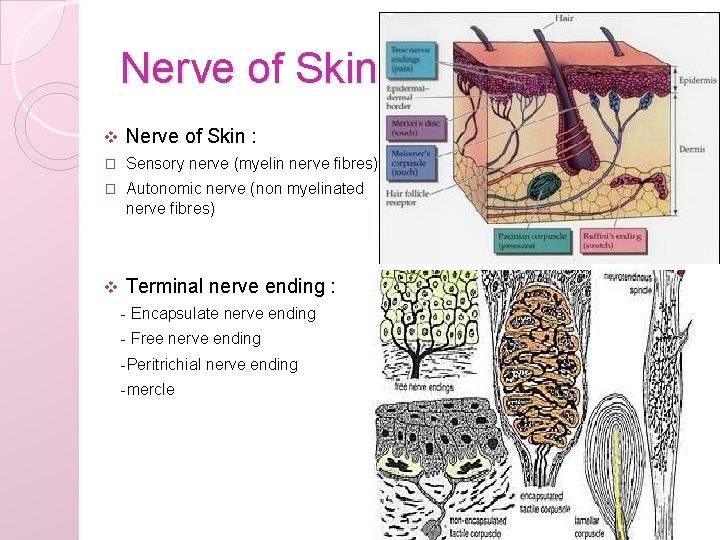
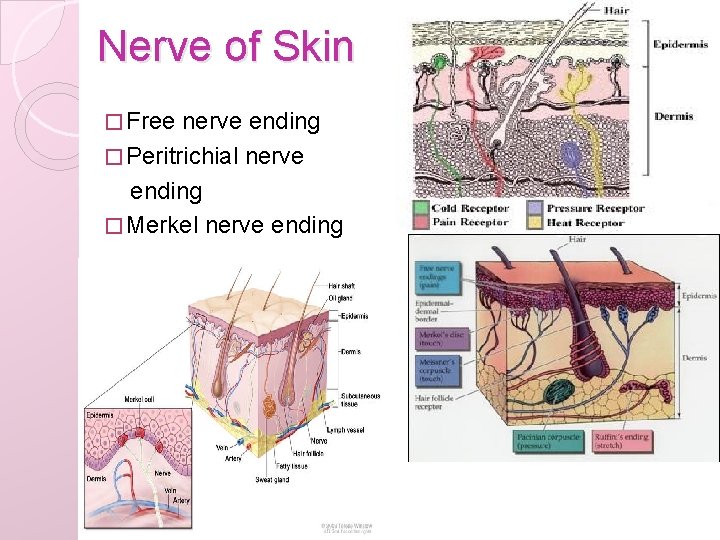
Nerve of Skin v Nerve of Skin : � Sensory nerve (myelin nerve fibres) � Autonomic nerve (non myelinated nerve fibres) v Terminal nerve ending : - Encapsulate nerve ending - Free nerve ending -Peritrichial nerve ending -mercle
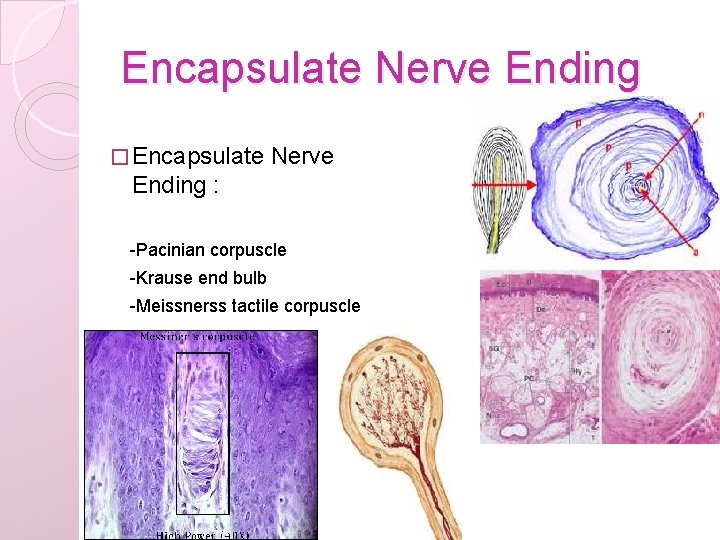
Encapsulate Nerve Ending � Encapsulate Nerve Ending : -Pacinian corpuscle -Krause end bulb -Meissnerss tactile corpuscle
Nerve of Skin � Free nerve ending � Peritrichial nerve ending � Merkel nerve ending
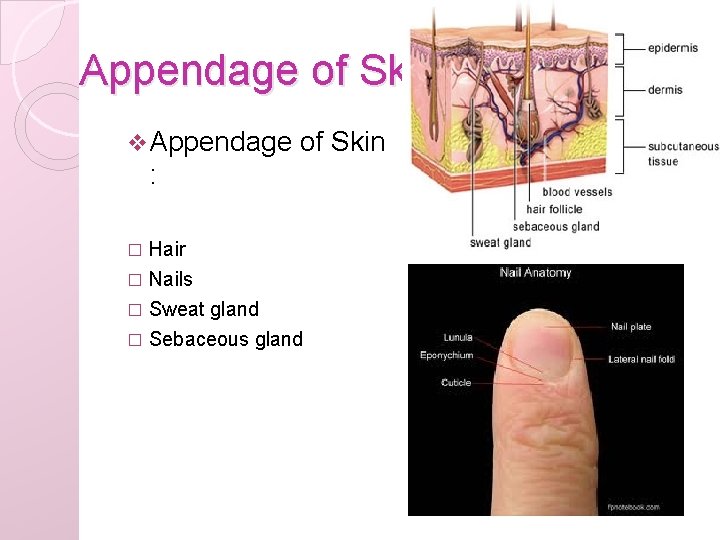
Appendage of Skin v Appendage of Skin : Hair � Nails � Sweat gland � Sebaceous gland �
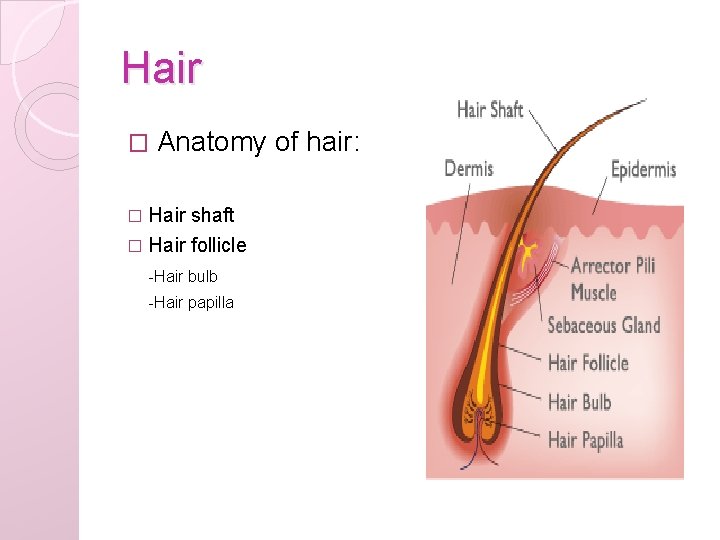
Hair � Anatomy of hair: Hair shaft � Hair follicle � -Hair bulb -Hair papilla
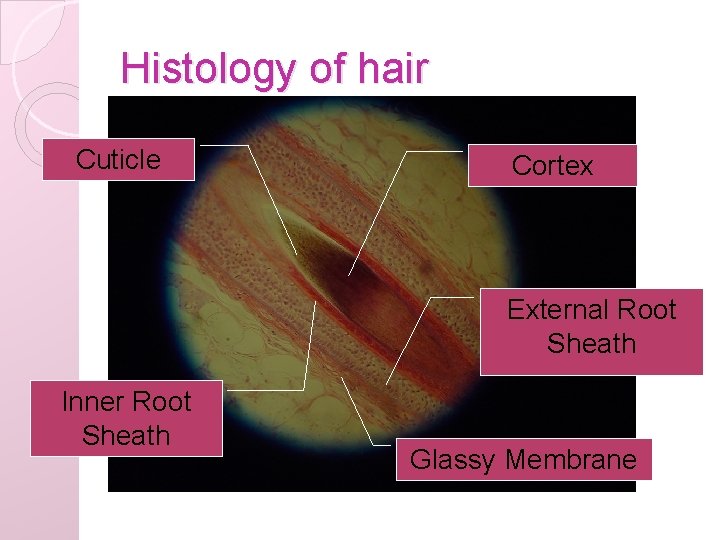
Hair v Histology � Hair shaft : of hair : - Medulla - Cortex - Cuticle � Hair follicle -Dermal papilla - matrix cells - Medulla - Cortex - Cuticle -Internal root sheath -External root sheath -Glassy membrance
Histology of hair Cuticle Cortex External Root Sheath Inner Root Sheath Glassy Membrane
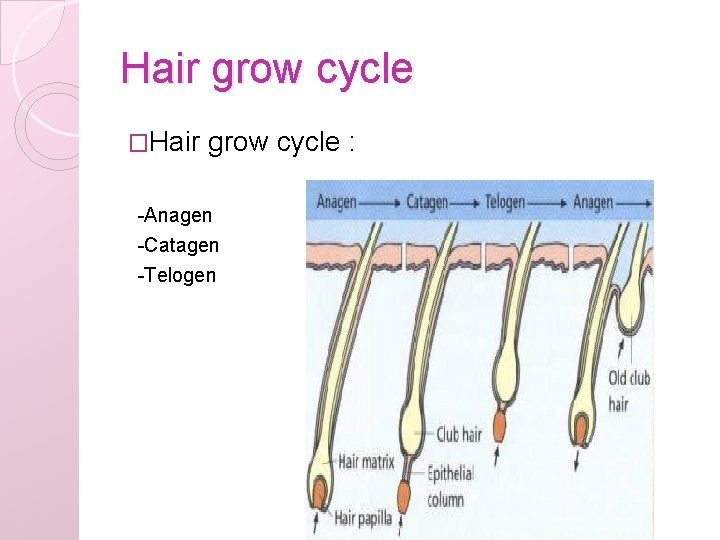
Hair grow cycle �Hair grow cycle : -Anagen -Catagen -Telogen
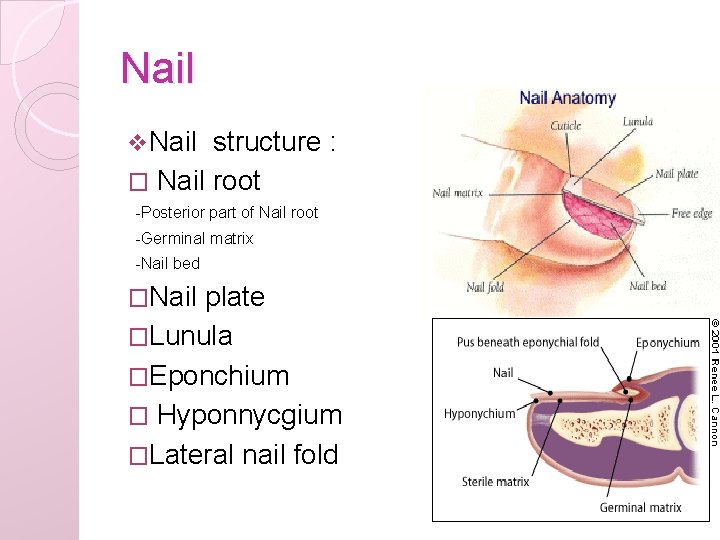
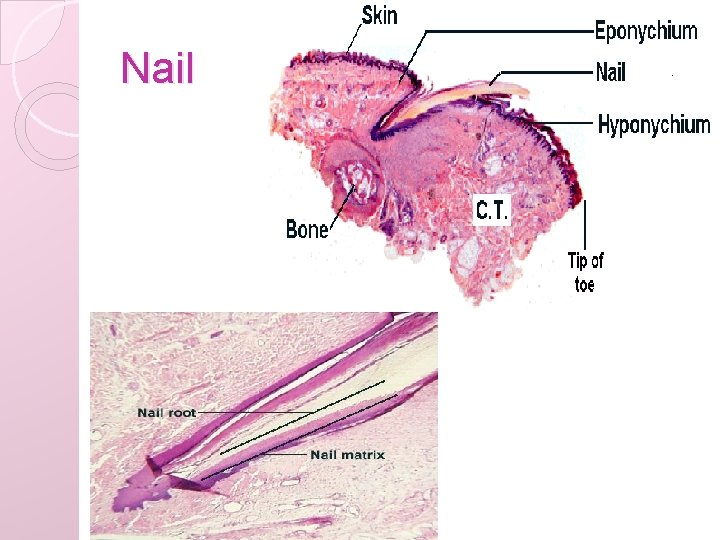
Nail v Nail structure : � Nail root -Posterior part of Nail root -Germinal matrix -Nail bed �Nail plate �Lunula �Eponchium � Hyponnycgium �Lateral nail fold
Nail
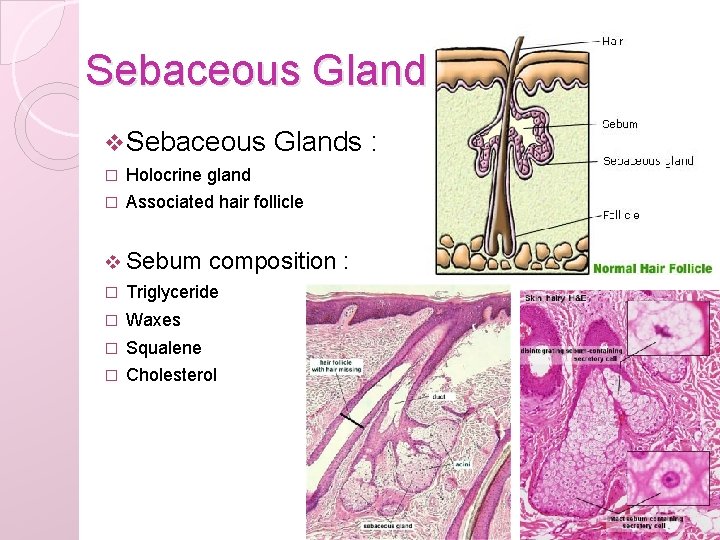
Sebaceous Glands v Sebaceous Glands : � Holocrine gland � Associated hair follicle v Sebum composition : � Triglyceride � Waxes � Squalene � Cholesterol
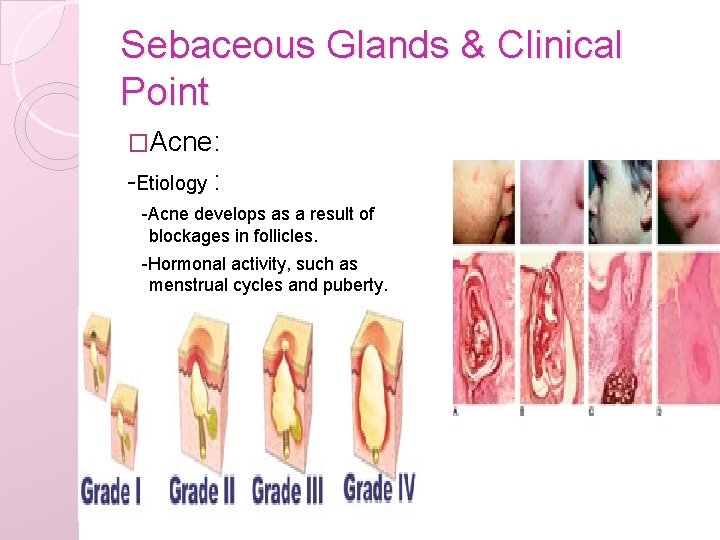
Sebaceous Glands & Clinical Point �Acne: -Etiology : -Acne develops as a result of blockages in follicles. -Hormonal activity, such as menstrual cycles and puberty.
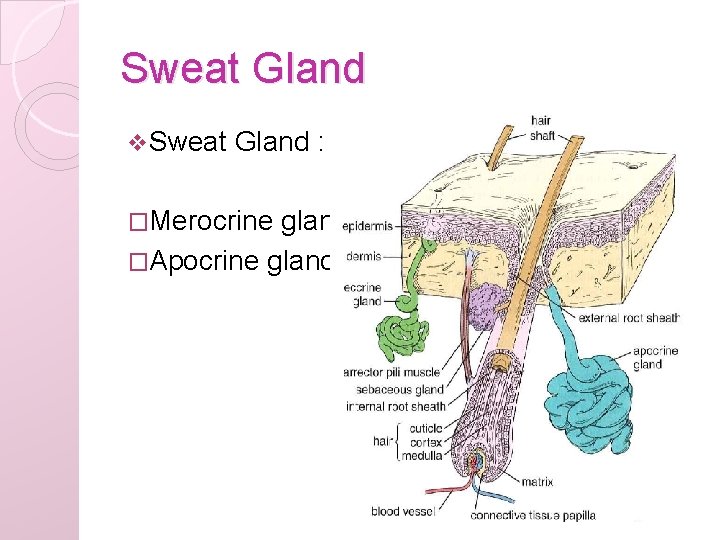
Sweat Gland v Sweat Gland : �Merocrine gland �Apocrine gland
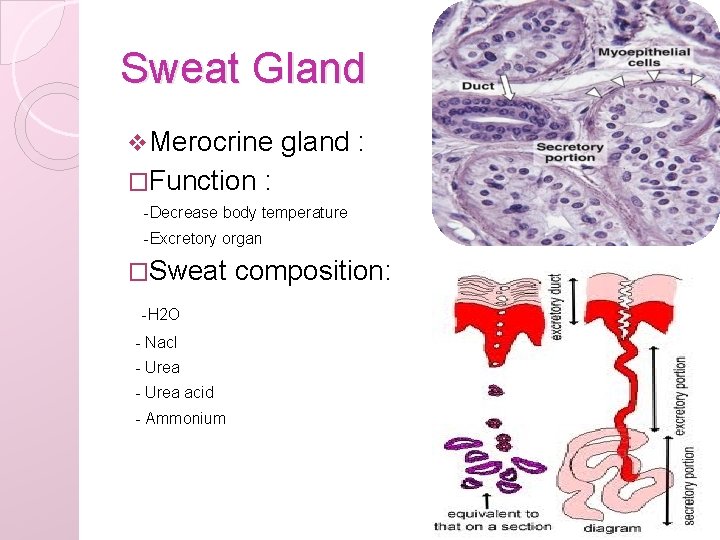
Sweat Gland v Merocrine �Function gland : : -Decrease body temperature -Excretory organ �Sweat -H 2 O - Nacl - Urea acid - Ammonium composition:
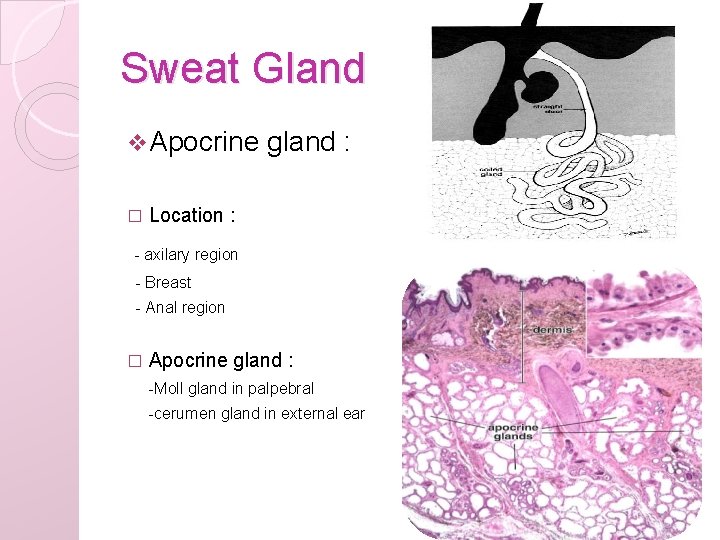
Sweat Gland v Apocrine � gland : Location : - axilary region - Breast - Anal region � Apocrine gland : -Moll gland in palpebral -cerumen gland in external ear
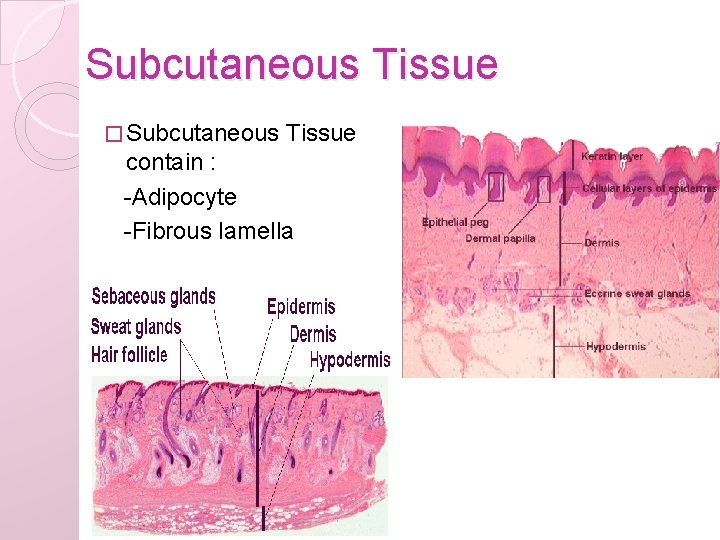
Subcutaneous Tissue � Subcutaneous Tissue contain : -Adipocyte -Fibrous lamella
THANK YOU