
Histology of pancreas and liver Pancreas It is

- Slides: 15
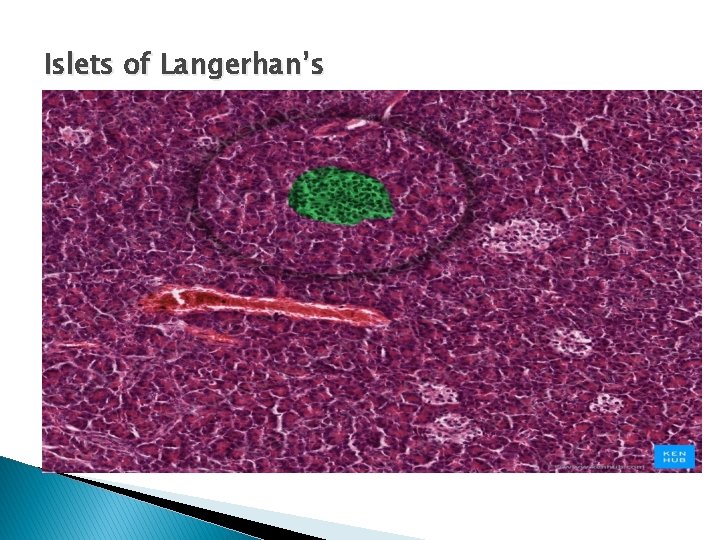
Histology of pancreas and liver Pancreas It is a compound tubulo acinar gland of serous secreting nature ØThe capsule is made up of connective tissue which divides the gland through its trabeculi into several lobes and lobules ØThe glandular adenomeres are made up of Pyramidal cells with parabasally placed spherical nucleus ØThe cytoplasm presents eosinophilic cytoplasmic Ø
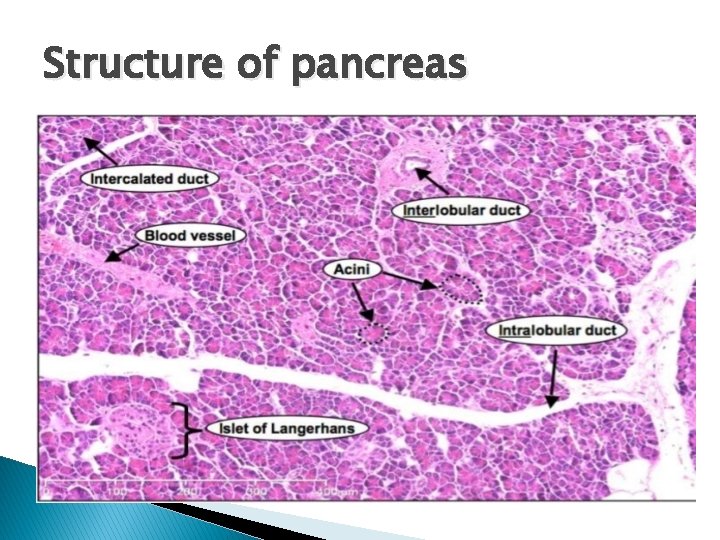
ØThe acinar cell rests over the basement membrane and the duct system presents intercalated, intralobularduct, interlobular duct, lobar duct and main excretory duct ØThe main excretory duct is lined with simple columnar epithelium ØThe central lumen of the acini presents centroacinar cells which are extended epithelial cells of intercalated ducts ØMyoepithelial cells are absent
Structure of pancreas
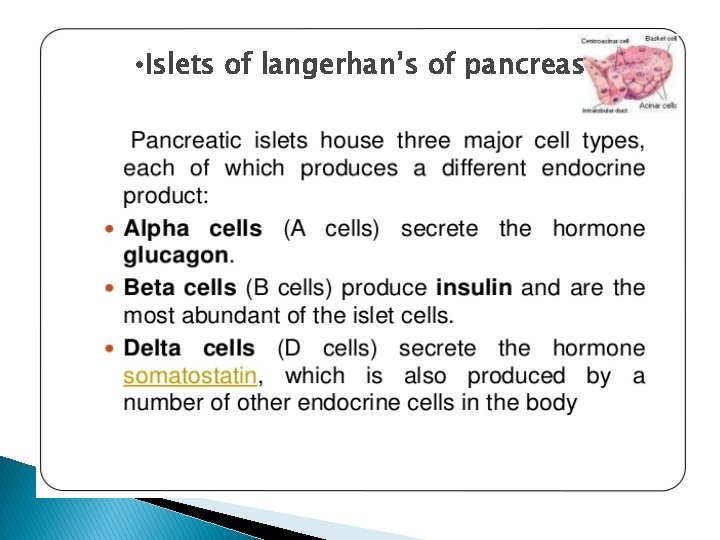
• Islets of langerhan’s of pancreas
Islets of Langerhan’s
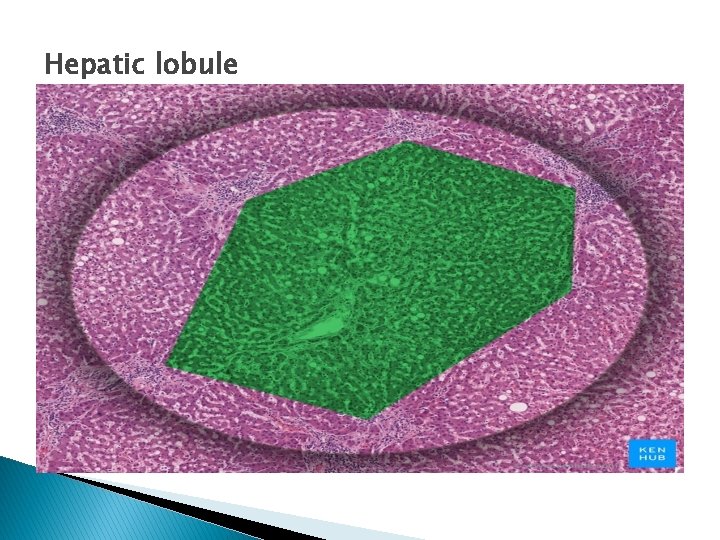
Liver ØIrregular connective tissue known as Glisson’s capsule is covered to its maximum extent by peritoneum ØFrom this capsule the CT descends towards the center of the gland which are predominated with reticular fiber ØThese septations divide the parenchyma into roughly hexagonal lobules ØThe interlobular septations are quite prominent in pig and made up of collagen fibers and are least developed in other animals
Glisson”s capsule
Hepatic lobule
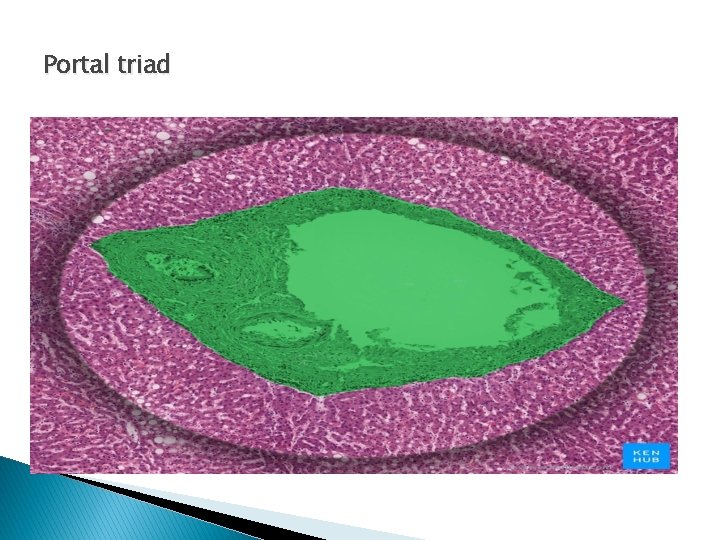
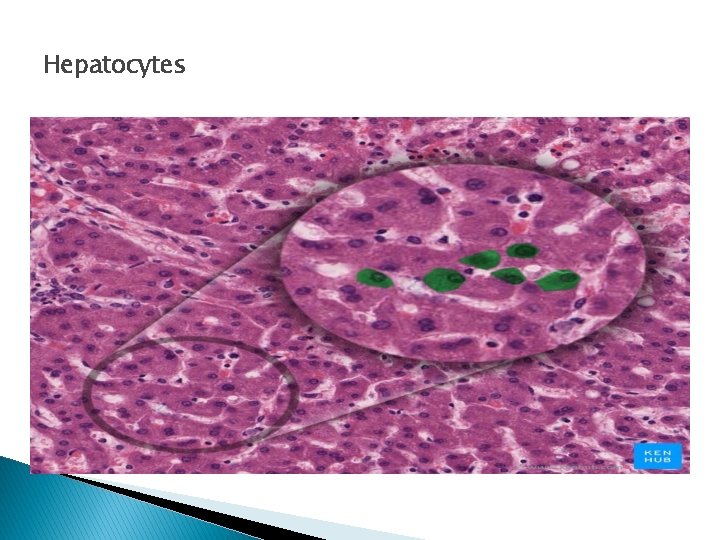
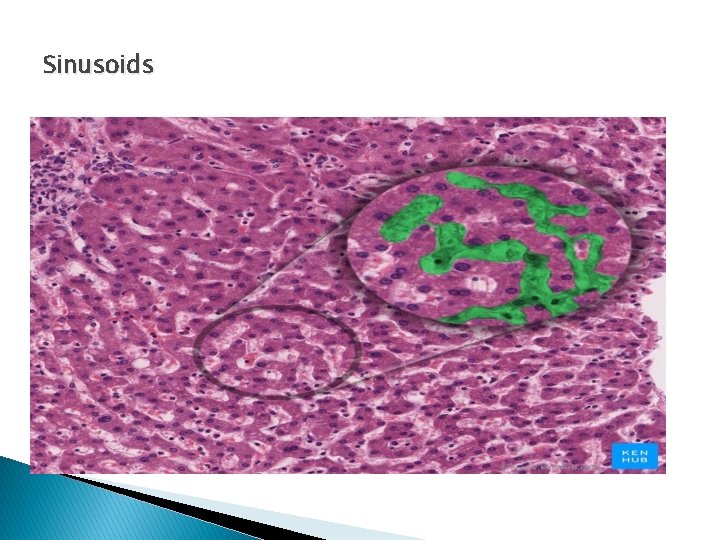
ØThe interlobular septations around hepatic lobule form six angle out of which the three angles contain portal vein, hepatic artery and bile duct. These areas are called portal areas or portal canal ØThe cells of the liver are known as hepatocytes which are arranged in radiating columns from outer margin of central vein towards the periphery of the lobule ØThe hepatic cell column are separated from each other by sinusoids which start from periphery and opens in the central vein ØThe hepatocytes are usually mononucleated cells and nucleus is spherical and cytoplasm rich in mitochondria, polyribosomes, lysosomes, SER, lipid and glycogen granules
Portal triad
Hepatocytes
Sinusoids
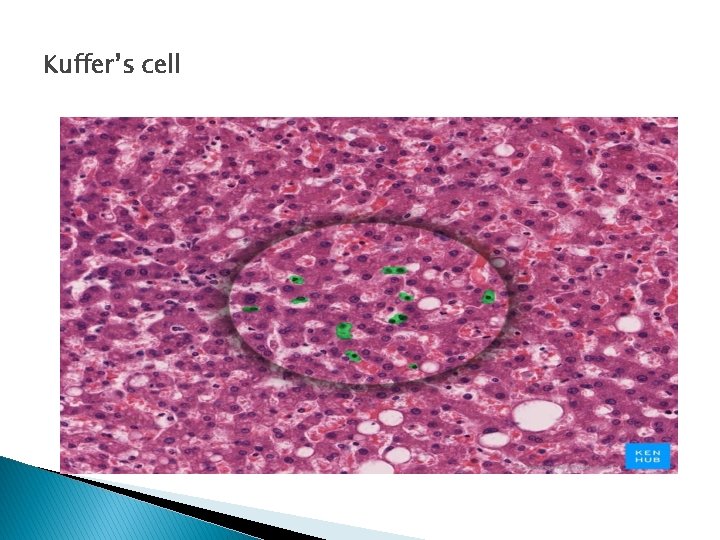
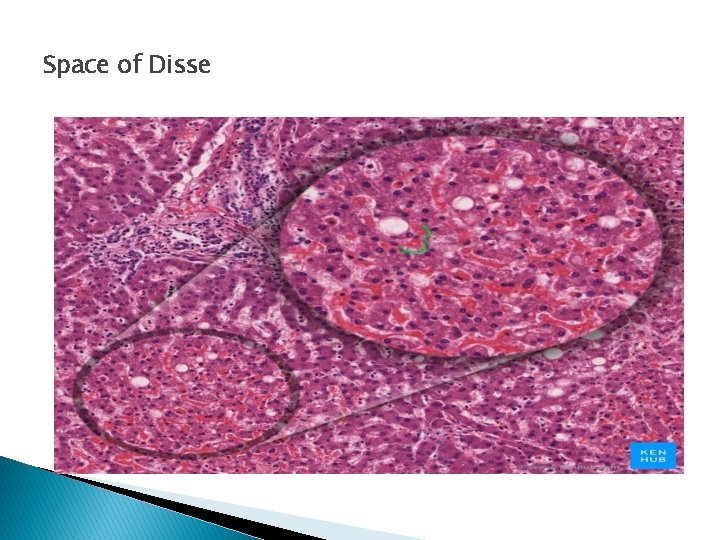
ØThe lining epithelium of sinusoids presents pores for transfer of macro and micro molecules of the nutrients carried through interlobular branch of portal vein ØThe sinusoidal wall is associated with large stellate shaped phagocytic cells popularly known as Kuffer’s cells ØThe space between the sinusoids and hepatocyte is called space of Disse
Kuffer’s cell
Space of Disse