
Histology of Nervous Tissue Neuroglia n Neurons n
- Slides: 17
Histology of Nervous Tissue Neuroglia n Neurons n Myelination n
Nervous Tissue: Support Cells n Support cells in the Central Nervous System (CNS) are grouped together as neuroglia n Neuroglia literally means “nerve glue” n The function of neuroglia is to support, insulate, and protect the delicate neurons of the brain
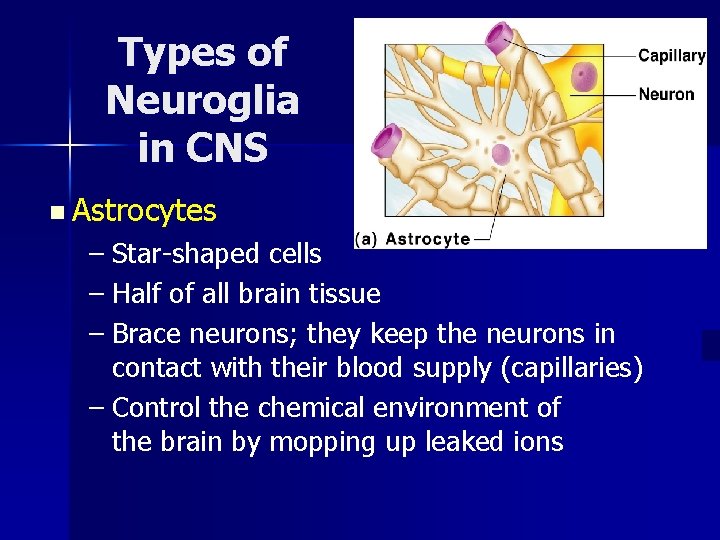
Types of Neuroglia in CNS n Astrocytes – Star-shaped cells – Half of all brain tissue – Brace neurons; they keep the neurons in contact with their blood supply (capillaries) – Control the chemical environment of the brain by mopping up leaked ions
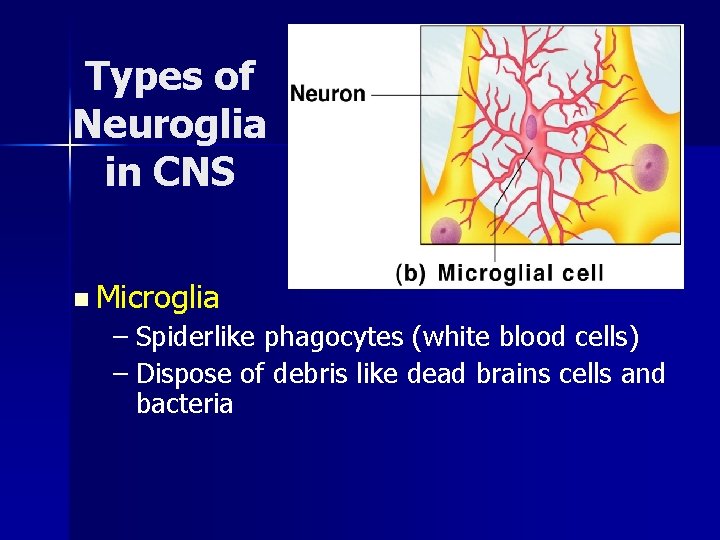
Types of Neuroglia in CNS n Microglia – Spiderlike phagocytes (white blood cells) – Dispose of debris like dead brains cells and bacteria
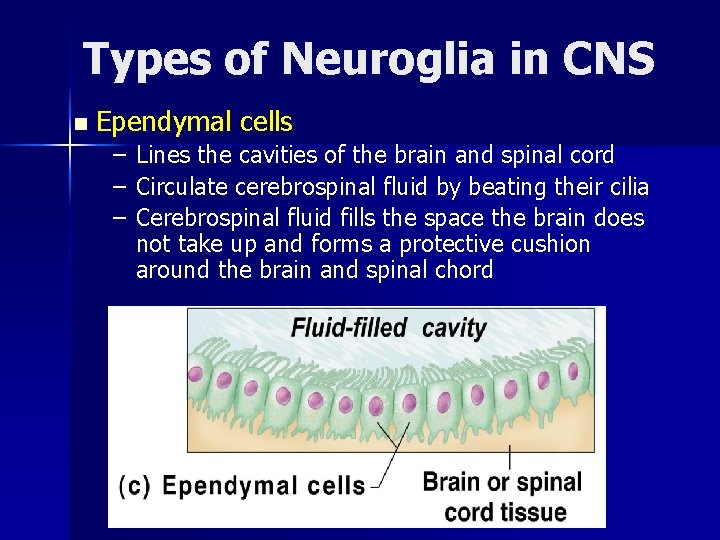
Types of Neuroglia in CNS n Ependymal cells – – – Lines the cavities of the brain and spinal cord Circulate cerebrospinal fluid by beating their cilia Cerebrospinal fluid fills the space the brain does not take up and forms a protective cushion around the brain and spinal chord
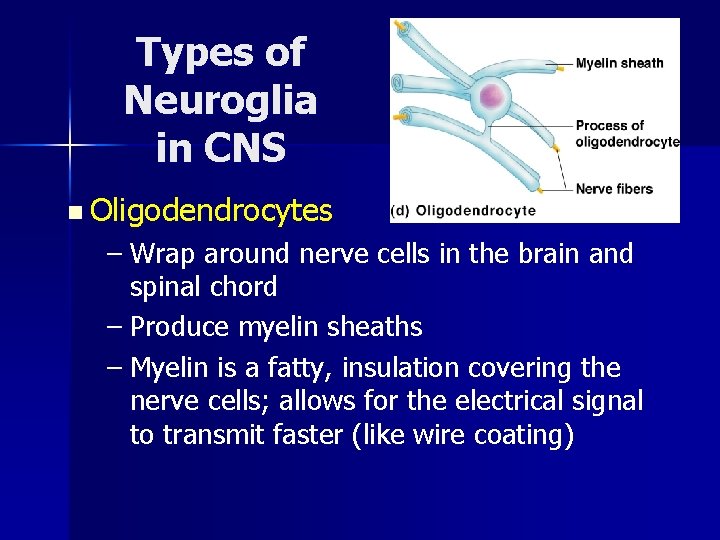
Types of Neuroglia in CNS n Oligodendrocytes – Wrap around nerve cells in the brain and spinal chord – Produce myelin sheaths – Myelin is a fatty, insulation covering the nerve cells; allows for the electrical signal to transmit faster (like wire coating)
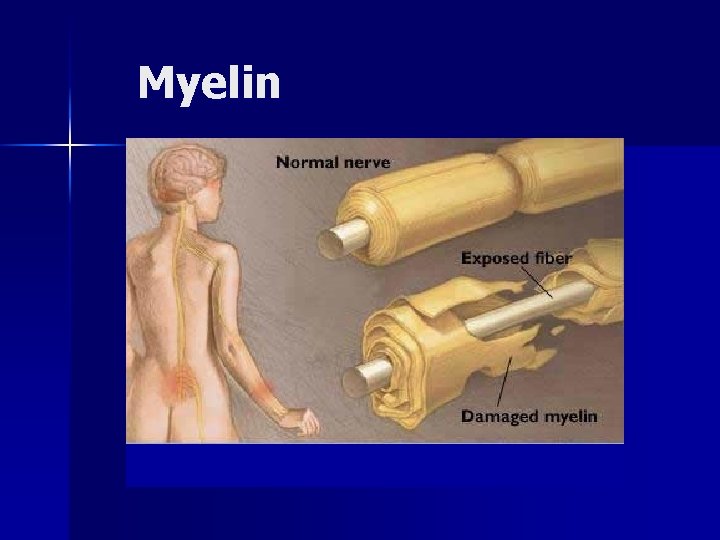
Myelin
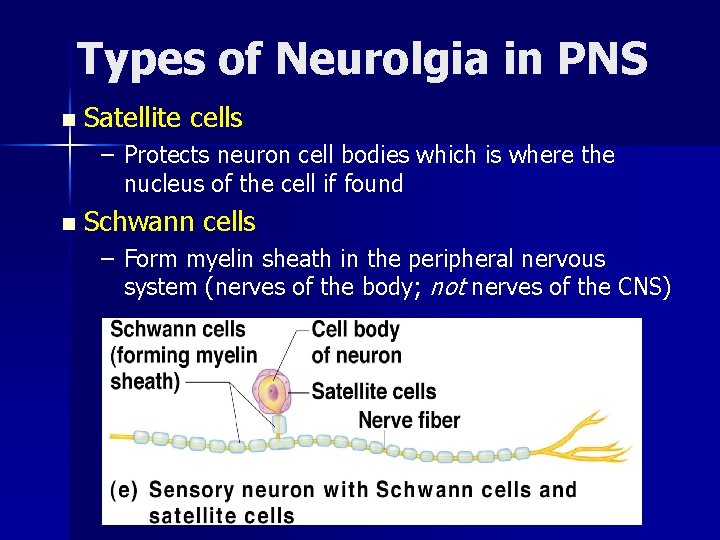
Types of Neurolgia in PNS n Satellite cells – Protects neuron cell bodies which is where the nucleus of the cell if found n Schwann cells – Form myelin sheath in the peripheral nervous system (nerves of the body; not nerves of the CNS)
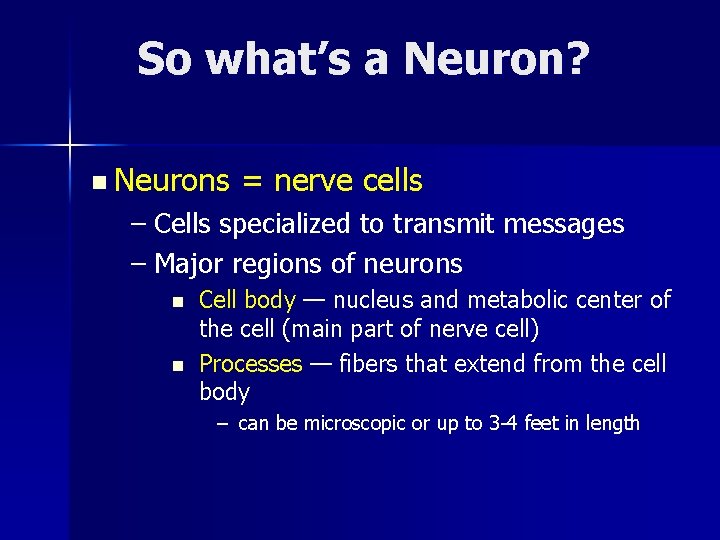
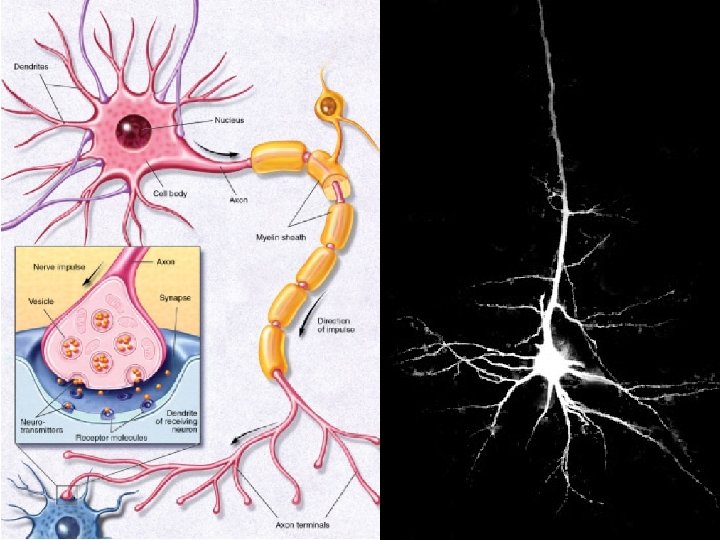
So what’s a Neuron? n Neurons = nerve cells – Cells specialized to transmit messages – Major regions of neurons n n Cell body — nucleus and metabolic center of the cell (main part of nerve cell) Processes — fibers that extend from the cell body – can be microscopic or up to 3 -4 feet in length
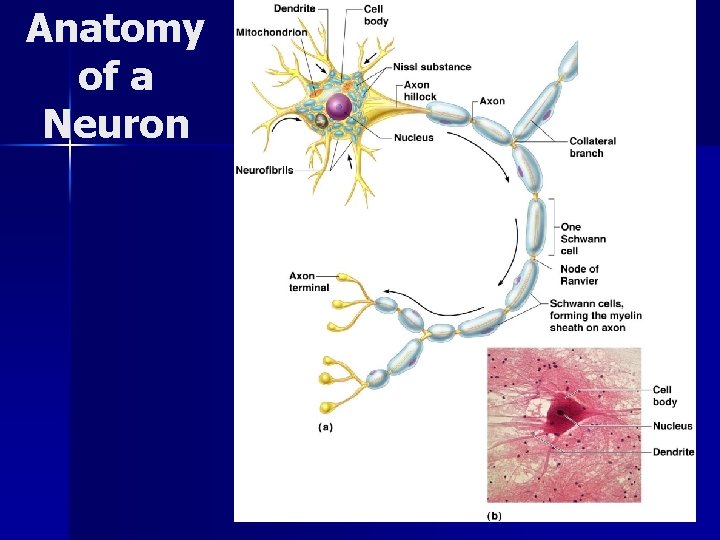
Anatomy of a Neuron
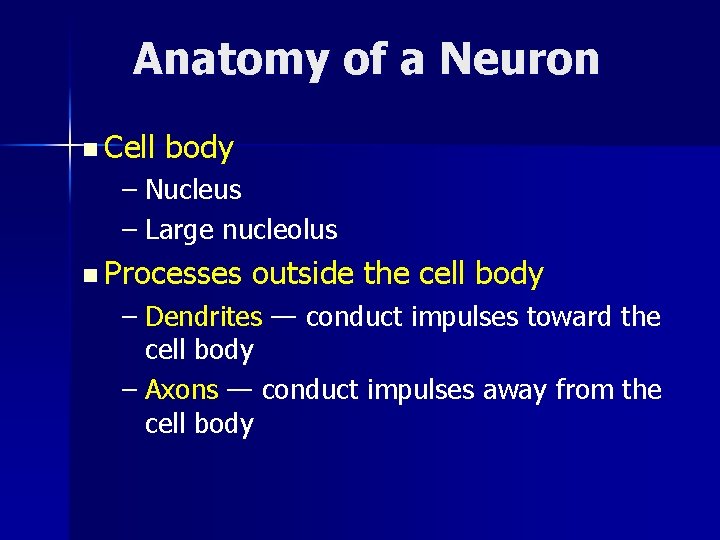
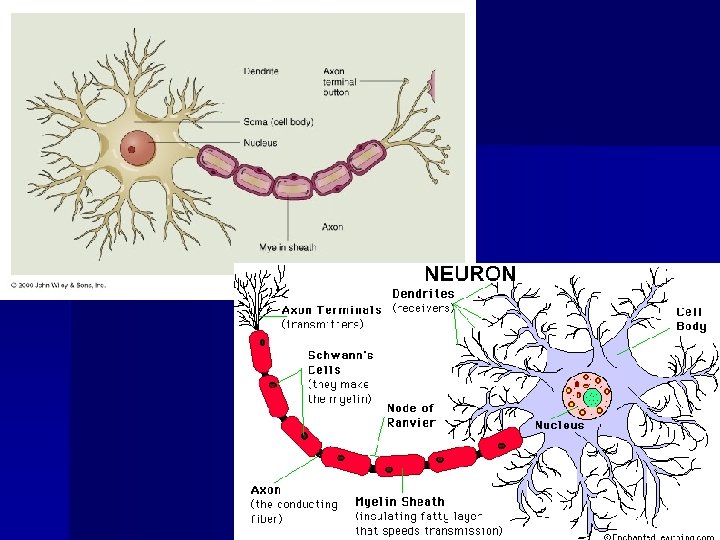
Anatomy of a Neuron n Cell body – Nucleus – Large nucleolus n Processes outside the cell body – Dendrites — conduct impulses toward the cell body – Axons — conduct impulses away from the cell body
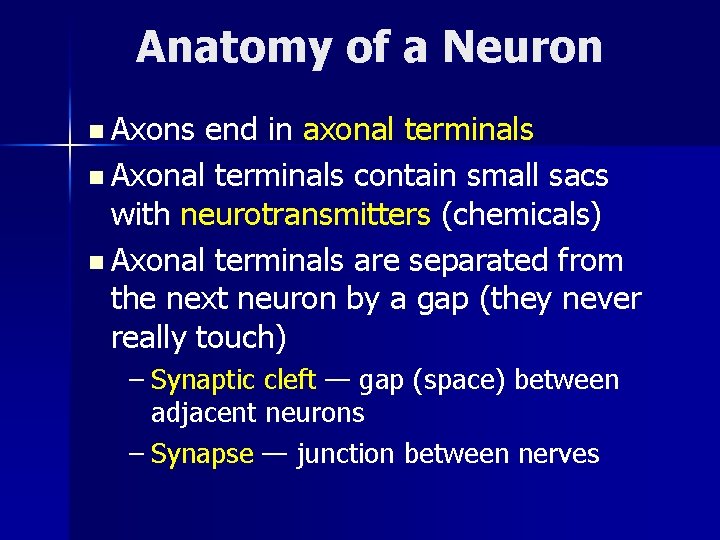
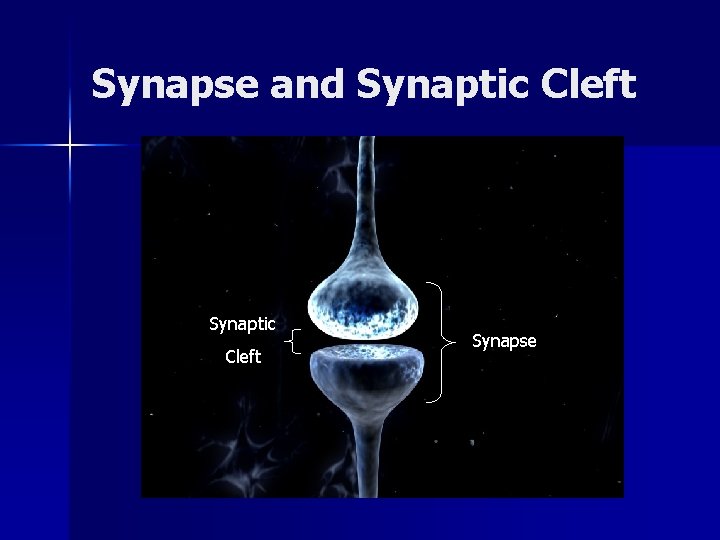
Anatomy of a Neuron n Axons end in axonal terminals n Axonal terminals contain small sacs with neurotransmitters (chemicals) n Axonal terminals are separated from the next neuron by a gap (they never really touch) – Synaptic cleft — gap (space) between adjacent neurons – Synapse — junction between nerves
Synapse and Synaptic Cleft Synapse
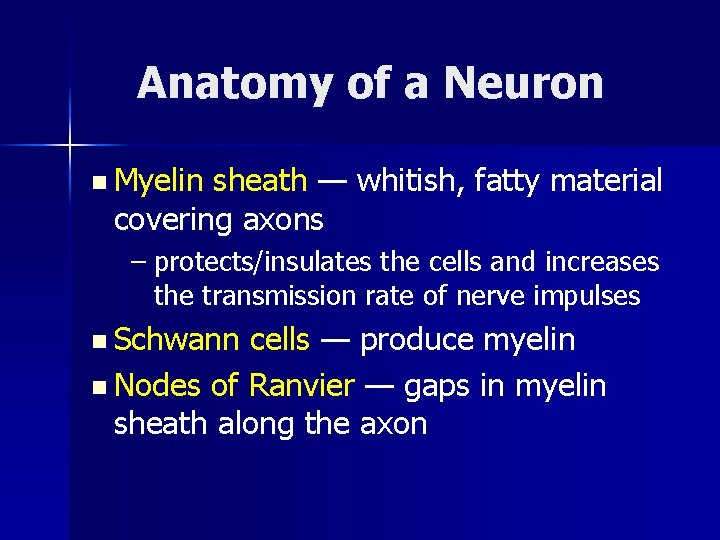
Anatomy of a Neuron n Myelin sheath — whitish, fatty material covering axons – protects/insulates the cells and increases the transmission rate of nerve impulses n Schwann cells — produce myelin n Nodes of Ranvier — gaps in myelin sheath along the axon
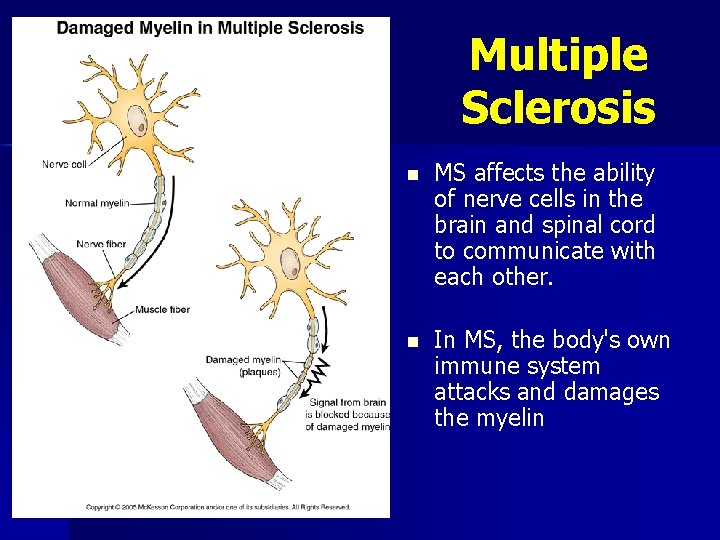
Multiple Sclerosis n MS affects the ability of nerve cells in the brain and spinal cord to communicate with each other. n In MS, the body's own immune system attacks and damages the myelin