
Histograms and Color Balancing Empire of Light Magritte
Histograms and Color Balancing “Empire of Light”, Magritte Computational Photography Derek Hoiem, University of Illinois
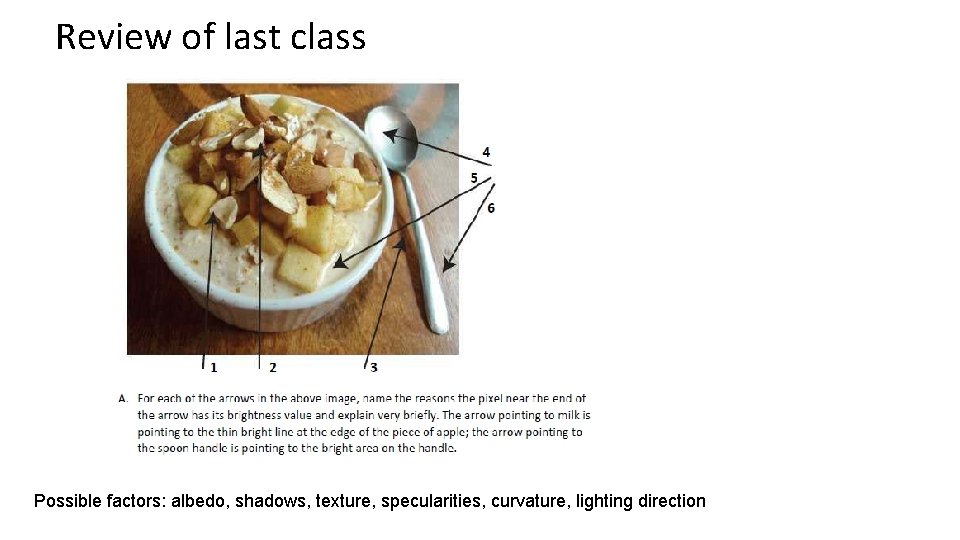
Review of last class Possible factors: albedo, shadows, texture, specularities, curvature, lighting direction
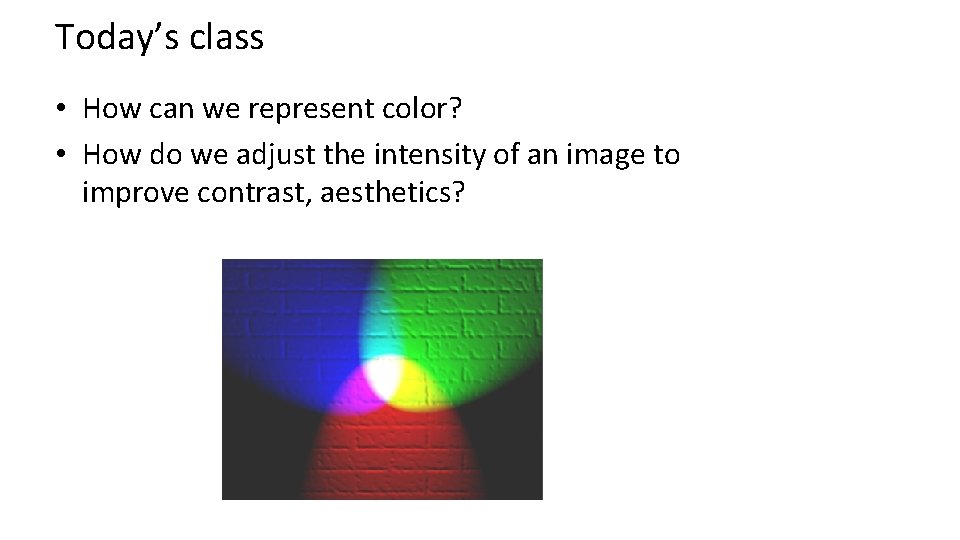
Today’s class • How can we represent color? • How do we adjust the intensity of an image to improve contrast, aesthetics?
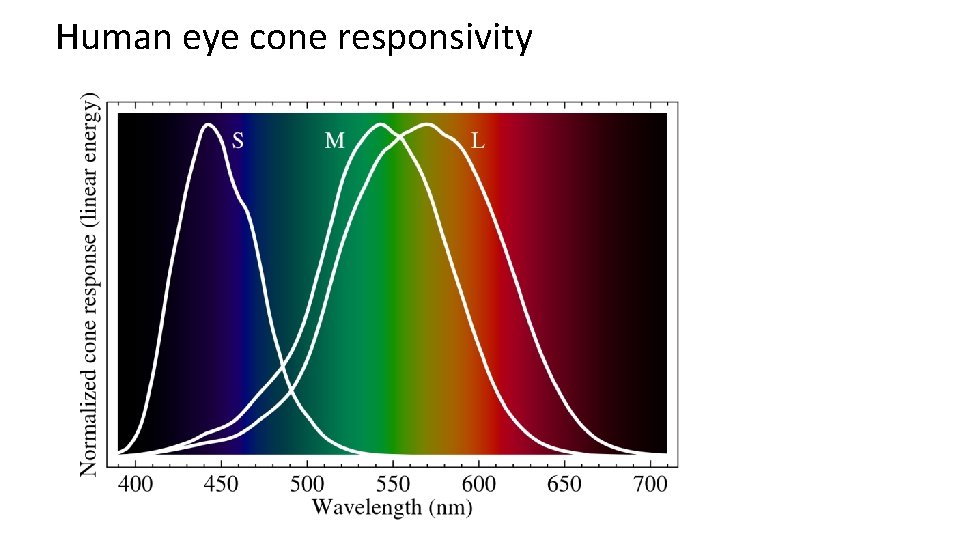
Human eye cone responsivity
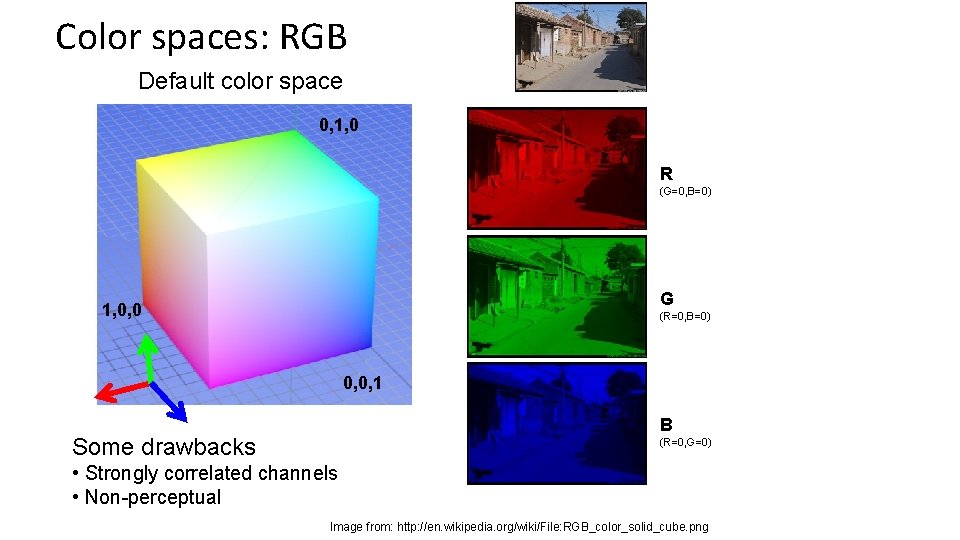
Color spaces: RGB Default color space 0, 1, 0 R (G=0, B=0) G 1, 0, 0 (R=0, B=0) 0, 0, 1 B Some drawbacks (R=0, G=0) • Strongly correlated channels • Non-perceptual Image from: http: //en. wikipedia. org/wiki/File: RGB_color_solid_cube. png
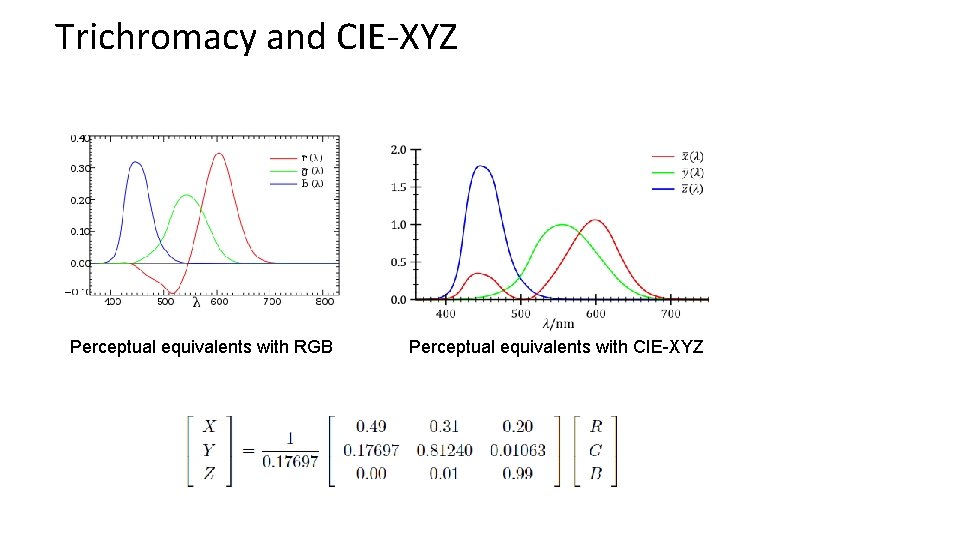
Trichromacy and CIE-XYZ Perceptual equivalents with RGB Perceptual equivalents with CIE-XYZ
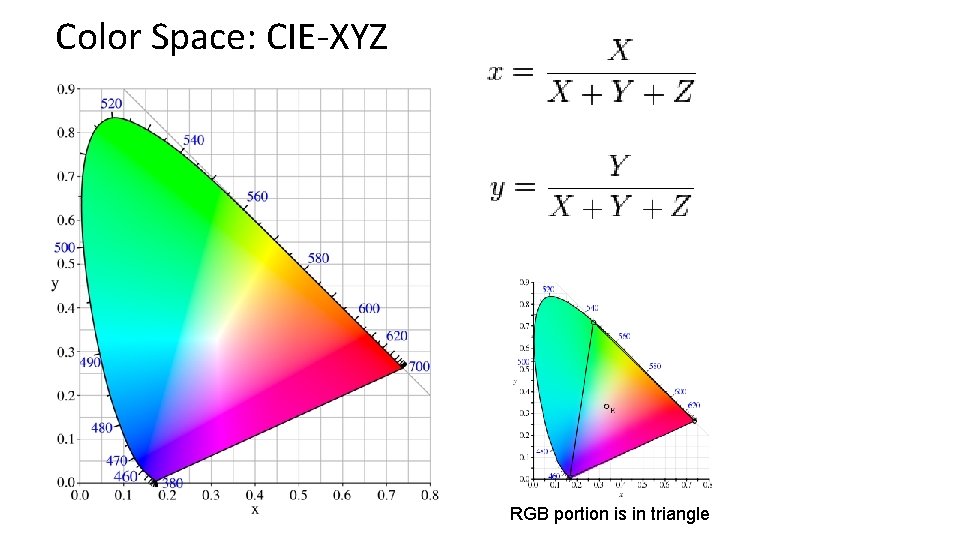
Color Space: CIE-XYZ RGB portion is in triangle
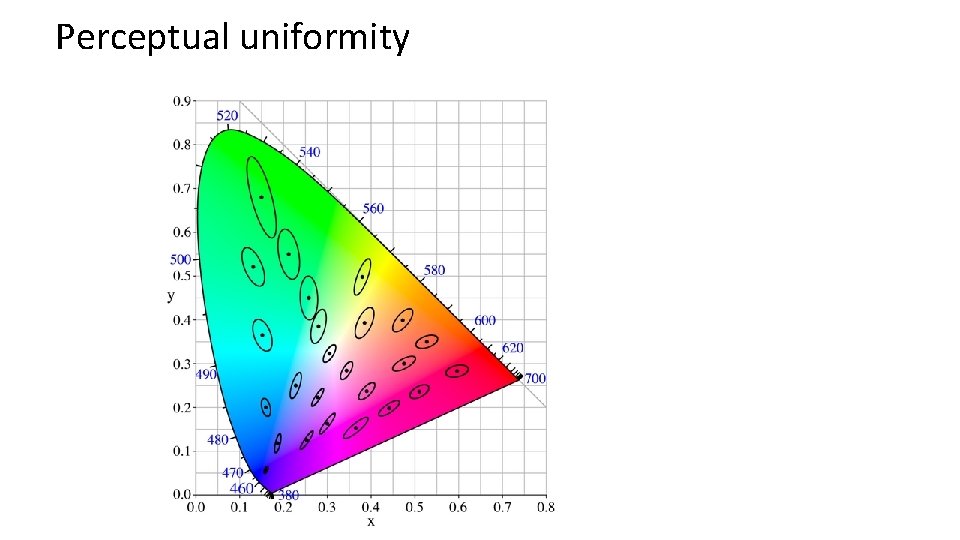
Perceptual uniformity
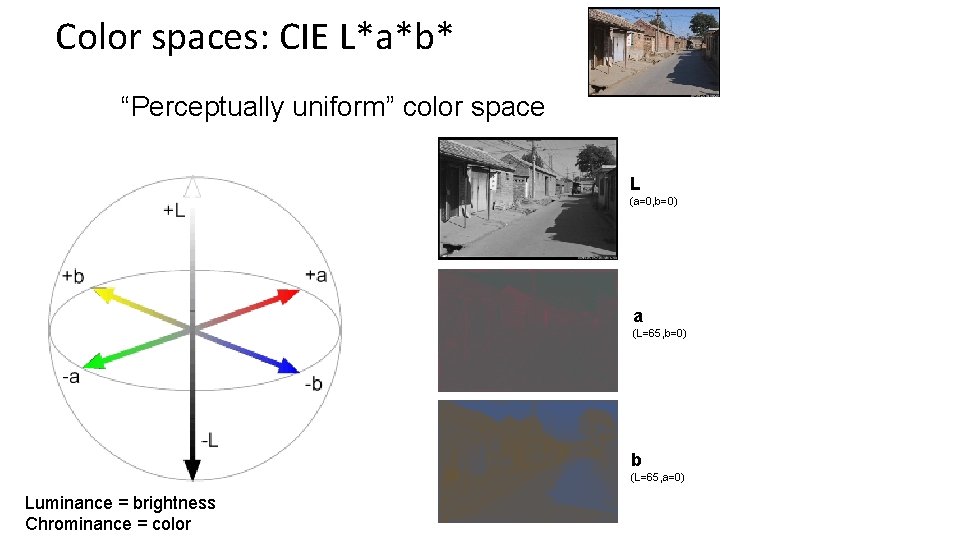
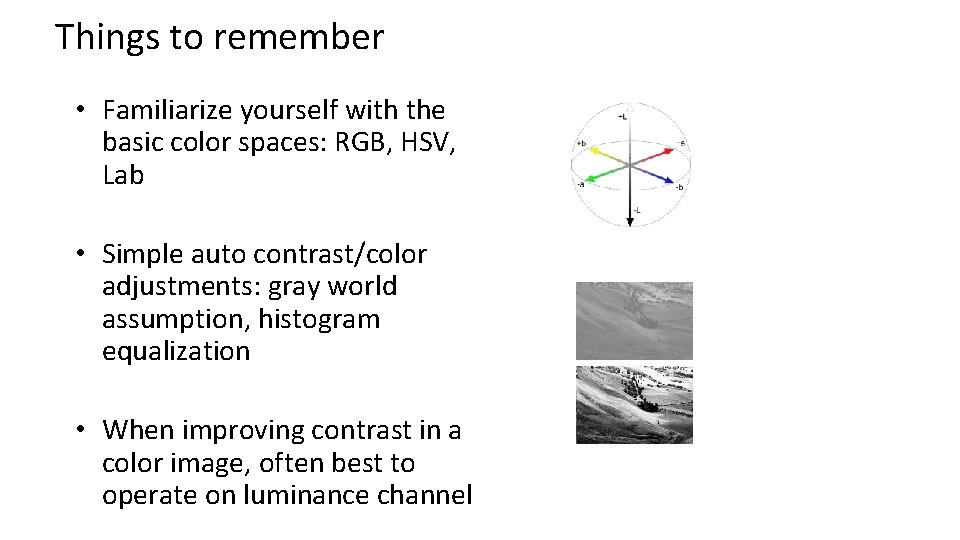
Color spaces: CIE L*a*b* “Perceptually uniform” color space L (a=0, b=0) a (L=65, b=0) b (L=65, a=0) Luminance = brightness Chrominance = color
If you had to choose, would you rather go without luminance or chrominance?
If you had to choose, would you rather go without luminance or chrominance?
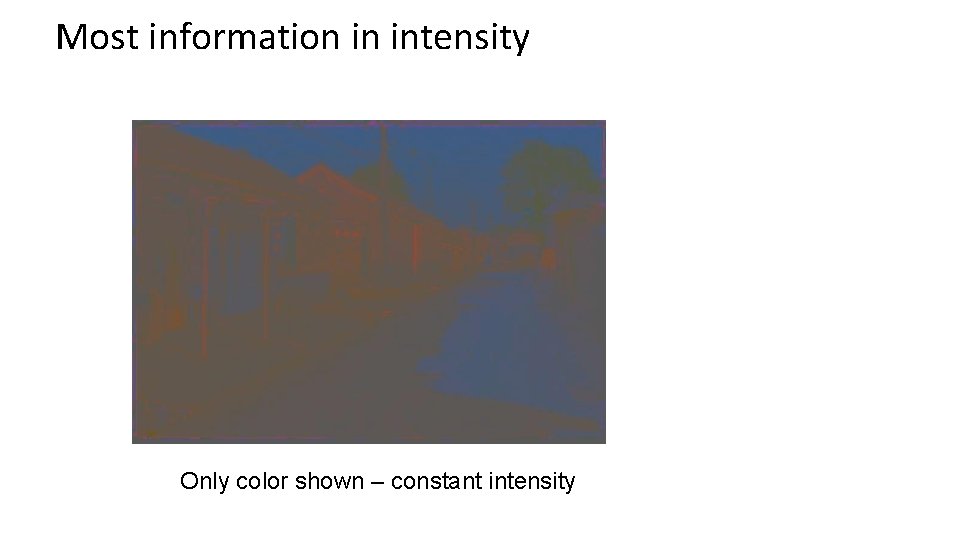
Most information in intensity Only color shown – constant intensity
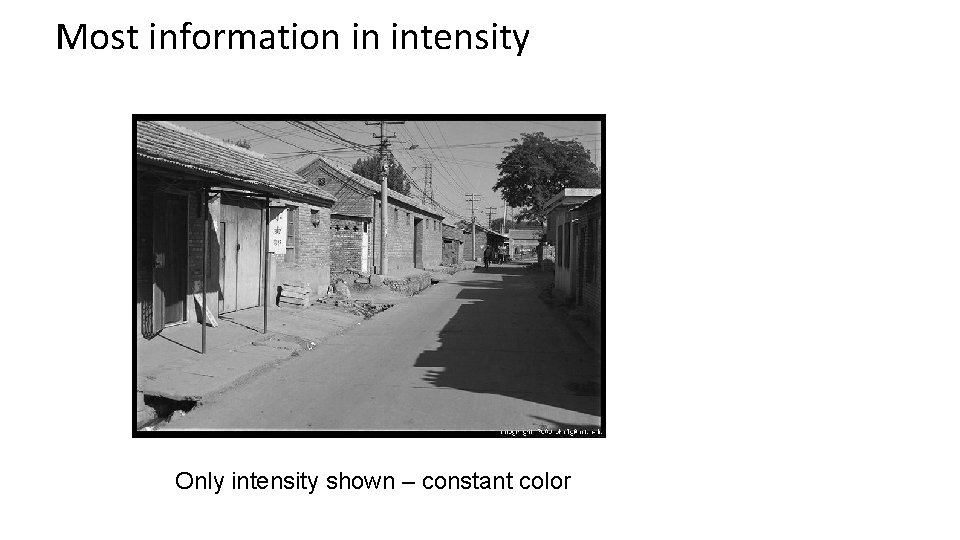
Most information in intensity Only intensity shown – constant color
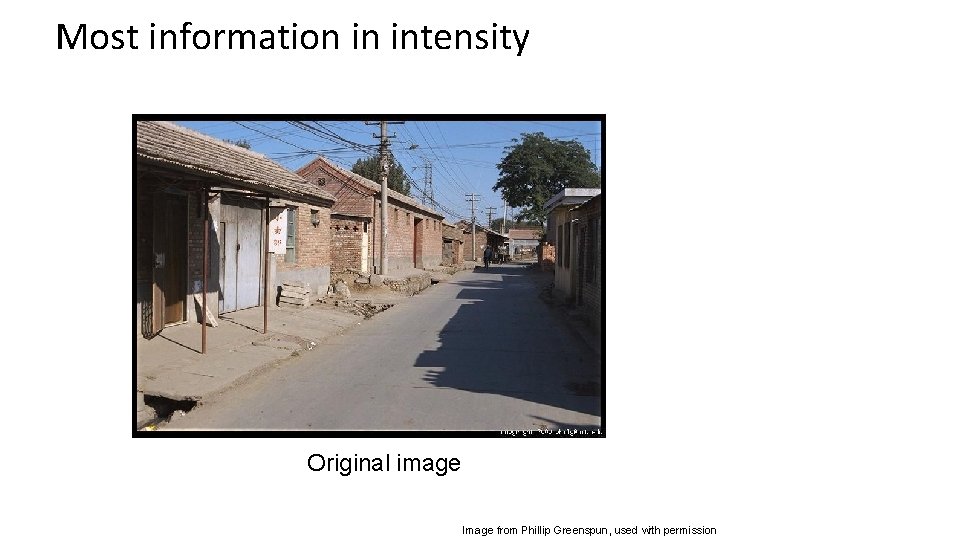
Most information in intensity Original image Image from Phillip Greenspun, used with permission
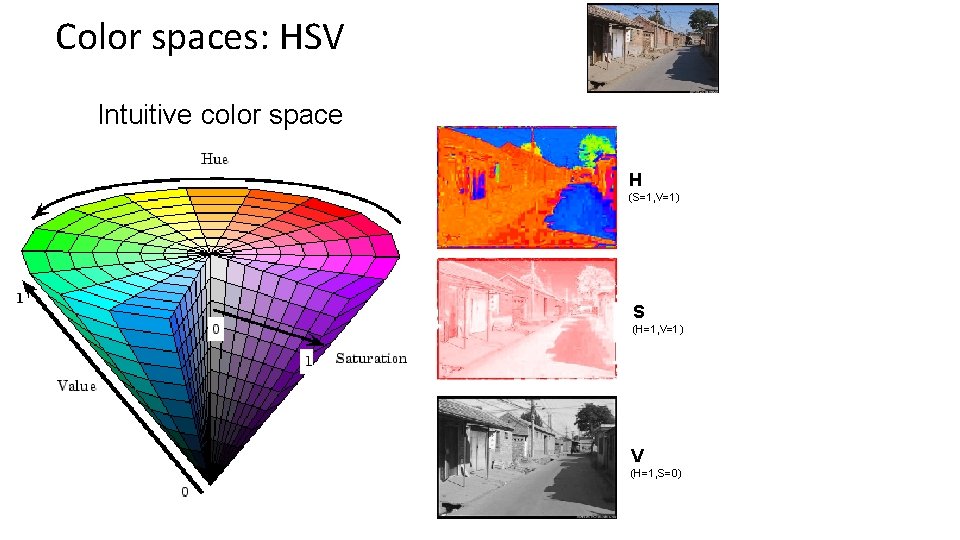
Color spaces: HSV Intuitive color space H (S=1, V=1) S (H=1, V=1) V (H=1, S=0)
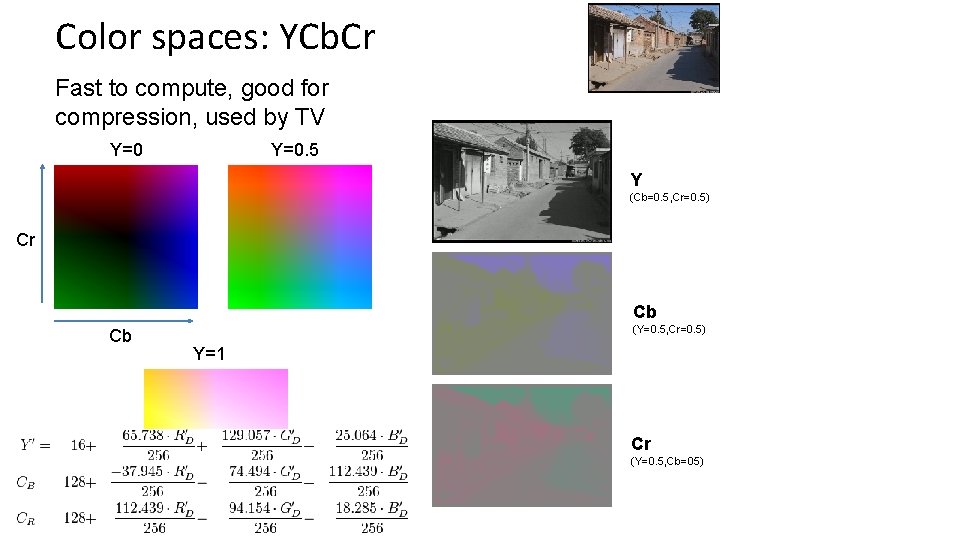
Color spaces: YCb. Cr Fast to compute, good for compression, used by TV Y=0. 5 Y (Cb=0. 5, Cr=0. 5) Cr Cb Cb (Y=0. 5, Cr=0. 5) Y=1 Cr (Y=0. 5, Cb=05)
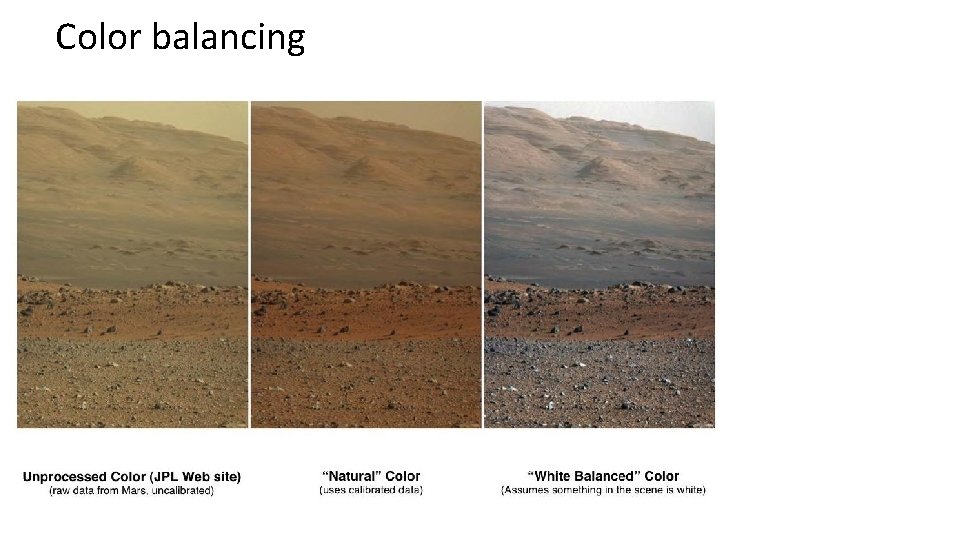
Color balancing
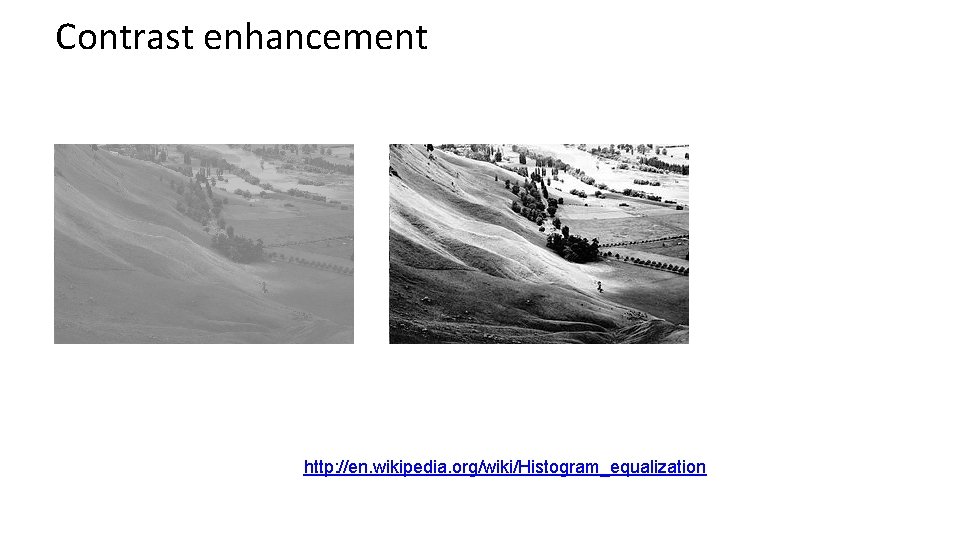
Contrast enhancement http: //en. wikipedia. org/wiki/Histogram_equalization
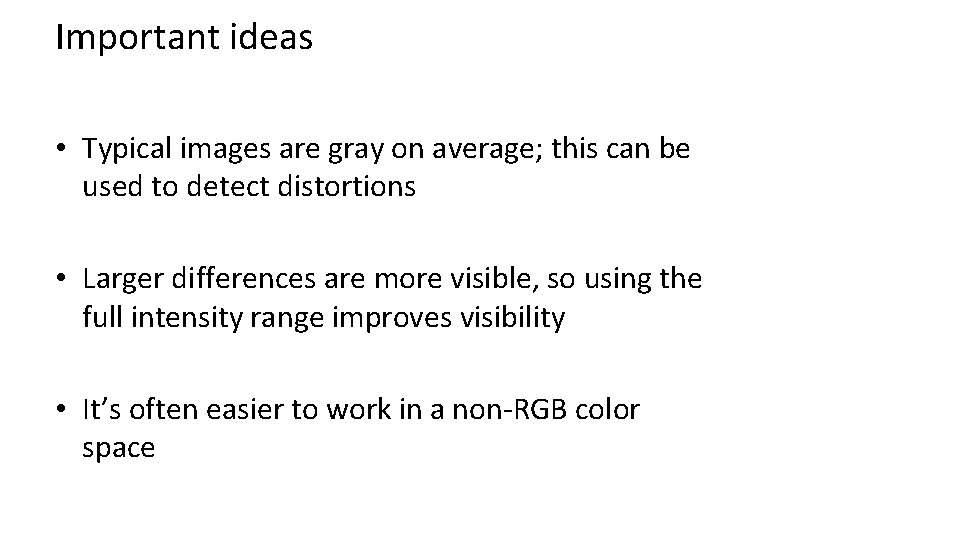
Important ideas • Typical images are gray on average; this can be used to detect distortions • Larger differences are more visible, so using the full intensity range improves visibility • It’s often easier to work in a non-RGB color space
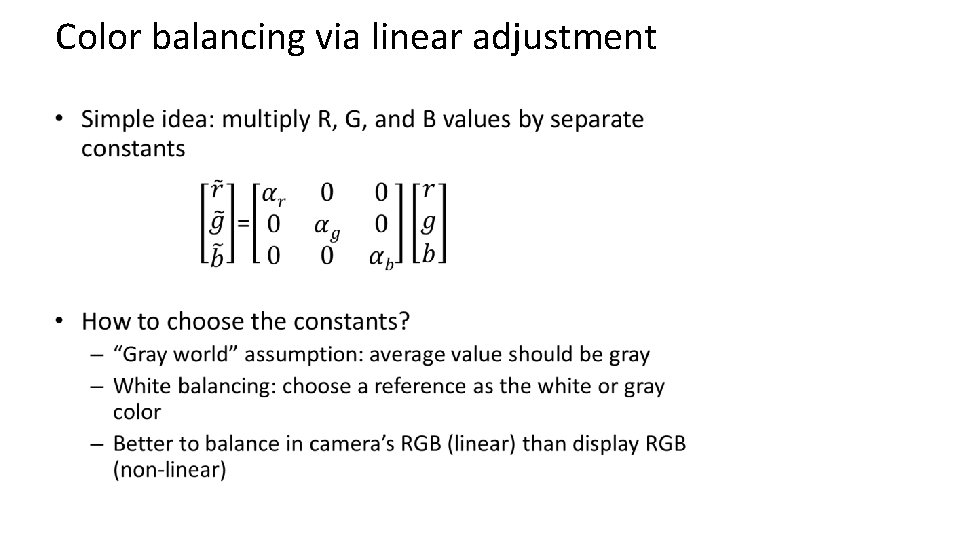
Color balancing via linear adjustment •
Tone Mapping • Typical problem: compress values from a high range to a smaller range – E. g. , camera captures 12 -bit linear intensity and needs to compress to 8 bits
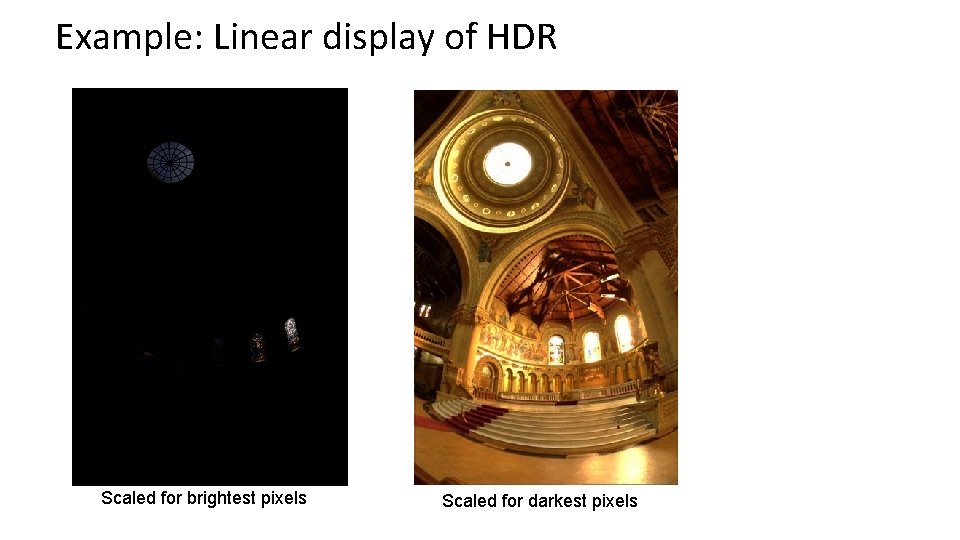
Example: Linear display of HDR Scaled for brightest pixels Scaled for darkest pixels
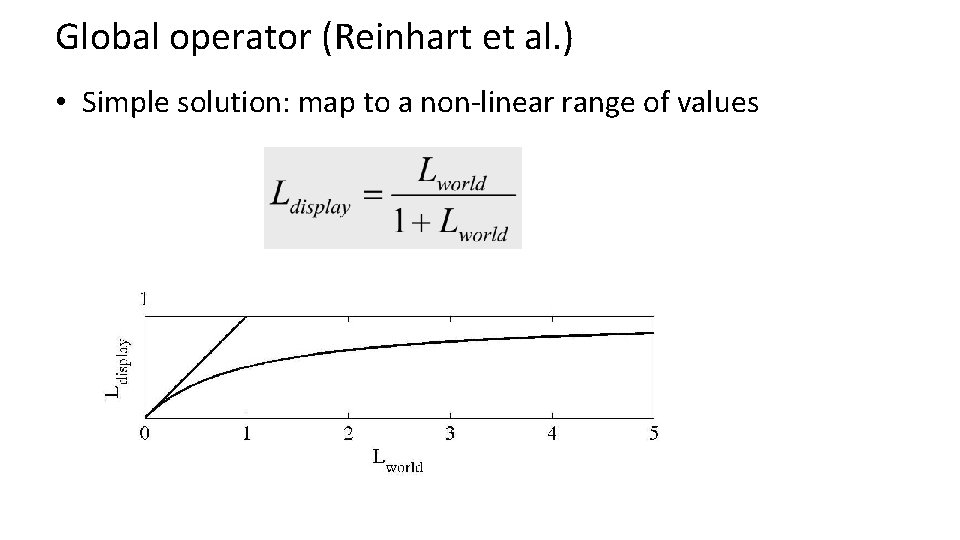
Global operator (Reinhart et al. ) • Simple solution: map to a non-linear range of values
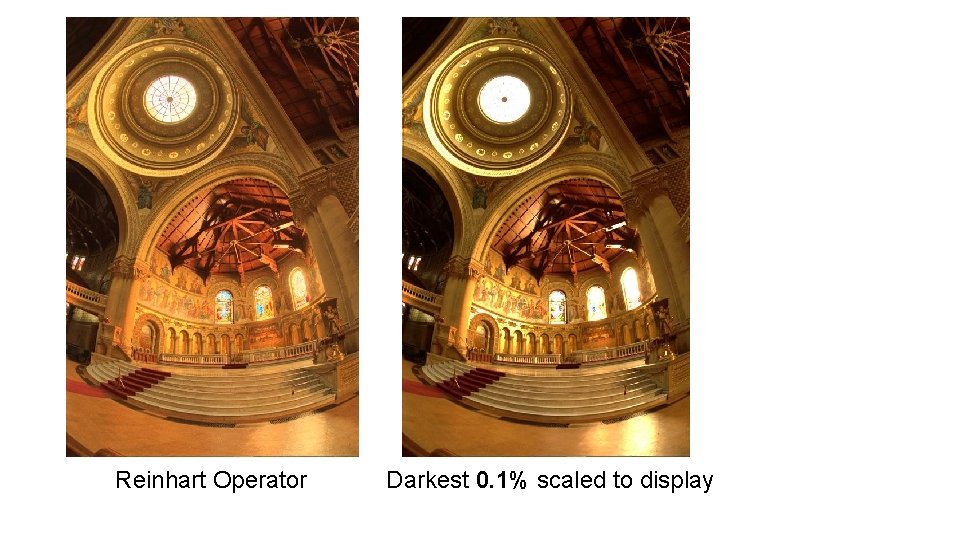
Reinhart Operator Darkest 0. 1% scaled to display
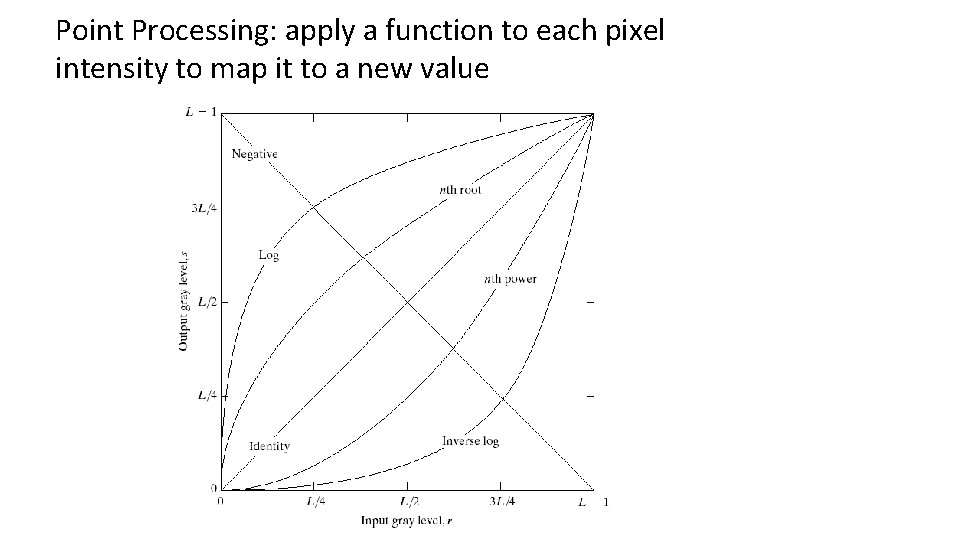
Point Processing: apply a function to each pixel intensity to map it to a new value
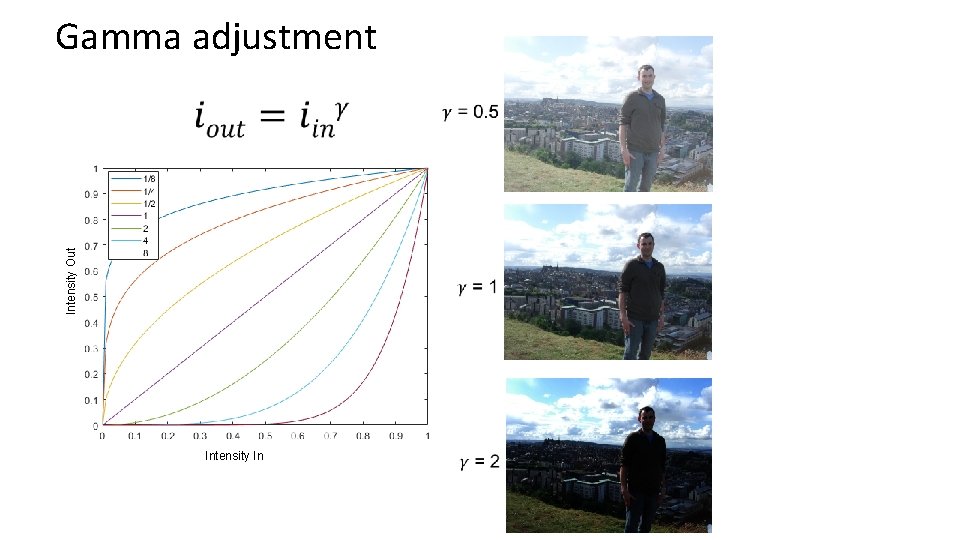
Intensity Out Gamma adjustment Intensity In
Matlab example
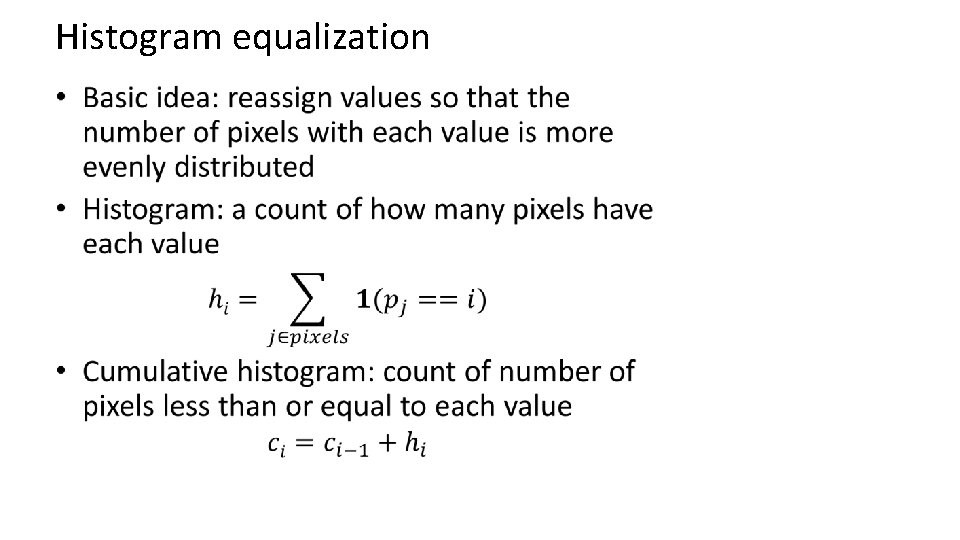
Histogram equalization •
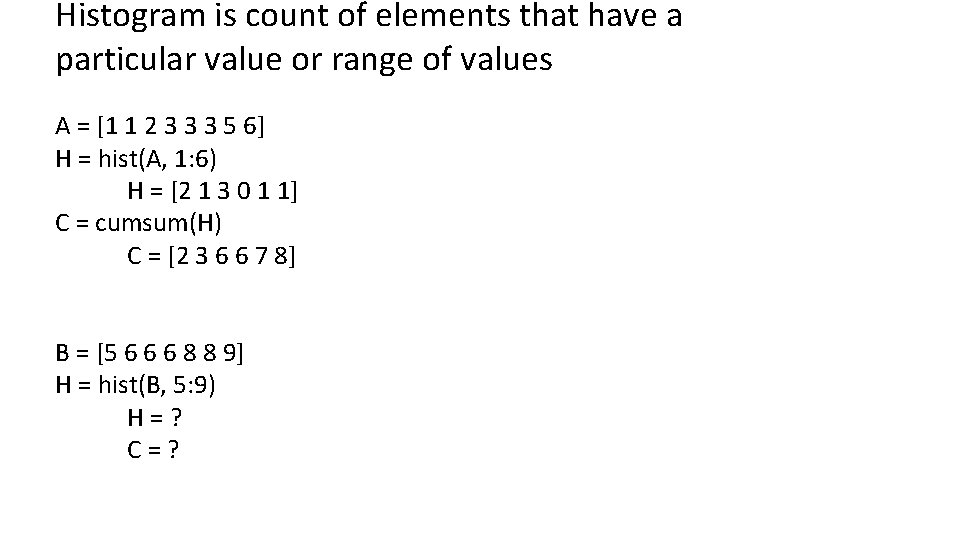
Histogram is count of elements that have a particular value or range of values A = [1 1 2 3 3 3 5 6] H = hist(A, 1: 6) H = [2 1 3 0 1 1] C = cumsum(H) C = [2 3 6 6 7 8] B = [5 6 6 6 8 8 9] H = hist(B, 5: 9) H=? C=?
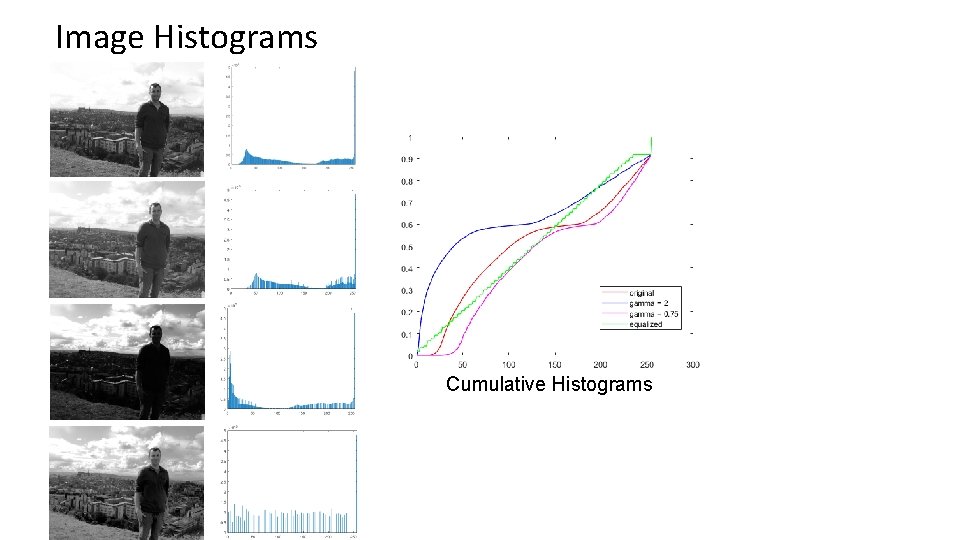
Image Histograms Cumulative Histograms
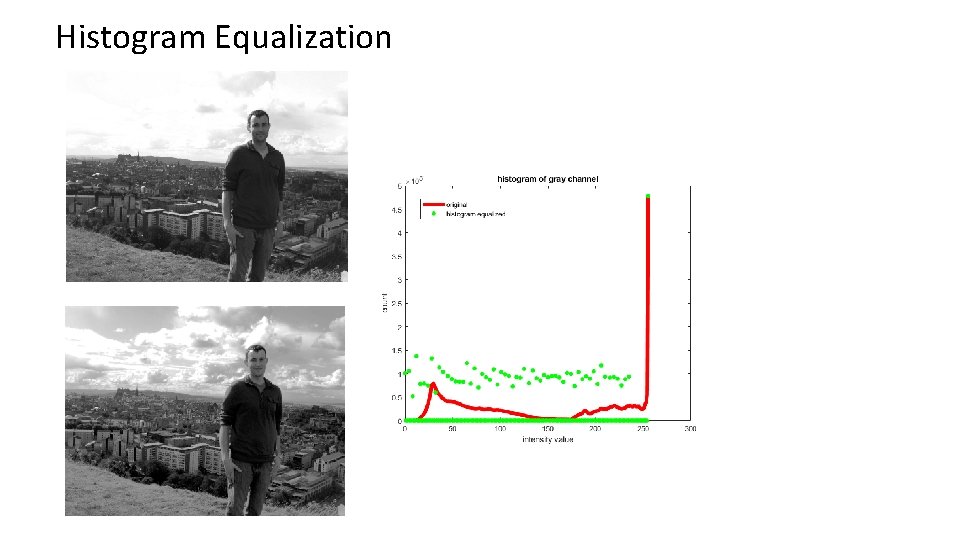
Histogram Equalization
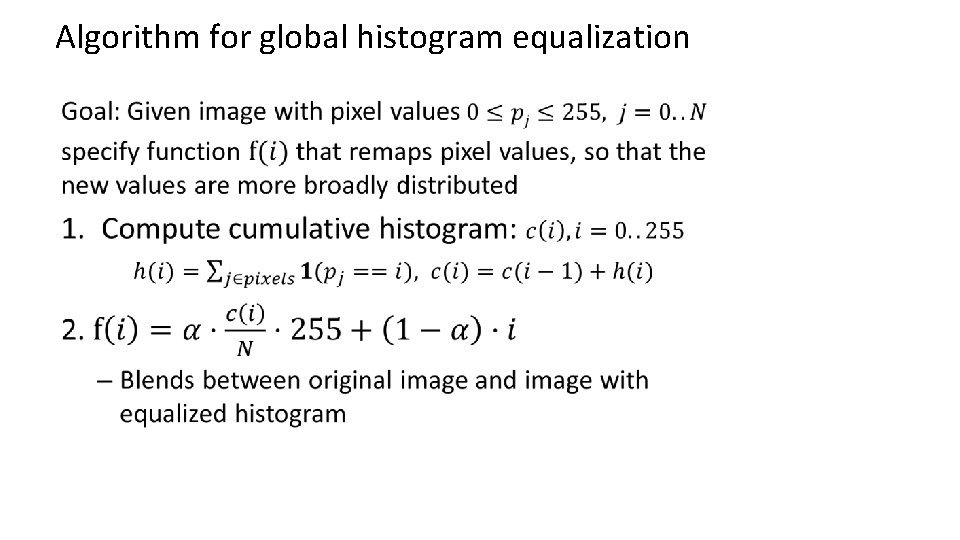
Algorithm for global histogram equalization •
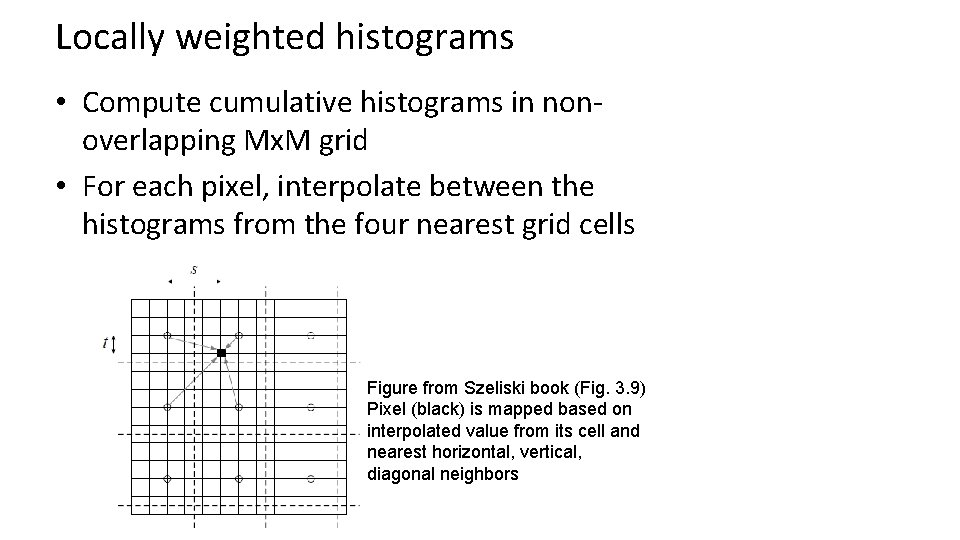
Locally weighted histograms • Compute cumulative histograms in nonoverlapping Mx. M grid • For each pixel, interpolate between the histograms from the four nearest grid cells Figure from Szeliski book (Fig. 3. 9) Pixel (black) is mapped based on interpolated value from its cell and nearest horizontal, vertical, diagonal neighbors
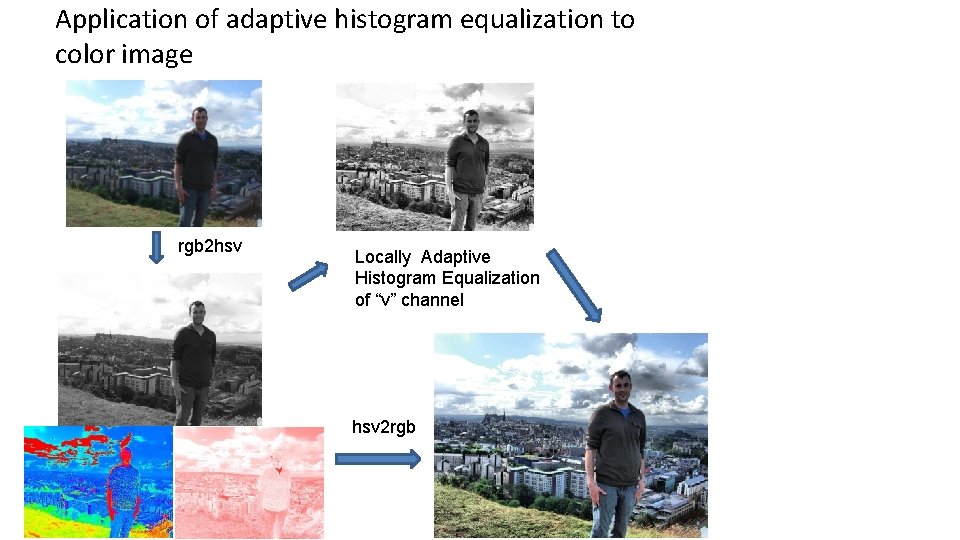
Application of adaptive histogram equalization to color image rgb 2 hsv Locally Adaptive Histogram Equalization of “v” channel hsv 2 rgb
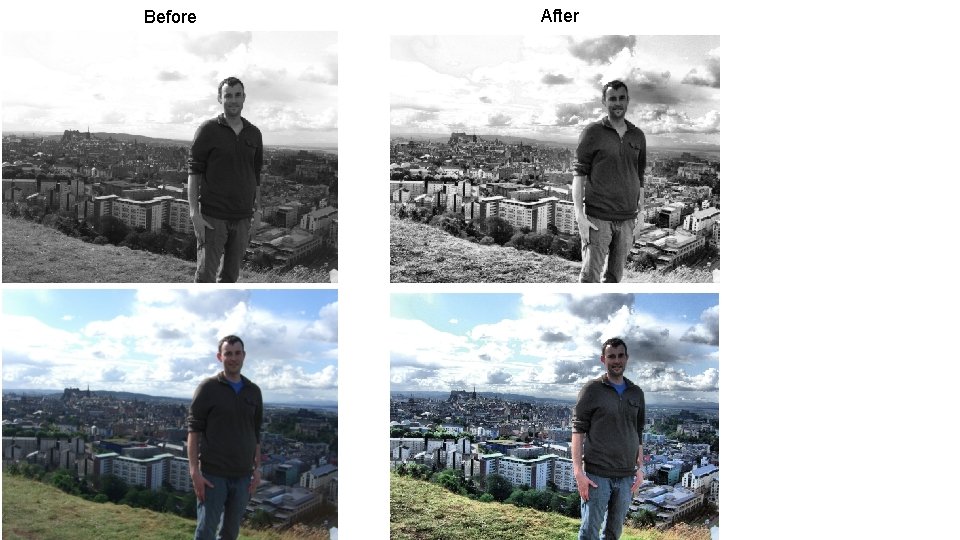
Before After
Other issues • Dealing with color images – Often better to split into luminance and chrominance to avoid unwanted color shift • Manipulating particular regions – Can use mask to select particular areas for manipulation • Useful Python functions/modules – skimage. color: color conversion, e. g. rgb 2 hsv – numpy: histogram, cumsum
Matlab Example 2
Things to remember • Familiarize yourself with the basic color spaces: RGB, HSV, Lab • Simple auto contrast/color adjustments: gray world assumption, histogram equalization • When improving contrast in a color image, often best to operate on luminance channel
Next class: texture synthesis and transfer
- Slides: 39