
Hirschsprung Disease John Rosen MD Miguel Saps MD
- Slides: 22
Hirschsprung Disease John Rosen, MD Miguel Saps, MD Ann & Robert H. Lurie Children’s Hospital of Chicago 2013 Resident Education Series Reviewed by Christine Waasdorp Hurtado, MD of the Professional Education Committee
Cases • 2 month-old full term female with abdominal distension who stools every 4 days • 9 year-old male with constipation, 3 admissions required in past for disimpaction and bowel irrigation Hirschsprung Disease 2
Presentation • Typically full-term, AGA infant – 50% pass meconium in first 48 h of life • Common symptoms – bloating, poor feeding, vomiting, constipation • Uncommon symptoms – bowel perforation, genitourinary symptoms – fecal urgency, stool withholding behavior, encopresis • Enterocolitis in 25% of infants with Hirschsprung disease (HD) – diarrhea, fever, lethargy – mortality 6 -30%, Hirschsprung Disease 3
Presentation • First case report in 1886 (Harald Hirschsprung) • 1/5000 live births • 4% risk of HD if sibling also affected – increased risk if long segment HD in family or part of syndrome – review of associated syndromes and genetics • J Med Genet 2001; 38: 729 -739 • 15% of cases have one or more other congenital anomaly – most commonly genitourinary, central nervous system, cardiac • Chromosomal abnormalities in at least 12% of HD cases Hirschsprung Disease 4
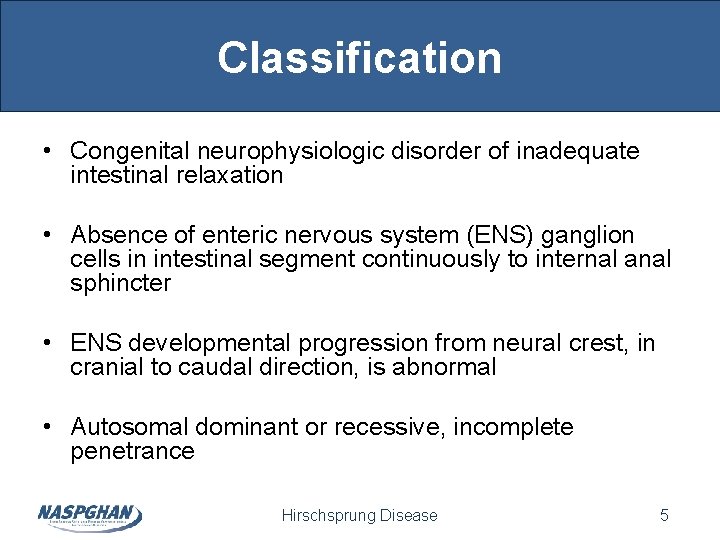
Classification • Congenital neurophysiologic disorder of inadequate intestinal relaxation • Absence of enteric nervous system (ENS) ganglion cells in intestinal segment continuously to internal anal sphincter • ENS developmental progression from neural crest, in cranial to caudal direction, is abnormal • Autosomal dominant or recessive, incomplete penetrance Hirschsprung Disease 5
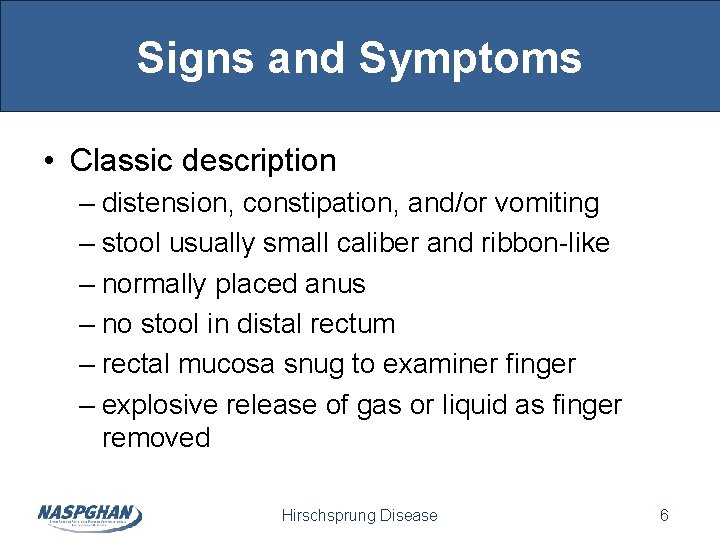
Signs and Symptoms • Classic description – distension, constipation, and/or vomiting – stool usually small caliber and ribbon-like – normally placed anus – no stool in distal rectum – rectal mucosa snug to examiner finger – explosive release of gas or liquid as finger removed Hirschsprung Disease 6
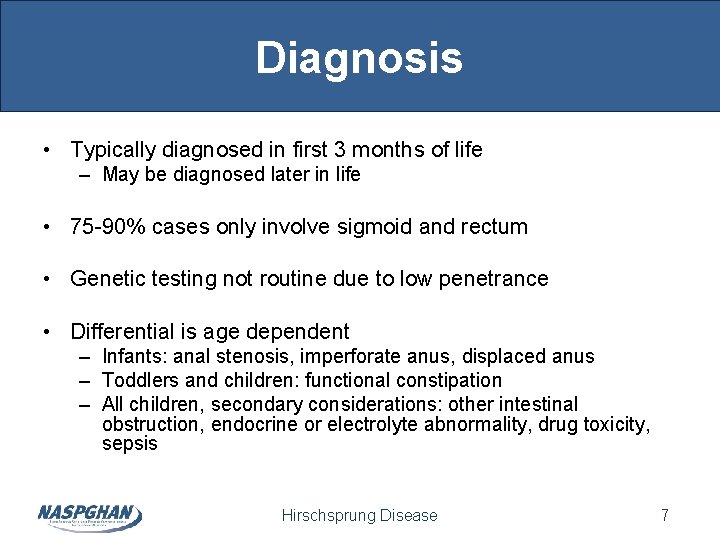
Diagnosis • Typically diagnosed in first 3 months of life – May be diagnosed later in life • 75 -90% cases only involve sigmoid and rectum • Genetic testing not routine due to low penetrance • Differential is age dependent – Infants: anal stenosis, imperforate anus, displaced anus – Toddlers and children: functional constipation – All children, secondary considerations: other intestinal obstruction, endocrine or electrolyte abnormality, drug toxicity, sepsis Hirschsprung Disease 7
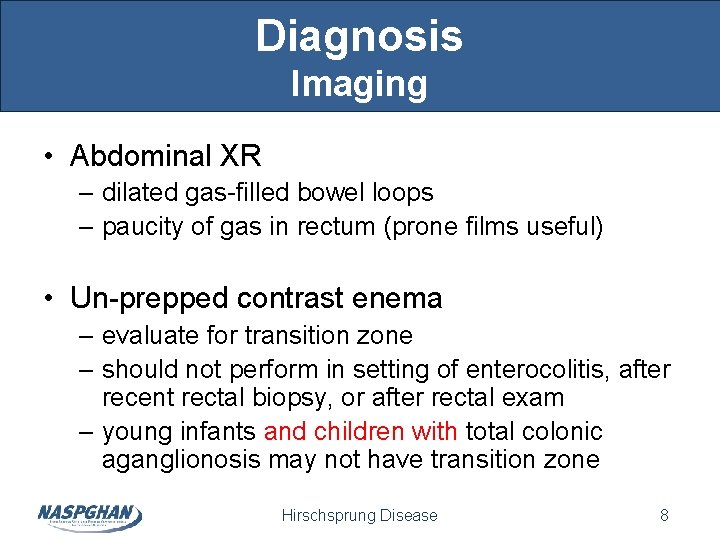
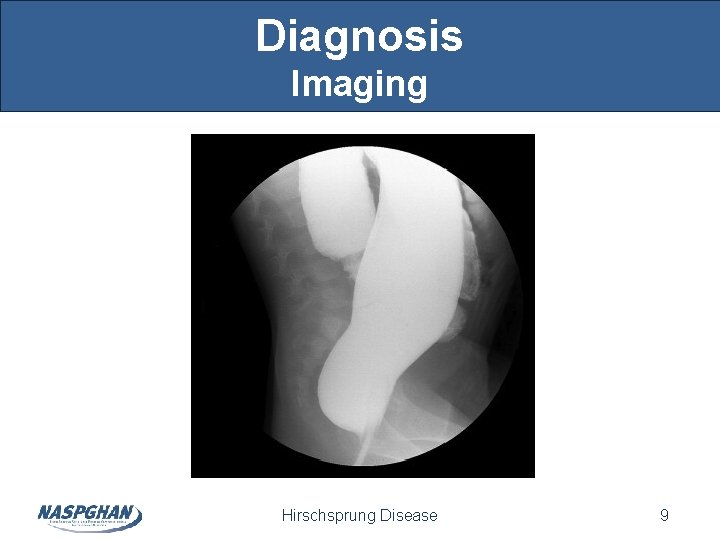
Diagnosis Imaging • Abdominal XR – dilated gas-filled bowel loops – paucity of gas in rectum (prone films useful) • Un-prepped contrast enema – evaluate for transition zone – should not perform in setting of enterocolitis, after recent rectal biopsy, or after rectal exam – young infants and children with total colonic aganglionosis may not have transition zone Hirschsprung Disease 8
Diagnosis Imaging Hirschsprung Disease 9
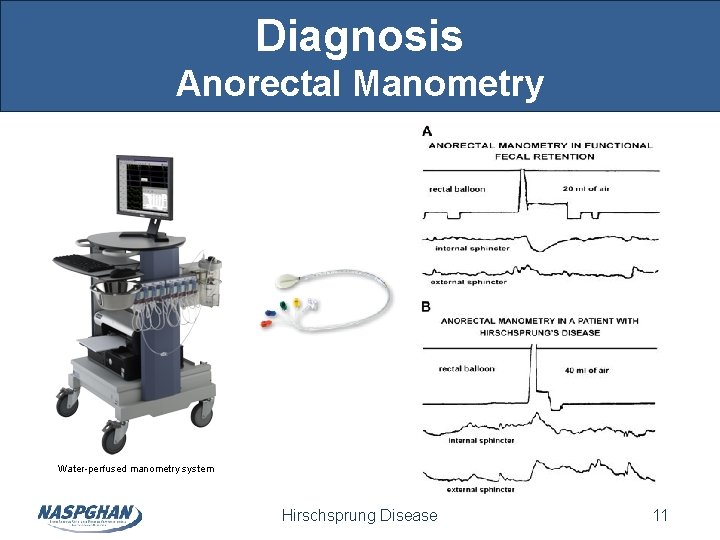
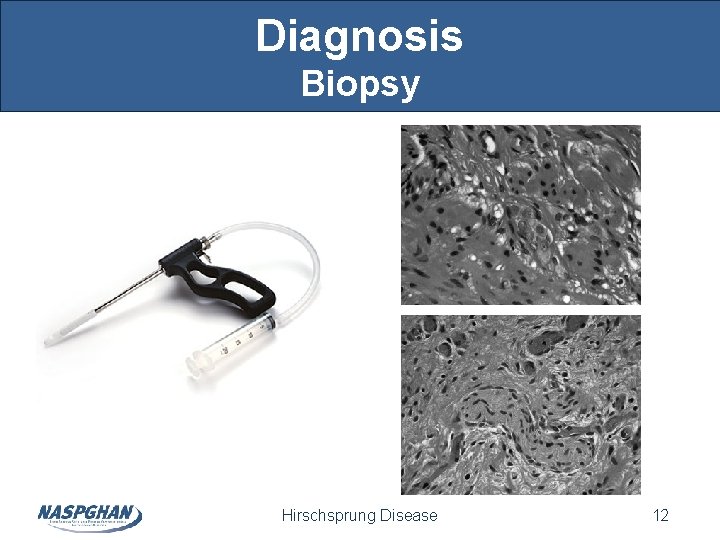
Diagnosis Other • Anorectal manometry – evaluate for rectoanal inhibitory reflex (RAIR) – requires specialized equipment/expertise • Rectal suction biopsy – may be inadequate in children age > 6 months • Full-thickness rectal biopsy – gold standard – requires anesthesia and sutures Hirschsprung Disease 10
Diagnosis Anorectal Manometry Water-perfused manometry system Hirschsprung Disease 11
Diagnosis Biopsy Hirschsprung Disease 12
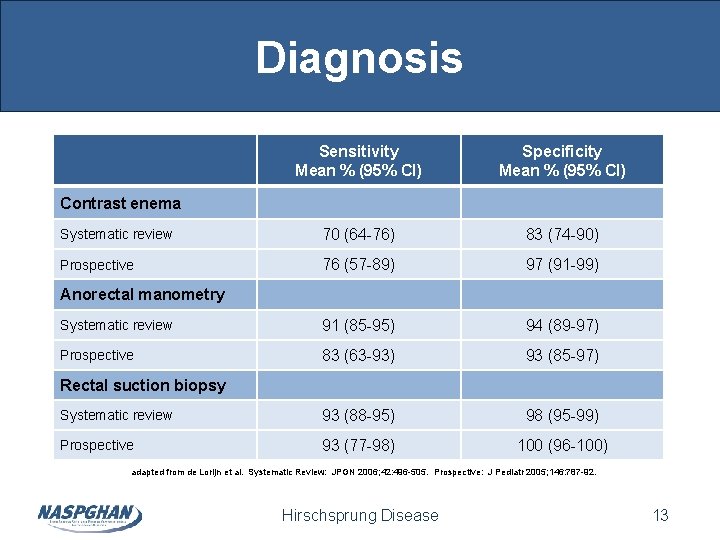
Diagnosis Sensitivity Mean % (95% CI) Specificity Mean % (95% CI) Systematic review 70 (64 -76) 83 (74 -90) Prospective 76 (57 -89) 97 (91 -99) Systematic review 91 (85 -95) 94 (89 -97) Prospective 83 (63 -93) 93 (85 -97) Systematic review 93 (88 -95) 98 (95 -99) Prospective 93 (77 -98) 100 (96 -100) Contrast enema Anorectal manometry Rectal suction biopsy adapted from de Lorijn et al. Systematic Review: JPGN 2006; 42: 496 -505. Prospective: J Pediatr 2005; 146: 787 -92. Hirschsprung Disease 13
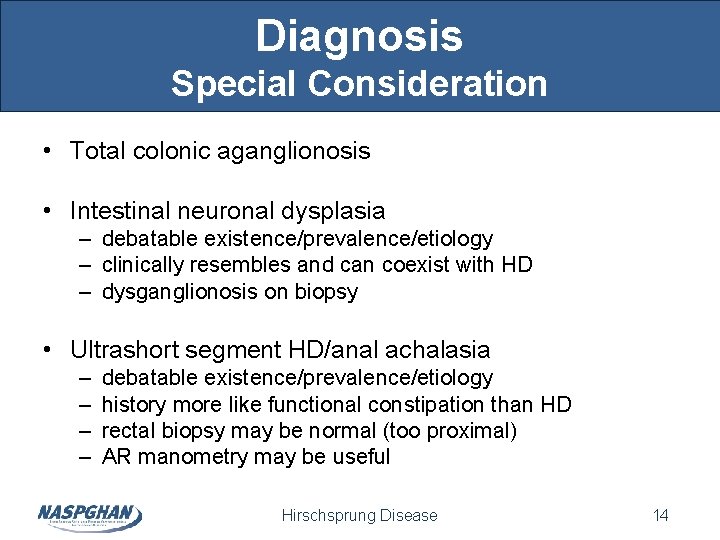
Diagnosis Special Consideration • Total colonic aganglionosis • Intestinal neuronal dysplasia – debatable existence/prevalence/etiology – clinically resembles and can coexist with HD – dysganglionosis on biopsy • Ultrashort segment HD/anal achalasia – – debatable existence/prevalence/etiology history more like functional constipation than HD rectal biopsy may be normal (too proximal) AR manometry may be useful Hirschsprung Disease 14
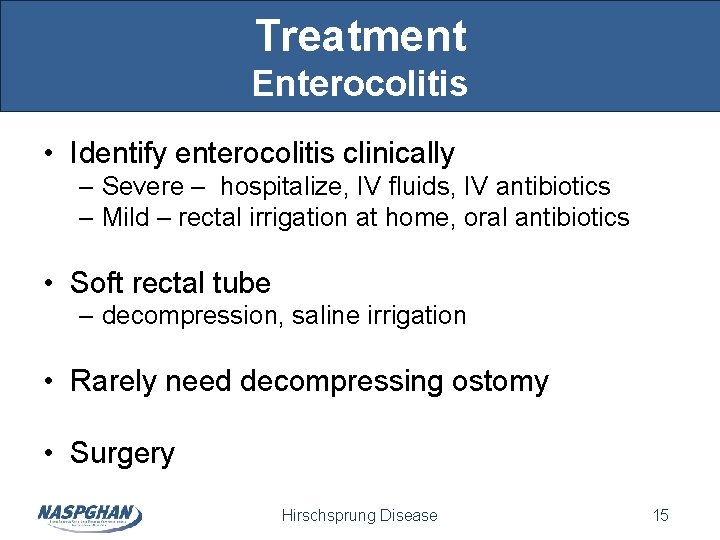
Treatment Enterocolitis • Identify enterocolitis clinically – Severe – hospitalize, IV fluids, IV antibiotics – Mild – rectal irrigation at home, oral antibiotics • Soft rectal tube – decompression, saline irrigation • Rarely need decompressing ostomy • Surgery Hirschsprung Disease 15
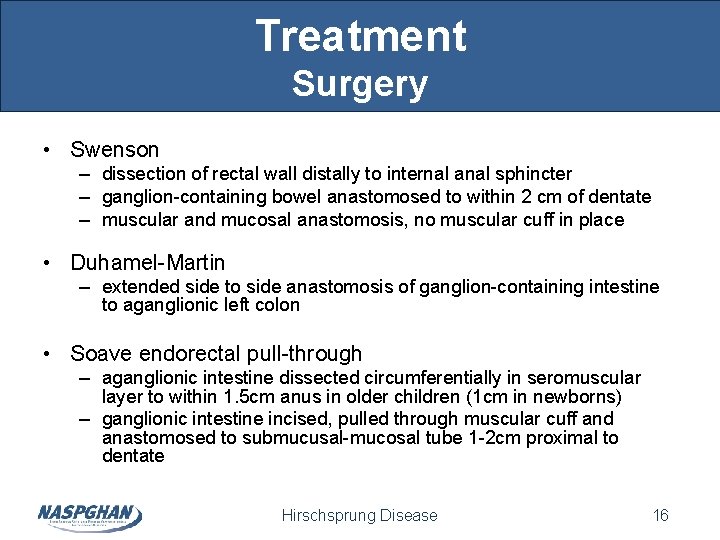
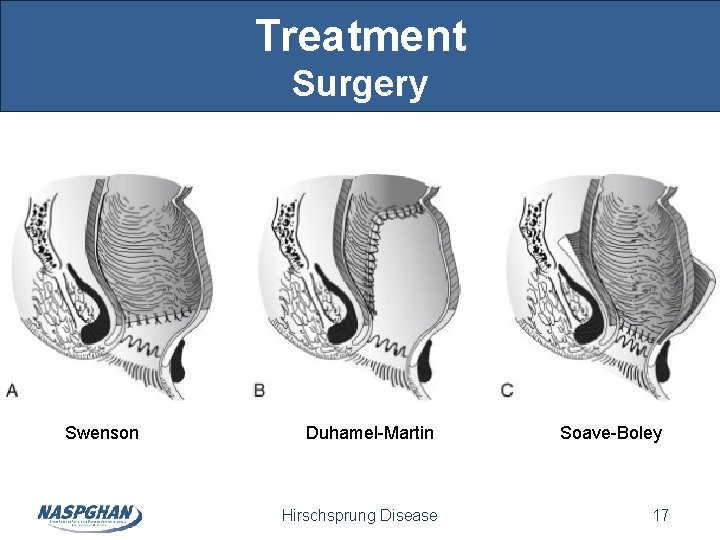
Treatment Surgery • Swenson – dissection of rectal wall distally to internal anal sphincter – ganglion-containing bowel anastomosed to within 2 cm of dentate – muscular and mucosal anastomosis, no muscular cuff in place • Duhamel-Martin – extended side to side anastomosis of ganglion-containing intestine to aganglionic left colon • Soave endorectal pull-through – aganglionic intestine dissected circumferentially in seromuscular layer to within 1. 5 cm anus in older children (1 cm in newborns) – ganglionic intestine incised, pulled through muscular cuff and anastomosed to submucusal-mucosal tube 1 -2 cm proximal to dentate Hirschsprung Disease 16
Treatment Surgery Swenson Duhamel-Martin Hirschsprung Disease Soave-Boley 17
Postoperative Prognosis Gastrointestinal • Constipation – Will require stool softeners, laxatives, and good toileting behavior – Common in childhood, but improve by late adolescence (>90%) • Fecal incontinence – Dysmotility, internal anal sphincter dysfunction, constipation – Aggressive medical management to treat constipation • Enterocolitis – – Up to 40% frequency after pull-through procedure Most episodes in first 2 years post-operatively Increased risk if anastomotic leak, stricture, or anal stenosis May be related to bacterial overgrowth Hirschsprung Disease 18
Postoperative Prognosis • Multidisciplinary clinic with biopsychosocial approach may improve symptomatic outcomes • Few may need additional surgery if repeated enterocolitis, intractable constipation, and/or incontinence – Revision – Malone antegrade colonic enema (MACE) – Anal dilatations • Quality of life excellent after age 15 – fecal incontinence from age 5 -15 has most impact on Qo. L Hirschsprung Disease 19
Treatment Future: Stem Cells • Multipotent and self-renewing cells exist in adult mammalian enteric nervous system • Cells can be obtained from muscularis or mucosa/submucosa (endoscopically) • ENS stem cells can be grown in vitro (neurospheres) and transplanted • Transplanted cells migrate, differentiate, and have functional capacity (in rodents and chicks) Hirschsprung Disease 20
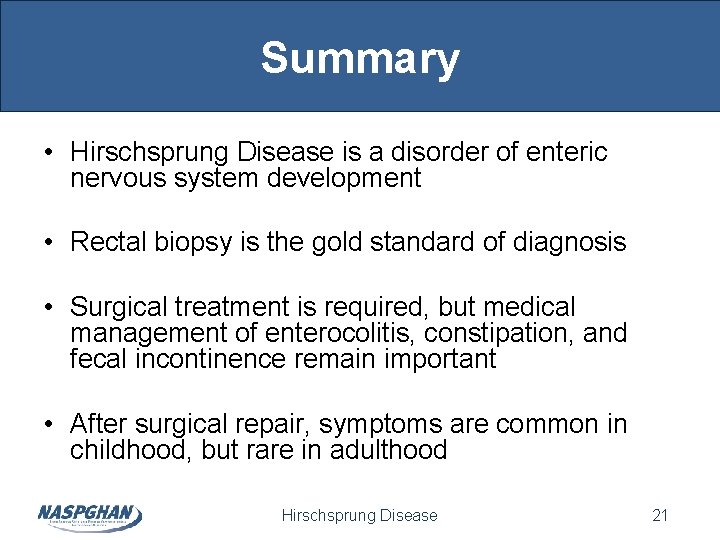
Summary • Hirschsprung Disease is a disorder of enteric nervous system development • Rectal biopsy is the gold standard of diagnosis • Surgical treatment is required, but medical management of enterocolitis, constipation, and fecal incontinence remain important • After surgical repair, symptoms are common in childhood, but rare in adulthood Hirschsprung Disease 21
References Amiel J, Sproat-Emison E, Garcia-Barcelo M, et al. Hirschsprung Disease Consortium. Hirschsprung disease, associated syndromes and genetics: a review. J Med Genet. 2008 Jan; 45(1): 1 -14. Epub 2007 Oct 26. Review. Belkind-Gerson J, Carreon-Rodriguez A, Benedict LA, Steiger C, Pieretti A, Nagy N, Dietrich J, Goldstein AM. Nestin-expressing cells in the gut give rise to enteric neurons and glial cells. Neurogastroenterol Motil. 2012 Sep 23. [epub ahead of print] Di. Lorenzo C, Solzi GF, Flores AF, Schwankovsky L, Hyman PE. Colonic motility after surgery for Hirschsprung's disease. Am J Gastroenterol. 2000 Jul; 95(7): 1759 -64. Engum S, Grosfeld J. Long-term results of treatment of Hirschsprung's disease. Semin Pediatr Surg. 2004 Nov; 13(4): 273 -85. Imseis E, Gariepy C. Hirschsprung’s Disease. In: Kleinmen R, Goulet O, Mieli-Vergani G et al. eds. Walker’s Pediatric Gastrointestinal Disease. 5 th ed. Sheldon, CT: People’s Medical Publishing House; 2008: 683 -92. de Lorijn F, Kremer L, Reitsma J, Benninga M. Diagnostic tests in Hirschsprung disease: a systematic review. J Pediatr Gastroenterol Nutr. 2006 May; 42(5): 496 -505 de Lorjin F, Reitsma J, Voskuiil W, Aronson D, Kate F, Smets A, Taminiau J, Benninga M. Diagnosis of Hirschsprung's disease: a prospective, comparative accuracy study of common tests. J Pediatr. 2005 Jun; 146(6): 787 -92. Masi P, Miele E, Staiano A. Pediatric Anorectal Disorders. Gastroenterol Clin N Amer. 2008 Sep; 37(3): 709 -30. Mattei P. Hirschsprung’s Disease. In: Wyllie R, Hyams J. eds. Pediatric Gastrointestinal and Liver Disease. 4 th ed. Online; Elsevier; 2012. van Kuyk EM, Brugman-Boezeman AT, Wissink-Essink M, Oerlemans HM, Severijnen RS, Bleijenberg G. Defecation problems in children with Hirschsprung's disease: a prospective controlled study of a multidisciplinary behavioural treatment. Acta Paediatr. 2001 Oct; 90(10): 1153 -9. Yanchar NL, Soucy P. Long-term outcome after Hirschsprung's disease: patients' perspectives. J Pediatr Surg. 1999 Jul; 34(7): 1152 -60. Hirschsprung Disease 22