
Hippy Vs Yuppie Objectives By the end of
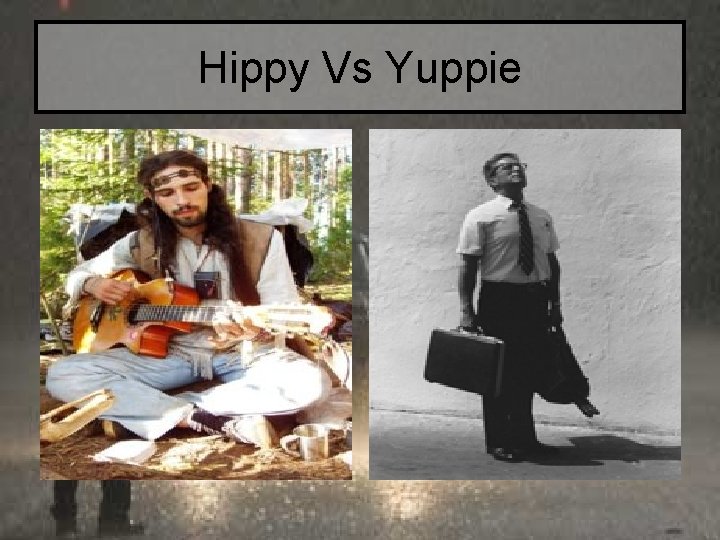
Hippy Vs Yuppie
Objectives By the end of today’s lesson you will be able to: §Complete a MITSL analysis of the poem “Hitcher” by Simon Armitage.
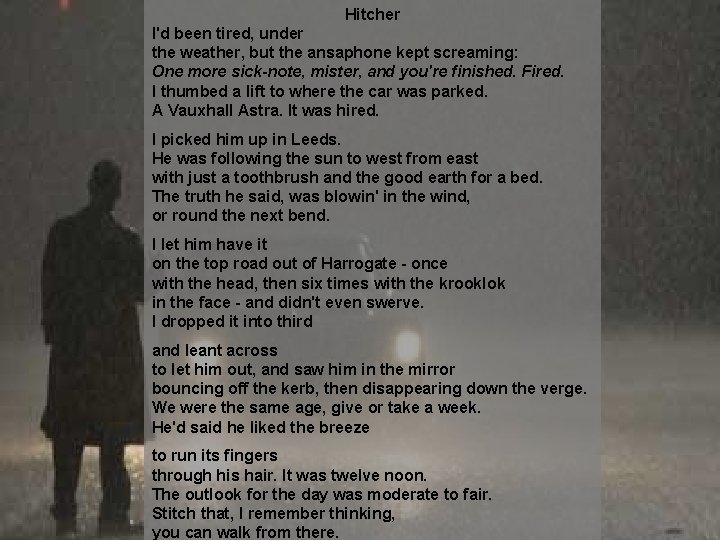
Hitcher I'd been tired, under the weather, but the ansaphone kept screaming: One more sick-note, mister, and you're finished. Fired. I thumbed a lift to where the car was parked. A Vauxhall Astra. It was hired. I picked him up in Leeds. He was following the sun to west from east with just a toothbrush and the good earth for a bed. The truth he said, was blowin' in the wind, or round the next bend. I let him have it on the top road out of Harrogate - once with the head, then six times with the krooklok in the face - and didn't even swerve. I dropped it into third and leant across to let him out, and saw him in the mirror bouncing off the kerb, then disappearing down the verge. We were the same age, give or take a week. He'd said he liked the breeze to run its fingers through his hair. It was twelve noon. The outlook for the day was moderate to fair. Stitch that, I remember thinking, you can walk from there.
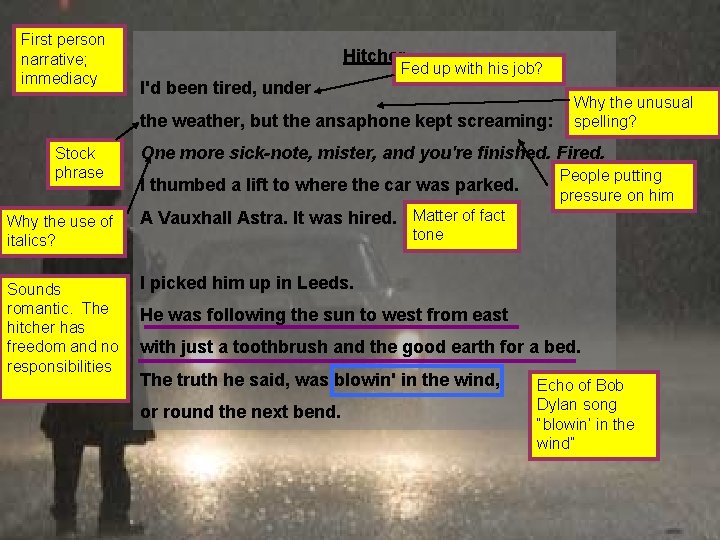
First person narrative; immediacy Hitcher Fed up with his job? I'd been tired, under the weather, but the ansaphone kept screaming: Stock phrase Why the use of italics? Sounds romantic. The hitcher has freedom and no responsibilities Why the unusual spelling? One more sick-note, mister, and you're finished. Fired. I thumbed a lift to where the car was parked. People putting pressure on him A Vauxhall Astra. It was hired. Matter of fact tone I picked him up in Leeds. He was following the sun to west from east with just a toothbrush and the good earth for a bed. The truth he said, was blowin' in the wind, or round the next bend. Echo of Bob Dylan song “blowin’ in the wind”
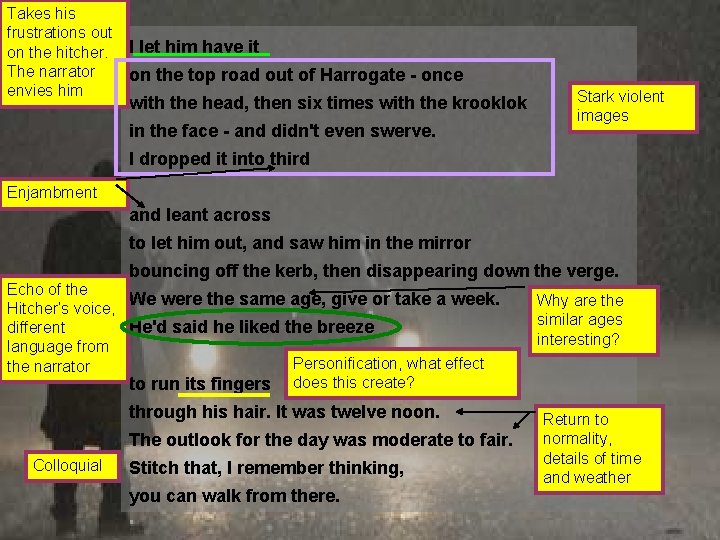
Takes his frustrations out on the hitcher. The narrator envies him I let him have it on the top road out of Harrogate - once with the head, then six times with the krooklok in the face - and didn't even swerve. Stark violent images I dropped it into third Enjambment and leant across to let him out, and saw him in the mirror bouncing off the kerb, then disappearing down the verge. Echo of the We were the same age, give or take a week. Hitcher’s voice, different He'd said he liked the breeze language from Personification, what effect the narrator to run its fingers does this create? through his hair. It was twelve noon. The outlook for the day was moderate to fair. Colloquial Stitch that, I remember thinking, you can walk from there. Why are the similar ages interesting? Return to normality, details of time and weather
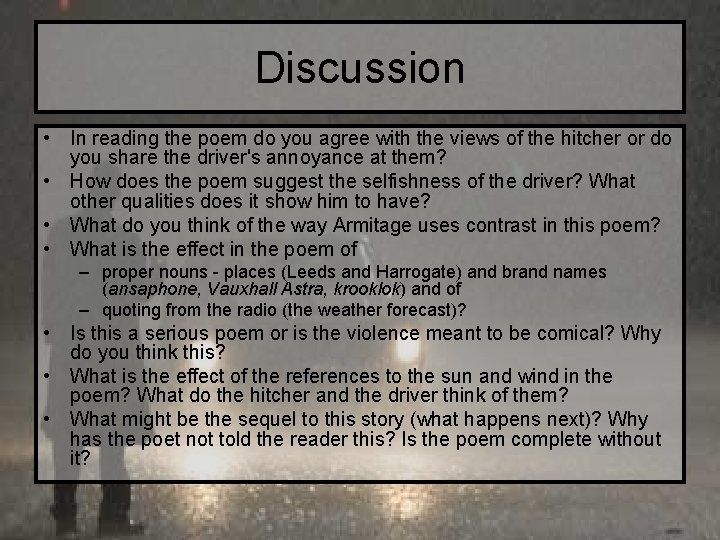
Discussion • In reading the poem do you agree with the views of the hitcher or do you share the driver's annoyance at them? • How does the poem suggest the selfishness of the driver? What other qualities does it show him to have? • What do you think of the way Armitage uses contrast in this poem? • What is the effect in the poem of – proper nouns - places (Leeds and Harrogate) and brand names (ansaphone, Vauxhall Astra, krooklok) and of – quoting from the radio (the weather forecast)? • Is this a serious poem or is the violence meant to be comical? Why do you think this? • What is the effect of the references to the sun and wind in the poem? What do the hitcher and the driver think of them? • What might be the sequel to this story (what happens next)? Why has the poet not told the reader this? Is the poem complete without it?
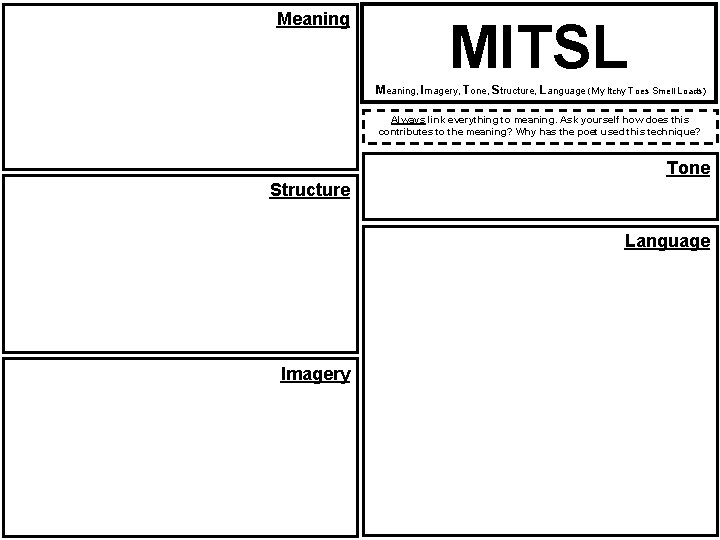
Meaning § what is the poem about? § who is the speaker? - are they dramatized (a character) § who is being spoken to or addressed? § what is being spoken about? § Theme(s) of the poem - what is it really about? § Setting/culture - where’s the poem set? Culture it is from/about? § where does the poem “get to” from start to end? Structure § Rhyme - is there a rhyme scheme? Couplets? Internal rhyme? § Rhythm - how many syllables per line? Is it regular or free verse? Why MITSL Meaning, Imagery, Tone, Structure, Language (My Itchy Toes Smell Loads) Always link everything to meaning. Ask yourself how does this contributes to the meaning? Why has the poet used this technique? Tone § How would the poem be spoken? (angry, sad, nostalgic, bitter, humorous etc) Language are some different lengths? § Stanzas - How many? How do they change? Is there a narrative? § Lines - how many are their in each verse? Do some stand out? § Enjambment - do the lines “run on” to the next line or stanza? § End stopping - does each line finish at the end of a sentence? § Form - does the poem have a shape to it? Imagery § Alliteration - the repeating of initial sounds. § Assonance - is the term used for the repetition of vowel sounds within consecutive words as in, 'rags of green weed hung down. . . '. § Metaphor - comparing two things by saying one is the other. § Simile - comparing two things saying one is like or as the other. § Personification - giving something non-human qualities. § Onomatopoeia - words that sound like thing they describe. § Repetition - does the poet repeat words or phrases? § What kinds of words are used? § Puns - a pun is a play on words - “Shear Class!” if Shearer scores. § Connotation - associations that words have (as "stallion" connotes a certain kind of horse with certain sorts of uses)? § Double meanings - “butts in” - putting bottoms in or interrupting. § Ambiguity - is the word or phrase deliberately unclear? Could it mean opposite things or many different things? . § Word order - are the words in an unusual order – why? § Adjectives - what are the key describing words? § Key words and phrases - do any of the words or phrases stand out? Do they shock? Are the words “violent” or “sad” etc? § Slang or unusual words and misspellings - Does the poet use slang or informal language? Are American words used? § Intertextuality - does the poem reference another text? § Style - does the poet copy another style? (Newspaper, play etc) § Characters - if there are characters how do they speak?
- Slides: 7