
Hippocampus Memory systems Learning Set of processes by

Hippocampus Memory systems
Learning • Set of processes by which experience creates enduring changes to neural circuits, changing behavior • Resulting changes are memories
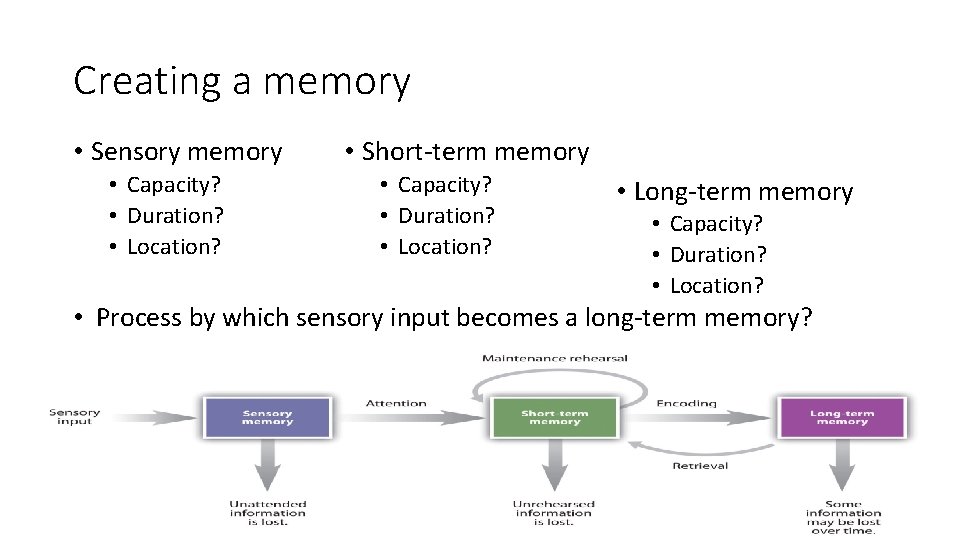
Creating a memory • Sensory memory • Capacity? • Duration? • Location? • Short-term memory • Capacity? • Duration? • Location? • Long-term memory • Capacity? • Duration? • Location? • Process by which sensory input becomes a long-term memory?
Using memories • Retrieval • Reconsolidation • Are memories stable and consistent over time?
Classifications of memory • Declarative memory - • Nondeclarative memory -
Brain regions involved in declarative memory • Hippocampus • Mammillary bodies • Damage or removal prevents consolidation of new long-term memories • Amygdala adds emotional valence
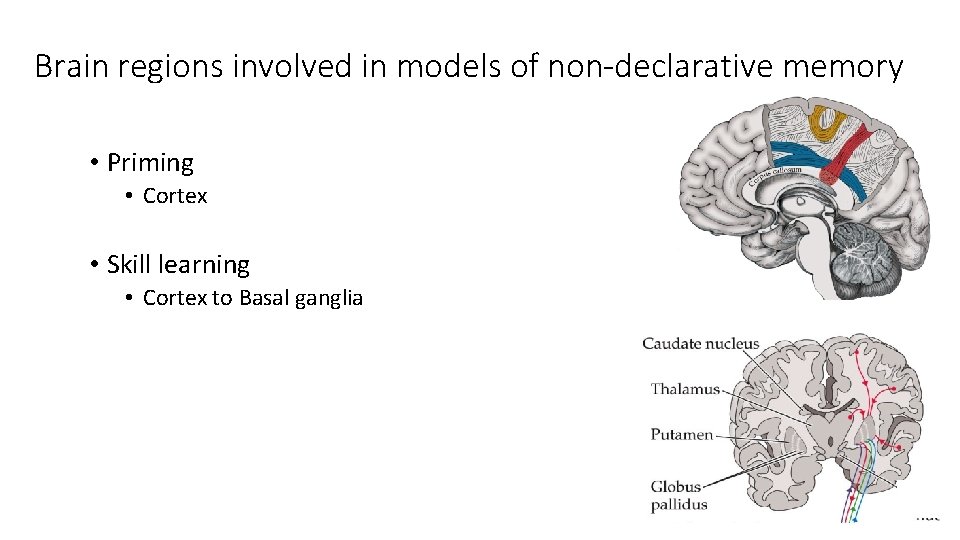
Brain regions involved in models of non-declarative memory • Priming • Cortex • Skill learning • Cortex to Basal ganglia
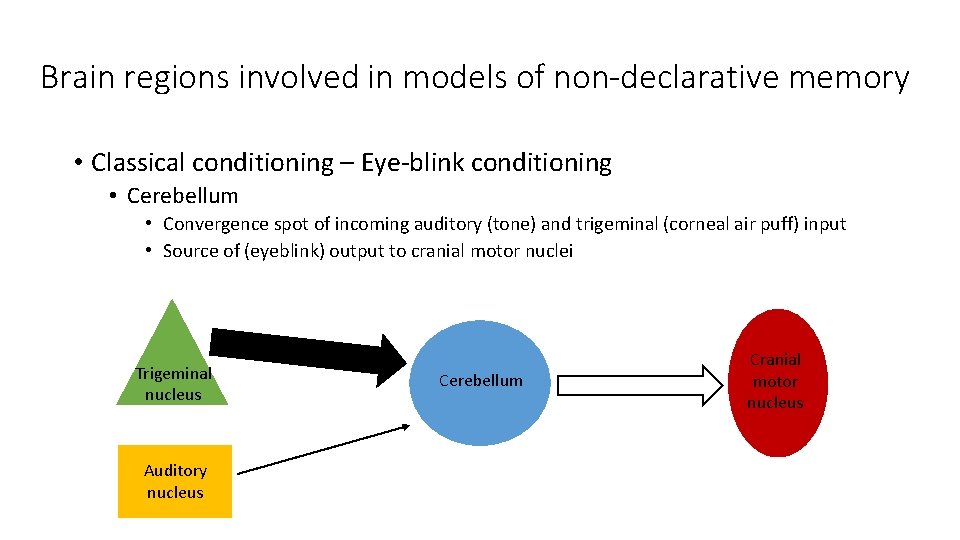
Brain regions involved in models of non-declarative memory • Classical conditioning – Eye-blink conditioning • Cerebellum • Convergence spot of incoming auditory (tone) and trigeminal (corneal air puff) input • Source of (eyeblink) output to cranial motor nuclei Trigeminal nucleus Auditory nucleus Cerebellum Cranial motor nucleus
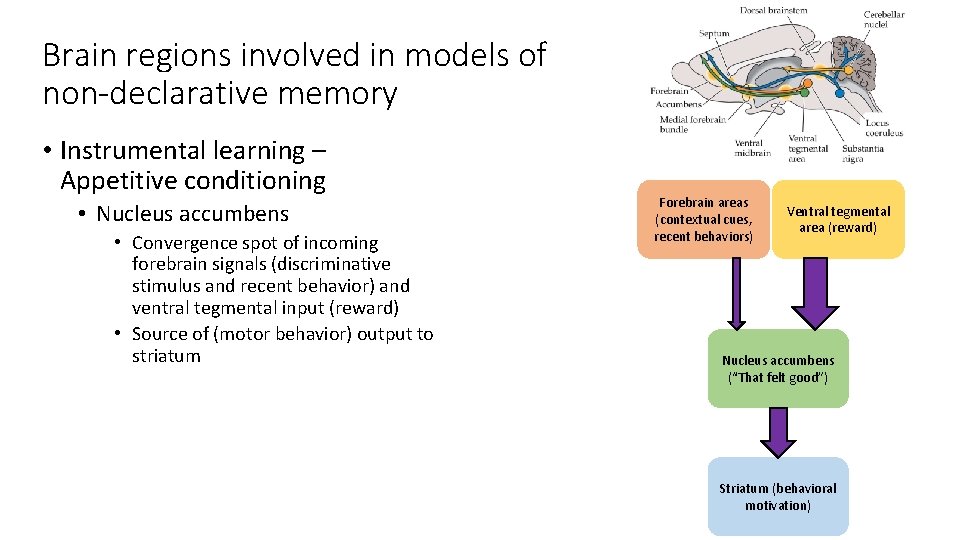
Brain regions involved in models of non-declarative memory • Instrumental learning – Appetitive conditioning • Nucleus accumbens • Convergence spot of incoming forebrain signals (discriminative stimulus and recent behavior) and ventral tegmental input (reward) • Source of (motor behavior) output to striatum Forebrain areas (contextual cues, recent behaviors) Ventral tegmental area (reward) Nucleus accumbens (“That felt good”) Striatum (behavioral motivation)

Hippocampus Long-term potentiation
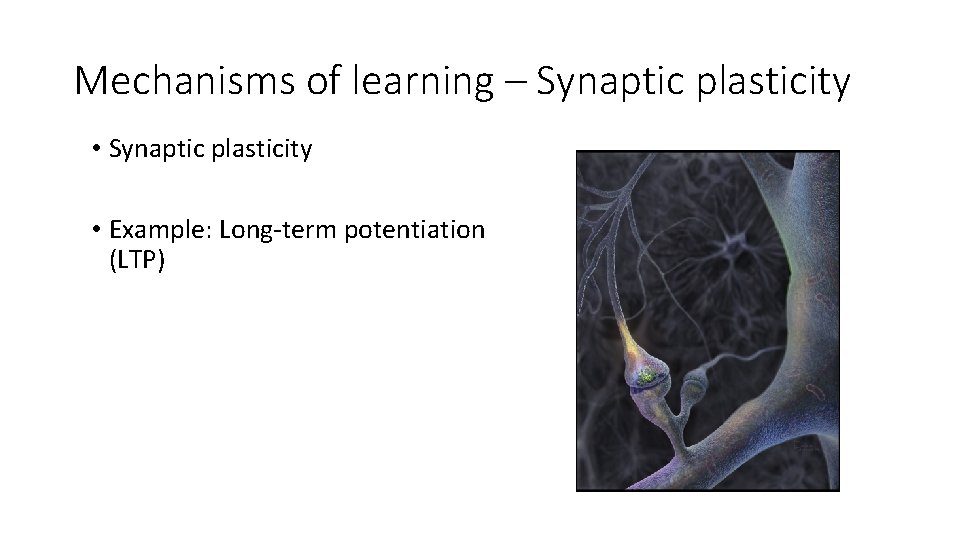
Mechanisms of learning – Synaptic plasticity • Example: Long-term potentiation (LTP)
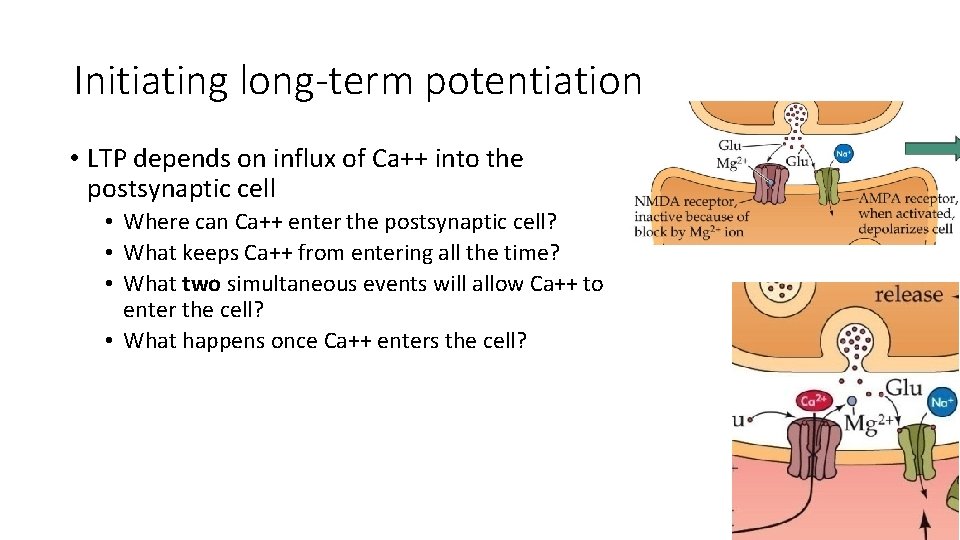
Initiating long-term potentiation • LTP depends on influx of Ca++ into the postsynaptic cell • Where can Ca++ enter the postsynaptic cell? • What keeps Ca++ from entering all the time? • What two simultaneous events will allow Ca++ to enter the cell? • What happens once Ca++ enters the cell?
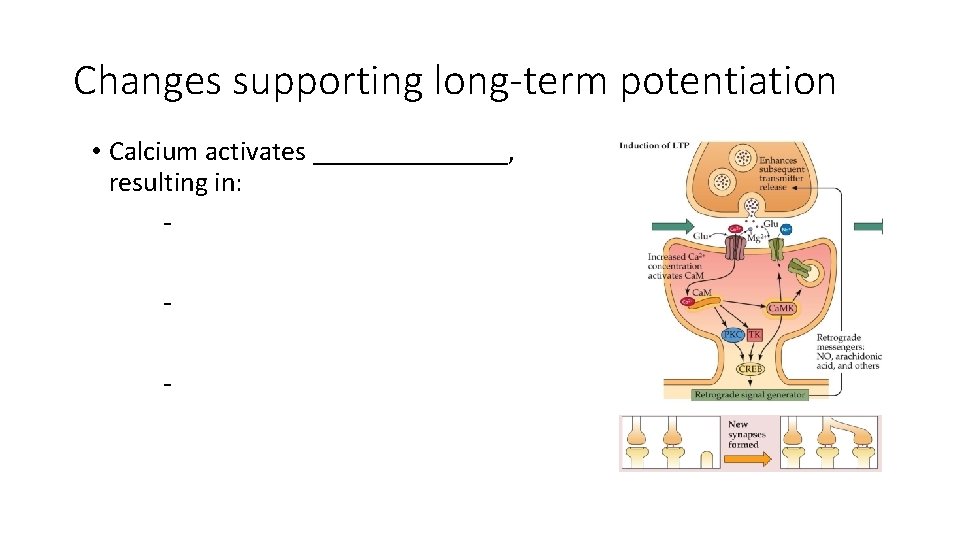
Changes supporting long-term potentiation • Calcium activates _______, resulting in: -
LTP characteristics • Synaptic strengthening is limited to those synapses where calcium entered the post-synaptic cell • Once long-term potentiation has been induced:

Hippocampus Damage and memory loss
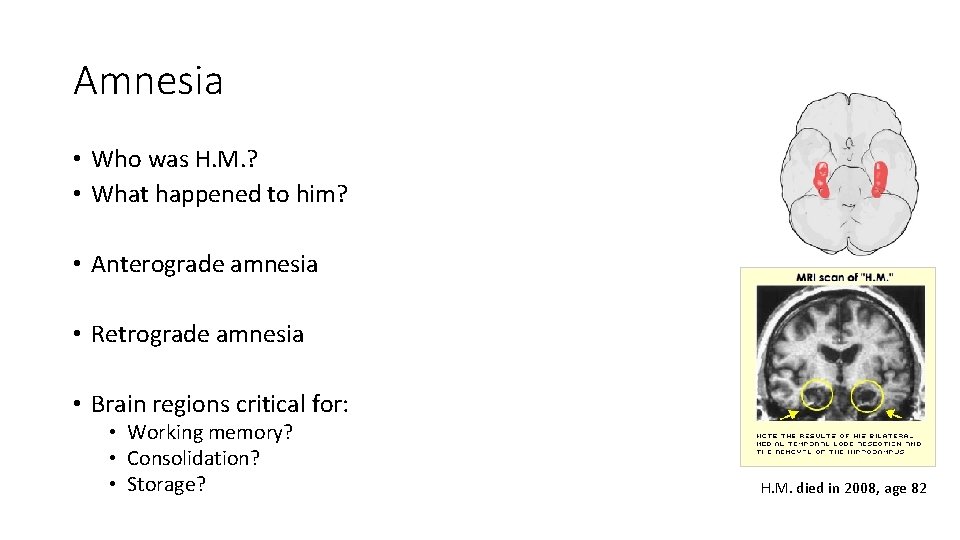
Amnesia • Who was H. M. ? • What happened to him? • Anterograde amnesia • Retrograde amnesia • Brain regions critical for: • Working memory? • Consolidation? • Storage? H. M. died in 2008, age 82
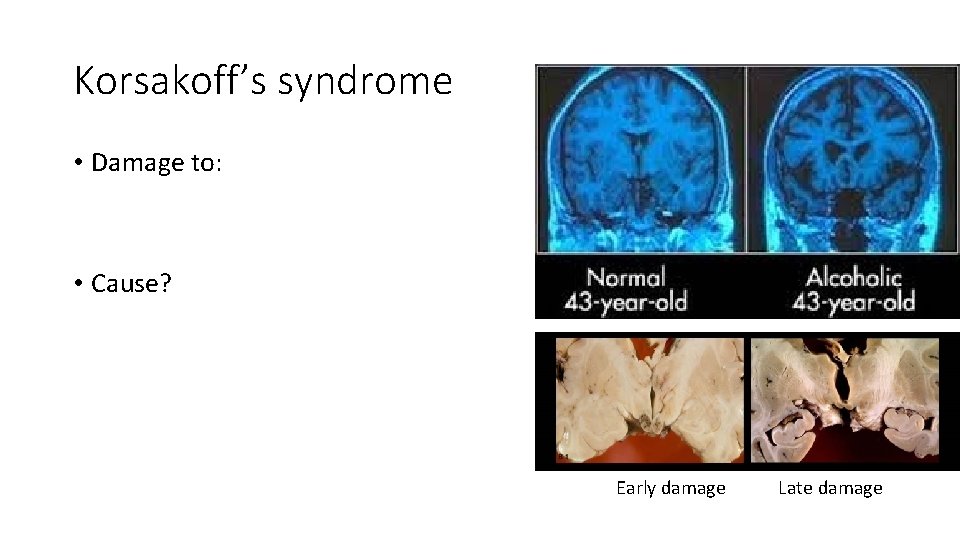
Korsakoff’s syndrome • Damage to: • Cause? Early damage Late damage
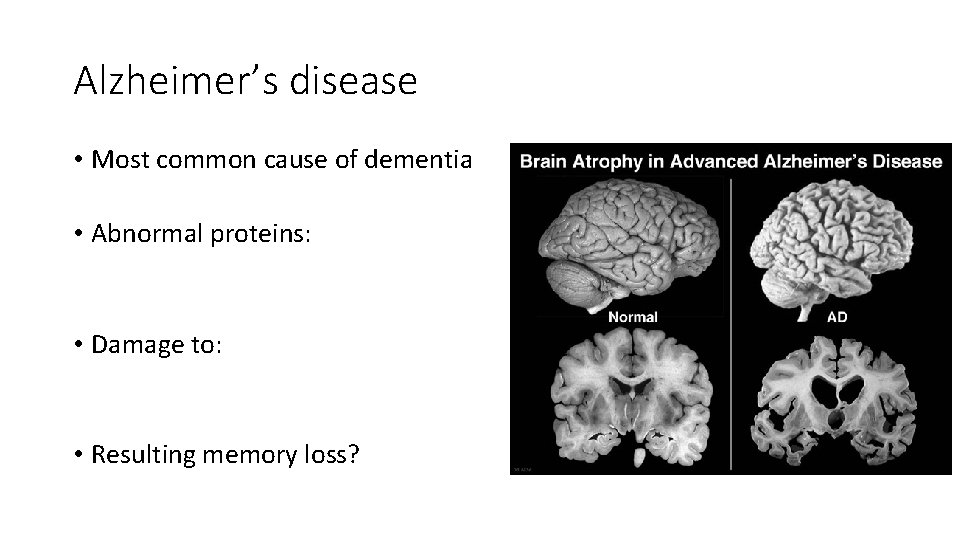
Alzheimer’s disease • Most common cause of dementia • Abnormal proteins: • Damage to: • Resulting memory loss?
- Slides: 18