
HIPAA Implementation Case Study Disease Management Christine M
- Slides: 16
HIPAA Implementation Case Study: Disease Management Christine M. Gershtein RN, MSN Life. Masters Supported Self. Care, Inc. Irvine, CA
Disease Management Association Definition Disease Management is a multi-disciplinary, continuumbased approach to healthcare delivery that proactively identifies populations with, or at risk for established medical conditions, that: · Supports the physician/patient relationship and plan of care · Emphasizes prevention of exacerbations and complications utilizing cost-effective evidence-based practice guidelines and patient empowerment strategies such as self-management · Continuously evaluates clinical, humanistic, and economic outcomes with the goal of improving overall health.
DMAA Definition Disease Management should contain the following: · Population Identification process · Evidence-based practice guidelines · Collaborative practice model - includes MD and other providers · Risk identification and matching of interventions with need · Patient self-management education (eg. primary prevention, behavior modification programs, and compliance/surveillance) · Process and outcomes measurement, evaluation, and mgmt. · Routine reporting/feedback loop (may include communication with patient, physician, health plan and ancillary providers, and practice profiling) · Appropriate use of information technology (may include specialized software, data registries, automated decision support tools, and callback systems)
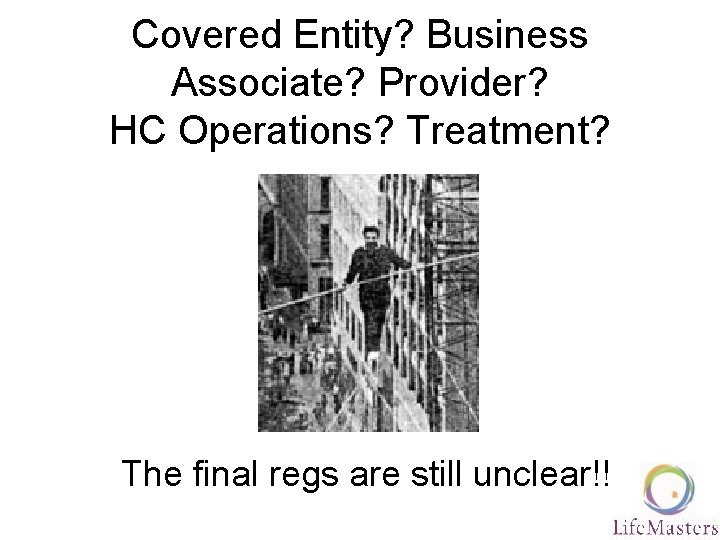
Covered Entity? Business Associate? Provider? HC Operations? Treatment? The final regs are still unclear!!
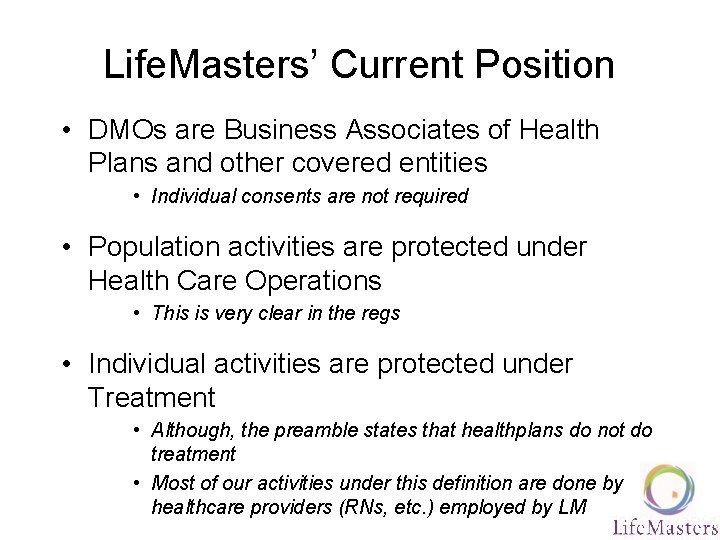
Life. Masters’ Current Position • DMOs are Business Associates of Health Plans and other covered entities • Individual consents are not required • Population activities are protected under Health Care Operations • This is very clear in the regs • Individual activities are protected under Treatment • Although, the preamble states that healthplans do not do treatment • Most of our activities under this definition are done by healthcare providers (RNs, etc. ) employed by LM
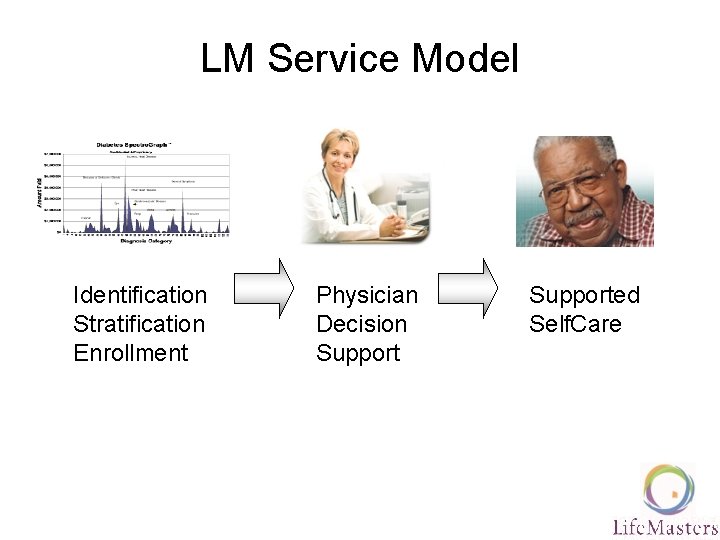
LM Service Model Identification Stratification Enrollment Physician Decision Supported Self. Care
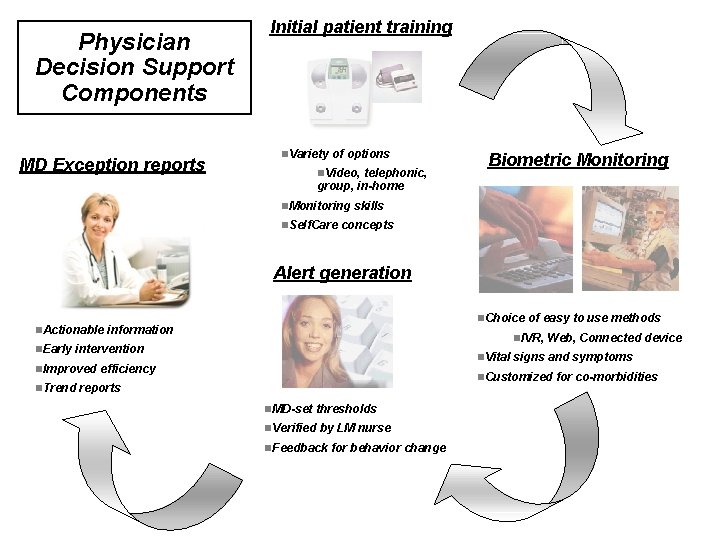
Physician Decision Support Components MD Exception reports Initial patient training n. Variety of options n. Video, telephonic, Biometric Monitoring group, in-home n. Monitoring skills n. Self. Care concepts Alert generation n. Choice of easy to use methods n. Actionable information n. IVR, Web, Connected device n. Early intervention n. Vital signs and symptoms n. Improved efficiency n. Customized for co-morbidities n. Trend reports n. MD-set thresholds n. Verified by LM nurse n. Feedback for behavior change
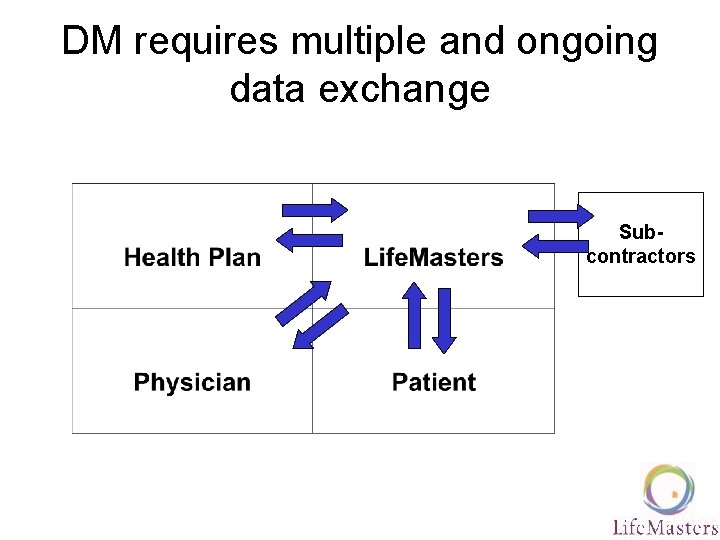
DM requires multiple and ongoing data exchange Subcontractors
Operations vs. Treatment
LM HIPAA Implementation Plan • Appointed Chief Privacy Officer (MD) • Established interdisciplinary committee – Operations, technology, clinical, legal • Inventory of existing confidentiality P&Ps – Who has access to what data (internally and externally)? – When/how to obtain patient consent for internal/external use of PHI – How to ensure patient access to his/her own data
LM HIPAA Implementation Plan • Contract review – Ensure sub-contractor compliance (data analysts, outsourced call centers, etc. ) – Ensure Business Associate relationship clear in customer contracts • Internal (and subcontractor) training on privacy P&Ps • Ensure appropriate IT data security measures are taken
Data Security Measures • Encryption of Data over the Internet • 128 bit secure sockets layer (SSL) level 3. 0 and digital certificates • Complex password protection • Information Access Control • Password protection • Ability to access, read, and modify data limited based on job requirements
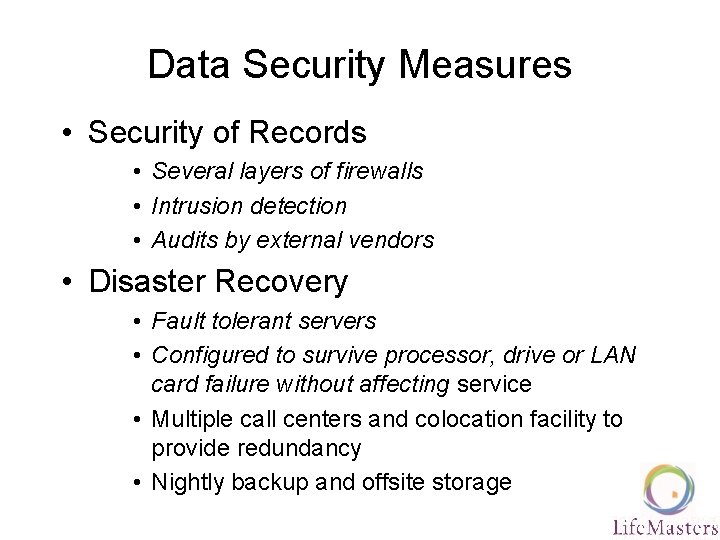
Data Security Measures • Security of Records • Several layers of firewalls • Intrusion detection • Audits by external vendors • Disaster Recovery • Fault tolerant servers • Configured to survive processor, drive or LAN card failure without affecting service • Multiple call centers and colocation facility to provide redundancy • Nightly backup and offsite storage
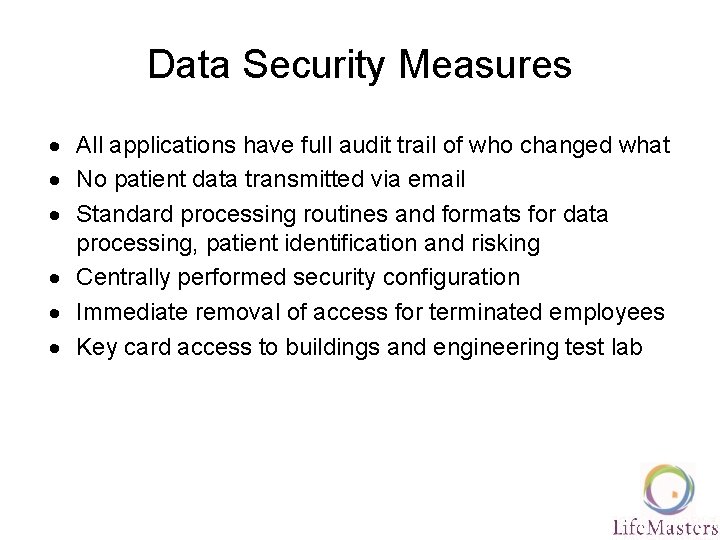
Data Security Measures · All applications have full audit trail of who changed what · No patient data transmitted via email · Standard processing routines and formats for data processing, patient identification and risking · Centrally performed security configuration · Immediate removal of access for terminated employees · Key card access to buildings and engineering test lab
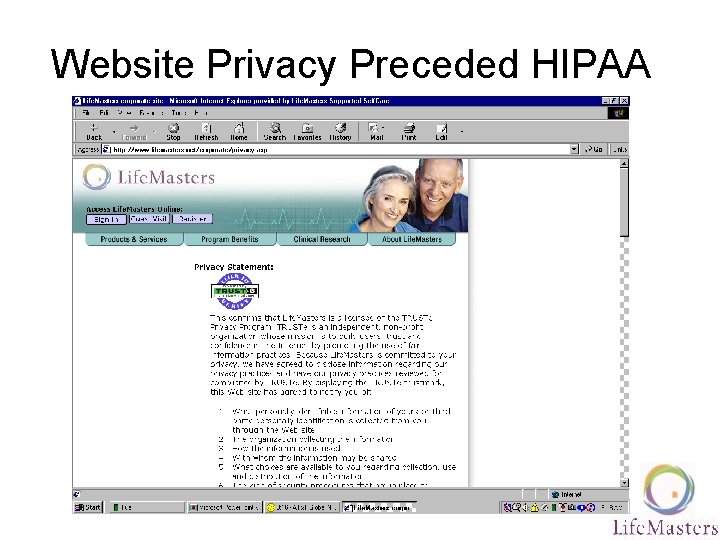
Website Privacy Preceded HIPAA
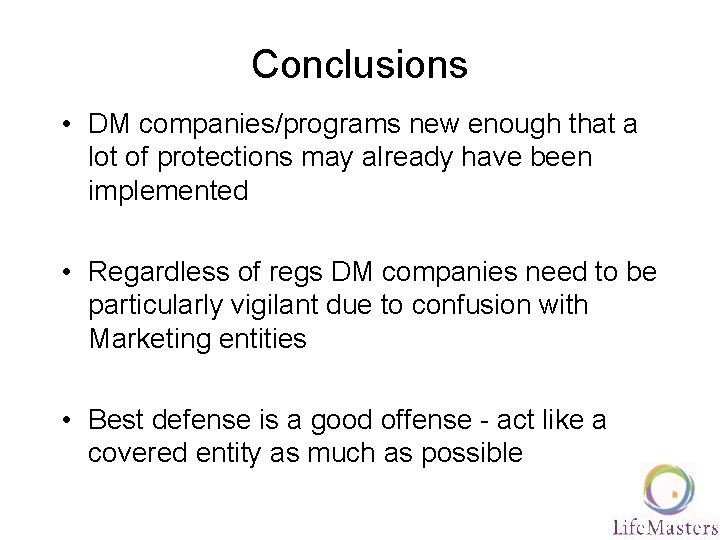
Conclusions • DM companies/programs new enough that a lot of protections may already have been implemented • Regardless of regs DM companies need to be particularly vigilant due to confusion with Marketing entities • Best defense is a good offense - act like a covered entity as much as possible