
HIP THIGH PELVIS INJURY EVALUATION History Mechanism of




- Slides: 32
HIP – THIGH – PELVIS INJURY EVALUATION
History
-Mechanism of Injury (MOI): -Majority of injuries to hip are chronic or overuse injuries -Acute MOI: -Direct blow to iliac crest, quadriceps or hamstrings -Falling on buttocks -Gradual increase in pain- may be due to tendinitis or femoral stress fx -Extreme amount of force needed to dislocate hip or fracture the Femur -Hip pain most frequently felt on anterior or medial aspect of hip & into groin; may be referred to knee or back
Inspection
-Check for alterations in gait pattern -Look for signs of trauma around iliac crest, in soft tissues (many structures in the hip are deep & show no obvious signs of trauma) -Measurement of leg length discrepancy: 3 Types of Leg Length Discrepancy 1. Functional (due to rotation of the pelvis): Compare level of ASIS & Greater Trochanter to distance from the floor (Standing) 2. True (actual anatomical discrepancy): Measure from ASIS to Medial Malleolus (lying) 3. Apparent (caused by muscle contracture): Measure from umbilicus (belly button) to Medial Malleolus (lying)
Palpation
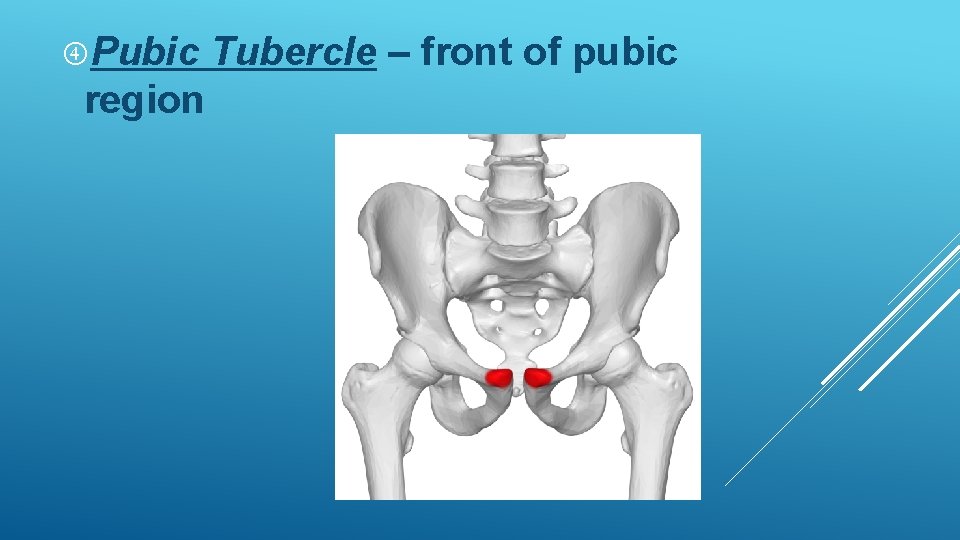
Medial Structures: -Adductor Muscle Group -Gracilis -Pubic Tubercle
Pubic region Tubercle – front of pubic
Anterior Structures -ASIS, AIIS -Iliac Crest -Sartorius -Rectus Femoris
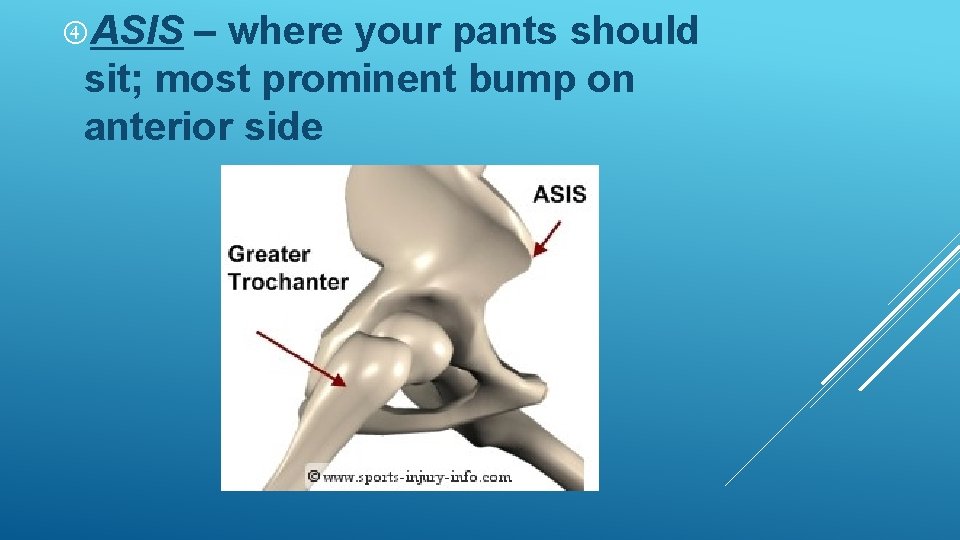
ASIS – where your pants should sit; most prominent bump on anterior side
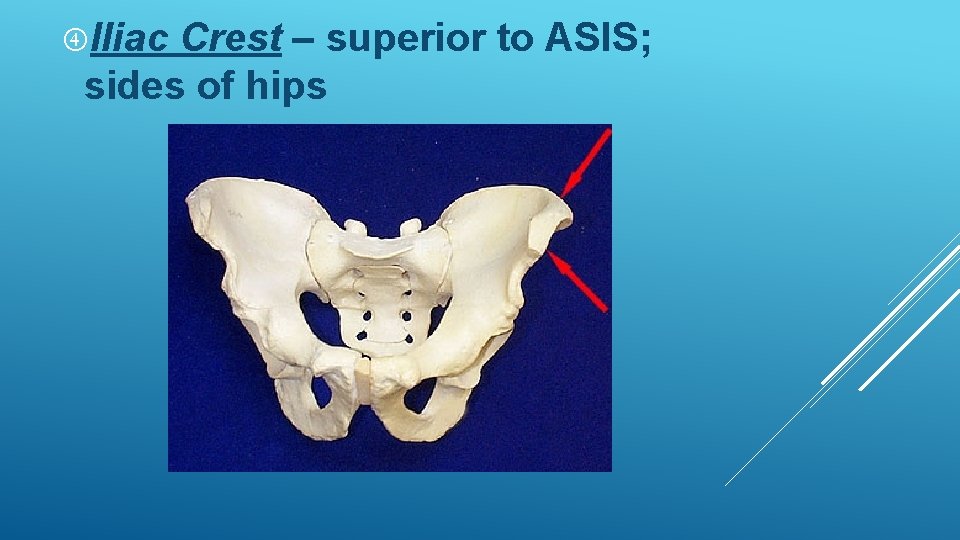
Iliac Crest – superior to ASIS; sides of hips
Lateral Structures: -Iliac Crest -Greater Trochanter -Gluteus Medius (palpate in hip abduction) -Tensor Fascia Latae
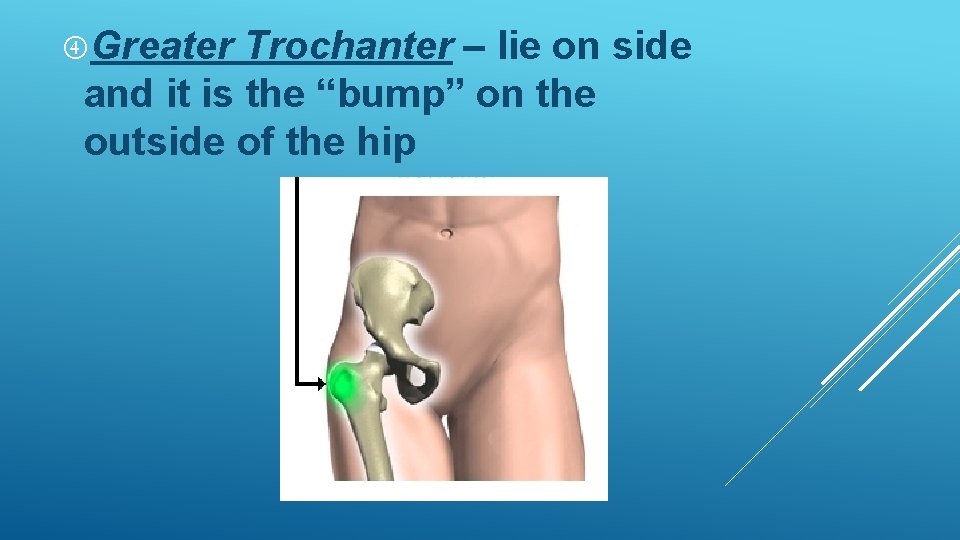
Greater Trochanter – lie on side and it is the “bump” on the outside of the hip
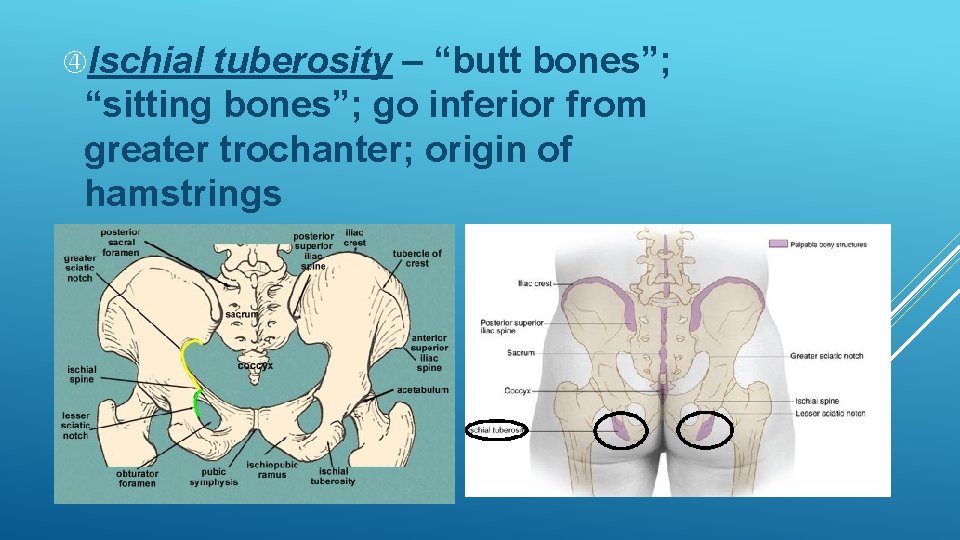
Posterior Structures: -PSIS -Gluteus Maximus -Hamstrings -Ischial Tuberosity
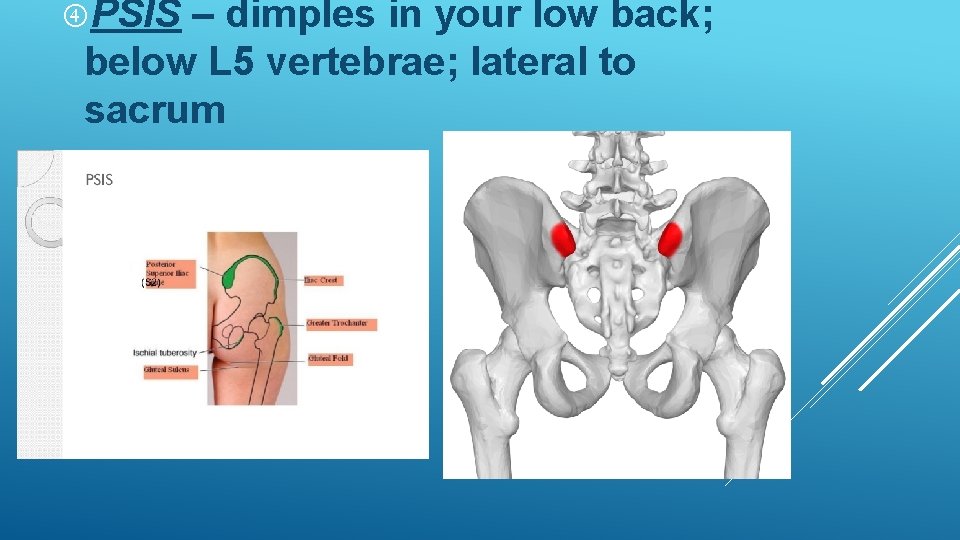
PSIS – dimples in your low back; below L 5 vertebrae; lateral to sacrum
Ischial tuberosity – “butt bones”; “sitting bones”; go inferior from greater trochanter; origin of hamstrings
Functional Tests
Range of Motion: Abduction, Adduction, Flexion, Extension, Circumduction, Internal Rotation, & External Rotation
-Active ROM -Athlete performs the action -Passive ROM -Trainer performs the action, athlete is relaxed -Resistive ROM -Trainer applies resistance as athlete performs the action
Stress Tests: These tests check individual structures to determine injuries
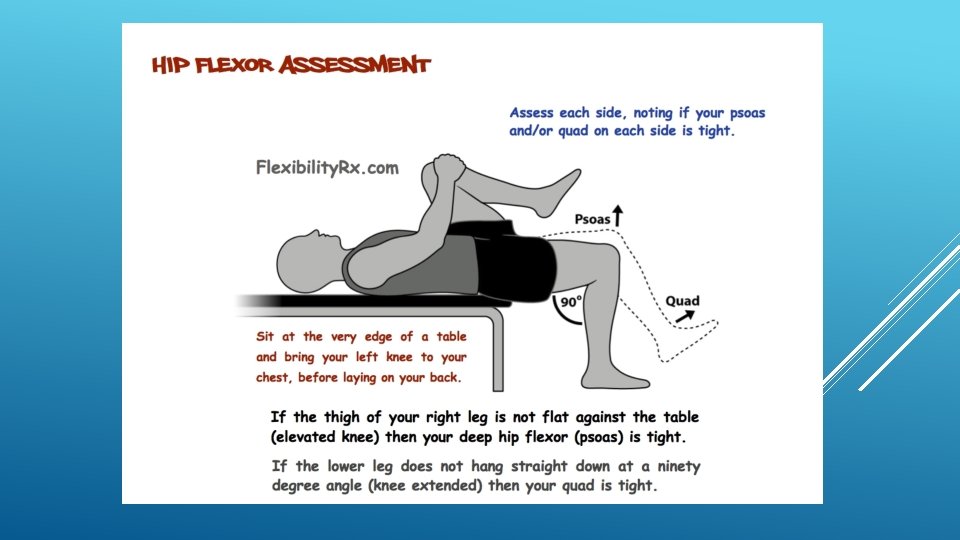
Thomas Test: -Tests for Hip Flexor Tightness -+ Test result: Involved knee rests at less than 90 degrees of flexion (Rectus Femoris) -+ Test result: Involved leg rises off the table (Iliopsoas)
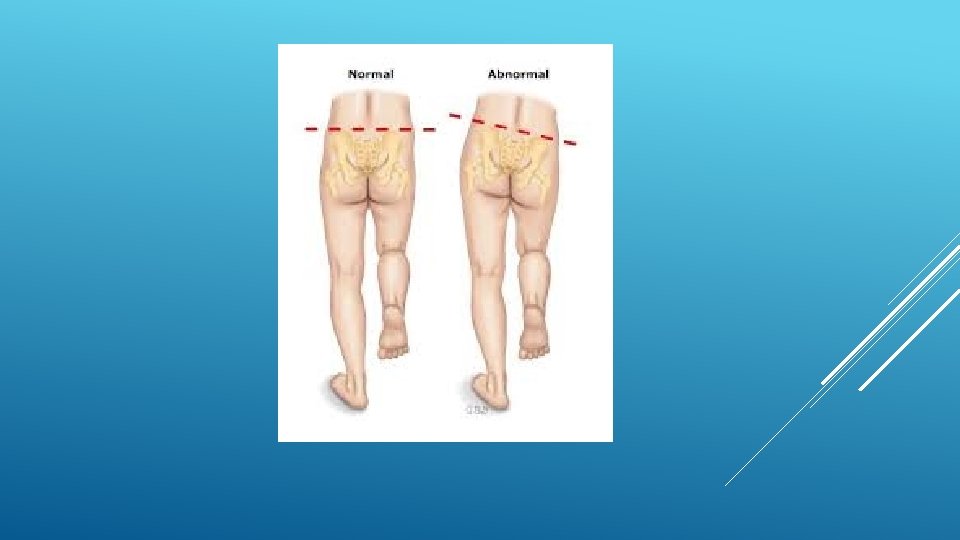
Trendelenburg Test: -Tests for weakness of the gluteal muscles -+ Test result: Pelvis lowers on non-weightbearing side
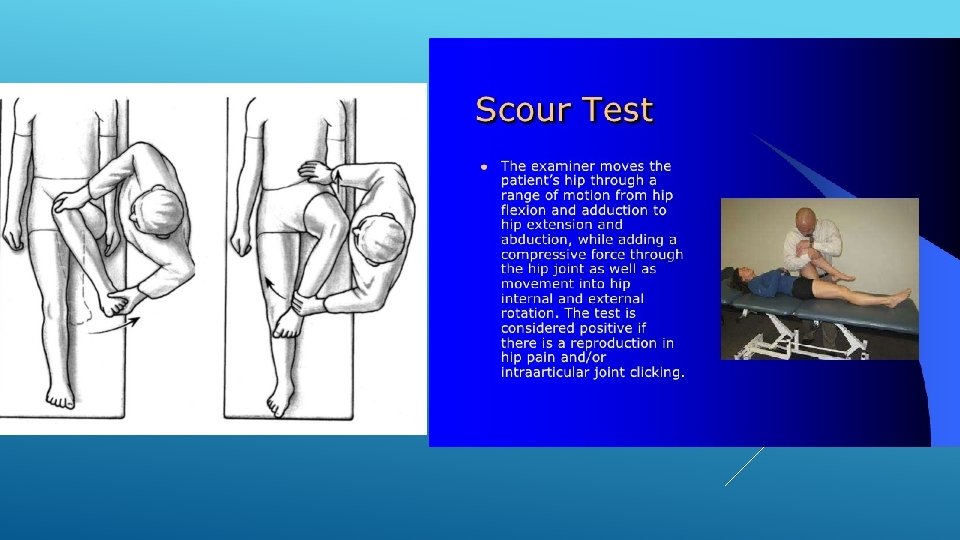
Hip Scouring Test: -Tests for defect in the articular cartilage of femur or acetabulum -+ Test Result: Pain
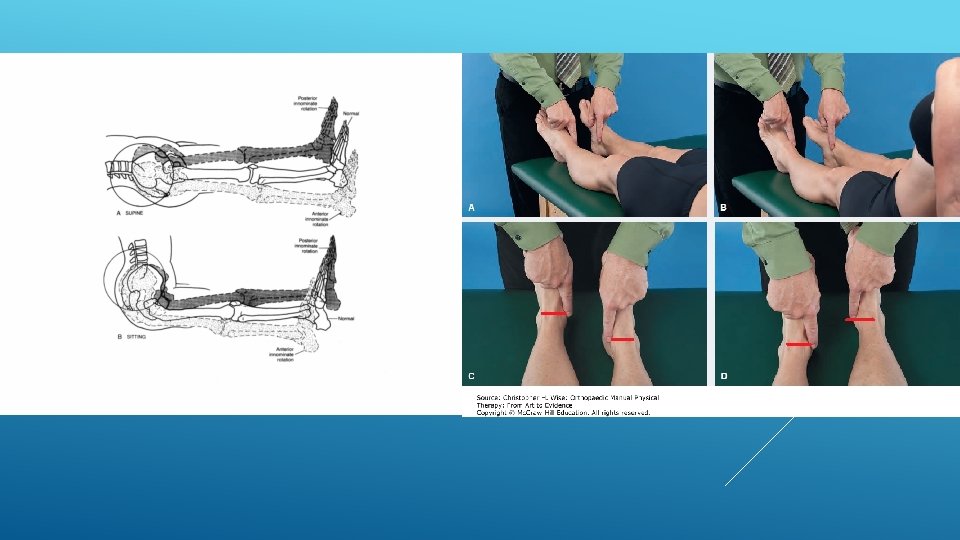
Long Sit Test: -Tests for leg-length discrepancy and rotation of the pelvis -+Test result: Medial Malleolus of 1 leg is shorter or longer than the other -If malleolus goes short to long = Posterior rotation -If malleolus goes long to short = Anterior rotation
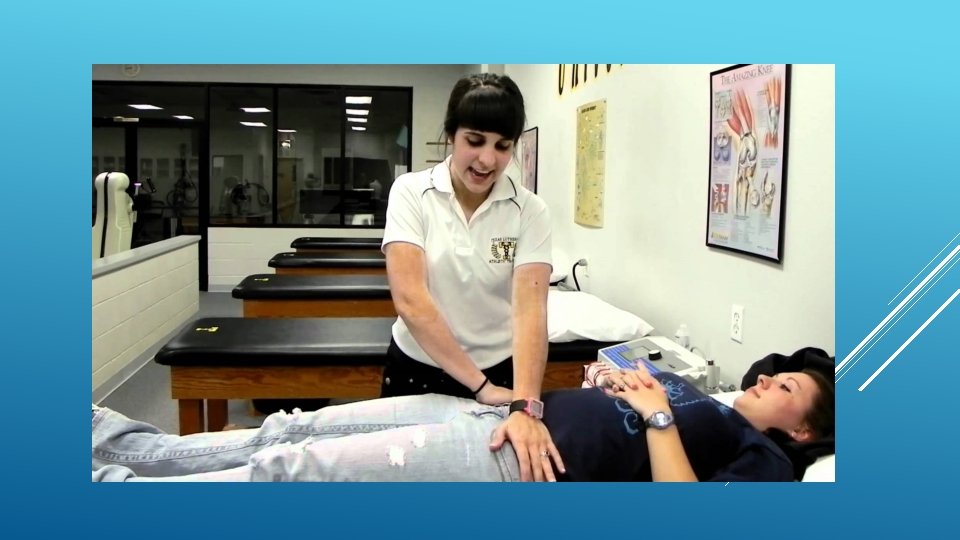
Sacroiliac Compression: -Tests for sacroiliac pathology -+ Test result: Pain
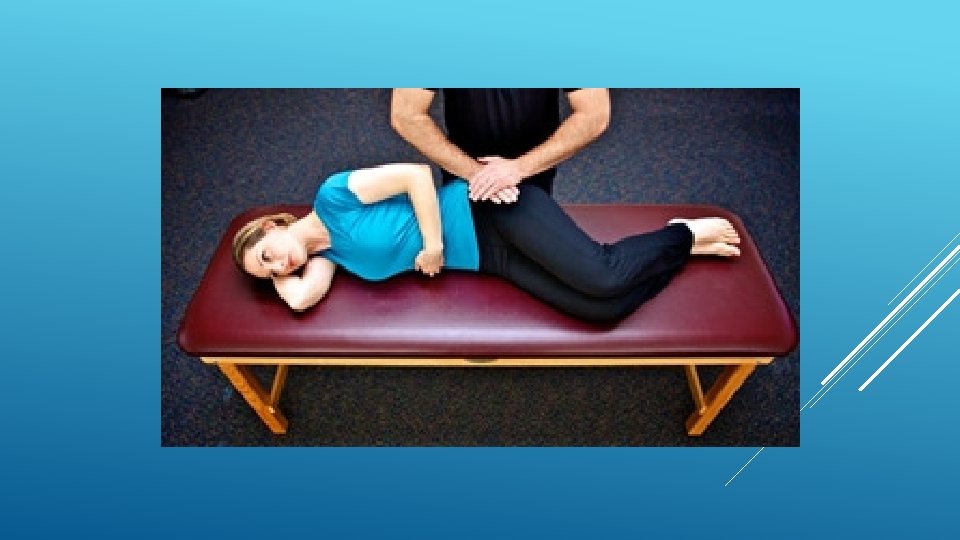
Sacroiliac Distraction: -Tests for sacroiliac pathology -+ Test result: Pain