
Hip Joint Acetabulum head of the femur Type

Hip Joint
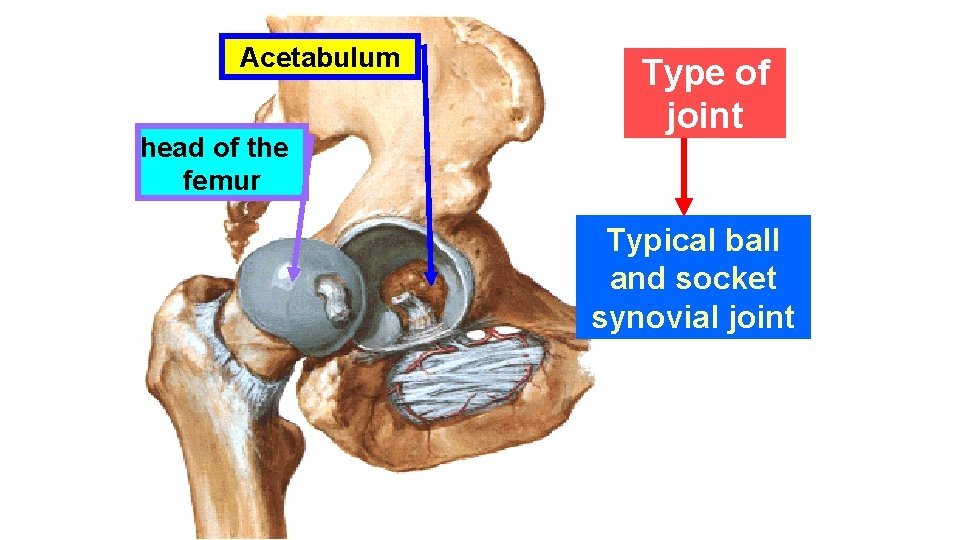
Acetabulum head of the femur Type of joint Typical ball and socket synovial joint
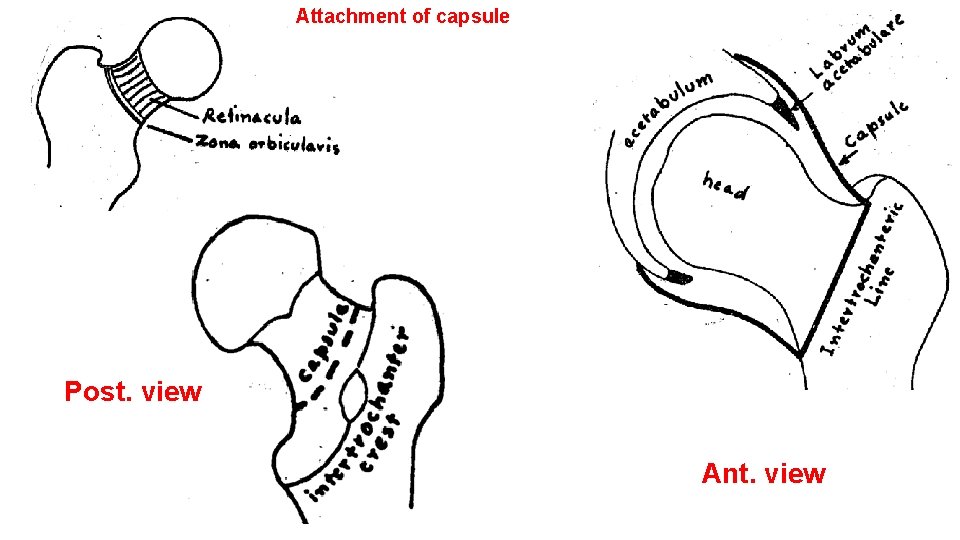
Attachment of capsule Post. view Ant. view
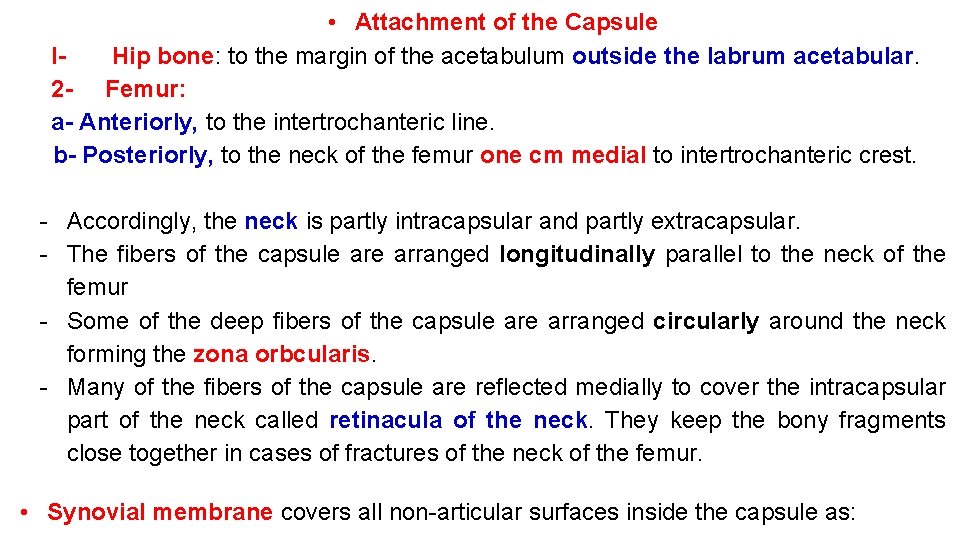
• Attachment of the Capsule IHip bone: to the margin of the acetabulum outside the labrum acetabular. 2 - Femur: a- Anteriorly, to the intertrochanteric line. b- Posteriorly, to the neck of the femur one cm medial to intertrochanteric crest. - Accordingly, the neck is partly intracapsular and partly extracapsular. - The fibers of the capsule arranged longitudinally parallel to the neck of the femur - Some of the deep fibers of the capsule arranged circularly around the neck forming the zona orbcularis. - Many of the fibers of the capsule are reflected medially to cover the intracapsular part of the neck called retinacula of the neck. They keep the bony fragments close together in cases of fractures of the neck of the femur. • Synovial membrane covers all non-articular surfaces inside the capsule as:
Ligaments of the hip joint
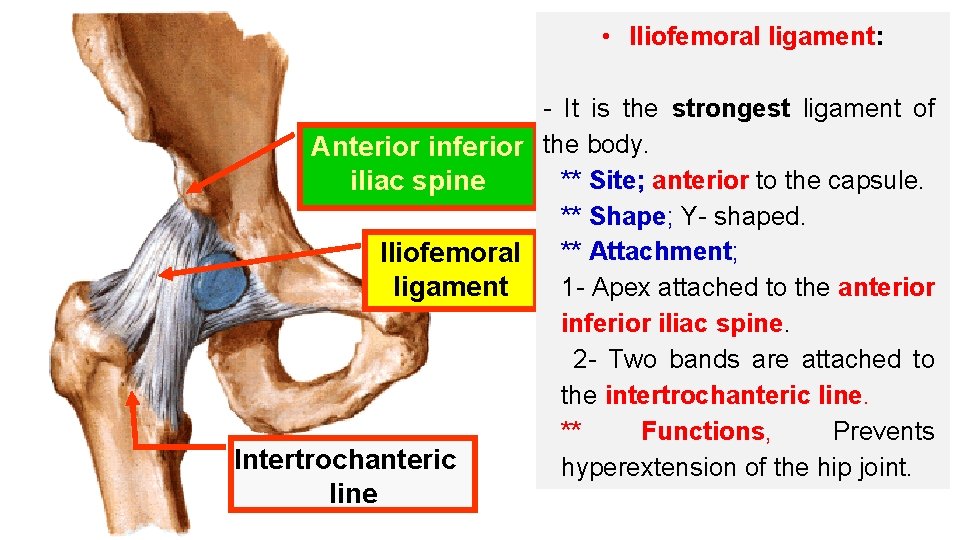
• Iliofemoral ligament: - It is the strongest ligament of Anterior inferior the body. ** Site; anterior to the capsule. iliac spine ** Shape; Y- shaped. Iliofemoral ** Attachment; ligament 1 - Apex attached to the anterior inferior iliac spine. 2 - Two bands are attached to the intertrochanteric line. ** Functions, Prevents Intertrochanteric hyperextension of the hip joint. line
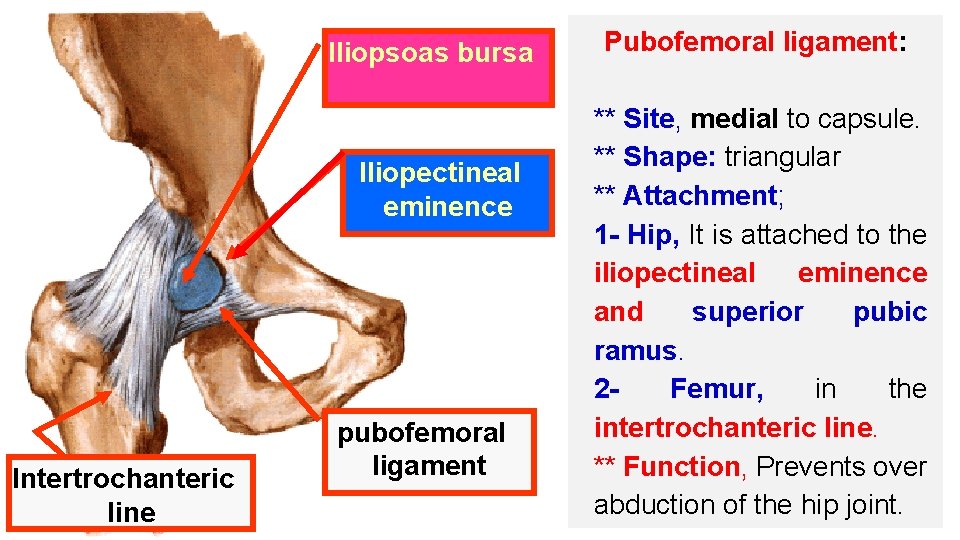
Iliopsoas bursa Iliopectineal eminence Intertrochanteric line pubofemoral ligament Pubofemoral ligament: ** Site, medial to capsule. ** Shape: triangular ** Attachment; 1 - Hip, It is attached to the iliopectineal eminence and superior pubic ramus. 2 Femur, in the intertrochanteric line. ** Function, Prevents over abduction of the hip joint.
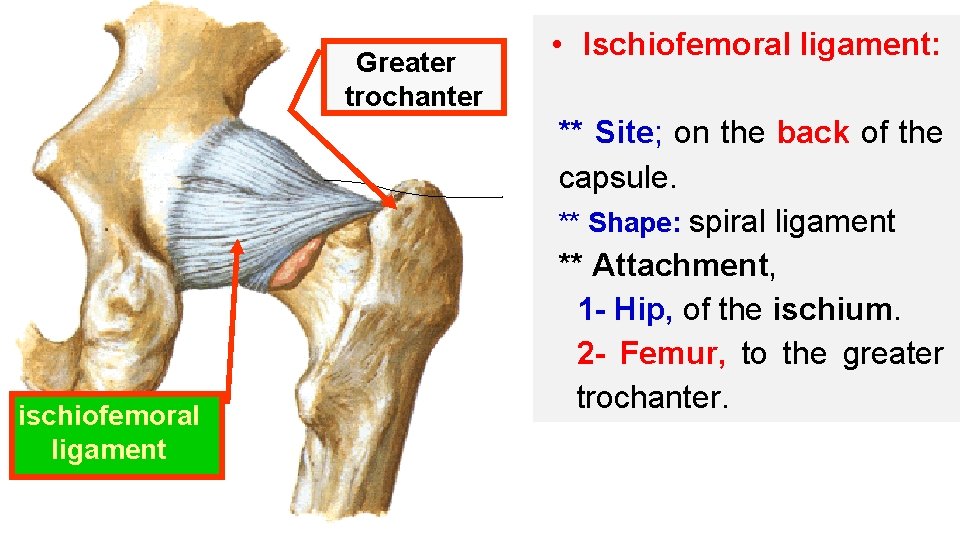
Greater trochanter ischiofemoral ligament • Ischiofemoral ligament: ** Site; on the back of the capsule. ** Shape: spiral ligament ** Attachment, 1 - Hip, of the ischium. 2 - Femur, to the greater trochanter.
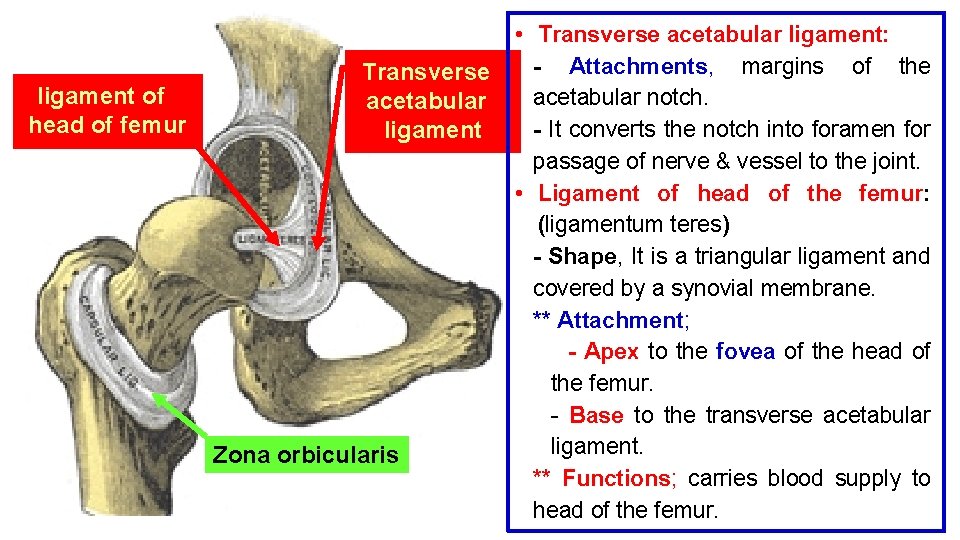
ligament of head of femur Transverse acetabular ligament Zona orbicularis • Transverse acetabular ligament: - Attachments, margins of the acetabular notch. - It converts the notch into foramen for passage of nerve & vessel to the joint. • Ligament of head of the femur: (ligamentum teres) - Shape, It is a triangular ligament and covered by a synovial membrane. ** Attachment; - Apex to the fovea of the head of the femur. - Base to the transverse acetabular ligament. ** Functions; carries blood supply to head of the femur.
v Movements of the hip joint 1 - Flexion: mainly by the psoas major and iliacus. - helped by the sartorius, rectus femoris and pectineus. 2 - Extension: mainly by the gluteus maximus. - helped by the hamstrings. 3 - Adduction: mainly by the adductors longus, brevis and magnus. - helped by the pectineus and gracills. 4 - Abduction: mainly by the glutei medius and minimus. - helped by the tensor fasciae latae and sartorius. 5 - Medial rotation: mainly by of the glutei medius and minimus (the anterior fibers). - helped by the tensor fasciae latae. 6 - Lateral rotation: by 1) Piriformis. 2) Obtuartor internus. 3) 2 Gemilli, 4) Quadratus femoris. 5) Obturator externus. 7 - Circumduction; a combination of flexion, abduction, extension and adduction done in succession. N, B: Glutei medius and minimus Prevent tilting of the pelvis to the unsupported side when the leg is raised from the ground.
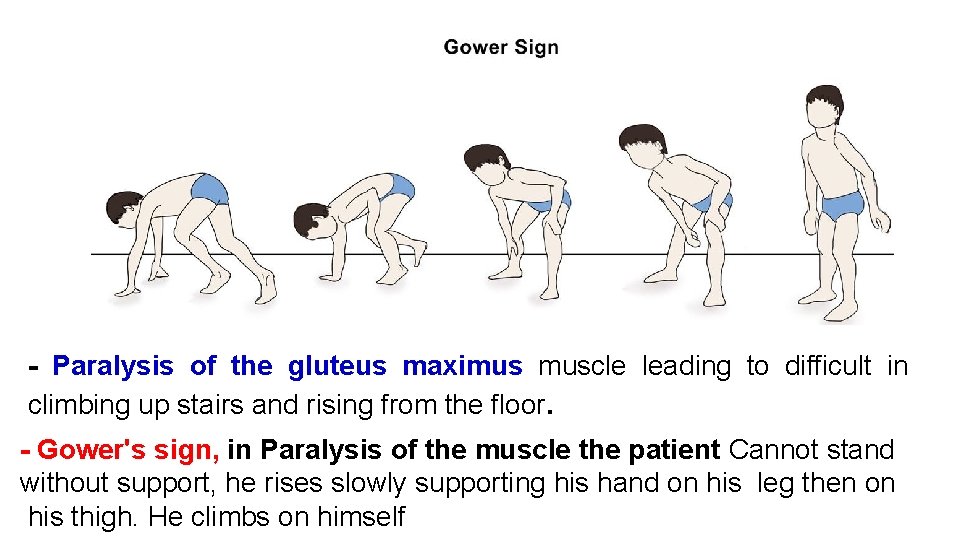
- Paralysis of the gluteus maximus muscle leading to difficult in climbing up stairs and rising from the floor. - Gower's sign, in Paralysis of the muscle the patient Cannot stand without support, he rises slowly supporting his hand on his leg then on his thigh. He climbs on himself
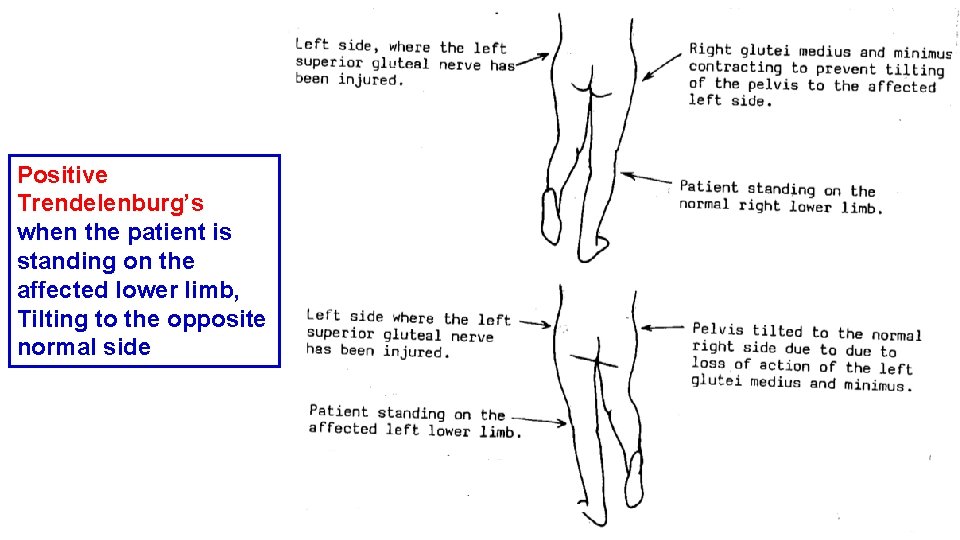
Positive Trendelenburg’s when the patient is standing on the affected lower limb, Tilting to the opposite normal side
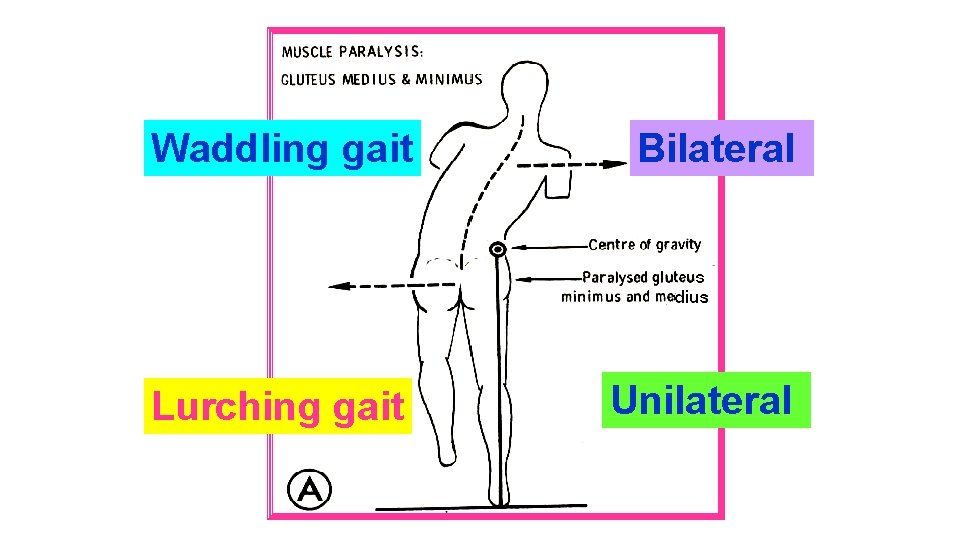
Waddling gait Bilateral Lurching gait Unilateral

- Slides: 15