
Hinduism Hinduism The beginnings of Hindu culture and
Hinduism
Hinduism The beginnings of Hindu culture and religion can be traced to the Indus river valley civilization which lasted from about 2500 BC to about 1500 BC. Hinduism is unique among the major religions of the world. It has no founder well-defined date of origin established creed universally accepted moral code universal form of worship
There is a great deal of Hindu sacred literature, such as the Vedas, the Upanishades, and the Mahabharata. But none of these scriptures is followed by all Hindus believe that the individual soul, or atman, is part of the unending cycle of nature.
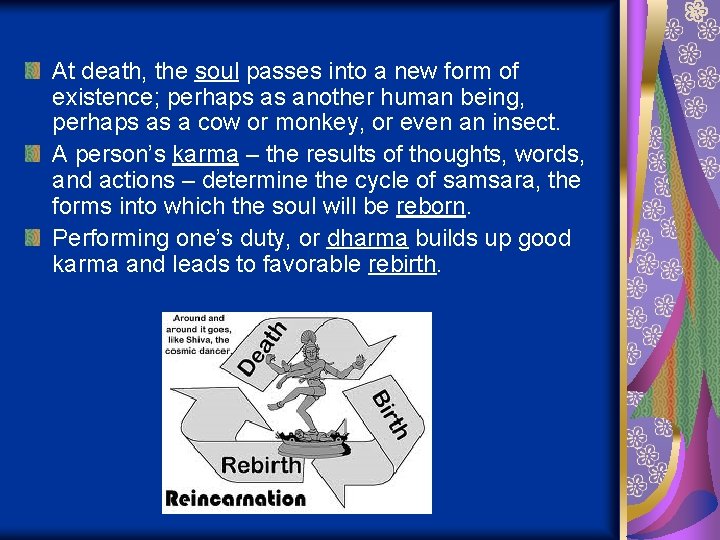
At death, the soul passes into a new form of existence; perhaps as another human being, perhaps as a cow or monkey, or even an insect. A person’s karma – the results of thoughts, words, and actions – determine the cycle of samsara, the forms into which the soul will be reborn. Performing one’s duty, or dharma builds up good karma and leads to favorable rebirth.
Remember: 1. Duty = Dharma 2. Perform dharma to get good karma 3. Be reborn in a higher state of being!

Hindus divide human beings into hierarchical social groups, called castes. Members of the highest class are called Brahmans are the priests of traditional India.
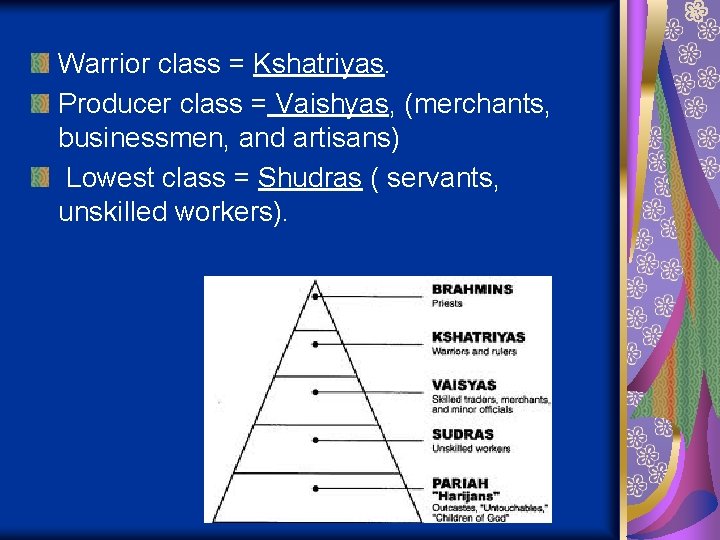
Warrior class = Kshatriyas. Producer class = Vaishyas, (merchants, businessmen, and artisans) Lowest class = Shudras ( servants, unskilled workers).
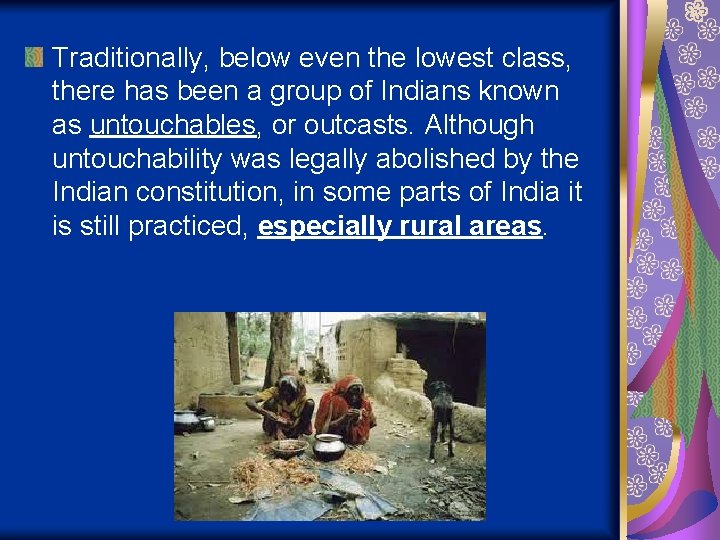
Traditionally, below even the lowest class, there has been a group of Indians known as untouchables, or outcasts. Although untouchability was legally abolished by the Indian constitution, in some parts of India it is still practiced, especially rural areas.
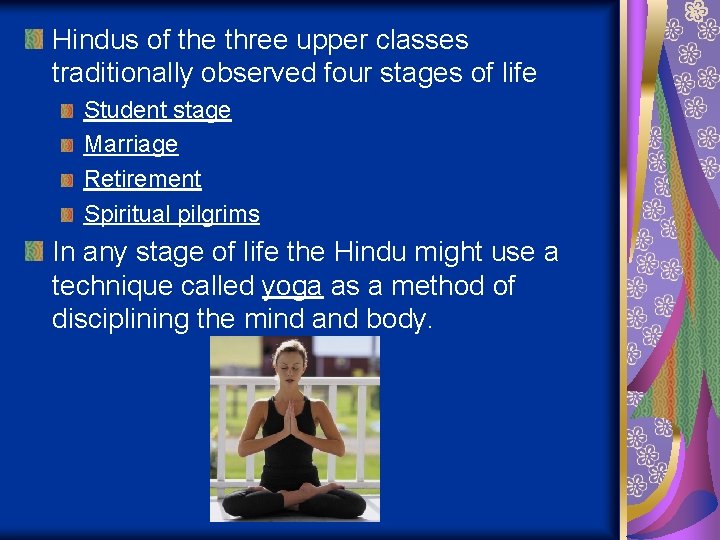
Hindus of the three upper classes traditionally observed four stages of life Student stage Marriage Retirement Spiritual pilgrims In any stage of life the Hindu might use a technique called yoga as a method of disciplining the mind and body.
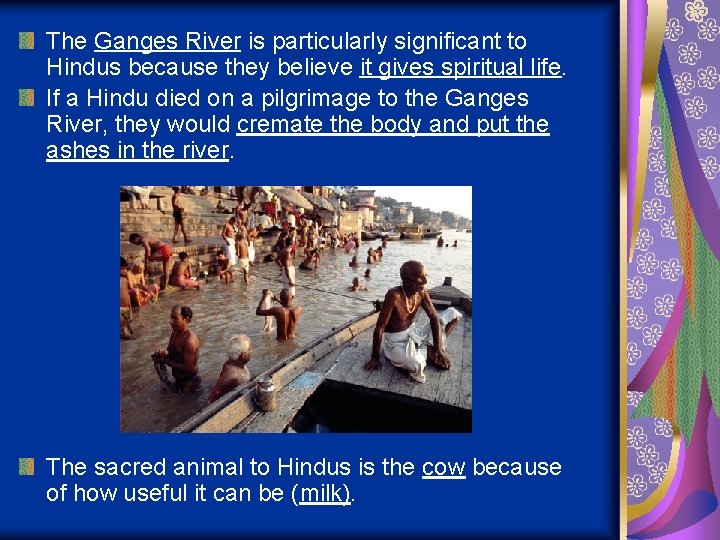
The Ganges River is particularly significant to Hindus because they believe it gives spiritual life. If a Hindu died on a pilgrimage to the Ganges River, they would cremate the body and put the ashes in the river. The sacred animal to Hindus is the cow because of how useful it can be (milk).
- Slides: 10