
Hinduism and Buddhism How are they Similar And
Hinduism and Buddhism How are they Similar And How are they Different
Hinduism: Main Ideas § Started in India § No founder and no church § Not just a religion, but a social structure. § Intertwined with all aspects of life. § Embraced the caste system.
Hinduism: CASTE SYSTEM Indian society developed into a complex system based on class. Castes are based on the idea that there are separate, different kinds of humans. Higher-caste people considered themselves purer and closer to “moksha. ”
Hinduism: CASTE RULES 1. Higher castes would become spiritually unclean if they had contact with lower castes. 2. Must marry from your same caste. 3. Occupations had their own castes and these were determined at birth. (Brahmin became cooks because they were the highest caste) 4. Each caste had its own council that enforced caste rules. 5. The caste system was deeply imbedded in law, custom and religious tradition, and the lower-caste (untouchables) accepted the view of their own unworthiness.
Hinduism: Beliefs § Each (god) is part of a supreme force called Brahman. § Brahman is a “triad”– one god w/ 3 persons § Brahma = creator § Vishnu = preserver § Shiva = destroyer § Every person has an essential self, or Atman. § Another name for the soul.
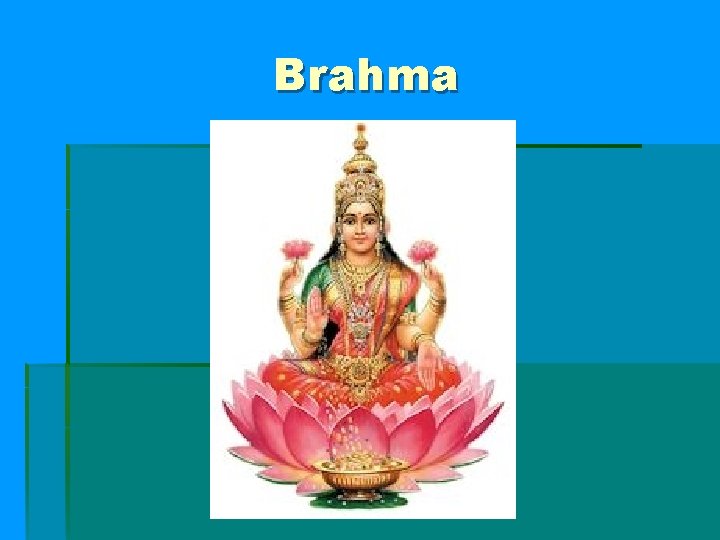
Brahma
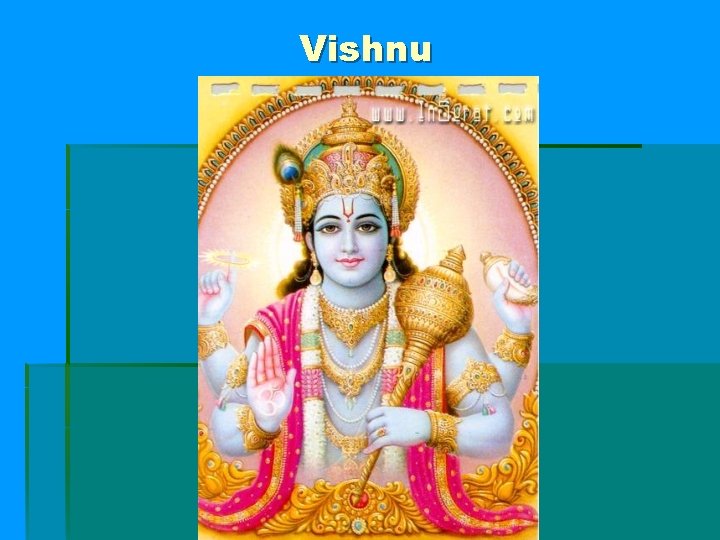
Vishnu
Modern Incarnation of Vishnu?
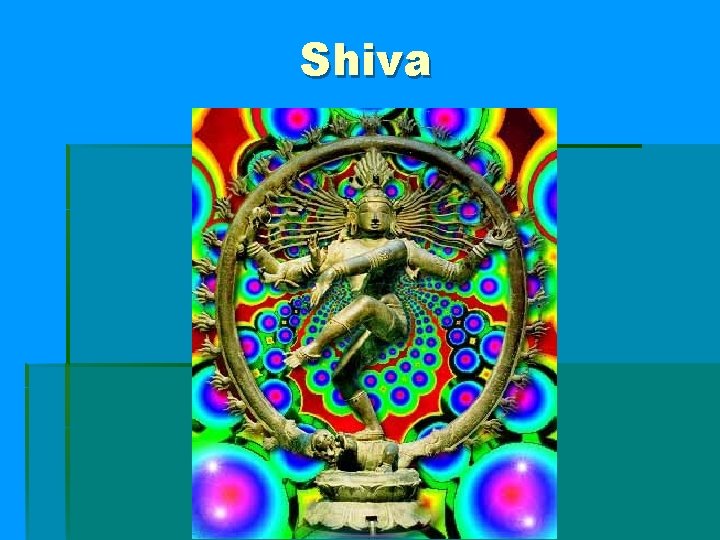
Shiva
Hinduism: Karma & Reincarnation § Karma: is the accumulated sum of ones good and bad deeds. § Determines how one will live in his/her next life. § Reincarnation: through pure acts one can be reborn at a higher level. § Bad deeds cause a person to be reborn at a lower level such as an animal.
Hinduism: § Each caste has its own dharma = duties and obligations. § The way things are- the rules that run the universe. § Hope to improve caste position for the next life by following dharma.
Hinduism: The Caste System § Castes in decreasing order: § Brahmins = priests & academics § Kshatriyas = rulers & military § Vaishyas = farmers, landlords & merchants § Sudras = peasants, servants, and workers in non-polluting jobs § Dalits = untouchables

Brahmins at Prayer
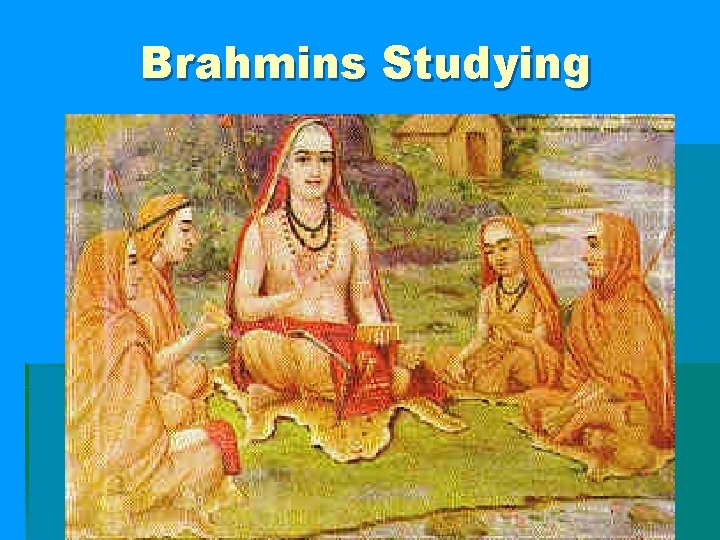
Brahmins Studying
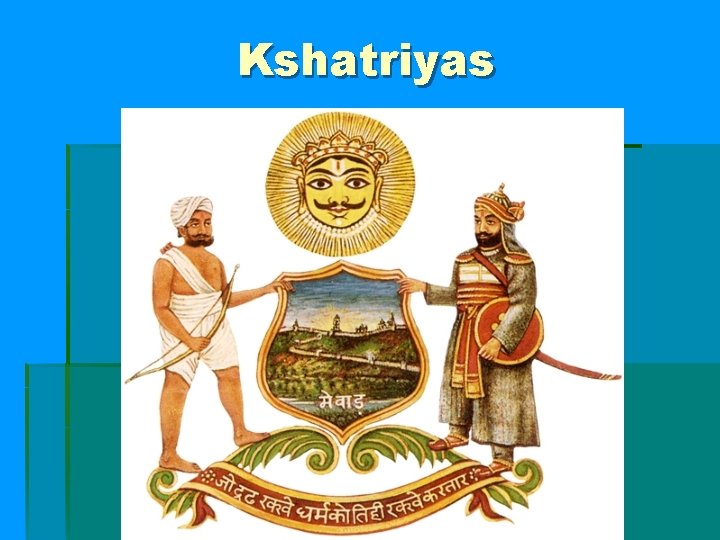
Kshatriyas
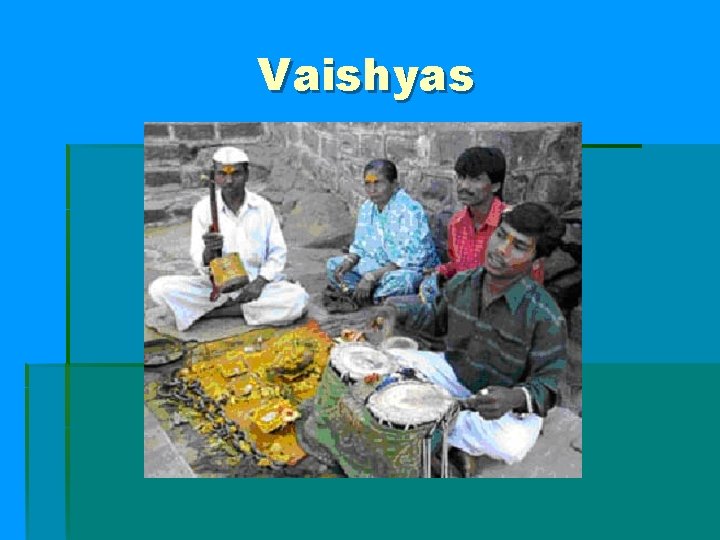
Vaishyas
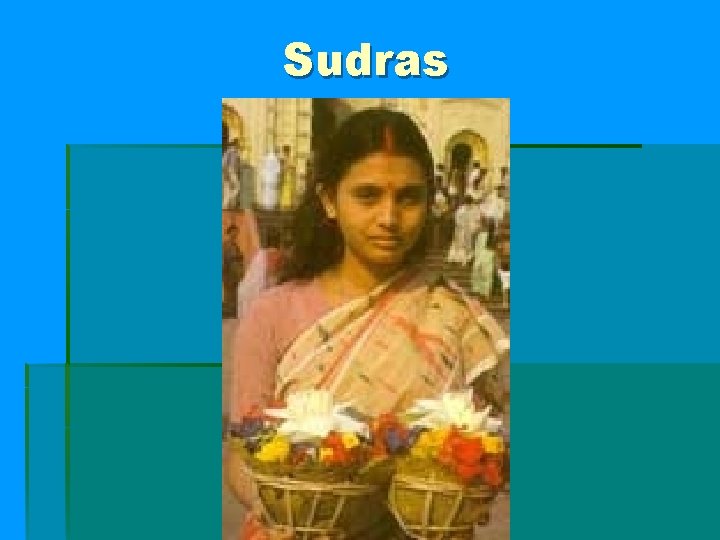
Sudras
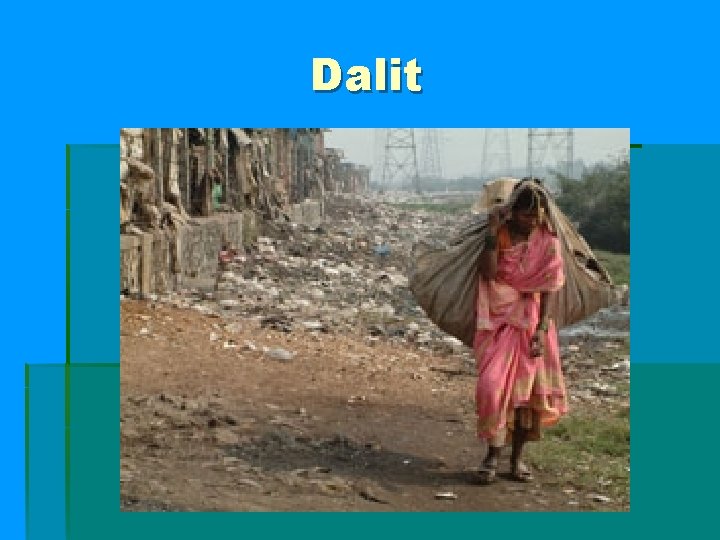
Dalit
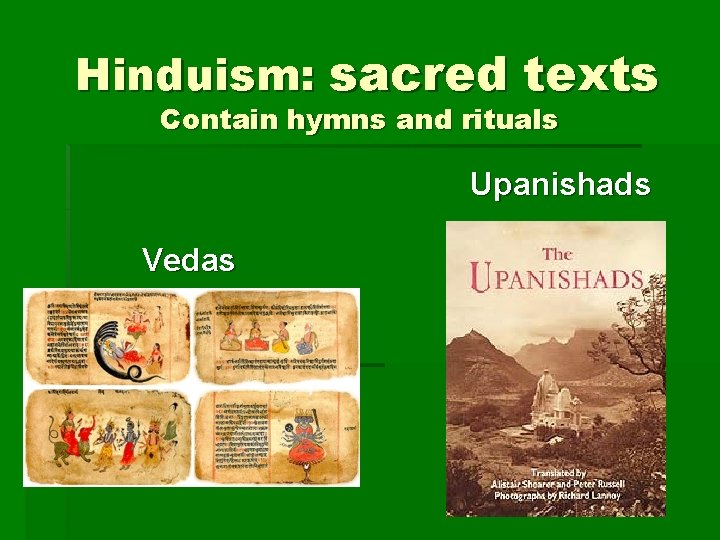
Hinduism: sacred texts Contain hymns and rituals Upanishads Vedas
Buddhism: Main Ideas § Started in Tibet and spread to China. § Gautama also known as Buddha or “Enlightened One. ” § Do not have any gods. § Priests were/are not necessary. § Buddha was a teacher. § Rejected the caste system.
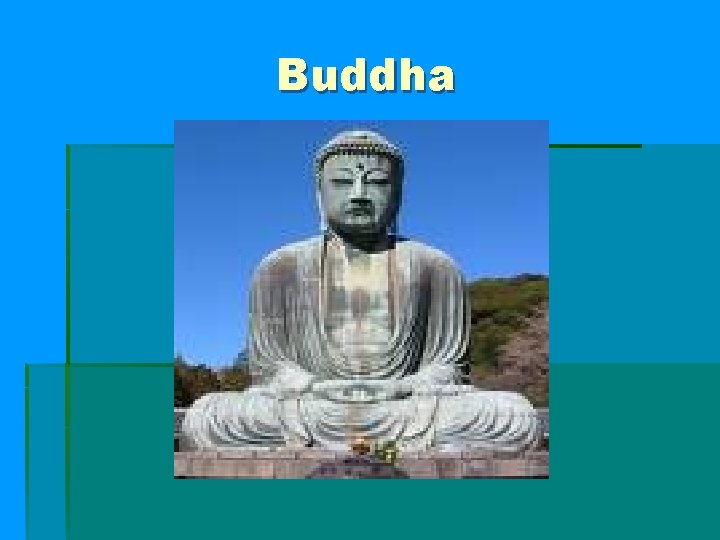
Buddha
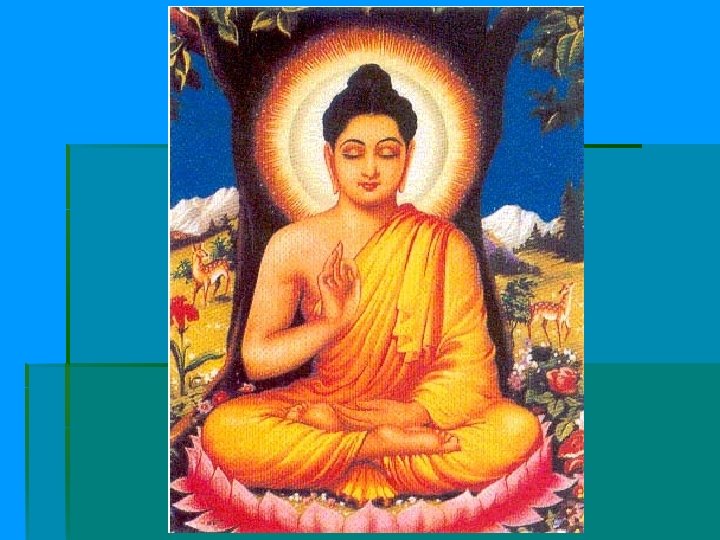
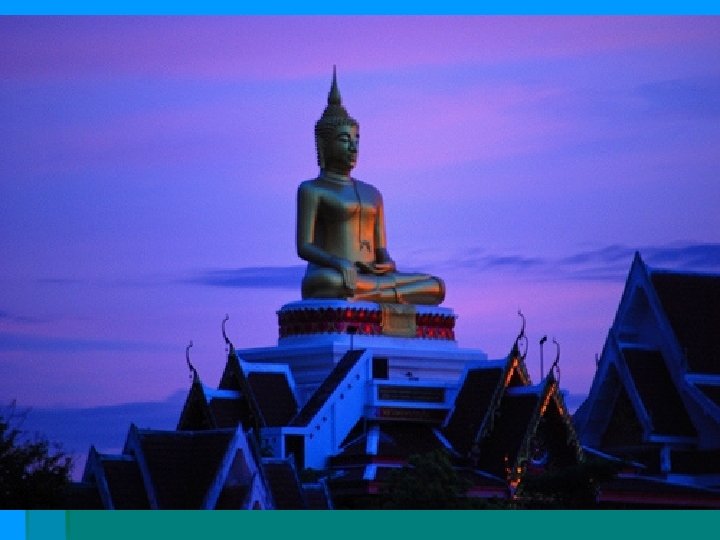
Buddhism: Gautama § Left his wife, child and luxurious lifestyle in order to seek truth. § He was determined to find a path to the state of Nirvana (a state of liberation and freedom from suffering). § A state of wanting nothing.
Buddhism: Attaining Enlightenment § One night (535 BC), while sitting under a ficus tree he experienced a major breakthrough. § Recalled all of his previous reincarnations § Saw how good and bad deeds lead to reincarnations § Learned that he had attained Nirvana and would never be reincarnated in a future life. § He had reached enlightenment!
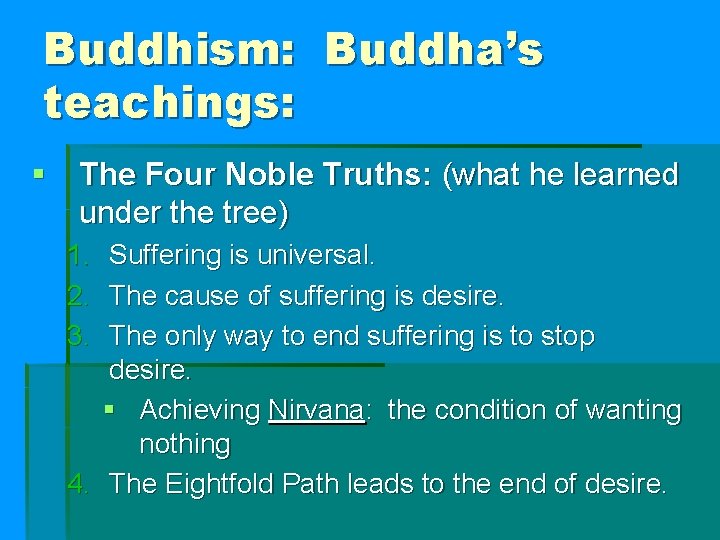
Buddhism: Buddha’s teachings: § The Four Noble Truths: (what he learned under the tree) 1. Suffering is universal. 2. The cause of suffering is desire. 3. The only way to end suffering is to stop desire. § Achieving Nirvana: the condition of wanting nothing 4. The Eightfold Path leads to the end of desire.
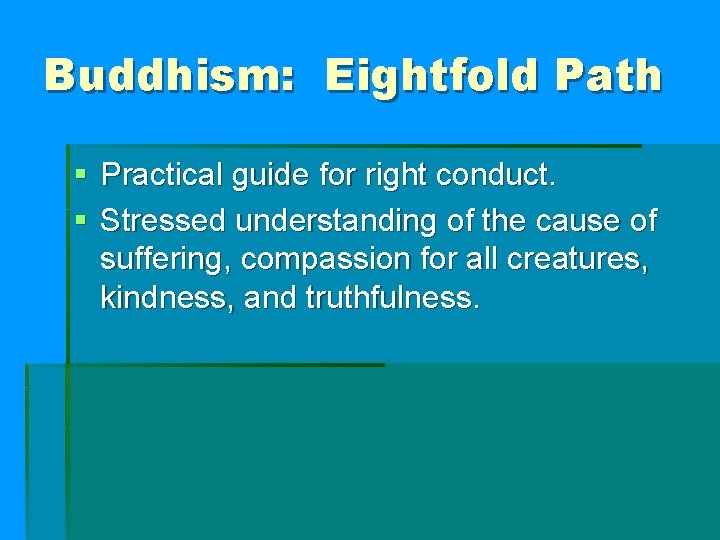
Buddhism: Eightfold Path § Practical guide for right conduct. § Stressed understanding of the cause of suffering, compassion for all creatures, kindness, and truthfulness.
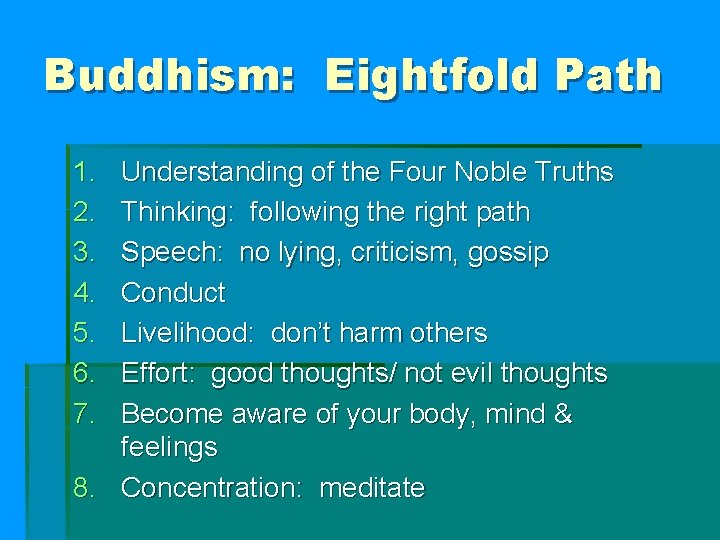
Buddhism: Eightfold Path 1. 2. 3. 4. 5. 6. 7. Understanding of the Four Noble Truths Thinking: following the right path Speech: no lying, criticism, gossip Conduct Livelihood: don’t harm others Effort: good thoughts/ not evil thoughts Become aware of your body, mind & feelings 8. Concentration: meditate
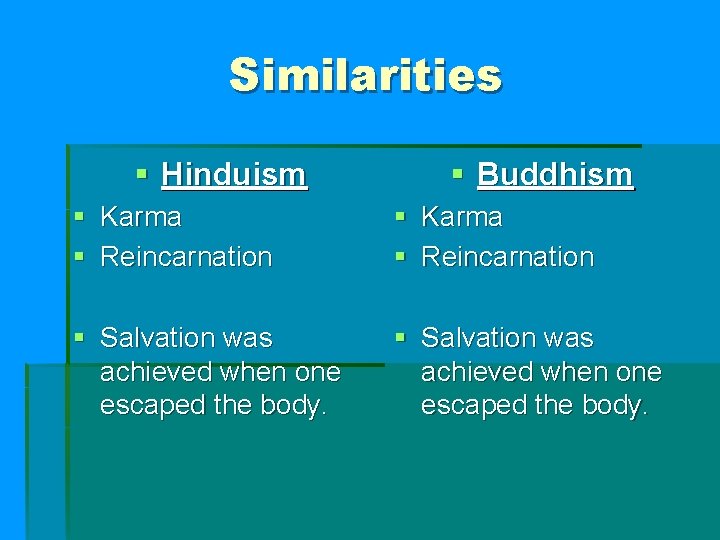
Similarities § Hinduism § Buddhism § Karma § Reincarnation § Salvation was achieved when one escaped the body.
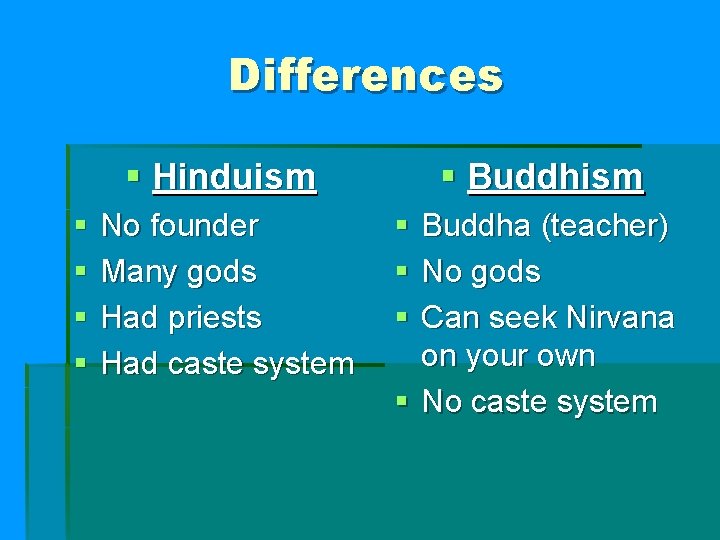
Differences § Hinduism § § No founder Many gods Had priests Had caste system § Buddhism § § § Buddha (teacher) No gods Can seek Nirvana on your own § No caste system
- Slides: 30