
Hindi Urdu Transliteration issues Rahmat Yousufzai and Amba
Hindi – Urdu Transliteration issues Rahmat Yousufzai and Amba Kulkarni
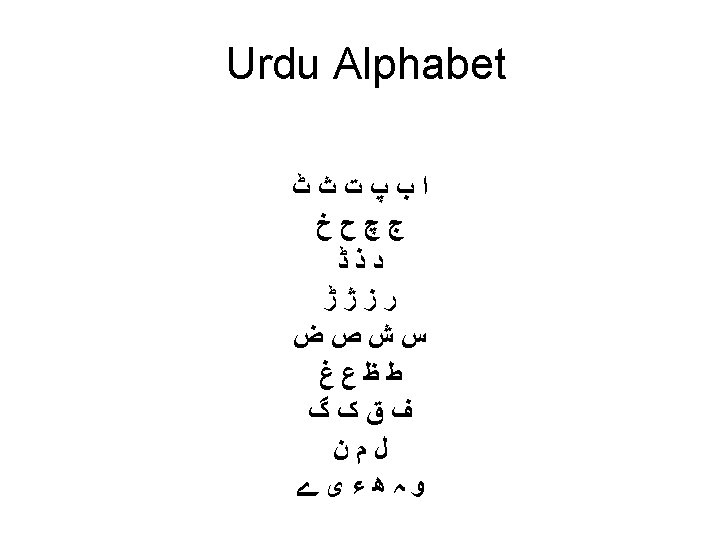
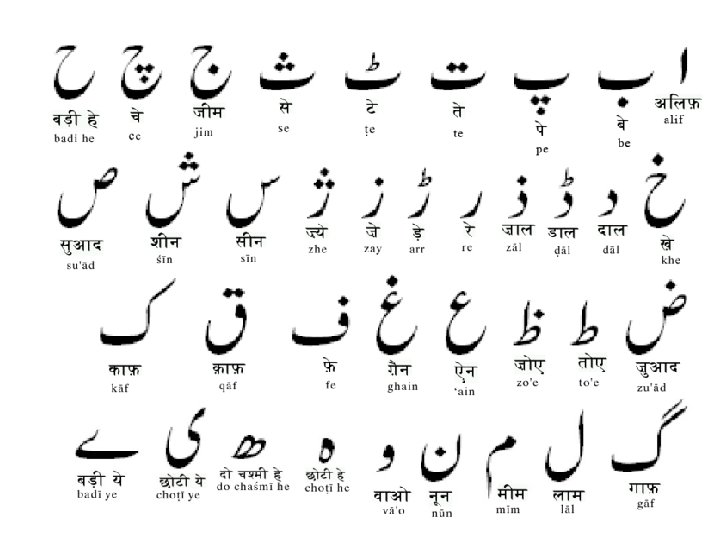
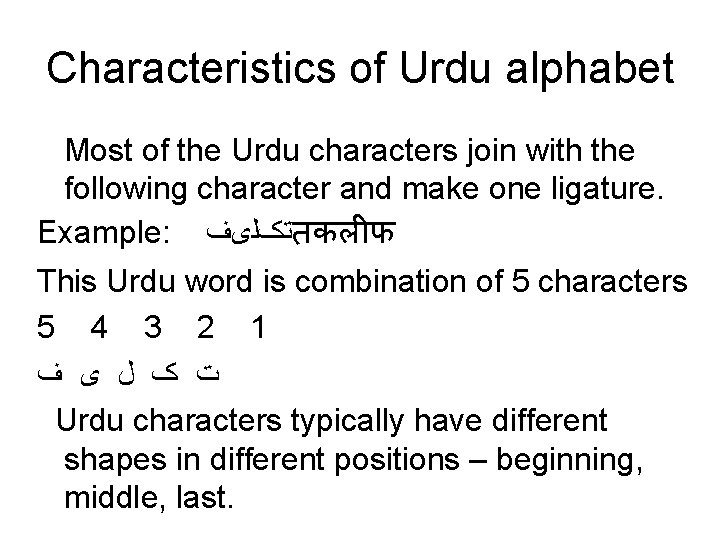
Characteristics of Urdu alphabet Most of the Urdu characters join with the following character and make one ligature. Example: ﺗکﻠیﻒ तकल फ This Urdu word is combination of 5 characters 5 4 3 2 1 ﺕ ک ﻝ ی ﻑ Urdu characters typically have different shapes in different positions – beginning, middle, last.
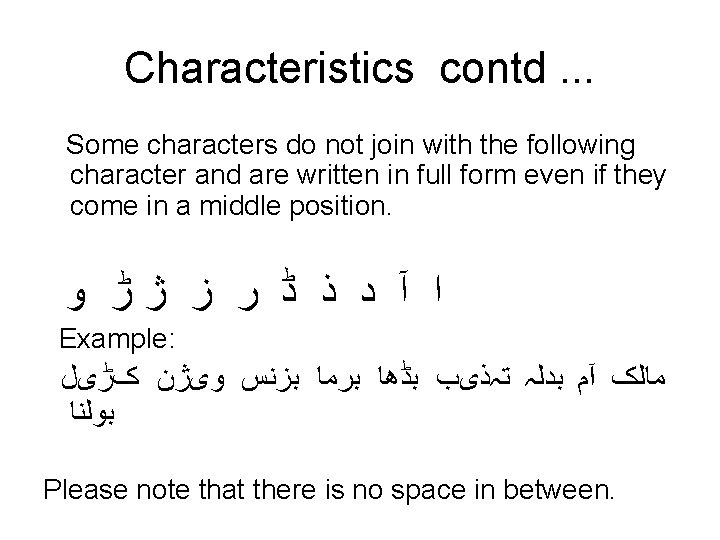
Characteristics contd. . . Some characters do not join with the following character and are written in full form even if they come in a middle position. ﺍ آ ﺩ ﺫ ڈ ﺭ ﺯ ژڑ ﻭ Example: ﻣﺎﻟک آﻢ ﺑﺪﻟہ ﺗہﺬیﺐ ﺑڈھﺎ ﺑﺮﻣﺎ ﺑﺰﻧﺲ ﻭیژﻦ کڑیﻞ ﺑﻮﻟﻨﺎ Please note that there is no space in between.
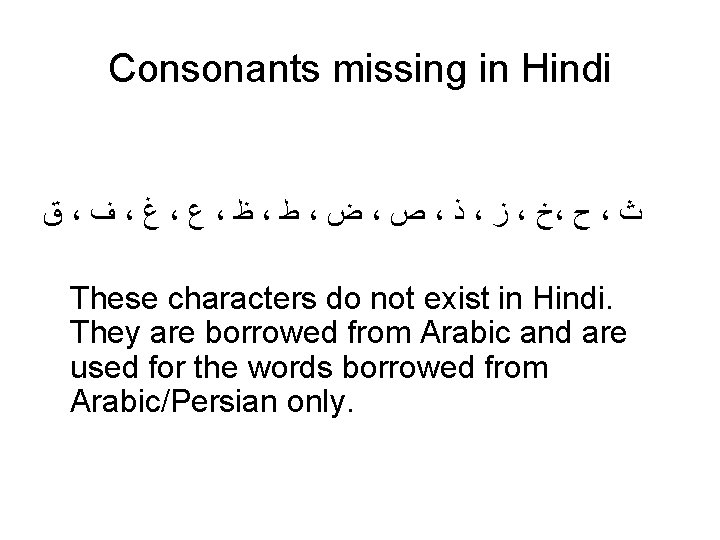
Consonants missing in Hindi ﻕ ، ﻑ ، ﻍ ، ﻉ ، ﻅ ، ﻁ ، ﺽ ، ﺹ ، ﺫ ، ﺯ ، ﺥ ، ﺡ ، ﺙ These characters do not exist in Hindi. They are borrowed from Arabic and are used for the words borrowed from Arabic/Persian only.
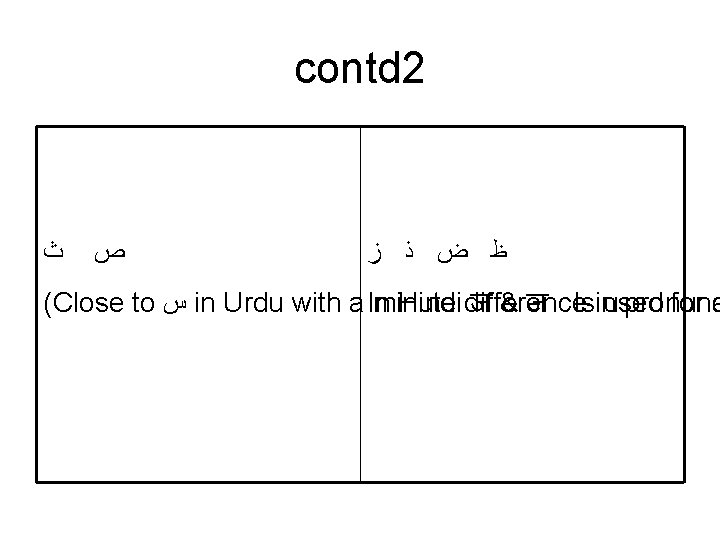
contd 2 ﺙ ﺹ ﻅ ﺽ ﺫ ﺯ (Close to ﺱ in Urdu with a In minute Hindi difference ज & ज Isinused pronunc for a
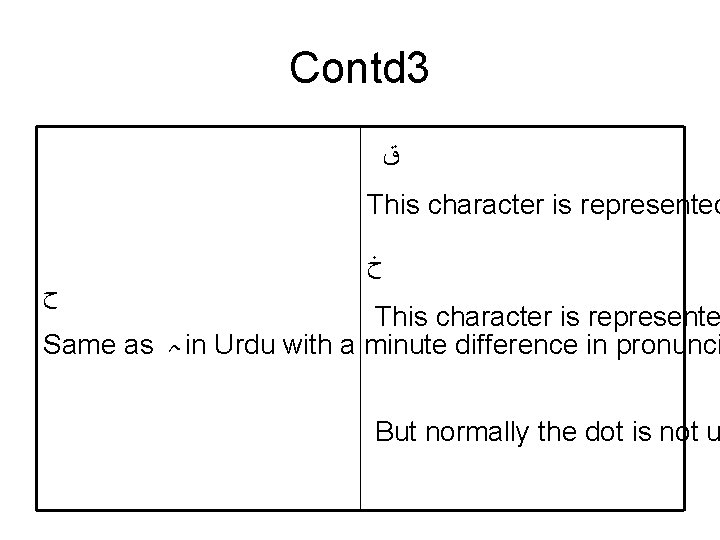
Contd 3 ﻕ This character is represented ﺡ ﺥ This character is represente Same as ہ in Urdu with a minute difference in pronunci But normally the dot is not u
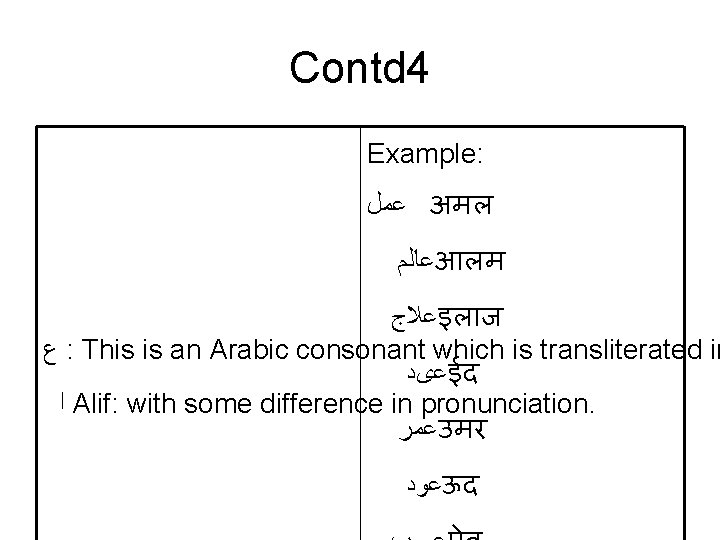
Contd 4 Example: ﻋﻤﻞ अमल ﻋﺎﻟﻢ आलम ﻋﻼﺝ इल ज ﻉ : This is an Arabic consonant which is transliterated in ﻋیﺪ ईद ﺍ Alif: with some difference in pronunciation. ﻋﻤﺮ उमर ﻋﻮﺩ ऊद
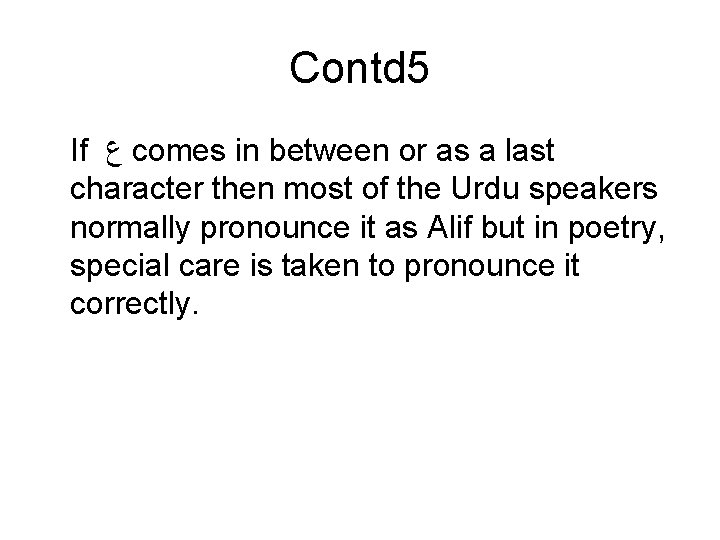
Contd 5 If ﻉ comes in between or as a last character then most of the Urdu speakers normally pronounce it as Alif but in poetry, special care is taken to pronounce it correctly.
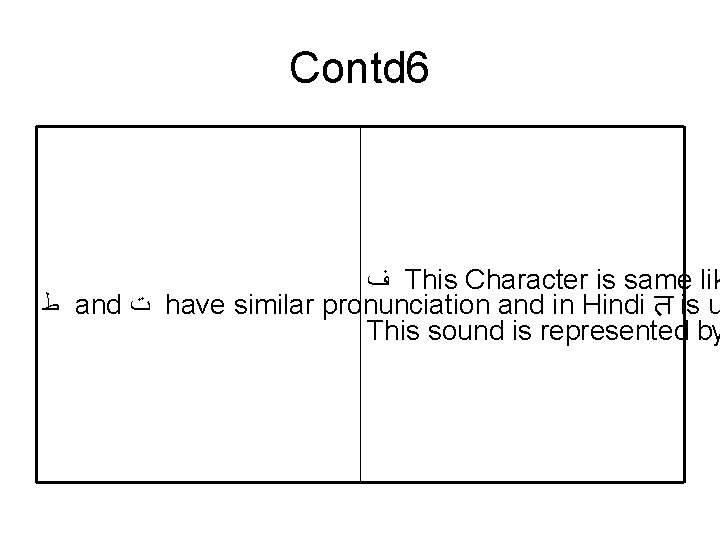
Contd 6 ﻑ This Character is same lik ﻁ and ﺕ have similar pronunciation and in Hindi त is u This sound is represented by
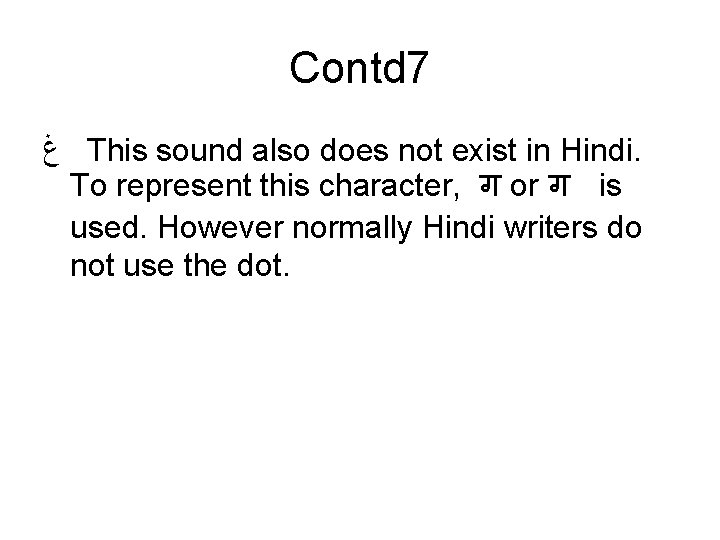
Contd 7 ﻍ This sound also does not exist in Hindi. To represent this character, ग or ग is used. However normally Hindi writers do not use the dot.
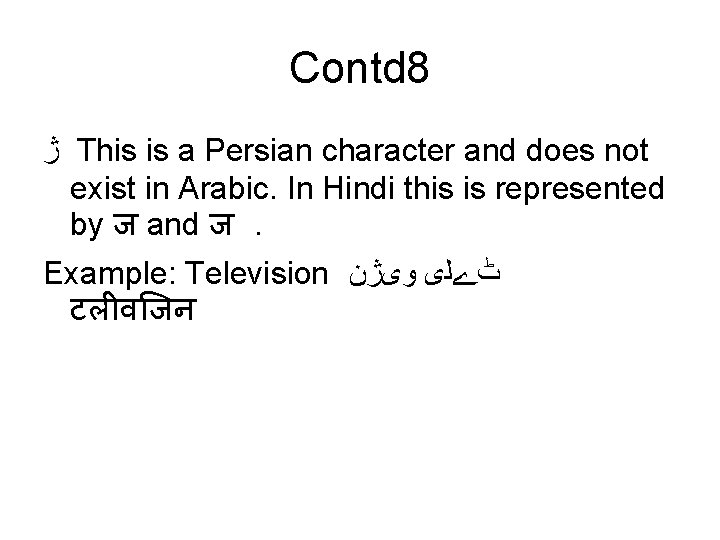
Contd 8 ژ This is a Persian character and does not exist in Arabic. In Hindi this is represented by ज and ज. Example: Television ٹےﻠی ﻭیژﻦ टल व जन

Contd 9 ھ This is Do-chashmi He and gives its sound only when joined with certain characters. An important point to be noted: Arabic has a character ( ھ do-chashmi he ). This character retains its shape only when it comes as first and middle position. In the last position it gets changed as ( ہ gola he ). Suggestion: For Urdu we should use ھ with unicode u 06 BE.
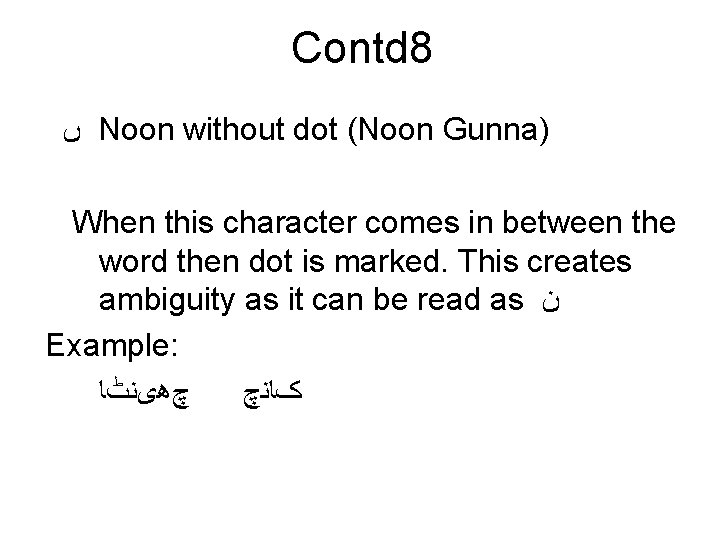
Contd 8 ں Noon without dot (Noon Gunna) When this character comes in between the word then dot is marked. This creates ambiguity as it can be read as ﻥ Example: چھیﻨٹﺎ کﺎﻧچ
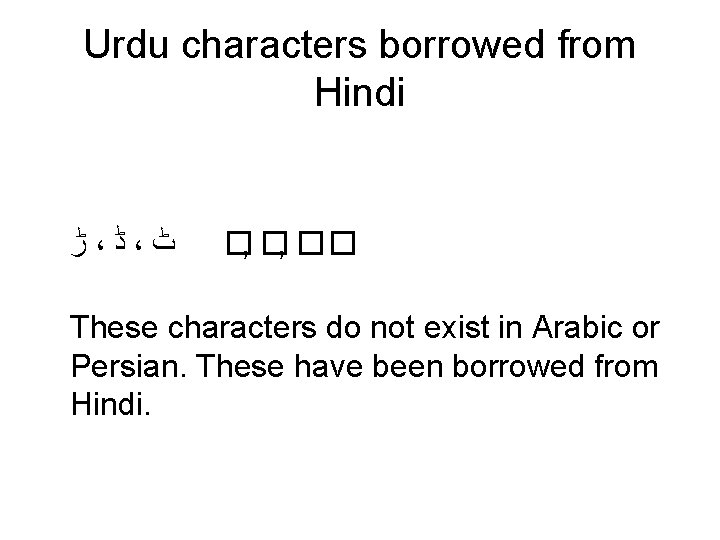
Urdu characters borrowed from Hindi ڑ ، ڈ ، ٹ �, �, �� These characters do not exist in Arabic or Persian. These have been borrowed from Hindi.

Certain Hindi characters representation in Urdu ، کھ ، گھ ، ﺟھ ، پھ چھ ، ﺑھ ، ﺩھ ، ﺗھ ، ، ڈھ ڑھ ، ٹھ �, �, �, �� , �, � These are the Hindi characters and are represented in Urdu by adding ( ھ Do. Chashmi He) to the initial character.
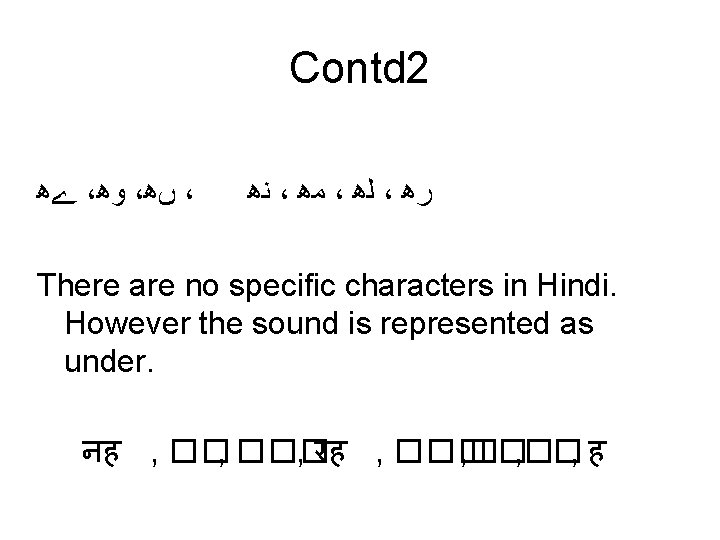
Contd 2 ےھ ، ﻭھ ، ںھ ، ﻧھ ، ﻣھ ، ﻟھ ، ﺭھ There are no specific characters in Hindi. However the sound is represented as under. नह , ��� , रह , ��� , ��, ह
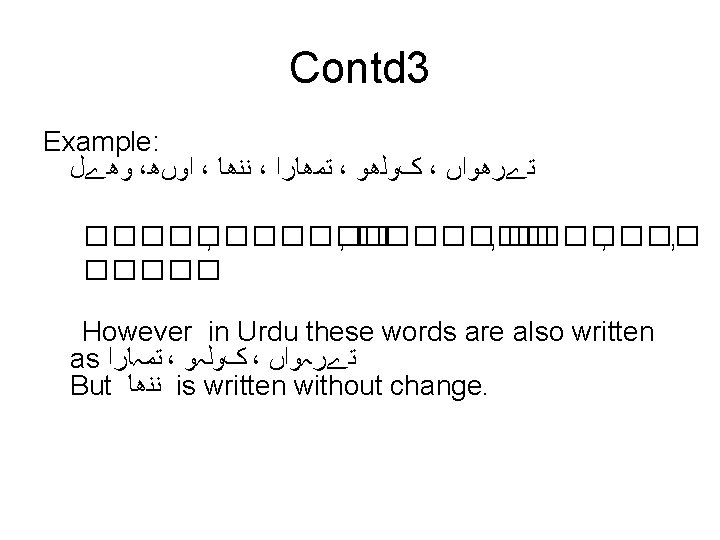
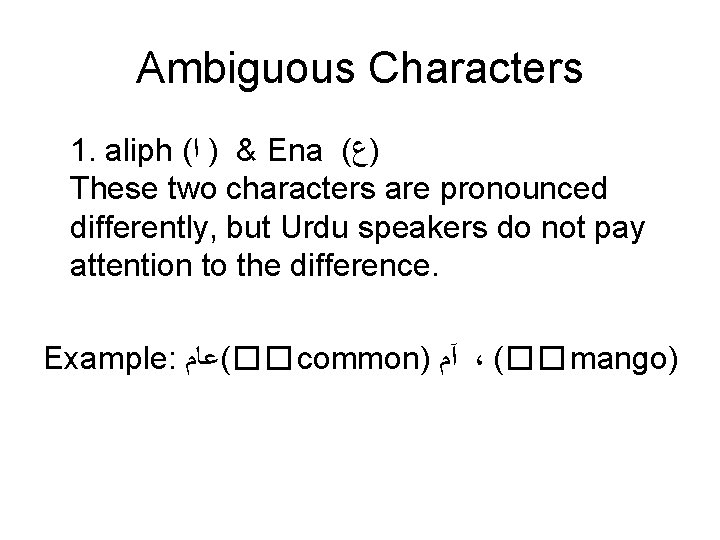
Ambiguous Characters 1. aliph ( & ) ﺍ Ena ( )ﻉ These two characters are pronounced differently, but Urdu speakers do not pay attention to the difference. Example: ��(ﻋﺎﻡ common) آﻢ ، (�� mango)
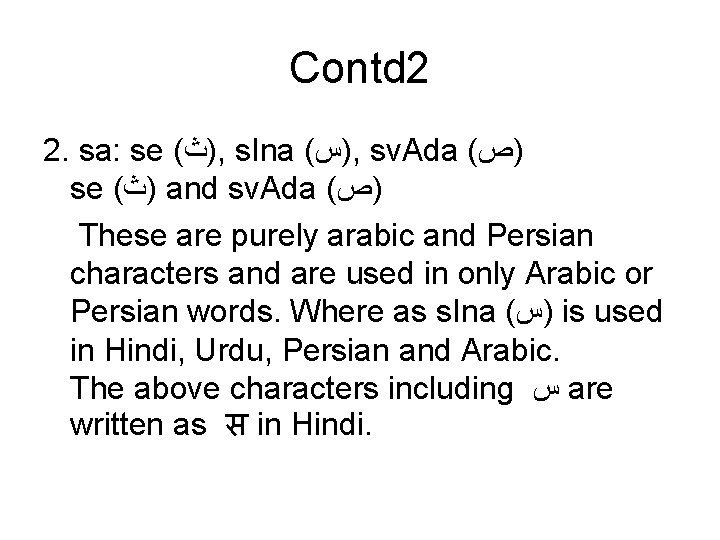
Contd 2 2. sa: se ( )ﺙ , s. Ina ( )ﺱ , sv. Ada ( )ﺹ se ( )ﺙ and sv. Ada ( )ﺹ These are purely arabic and Persian characters and are used in only Arabic or Persian words. Where as s. Ina ( )ﺱ is used in Hindi, Urdu, Persian and Arabic. The above characters including ﺱ are written as स in Hindi.
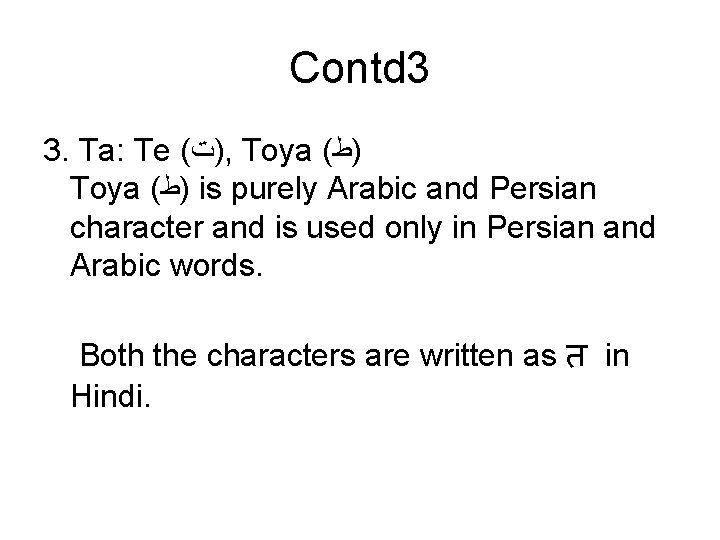
Contd 3 3. Ta: Te ( )ﺕ , Toya ( )ﻁ is purely Arabic and Persian character and is used only in Persian and Arabic words. Both the characters are written as त in Hindi.
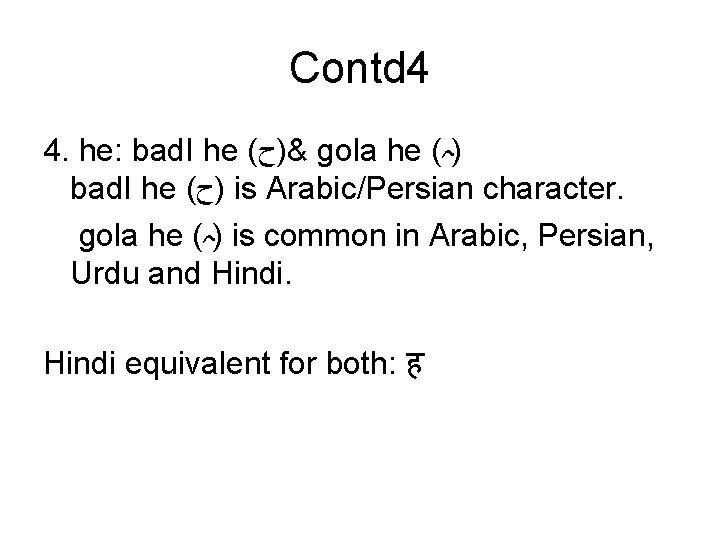
Contd 4 4. he: bad. I he ( &)ﺡ gola he ( )ہ bad. I he ( )ﺡ is Arabic/Persian character. gola he ( )ہ is common in Arabic, Persian, Urdu and Hindi equivalent for both: ह
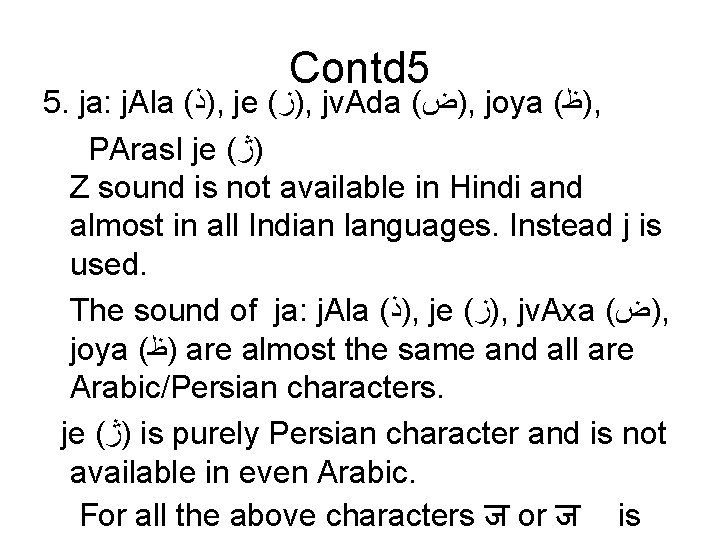
Contd 5 5. ja: j. Ala ( )ﺫ , je ( )ﺯ , jv. Ada ( )ﺽ , joya ( )ﻅ , PAras. I je ( )ژ Z sound is not available in Hindi and almost in all Indian languages. Instead j is used. The sound of ja: j. Ala ( )ﺫ , je ( )ﺯ , jv. Axa ( )ﺽ , joya ( )ﻅ are almost the same and all are Arabic/Persian characters. je ( )ژ is purely Persian character and is not available in even Arabic. For all the above characters ज or ज is
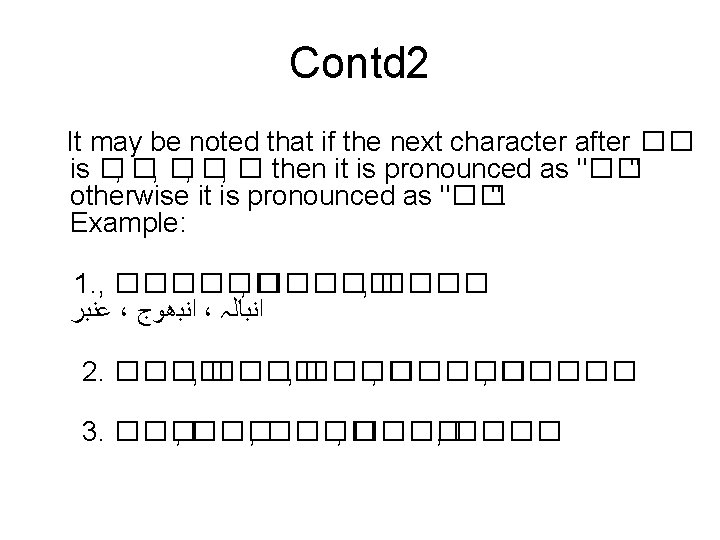
Contd 2 It may be noted that if the next character after �� is �, �, � then it is pronounced as "��" otherwise it is pronounced as "�� ". Example: 1. , ������ , ���� ﻋﻨﺒﺮ ، ﺍﻧﺒھﻮﺝ ، ﺍﻧﺒﺎﻟہ 2. ���� , ����� 3. ��� , ����
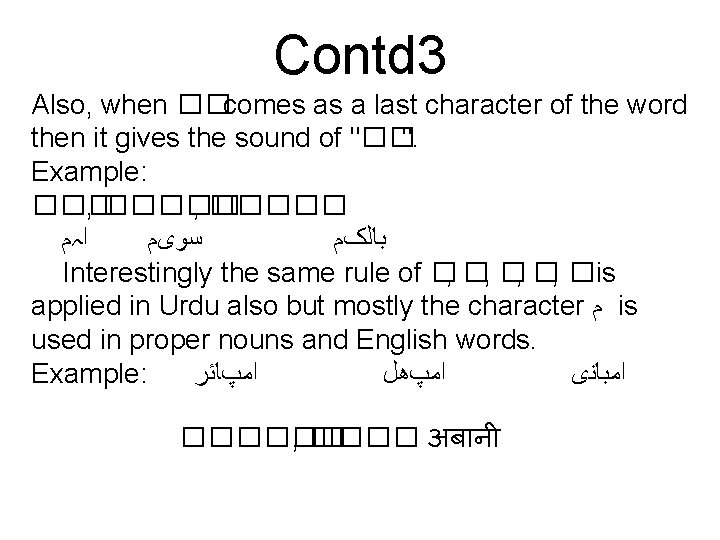
Contd 3 Also, when ��comes as a last character of the word then it gives the sound of "��". Example: ��� , ����� ﺍہﻢ ﺳﻮیﻢ ﺑﺎﻟکﻢ Interestingly the same rule of �, �, �is applied in Urdu also but mostly the character ﻡ is used in proper nouns and English words. Example: ﺍﻣپﺎﺋﺮ ﺍﻣپھﻞ ﺍﻣﺒﺎﻧی ������ , ���� अब न
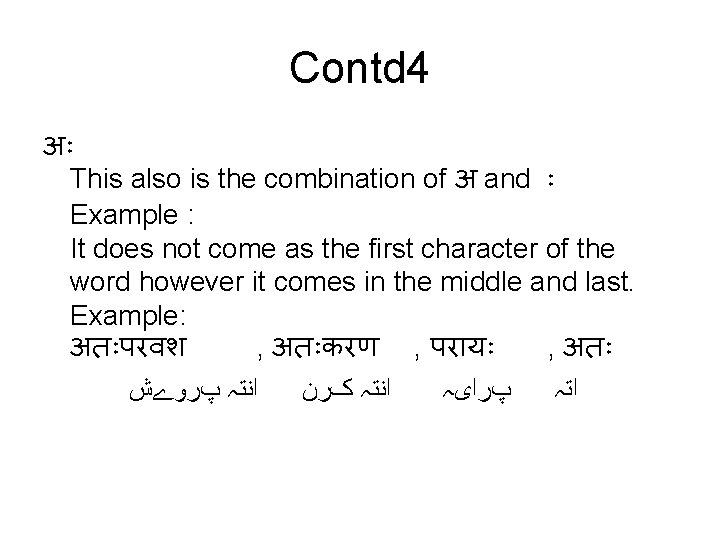
Contd 4 अ This also is the combination of अ and Example : It does not come as the first character of the word however it comes in the middle and last. Example: अत परवश , अत करण , पर य , अत ﺍﻧﺘہ پﺮﻭےﺶ ﺍﻧﺘہ کﺮﻥ پﺮﺍیہ ﺍﺗہ
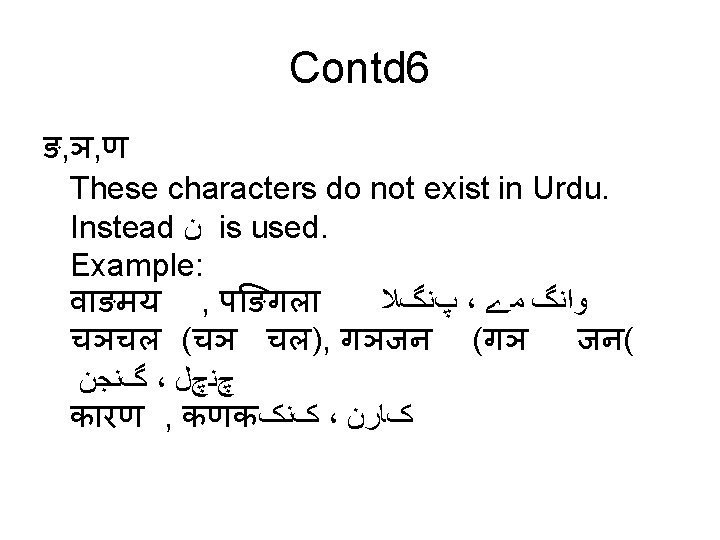
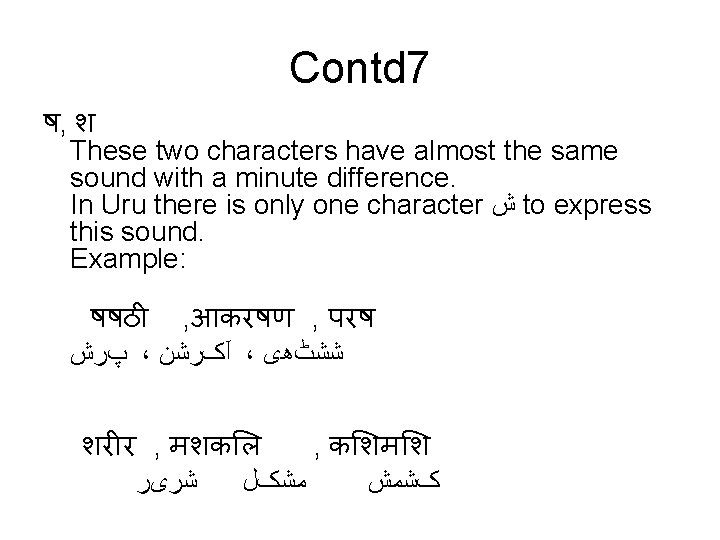
Contd 7 ष, श These two characters have almost the same sound with a minute difference. In Uru there is only one character ﺵ to express this sound. Example: षषठ , आकरषण , परष پﺮﺵ ، آکﺮﺷﻦ ، ﺷﺸٹھی शर र , मशक ल , क शम श ﺷﺮیﺮ ﻣﺸکﻞ کﺸﻤﺶ
Diacritic marks in Urdu In Urdu, there are no Matras like Hindi. Urdu has some diacritic marks but uses them only in elementary books.
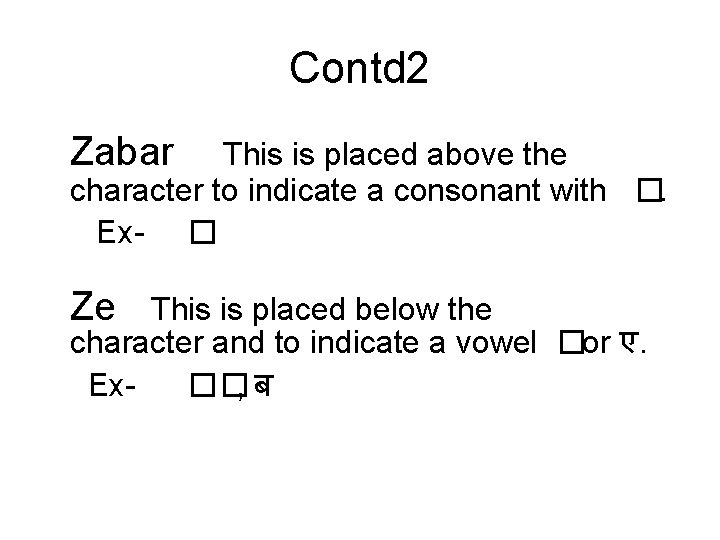
Contd 2 Zabar This is placed above the character to indicate a consonant with �. Ex- � Ze This is placed below the character and to indicate a vowel �or ए. Ex��, ब
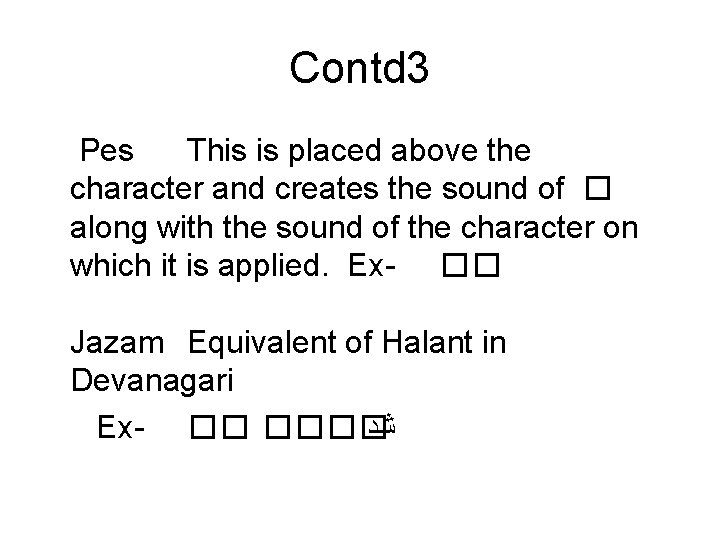
Contd 3 Pes This is placed above the character and creates the sound of � along with the sound of the character on which it is applied. Ex- �� Jazam Equivalent of Halant in Devanagari Ex- �� ���� ﺷﺩ
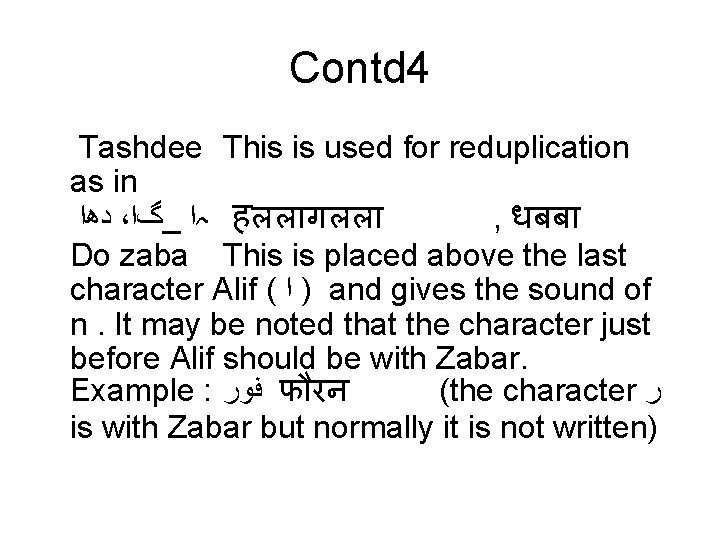
Contd 4 Tashdee This is used for reduplication as in ﺩھﺍ ، ہﺍ _گﺍ हलल गलल , धबब Do zaba This is placed above the last character Alif ( ) ﺍ and gives the sound of n. It may be noted that the character just before Alif should be with Zabar. Example : ﻓﻮﺭ फ रन (the character ﺭ is with Zabar but normally it is not written)
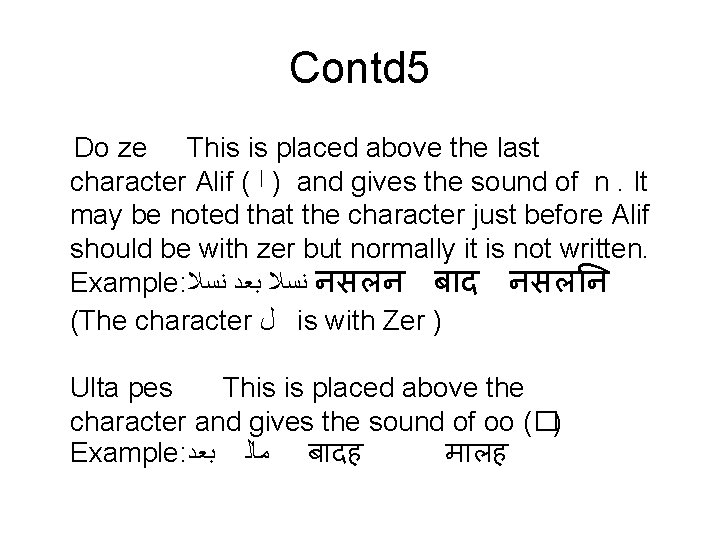
Contd 5 Do ze This is placed above the last character Alif ( ) ﺍ and gives the sound of n. It may be noted that the character just before Alif should be with zer but normally it is not written. Example: ﻧﺴﻼ ﺑﻌﺪ ﻧﺴﻼ नसलन ब द नसल न (The character ﻝ is with Zer ) Ulta pes This is placed above the character and gives the sound of oo (�) Example: ﻣﺎﻟ ﺑﻌﺪ ब दह म लह
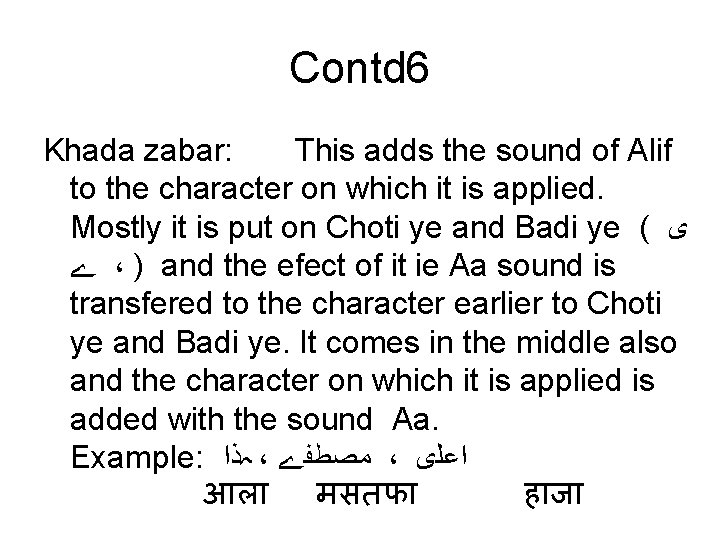
Contd 6 Khada zabar: This adds the sound of Alif to the character on which it is applied. Mostly it is put on Choti ye and Badi ye ( ی ے ، ) and the efect of it ie Aa sound is transfered to the character earlier to Choti ye and Badi ye. It comes in the middle also and the character on which it is applied is added with the sound Aa. Example: ہﺫﺍ ، ﻣﺼﻄﻔے ، ﺍﻋﻠی आल मसतफ ह ज
Contd 7 Other Diacritic marks are pesh and khada zer.
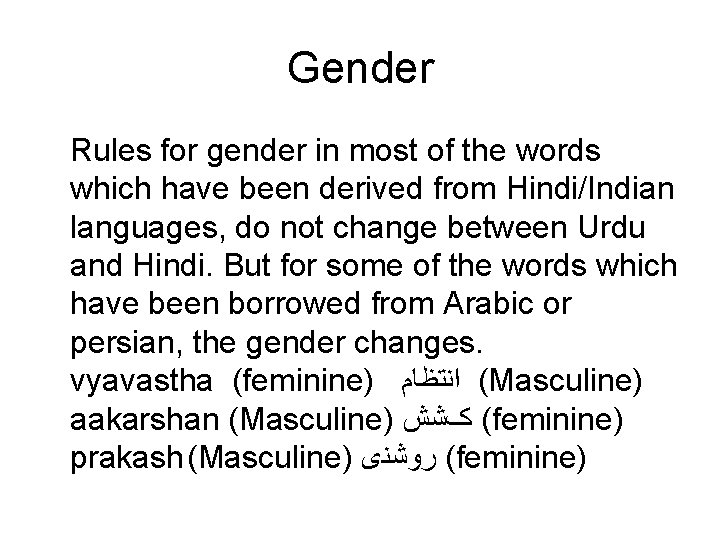
Gender Rules for gender in most of the words which have been derived from Hindi/Indian languages, do not change between Urdu and Hindi. But for some of the words which have been borrowed from Arabic or persian, the gender changes. vyavastha (feminine) ( ﺍﻧﺘﻈﺎﻡ Masculine) aakarshan (Masculine) ( کﺸﺶ feminine) prakash(Masculine) ( ﺭﻭﺷﻨی feminine)
Compound Words In Urdu two words are joined together. ( Same as in English where Apostrophe is used to join the words and Apostrophe gives the sense of "of"). In Urdu, the words are joined by "Izaafat". There are three types of Izaafat.
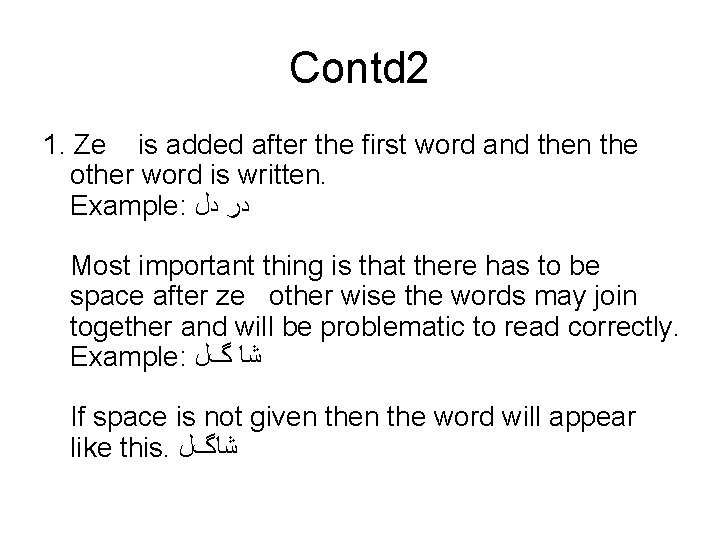
Contd 2 1. Ze is added after the first word and then the other word is written. Example: ﺩﺭ ﺩﻝ Most important thing is that there has to be space after ze other wise the words may join together and will be problematic to read correctly. Example: ﺷﺎ گﻞ If space is not given the word will appear like this. ﺷﺎگﻞ
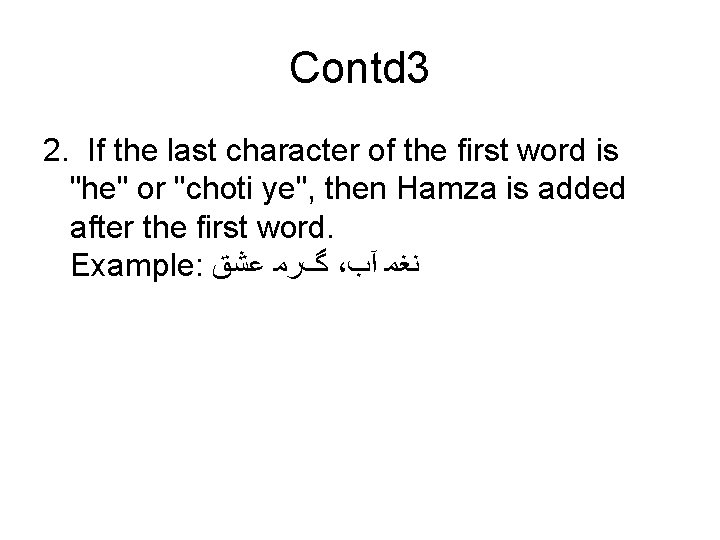
Contd 3 2. If the last character of the first word is "he" or "choti ye", then Hamza is added after the first word. Example: گﺮﻣ ﻋﺸﻖ ، ﻧﻐﻤ آﺐ
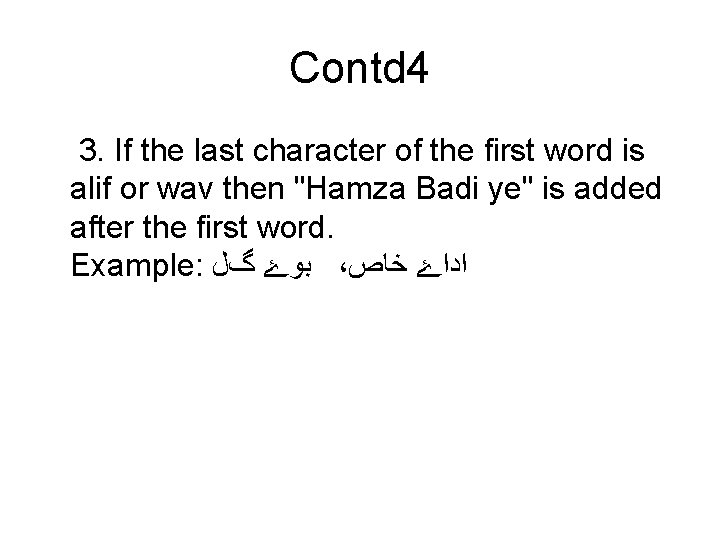
Contd 4 3. If the last character of the first word is alif or wav then "Hamza Badi ye" is added after the first word. Example: ﺑﻮۓ گﻞ ، ﺍﺩﺍۓ ﺧﺎﺹ
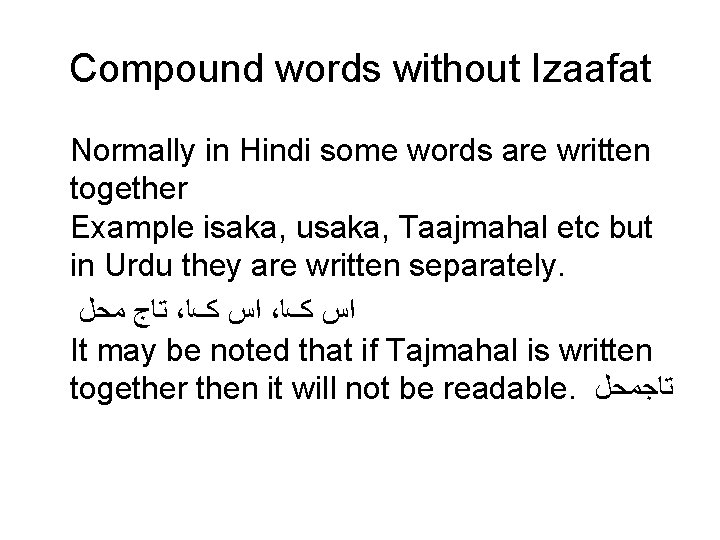
Compound words without Izaafat Normally in Hindi some words are written together Example isaka, usaka, Taajmahal etc but in Urdu they are written separately. ﺗﺎﺝ ﻣﺤﻞ ، ﺍﺱ کﺎ It may be noted that if Tajmahal is written together then it will not be readable. ﺗﺎﺟﻤﺤﻞ
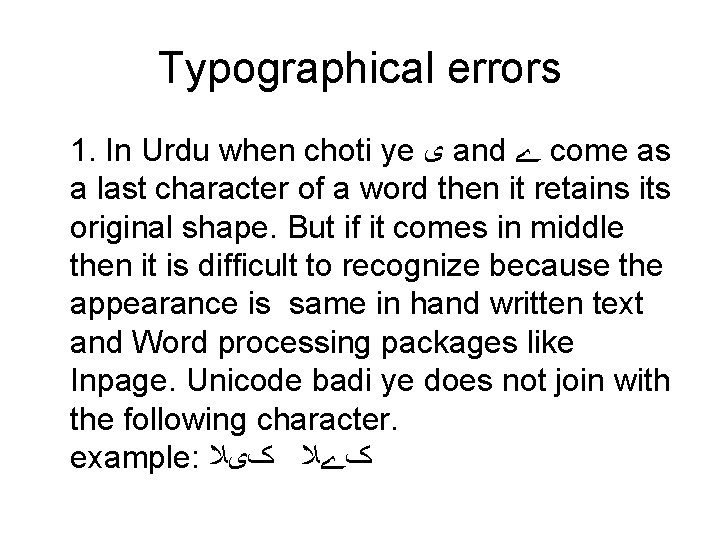
Typographical errors 1. In Urdu when choti ye ی and ے come as a last character of a word then it retains its original shape. But if it comes in middle then it is difficult to recognize because the appearance is same in hand written text and Word processing packages like Inpage. Unicode badi ye does not join with the following character. example: کےﻼ کیﻼ
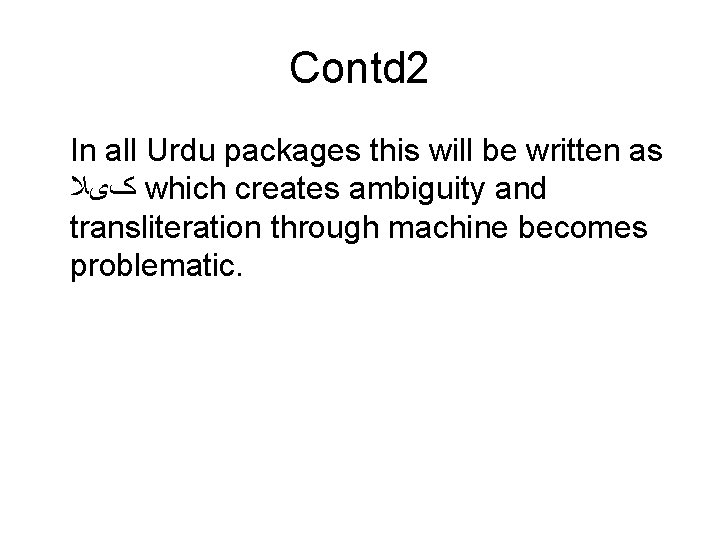
Contd 2 In all Urdu packages this will be written as کیﻼ which creates ambiguity and transliteration through machine becomes problematic.
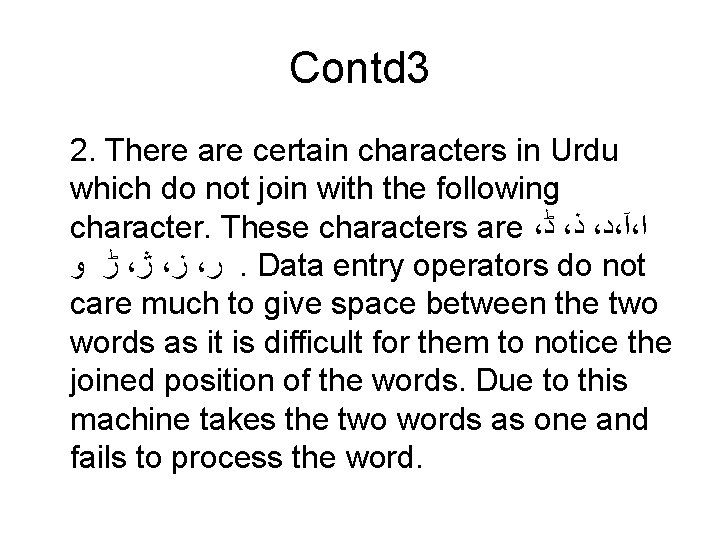
Contd 3 2. There are certain characters in Urdu which do not join with the following character. These characters are ، ڈ ، ﺫ ، ﺩ ، آ ، ﺍ ڑ ﻭ ، ژ ، ﺯ ، ﺭ. Data entry operators do not care much to give space between the two words as it is difficult for them to notice the joined position of the words. Due to this machine takes the two words as one and fails to process the word.
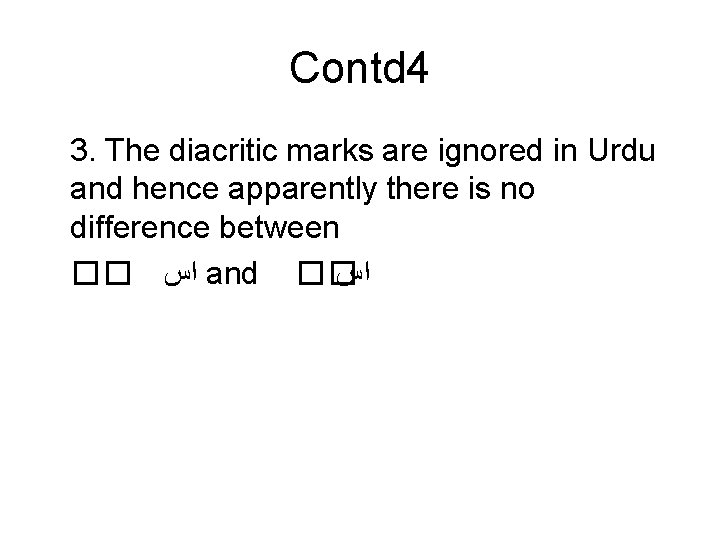
Contd 4 3. The diacritic marks are ignored in Urdu and hence apparently there is no difference between �� ﺍﺱ and �� ﺍﺱ
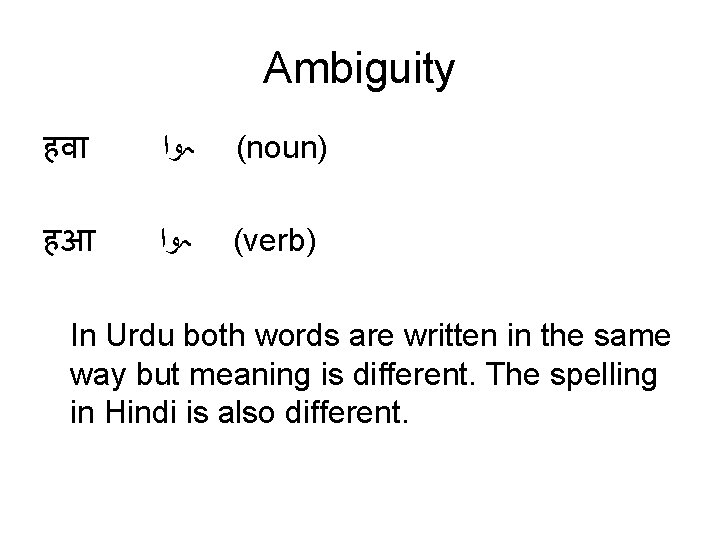
Ambiguity हव ہﻮﺍ (noun) हआ ہﻮﺍ (verb) In Urdu both words are written in the same way but meaning is different. The spelling in Hindi is also different.
- Slides: 48