
Hills Like White Elephants by Ernest Hemingway Author
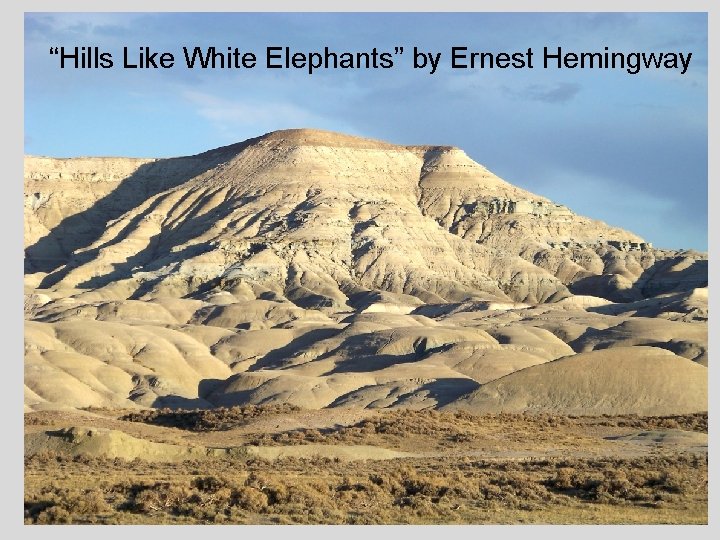
“Hills Like White Elephants” by Ernest Hemingway
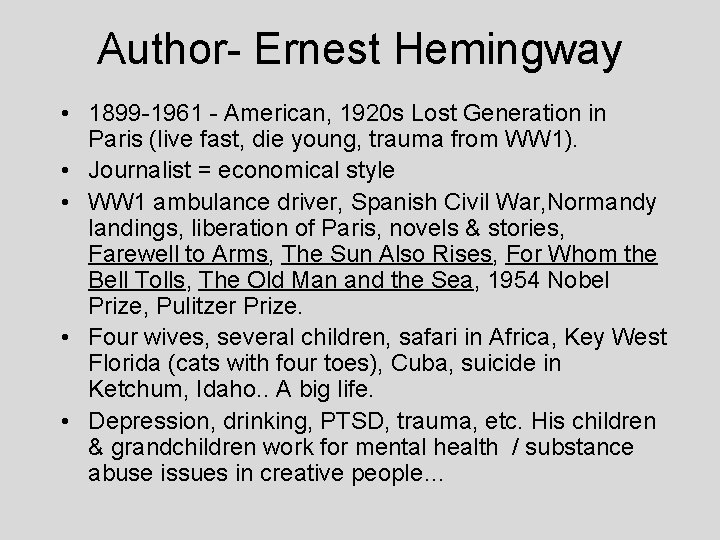
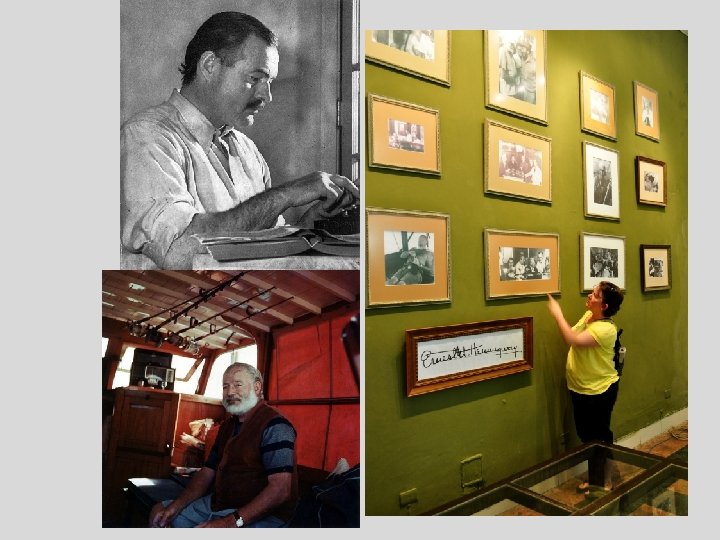
Author- Ernest Hemingway • 1899 -1961 - American, 1920 s Lost Generation in Paris (live fast, die young, trauma from WW 1). • Journalist = economical style • WW 1 ambulance driver, Spanish Civil War, Normandy landings, liberation of Paris, novels & stories, Farewell to Arms, The Sun Also Rises, For Whom the Bell Tolls, The Old Man and the Sea, 1954 Nobel Prize, Pulitzer Prize. • Four wives, several children, safari in Africa, Key West Florida (cats with four toes), Cuba, suicide in Ketchum, Idaho. . A big life. • Depression, drinking, PTSD, trauma, etc. His children & grandchildren work for mental health / substance abuse issues in creative people…
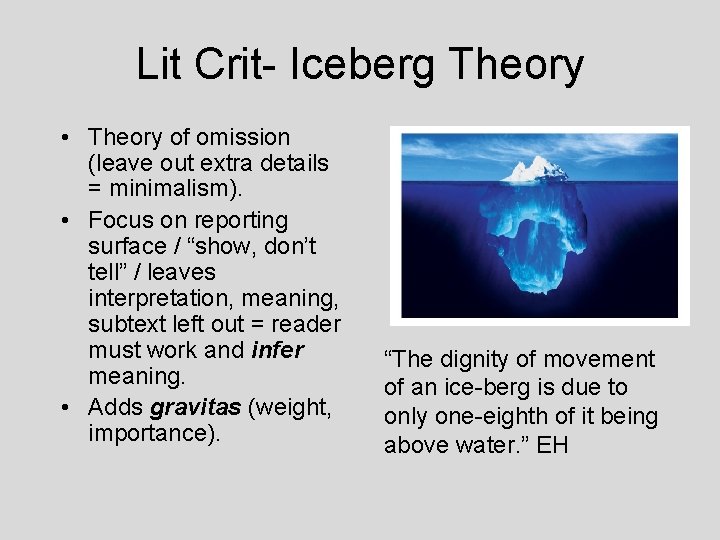
Lit Crit- Iceberg Theory • Theory of omission (leave out extra details = minimalism). • Focus on reporting surface / “show, don’t tell” / leaves interpretation, meaning, subtext left out = reader must work and infer meaning. • Adds gravitas (weight, importance). “The dignity of movement of an ice-berg is due to only one-eighth of it being above water. ” EH
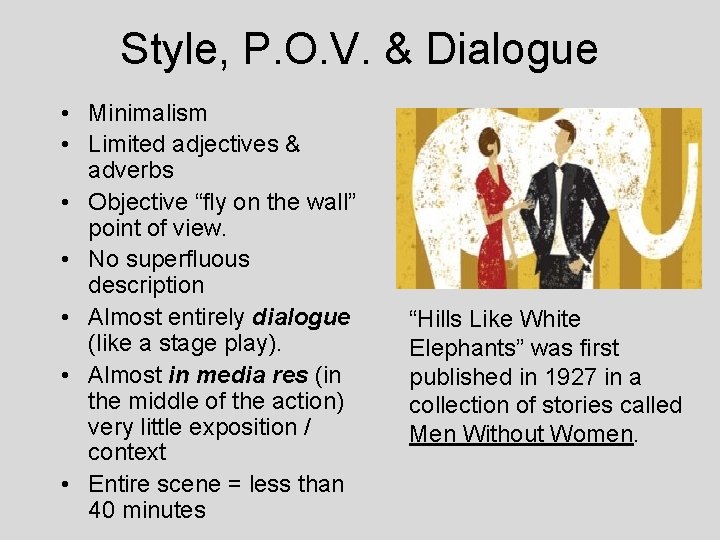
Style, P. O. V. & Dialogue • Minimalism • Limited adjectives & adverbs • Objective “fly on the wall” point of view. • No superfluous description • Almost entirely dialogue (like a stage play). • Almost in media res (in the middle of the action) very little exposition / context • Entire scene = less than 40 minutes “Hills Like White Elephants” was first published in 1927 in a collection of stories called Men Without Women.
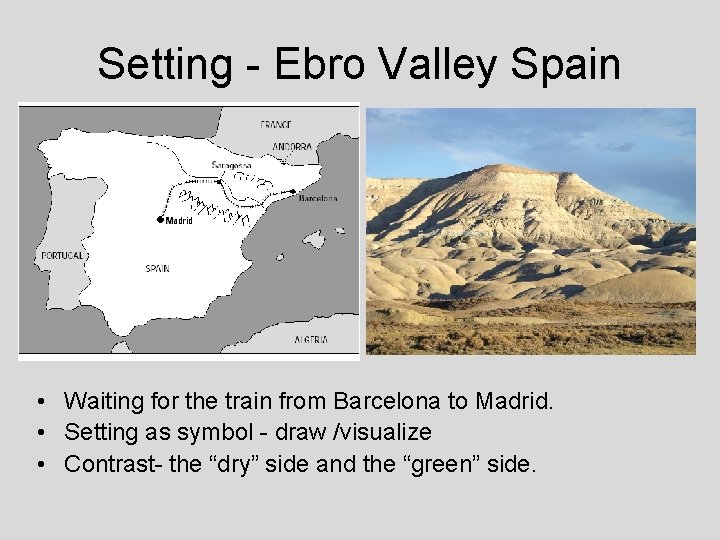
Setting - Ebro Valley Spain • Waiting for the train from Barcelona to Madrid. • Setting as symbol - draw /visualize • Contrast- the “dry” side and the “green” side.
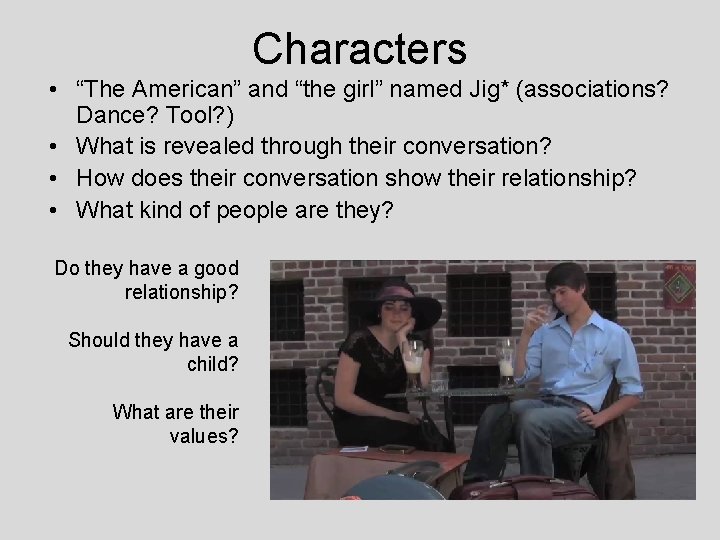
Characters • “The American” and “the girl” named Jig* (associations? Dance? Tool? ) • What is revealed through their conversation? • How does their conversation show their relationship? • What kind of people are they? Do they have a good relationship? Should they have a child? What are their values?
Symbolism & Motif • SYMBOL = concrete object that represents something else. • MOTIF = recurring image or idea (look for repetition). • The title, recurring references, and visual imagery help to build the symbol & motif. • Multi-layered public and private symbols. • Leads you towards the THEME. • Break the whole thing apart= • White elephant • Hills • Travel • Bamboo curtains • Drinking - Anis del Toro & beer • Train & tracks • Baggage / luggage • Operation • Relationship • communication
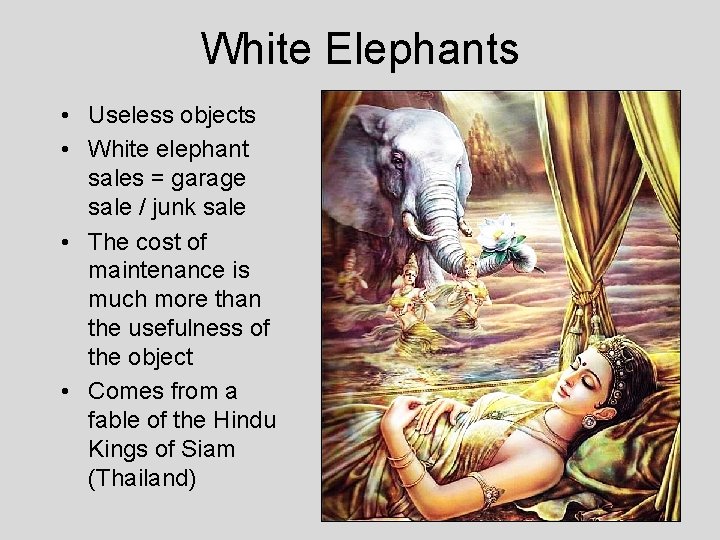
White Elephants • Useless objects • White elephant sales = garage sale / junk sale • The cost of maintenance is much more than the usefulness of the object • Comes from a fable of the Hindu Kings of Siam (Thailand)
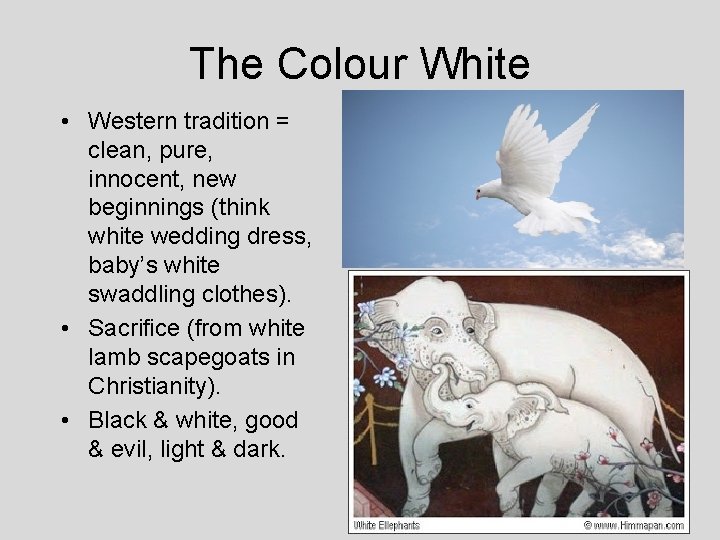
The Colour White • Western tradition = clean, pure, innocent, new beginnings (think white wedding dress, baby’s white swaddling clothes). • Sacrifice (from white lamb scapegoats in Christianity). • Black & white, good & evil, light & dark.
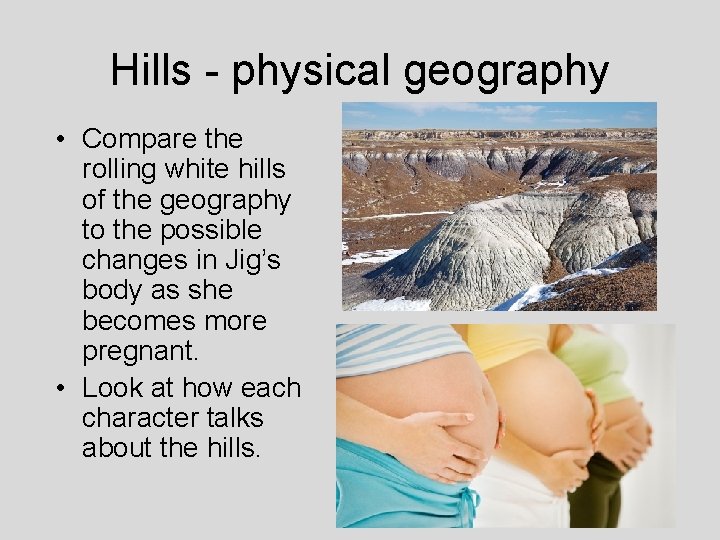
Hills - physical geography • Compare the rolling white hills of the geography to the possible changes in Jig’s body as she becomes more pregnant. • Look at how each character talks about the hills.
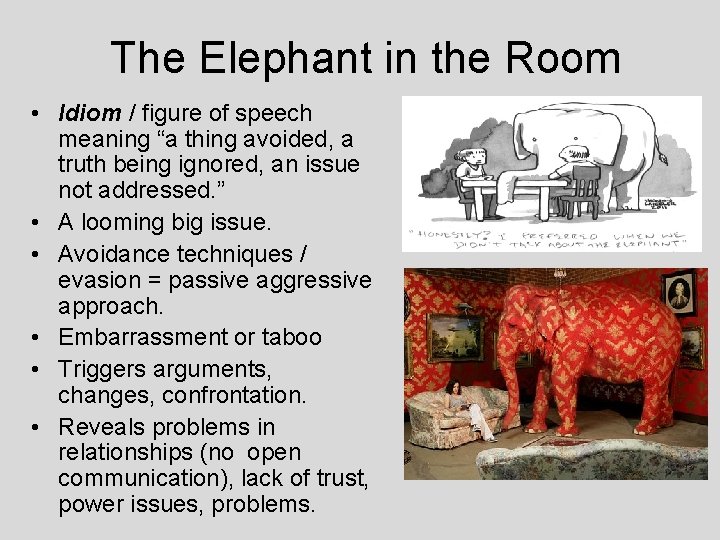
The Elephant in the Room • Idiom / figure of speech meaning “a thing avoided, a truth being ignored, an issue not addressed. ” • A looming big issue. • Avoidance techniques / evasion = passive aggressive approach. • Embarrassment or taboo • Triggers arguments, changes, confrontation. • Reveals problems in relationships (no open communication), lack of trust, power issues, problems.
Theme & Literary Analysis • Deconstruct the story. Examine all parts. • Put it all back together like a puzzle. • What is the main idea? • What is the author’s message? • What is your response and understanding? • Various interpretations. • More than one possible theme in any work. THEME = main idea, central message, interpretation of subject, big ideas about the human experience.
Subject vs. Theme • Talking vs. communication • Types and quality of relationships. • Crisis, choice, decision, the crossroads. • Lifestyle choices. • Drinking, substance abuse, etc. • Travel. • Abortion. • The role of a parent. • Youth, innocence, age, stages of life. What does the author say about the subject? What is your interpretation of the subject?
Discussion Questions • What do you think of the relationship between Jig and the American? • If the situation were reversed, Jig wanting an abortion, how would it change the story? • What do you think happens when the train arrives? • What do you make of the emphasis on happiness? • Do you like the characters? • Why does Jig say, “I feel fine” at the end? • Questions? Confusions? Other ideas?
Show What You Know • • • Draw the setting Compare: character chart with evidence Symbolism analysis Reader response to theme and subject Detailed analysis of one quote
- Slides: 16