
Highway Safety Manual DAY 2 HSM Practitioners Guide


- Slides: 16
Highway Safety Manual DAY 2 - HSM Practitioners Guide for Multilane Rural Highways and Urban Suburban Streets 1 -1
Review from DAY 1 1 -2
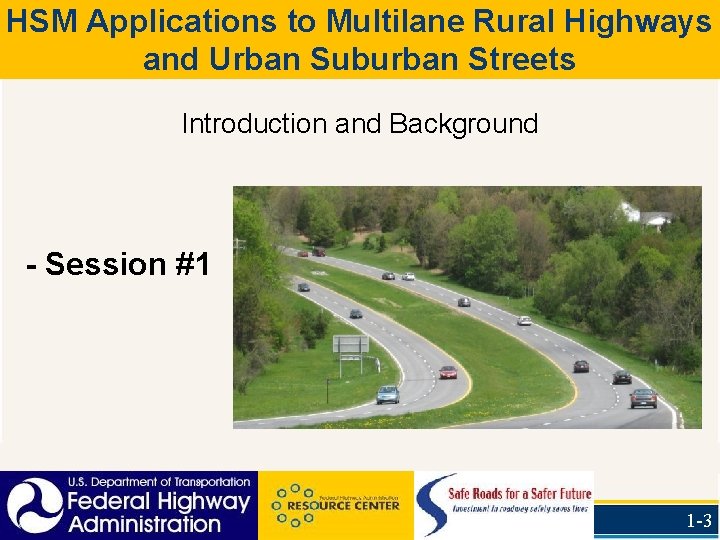
HSM Applications to Multilane Rural Highways and Urban Suburban Streets Introduction and Background - Session #1 1 -3
HSM Applications to Multilane Rural Highways and Urban Suburban Streets Learning Outcomes: ► Review Crash Frequency Performance of Rural Multilane Segments and Intersections 1 -4
HIGHWAY SAFETY MANUAL Multilane Rural Highways and Urban Suburban Streets 1 -5
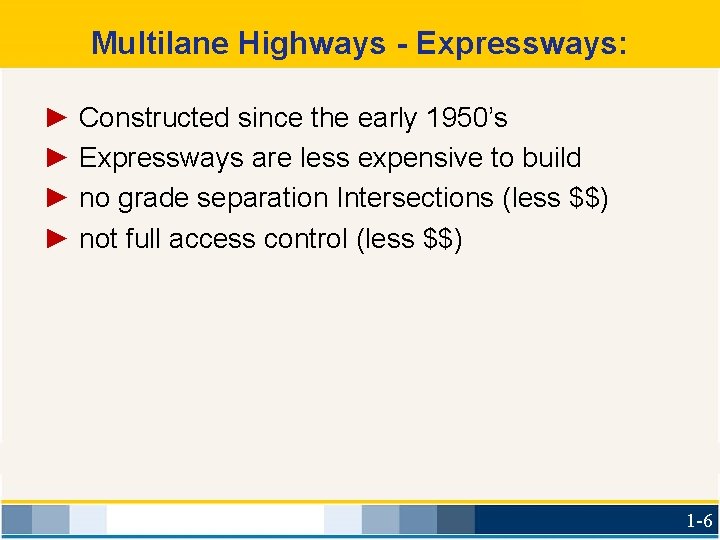
Multilane Highways - Expressways: ► Constructed since the early 1950’s ► Expressways are less expensive to build ► no grade separation Intersections (less $$) ► not full access control (less $$) 1 -6
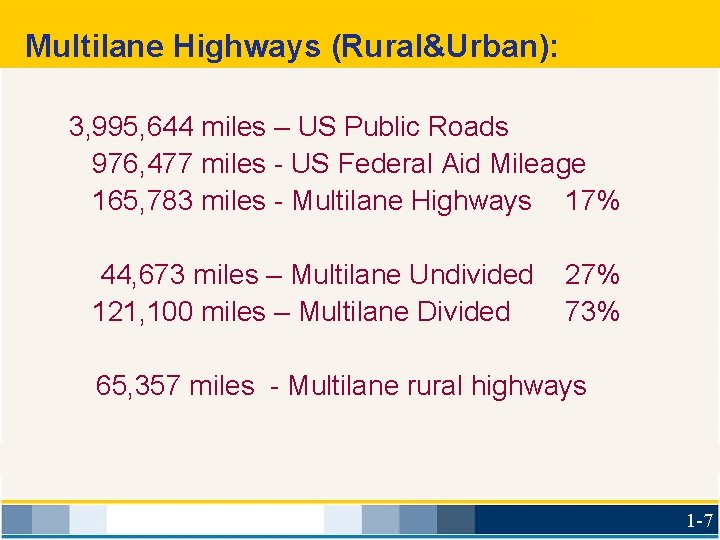
Multilane Highways (Rural&Urban): 3, 995, 644 miles – US Public Roads 976, 477 miles - US Federal Aid Mileage 165, 783 miles - Multilane Highways 17% 44, 673 miles – Multilane Undivided 121, 100 miles – Multilane Divided 27% 73% 65, 357 miles - Multilane rural highways 1 -7
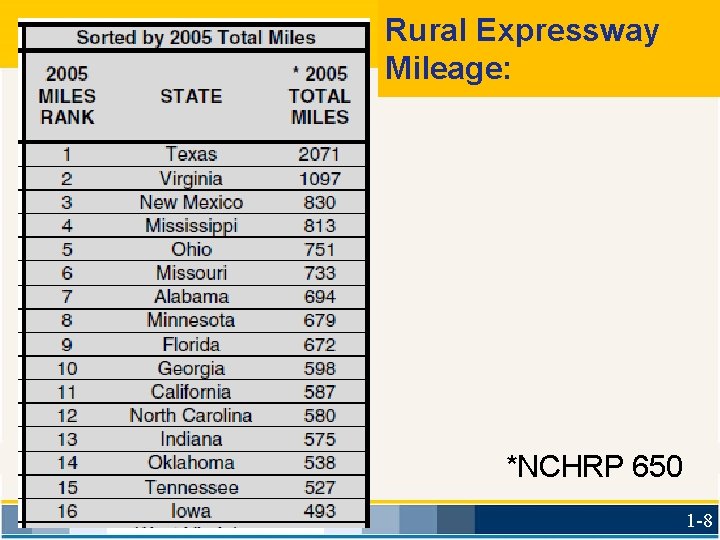
Rural Expressway Mileage: *NCHRP 650 1 -8
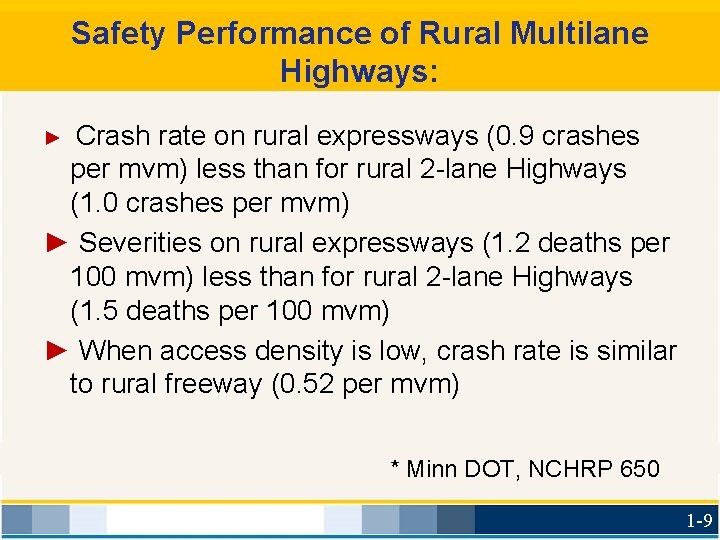
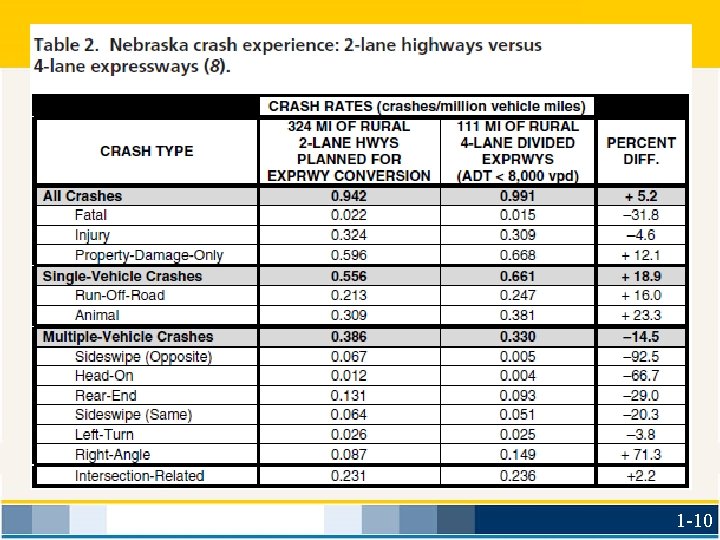
Safety Performance of Rural Multilane Highways: Crash rate on rural expressways (0. 9 crashes per mvm) less than for rural 2 -lane Highways (1. 0 crashes per mvm) ► Severities on rural expressways (1. 2 deaths per 100 mvm) less than for rural 2 -lane Highways (1. 5 deaths per 100 mvm) ► When access density is low, crash rate is similar to rural freeway (0. 52 per mvm) ► * Minn DOT, NCHRP 650 1 -9
1 -10
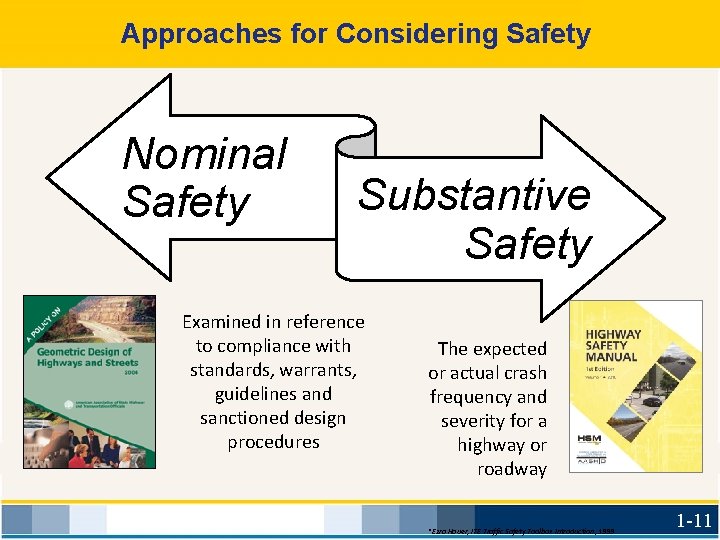
Approaches for Considering Safety Nominal Safety Substantive Safety Examined in reference to compliance with standards, warrants, guidelines and sanctioned design procedures The expected or actual crash frequency and severity for a highway or roadway *Ezra Hauer, ITE Traffic Safety Toolbox Introduction, 1999 1 -11
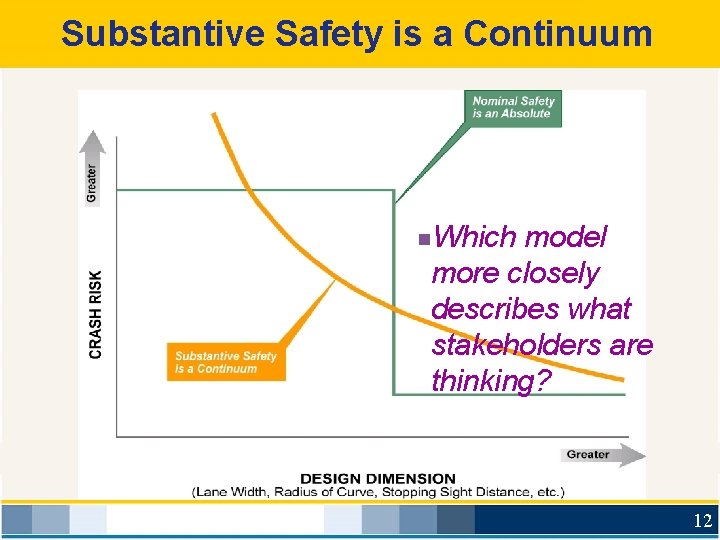
Substantive Safety is a Continuum Which model more closely describes what stakeholders are thinking? g 12
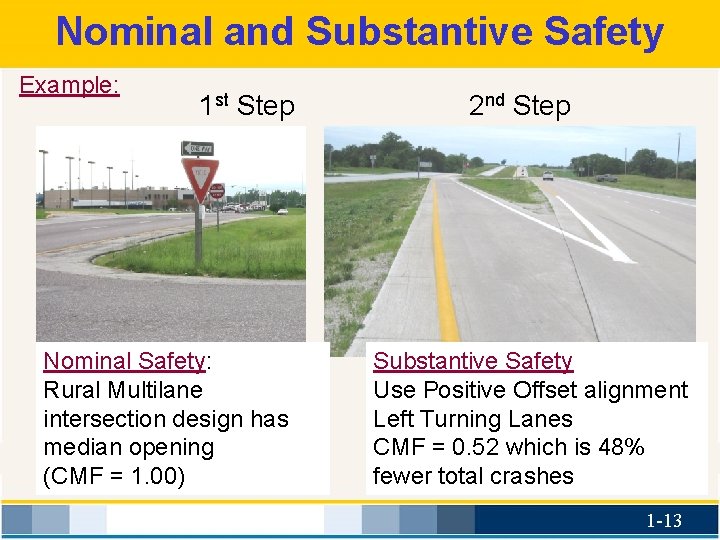
Nominal and Substantive Safety Example: 1 st Step Nominal Safety: Rural Multilane intersection design has median opening (CMF = 1. 00) 2 nd Step Substantive Safety Use Positive Offset alignment Left Turning Lanes CMF = 0. 52 which is 48% fewer total crashes 1 -13
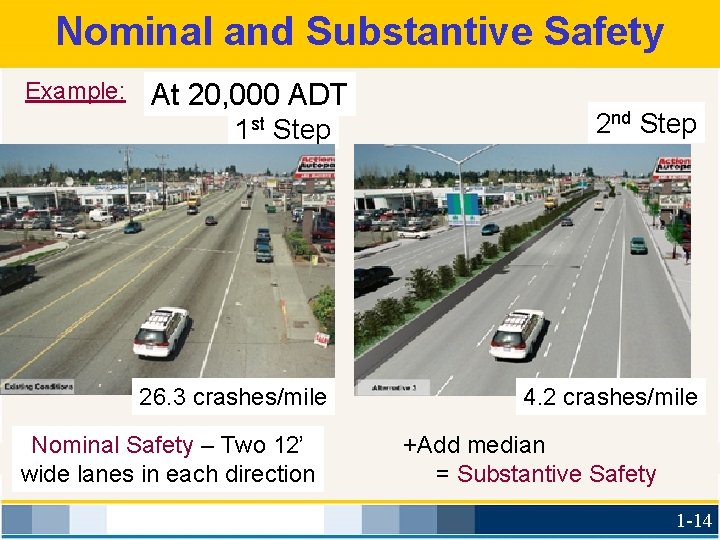
Nominal and Substantive Safety Example: At 20, 000 ADT 1 st Step 2 nd Step 26. 3 crashes/mile 4. 2 crashes/mile Nominal Safety – Two 12’ wide lanes in each direction +Add median = Substantive Safety 1 -14
HSM Applications to Multilane Rural Highways and Urban Suburban Streets Learning Outcomes: ► Reviewed Crash Frequency (Safety) Performance of Rural Multilane Intersections ►Defined Substantive Safety beyond Nominal Safety 1 -15
Introduction and Background Questions and Discussion: 1 -16