
HIGHWAY SAFETY MANUAL Copyright 2016 STC UK Learning





- Slides: 30
HIGHWAY SAFETY MANUAL Copyright © 2016 STC, UK
Learning Outcomes w Introduce the Highway Safety Manual w Define procedures and techniques w Demonstrate use of Safety Performance Functions l Crash Modification Factors l
Safety always comes first in everything we do!
Safety & Roadway Design w Each design assumes a safety level w Section 109, Title 23, USC l Need for balancing of safety, mobility, economic considerations, protection and enhancement of natural environment, and preservation of community values w Tradeoffs among design, cost, and safety
Decision Making Process Environment Society Costs Safety Right of Way Capacity
Basic Safety Questions? w How can I predict safety performance of geometric design features? w How can I quantitatively calculate safety effects? w How can I justify decisions based on safety implications?
Highway Safety Manual Purpose w Resource for professionals w Safety knowledge w Decision making tools
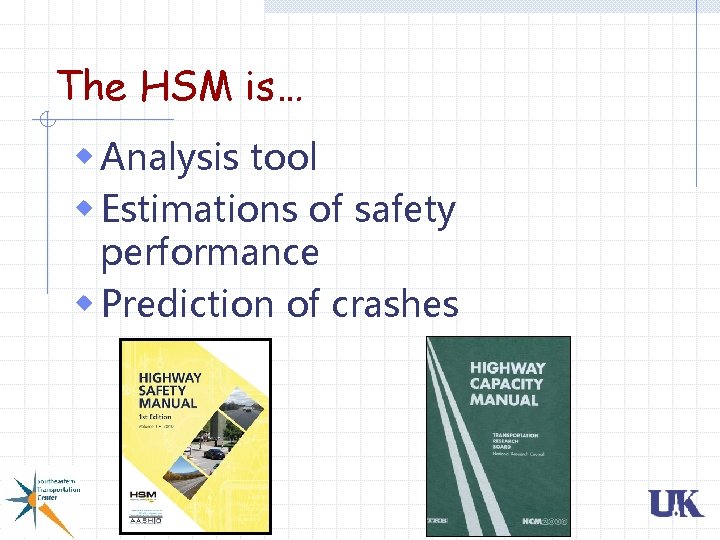
The HSM is… w Analysis tool w Estimations of safety performance w Prediction of crashes
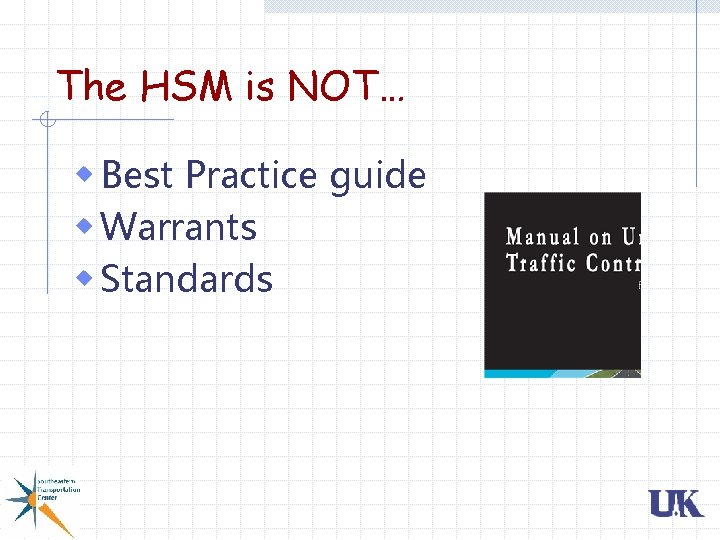
The HSM is NOT… w Best Practice guide w Warrants w Standards
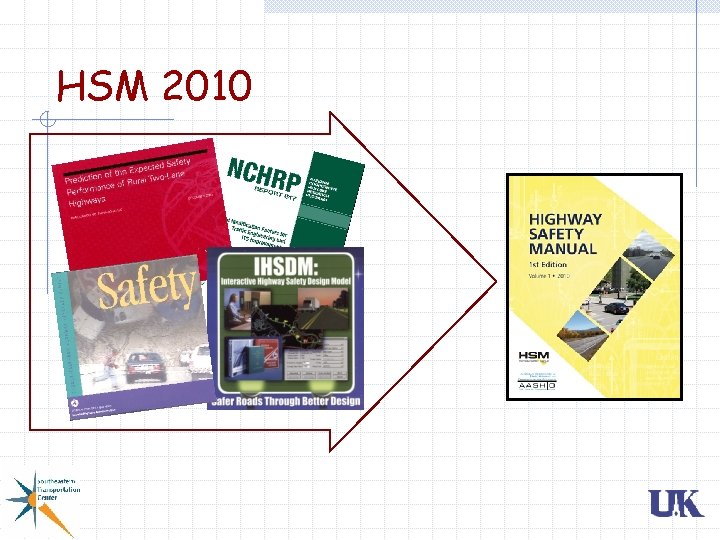
HSM 2010
A Safe Roadway? List what are the top three items that make a roadway safe 1. 2. 3.
Safe Roadway?
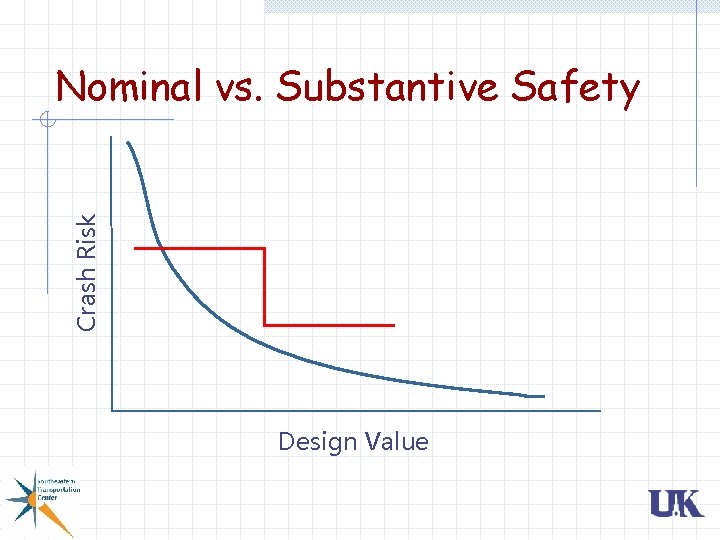
Safety Levels w Nominal safety Measured as compliance to standards, warrants and guidelines l Yes/No l w Substantive safety Measured by crash frequency and severity l Continuous scale l
Crash Risk Nominal vs. Substantive Safety Design Value
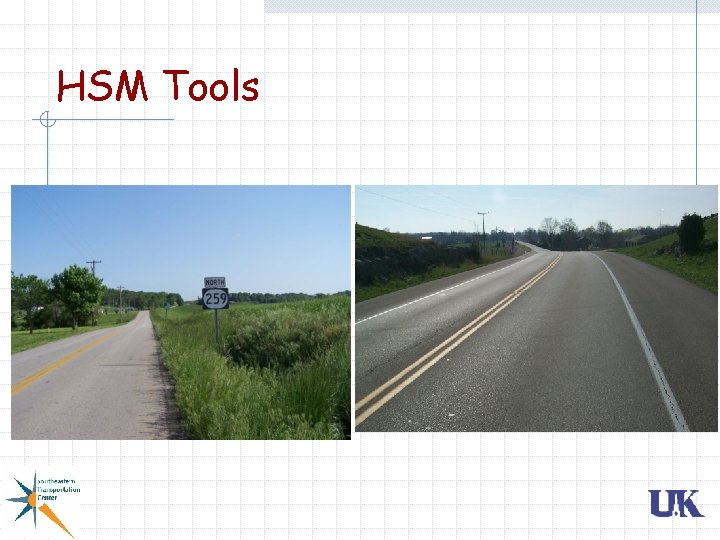
HSM Tools
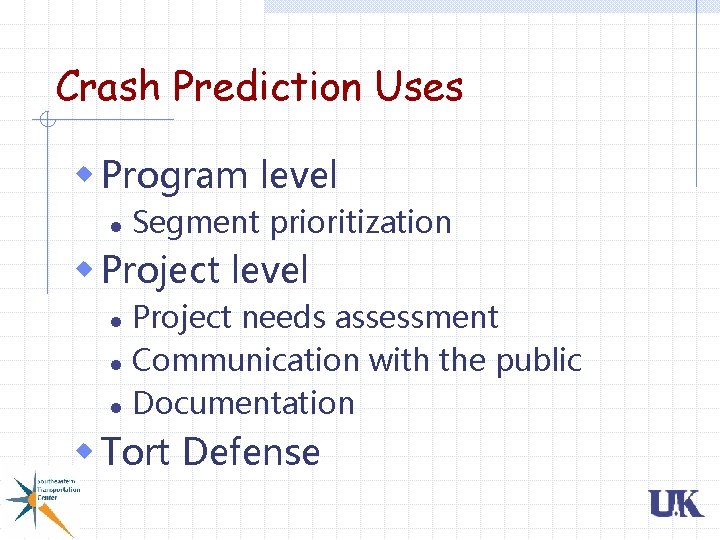
Crash Prediction Uses w Program level l Segment prioritization w Project level Project needs assessment l Communication with the public l Documentation l w Tort Defense
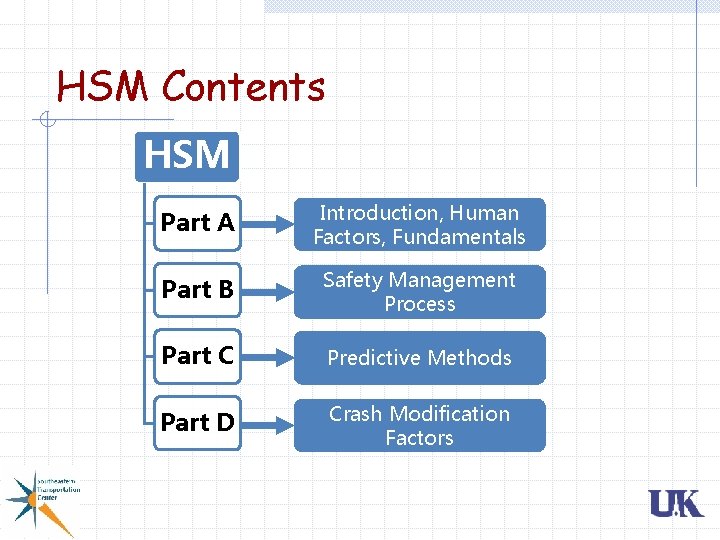
HSM Contents HSM Part A Introduction, Human Factors, Fundamentals Part B Safety Management Process Part C Predictive Methods Part D Crash Modification Factors
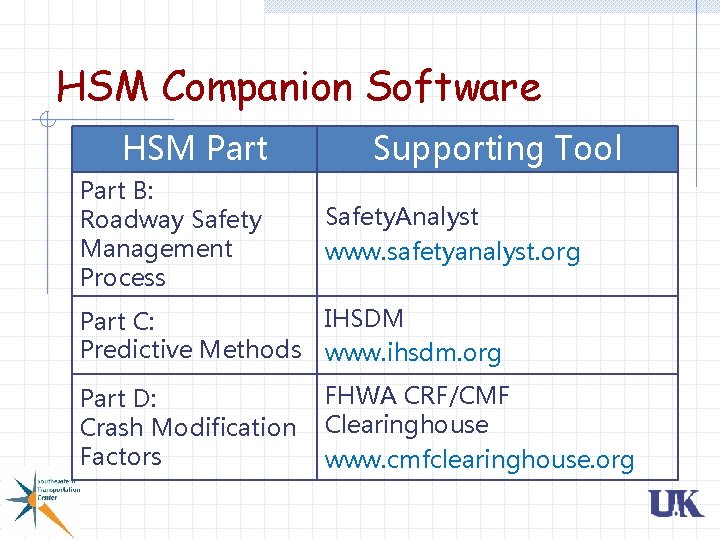
HSM Companion Software HSM Part B: Roadway Safety Management Process Supporting Tool Safety. Analyst www. safetyanalyst. org IHSDM Part C: Predictive Methods www. ihsdm. org Part D: Crash Modification Factors FHWA CRF/CMF Clearinghouse www. cmfclearinghouse. org
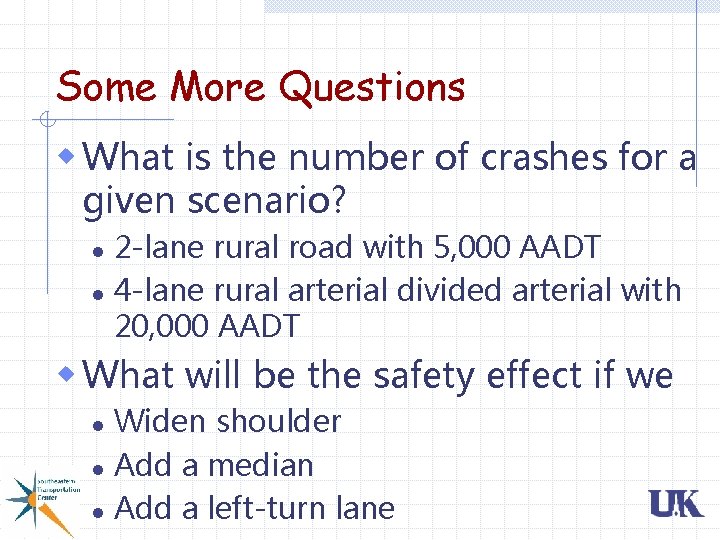
Some More Questions w What is the number of crashes for a given scenario? 2 -lane rural road with 5, 000 AADT l 4 -lane rural arterial divided arterial with 20, 000 AADT l w What will be the safety effect if we Widen shoulder l Add a median l Add a left-turn lane l
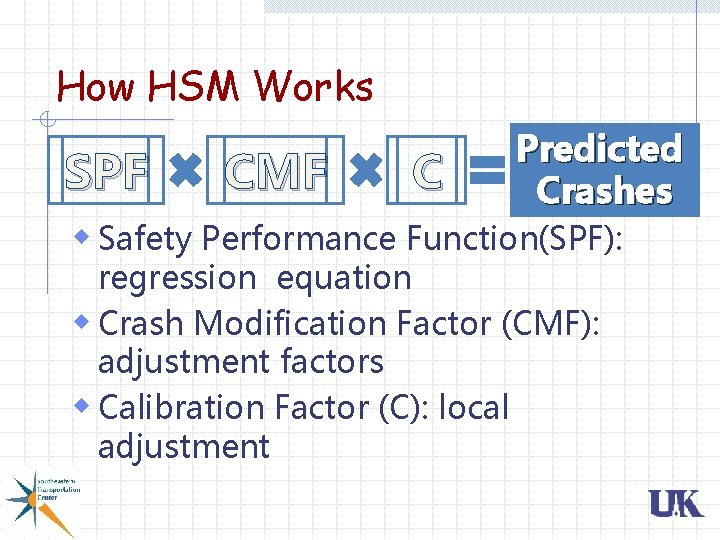
How HSM Works SPF CMF C Predicted Crashes w Safety Performance Function(SPF): regression equation w Crash Modification Factor (CMF): adjustment factors w Calibration Factor (C): local adjustment
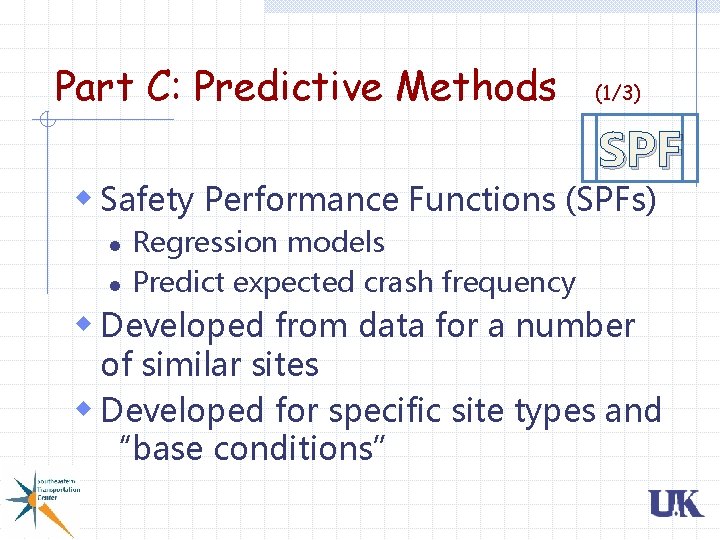
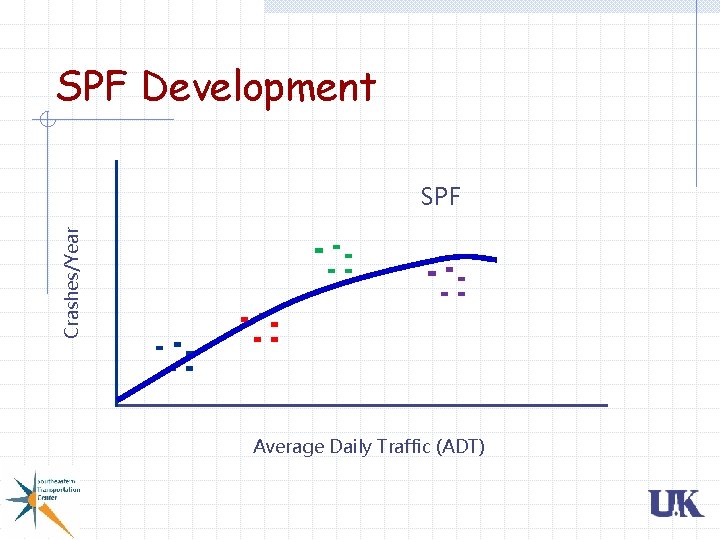
Part C: Predictive Methods (1/3) SPF w Safety Performance Functions (SPFs) l l Regression models Predict expected crash frequency w Developed from data for a number of similar sites w Developed for specific site types and “base conditions”
SPF Development Crashes/Year SPF Average Daily Traffic (ADT)
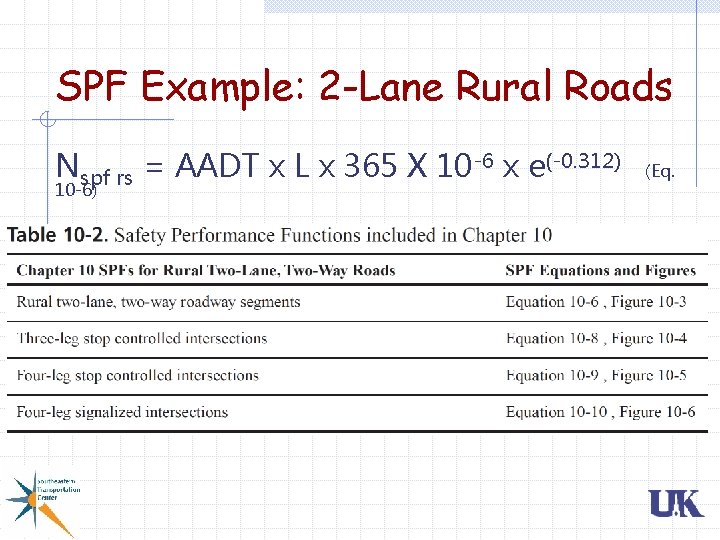
SPF Example: 2 -Lane Rural Roads Nspf rs = AADT x L x 365 X 10 -6 x e(-0. 312) 10 -6) Note: assumed crash type and severity distribution (Eq.
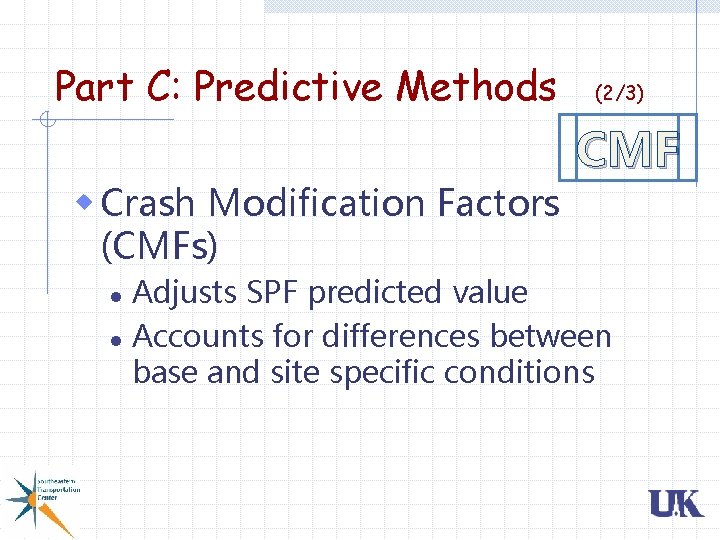
Part C: Predictive Methods w Crash Modification Factors (2/3) CMF (CMFs) Adjusts SPF predicted value l Accounts for differences between base and site specific conditions l
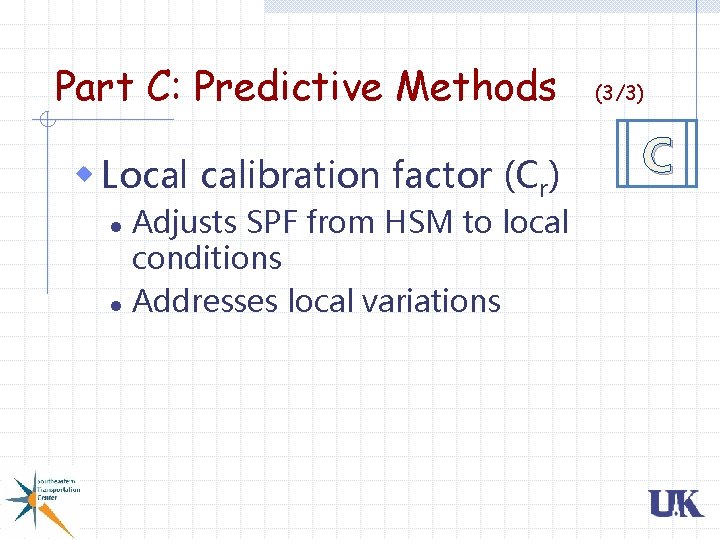
Part C: Predictive Methods w Local calibration factor (Cr) Adjusts SPF from HSM to local conditions l Addresses local variations l (3/3) C
HSM Prediction Models w Prediction models for Homogeneous highway segments l Intersections l w Segments based on homogeneous Geometry l AADT ranges l
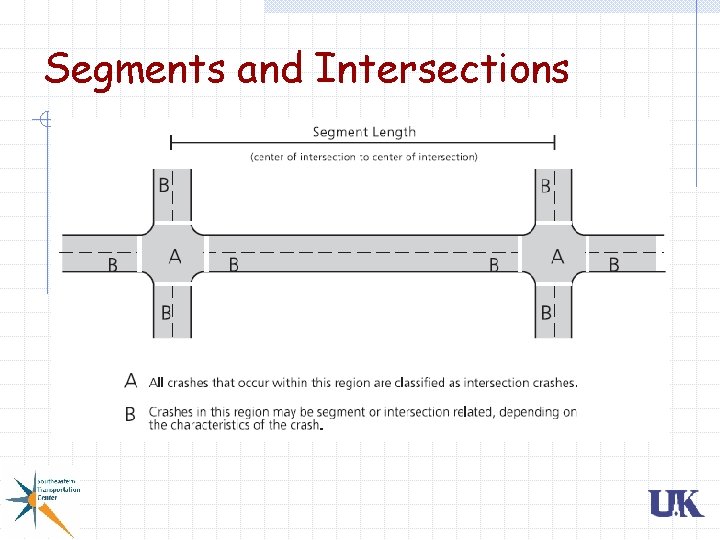
Segments and Intersections
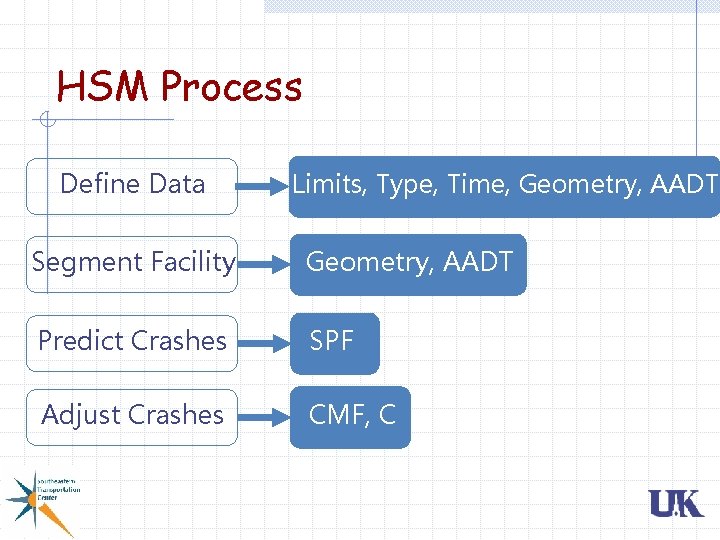
HSM Process Define Data Limits, Type, Time, Geometry, AADT Segment Facility Geometry, AADT Predict Crashes SPF Adjust Crashes CMF, C
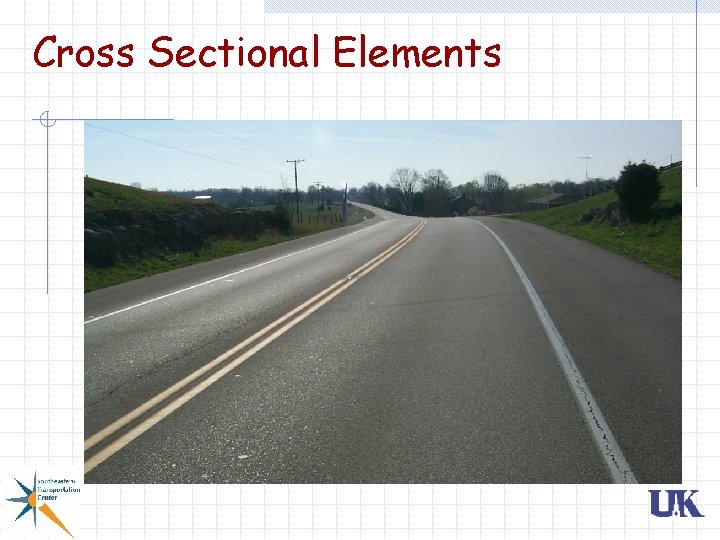
Cross Sectional Elements
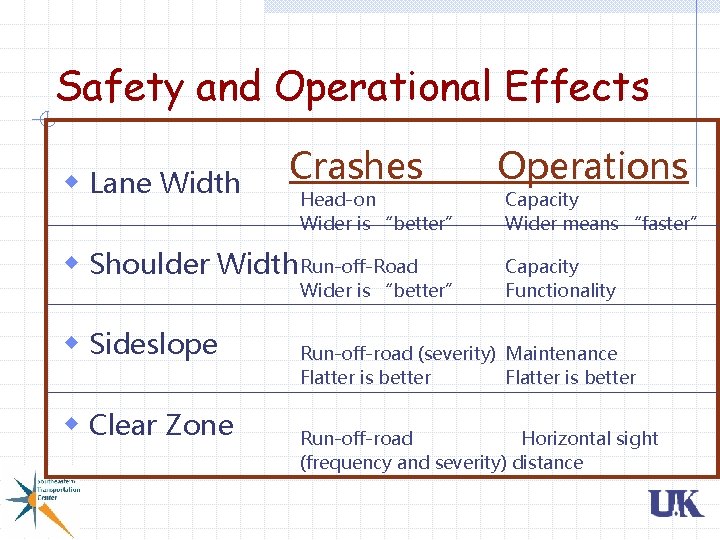
Safety and Operational Effects w Lane Width Crashes Head-on Wider is “better” w Shoulder Width. Run-off-Road Wider is “better” w Sideslope w Clear Zone Operations Capacity Wider means “faster” Capacity Functionality Run-off-road (severity) Maintenance Flatter is better Run-off-road Horizontal sight (frequency and severity) distance