
HIGHWAY PLAN READING For Utility owners designers and




- Slides: 53
HIGHWAY PLAN READING For Utility owners, designers, and contractors. Bryan Bradley, P. E. 800 Lincoln Way Ames, Iowa 50100 State Utility Engineer 515 -239 -1014 bryan. bradley@dot. iowa. gov
Course Objectives • Become familiar with plan features important to utilities: – – – Title Sheets Plan and Profile Sheets Right of Way Sheets Typical Sections Cross Sections • Learn how to locate plan features in the field
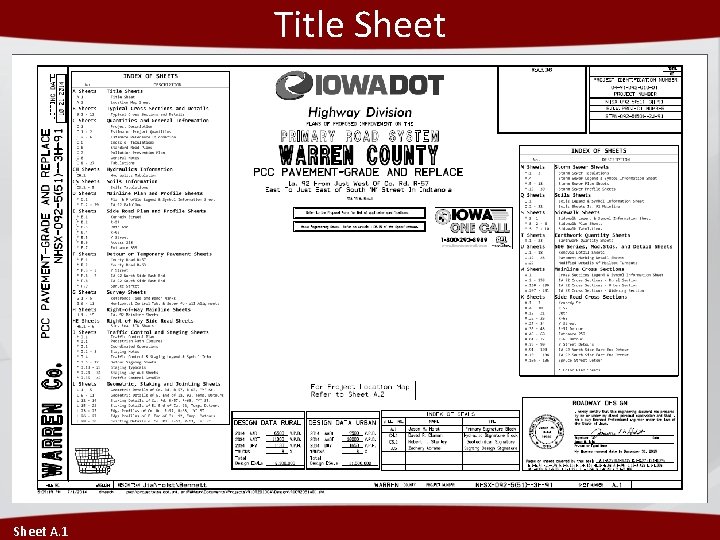
Title Sheet A. 1
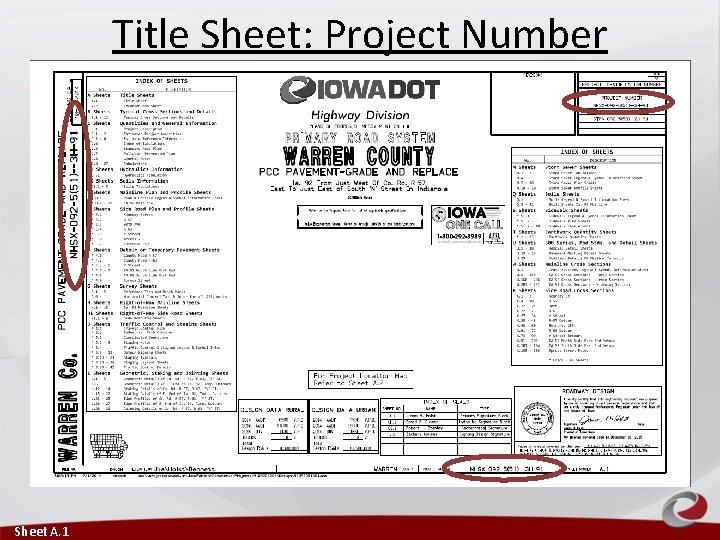
Title Sheet: Project Number Sheet A. 1
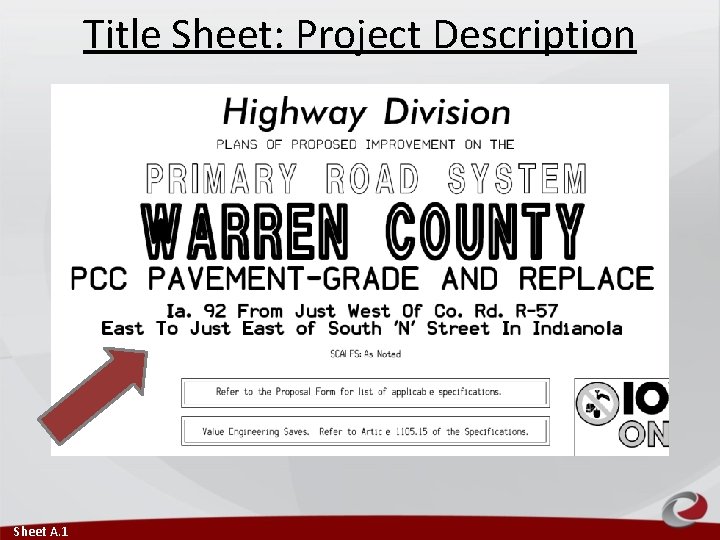
Title Sheet: Project Description Sheet A. 1
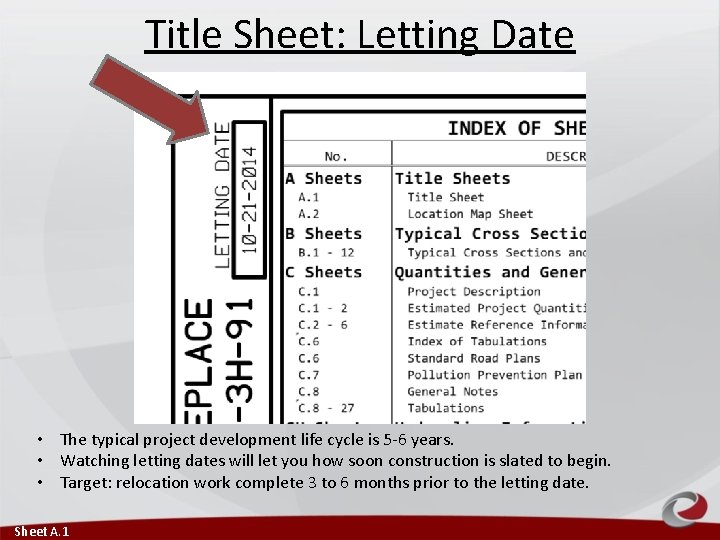
Title Sheet: Letting Date • The typical project development life cycle is 5 -6 years. • Watching letting dates will let you how soon construction is slated to begin. • Target: relocation work complete 3 to 6 months prior to the letting date. Sheet A. 1
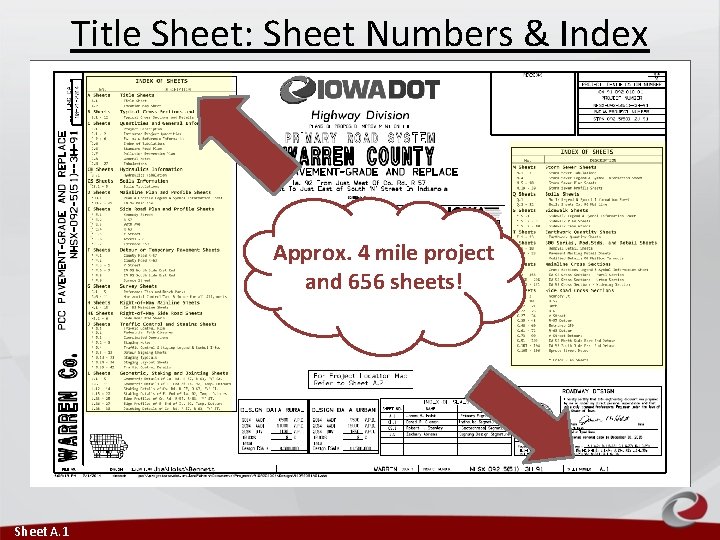
Title Sheet: Sheet Numbers & Index Approx. 4 mile project and 656 sheets! Sheet A. 1
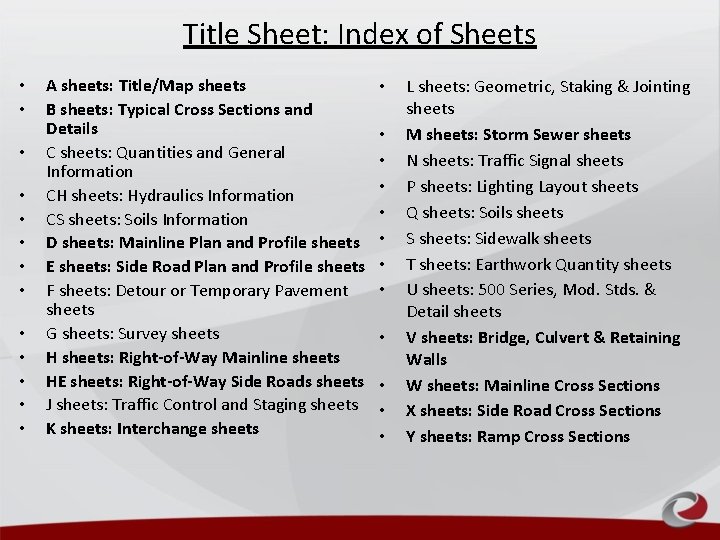
Title Sheet: Index of Sheets • • • • A sheets: Title/Map sheets B sheets: Typical Cross Sections and Details C sheets: Quantities and General Information CH sheets: Hydraulics Information CS sheets: Soils Information D sheets: Mainline Plan and Profile sheets E sheets: Side Road Plan and Profile sheets F sheets: Detour or Temporary Pavement sheets G sheets: Survey sheets H sheets: Right-of-Way Mainline sheets HE sheets: Right-of-Way Side Roads sheets J sheets: Traffic Control and Staging sheets K sheets: Interchange sheets • • • L sheets: Geometric, Staking & Jointing sheets M sheets: Storm Sewer sheets N sheets: Traffic Signal sheets P sheets: Lighting Layout sheets Q sheets: Soils sheets S sheets: Sidewalk sheets T sheets: Earthwork Quantity sheets U sheets: 500 Series, Mod. Stds. & Detail sheets V sheets: Bridge, Culvert & Retaining Walls W sheets: Mainline Cross Sections X sheets: Side Road Cross Sections Y sheets: Ramp Cross Sections
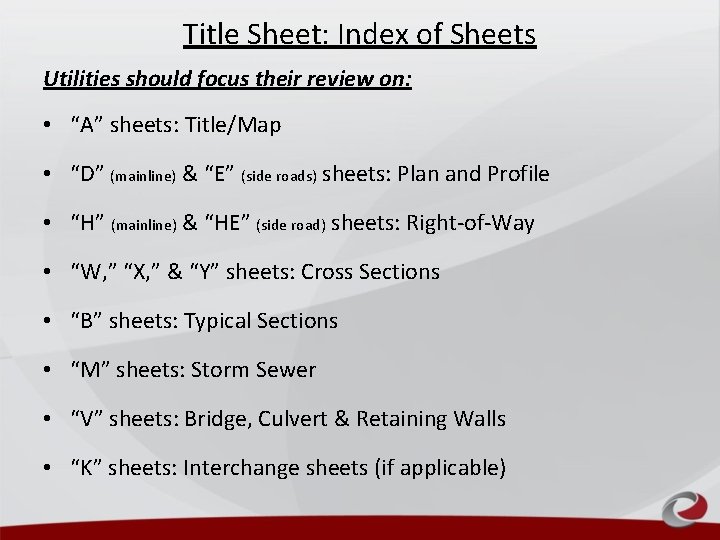
Title Sheet: Index of Sheets Utilities should focus their review on: • “A” sheets: Title/Map • “D” (mainline) & “E” (side roads) sheets: Plan and Profile • “H” (mainline) & “HE” (side road) sheets: Right-of-Way • “W, ” “X, ” & “Y” sheets: Cross Sections • “B” sheets: Typical Sections • “M” sheets: Storm Sewer • “V” sheets: Bridge, Culvert & Retaining Walls • “K” sheets: Interchange sheets (if applicable)
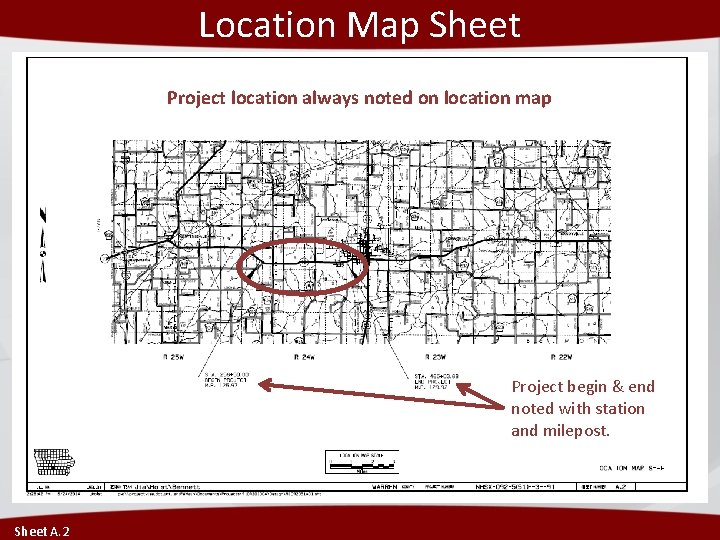
Location Map Sheet Project location always noted on location map Project begin & end noted with station and milepost. Sheet A. 2
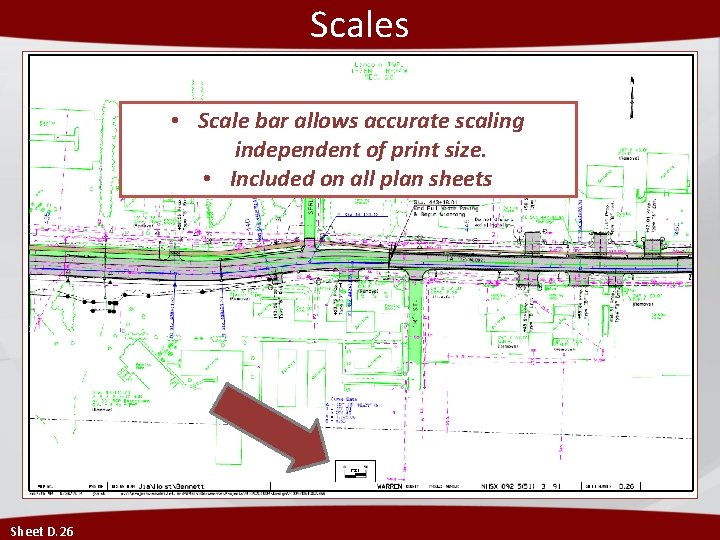
Scales • Scale bar allows accurate scaling independent of print size. • Included on all plan sheets Sheet D. 26
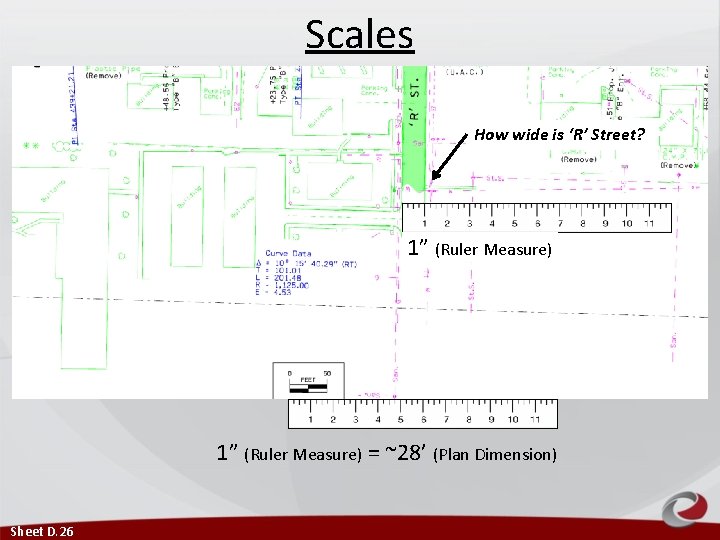
Scales How wide is ‘R’ Street? 1” (Ruler Measure) = ~28’ (Plan Dimension) Sheet D. 26
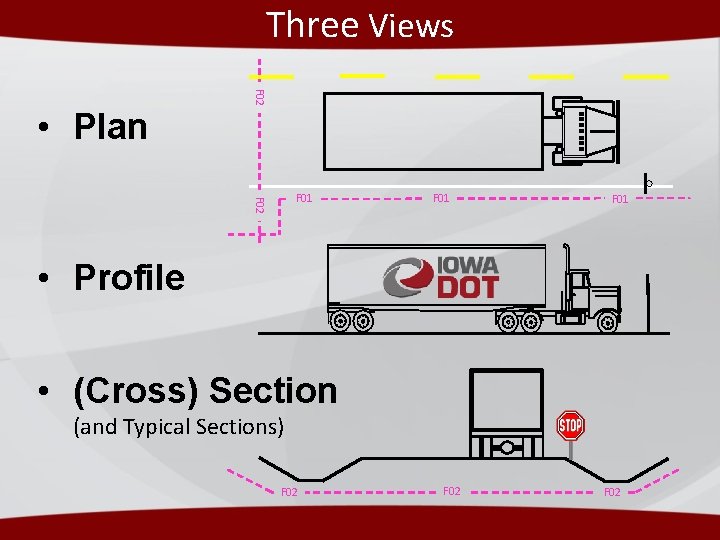
Three Views F 02 • Plan F 02 F 01 • Profile • (Cross) Section (and Typical Sections) F 02
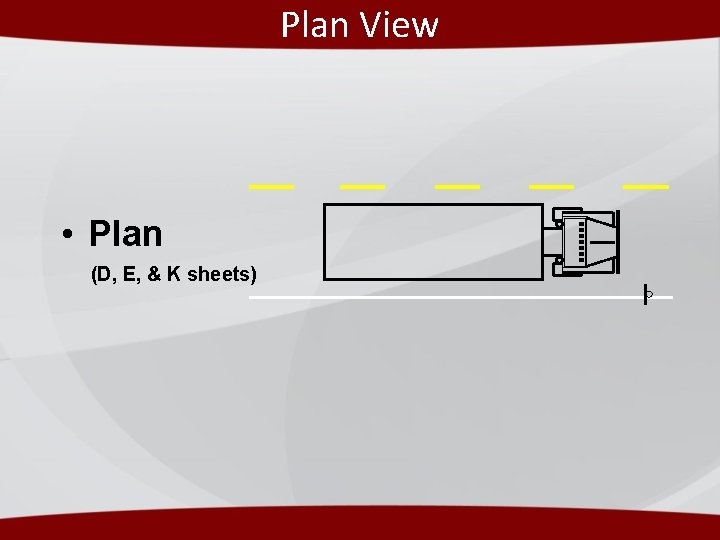
Plan View • Plan (D, E, & K sheets)
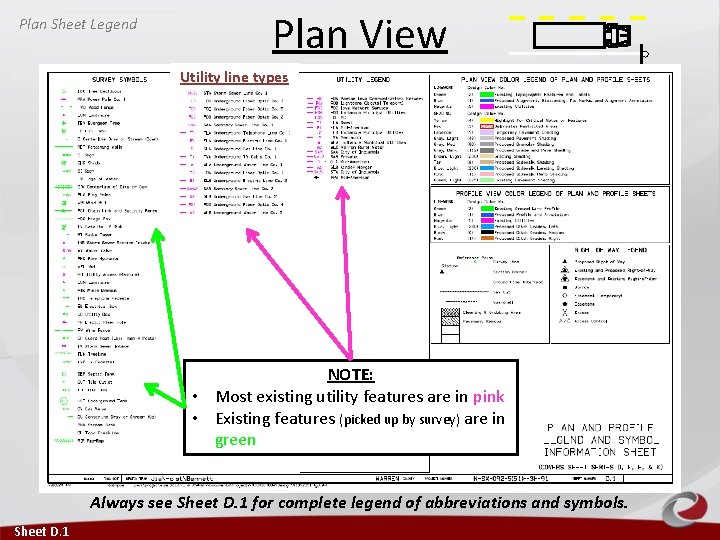
Plan Sheet Legend Plan View Utility line types NOTE: • Most existing utility features are in pink • Existing features (picked up by survey) are in green Always see Sheet D. 1 for complete legend of abbreviations and symbols. Sheet D. 1
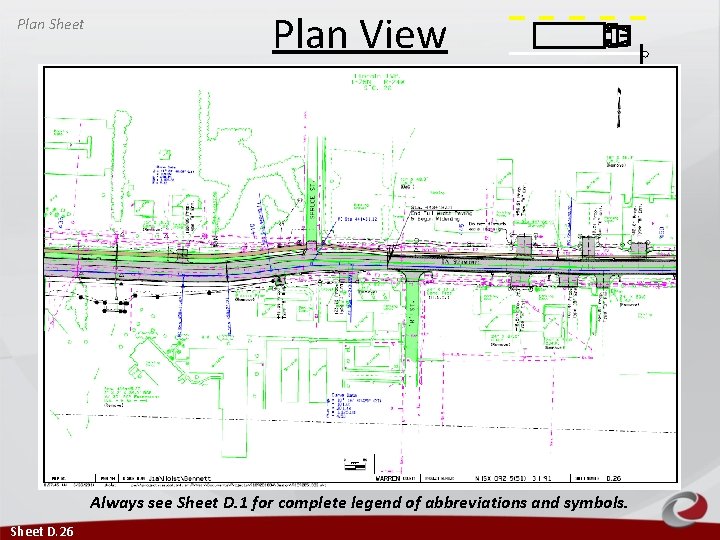
Plan Sheet Plan View Always see Sheet D. 1 for complete legend of abbreviations and symbols. Sheet D. 26
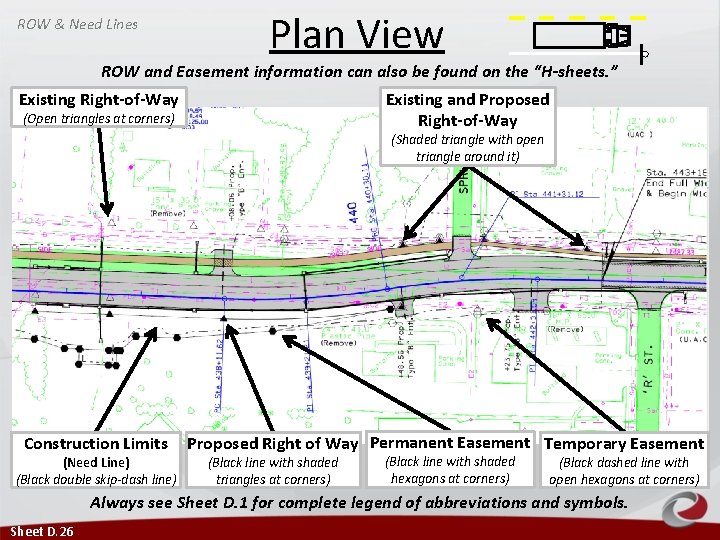
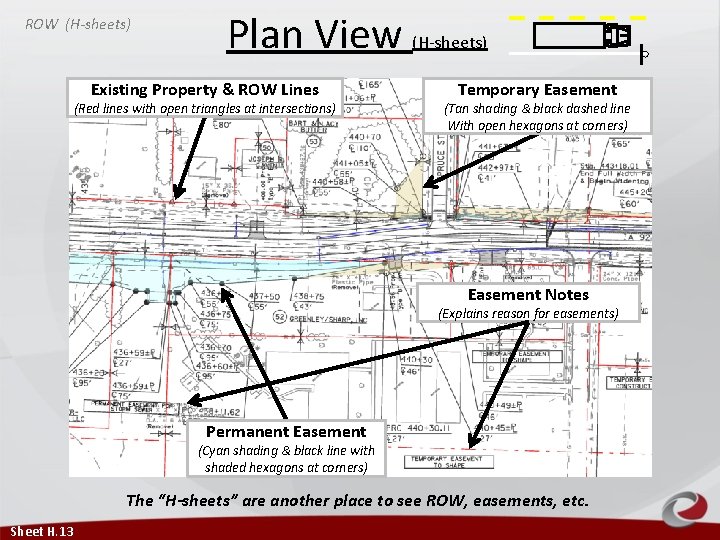
ROW & Need Lines Plan View ROW and Easement information can also be found on the “H-sheets. ” Existing Right-of-Way Existing and Proposed Right-of-Way (Open triangles at corners) (Shaded triangle with open triangle around it) Construction Limits (Need Line) (Black double skip-dash line) Proposed Right of Way Permanent Easement Temporary Easement (Black line with shaded triangles at corners) (Black line with shaded hexagons at corners) (Black dashed line with open hexagons at corners) Always see Sheet D. 1 for complete legend of abbreviations and symbols. Sheet D. 26
ROW (H-sheets) Plan View (H-sheets) Existing Property & ROW Lines (Red lines with open triangles at intersections) Temporary Easement (Tan shading & black dashed line With open hexagons at corners) Easement Notes (Explains reason for easements) Permanent Easement (Cyan shading & black line with shaded hexagons at corners) The “H-sheets” are another place to see ROW, easements, etc. Sheet H. 13
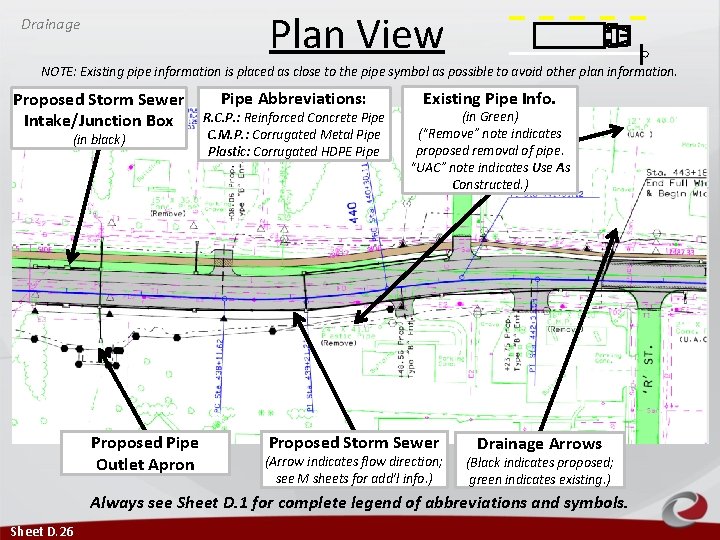
Plan View Drainage NOTE: Existing pipe information is placed as close to the pipe symbol as possible to avoid other plan information. Proposed Storm Sewer Intake/Junction Box (in black) Proposed Pipe Outlet Apron Pipe Abbreviations: R. C. P. : Reinforced Concrete Pipe C. M. P. : Corrugated Metal Pipe Plastic: Corrugated HDPE Pipe Existing Pipe Info. (in Green) (“Remove” note indicates proposed removal of pipe. “UAC” note indicates Use As Constructed. ) Proposed Storm Sewer (Arrow indicates flow direction; see M sheets for add’l info. ) Drainage Arrows (Black indicates proposed; green indicates existing. ) Always see Sheet D. 1 for complete legend of abbreviations and symbols. Sheet D. 26
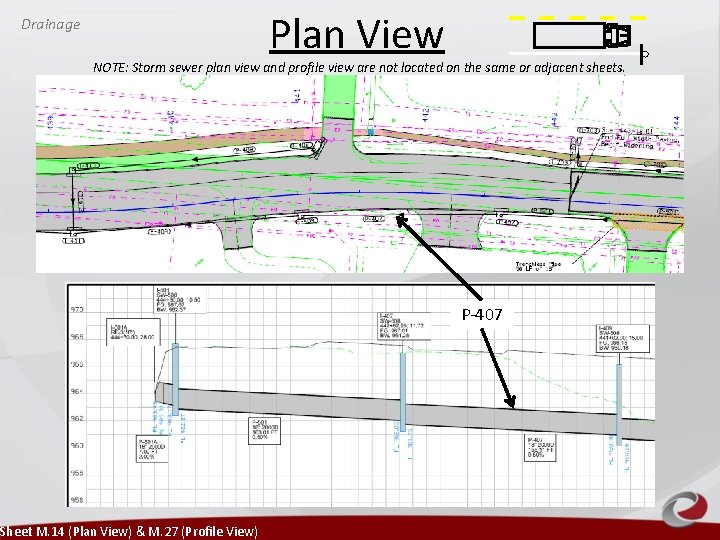
Drainage Plan View NOTE: Storm sewer plan view and profile view are not located on the same or adjacent sheets. Sheet M. 14 (Plan View) & M. 27 (Profile View) P-407
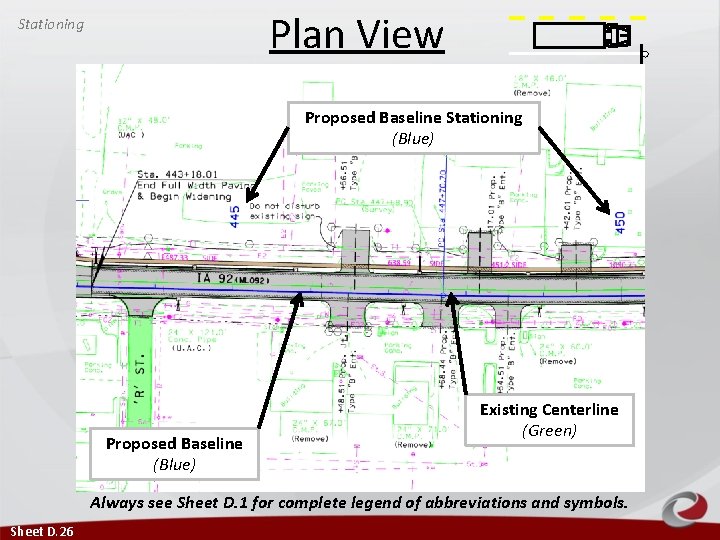
Plan View Stationing Proposed Baseline Stationing (Blue) Proposed Baseline (Blue) Existing Centerline (Green) Always see Sheet D. 1 for complete legend of abbreviations and symbols. Sheet D. 26
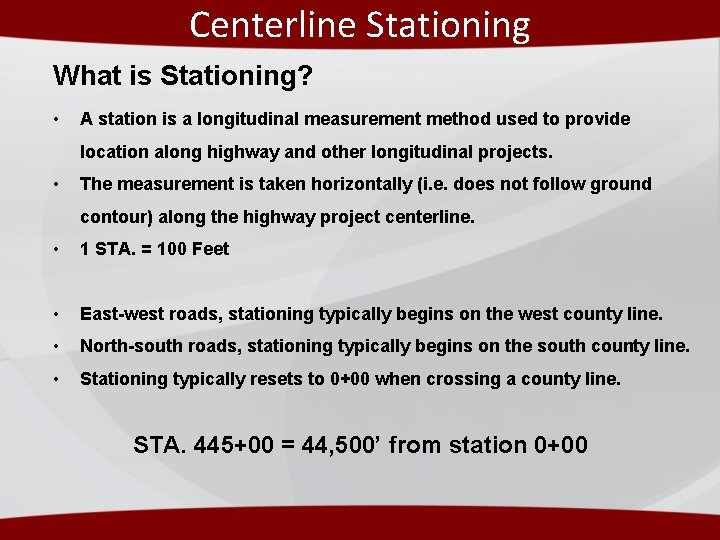
Centerline Stationing What is Stationing? • A station is a longitudinal measurement method used to provide location along highway and other longitudinal projects. • The measurement is taken horizontally (i. e. does not follow ground contour) along the highway project centerline. • 1 STA. = 100 Feet • East-west roads, stationing typically begins on the west county line. • North-south roads, stationing typically begins on the south county line. • Stationing typically resets to 0+00 when crossing a county line. STA. 445+00 = 44, 500’ from station 0+00
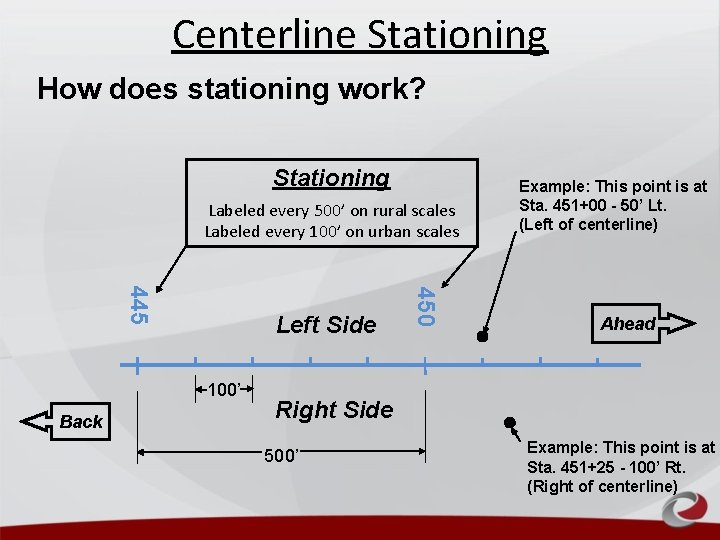
Centerline Stationing How does stationing work? Stationing Labeled every 500’ on rural scales Labeled every 100’ on urban scales 100’ Back 450 445 Left Side Example: This point is at Sta. 451+00 - 50’ Lt. (Left of centerline) Ahead Right Side 500’ Example: This point is at Sta. 451+25 - 100’ Rt. (Right of centerline)
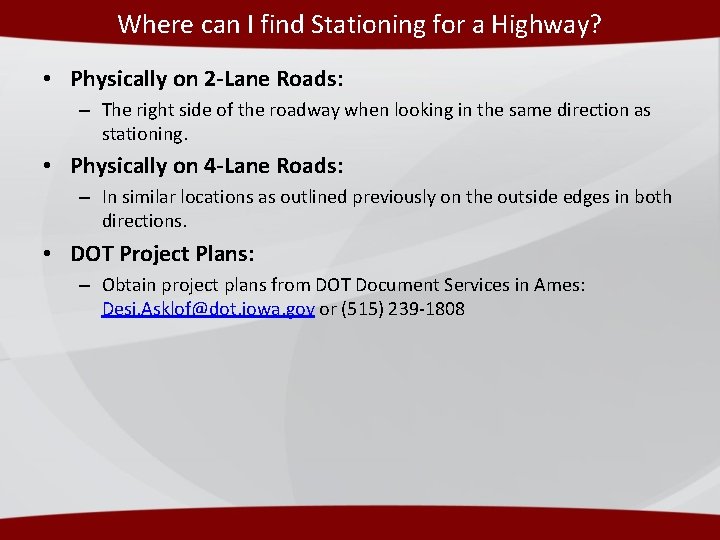
Where can I find Stationing for a Highway? • Physically on 2 -Lane Roads: – The right side of the roadway when looking in the same direction as stationing. • Physically on 4 -Lane Roads: – In similar locations as outlined previously on the outside edges in both directions. • DOT Project Plans: – Obtain project plans from DOT Document Services in Ames: Desi. Asklof@dot. iowa. gov or (515) 239 -1808
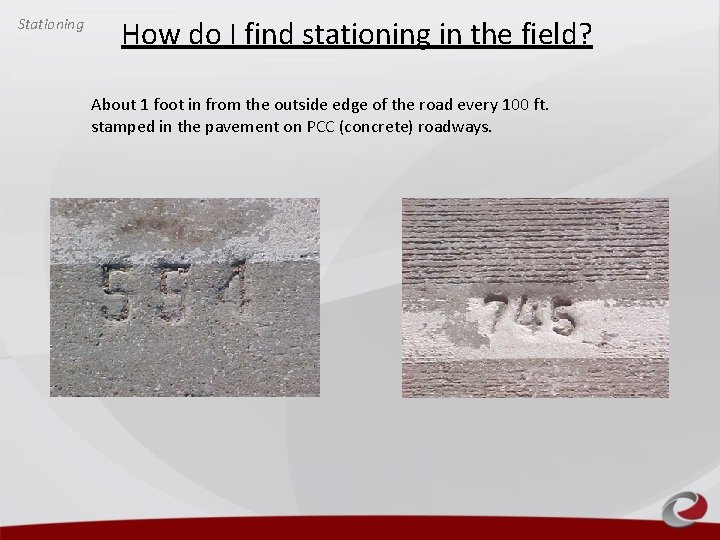
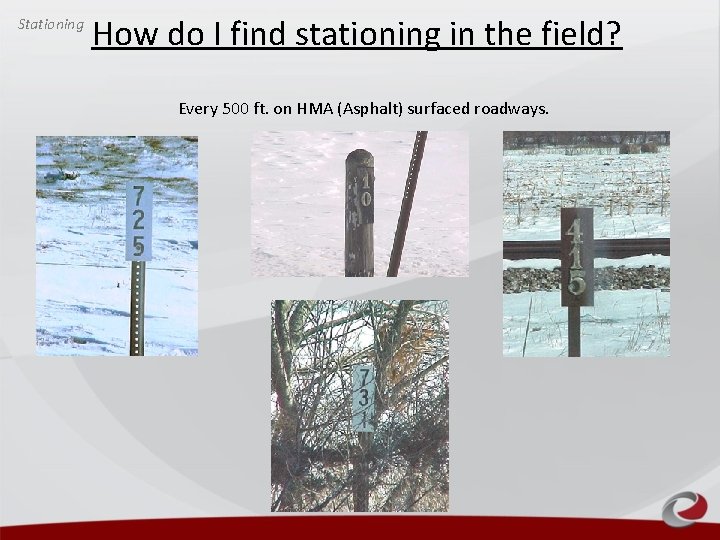
Stationing How do I find stationing in the field? About 1 foot in from the outside edge of the road every 100 ft. stamped in the pavement on PCC (concrete) roadways.
Stationing How do I find stationing in the field? Every 500 ft. on HMA (Asphalt) surfaced roadways.
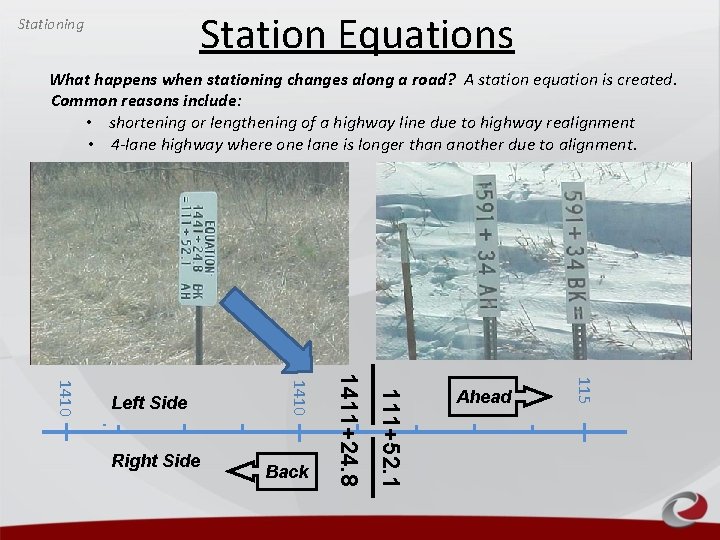
Station Equations Stationing What happens when stationing changes along a road? A station equation is created. Common reasons include: • shortening or lengthening of a highway line due to highway realignment • 4 -lane highway where one lane is longer than another due to alignment. Ahead 115 111+52. 1 Back 1411+24. 8 Right Side 1410 Left Side
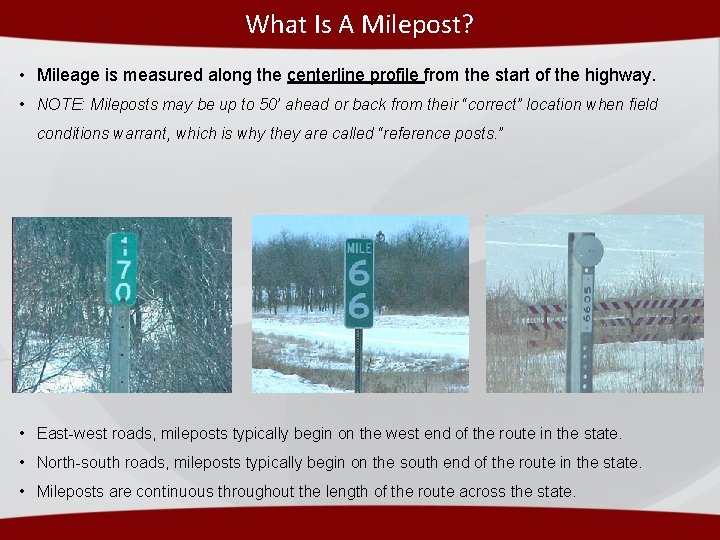
What Is A Milepost? • Mileage is measured along the centerline profile from the start of the highway. • NOTE: Mileposts may be up to 50’ ahead or back from their “correct” location when field conditions warrant, which is why they are called “reference posts. ” • East-west roads, mileposts typically begin on the west end of the route in the state. • North-south roads, mileposts typically begin on the south end of the route in the state. • Mileposts are continuous throughout the length of the route across the state.
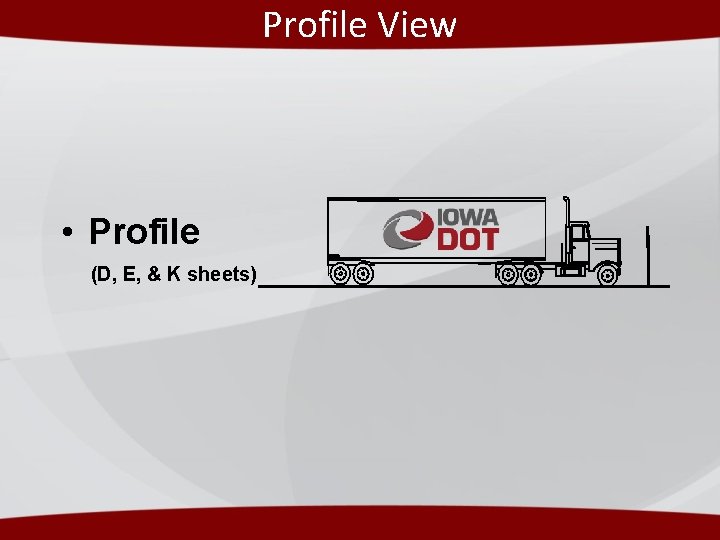
Profile View • Profile (D, E, & K sheets)
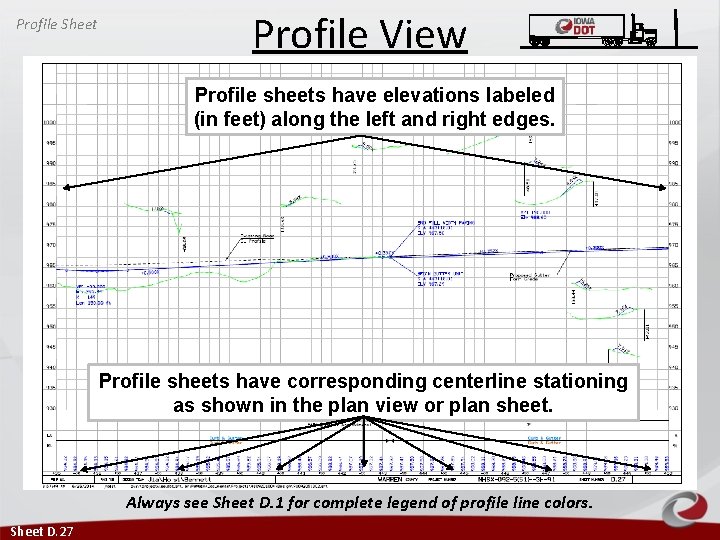
Profile Sheet Profile View Profile sheets have elevations labeled (in feet) along the left and right edges. Profile sheets have corresponding centerline stationing as shown in the plan view or plan sheet. Always see Sheet D. 1 for complete legend of profile line colors. Sheet D. 27
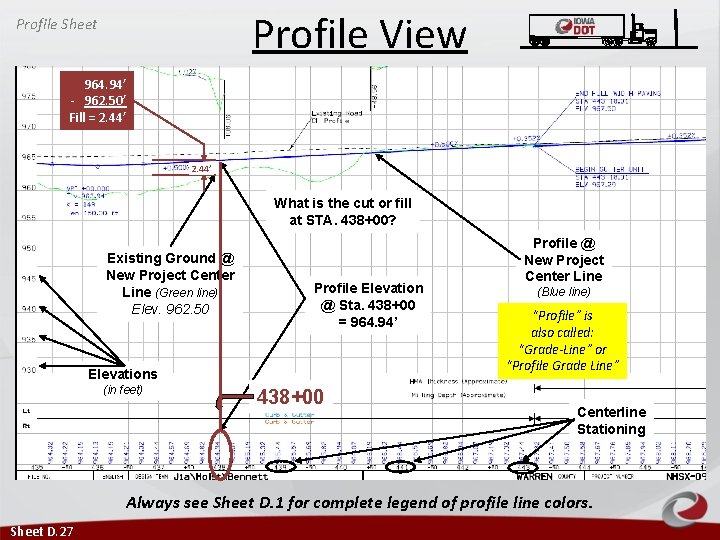
Profile View Profile Sheet 964. 94’ - 962. 50’ Fill = 2. 44’ What is the cut or fill at STA. 438+00? Existing Ground @ New Project Center Line (Green line) Elev. 962. 50 Profile Elevation @ Sta. 438+00 = 964. 94’ Elevations (in feet) 438+00 Profile @ New Project Center Line (Blue line) “Profile” is also called: “Grade-Line” or “Profile Grade Line” Centerline Stationing Always see Sheet D. 1 for complete legend of profile line colors. Sheet D. 27
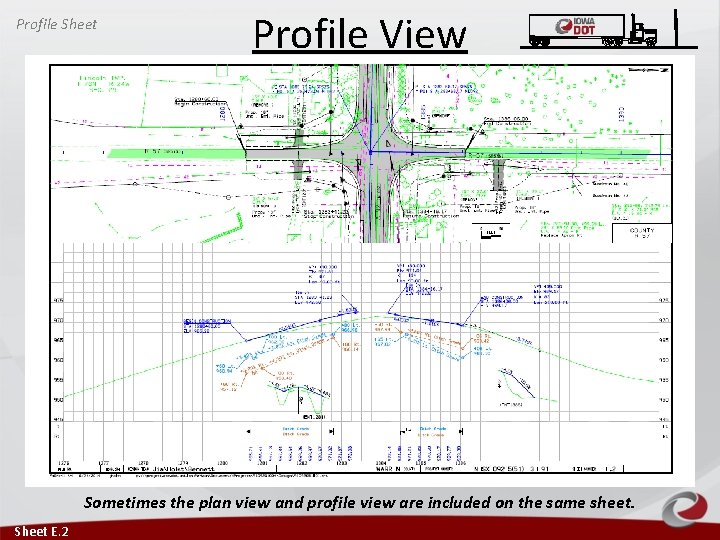
Profile Sheet Profile View Sometimes the plan view and profile view are included on the same sheet. Sheet E. 2
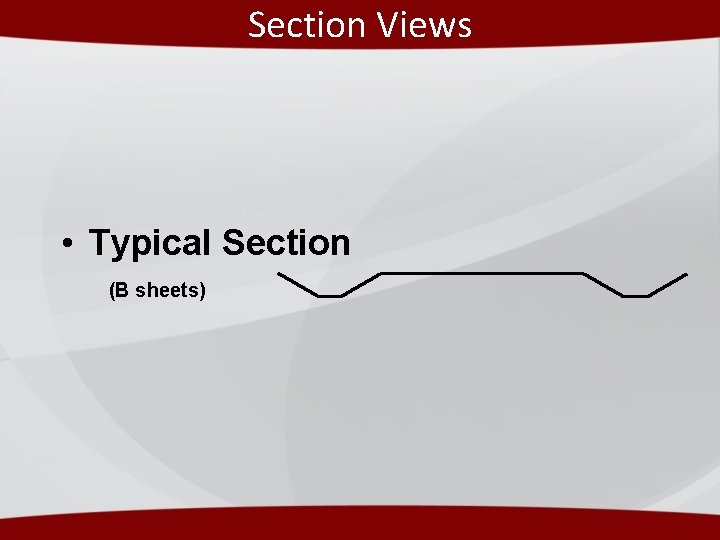
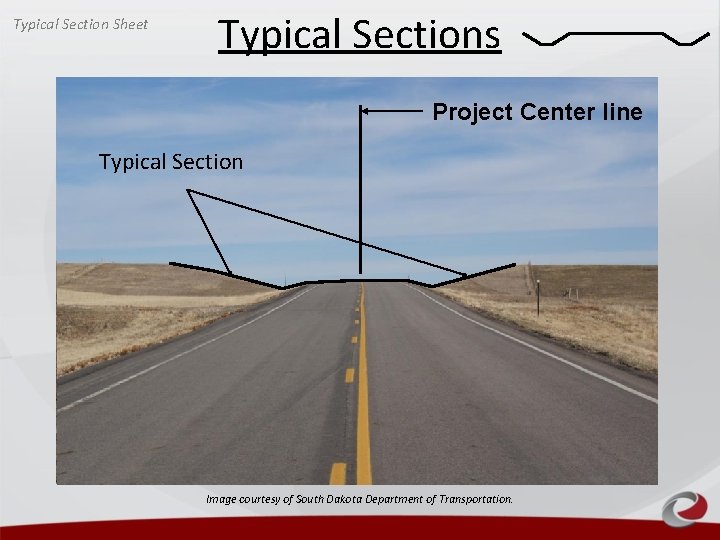
Section Views • Typical Section (B sheets)
Typical Section Sheet Typical Sections Project Center line Typical Section Image courtesy of South Dakota Department of Transportation.
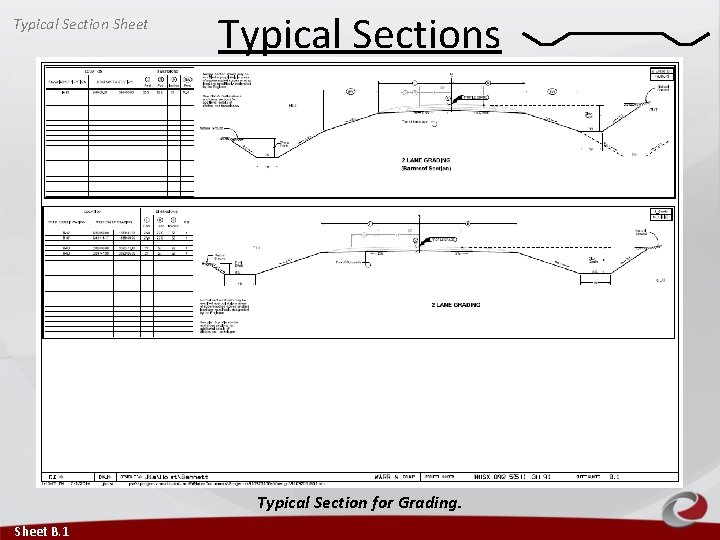
Typical Section Sheet Typical Sections Typical Section for Grading. Sheet B. 1
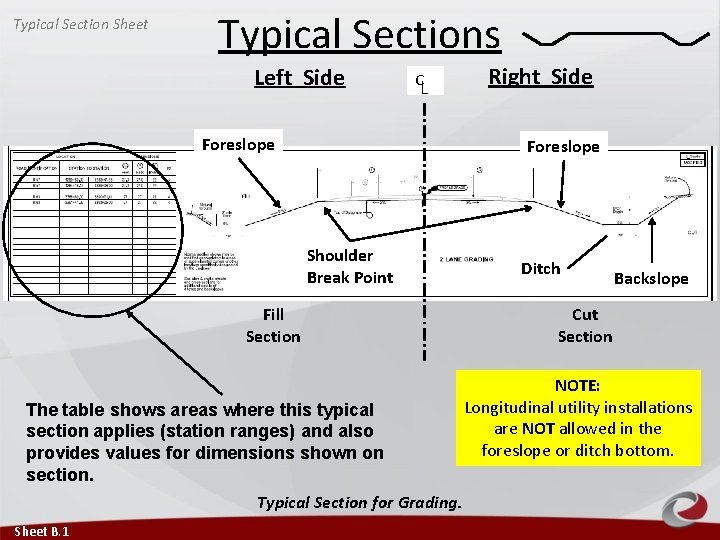
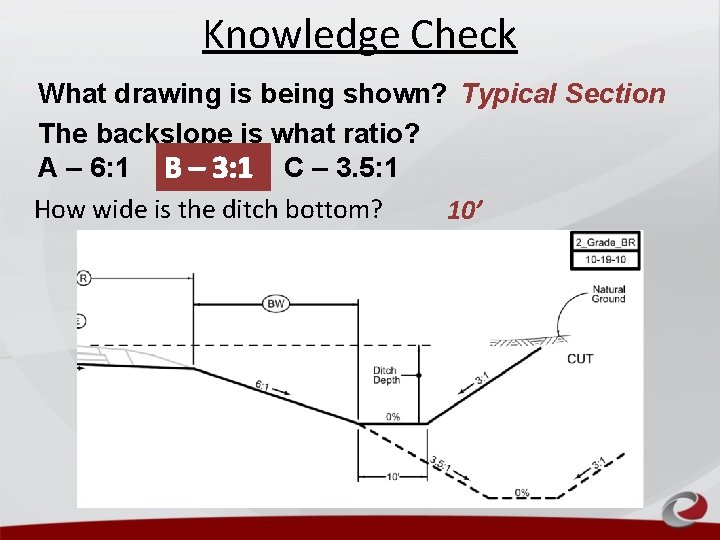
Typical Section Sheet Typical Sections Left Side C L Foreslope Shoulder Break Point Fill Section The table shows areas where this typical section applies (station ranges) and also provides values for dimensions shown on section. Typical Section for Grading. Sheet B. 1 Right Side Ditch Backslope Cut Section NOTE: Longitudinal utility installations are NOT allowed in the foreslope or ditch bottom.
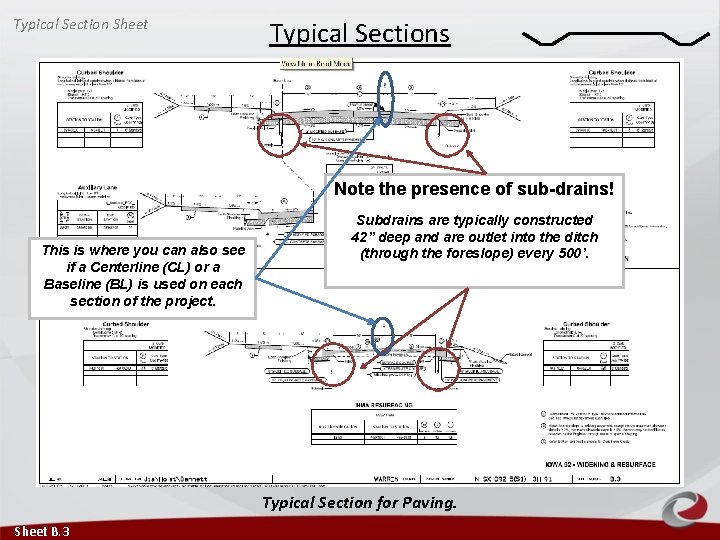
Typical Section Sheet Typical Sections Note the presence of sub-drains! This is where you can also see if a Centerline (CL) or a Baseline (BL) is used on each section of the project. Subdrains are typically constructed 42” deep and are outlet into the ditch (through the foreslope) every 500’. Typical Section for Paving. Sheet B. 3
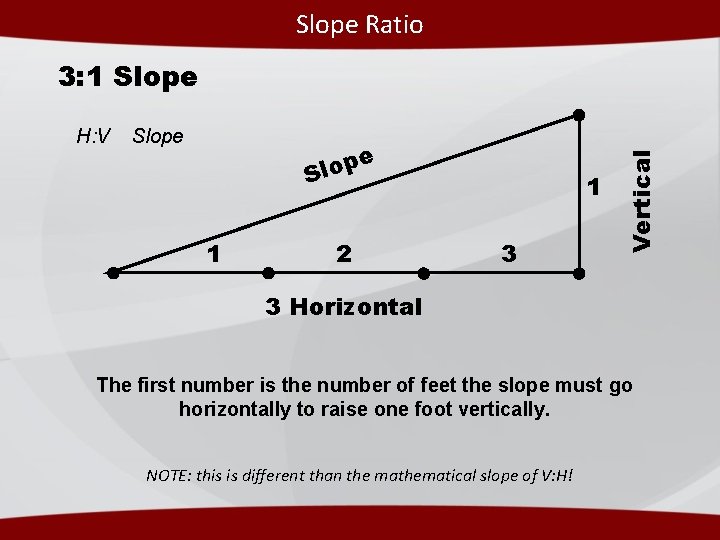
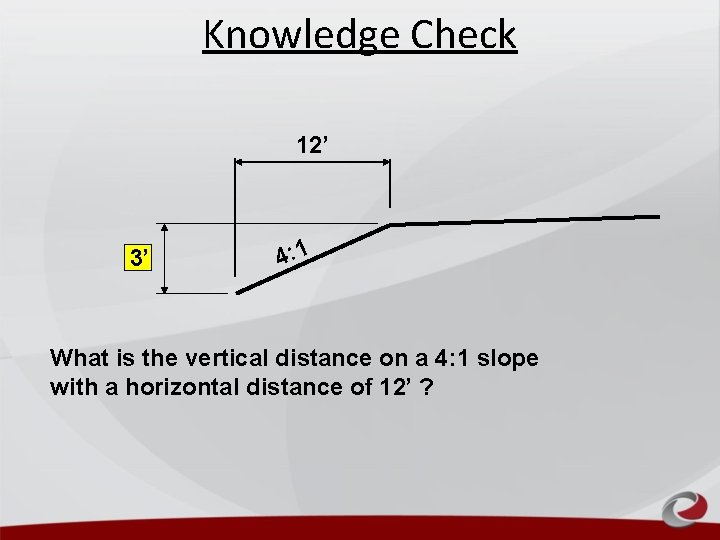
Slope Ratio H: V Slope e p Slo 1 2 1 3 Vertical 3: 1 Slope 3 Horizontal The first number is the number of feet the slope must go horizontally to raise one foot vertically. NOTE: this is different than the mathematical slope of V: H!
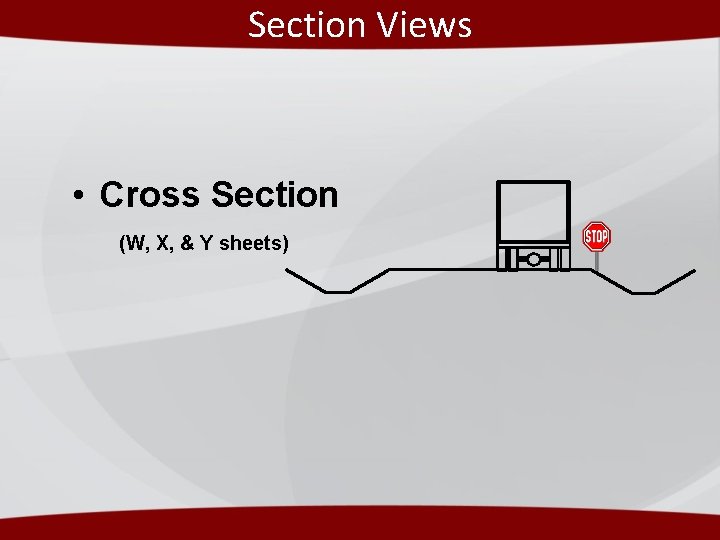
Section Views • Cross Section (W, X, & Y sheets)
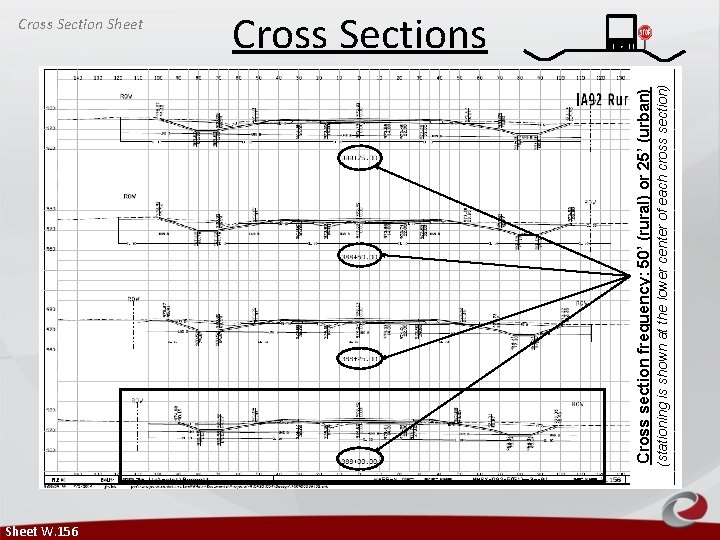
Sheet W. 156 (stationing is shown at the lower center of each cross section) Cross section frequency: 50’ (rural) or 25’ (urban) Cross Section Sheet Cross Sections
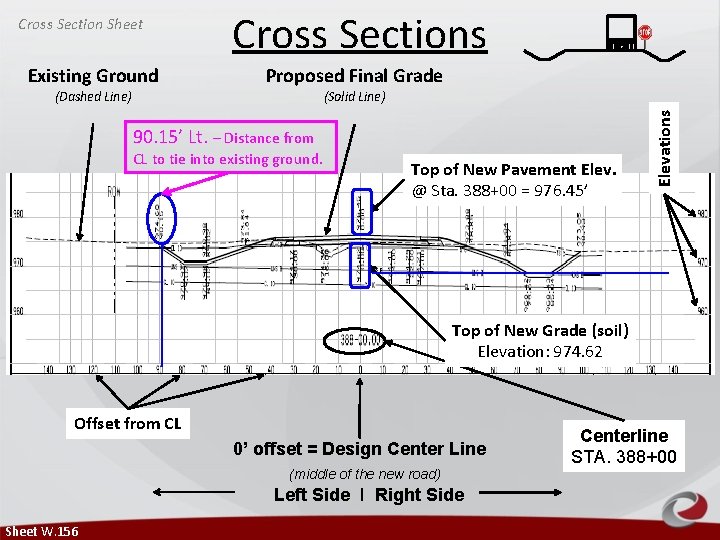
Existing Ground (Dashed Line) Cross Sections Proposed Final Grade (Solid Line) 90. 15’ Lt. – Distance from CL to tie into existing ground. Top of New Pavement Elev. @ Sta. 388+00 = 976. 45’ Elevations Cross Section Sheet Top of New Grade (soil) Elevation: 974. 62 Offset from CL 0’ offset = Design Center Line (middle of the new road) Left Side I Right Side Sheet W. 156 Centerline STA. 388+00
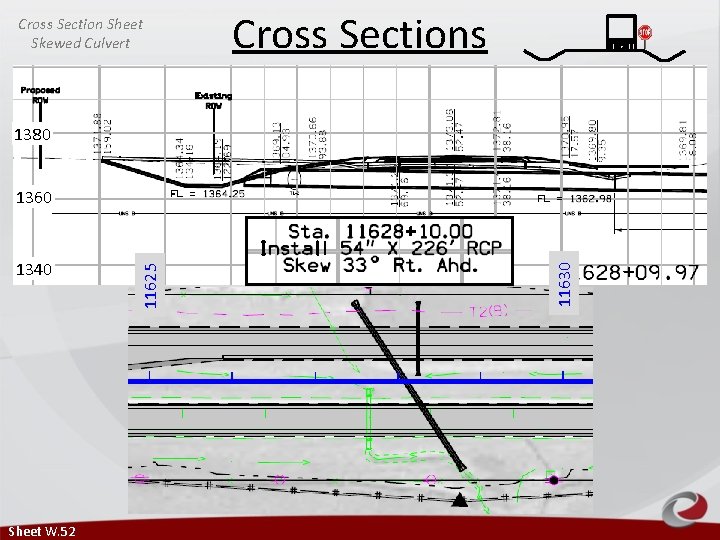
Cross Section Sheet Skewed Culvert Cross Sections 1380 Sheet W. 52 11630 1340 11625 1360
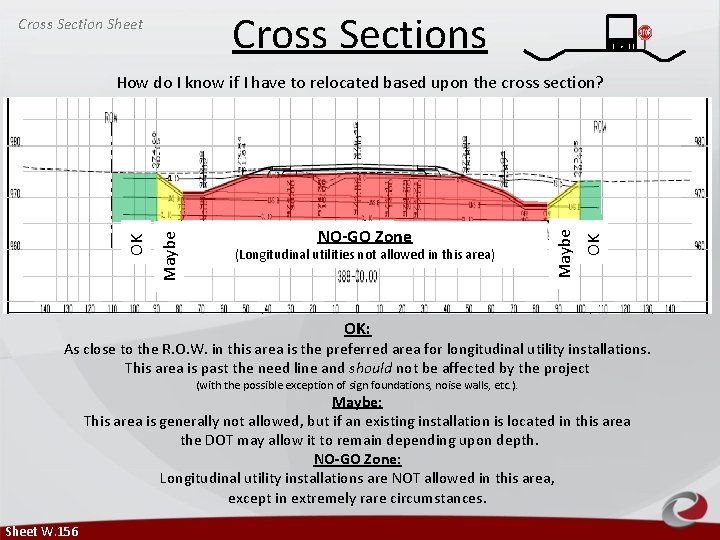
Cross Sections Cross Section Sheet (Longitudinal utilities not allowed in this area) OK NO-GO Zone Maybe OK How do I know if I have to relocated based upon the cross section? OK: As close to the R. O. W. in this area is the preferred area for longitudinal utility installations. This area is past the need line and should not be affected by the project (with the possible exception of sign foundations, noise walls, etc. ). Maybe: This area is generally not allowed, but if an existing installation is located in this area the DOT may allow it to remain depending upon depth. NO-GO Zone: Longitudinal utility installations are NOT allowed in this area, except in extremely rare circumstances. Sheet W. 156
Electronic Plans • PDF plans posted to Utilities FTP site for all projects • Link to FTP site sent with project notifications (U 02, U 03, U 04) • Microstation design files (. dgn) are available upon request • Contact the District Utility Coordinator to request these files • The Iowa DOT does not provide Auto. CAD files (. dwg) but Microstation files can often be converted to Auto. CAD (. dwg) by others.
Review 1. 2. 3. Look at title sheet (A. 1) to determine project scope. Look at map sheet (A. 2) to determine project location. If your installation may be impacted, go to the Plan and Profile sheets (D sheets) to find your utility installation on the plan sheets. a. b. 4. 5. Check to see if your facilities are inside the “need line. ” Check to see if the R. O. W. is changing in the area where your facility is located. If it appears your facilities may be impacted, go to the impacted locations in the cross sections to see extent of grading work. If no “D sheets” in plan, check “B sheet” typical sections for extent of work. a. b. Typically this occurs on jobs with minimal or no grading work. If it is an urban job, check for “S sheets” to determine any sidewalk upgrades which would impact above-ground facilities (poles, pedestals, handholds, etc. ).
Questions? Bryan Bradley, P. E. 800 Lincoln Way Ames, Iowa 50100 State Utility Engineer 515 -239 -1014 bryan. bradley@dot. iowa. gov
Knowledge Check
Knowledge Check 12’ 3’ ? 4: 1 What is the vertical distance on a 4: 1 slope with a horizontal distance of 12’ ?
Knowledge Check What drawing is being shown? Typical Section The backslope is what ratio? A – 6: 1 B – 3: 1 C – 3. 5: 1 How wide is the ditch bottom? 10’
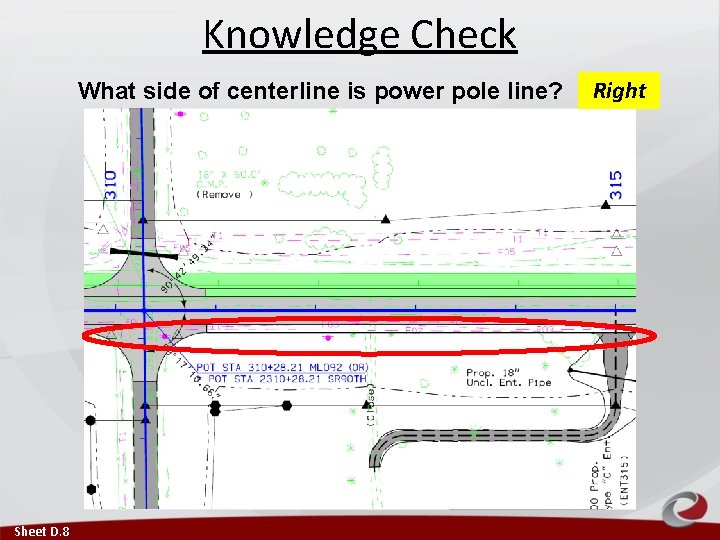
Knowledge Check What side of centerline is power pole line? Sheet D. 8 Right
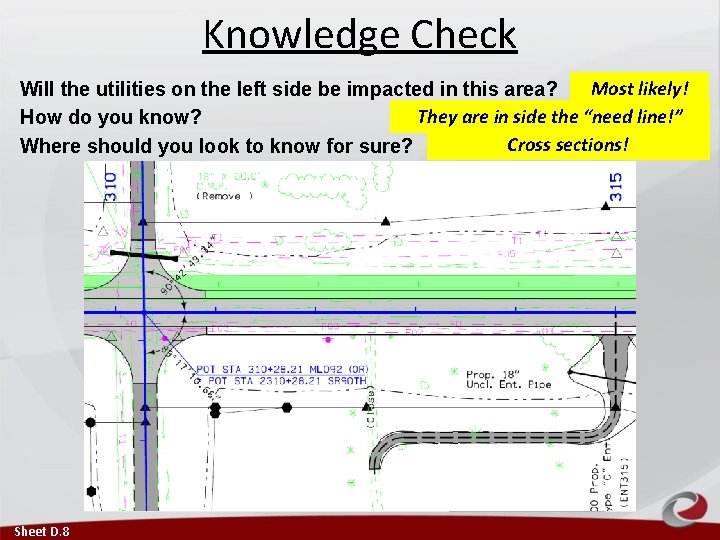
Knowledge Check Most likely! Will the utilities on the left side be impacted in this area? They are in side the “need line!” How do you know? Cross sections! Where should you look to know for sure? Sheet D. 8
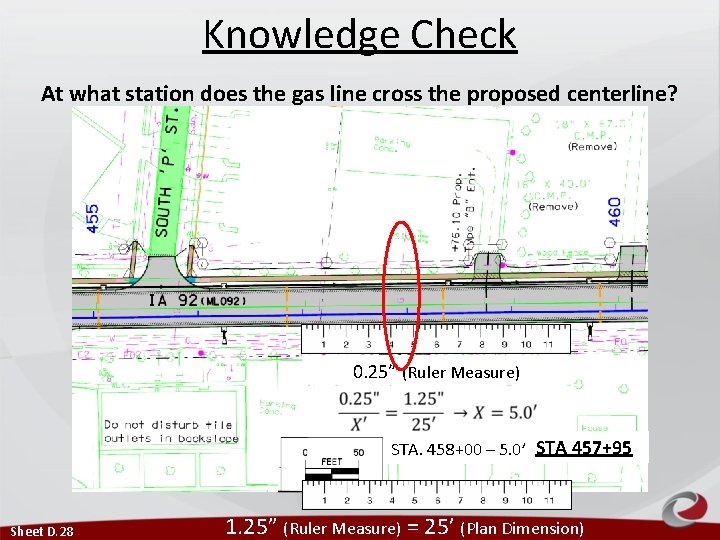
Knowledge Check At what station does the gas line cross the proposed centerline? 0. 25” (Ruler Measure) STA. 458+00 – 5. 0’ =STA 457+95 Sheet D. 28 1. 25” (Ruler Measure) = 25’ (Plan Dimension)
Questions? Bryan Bradley, P. E. 800 Lincoln Way Ames, Iowa 50100 Special Thanks to: Ben Hucker Brenda Sanders State Utility Engineer 515 -239 -1014 bryan. bradley@dot. iowa. gov District 6 TEI District 5 EOT