
Highresolution Modelling of the Boundary Layer and Implications
High-resolution Modelling of the Boundary Layer and Implications for Urban Airquality Forecasting RMet. S Atmospheric Science Conference 2018 Lewis Blunn Supervisors: Dr Omduth Coceal (NCAS), Prof Bob Plant (Uo. R), Prof Janet Barlow (Uo. R), Dr Sylvia Bohnenstengel (Met Office) and Dr Humphrey Lean (Met Office) Funding: NCAS Air Quality Studentship and University of Reading 1
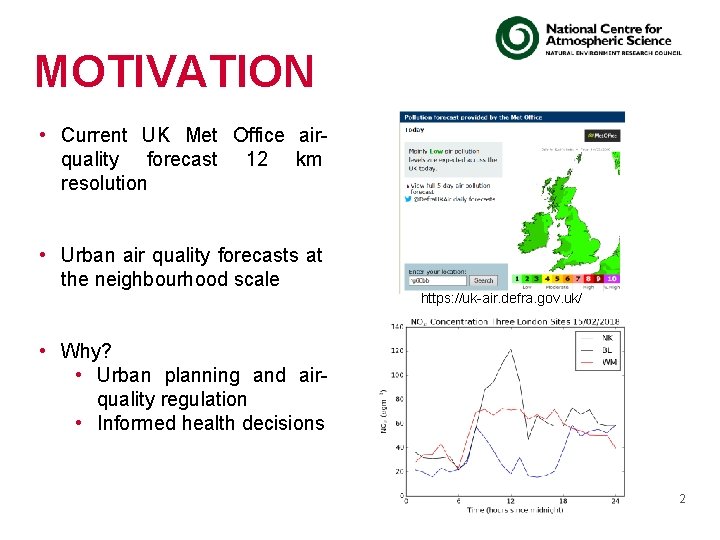
MOTIVATION • Current UK Met Office airquality forecast 12 km resolution • Urban air quality forecasts at the neighbourhood scale https: //uk-air. defra. gov. uk/ • Why? • Urban planning and airquality regulation • Informed health decisions 2
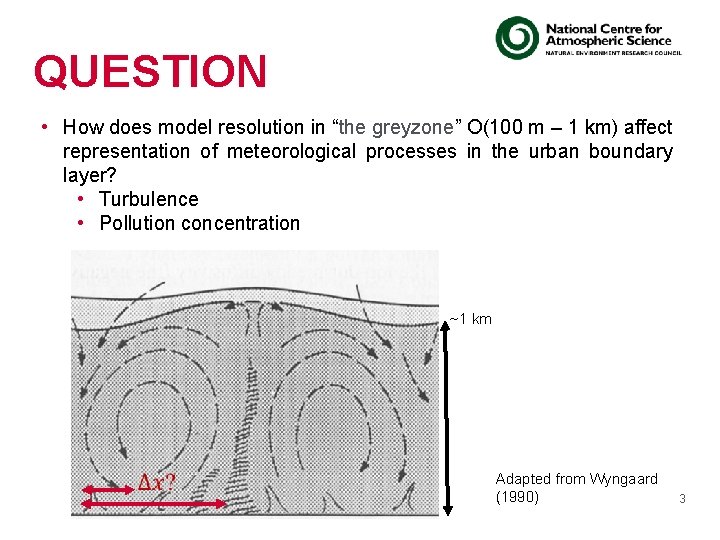
QUESTION • How does model resolution in “the greyzone” O(100 m – 1 km) affect representation of meteorological processes in the urban boundary layer? • Turbulence • Pollution concentration ~1 km Adapted from Wyngaard (1990) 3
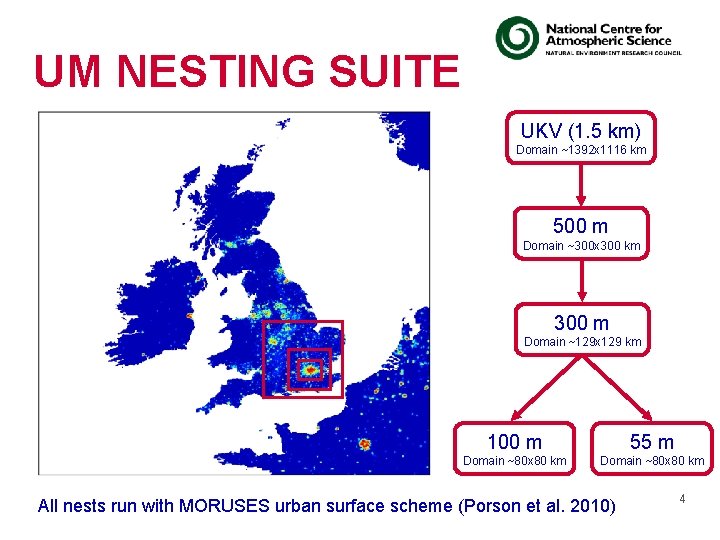
UM NESTING SUITE UKV (1. 5 km) Domain ~1392 x 1116 km 500 m Domain ~300 x 300 km 300 m Domain ~129 x 129 km 100 m 55 m Domain ~80 x 80 km All nests run with MORUSES urban surface scheme (Porson et al. 2010) 4
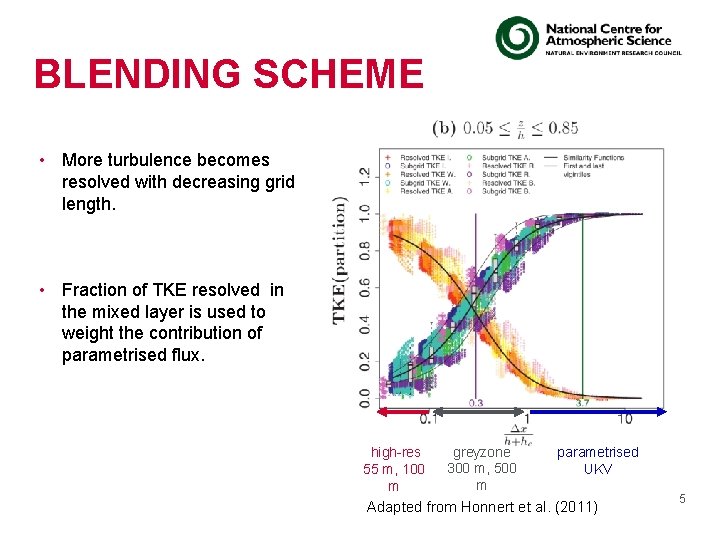
BLENDING SCHEME • More turbulence becomes resolved with decreasing grid length. • Fraction of TKE resolved in the mixed layer is used to weight the contribution of parametrised flux. high-res 55 m, 100 m greyzone 300 m, 500 m parametrised UKV Adapted from Honnert et al. (2011) 5
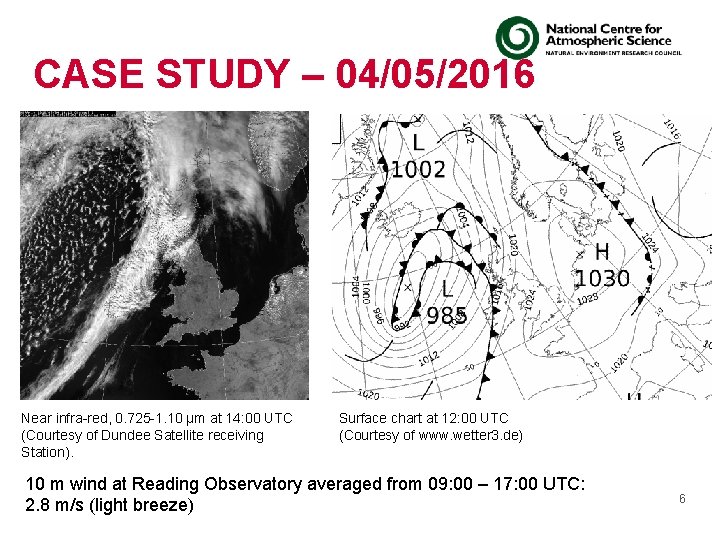
CASE STUDY – 04/05/2016 Near infra-red, 0. 725 -1. 10 µm at 14: 00 UTC (Courtesy of Dundee Satellite receiving Station). Surface chart at 12: 00 UTC (Courtesy of www. wetter 3. de) 10 m wind at Reading Observatory averaged from 09: 00 – 17: 00 UTC: 2. 8 m/s (light breeze) 6
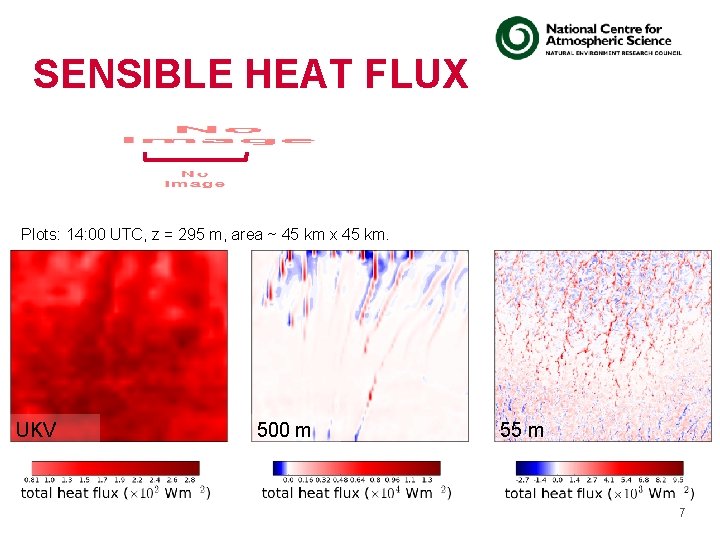
SENSIBLE HEAT FLUX Plots: 14: 00 UTC, z = 295 m, area ~ 45 km x 45 km. UKV 500 m 55 m 7
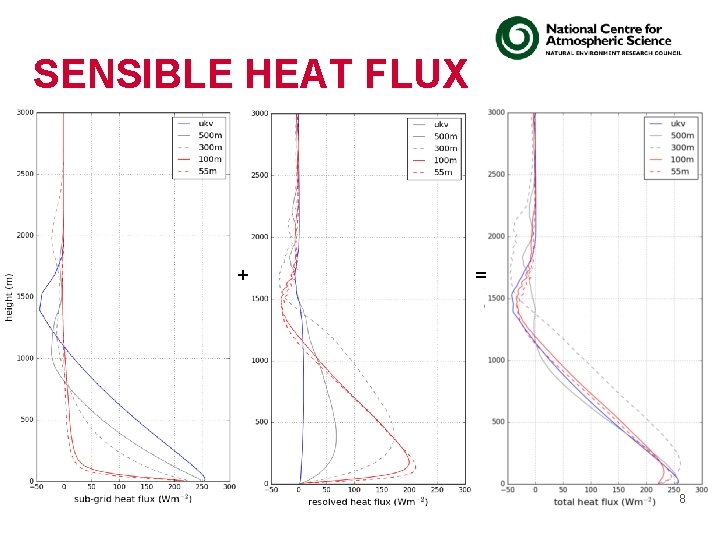
SENSIBLE HEAT FLUX + = 8
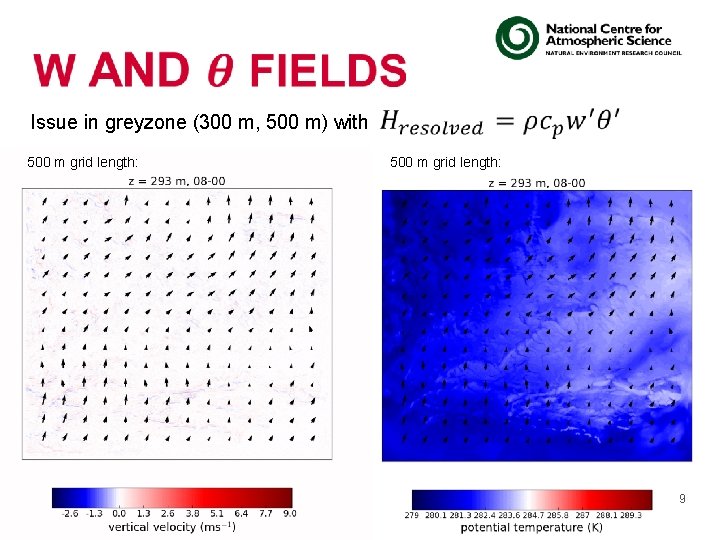
Issue in greyzone (300 m, 500 m) with 500 m grid length: 9
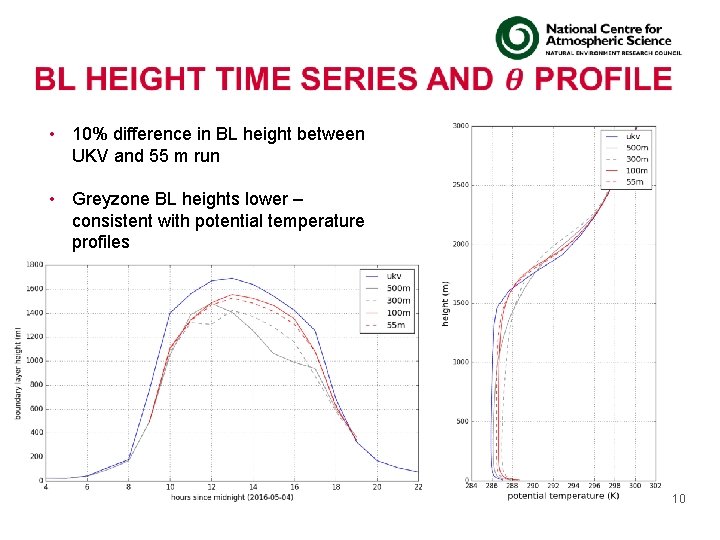
• 10% difference in BL height between UKV and 55 m run • Greyzone BL heights lower – consistent with potential temperature profiles 10
CONCLUSIONS • Advise caution when using greyzone for air quality forecasting • Recent Met Office “Blobbiness” report has similar findings • 10% difference in BL heights between 1. 5 km (UKV) and 55 m runs → Translates to approx. 10% difference in tracer concentration • Parametrised (UKV) and high-res (55 m, 100 m) sensible heat flux profiles consistent with each other • Spatial structure of sensible heat flux varies greatly with resolution → Pollution fluxes 11
THANK YOU References: - Honnert, R. , V. Masson, and F. Couvreux, 2011: A Diagnostic for Evaluating the Representation of Turbulence in Atmospheric Models at the Kilometric Scale. J. Atmos. Sci. 68, 3112– 3131. - Porson, A. , P. A. Clark, I. N. Harman, M. J. Best, and S. E. Belcher, 2010: Implementation of a new urban energy budget scheme in the Met. UM. Part I: Description and idealized simulations. Quart. J. Roy. Meteorol. Soc. 136, 1514 – 1529. - Wyngaard, J. C. , 1990: Scalar Fluxes in the Planetary Boundary Layer – Theory, Modeling, and Measurement. Boundary-Layer Meteorology 50, 49– 75. Lewis Blunn Supervisors: Dr Omduth Coceal (NCAS), Prof Bob Plant (Uo. R), Prof Janet Barlow (Uo. R), Dr Sylvia Bohnenstengel (Met Office) and Dr Humphrey Lean (Met Office) 12
- Slides: 12