
HighPerformance DRAM System Design Constraints and Considerations by

High-Performance DRAM System Design Constraints and Considerations by: Joseph Gross August 2, 2010
Table of Contents �Background ◦ Devices and organizations �DRAM Protocol ◦ Operations and timing constraints �Power Analysis �Experimental Setup ◦ Policies and Algorithms �Results �Conclusions �Appendix 2
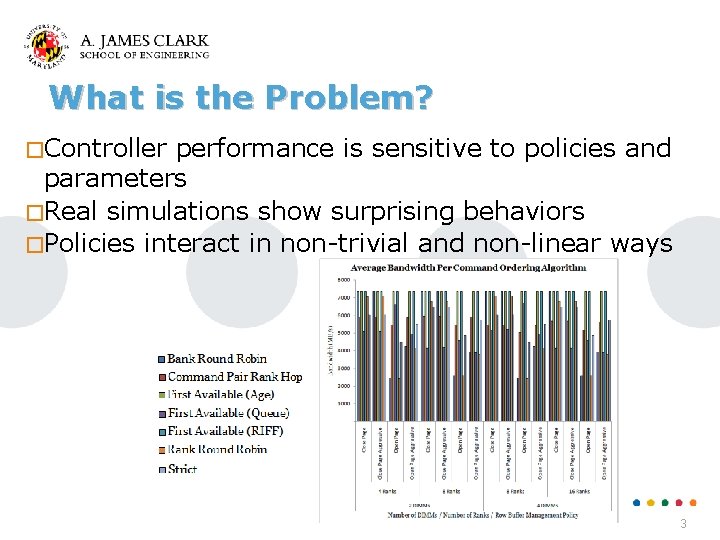
What is the Problem? �Controller performance is sensitive to policies and parameters �Real simulations show surprising behaviors �Policies interact in non-trivial and non-linear ways 3
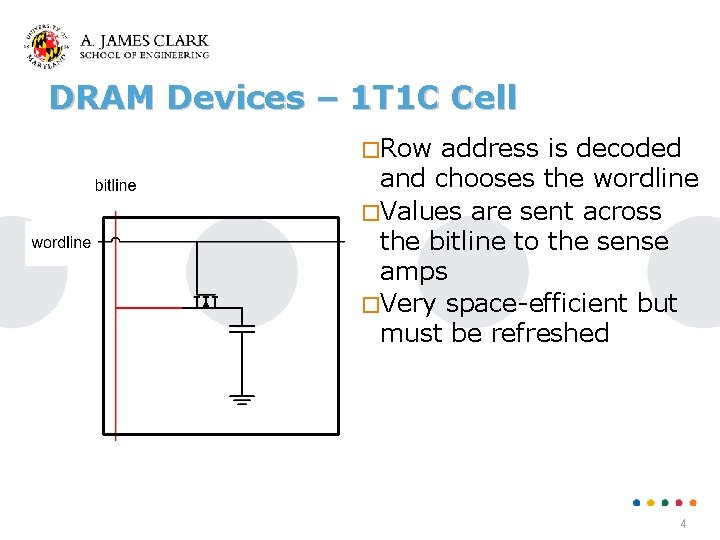
DRAM Devices – 1 T 1 C Cell �Row address is decoded and chooses the wordline �Values are sent across the bitline to the sense amps �Very space-efficient but must be refreshed 4
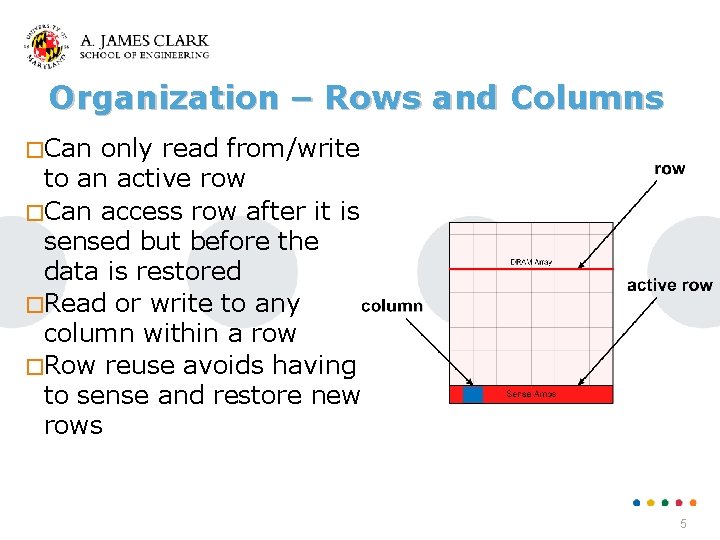
Organization – Rows and Columns �Can only read from/write to an active row �Can access row after it is sensed but before the data is restored �Read or write to any column within a row �Row reuse avoids having to sense and restore new rows 5
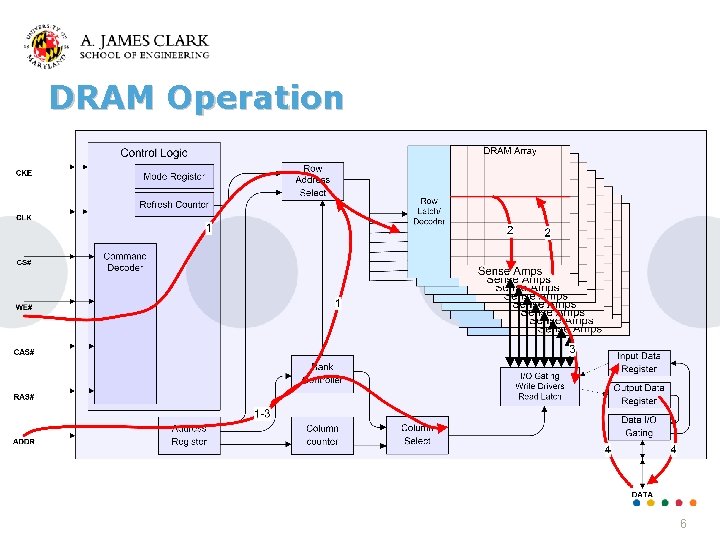
DRAM Operation 6
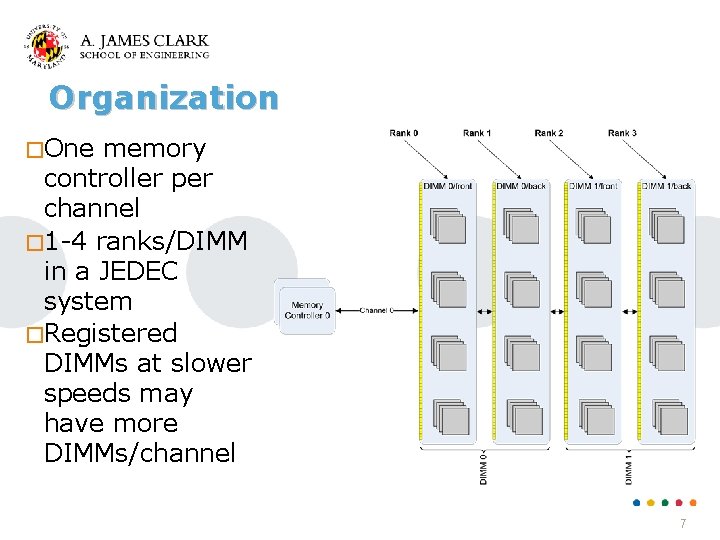
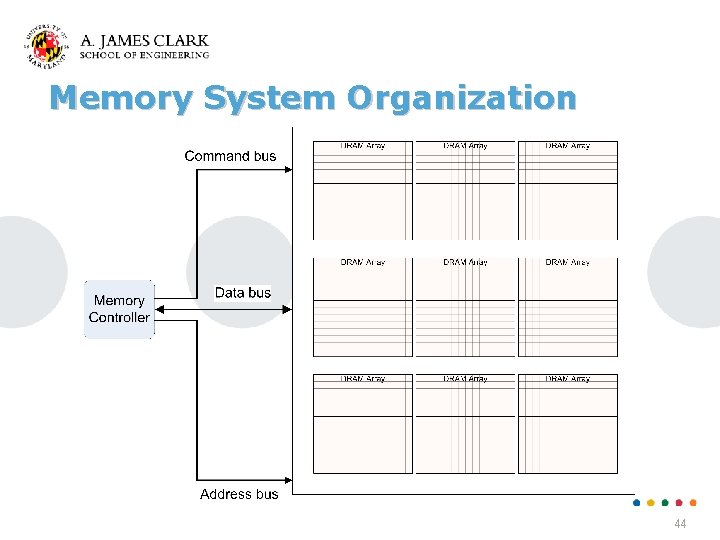
Organization �One memory controller per channel � 1 -4 ranks/DIMM in a JEDEC system �Registered DIMMs at slower speeds may have more DIMMs/channel 7
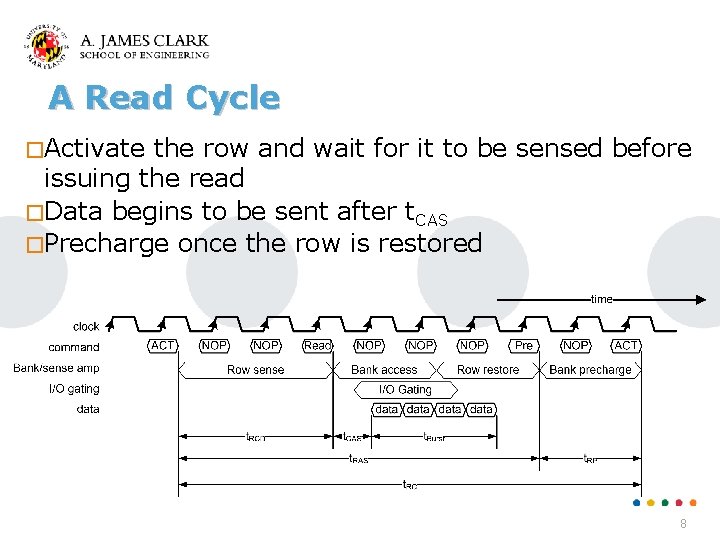
A Read Cycle �Activate the row and wait for it to be sensed before issuing the read �Data begins to be sent after t. CAS �Precharge once the row is restored 8
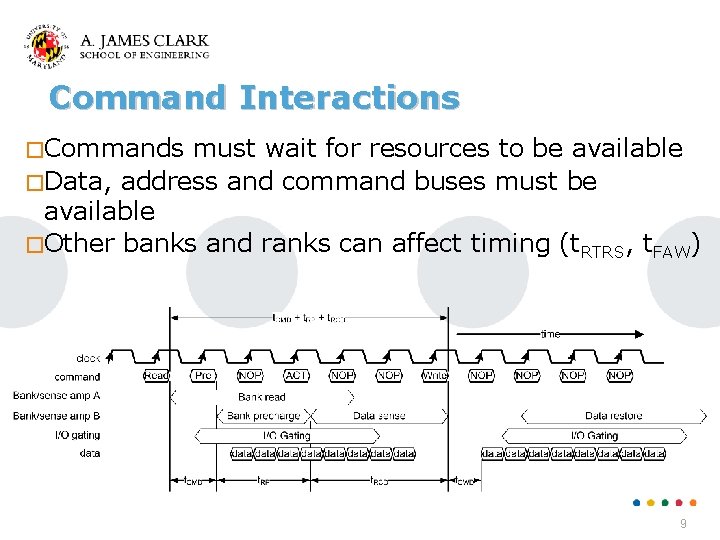
Command Interactions �Commands must wait for resources to be available �Data, address and command buses must be available �Other banks and ranks can affect timing (t. RTRS, t. FAW) 9
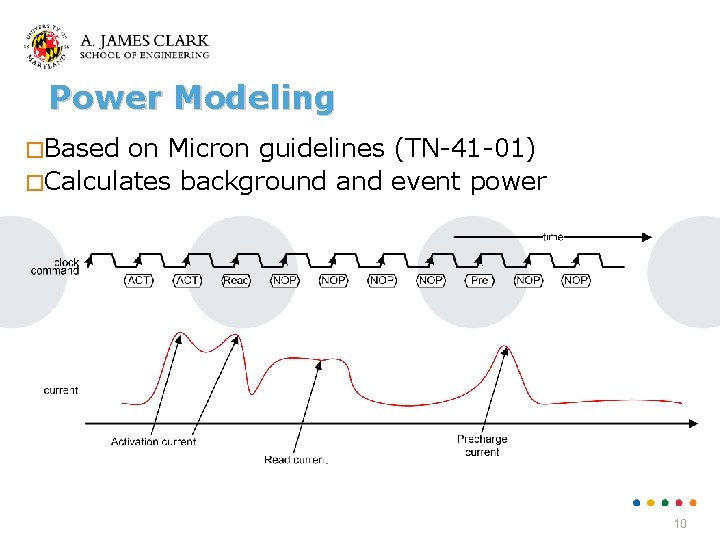
Power Modeling �Based on Micron guidelines (TN-41 -01) �Calculates background and event power 10
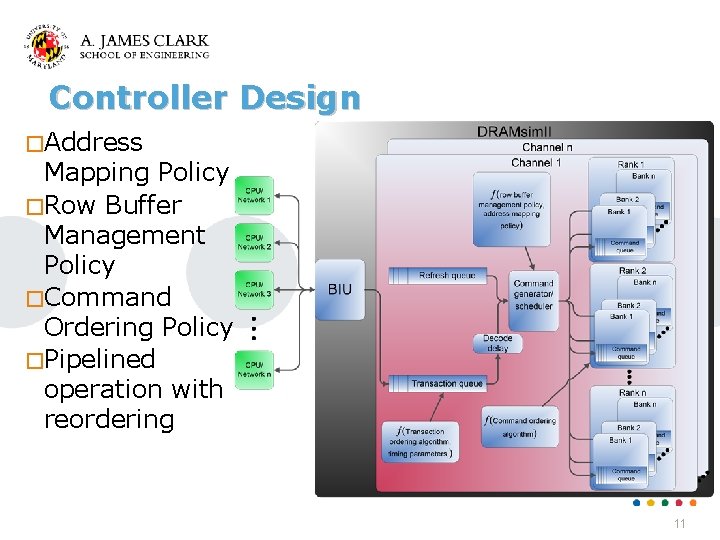
Controller Design �Address Mapping Policy �Row Buffer Management Policy �Command Ordering Policy �Pipelined operation with reordering 11
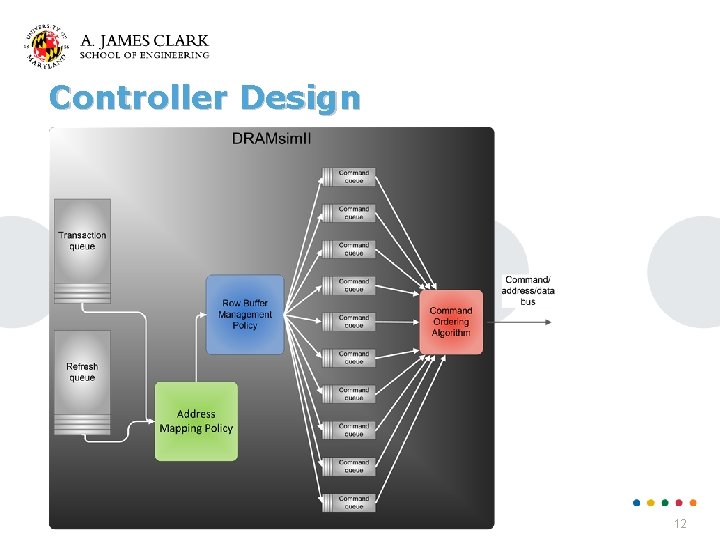
Controller Design 12
Transaction Queue �Not varied in this simulation �Policies ◦ Reads go before writes ◦ Fetches go before reads ◦ Variable number of transactions may be decoded �Optimized to avoid bottlenecks �Request reordering 13
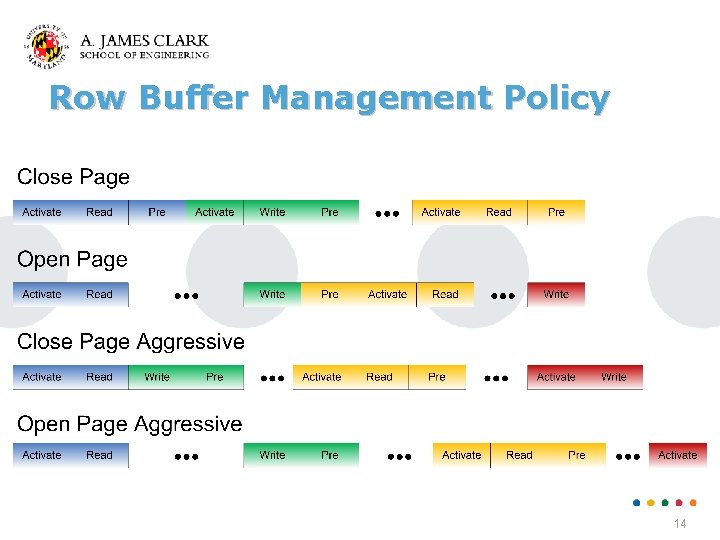
Row Buffer Management Policy 14
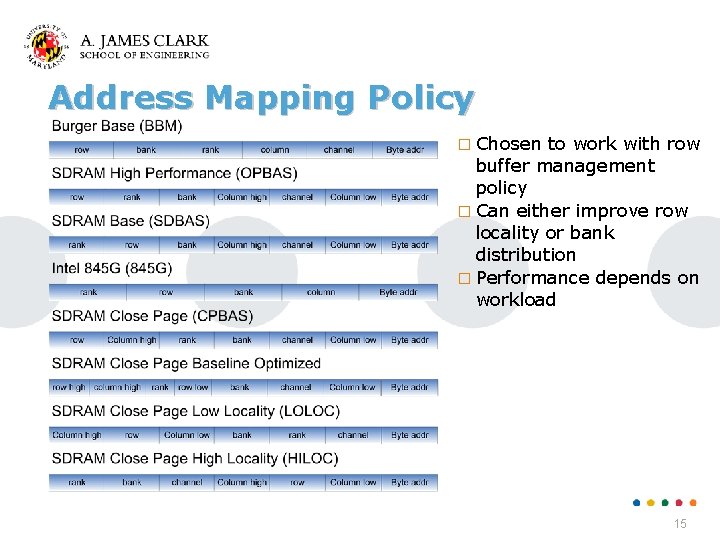
Address Mapping Policy � Chosen to work with row buffer management policy � Can either improve row locality or bank distribution � Performance depends on workload 15
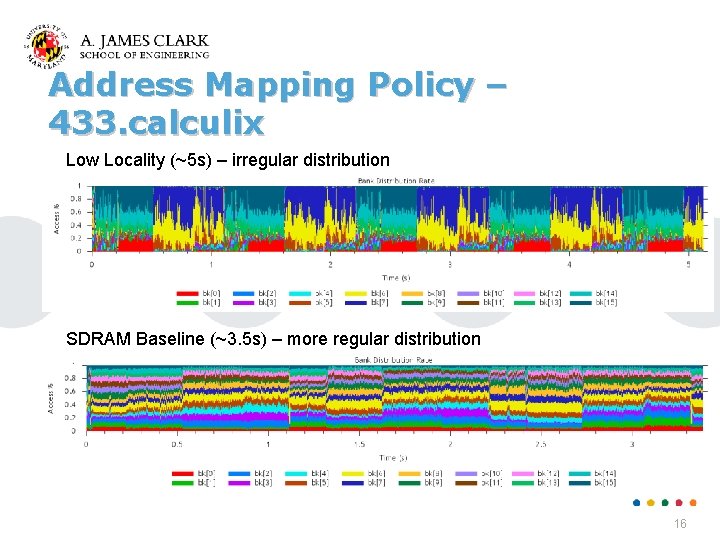
Address Mapping Policy – 433. calculix Low Locality (~5 s) – irregular distribution SDRAM Baseline (~3. 5 s) – more regular distribution 16
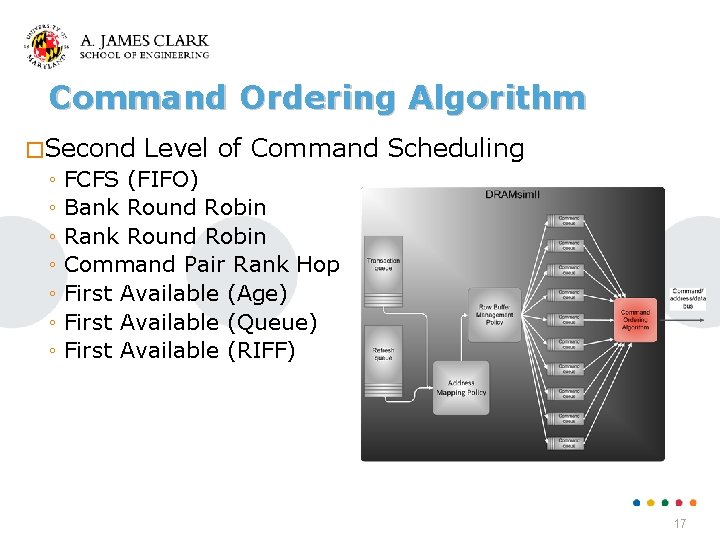
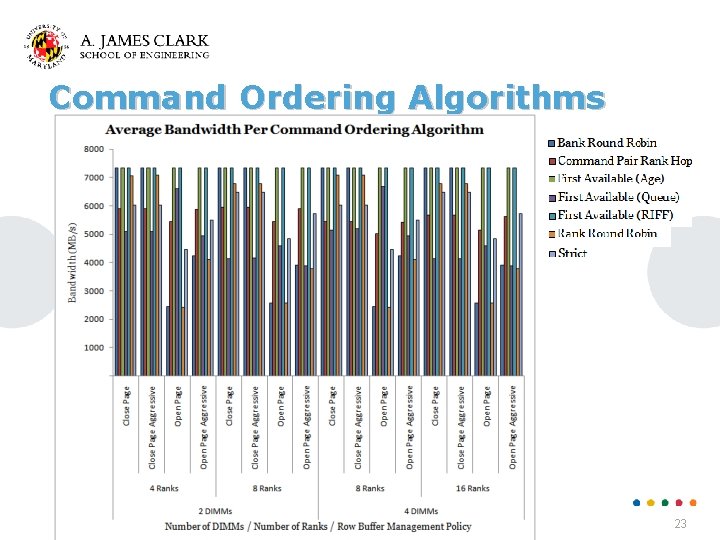
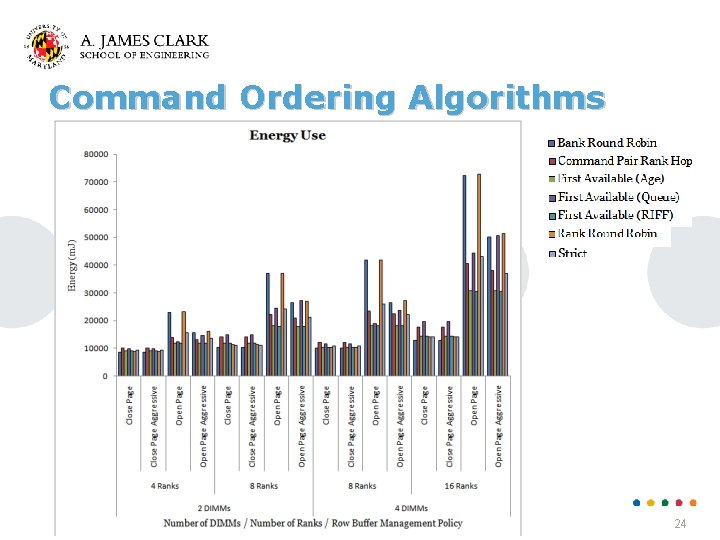
Command Ordering Algorithm �Second Level of Command Scheduling ◦ FCFS (FIFO) ◦ Bank Round Robin ◦ Rank Round Robin ◦ Command Pair Rank Hop ◦ First Available (Age) ◦ First Available (Queue) ◦ First Available (RIFF) 17
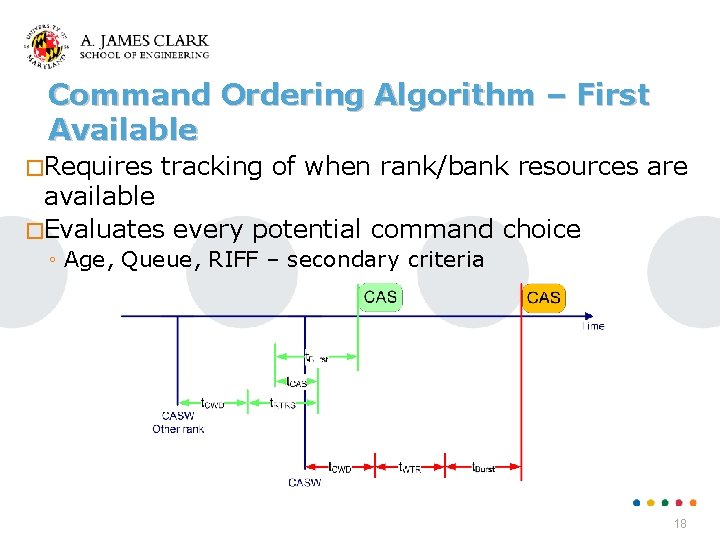
Command Ordering Algorithm – First Available �Requires tracking of when rank/bank resources are available �Evaluates every potential command choice ◦ Age, Queue, RIFF – secondary criteria 18
Results - Bandwidth 19
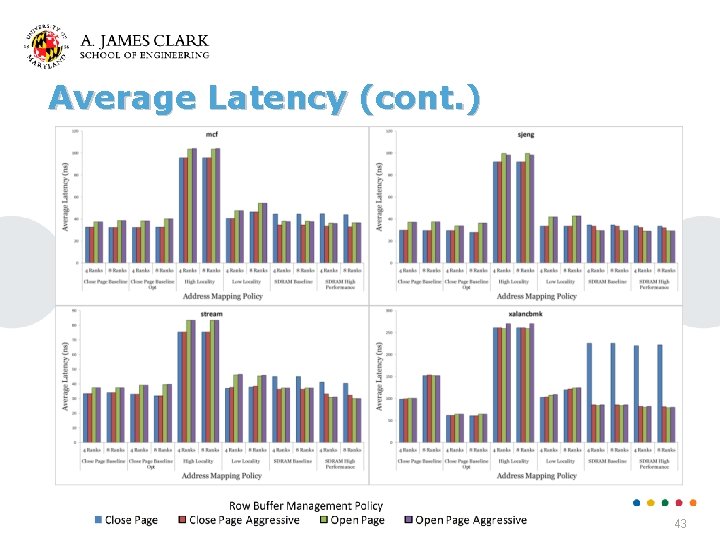
Results - Latency 20
Results – Execution Time 21
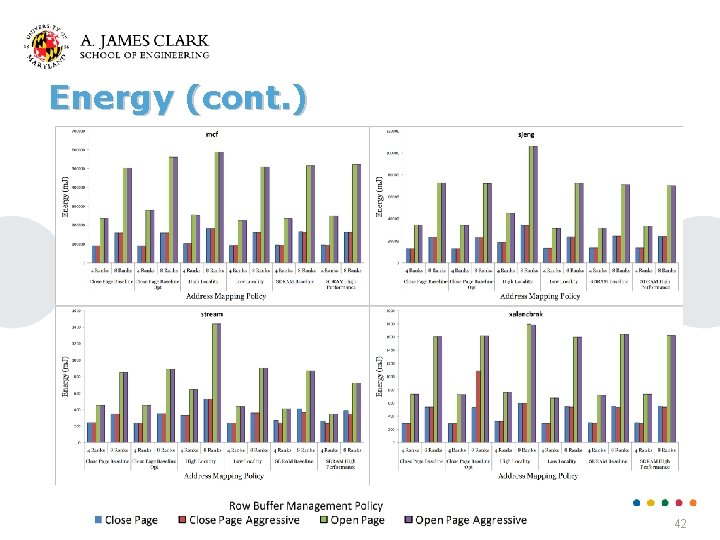
Results - Energy 22
Command Ordering Algorithms 23
Command Ordering Algorithms 24
Conclusions �The right combination of policies can achieve good latency/bandwidth for a given benchmark ◦ Address mapping policies and row buffer management policies should be chosen together ◦ Command ordering algorithms become important as the memory system is heavily loaded �Open Page policies require more energy than Close Page policies in most conditions �The extra logic for more complex schemes helps improve bandwidth but may not be necessary �Address mapping policies should balance row reuse and bank distribution to reuse open rows and use available resources in parallel 25
Appendix 26
Bandwidth (cont. ) 27
Row Reuse Rate (cont. ) 28
Bandwidth (cont. ) 29
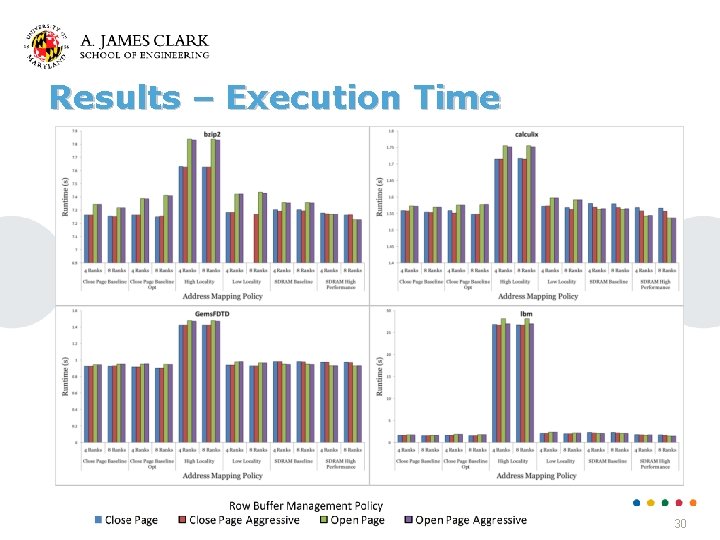
Results – Execution Time 30
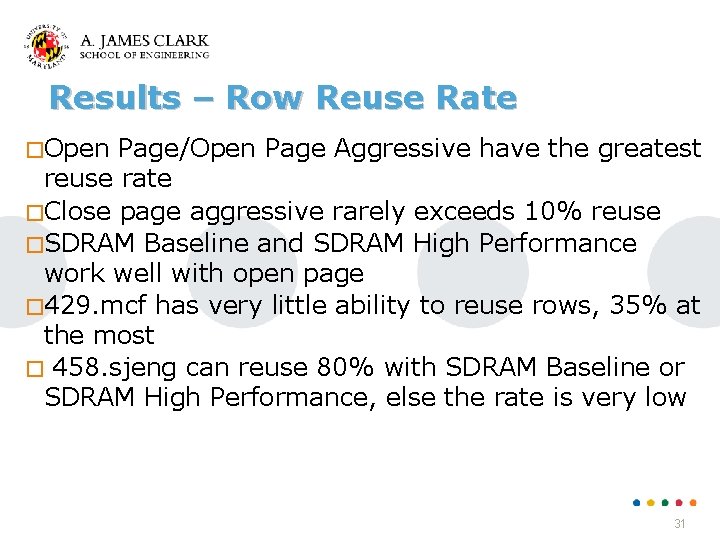
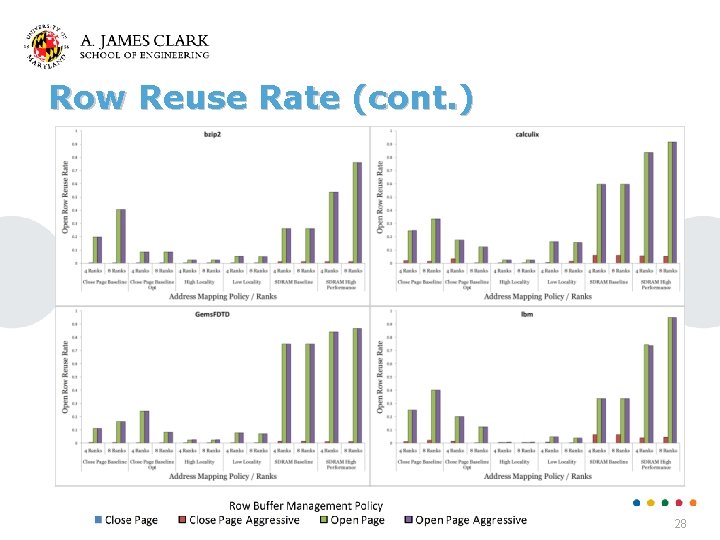
Results – Row Reuse Rate �Open Page/Open Page Aggressive have the greatest reuse rate �Close page aggressive rarely exceeds 10% reuse �SDRAM Baseline and SDRAM High Performance work well with open page � 429. mcf has very little ability to reuse rows, 35% at the most � 458. sjeng can reuse 80% with SDRAM Baseline or SDRAM High Performance, else the rate is very low 31
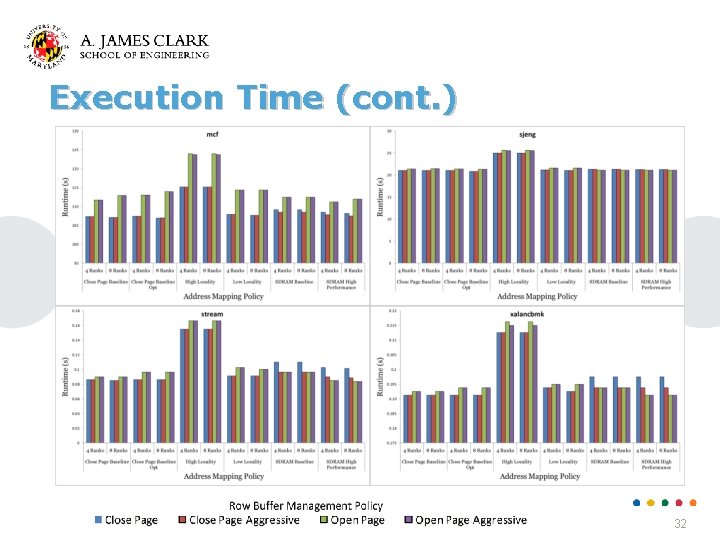
Execution Time (cont. ) 32
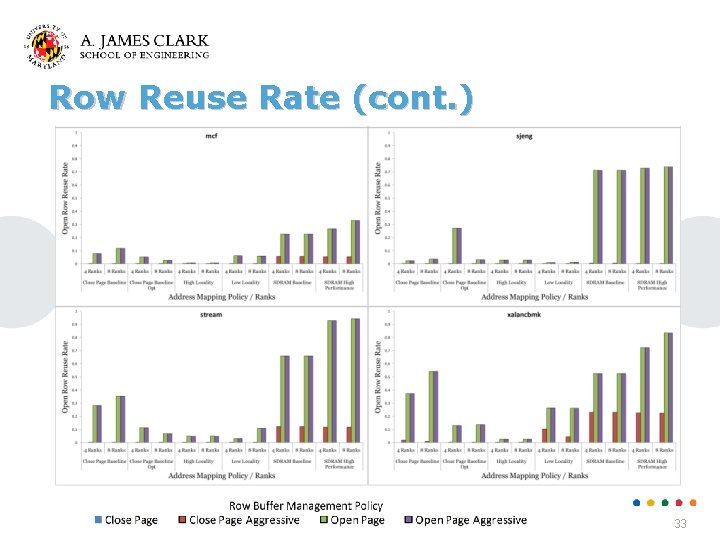
Row Reuse Rate (cont. ) 33
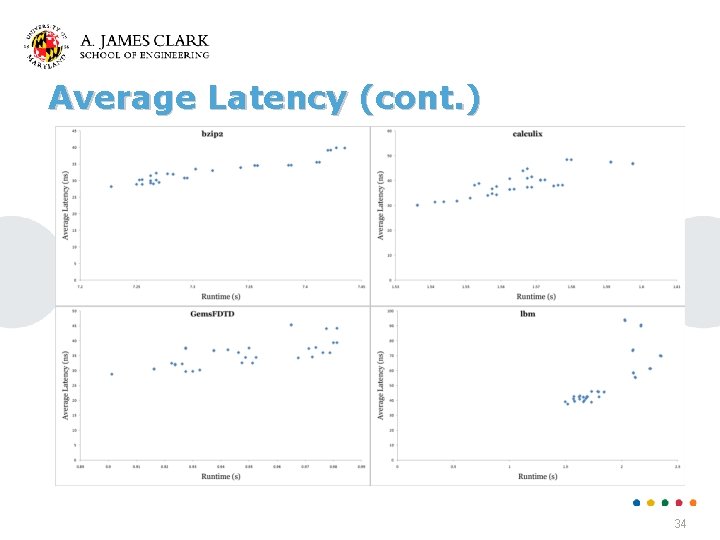
Average Latency (cont. ) 34
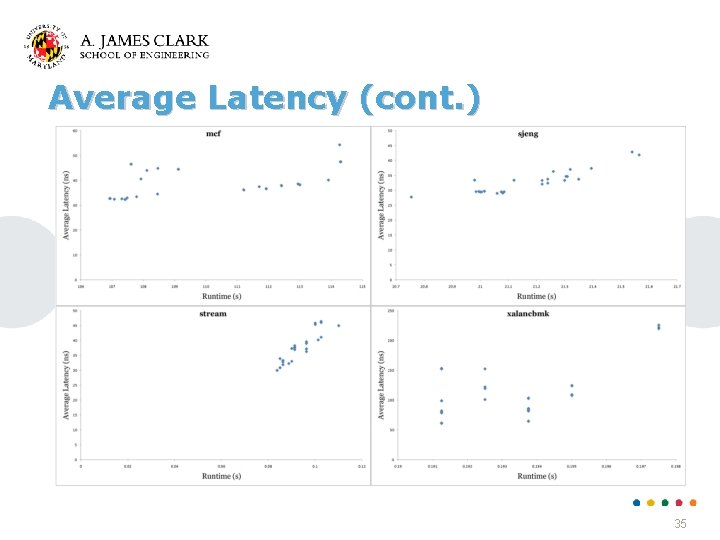
Average Latency (cont. ) 35
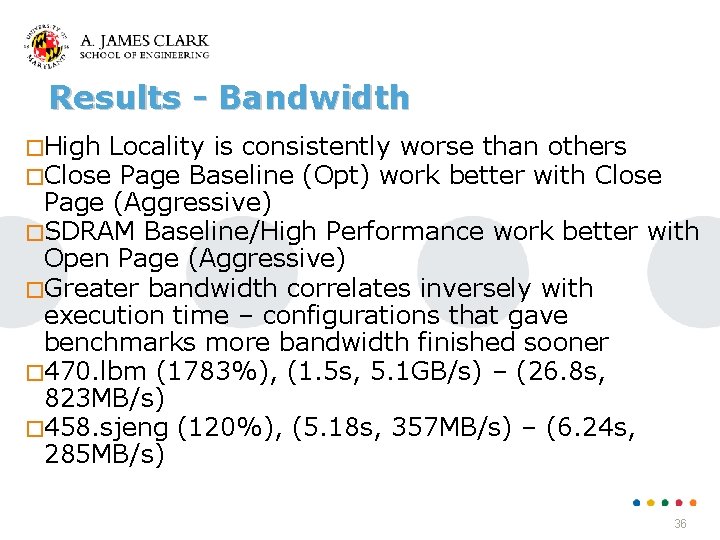
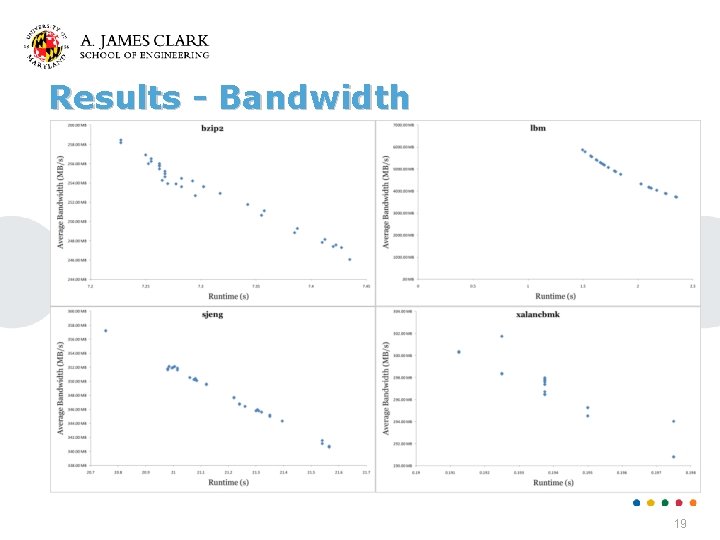
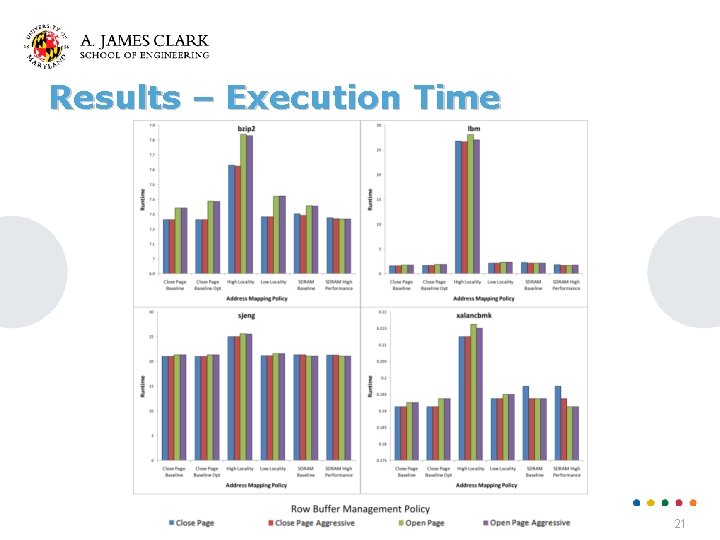
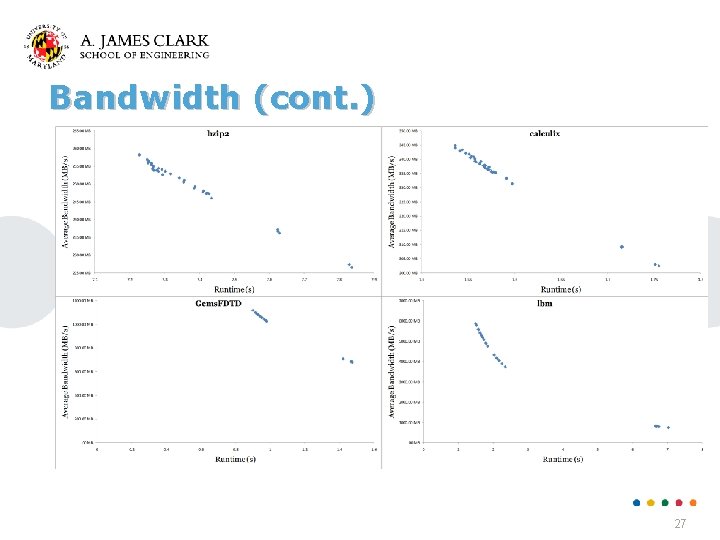
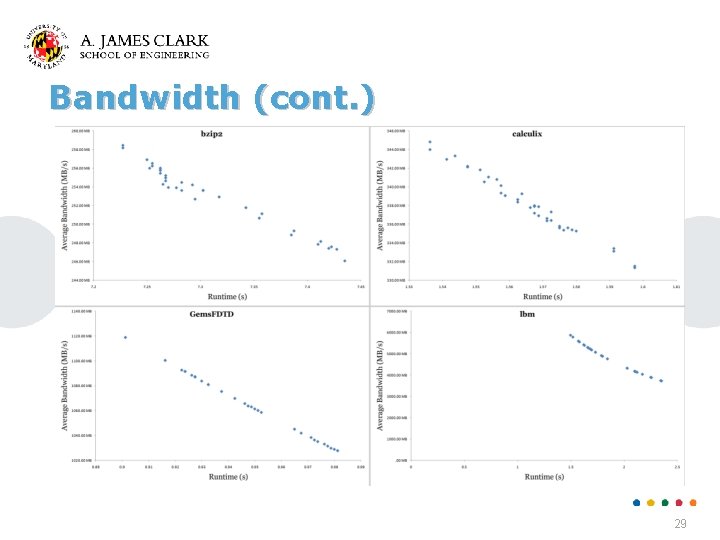
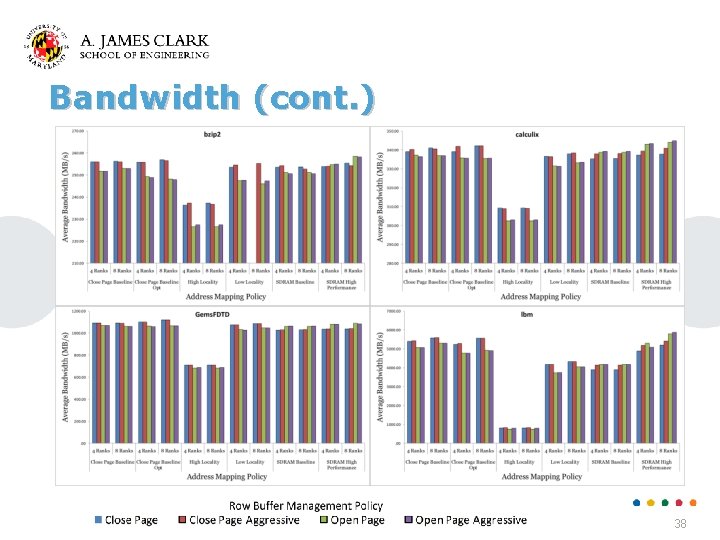
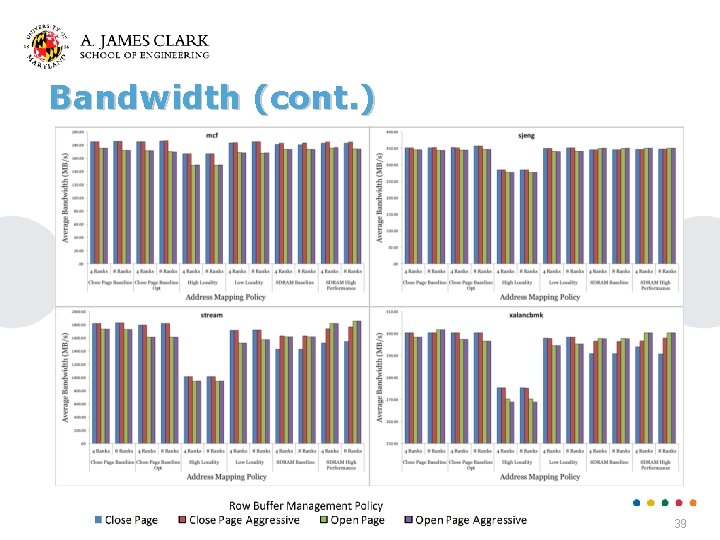
Results - Bandwidth �High Locality is consistently worse than others �Close Page Baseline (Opt) work better with Close Page (Aggressive) �SDRAM Baseline/High Performance work better with Open Page (Aggressive) �Greater bandwidth correlates inversely with execution time – configurations that gave benchmarks more bandwidth finished sooner � 470. lbm (1783%), (1. 5 s, 5. 1 GB/s) – (26. 8 s, 823 MB/s) � 458. sjeng (120%), (5. 18 s, 357 MB/s) – (6. 24 s, 285 MB/s) 36
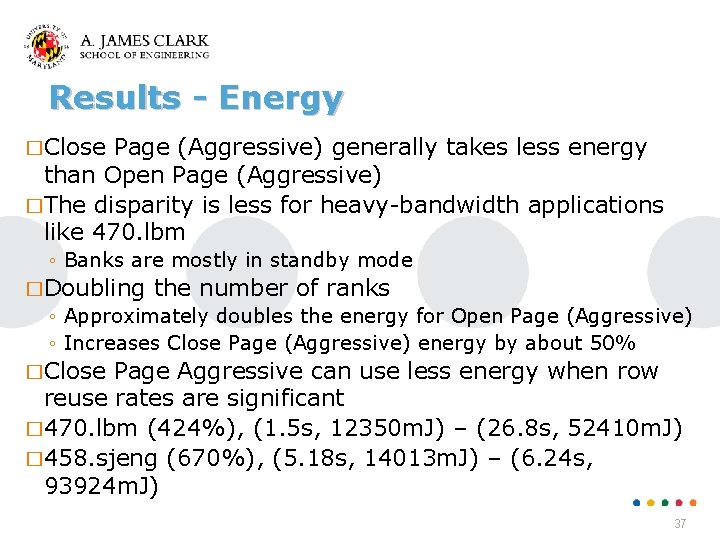
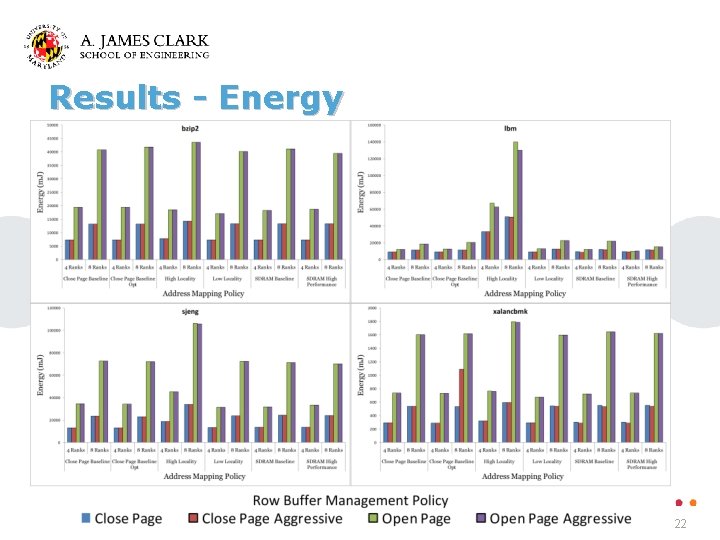
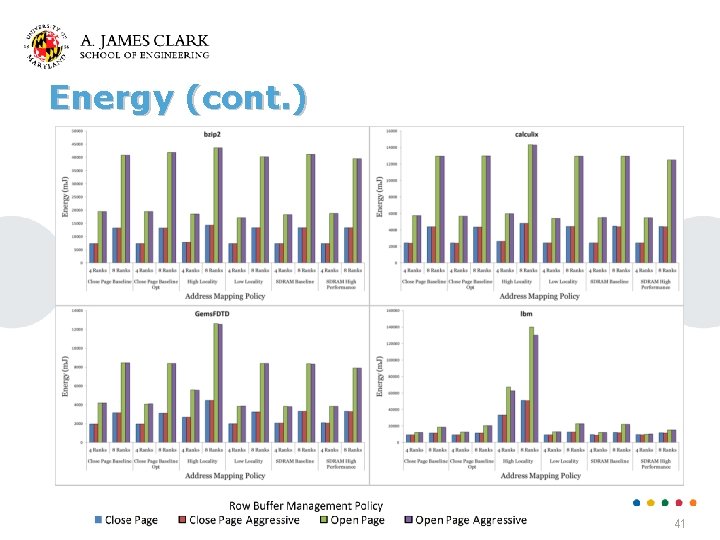
Results - Energy �Close Page (Aggressive) generally takes less energy than Open Page (Aggressive) �The disparity is less for heavy-bandwidth applications like 470. lbm ◦ Banks are mostly in standby mode �Doubling the number of ranks ◦ Approximately doubles the energy for Open Page (Aggressive) ◦ Increases Close Page (Aggressive) energy by about 50% �Close Page Aggressive can use less energy when row reuse rates are significant � 470. lbm (424%), (1. 5 s, 12350 m. J) – (26. 8 s, 52410 m. J) � 458. sjeng (670%), (5. 18 s, 14013 m. J) – (6. 24 s, 93924 m. J) 37
Bandwidth (cont. ) 38
Bandwidth (cont. ) 39
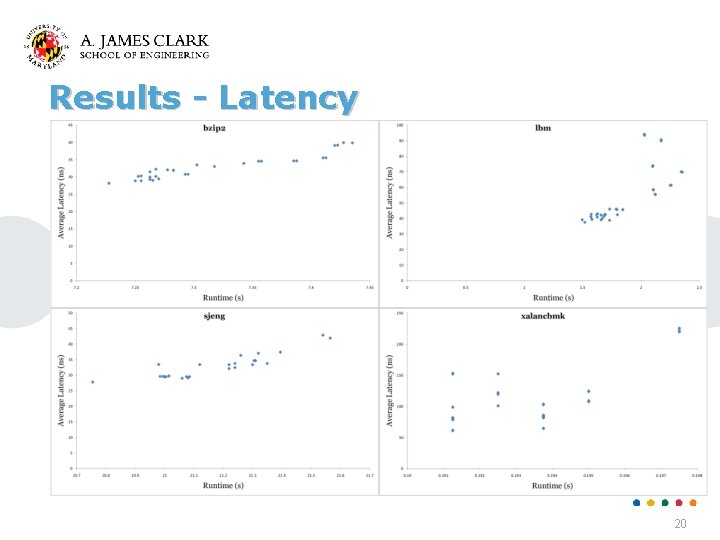
Results – Average Latency 40
Energy (cont. ) 41
Energy (cont. ) 42
Average Latency (cont. ) 43
Memory System Organization 44
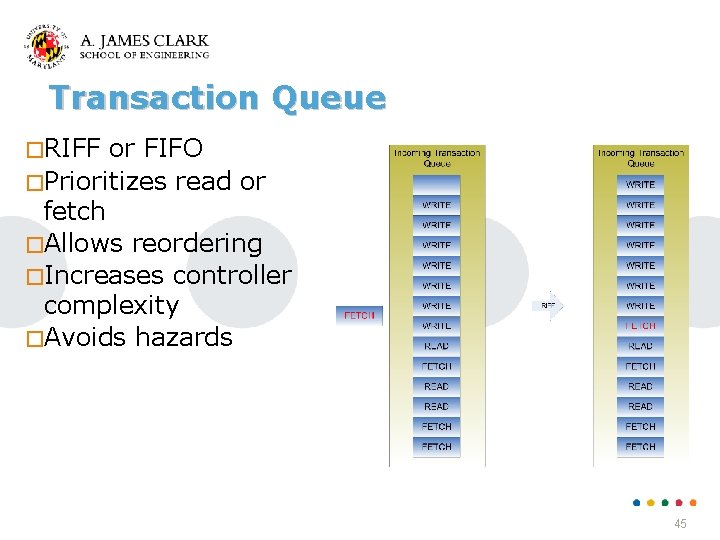
Transaction Queue �RIFF or FIFO �Prioritizes read or fetch �Allows reordering �Increases controller complexity �Avoids hazards 45
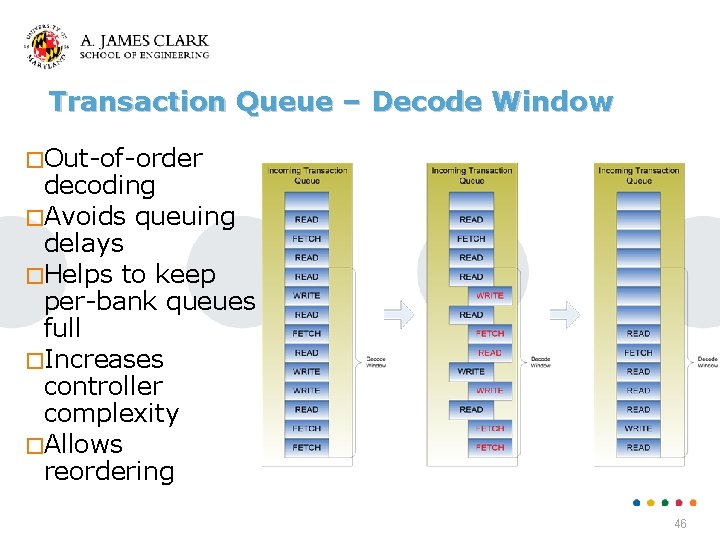
Transaction Queue – Decode Window �Out-of-order decoding �Avoids queuing delays �Helps to keep per-bank queues full �Increases controller complexity �Allows reordering 46
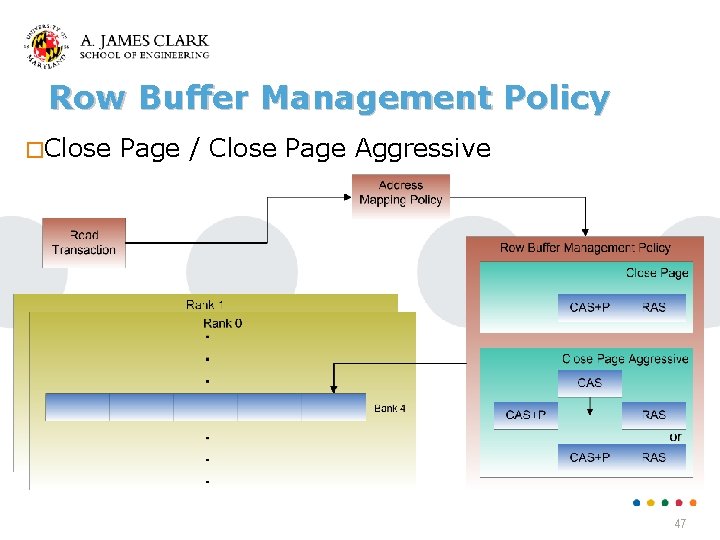
Row Buffer Management Policy �Close Page / Close Page Aggressive 47
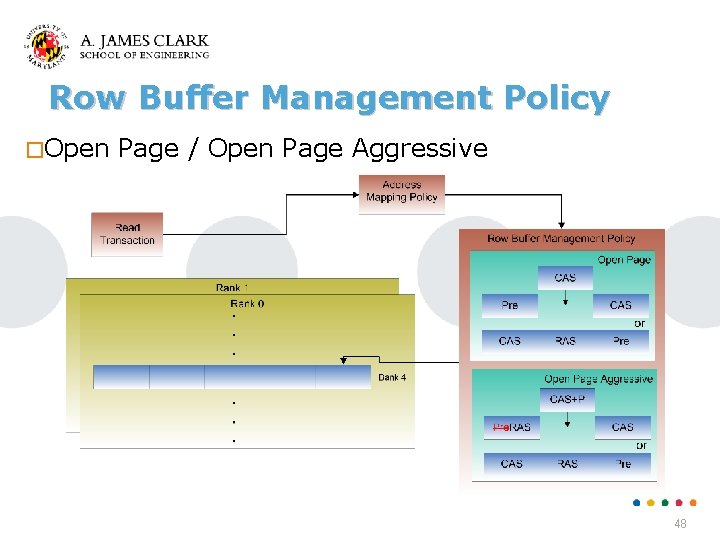
Row Buffer Management Policy �Open Page / Open Page Aggressive 48
- Slides: 48