
Highly scaled out relational database as a service

Highly scaled out relational database as a service Browser SQL Azure Database (Windows Azure Compute) SOAP/REST HTTP/S • Highly scaled Database “as a Service” – beyond hosting (ASP. NET) Windows Azure Compute SQL Azure Database • SQL Server technology foundation • Highly symmetrical Astoria/REST - EDM HTTP/S App Code T-SQL (TDS) Relational database service SQL Server Reporting Server (on-premises) T-SQL (TDS) MS Datacenter - AD Federation (Live. Id /. Net Svcs ACS) Customer Value Props ü Self-provisioning and capacity on demand ü Symmetry w/ on-premises database platform ü Automatic high-availability and fault-tolerance ü Automated DB maintenance (infrastructure) ü Simple, flexible pricing – “pay as you grow”
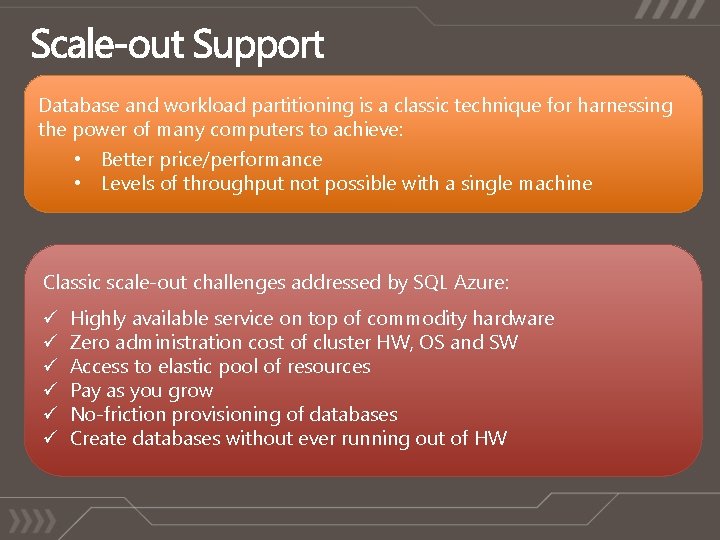
Database and workload partitioning is a classic technique for harnessing the power of many computers to achieve: • Better price/performance • Levels of throughput not possible with a single machine Classic scale-out challenges addressed by SQL Azure: ü ü ü Highly available service on top of commodity hardware Zero administration cost of cluster HW, OS and SW Access to elastic pool of resources Pay as you grow No-friction provisioning of databases Create databases without ever running out of HW
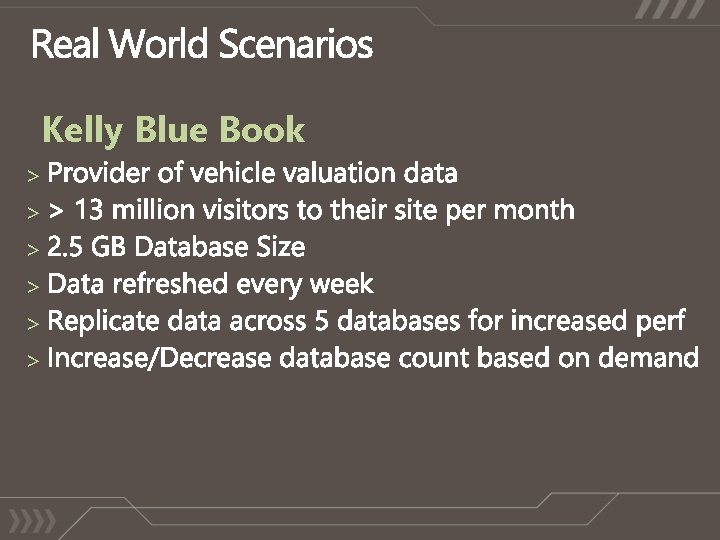
Kelly Blue Book > > >
customer
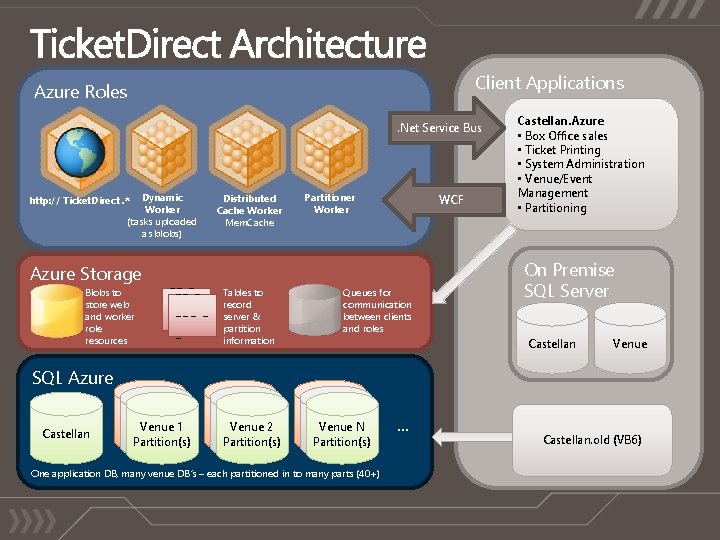
Client Applications Azure Roles . Net Service Bus Dynamic Worker (tasks uploaded as blobs) http: // Ticket. Direct. * Azure Storage Blobs to store web and worker role resources ------- Distributed Cache Worker Mem. Cache Tables to record server & partition information Partitioner Worker WCF Queues for communication between clients and roles Castellan. Azure • Box Office sales • Ticket Printing • System Administration • Venue/Event Management • Partitioning On Premise SQL Server Castellan Venue SQL Azure Castellan Venue DB 1 Partition(s) DB’s Castellan Venue DB 2 Partition(s) DB’s Castellan Venue DBN Partition(s) DB’s One application DB, many venue DB’s – each partitioned in to many parts (40+) . . . Castellan. old (VB 6)
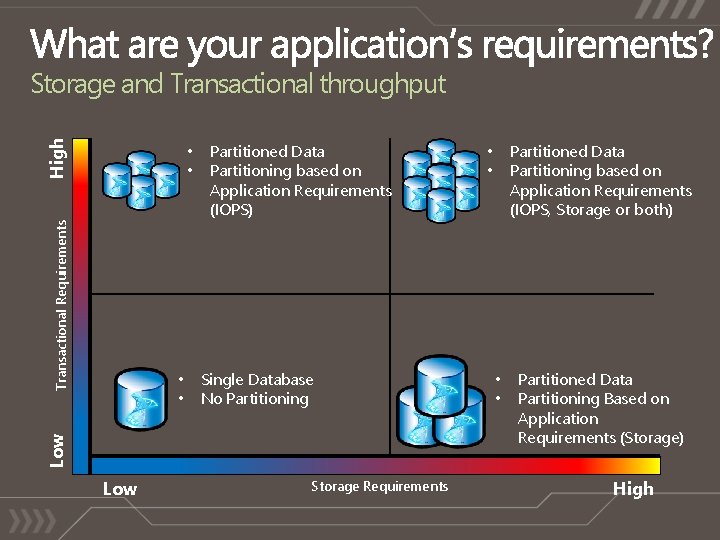
High Storage and Transactional throughput Transactional Requirements • • Single Database No Partitioning Low • • Partitioned Data Partitioning based on Application Requirements (IOPS) Low Storage Requirements Partitioned Data Partitioning based on Application Requirements (IOPS, Storage or both) • • Partitioned Data Partitioning Based on Application Requirements (Storage) High
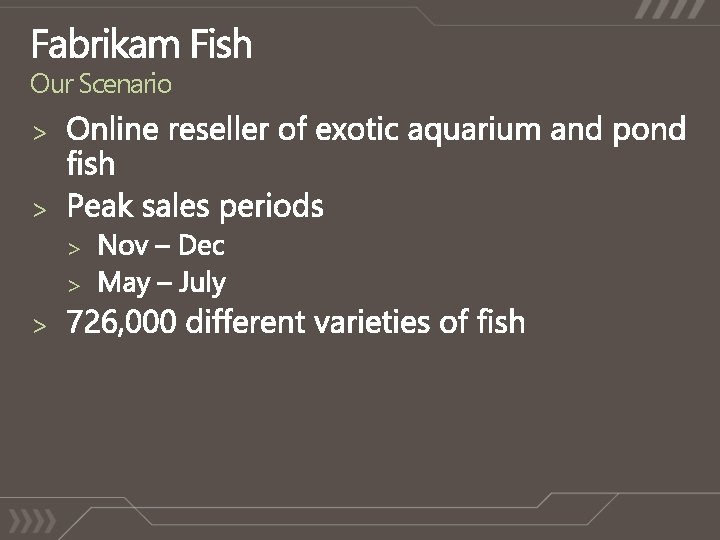
Our Scenario > > >
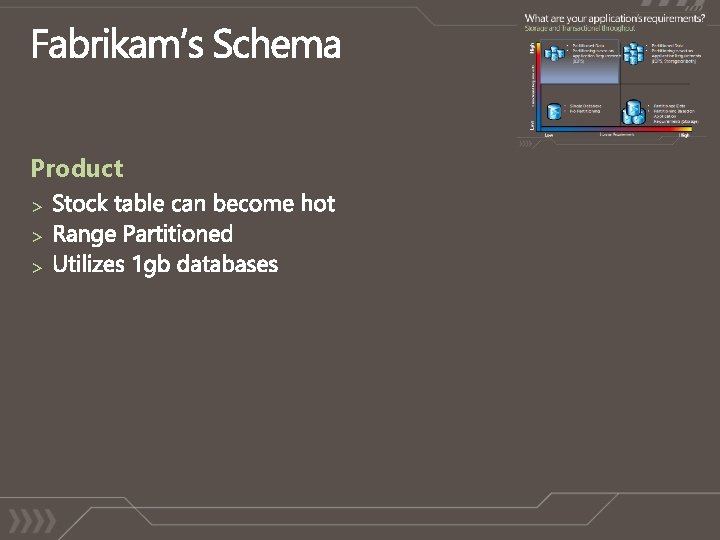
Product > > >
code walkthrough
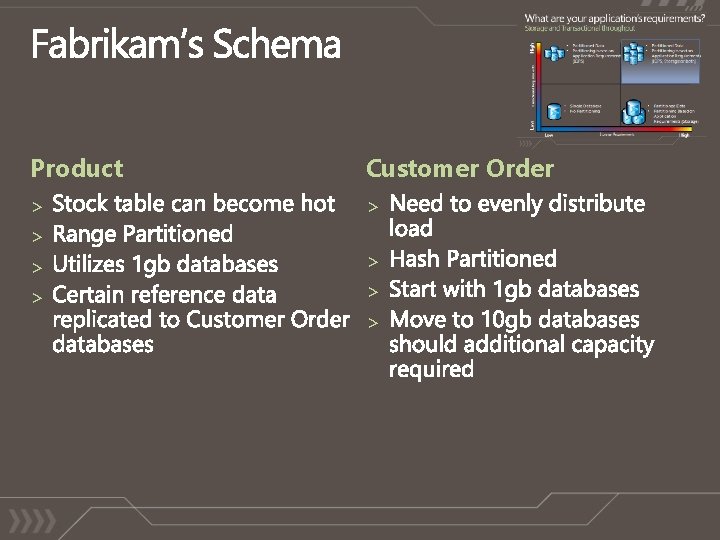
Product Customer Order > > > >
code walkthrough
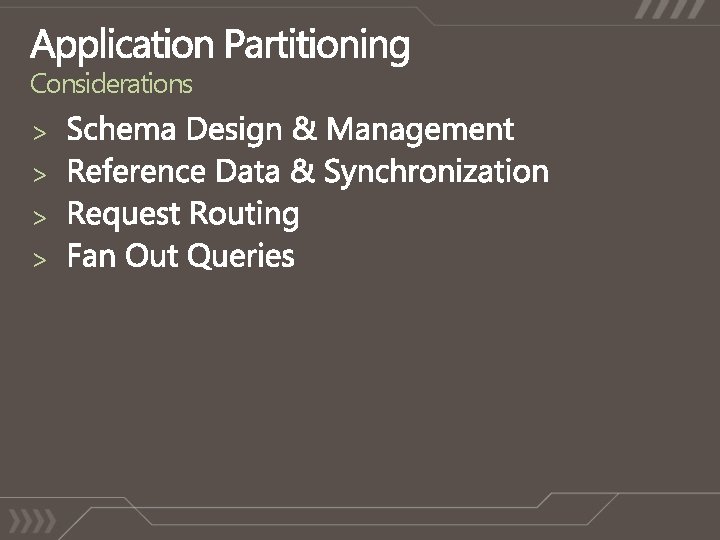
Considerations > >
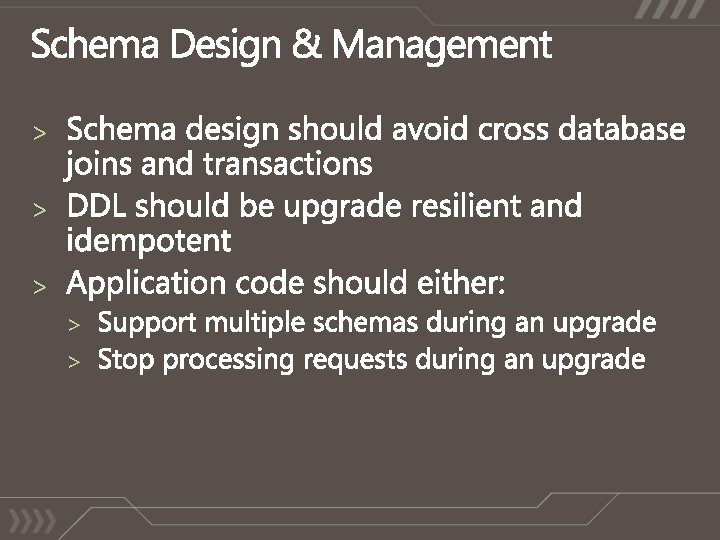
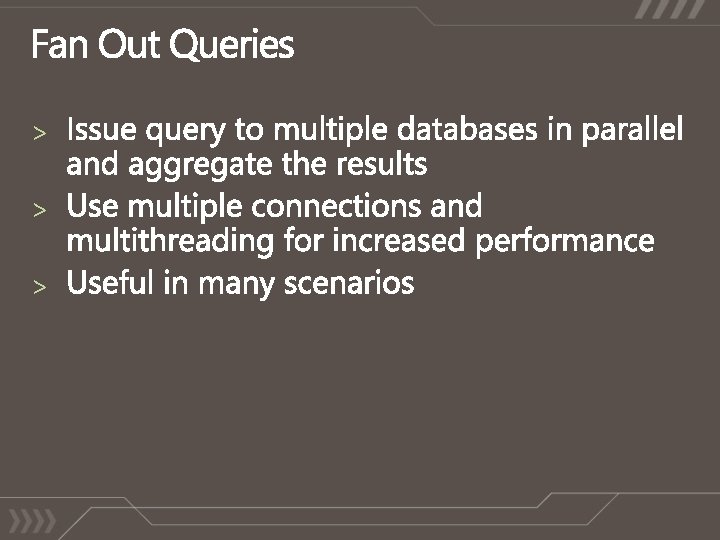
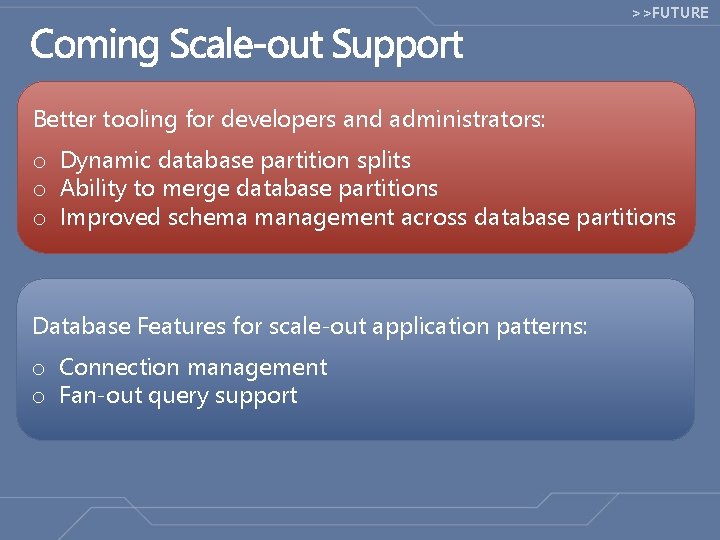
>>FUTURE Better tooling for developers and administrators: o Dynamic database partition splits o Ability to merge database partitions o Improved schema management across database partitions Database Features for scale-out application patterns: o Connection management o Fan-out query support

YOUR FEEDBACK IS IMPORTANT TO US! Please fill out session evaluation forms online at Microsoft. PDC. com

> > channel 9. msdn. com/learn Built by Developers for Developers….

© 2009 Microsoft Corporation. All rights reserved. Microsoft, Windows Vista and other product names are or may be registered trademarks and/or trademarks in the U. S. and/or other countries. The information herein is for informational purposes only and represents the current view of Microsoft Corporation as of the date of this presentation. Because Microsoft must respond to changing market conditions, it should not be interpreted to be a commitment on the part of Microsoft, and Microsoft cannot guarantee the accuracy of any information provided after the date of this presentation. MICROSOFT MAKES NO WARRANTIES, EXPRESS, IMPLIED OR STATUTORY, AS TO THE INFORMATION IN THIS PRESENTATION.
- Slides: 28