
HIGHLIGHTS OF CHANGES FROM DSMIVTR TO DSM5 DR


- Slides: 22
HIGHLIGHTS OF CHANGES FROM DSM-IV-TR TO DSM-5 DR AGHILIAN PSYCHATRIST
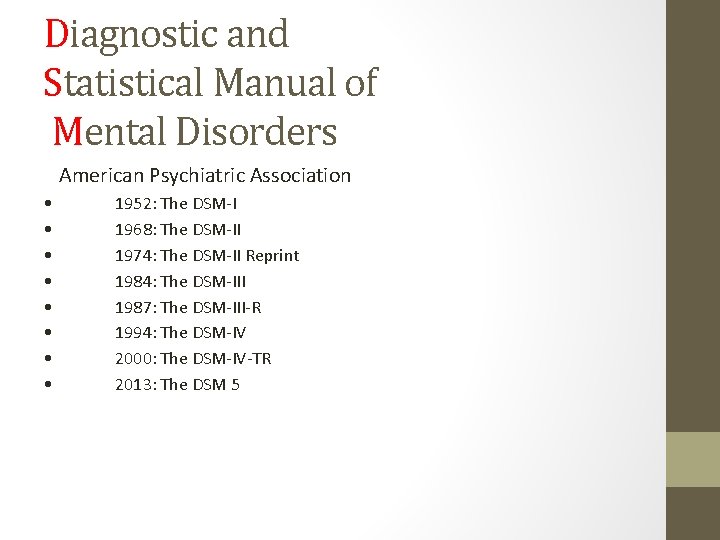
Diagnostic and Statistical Manual of Mental Disorders American Psychiatric Association • • 1952: The DSM-I 1968: The DSM-II 1974: The DSM-II Reprint 1984: The DSM-III 1987: The DSM-III-R 1994: The DSM-IV 2000: The DSM-IV-TR 2013: The DSM 5
Many mental health professionals use the manual to determine and help communicate a patient's diagnosis after an evaluation; hospitals, clinics, and insurance companies in the US also generally require a DSM diagnosis for all patients treated. The DSM can be used clinically in this way, and also to categorize patients using diagnostic criteria for research purposes.
International Statistical Classification of Diseases and Related Health Problems(ICD) § A medical classification list by the World Health Organization (WHO). It codes for diseases, signs and symptoms, abnormal findings, complaints, social circumstances, and external causes of injury or diseases. § The code set allows more than 14, 400 different codes and permits the tracking of many new diagnoses. § Work on ICD-10 began in 1983 and was completed in 1992
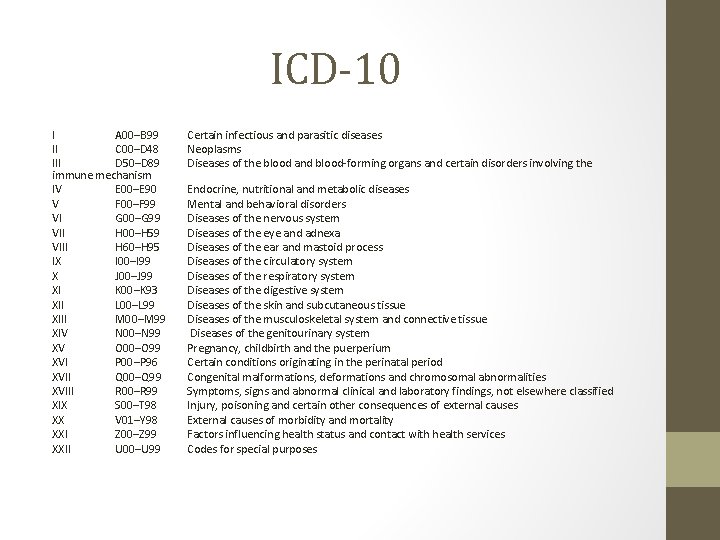
ICD-10 I A 00–B 99 II C 00–D 48 III D 50–D 89 immune mechanism IV E 00–E 90 V F 00–F 99 VI G 00–G 99 VII H 00–H 59 VIII H 60–H 95 IX I 00–I 99 X J 00–J 99 XI K 00–K 93 XII L 00–L 99 XIII M 00–M 99 XIV N 00–N 99 XV O 00–O 99 XVI P 00–P 96 XVII Q 00–Q 99 XVIII R 00–R 99 XIX S 00–T 98 XX V 01–Y 98 XXI Z 00–Z 99 XXII U 00–U 99 Certain infectious and parasitic diseases Neoplasms Diseases of the blood and blood-forming organs and certain disorders involving the Endocrine, nutritional and metabolic diseases Mental and behavioral disorders Diseases of the nervous system Diseases of the eye and adnexa Diseases of the ear and mastoid process Diseases of the circulatory system Diseases of the respiratory system Diseases of the digestive system Diseases of the skin and subcutaneous tissue Diseases of the musculoskeletal system and connective tissue Diseases of the genitourinary system Pregnancy, childbirth and the puerperium Certain conditions originating in the perinatal period Congenital malformations, deformations and chromosomal abnormalities Symptoms, signs and abnormal clinical and laboratory findings, not elsewhere classified Injury, poisoning and certain other consequences of external causes External causes of morbidity and mortality Factors influencing health status and contact with health services Codes for special purposes
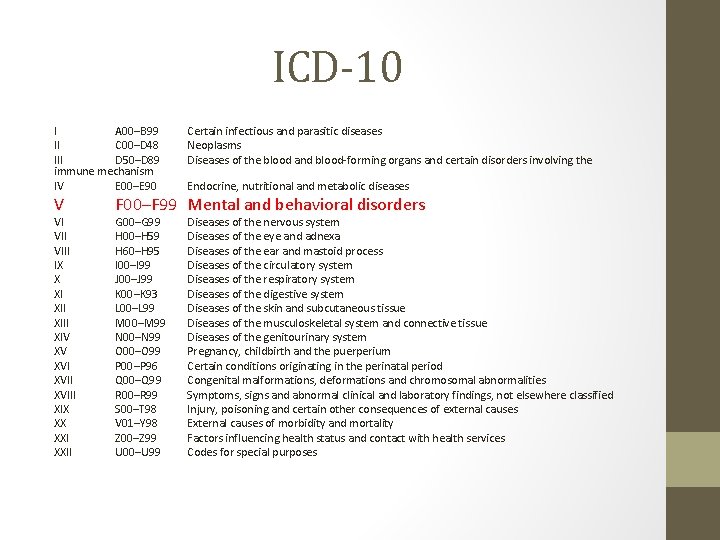
ICD-10 I A 00–B 99 II C 00–D 48 III D 50–D 89 immune mechanism IV E 00–E 90 Certain infectious and parasitic diseases Neoplasms Diseases of the blood and blood-forming organs and certain disorders involving the VI VIII IX X XI XIII XIV XV XVIII XIX XX XXII Diseases of the nervous system Diseases of the eye and adnexa Diseases of the ear and mastoid process Diseases of the circulatory system Diseases of the respiratory system Diseases of the digestive system Diseases of the skin and subcutaneous tissue Diseases of the musculoskeletal system and connective tissue Diseases of the genitourinary system Pregnancy, childbirth and the puerperium Certain conditions originating in the perinatal period Congenital malformations, deformations and chromosomal abnormalities Symptoms, signs and abnormal clinical and laboratory findings, not elsewhere classified Injury, poisoning and certain other consequences of external causes External causes of morbidity and mortality Factors influencing health status and contact with health services Codes for special purposes V Endocrine, nutritional and metabolic diseases F 00–F 99 Mental and behavioral disorders G 00–G 99 H 00–H 59 H 60–H 95 I 00–I 99 J 00–J 99 K 00–K 93 L 00–L 99 M 00–M 99 N 00–N 99 O 00–O 99 P 00–P 96 Q 00–Q 99 R 00–R 99 S 00–T 98 V 01–Y 98 Z 00–Z 99 U 00–U 99
DSM-5
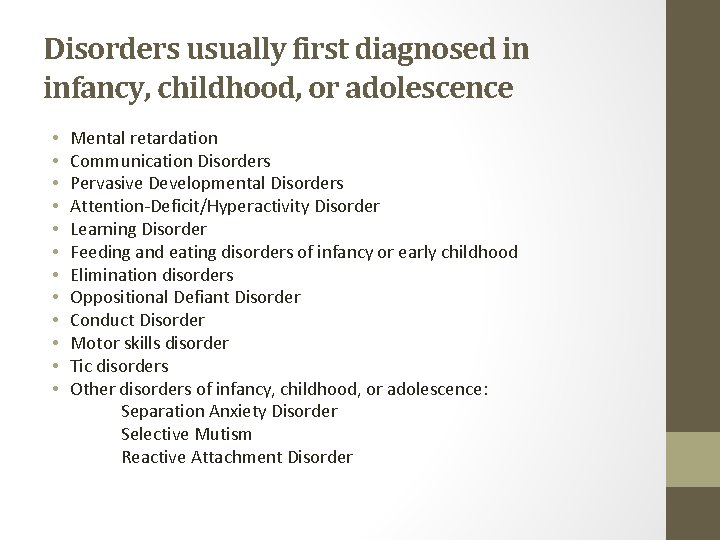
Disorders usually first diagnosed in infancy, childhood, or adolescence • • • Mental retardation Communication Disorders Pervasive Developmental Disorders Attention-Deficit/Hyperactivity Disorder Learning Disorder Feeding and eating disorders of infancy or early childhood Elimination disorders Oppositional Defiant Disorder Conduct Disorder Motor skills disorder Tic disorders Other disorders of infancy, childhood, or adolescence: Separation Anxiety Disorder Selective Mutism Reactive Attachment Disorder
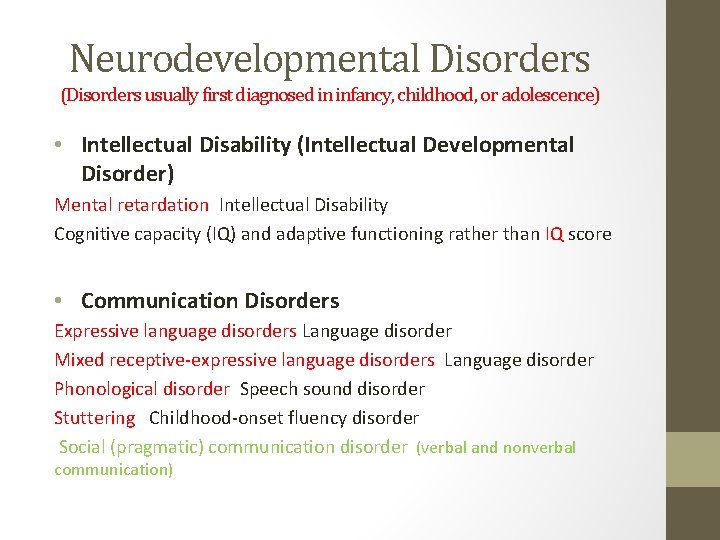
Neurodevelopmental Disorders (Disorders usually first diagnosed in infancy, childhood, or adolescence) • Intellectual Disability (Intellectual Developmental Disorder) Mental retardation Intellectual Disability Cognitive capacity (IQ) and adaptive functioning rather than IQ score • Communication Disorders Expressive language disorders Language disorder Mixed receptive-expressive language disorders Language disorder Phonological disorder Speech sound disorder Stuttering Childhood-onset fluency disorder Social (pragmatic) communication disorder (verbal and nonverbal communication)
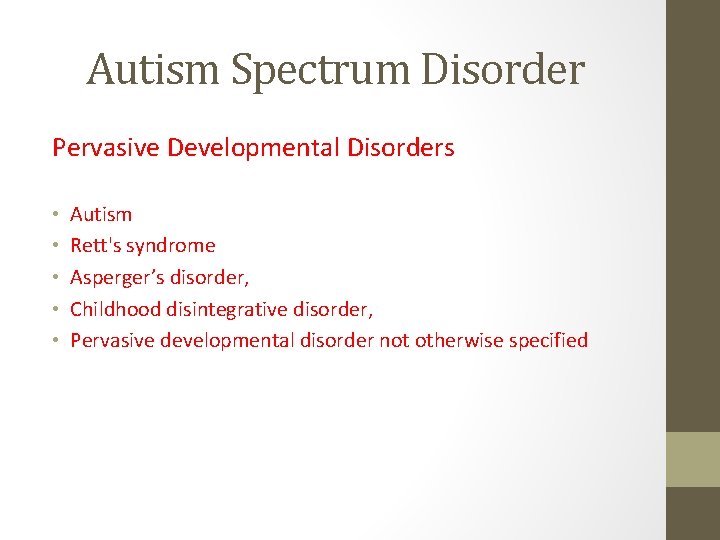
Autism Spectrum Disorder Pervasive Developmental Disorders • • • Autism Rett's syndrome Asperger’s disorder, Childhood disintegrative disorder, Pervasive developmental disorder not otherwise specified
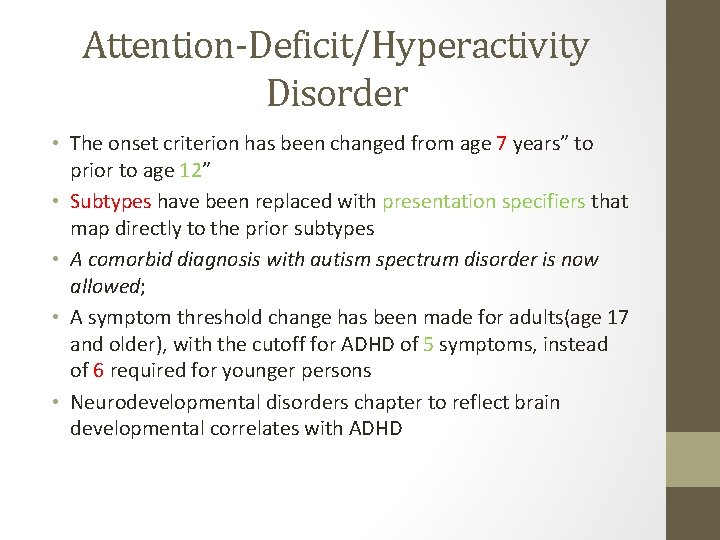
Attention-Deficit/Hyperactivity Disorder • The onset criterion has been changed from age 7 years” to prior to age 12” • Subtypes have been replaced with presentation specifiers that map directly to the prior subtypes • A comorbid diagnosis with autism spectrum disorder is now allowed; • A symptom threshold change has been made for adults(age 17 and older), with the cutoff for ADHD of 5 symptoms, instead of 6 required for younger persons • Neurodevelopmental disorders chapter to reflect brain developmental correlates with ADHD
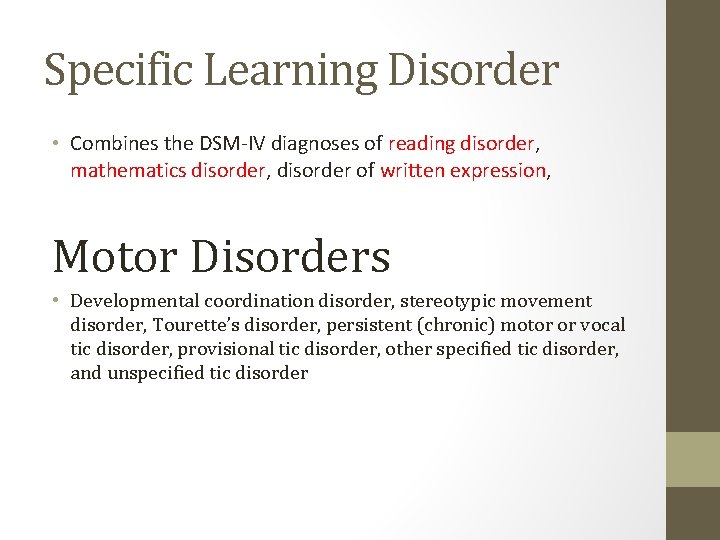
Specific Learning Disorder • Combines the DSM-IV diagnoses of reading disorder, mathematics disorder, disorder of written expression, Motor Disorders • Developmental coordination disorder, stereotypic movement disorder, Tourette’s disorder, persistent (chronic) motor or vocal tic disorder, provisional tic disorder, other specified tic disorder, and unspecified tic disorder
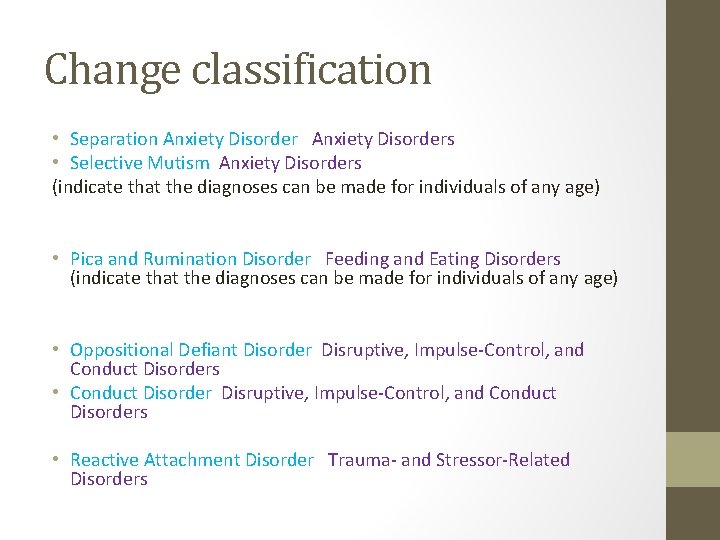
Change classification • Separation Anxiety Disorders • Selective Mutism Anxiety Disorders (indicate that the diagnoses can be made for individuals of any age) • Pica and Rumination Disorder Feeding and Eating Disorders (indicate that the diagnoses can be made for individuals of any age) • Oppositional Defiant Disorder Disruptive, Impulse-Control, and Conduct Disorders • Conduct Disorder Disruptive, Impulse-Control, and Conduct Disorders • Reactive Attachment Disorder Trauma- and Stressor-Related Disorders
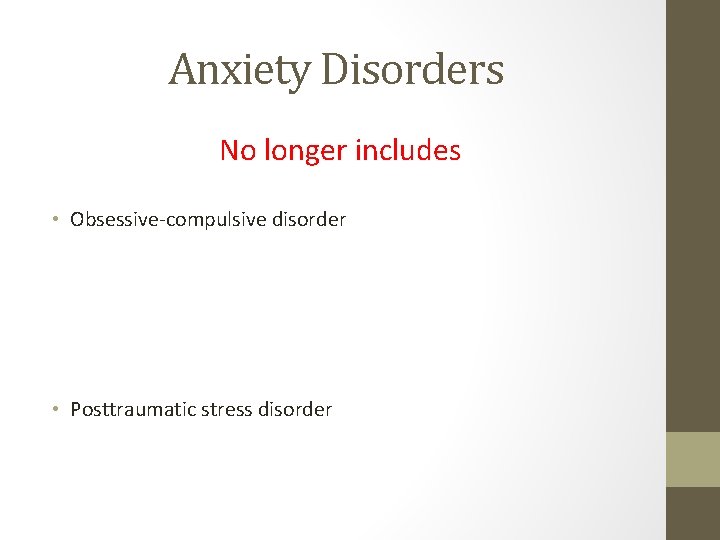
Anxiety Disorders No longer includes • Obsessive-compulsive disorder • Posttraumatic stress disorder
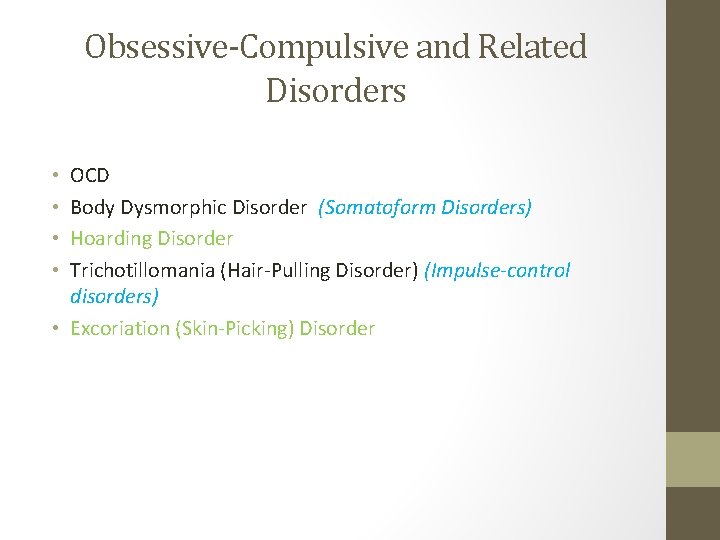
Obsessive-Compulsive and Related Disorders OCD Body Dysmorphic Disorder (Somatoform Disorders) Hoarding Disorder Trichotillomania (Hair-Pulling Disorder) (Impulse-control disorders) • Excoriation (Skin-Picking) Disorder • •
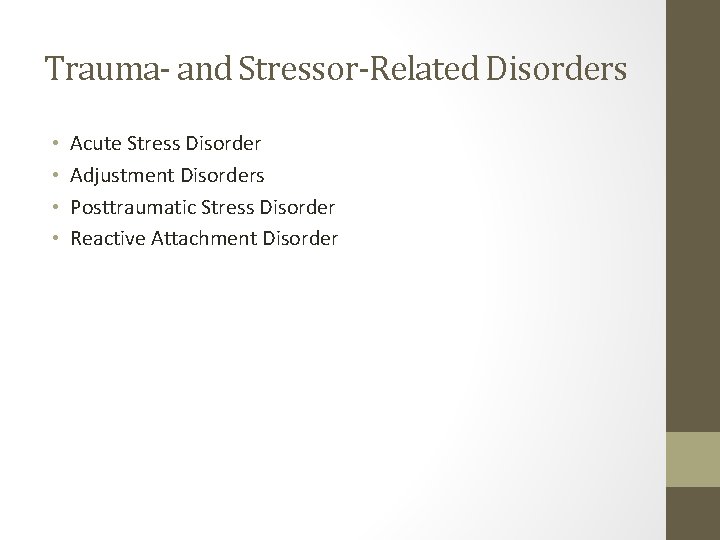
Trauma- and Stressor-Related Disorders • • Acute Stress Disorder Adjustment Disorders Posttraumatic Stress Disorder Reactive Attachment Disorder
Major Depressive Disorder • Bereavement Exclusion: The symptoms are not better accounted for by bereavement, i. e. , after the loss of a loved one, the symptoms persist for longer than 2 months
Schizophrenia • Bizarre delusions • At least one of : Delusions, Hallucinations, Disorganized speech must be present • The DSM-IV subtypes of schizophrenia (paranoid, disorganized, catatonic, undifferentiated, and residual types) are eliminated
Terminology �The phrase “general medical condition” is replaced in DSM-5 with “another medical condition” where relevant across all disorders
The Multiaxial System � �DSM-5 has moved to a nonaxial documentation of diagnosis
Thank you