
HighLeverage Practices Using Data to Understand Students Needs

- Slides: 59
High-Leverage Practices Using Data to Understand Students’ Needs and Inform Practice (High-Leverage Practices 1 and 4)
Facilitator Introductions
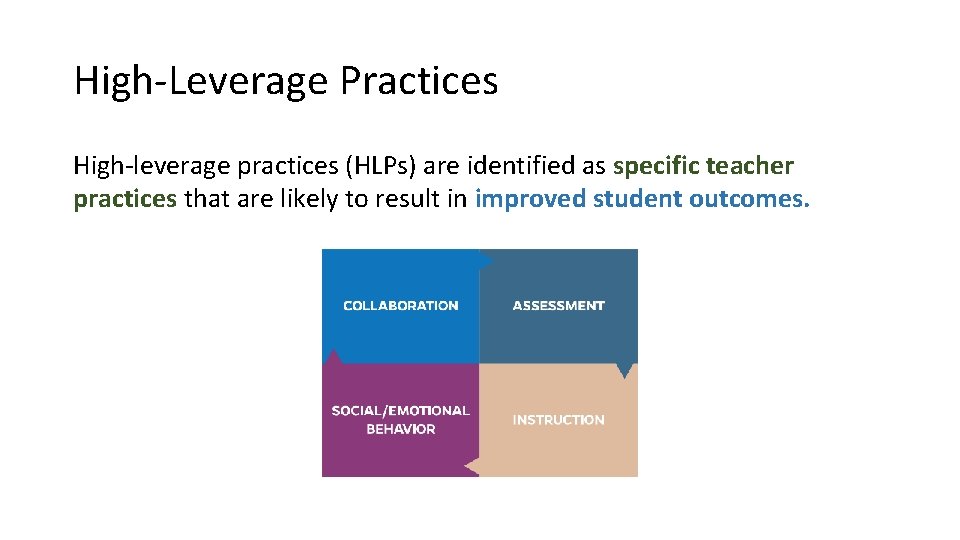
High-Leverage Practices High-leverage practices (HLPs) are identified as specific teacher practices that are likely to result in improved student outcomes.
For Today • HLP 1: Collaborate With Professionals to Increase Student Success • HLP 4: Use Multiple Sources of Information to Develop a Comprehensive Understanding of a Student’s Strengths and Needs
HLP 4: Use Multiple Sources of Information to Develop a Comprehensive Understanding of a Student’s Strengths and Needs
Best Practice Assessments should be sensitive to the importance of culture and ethnic backgrounds.
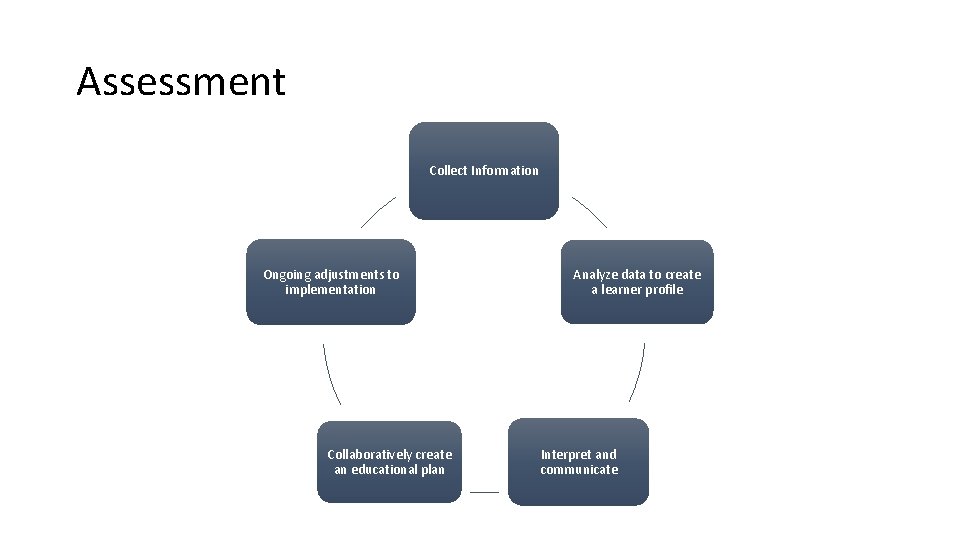
Assessment Collect Information Ongoing adjustments to implementation Collaboratively create an educational plan Analyze data to create a learner profile Interpret and communicate
Analyze and Describe Students’ Strengths and Needs • Analysis of student strengths and needs is aligned with the evaluation criteria and/or assessed learning objectives. • Analysis goes beyond a list of students’ successes and errors; analysis explains students’ understanding in relation to their performance on the identified assessment. • Analysis identifies specific examples from student work to demonstrate strengths and needs.
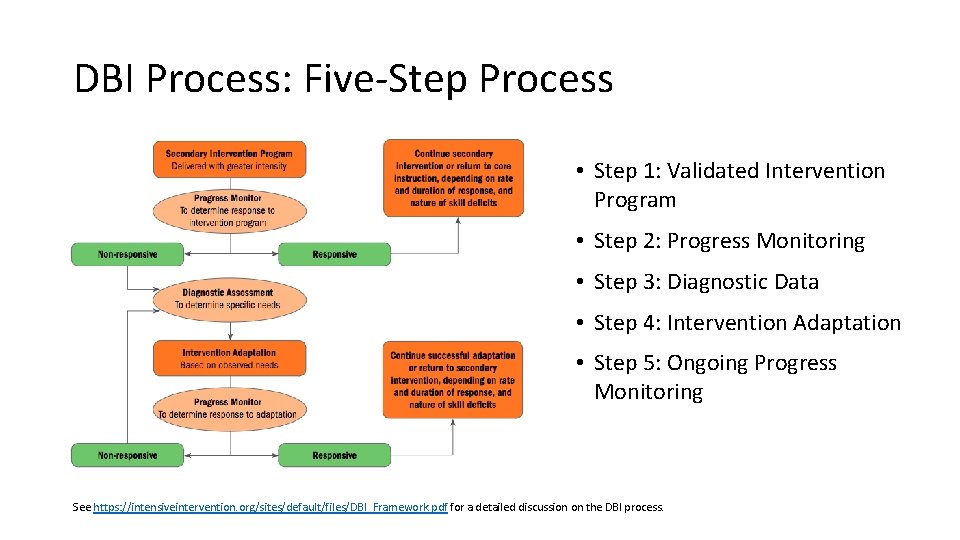
Data-Based Individualization Data-based individualization (DBI) is a research-based process for individualizing and intensifying interventions through the systematic use of assessment data, validated interventions, and research-based adaptation strategies. For more information about DBI, see https: //intensiveintervention. org/resource/breaking-down-dbi-process-questions-considerations.
Who Needs Intensive Intervention? The following types of students need intensive intervention: • Students with disabilities who are not making adequate progress in their current instructional program • Students who present with very low academic achievement and/or high-intensity or high-frequency behavior problems (typically those with disabilities) • Students in a tiered intervention program who have not responded to secondary intervention programs delivered with fidelity
Think-Pair-Share In what ways are Tier III or intensive interventions in your school different from special education services? In what ways are they the same?
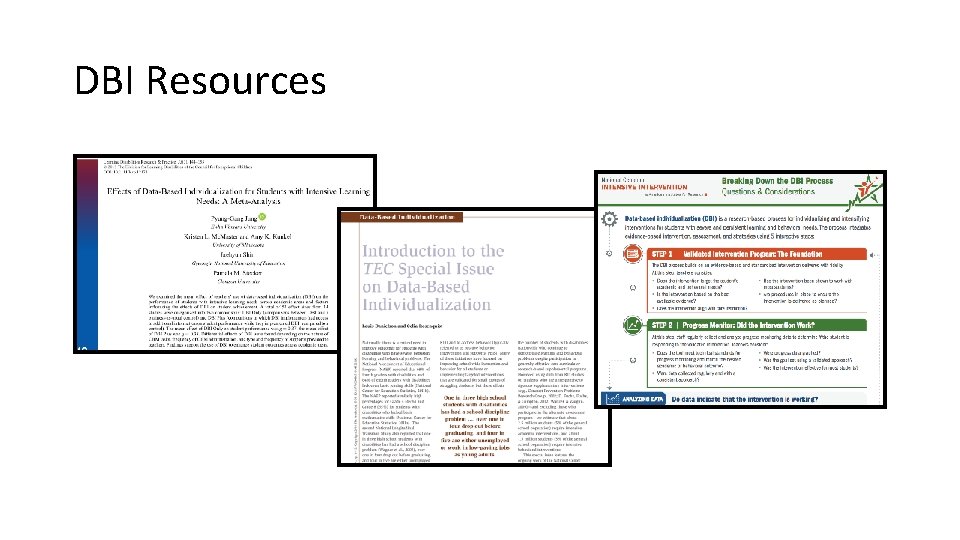
DBI Resources
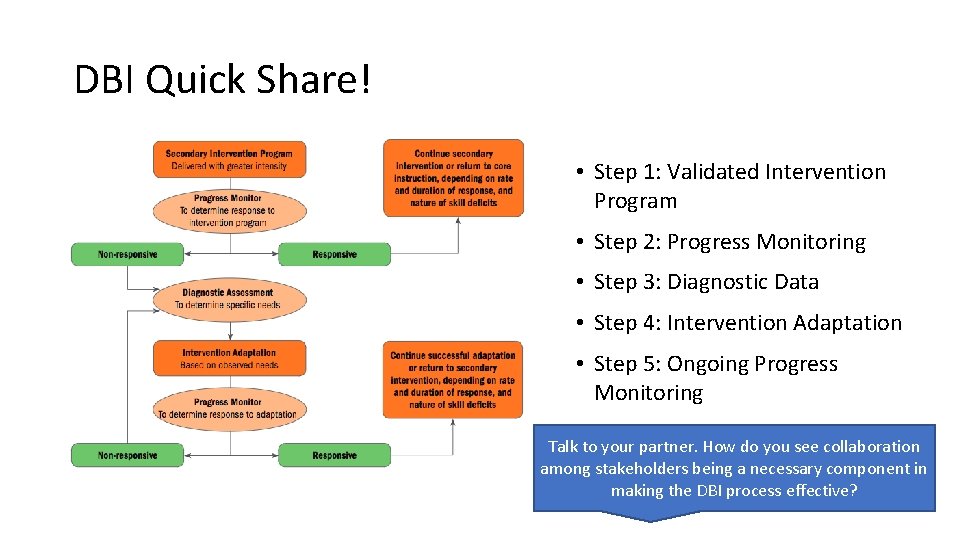
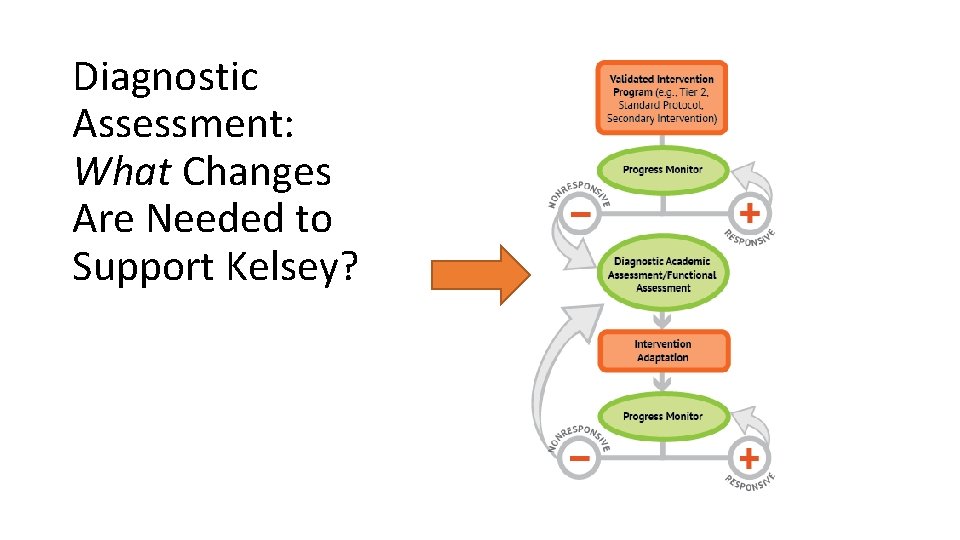
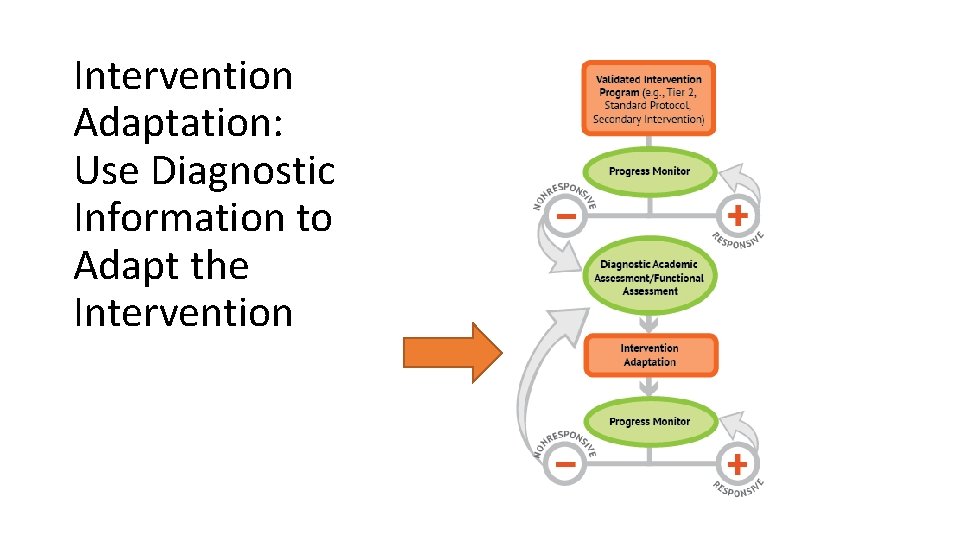
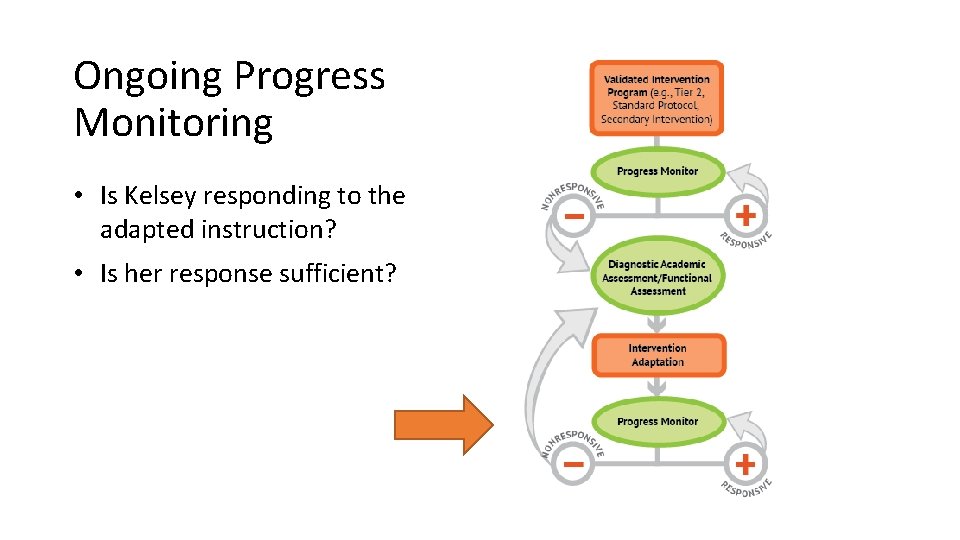
DBI Process: Five-Step Process • Step 1: Validated Intervention Program • Step 2: Progress Monitoring • Step 3: Diagnostic Data • Step 4: Intervention Adaptation • Step 5: Ongoing Progress Monitoring See https: //intensiveintervention. org/sites/default/files/DBI_Framework. pdf for a detailed discussion on the DBI process.
DBI Quick Share! • Step 1: Validated Intervention Program • Step 2: Progress Monitoring • Step 3: Diagnostic Data • Step 4: Intervention Adaptation • Step 5: Ongoing Progress Monitoring Talk to your partner. How do you see collaboration among stakeholders being a necessary component in making the DBI process effective?
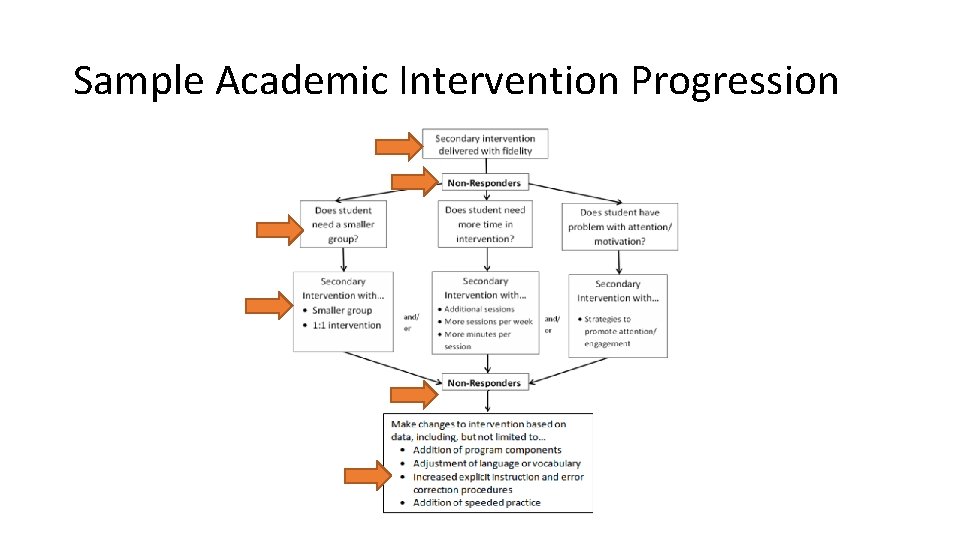
Sample Academic Intervention Progression
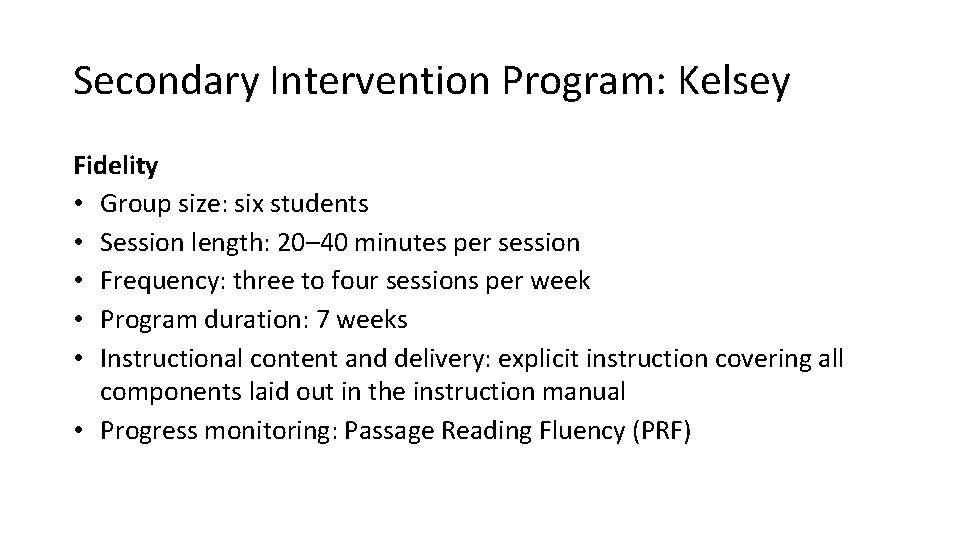
Secondary Intervention Program: Student Example—Kelsey • Background: Kelsey presented with serious reading problems, reading at an early second-grade level at the beginning of fourth grade. • Intervention program: Kelsey’s teacher selected a research-validated program that addressed phonological awareness, word study, and fluency skills.
Secondary Intervention Program: Kelsey Fidelity • Group size: six students • Session length: 20– 40 minutes per session • Frequency: three to four sessions per week • Program duration: 7 weeks • Instructional content and delivery: explicit instruction covering all components laid out in the instruction manual • Progress monitoring: Passage Reading Fluency (PRF)
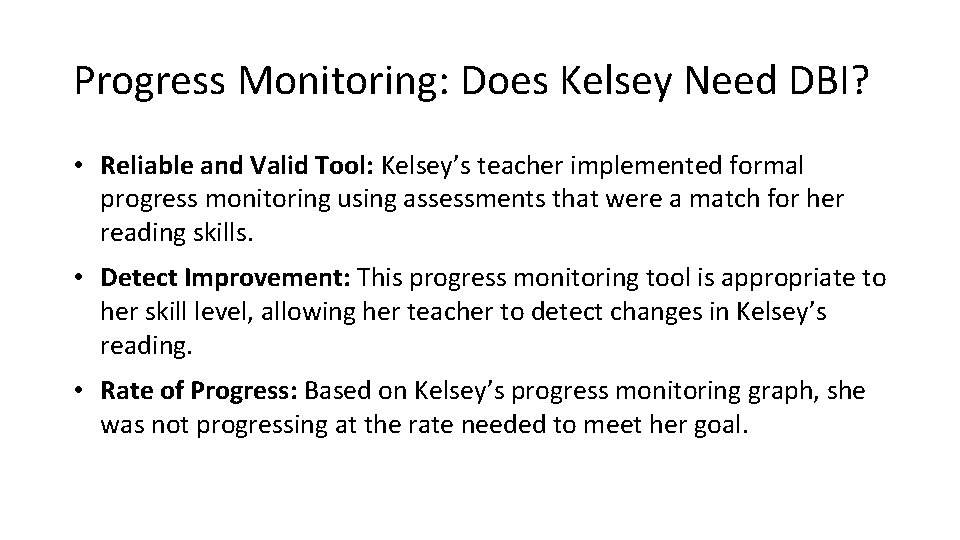
Progress Monitoring: Does Kelsey Need DBI? • Reliable and Valid Tool: Kelsey’s teacher implemented formal progress monitoring using assessments that were a match for her reading skills. • Detect Improvement: This progress monitoring tool is appropriate to her skill level, allowing her teacher to detect changes in Kelsey’s reading. • Rate of Progress: Based on Kelsey’s progress monitoring graph, she was not progressing at the rate needed to meet her goal.
Progress Monitoring: Determining Kelsey’s Need for DBI
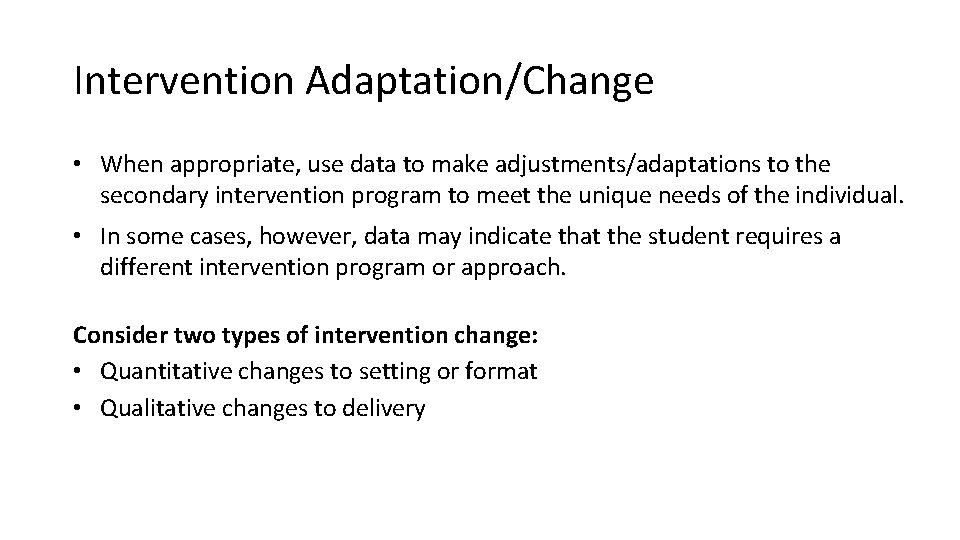
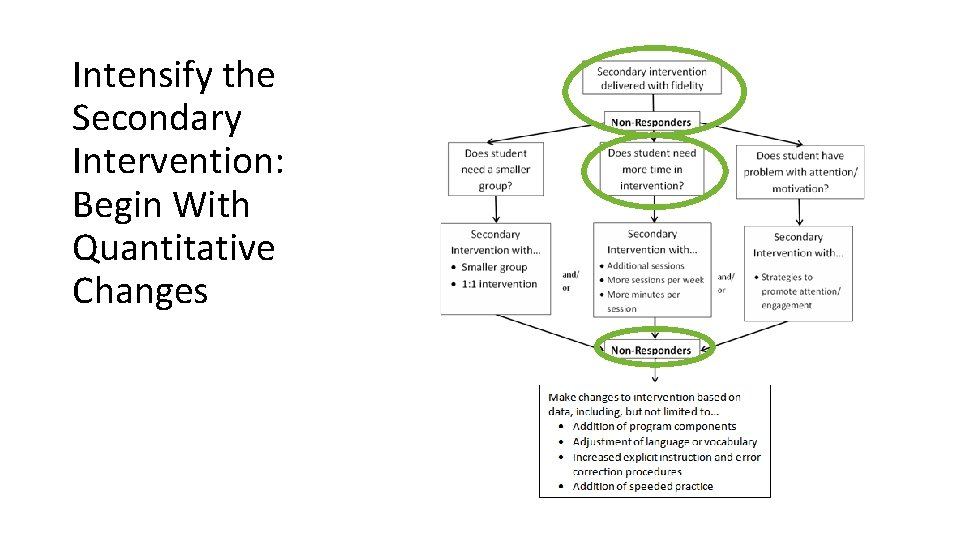
Intervention Adaptation/Change • When appropriate, use data to make adjustments/adaptations to the secondary intervention program to meet the unique needs of the individual. • In some cases, however, data may indicate that the student requires a different intervention program or approach. Consider two types of intervention change: • Quantitative changes to setting or format • Qualitative changes to delivery
Try Quantitative Change(s) First • Increase intervention frequency, length of sessions, or duration. • Decrease group size. • Decrease heterogeneity of the intervention group. Note: In many cases, quantitative changes may be necessary but not sufficient to facilitate progress for students with intensive needs.
Consider Qualitative Changes Second Qualitative adaptations may be made to the intervention program to alter • instruction based on learner characteristics (e. g. , addressing working memory or attention problems); • the skill level of the interventionist; • content delivery; • how students respond; • the amount of adult feedback and error correction students receive; • frequency/specificity of checks for retention; and • the materials, curriculum, or whole intervention (could be a complete change in program).
Intensify the Secondary Intervention: Begin With Quantitative Changes
Quantitative Intervention Adaptation: Kelsey’s teacher intensified her instruction by adding an additional 15 minutes of instruction per session. Despite this change in intervention length, Kelsey continued to make insufficient progress.
Diagnostic Assessment: What Changes Are Needed to Support Kelsey?
Informal Diagnostic Assessment • Progress monitoring assessments help teams determine when an instructional change is needed. • Informal diagnostic assessments allow teams to use available data (e. g. , progress monitoring data, informal skill inventories, work samples) to help determine the nature of the intervention change needed.
Informal Diagnostic Assessment Potential data sources: • Classroom-based assessments • Error analysis of progress monitoring data • Student work samples • Standardized measures (if feasible)
Informal Diagnostic Assessment: Kelsey • To determine the nature of the instructional change needed, Kelsey’s teacher conducted an error analysis of Kelsey’s most recent PRF data. • She also administered a phonics survey to determine Kelsey’s decoding strengths and weaknesses.
Intervention Adaptation: Use Diagnostic Information to Adapt the Intervention
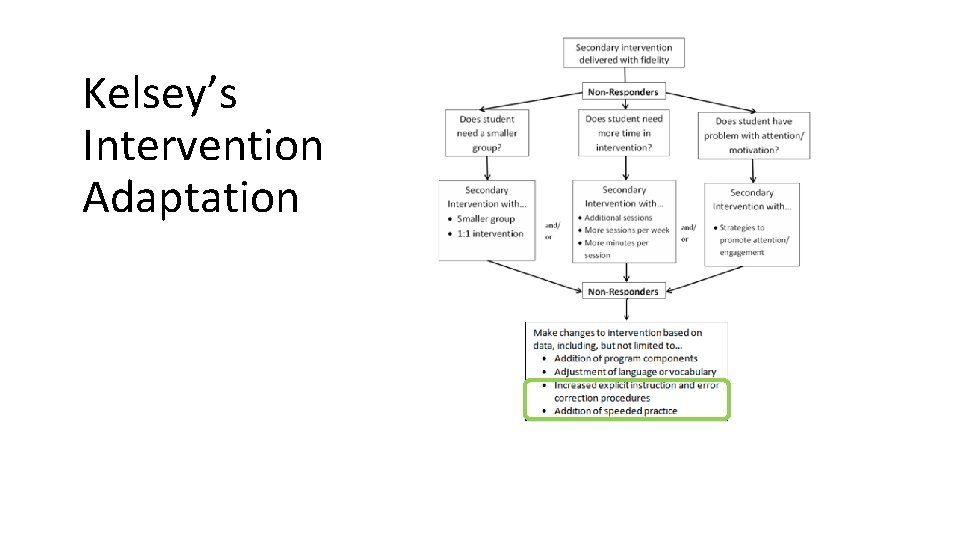
Intervention Adaptation: Kelsey Diagnostic assessment showed that Kelsey had difficulty applying decoding strategies to vowel teams. Her teacher applied the following intensive intervention principles to intensify her decoding instruction: • Incorporated fluency practice of newly taught terms, with specified mastery criteria • Provided explicit instruction and error correction • Frequently checked for retention with reteaching as needed
Kelsey’s Intervention Adaptation
Ongoing Progress Monitoring • Is Kelsey responding to the adapted instruction? • Is her response sufficient?
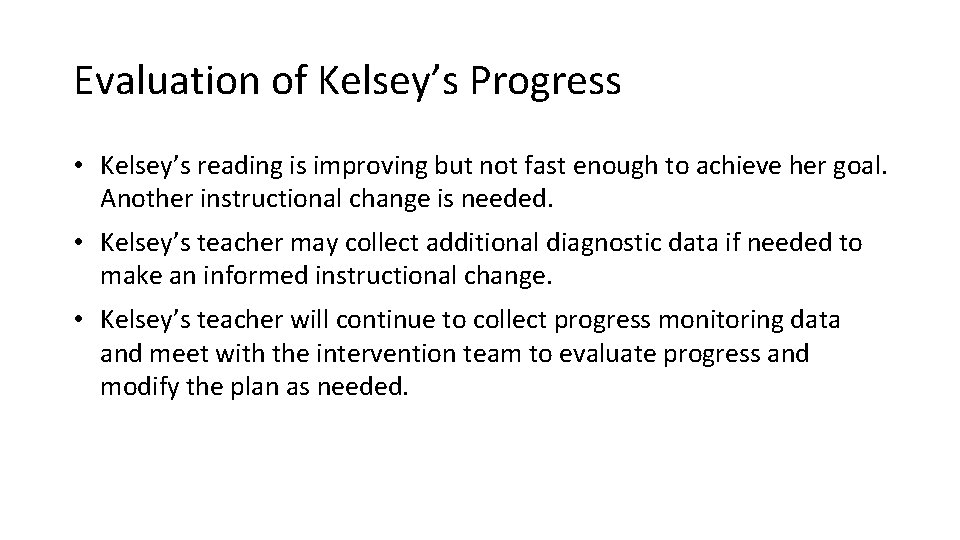
Evaluation of Kelsey’s Progress • Kelsey’s reading is improving but not fast enough to achieve her goal. Another instructional change is needed. • Kelsey’s teacher may collect additional diagnostic data if needed to make an informed instructional change. • Kelsey’s teacher will continue to collect progress monitoring data and meet with the intervention team to evaluate progress and modify the plan as needed.
Turn and Talk • Work with a partner to recap HLP 4. • Provide one example of how you can use HLP 4 in the classroom. • Share with the group.
HLP 1: Collaborate With Professionals to Increase Student Success
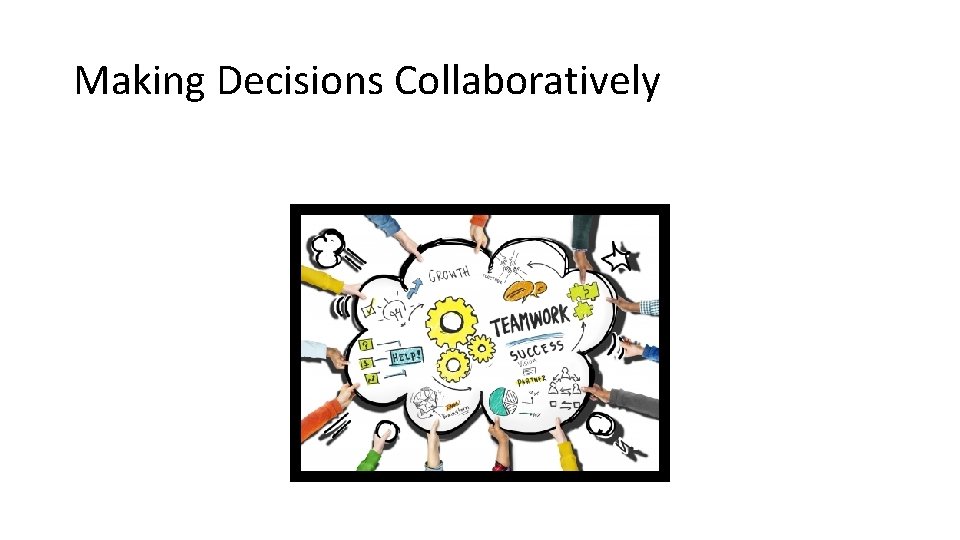
Making Decisions Collaboratively
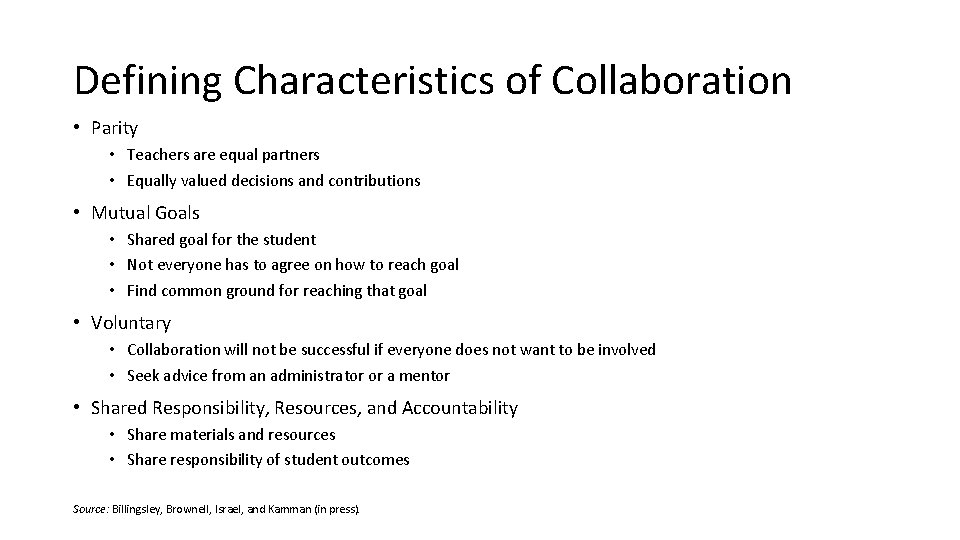
Defining Characteristics of Collaboration • Parity • Teachers are equal partners • Equally valued decisions and contributions • Mutual Goals • Shared goal for the student • Not everyone has to agree on how to reach goal • Find common ground for reaching that goal • Voluntary • Collaboration will not be successful if everyone does not want to be involved • Seek advice from an administrator or a mentor • Shared Responsibility, Resources, and Accountability • Share materials and resources • Share responsibility of student outcomes Source: Billingsley, Brownell, Israel, and Kamman (in press).
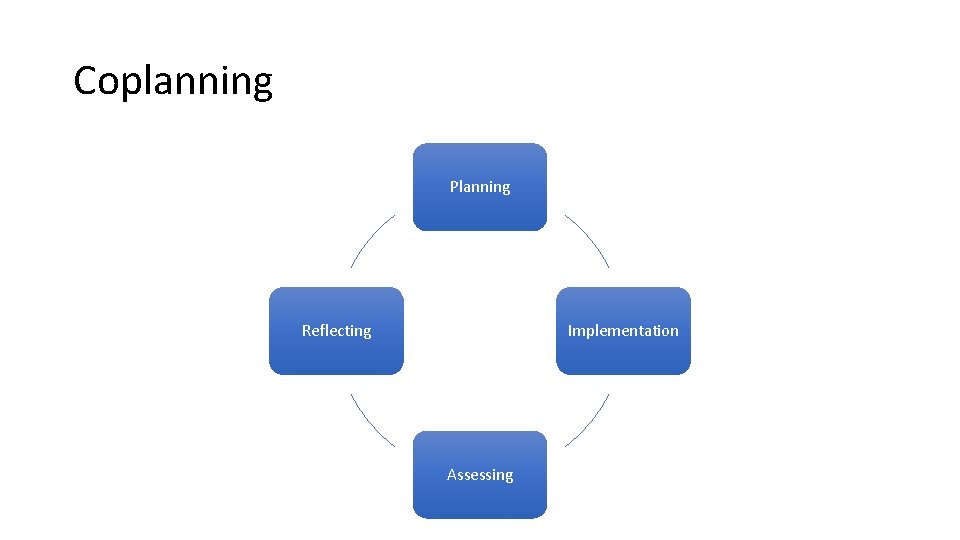
Coplanning Planning Reflecting Implementation Assessing
Coplanning and Coteaching • Coplanning strategies are designed to parallel coteaching strategies. • As with coteaching strategies, coplanning strategies are not intended as a hierarchy or progression. • Coplanning strategies can be selected to fit the needs of a given lesson and the needs of the coteachers.
Coplanning We use coplanning as a model where two or more teachers • actively engage in planning, • agree on instructional goals and a timeline for instruction, • analyze assessment of student learning, • develop instructional tasks, • select or develop instructional tools, and • design an assessment plan.
Models of Coplanning
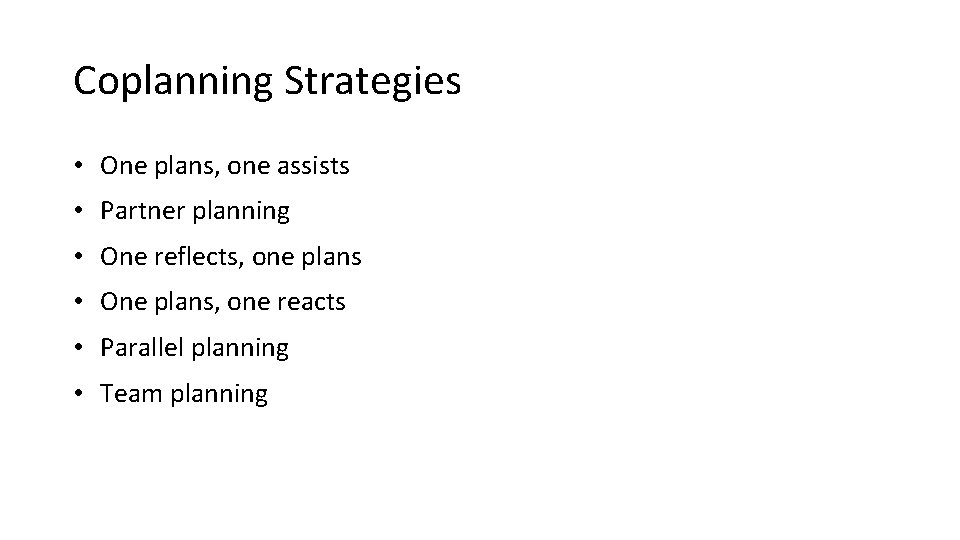
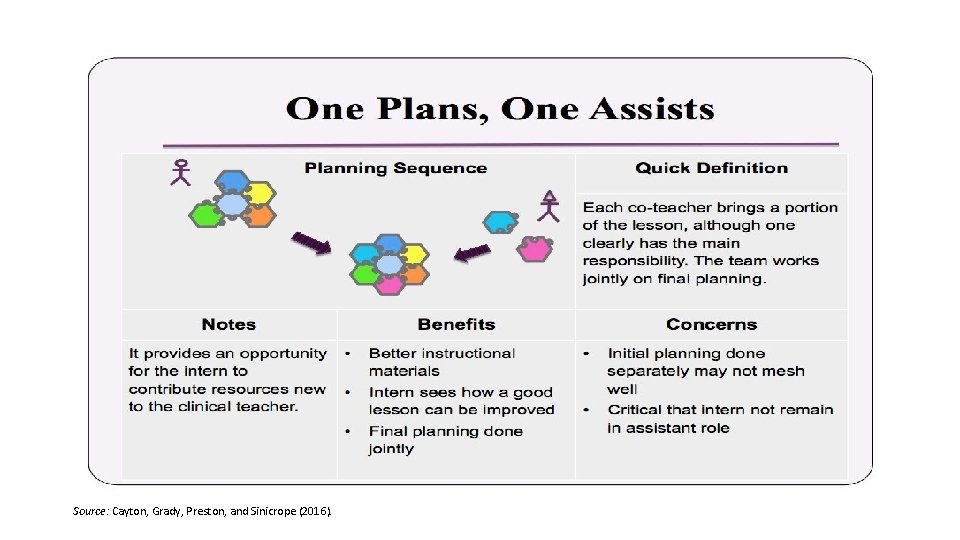
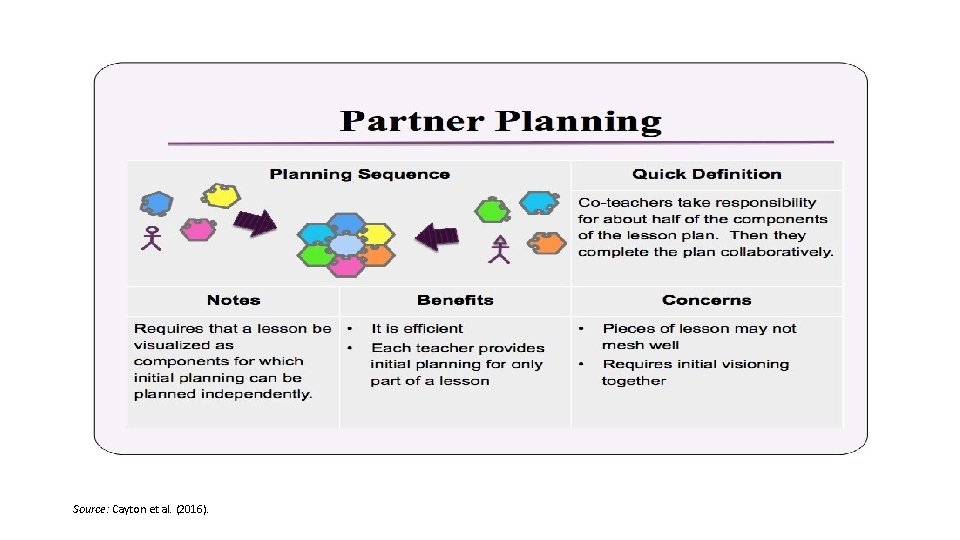
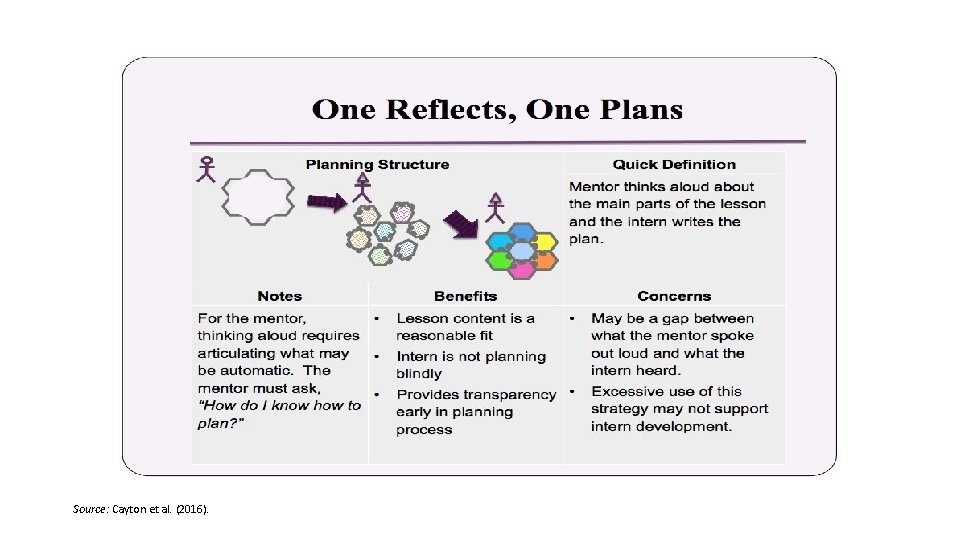
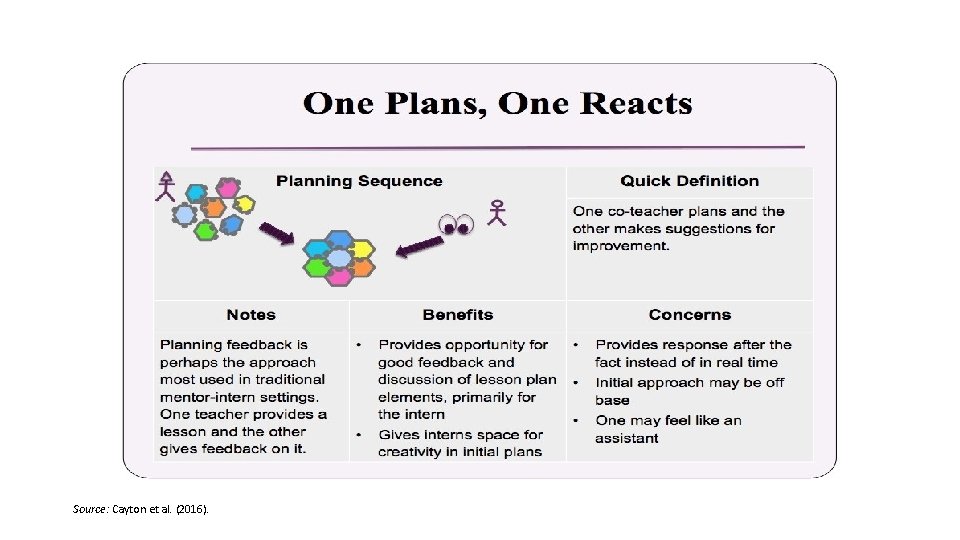
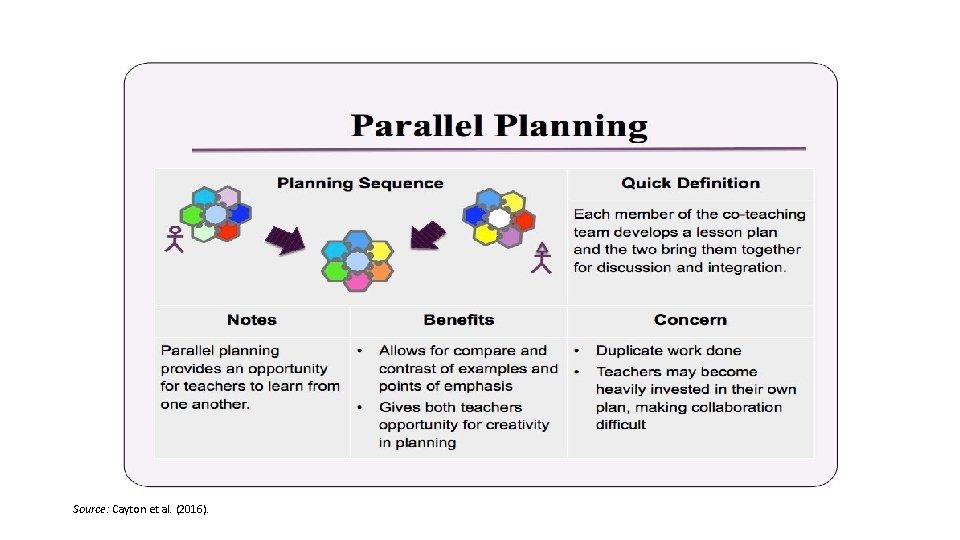
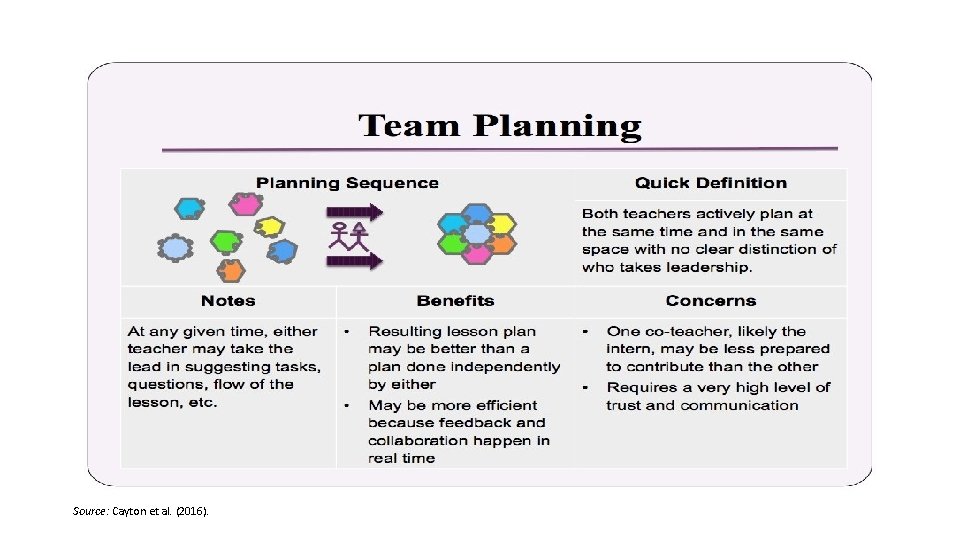
Coplanning Strategies • One plans, one assists • Partner planning • One reflects, one plans • One plans, one reacts • Parallel planning • Team planning
Source: Cayton, Grady, Preston, and Sinicrope (2016).
Source: Cayton et al. (2016).
Source: Cayton et al. (2016).
Source: Cayton et al. (2016).
Source: Cayton et al. (2016).
Source: Cayton et al. (2016).
Turn and Talk Which version of coplanning seems most accessible in your settings? 1. One plans, one assists 2. Partner planning 3. One reflects, one plans 4. One plans, one reacts 5. Parallel planning 6. Team planning
Implementing Coplanning • Ensure time for planning. • Have a positive attitude. • Be clear and open about your strengths and limitations as you collaborate with your coteacher.
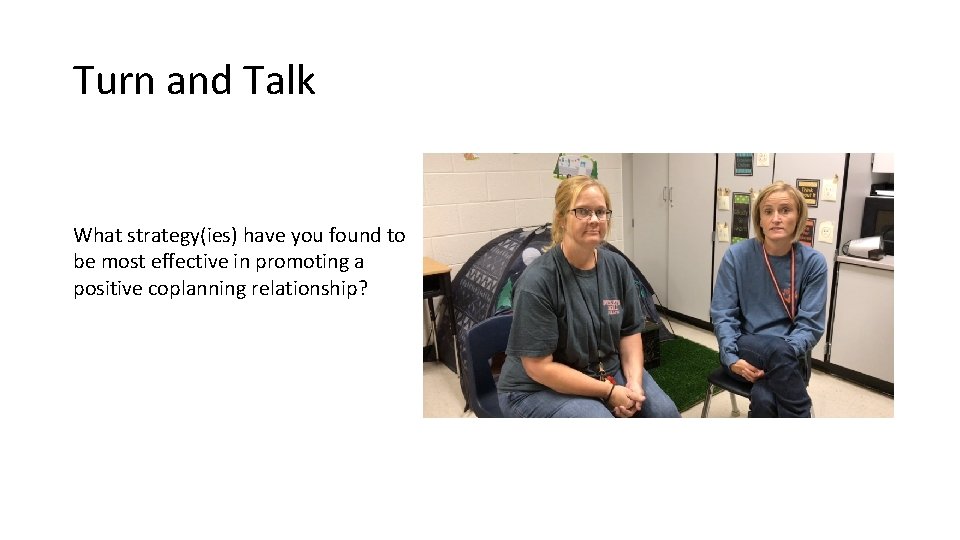
Turn and Talk What strategy(ies) have you found to be most effective in promoting a positive coplanning relationship?
DBI and Coplanning • Collaboration requires the use of effective collaboration behaviors to develop and adjust instructional or behavioral plans based on student data. • Coplanning models create a structure that make developing databased interventions possible.
Stakeholder Considerations
Considerations for Teachers • Consider the dynamics between novice and seasoned teachers. • Determine the role of preservice teachers and/or residents. • Shift the model to ensure equity and parity of teachers. • Consider which model is appropriate for the lesson or teacher needs.
Considerations for School Leaders • Create space in the schedule for collaborative planning to occur. • Facilitate review of the data collection procedure. • Review coteaching partnerships regularly. • Review coplanning and coteaching models frequently with teachers to remind them to select the model that fits the lesson or meets the needs of the teachers.
Considerations for Educator Preparation Providers • Integrate the DBI process in course content and fieldwork. • Provide opportunities for candidates to practice collaboration. • Model collaboration and interdisciplinary practice for candidates.
Turn and Talk • Work with a partner to recap HLP 1. • Provide one example of how you can use HLP 1 in the classroom. • Share with the group.
References Billingsley, B. , Brownell, M. , Israel, M, & Kamman, M. (in press). A survival guide for new special educators. San Francisco, CA: Jossey-Bass. Cayton, Grady, Preston, & Sinicrope (2016). National Center on Intensive Intervention. (2013). Data-based individualization: A framework for intensive intervention. Washington, DC: U. S. Department of Education, Office of Special Education Programs. Retrieved from https: //intensiveintervention. org/sites/default/files/DBI_Framework. pdf
Authors The HLP Induction Professional Development Series was created by the following individuals: • • Wina Low, Karen Suddeth, and Karen Wyler, Georgia Department of Education Flavia Gordon-Gunter, Georgia Professional Standards Commission Lisa Hill, East Georgia Learning Resources System Jessica Simpson and Kristy Brown, Augusta University Stacy Arnold, Jefferson County Schools Michele Sherman, Columbia County Schools Meg Kamman and Amy Colpo, CEEDAR Center Melissa Driver, Da. Shaunda Patterson, Kate Zimmer, and Pam Wetherington, materials adapted from the Georgia’s High-Leverage Practices Webinar Series