
HighLeverage Practices Introduction to HighLeverage Practices Through a
- Slides: 27
High‐Leverage Practices Introduction to High‐Leverage Practices Through a Multi‐Tiered System of Supports
Facilitator Introductions
Session Structure • What is a Multi‐Tiered Support System (MTSS? ) • What are high‐leverage practices (HLPs)? • How do HLPs fit within the MTSS framework? • What HLP resources are available and how do I use them? • What’s next?
MTSS Statement of Purpose • MTSS is a framework that integrates assessment and intervention within a schoolwide, multilevel prevention system to maximize student outcomes for all learners. • Georgia’s Tiered System of Supports for Students is based on a problem‐solving model.
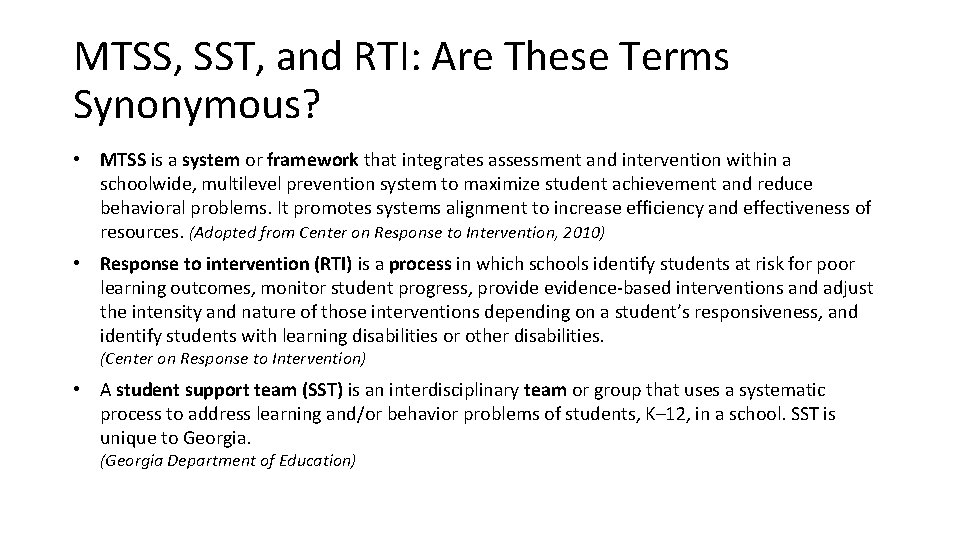
MTSS, SST, and RTI: Are These Terms Synonymous? • MTSS is a system or framework that integrates assessment and intervention within a schoolwide, multilevel prevention system to maximize student achievement and reduce behavioral problems. It promotes systems alignment to increase efficiency and effectiveness of resources. (Adopted from Center on Response to Intervention, 2010) • Response to intervention (RTI) is a process in which schools identify students at risk for poor learning outcomes, monitor student progress, provide evidence‐based interventions and adjust the intensity and nature of those interventions depending on a student’s responsiveness, and identify students with learning disabilities or other disabilities. (Center on Response to Intervention) • A student support team (SST) is an interdisciplinary team or group that uses a systematic process to address learning and/or behavior problems of students, K– 12, in a school. SST is unique to Georgia. (Georgia Department of Education)
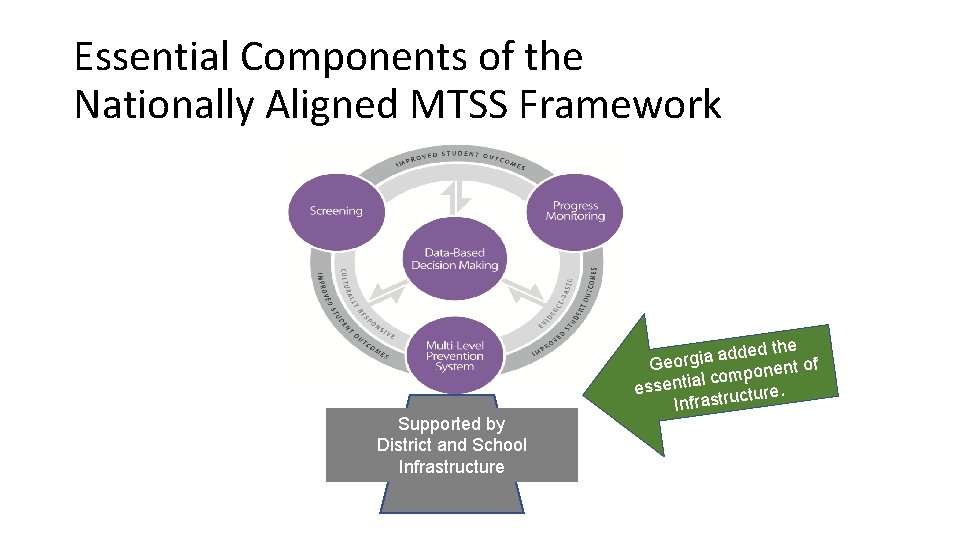
Essential Components of the Nationally Aligned MTSS Framework Supported by District and School Infrastructure d the e d d a a i Georg nt of e n o p m o lc essentia cture. Infrastru
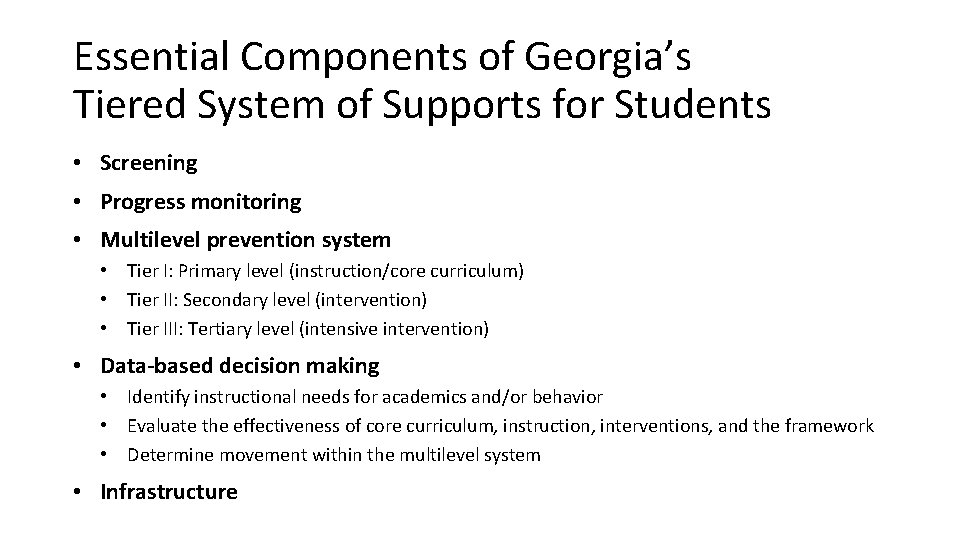
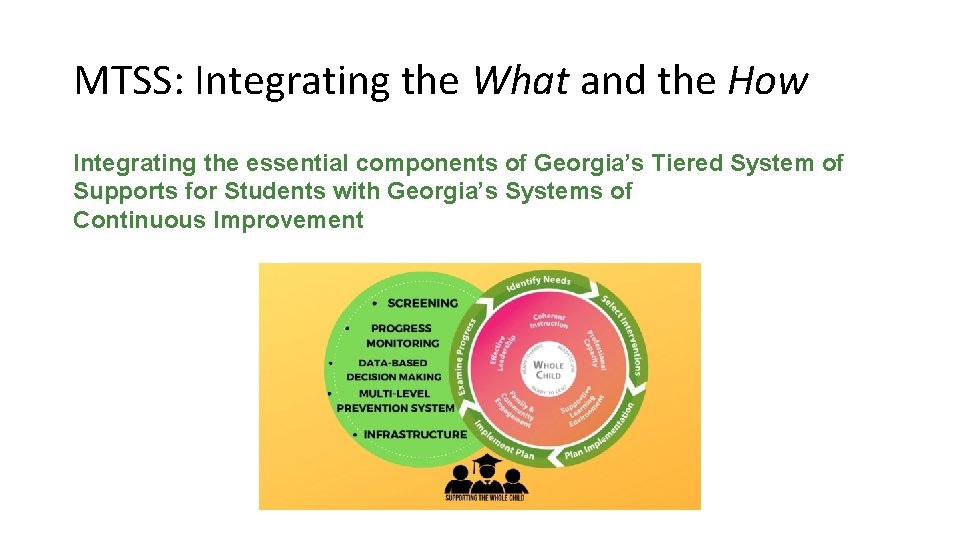
Essential Components of Georgia’s Tiered System of Supports for Students • Screening • Progress monitoring • Multilevel prevention system • Tier I: Primary level (instruction/core curriculum) • Tier II: Secondary level (intervention) • Tier III: Tertiary level (intensive intervention) • Data-based decision making • Identify instructional needs for academics and/or behavior • Evaluate the effectiveness of core curriculum, instruction, interventions, and the framework • Determine movement within the multilevel system • Infrastructure
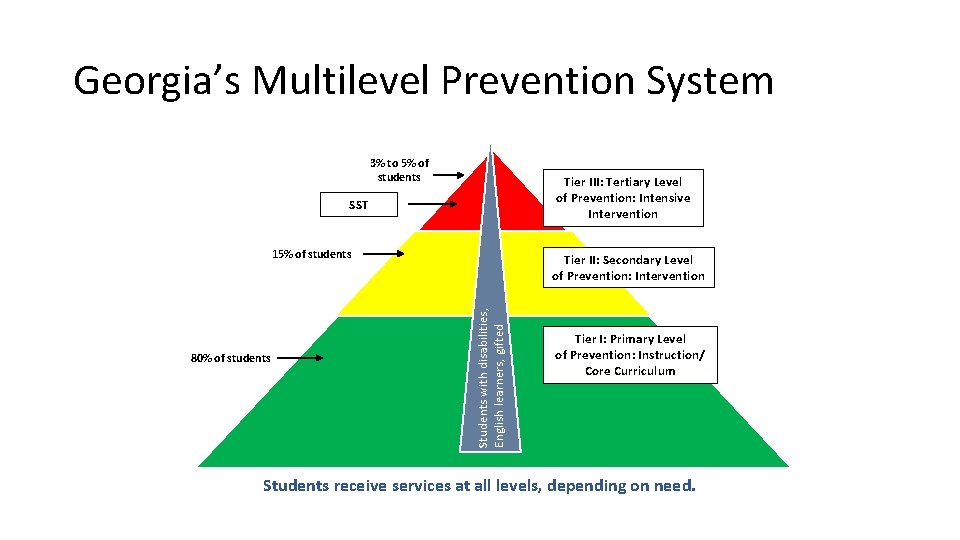
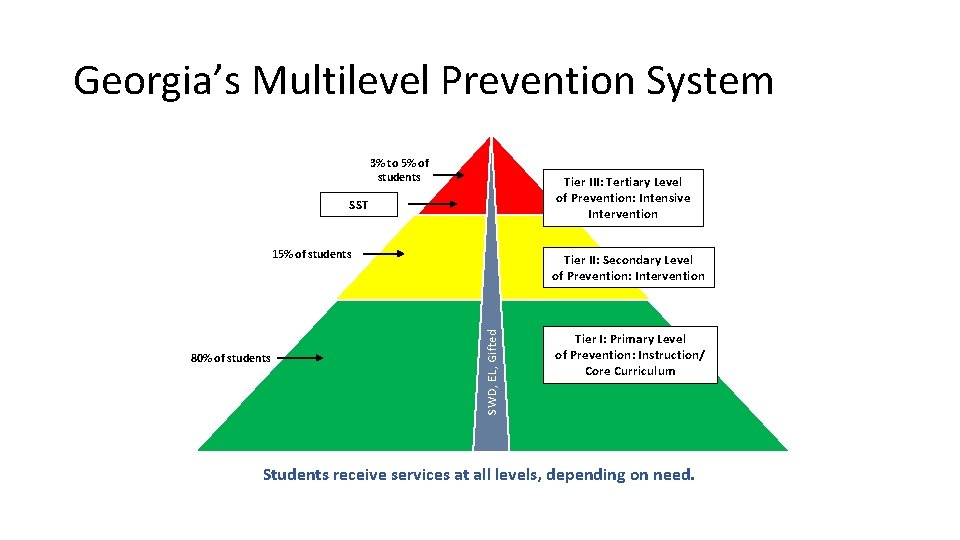
Georgia’s Multilevel Prevention System 3% to 5% of students Tier III: Tertiary Level of Prevention: Intensive Intervention SST 15% of students Students with disabilities, English learners, gifted 80% of students Tier II: Secondary Level of Prevention: Intervention Tier I: Primary Level of Prevention: Instruction/ Core Curriculum Students receive services at all levels, depending on need.
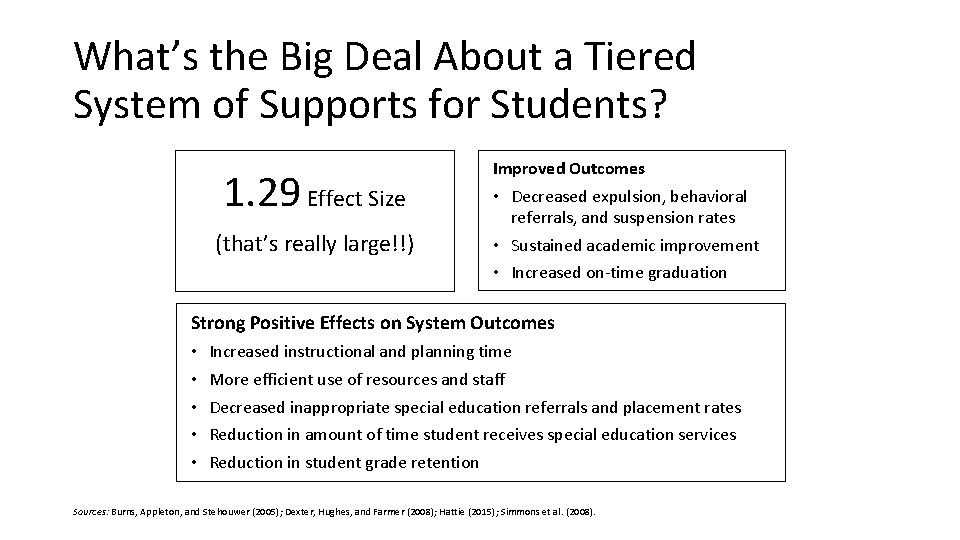
What’s the Big Deal About a Tiered System of Supports for Students? 1. 29 Effect Size (that’s really large!!) Improved Outcomes • Decreased expulsion, behavioral referrals, and suspension rates • Sustained academic improvement • Increased on‐time graduation Strong Positive Effects on System Outcomes • • • Increased instructional and planning time More efficient use of resources and staff Decreased inappropriate special education referrals and placement rates Reduction in amount of time student receives special education services Reduction in student grade retention Sources: Burns, Appleton, and Stehouwer (2005); Dexter, Hughes, and Farmer (2008); Hattie (2015); Simmons et al. (2008).
What Are HLPs?
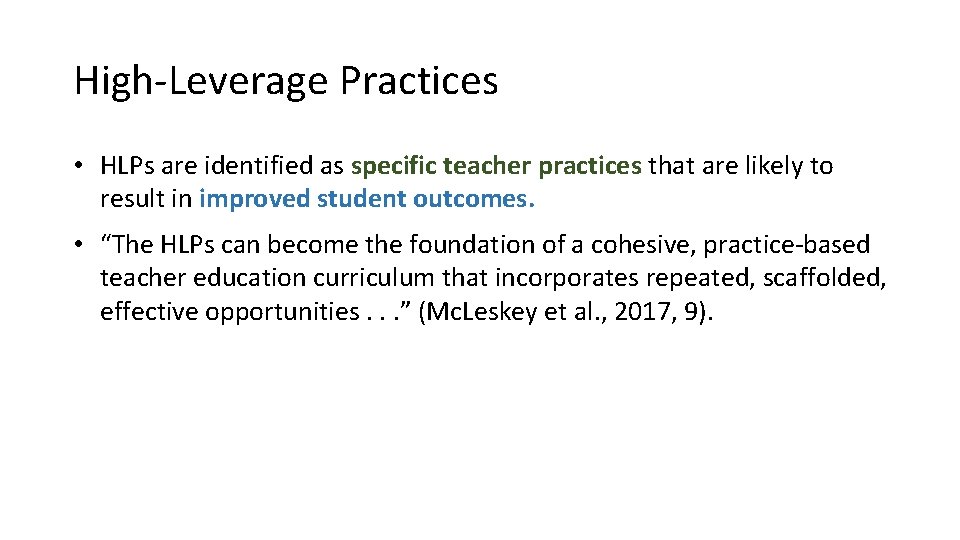
High‐Leverage Practices • HLPs are identified as specific teacher practices that are likely to result in improved student outcomes. • “The HLPs can become the foundation of a cohesive, practice‐based teacher education curriculum that incorporates repeated, scaffolded, effective opportunities. . . ” (Mc. Leskey et al. , 2017, 9).
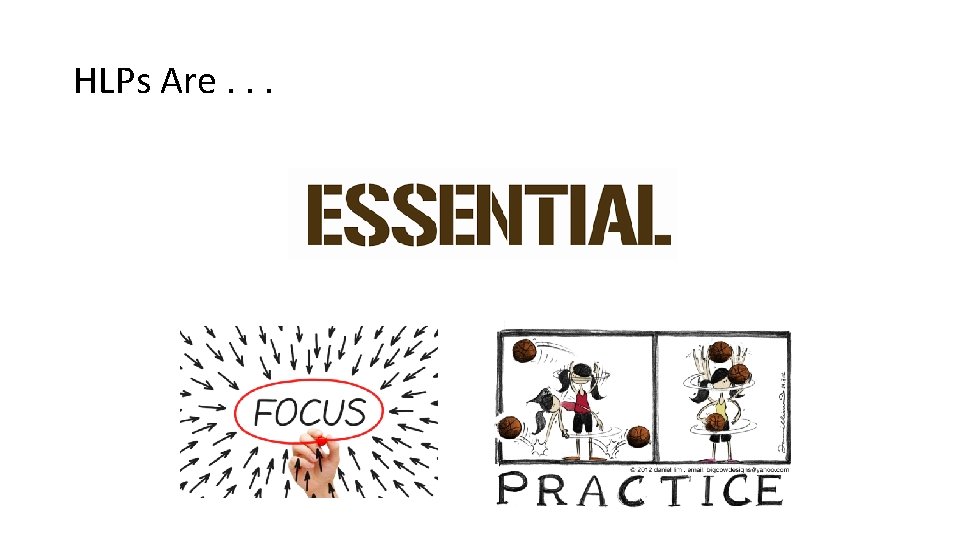
HLPs Are. . .
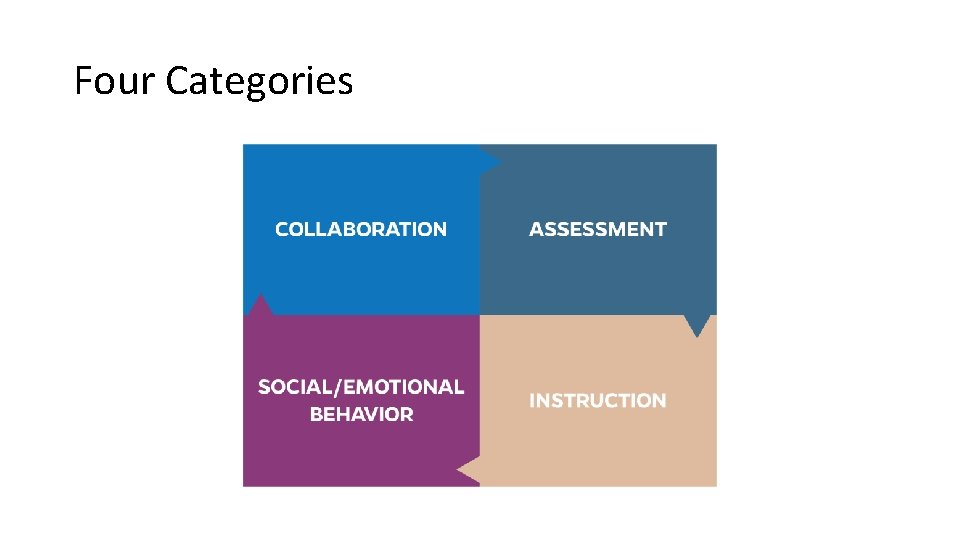
Four Categories
Benefits of HLPs • Appropriate for all learners • Useful across content and subject areas • Established evidence base
Poll Time! Which of the HLP categories are you most excited to learn about? • Collaboration • Assessment • Social/Behavioral • Instruction
How Do HLPs and MTSS Relate/ Work Together?
MTSS: Integrating the What and the How Integrating the essential components of Georgia’s Tiered System of Supports for Students with Georgia’s Systems of Continuous Improvement
Georgia’s Multilevel Prevention System 3% to 5% of students Tier III: Tertiary Level of Prevention: Intensive Intervention SST 15% of students SWD, EL, Gifted 80% of students Tier II: Secondary Level of Prevention: Intervention Tier I: Primary Level of Prevention: Instruction/ Core Curriculum Students receive services at all levels, depending on need.
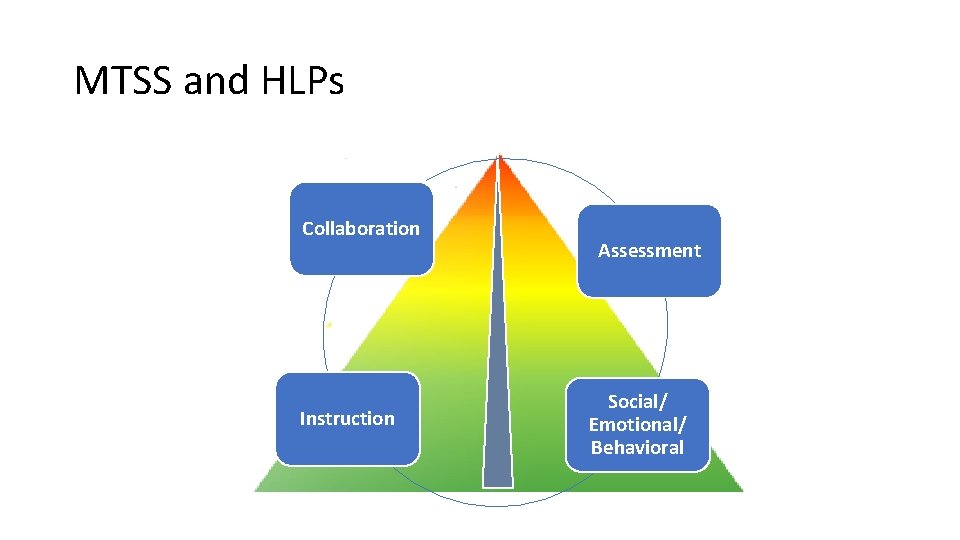
MTSS and HLPs Collaboration Instruction Assessment Social/ Emotional/ Behavioral
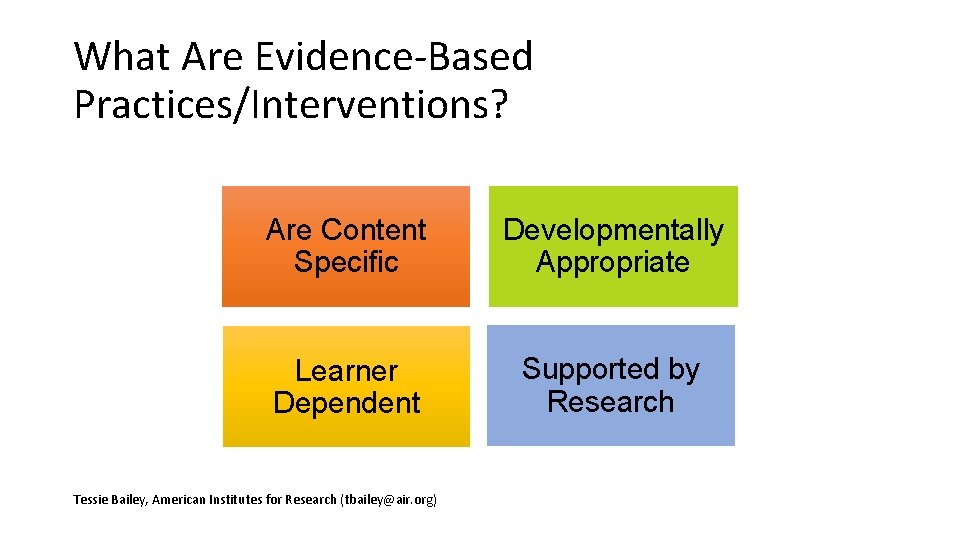
Instructional Understandings About Evidence ‐Based Practices and Interventions Evidence‐based practices (EBPs) and interventions (EBIs) are generally content specific and result in positive impacts on academics and behavior. Tessie Bailey, American Institutes for Research (tbailey@air. org) 20
What Are Evidence‐Based Practices/Interventions? Are Content Specific Developmentally Appropriate Learner Dependent Supported by Research Tessie Bailey, American Institutes for Research (tbailey@air. org) 21
Implementing High‐Leverage Practices and Evidence‐Based Practices When HLPs are coupled with EBPs/EBIs, they provide a continuum of supports that result in a rapid response to academic and behavioral needs. http: //www. teachingworks. org/work‐of‐teaching/high‐leverage‐practices 9/30/2020 22
What HLP Resources Are Available and How Do I Use Them?
Available Resources • Crosswalk with HLP for general and special education and leadership standards: http: //ceedar. education. ufl. edu/wp‐content/uploads/2017/11/HLP‐Crosswalk‐ with‐PSEL 1. pdf • This website explains and provides videos on HLPs: https: //highleveragepractices. org/ • A crosswalk with Georgia TKES and HLPs • Downloadable HLP Book and additional resources http: //ceedar. education. ufl. edu/high‐leverage‐practices/
References Burns, M. K. , Appleton, J. J. , & Stehouwer, J. D. (2005). Meta‐analytic review of responsiveness‐to‐intervention research. Educational Psychology, 23(4), 381– 394. https: //doi. org/10. 1177/073428290502300406 Dexter, D. D. , Hughes, C. A. , & Farmer, T. W. (2008). Hattie (2015). Mc. Leskey, J. , Barringer, M. D. , Billingsley, B. , Brownell, M. , Jackson, D. , Kennedy, M. , . . . Ziegler, D. (2017). High -leverage practices in special education. Arlington, VA: Council for Exceptional Children and CEEDAR Center
References National Center on Response to Intervention. (2010). Simmons, D. C. , Coyne, M. D. , Kwok, O. ‐m. , Mc. Donagh, S. , Harn, B. A. , & Kame'enui, E. J. (2008). Indexing response to intervention: A longitudinal study of reading risk from kindergarten through third grade. Journal of Learning Disabilities, 41(2), 158– 173. http: //dx. doi. org/10. 1177/0022219407313587
Authors The HLP Induction Professional Development Series was created by the following individuals: • • Wina Low, Karen Suddeth, & Karen Wyler, Georgia Department of Education Flavia Gordon‐Gunter, Georgia Professional Standards Commission Lisa Hill, East Georgia Learning Resources System Jessica Simpson & Kristy Brown, Augusta University Stacy Arnold, Jefferson County Schools Michele Sherman, Columbia County Schools Meg Kamman & Amy Colpo, CEEDAR Center Melissa Driver, Da. Shaunda Patterson, Kate Zimmer, & Pam Wetherington, materials adapted from the Georgia’s High‐Leverage Practices Webinar Series