
HighImpact Educational Practices What are they Evelyn Waiwaiole
- Slides: 28
High-Impact Educational Practices: What are they? Evelyn Waiwaiole Program Manager, High-Impact Practices Jeff Crumpley Associate Director CCCSE Center for Community College Student Engagement
Identifying and Promoting High-Impact Educational Practices in Community Colleges § 3 Year Initiative § Funded by the Bill and Melinda Gates Foundation and Lumina Foundation § Analyze data from four surveys § Focus groups § Institutes § National Reports § Initiative ends August, 2014 2
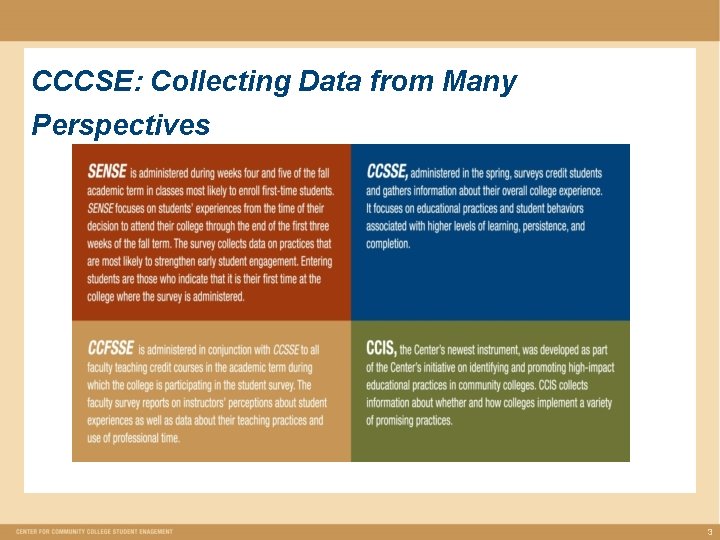
CCCSE: Collecting Data from Many Perspectives 3
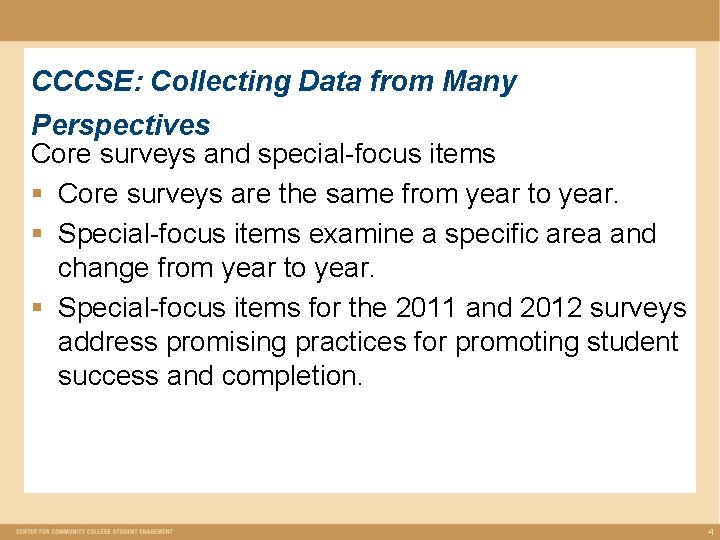
CCCSE: Collecting Data from Many Perspectives Core surveys and special-focus items § Core surveys are the same from year to year. § Special-focus items examine a specific area and change from year to year. § Special-focus items for the 2011 and 2012 surveys address promising practices for promoting student success and completion. 4
CCSSE High Impact Practices Early Results
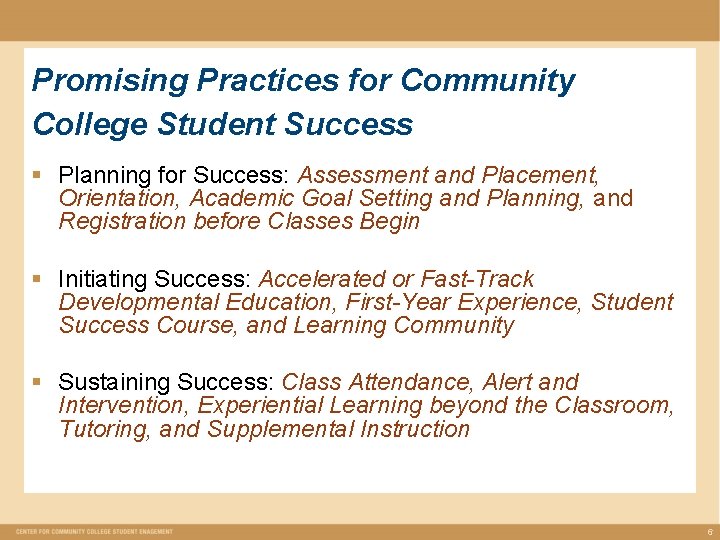
Promising Practices for Community College Student Success § Planning for Success: Assessment and Placement, Orientation, Academic Goal Setting and Planning, and Registration before Classes Begin § Initiating Success: Accelerated or Fast-Track Developmental Education, First-Year Experience, Student Success Course, and Learning Community § Sustaining Success: Class Attendance, Alert and Intervention, Experiential Learning beyond the Classroom, Tutoring, and Supplemental Instruction 6
CCFSSE High Impact Practices
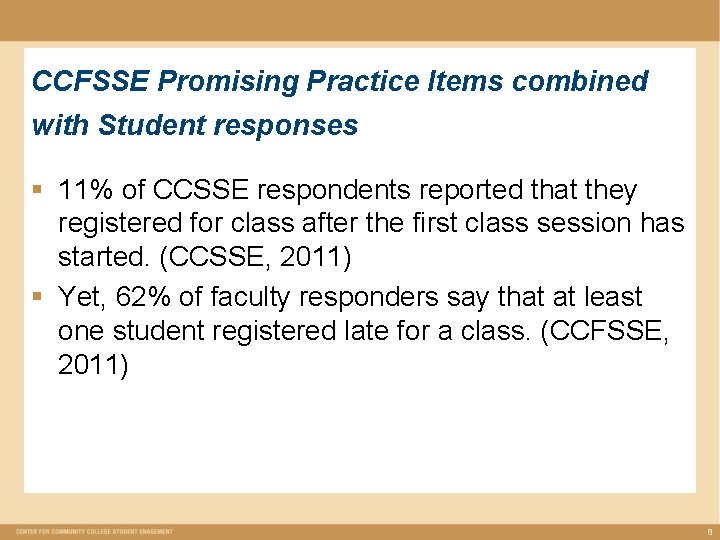
CCFSSE Promising Practice Items combined with Student responses § 11% of CCSSE respondents reported that they registered for class after the first class session has started. (CCSSE, 2011) § Yet, 62% of faculty responders say that at least one student registered late for a class. (CCFSSE, 2011) 8
SENSE High Impact Practices
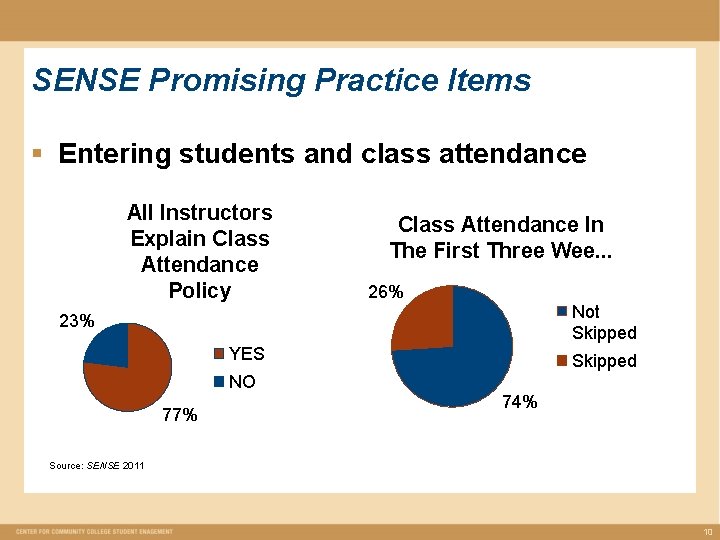
SENSE Promising Practice Items § Entering students and class attendance All Instructors Explain Class Attendance Policy Class Attendance In The First Three Wee. . . 26% Not Skipped 23% YES Skipped NO 77% 74% Source: SENSE 2011 10
What students say about skipping class See CCCSE video at http: //www. youtube. com/user/CCCSEVideo 11
CCIS High Impact Practices
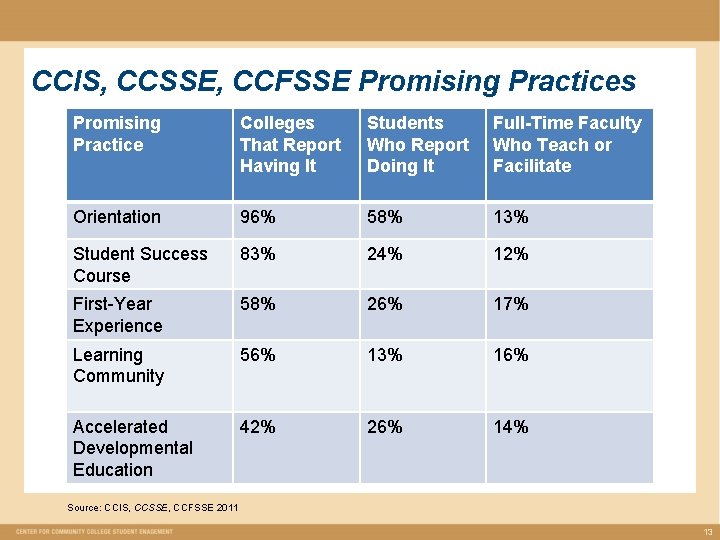
CCIS, CCSSE, CCFSSE Promising Practices Promising Practice Colleges That Report Having It Students Who Report Doing It Full-Time Faculty Who Teach or Facilitate Orientation 96% 58% 13% Student Success Course 83% 24% 12% First-Year Experience 58% 26% 17% Learning Community 56% 13% 16% Accelerated Developmental Education 42% 26% 14% Source: CCIS, CCSSE, CCFSSE 2011 13
Students are not always well-informed See CCCSE video at http: //www. youtube. com/user/CCCSEVideo 14
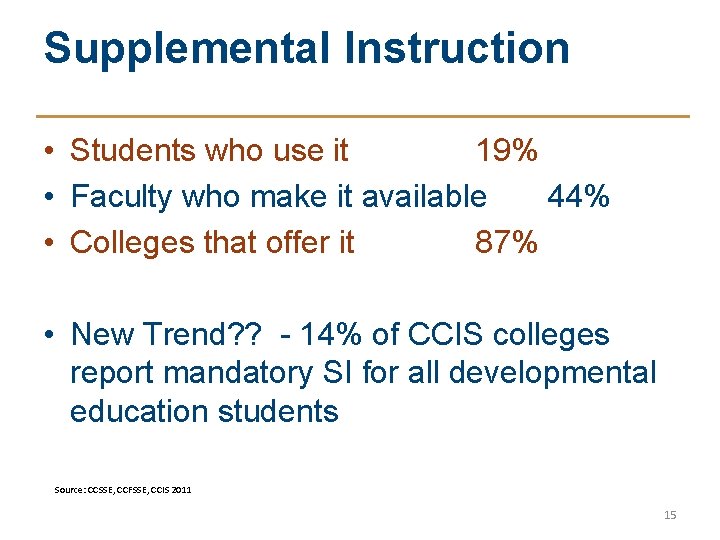
Supplemental Instruction • Students who use it 19% • Faculty who make it available 44% • Colleges that offer it 87% • New Trend? ? - 14% of CCIS colleges report mandatory SI for all developmental education students Source: CCSSE, CCFSSE, CCIS 2011 15
A Student Speaks about SI See CCCSE video at http: //www. youtube. com/user/CCCSEVideo 16
CCIS High Impact Practices How does student participation in these promising practices show up in CCSSE benchmark scores?
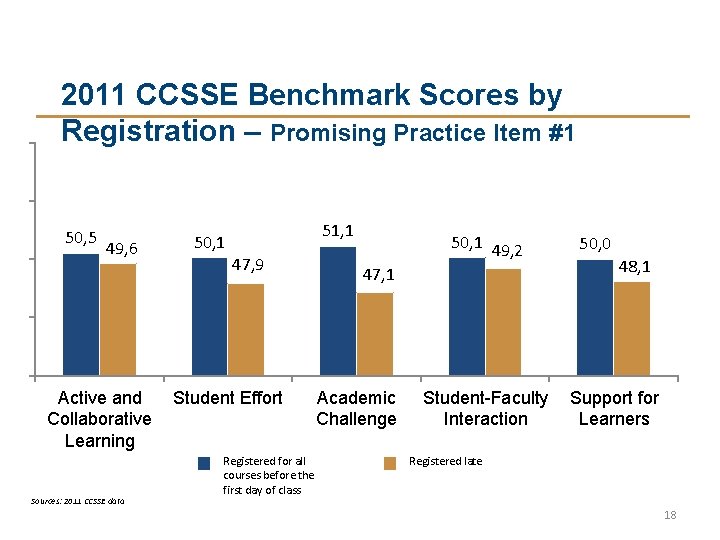
2011 CCSSE Benchmark Scores by Registration – Promising Practice Item #1 50, 5 49, 6 Active and Collaborative Learning Sources: 2011 CCSSE data 51, 1 50, 1 47, 9 Student Effort Registered for all courses before the first day of class 50, 1 49, 2 47, 1 Academic Challenge Student-Faculty Interaction 50, 0 48, 1 Support for Learners Registered late 18
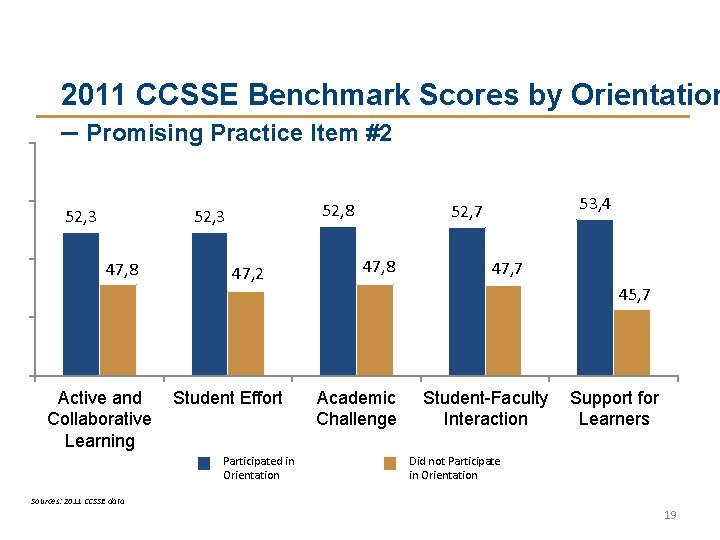
2011 CCSSE Benchmark Scores by Orientation – Promising Practice Item #2 52, 3 52, 8 52, 3 47, 8 Active and Collaborative Learning 47, 2 Student Effort Participated in Orientation 53, 4 52, 7 47, 8 47, 7 45, 7 Academic Challenge Student-Faculty Interaction Support for Learners Did not Participate in Orientation Sources: 2011 CCSSE data 19
Views of Orientation See CCCSE video at http: //www. youtube. com/user/CCCSEVideo 20
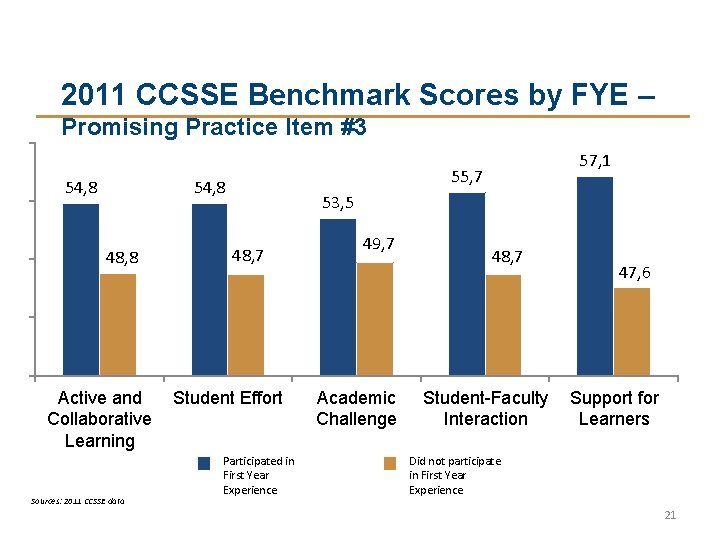
2011 CCSSE Benchmark Scores by FYE – Promising Practice Item #3 54, 8 55, 7 54, 8 48, 8 Active and Collaborative Learning Sources: 2011 CCSSE data 57, 1 53, 5 48, 7 Student Effort Participated in First Year Experience 49, 7 Academic Challenge 48, 7 Student-Faculty Interaction 47, 6 Support for Learners Did not participate in First Year Experience 21
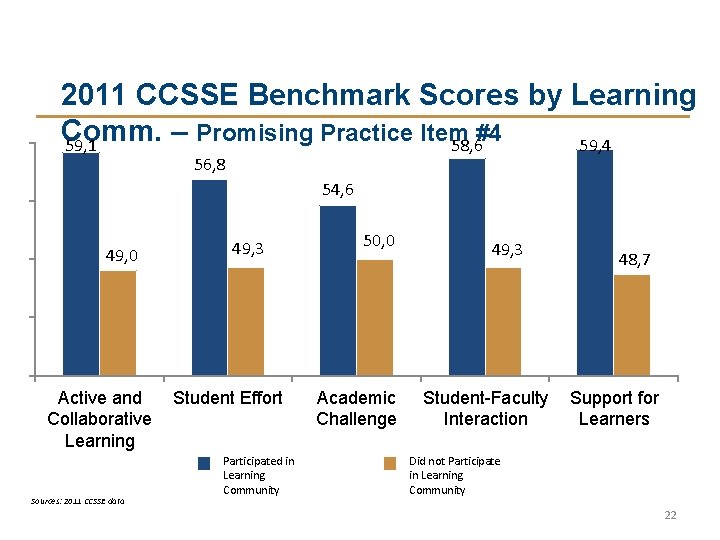
2011 CCSSE Benchmark Scores by Learning Comm. – Promising Practice Item #4 59, 1 58, 6 59, 4 56, 8 54, 6 49, 0 Active and Collaborative Learning Sources: 2011 CCSSE data 49, 3 Student Effort Participated in Learning Community 50, 0 Academic Challenge 49, 3 Student-Faculty Interaction 48, 7 Support for Learners Did not Participate in Learning Community 22
Impression of a first year learning community See CCCSE video at http: //www. youtube. com/user/CCCSEVideo 23
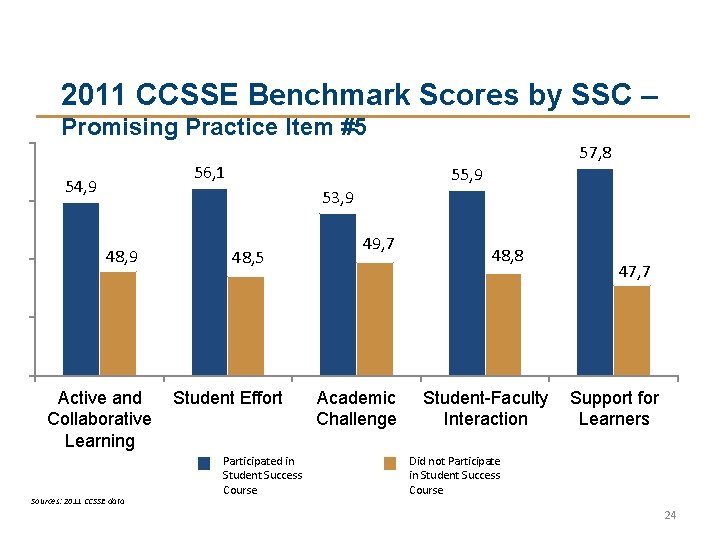
2011 CCSSE Benchmark Scores by SSC – Promising Practice Item #5 57, 8 56, 1 54, 9 55, 9 53, 9 48, 9 Active and Collaborative Learning Sources: 2011 CCSSE data 48, 5 Student Effort Participated in Student Success Course 49, 7 Academic Challenge 48, 8 Student-Faculty Interaction 47, 7 Support for Learners Did not Participate in Student Success Course 24
Student Success Courses See CCCSE video at http: //www. youtube. com/user/CCCSEVideo 25
High Impact Practices: What comes next?
CCIS High Impact Practices: Next steps § Analysis of components inside of each promising practice § Analysis of the relationship between each promising practice and self-reported GPA § Analysis of the relationship between each promising practice and student records § Deeper looks at college specific programs with successful results 27
Questions ? Center for Community College Student Engagement 3316 Grandview Street Austin, Texas 78705 Phone: 512 -471 -6687 www. ccsse. org