
HIGHFIELD LEVEL 2 AWARD IN CONFLICT MANAGEMENT 60006705

- Slides: 22
HIGHFIELD LEVEL 2 AWARD IN CONFLICT MANAGEMENT (600/0670/5)
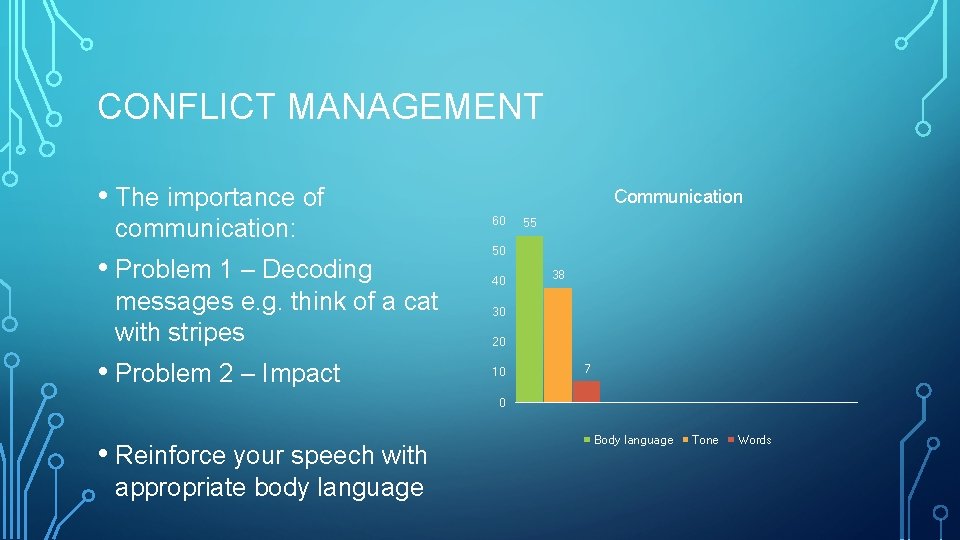
CONFLICT MANAGEMENT • The importance of communication: • Problem 1 – Decoding messages e. g. think of a cat with stripes • Problem 2 – Impact Communication 60 55 50 40 38 30 20 10 7 0 • Reinforce your speech with appropriate body language Body language Tone Words
CONFLICT MANAGEMENT • LO 1: Know how communications can be used to solve problems and reduce the likelihood of conflict • The importance of positive communication as a way of reducing the likelihood of conflict ØBe proactive in giving out information to customers ØListen to the individual before responding ØMaintain a calm tone and non-aggressive body language
CONFLICT MANAGEMENT • How managing customer expectations can reduce the likelihood of conflict ØClear communications ØManaging unrealistic expectations ØExplaining procedures ØProactive service delivery
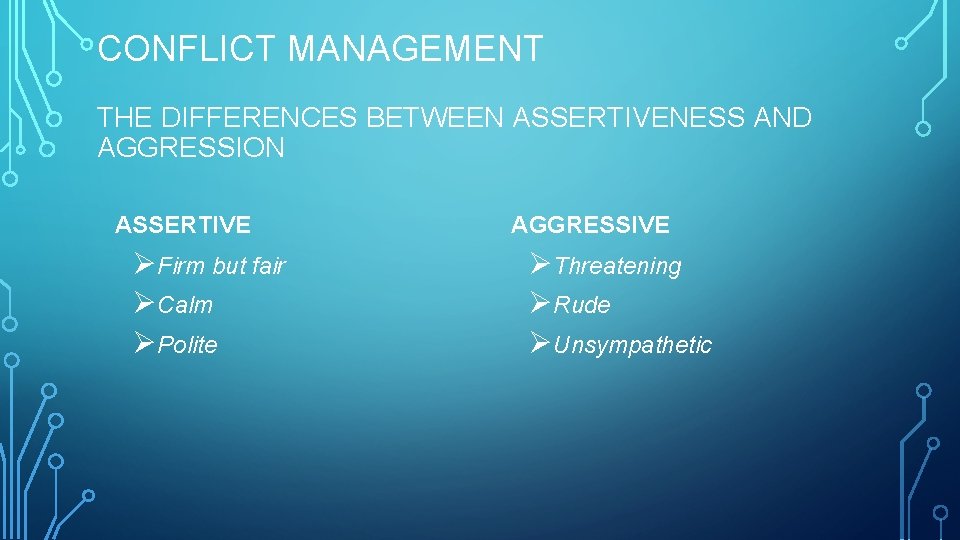
CONFLICT MANAGEMENT THE DIFFERENCES BETWEEN ASSERTIVENESS AND AGGRESSION ASSERTIVE ØFirm but fair ØCalm ØPolite AGGRESSIVE ØThreatening ØRude ØUnsympathetic
CONFLICT MANAGEMENT • The importance of viewing a situation from the customer’s perspective important ØHelps to defuse conflict situations ØEnables the use of empathy ØBuilds a rapport
CONFLICT MANAGEMENT • Identify strategies that can be used to solve problems ØBuilding rapport ØStating expectations ØCompromising
CONFLICT MANAGEMENT • LO 2 Know the factors that influence human responses in conflict situations • Human responses to emotional or threatening situations ØFight or flight ØFear ØShock ØAnger ØAggression
CONFLICT MANAGEMENT • Factors that can trigger an angry response in others • Factors: ØBeing under the influence of drink or drugs ØEmotions – anger, pain, upset etc. • Possible triggers: ØShowing disrespect ØThreatening/aggressive behaviour ØInsulting behaviour
CONFLICT MANAGEMENT • Factors that can inhibit an angry response in others: ØSelf-control ØCalmness ØFear of prosecution ØFear of retaliation
CONFLICT MANAGEMENT • LO 3 Know how to assess and reduce risks in conflict situations • The stages of escalation in conflict situations: ØFrustration ØAnger ØAggression ØViolence
CONFLICT MANAGEMENT • How to apply dynamic risk assessment to a conflict situation: ØThink ‘safety first’ ØAssess the situation ØConsider the options ØTake action
CONFLICT MANAGEMENT • The importance of following employer policies and guidance in conflict situations: ØLegislation – Health & Safety at Work Act 1974 ØReduce risk of litigation/employment/employee ØProtect company reputation ØProvide clear role and responsibility
CONFLICT MANAGEMENT • Measures that can reduce risks for people who may be involved in conflict situations ØTraining ØPersonal protective equipment (PPE) ØCCTV ØPositive communication
CONFLICT MANAGEMENT • LO 4: Know how to communicate effectively and deescalate conflict in emotive situations • How to use non-verbal communication in emotive situations: ØAwareness of personal space ØNon-aggressive body language ØOpen hand gestures
CONFLICT MANAGEMENT • How to overcome communication barriers in emotive situations ØMove to a quieter area ØSpeak slowly and calmly ØNon-aggressive body language ØBe patient
CONFLICT MANAGEMENT • Ways of defusing emotive conflict situations: ØPositive communication ØEmpathy ØSelf-control
CONFLICT MANAGEMENT • How to work with colleagues to de-escalate conflict situations: ØDynamic risk assessment ØCorrect positioning ØChanging control with a colleague
CONFLICT MANAGEMENT • The importance of providing exit routes and space when dealing with an angry person: ØNon-aggressive stance ØMaintaining personal space ØEnsure an escape route is available for self and aggressor
CONFLICT MANAGEMENT • LO 5: Know good practice to follow after conflict situations • The importance of accessing help and support following an incident: ØEmotional support ØReduces the possibility of post-traumatic stress disorder
CONFLICT MANAGEMENT • The benefits of reflecting on and learning from conflict situations: ØMaking improvements ØSharing good practice ØIdentifying poor practice
CONFLICT MANAGEMENT • The benefits of sharing good practice and contributing to solutions to recurring problems: ØImproved customer service ØImproved morale and safety ØReduced stress