
Higher Physics Unit 2 Particles and Waves Irradiance
- Slides: 16
Higher Physics
Unit 2 Particles and Waves
Irradiance (Intensity of Radiation)
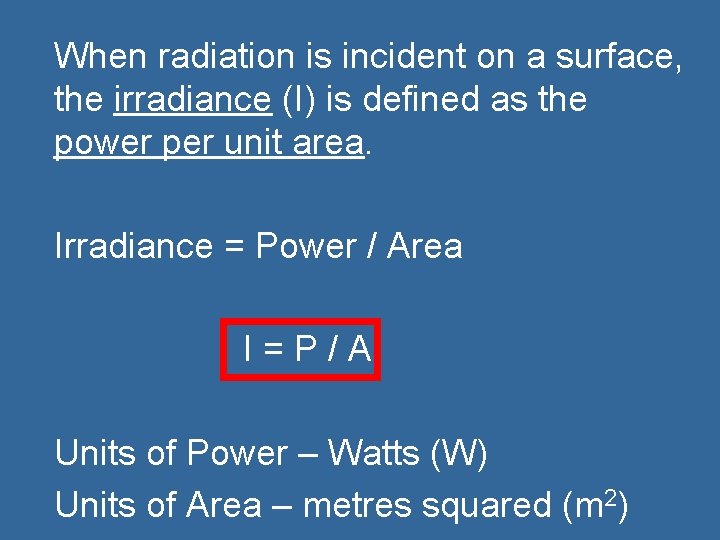
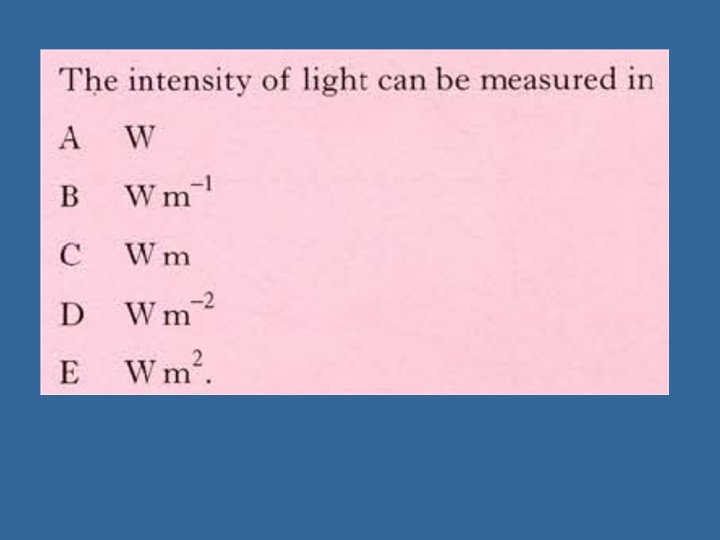
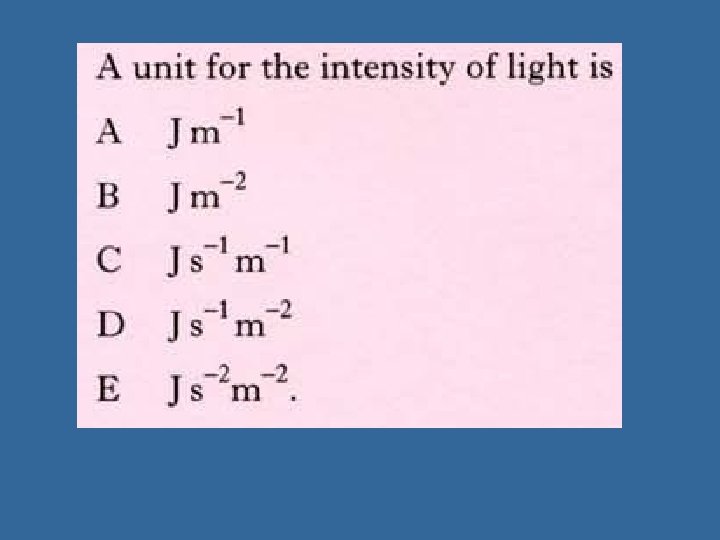
When radiation is incident on a surface, the irradiance (I) is defined as the power per unit area. Irradiance = Power / Area I=P/A Units of Power – Watts (W) Units of Area – metres squared (m 2)
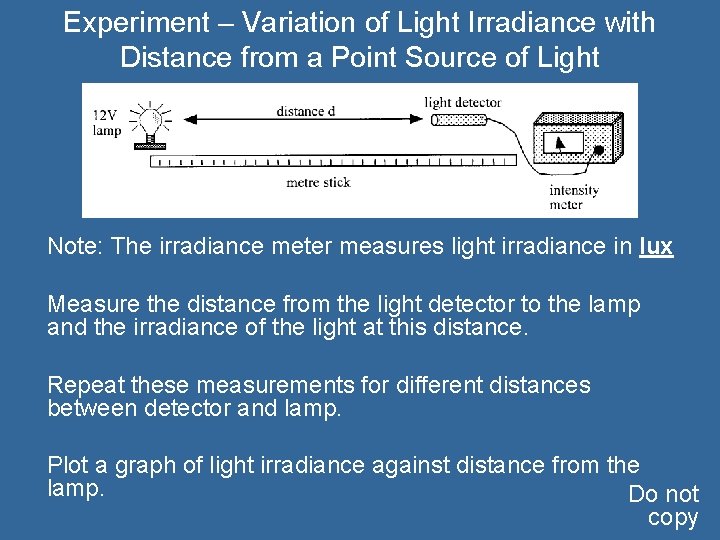
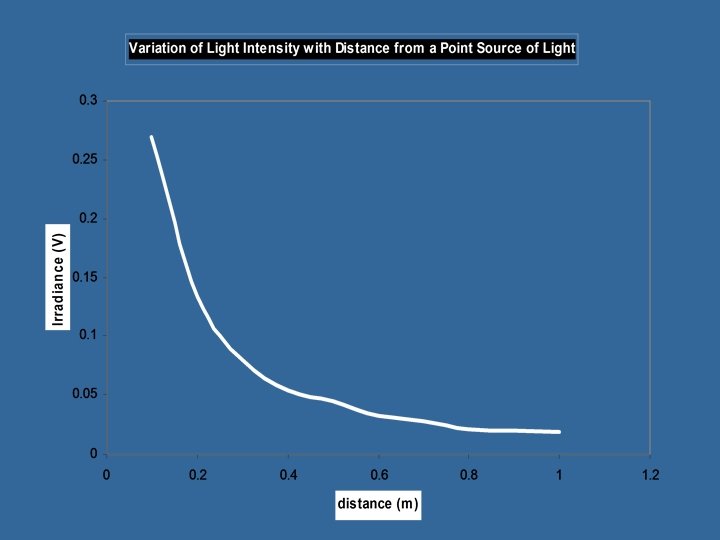
Experiment – Variation of Light Irradiance with Distance from a Point Source of Light Note: The irradiance meter measures light irradiance in lux Measure the distance from the light detector to the lamp and the irradiance of the light at this distance. Repeat these measurements for different distances between detector and lamp. Plot a graph of light irradiance against distance from the lamp. Do not copy
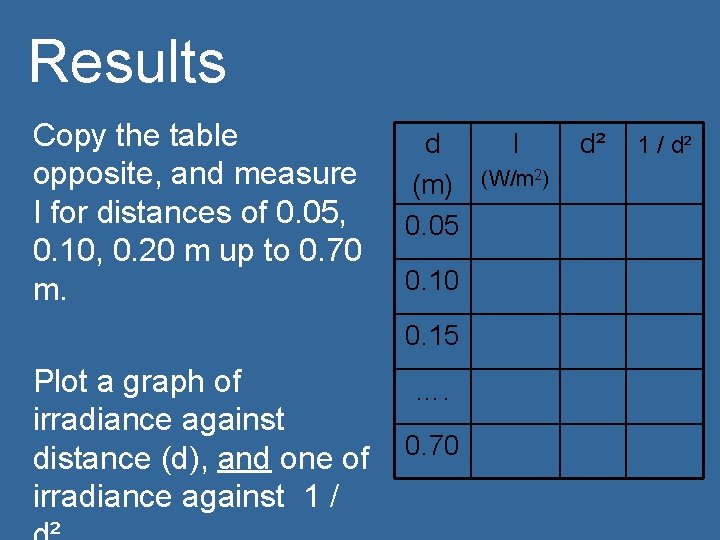
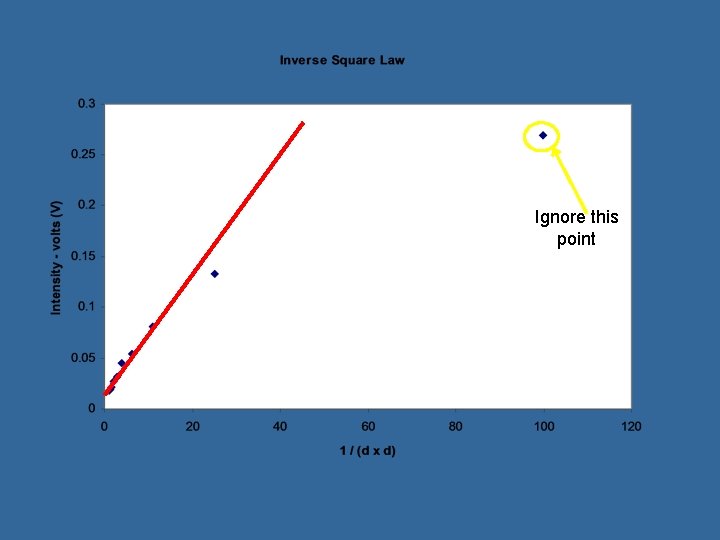
Results Copy the table opposite, and measure I for distances of 0. 05, 0. 10, 0. 20 m up to 0. 70 m. d (m) 0. 05 0. 10 0. 15 Plot a graph of irradiance against distance (d), and one of irradiance against 1 / …. 0. 70 I (W/m 2) d² 1 / d²
Ignore this point
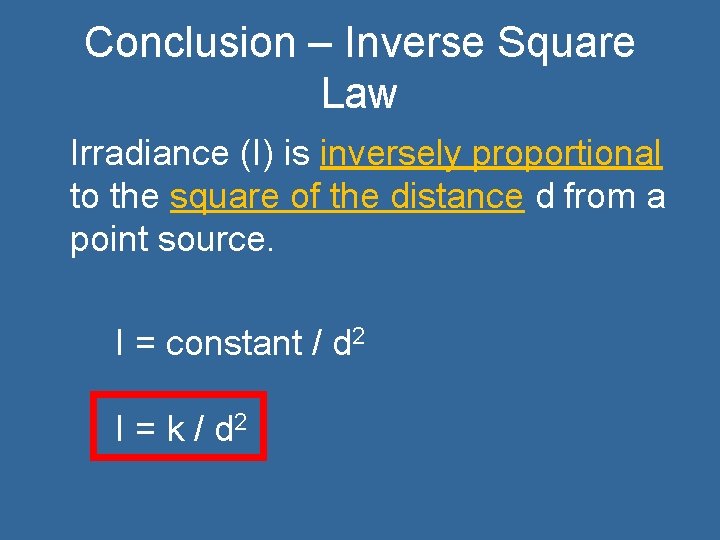
Conclusion – Inverse Square Law Irradiance (I) is inversely proportional to the square of the distance d from a point source. I = constant / d 2 I = k / d 2
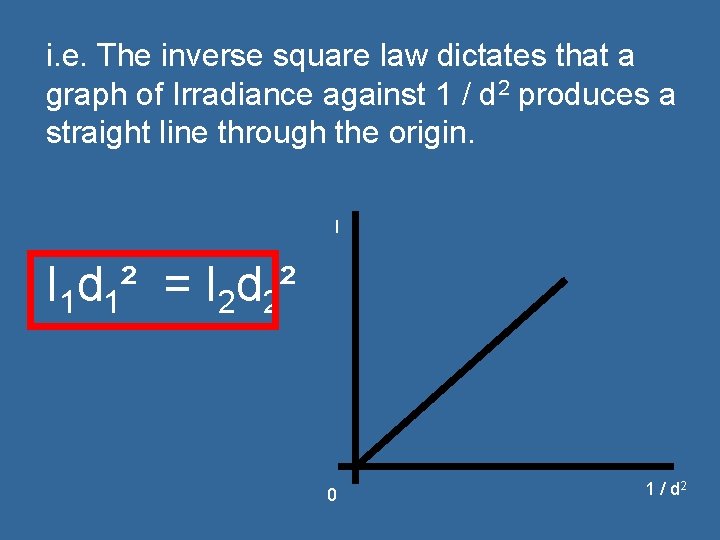
i. e. The inverse square law dictates that a graph of Irradiance against 1 / d 2 produces a straight line through the origin. I I 1 d 1² = I 2 d 2² 0 1 / d 2
Point sources In experiments, we must use point sources of light when investigating irradiance (intensity) and distance (point sources emit radiation in all directions). The filament of torch bulbs are better for this than, say, a laser light source (which only emits light in one direction).
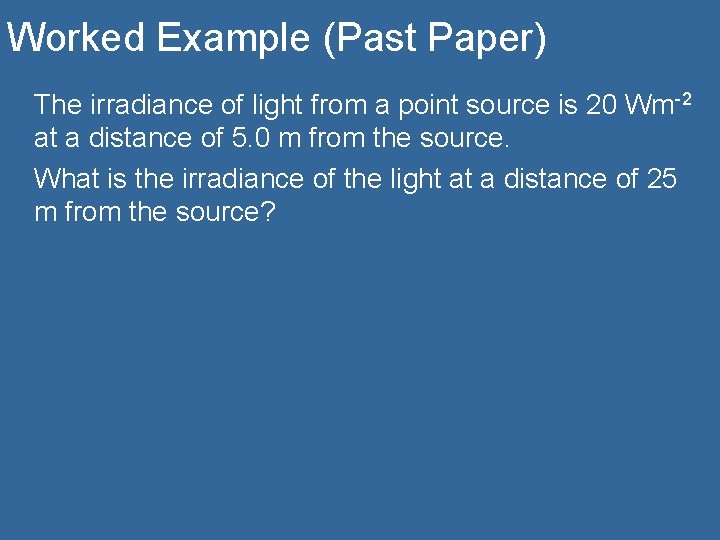
Worked Example (Past Paper) The irradiance of light from a point source is 20 Wm-2 at a distance of 5. 0 m from the source. What is the irradiance of the light at a distance of 25 m from the source?
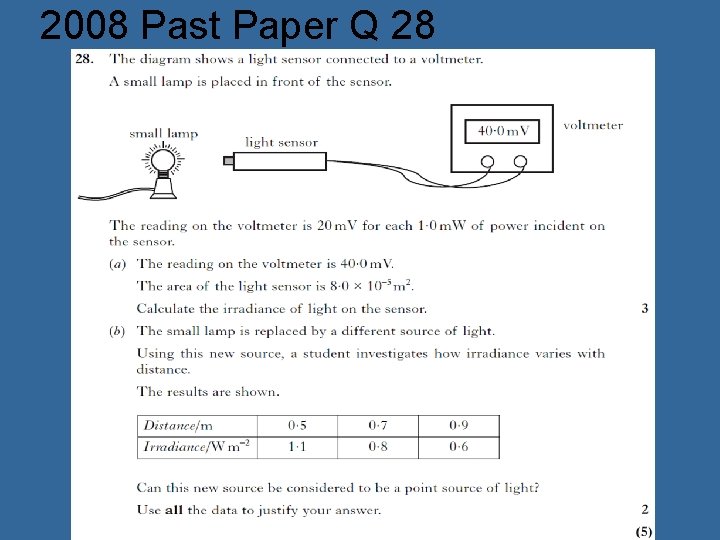
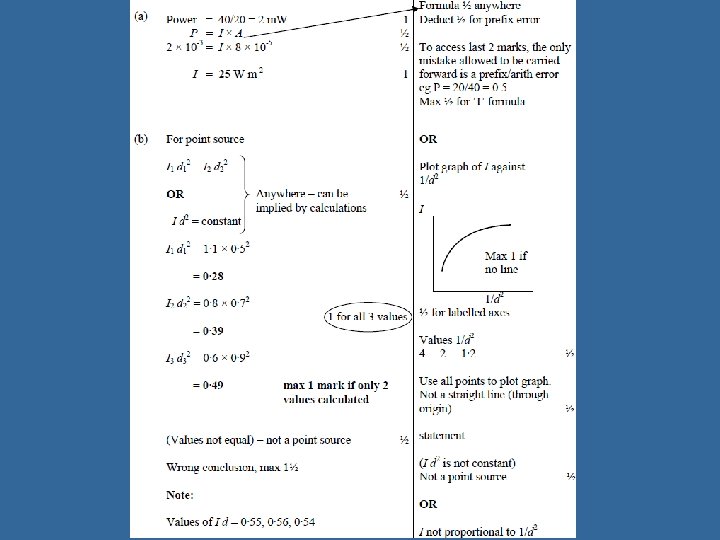
2008 Past Paper Q 28