
Higher PE Interpreting Information Types of Information Qualitative

- Slides: 8
Higher PE Interpreting Information
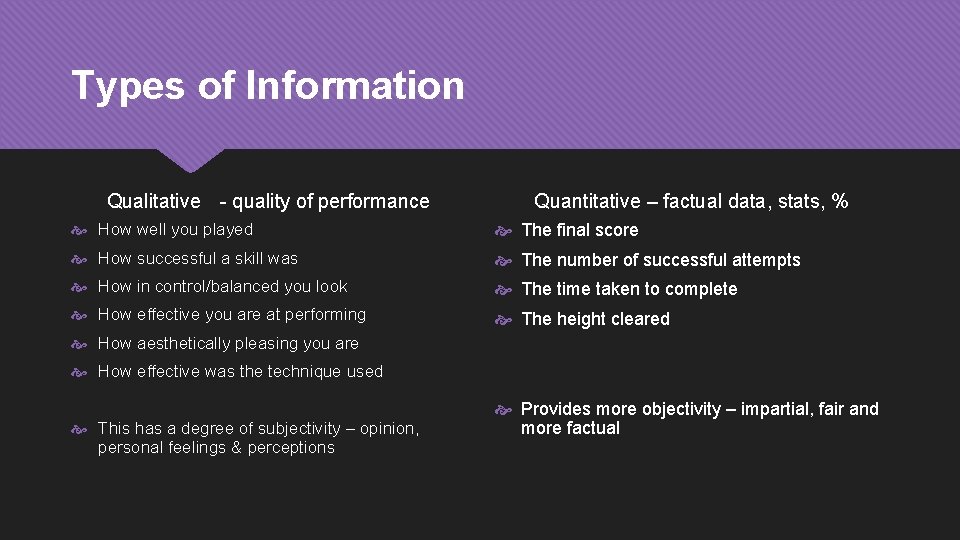
Types of Information Qualitative - quality of performance Quantitative – factual data, stats, % How well you played The final score How successful a skill was The number of successful attempts How in control/balanced you look The time taken to complete How effective you are at performing The height cleared How aesthetically pleasing you are How effective was the technique used This has a degree of subjectivity – opinion, personal feelings & perceptions Provides more objectivity – impartial, fair and more factual
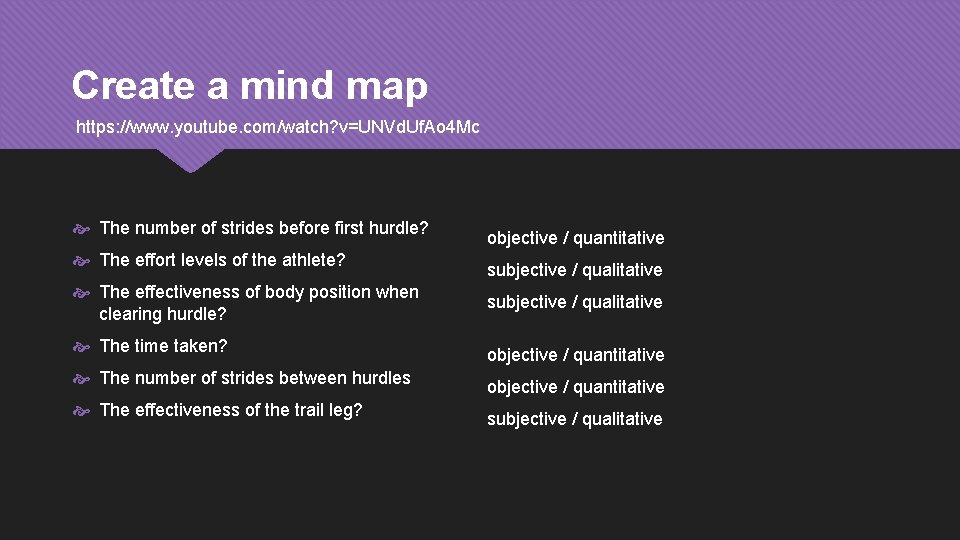
Create a mind map https: //www. youtube. com/watch? v=UNVd. Uf. Ao 4 Mc The number of strides before first hurdle? The effort levels of the athlete? The effectiveness of body position when clearing hurdle? objective / quantitative subjective / qualitative The time taken? objective / quantitative The number of strides between hurdles objective / quantitative The effectiveness of the trail leg? subjective / qualitative
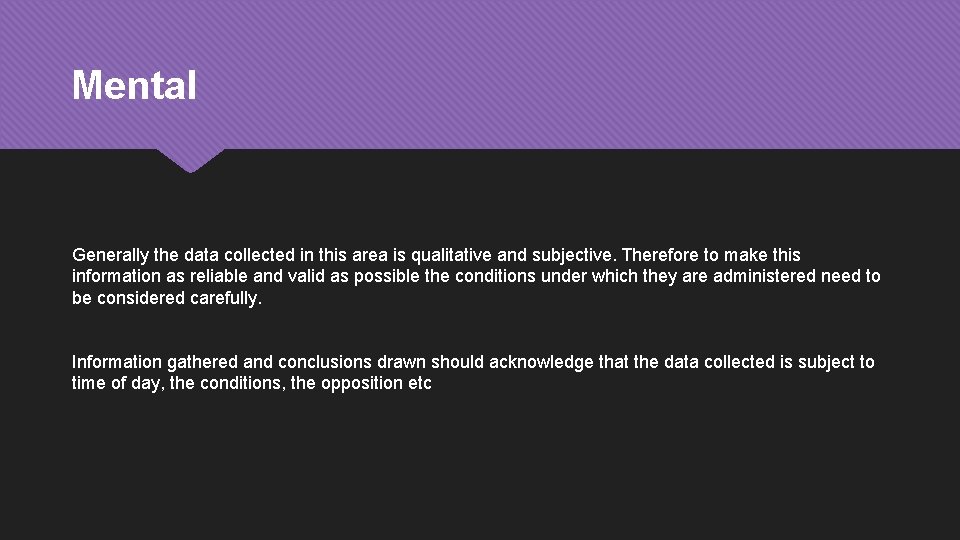
Mental Generally the data collected in this area is qualitative and subjective. Therefore to make this information as reliable and valid as possible the conditions under which they are administered need to be considered carefully. Information gathered and conclusions drawn should acknowledge that the data collected is subject to time of day, the conditions, the opposition etc
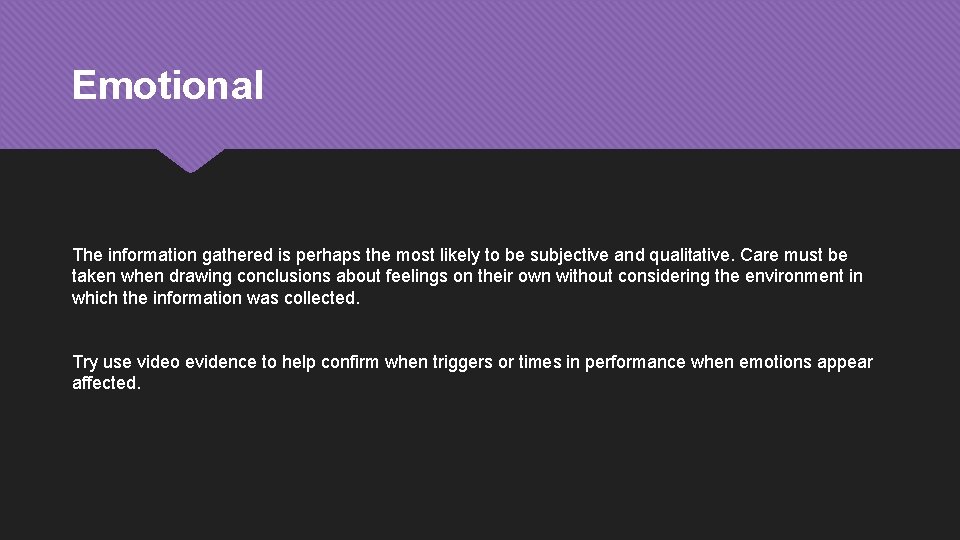
Emotional The information gathered is perhaps the most likely to be subjective and qualitative. Care must be taken when drawing conclusions about feelings on their own without considering the environment in which the information was collected. Try use video evidence to help confirm when triggers or times in performance when emotions appear affected.
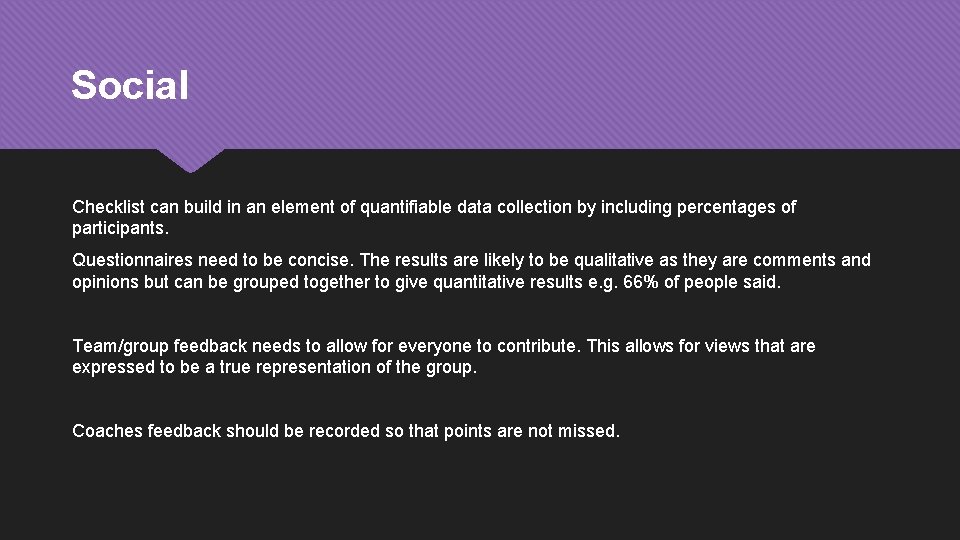
Social Checklist can build in an element of quantifiable data collection by including percentages of participants. Questionnaires need to be concise. The results are likely to be qualitative as they are comments and opinions but can be grouped together to give quantitative results e. g. 66% of people said. Team/group feedback needs to allow for everyone to contribute. This allows for views that are expressed to be a true representation of the group. Coaches feedback should be recorded so that points are not missed.
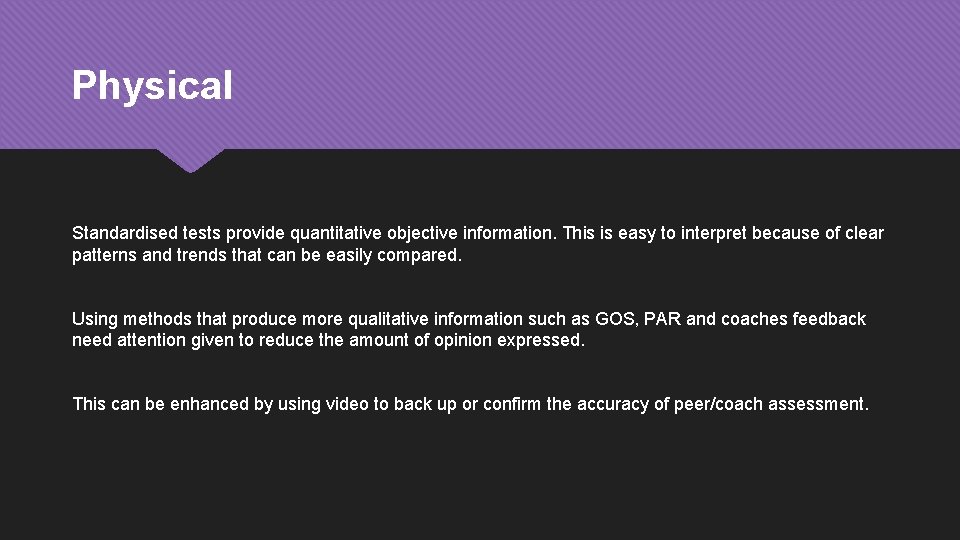
Physical Standardised tests provide quantitative objective information. This is easy to interpret because of clear patterns and trends that can be easily compared. Using methods that produce more qualitative information such as GOS, PAR and coaches feedback need attention given to reduce the amount of opinion expressed. This can be enhanced by using video to back up or confirm the accuracy of peer/coach assessment.
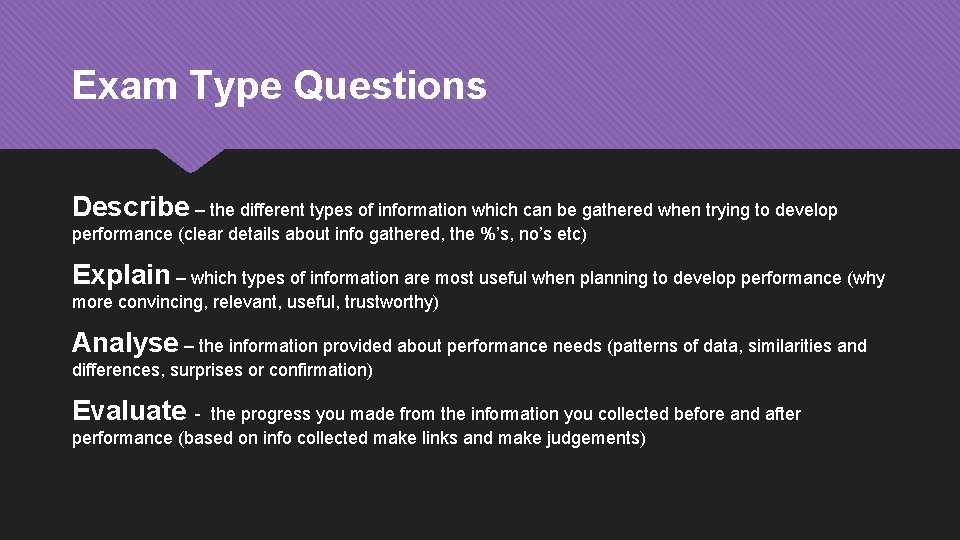
Exam Type Questions Describe – the different types of information which can be gathered when trying to develop performance (clear details about info gathered, the %’s, no’s etc) Explain – which types of information are most useful when planning to develop performance (why more convincing, relevant, useful, trustworthy) Analyse – the information provided about performance needs (patterns of data, similarities and differences, surprises or confirmation) Evaluate - the progress you made from the information you collected before and after performance (based on info collected make links and make judgements)