
Higher Order Questions Five Guidelines for Interpretive Exercises
- Slides: 9
Higher Order Questions
Five Guidelines for Interpretive Exercises 1. 2. 3. 4. 5. Relevance to instruction Similarity to presented material Brevity so not a test of reading speed Answers not Provided in material provided Multiple Questions to make efficient use of time
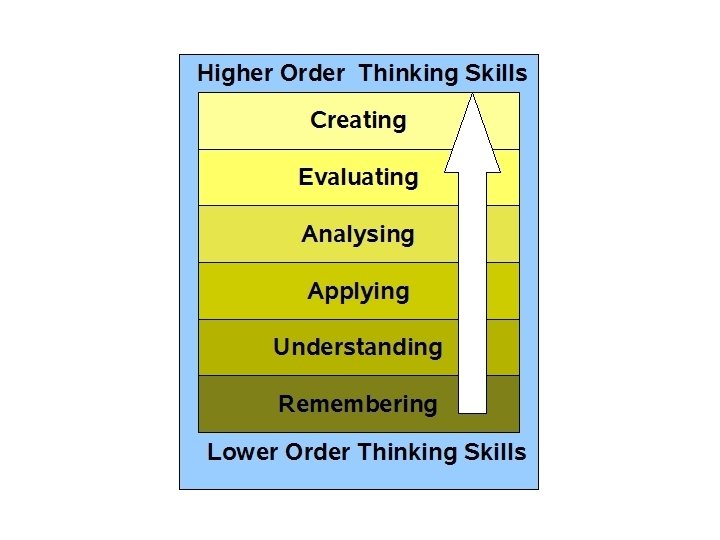
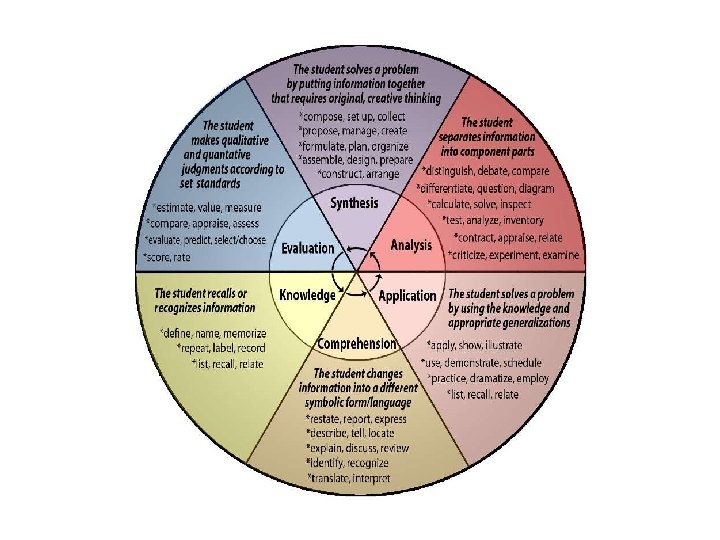
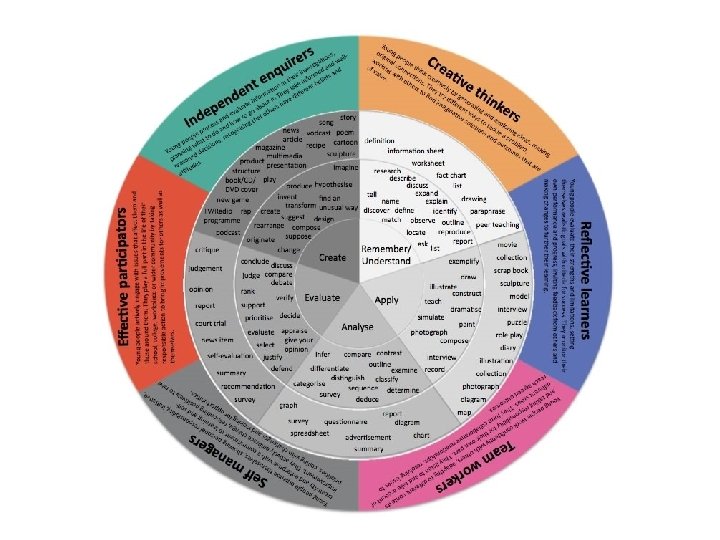
Higher Level Questions Solve a problem Interpret a diagram, chart or table Explain in your own words Identify a relationship Carry out an activity Develop a process Search “Bloom’s taxonomy chart” http: //www. bing. com/images/search? q=bloom's+taxonom y+chart&qpvt=bloom%27 s+taxonomy+chart&FORM=IGRE
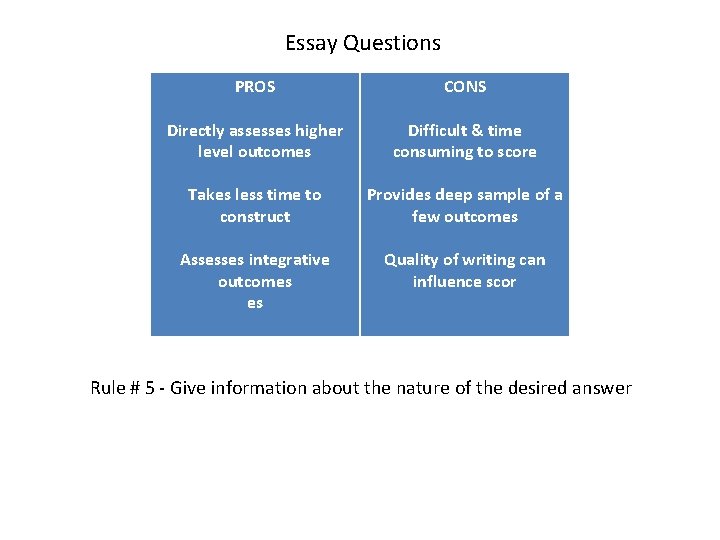
Essay Questions PROS CONS Directly assesses higher level outcomes Difficult & time consuming to score Takes less time to construct Provides deep sample of a few outcomes Assesses integrative outcomes es Quality of writing can influence scor Rule # 5 - Give information about the nature of the desired answer
Writing Essay Questions 1. Use several short essays rather than one long one. 2. Make the reading level appropriate 3. Connect the essay to your objectives 4. Base it on a fresh sample that wasn’t taught 5. Provide a clear focus 6. Avoid topics that require a lot of memory 7. Narrow the focus on using guiding terms 8. Provide info on length & time to complete 9. Indicate your scoring criteria
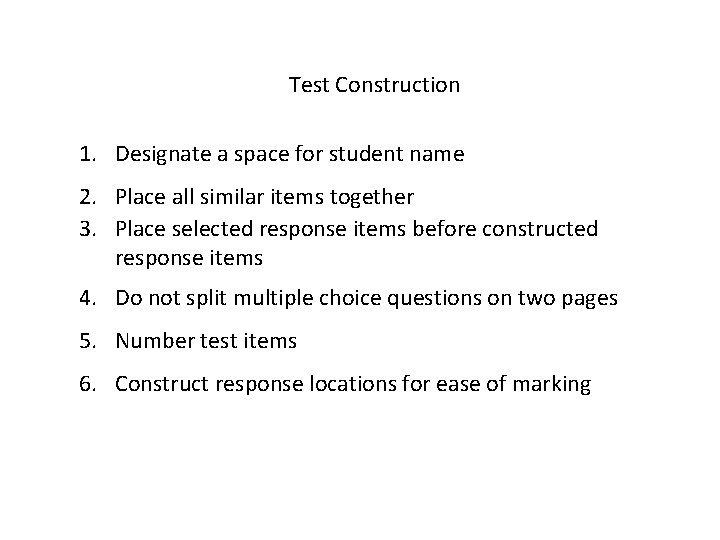
Test Construction 1. Designate a space for student name 2. Place all similar items together 3. Place selected response items before constructed response items 4. Do not split multiple choice questions on two pages 5. Number test items 6. Construct response locations for ease of marking