
HIGHER EDUCATION IN ITALY Alberto Mondi 6 May
HIGHER EDUCATION IN ITALY Alberto Mondi 6 May 2010
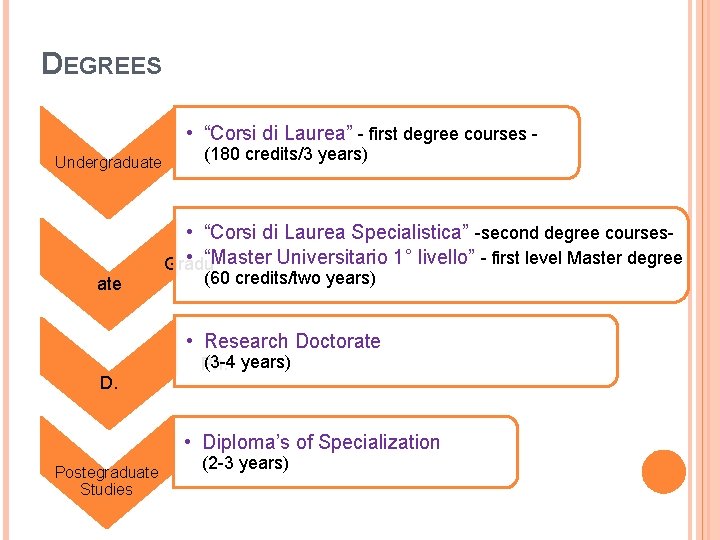
DEGREES • “Corsi di Laurea” - first degree courses Undergraduate (180 credits/3 years) • “Corsi di Laurea Specialistica” -second degree courses • “Master Universitario 1° livello” - first level Master degree Gradu (60 credits/two years) • Research Doctorate D. (3 -4 years) Ph. • Diploma’s of Specialization Postegraduate Studies (2 -3 years)
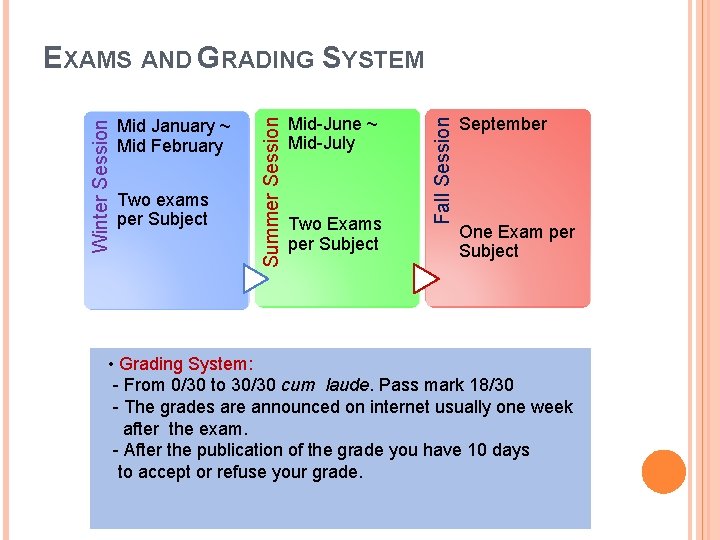
Two exams per Subject Mid-June ~ Mid-July Two Exams per Subject Fall Session Mid January ~ Mid February Summer Session Winter Session EXAMS AND GRADING SYSTEM September One Exam per Subject • Grading System: - From 0/30 to 30/30 cum laude. Pass mark 18/30 - The grades are announced on internet usually one week after the exam. - After the publication of the grade you have 10 days to accept or refuse your grade.
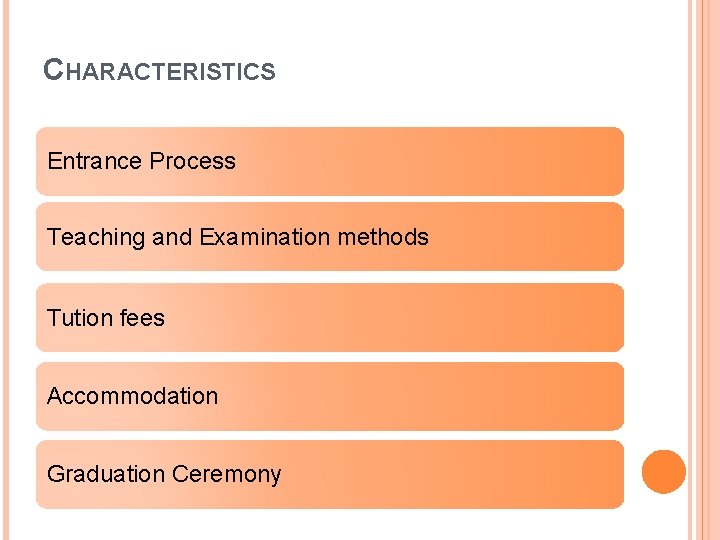
CHARACTERISTICS Entrance Process Teaching and Examination methods Tution fees Accommodation Graduation Ceremony

ITALY’S BEST UNIVERSITIES 1. University “La Sapienza” Rome of 2. University of Bologna 3. University of Milan 4. University “Federico II” Naples 5. University of Florence 6. University of Pisa of
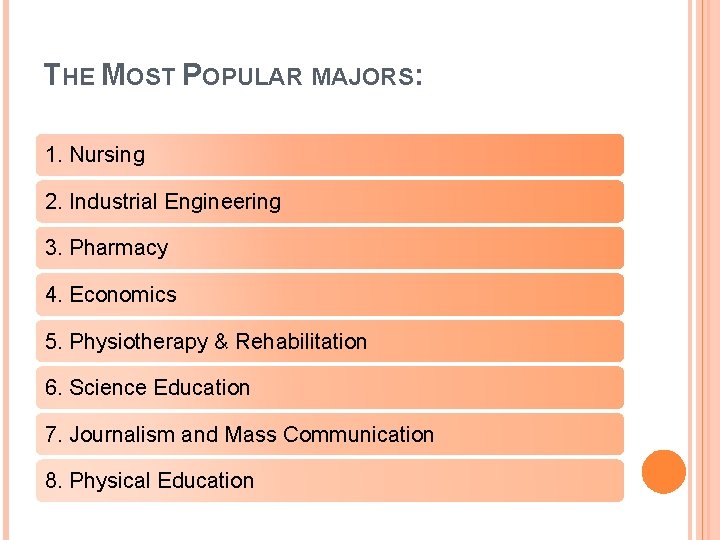
THE MOST POPULAR MAJORS: 1. Nursing 2. Industrial Engineering 3. Pharmacy 4. Economics 5. Physiotherapy & Rehabilitation 6. Science Education 7. Journalism and Mass Communication 8. Physical Education
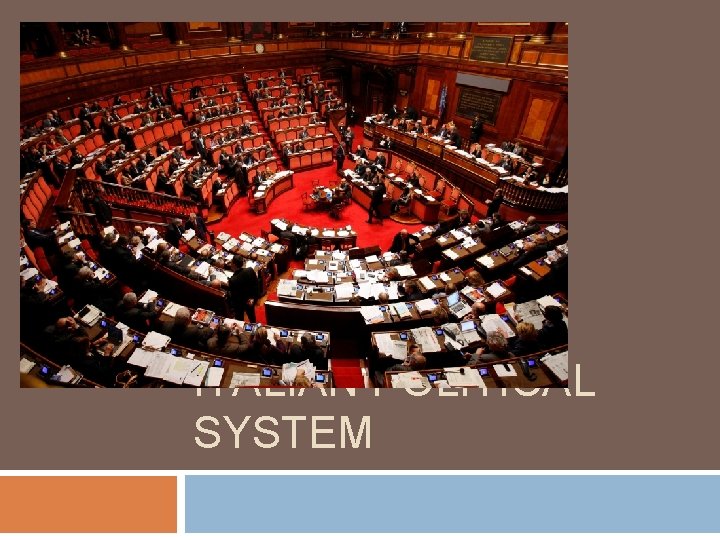
ITALIAN POLITICAL SYSTEM
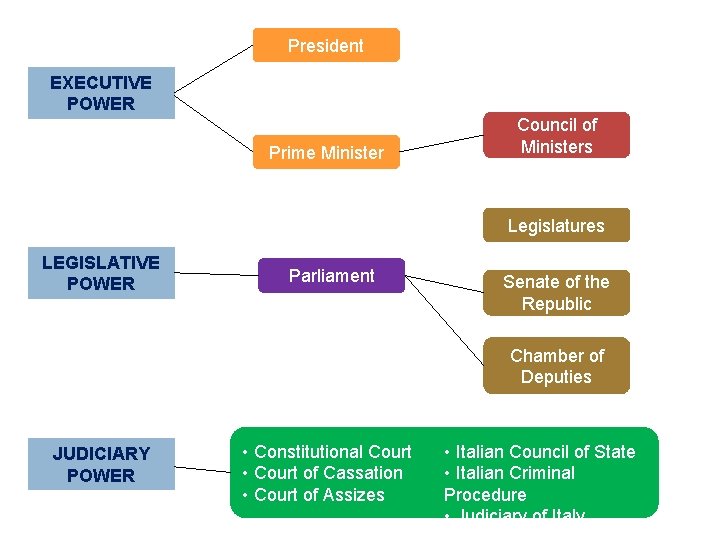
President EXECUTIVE POWER Prime Minister Council of Ministers Legislatures LEGISLATIVE POWER Parliament Senate of the Republic Chamber of Deputies JUDICIARY POWER • Constitutional Court • Court of Cassation • Court of Assizes • Italian Council of State • Italian Criminal Procedure • Judiciary of Italy
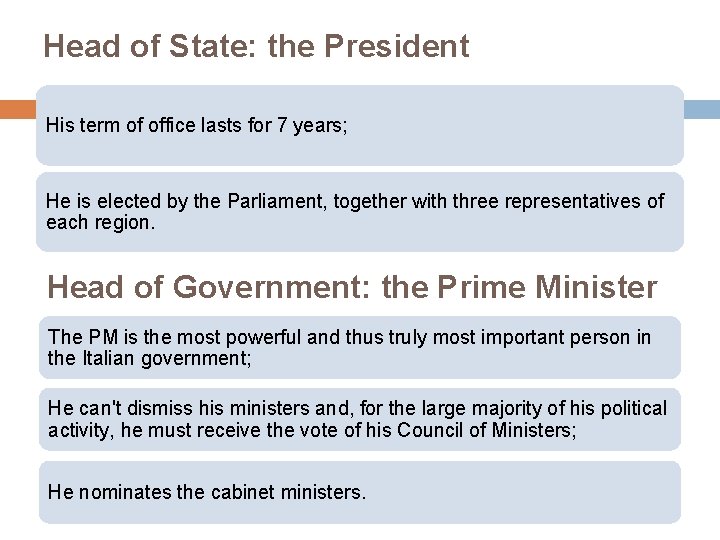
Head of State: the President His term of office lasts for 7 years; He is elected by the Parliament, together with three representatives of each region. Head of Government: the Prime Minister The PM is the most powerful and thus truly most important person in the Italian government; He can't dismiss his ministers and, for the large majority of his political activity, he must receive the vote of his Council of Ministers; He nominates the cabinet ministers.
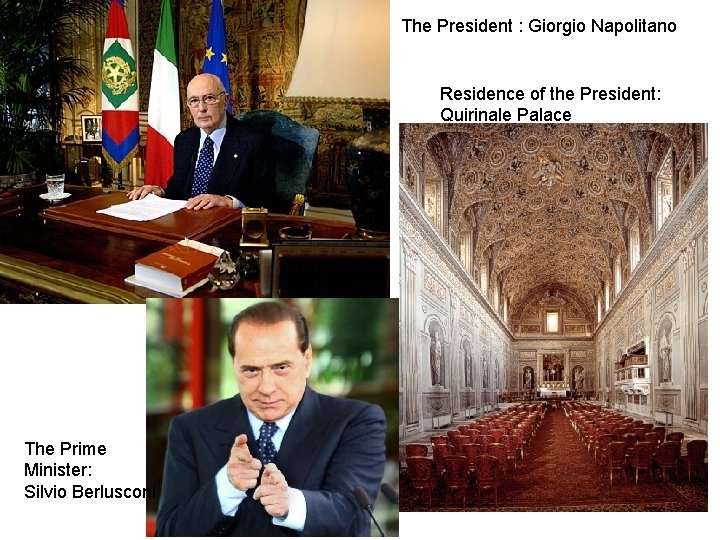
The President : Giorgio Napolitano Residence of the President: Quirinale Palace The Prime Minister: Silvio Berlusconi
Council of Ministers It is the principal organ of the Italian government; It is formed by 60 members: - the Prime Minister - 21 ministers, of whom 9 without portfolio - 38 undersecretaries
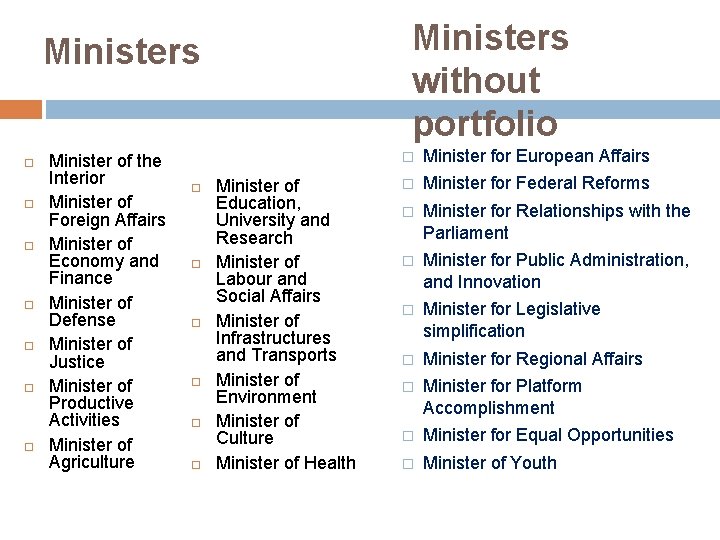
Ministers without portfolio Ministers Minister of the Interior Minister of Foreign Affairs Minister of Economy and Finance Minister of Defense Minister of Justice Minister of Productive Activities Minister of Agriculture Minister of Education, University and Research Minister of Labour and Social Affairs Minister of Infrastructures and Transports Minister of Environment Minister of Culture Minister of Health � Minister for European Affairs � Minister for Federal Reforms � Minister for Relationships with the Parliament � Minister for Public Administration, and Innovation � Minister for Legislative simplification � Minister for Regional Affairs � Minister for Platform Accomplishment � Minister for Equal Opportunities � Minister of Youth
Senate of the Republic It is the upper house of the Parliament of Italy; It consists of 315 members elected for a maximum of 5 years; Senators must be 40 or older, and are elected by citizens 25 years of age or over There are 7 life senators; In Italy there is a “perfect bicameralism”; The Senate may be dissolved before the expiration of its normal term by the President of the Republic, when no government can obtain a majority.
Chamber of Deputies It is the lower house of the Parliament of Italy; It has 630 deputies. 12 deputies represent Italian citizens overseas; The monthly allowance for each deputy amounts to about € 5. 500: A monthly allowance of about € 4. 000 is paid by way of reimbursement of the cost of living in Rome; Deputies are issued with passes for free circulation on motorways, railways, sea and air transport for journeys within the national boundaries.
Constitutional Court It is the Supreme Court of Italy; It is composed of 15 judges: 5 judges appointed by the President, 5 judges elected by Parliament, and 5 judges elected by the ordinary and administrative supreme courts. The term of office lasts 9 years and each judge can be elected only once. Court of Cassation It is the major court of last resort in Italy; It corrects a lower court's interpretation or application of the law; Appeals to the Court of Cassation generally come from the appeals court, but litigants may also appeal directly from the trial court.
Main Political Parties The People of Freedom Democratic Party Lega Nord Italy of Values Union of Christian and Centre Democrats Brief History of Italian Politics The First Republic (1945 -1969) The Years of Lead (1969 -1980) The Eighties (1980 -1992) The Second Republic (1992 - …. )
Thank You for Listening!
- Slides: 17