
Higher Biology Unit 2 2 3 Metabolic rate
Higher Biology Unit 2 2. 3 Metabolic rate
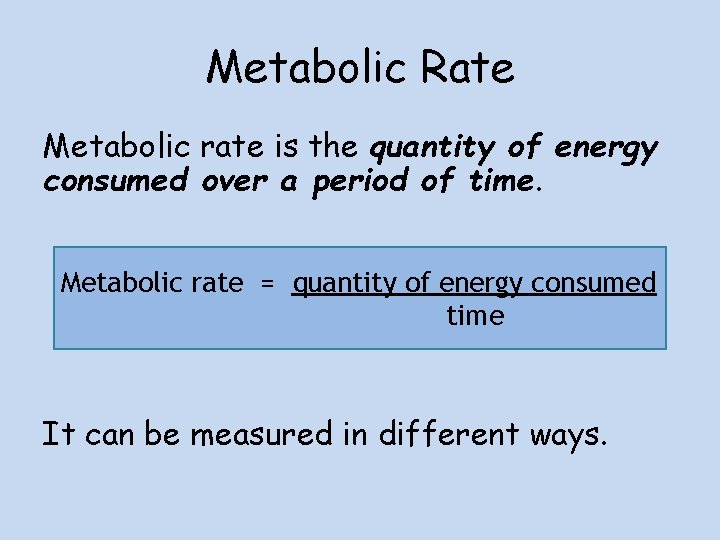
Metabolic Rate Metabolic rate is the quantity of energy consumed over a period of time. Metabolic rate = quantity of energy consumed time It can be measured in different ways.
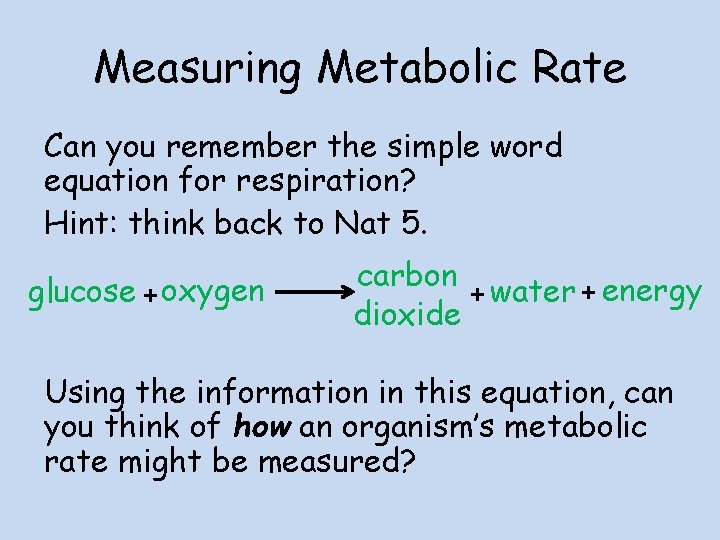
Measuring Metabolic Rate Can you remember the simple word equation for respiration? Hint: think back to Nat 5. glucose + oxygen carbon water energy + + dioxide Using the information in this equation, can you think of how an organism’s metabolic rate might be measured?

Measuring Metabolic Rate An organism’s metabolic rate can be measured as; • oxygen consumption per unit of time • carbon dioxide production per unit of time • energy production (heat energy) per unit of time.
Measuring Metabolic Rate Two pieces of apparatus that can be used to measure the metabolic rate of an organism are; • a respirometer • a calorimeter

Respirometer A respirometer is used to measure the volume of oxygen consumed by a respiring organism, over a period of time.
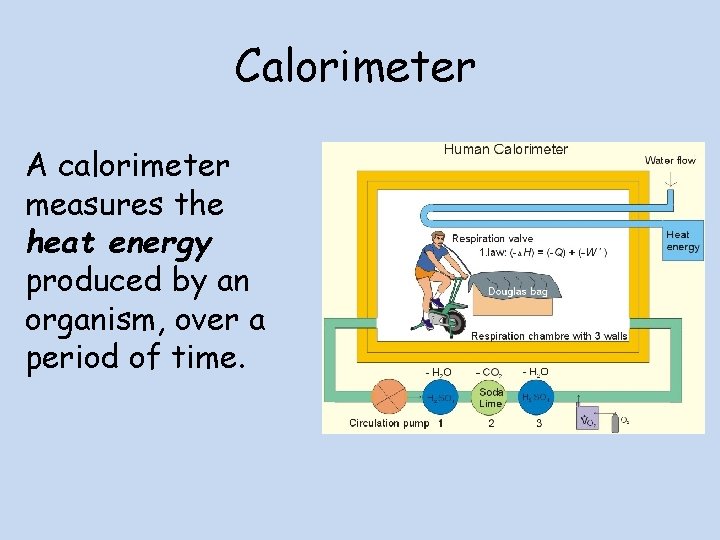
Calorimeter A calorimeter measures the heat energy produced by an organism, over a period of time.
Basal Metabolic Rate • This is the minimum rate of energy release needed by an endotherm to maintain essential body processes Metabolism and survival
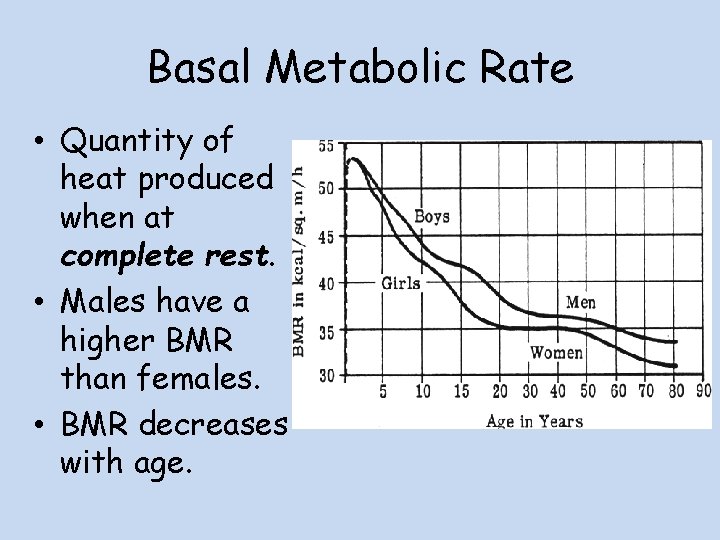
Basal Metabolic Rate • Quantity of heat produced when at complete rest. • Males have a higher BMR than females. • BMR decreases with age.
Key Points • Metabolic rate is the quantity of energy used in a given period of time. • It can be measured in terms of an organism’s; consumption of O 2, production of CO 2 and heat production. • Equipment used includes; a respirometer and a calorimeter. • Basal metabolic rate is the quantity of heat produced when at complete rest.
- Slides: 10