
Higher Biology Unit 1 DNA and the Genome
Higher Biology Unit 1 DNA and the Genome KEY AREA 8: Genomic Sequencing
DNA and the Genome Learning Intentions KEY AREA 8 – Genomic Sequencing 1. Sequencing and Comparison 2. Sequence of Evolution 3. Individual Genomics
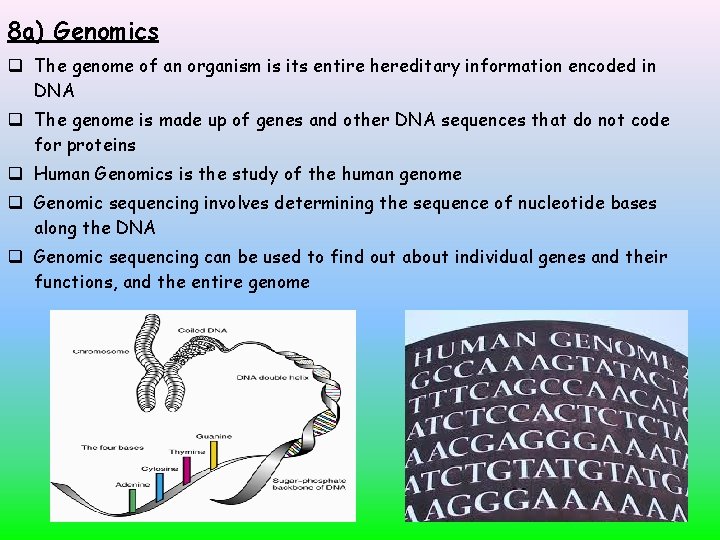
8 a) Genomics The genome of an organism is its entire hereditary information encoded in DNA The genome is made up of genes and other DNA sequences that do not code for proteins Human Genomics is the study of the human genome Genomic sequencing involves determining the sequence of nucleotide bases along the DNA Genomic sequencing can be used to find out about individual genes and their functions, and the entire genome
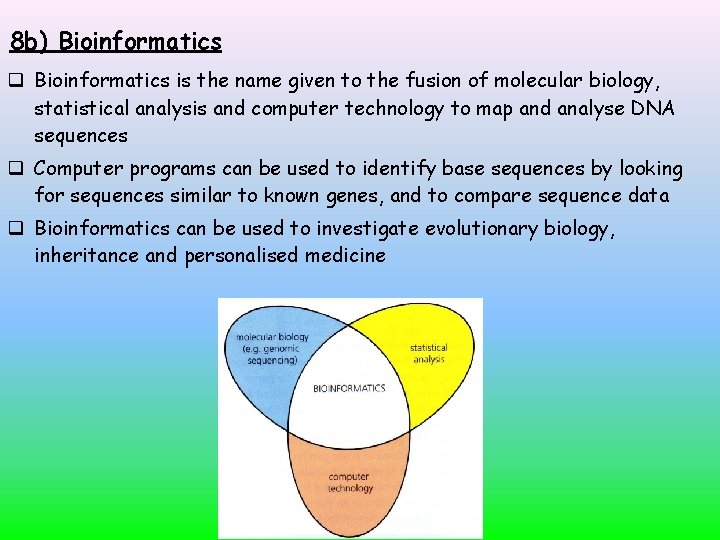
8 b) Bioinformatics is the name given to the fusion of molecular biology, statistical analysis and computer technology to map and analyse DNA sequences Computer programs can be used to identify base sequences by looking for sequences similar to known genes, and to compare sequence data Bioinformatics can be used to investigate evolutionary biology, inheritance and personalised medicine
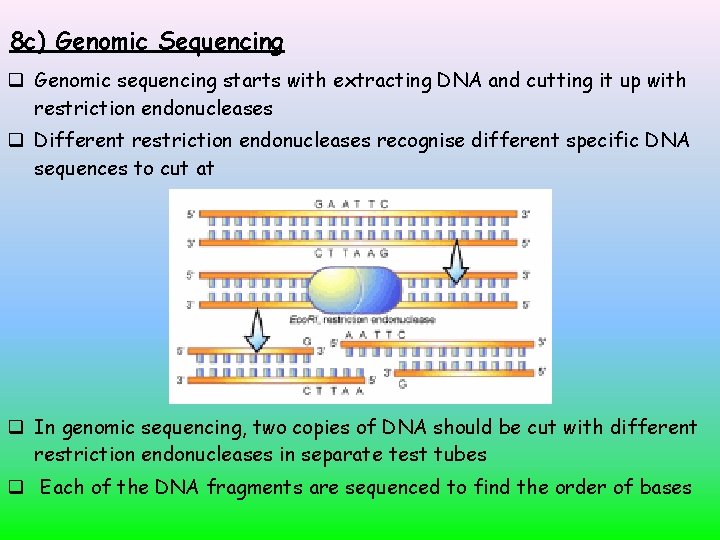
8 c) Genomic Sequencing Genomic sequencing starts with extracting DNA and cutting it up with restriction endonucleases Different restriction endonucleases recognise different specific DNA sequences to cut at In genomic sequencing, two copies of DNA should be cut with different restriction endonucleases in separate test tubes Each of the DNA fragments are sequenced to find the order of bases
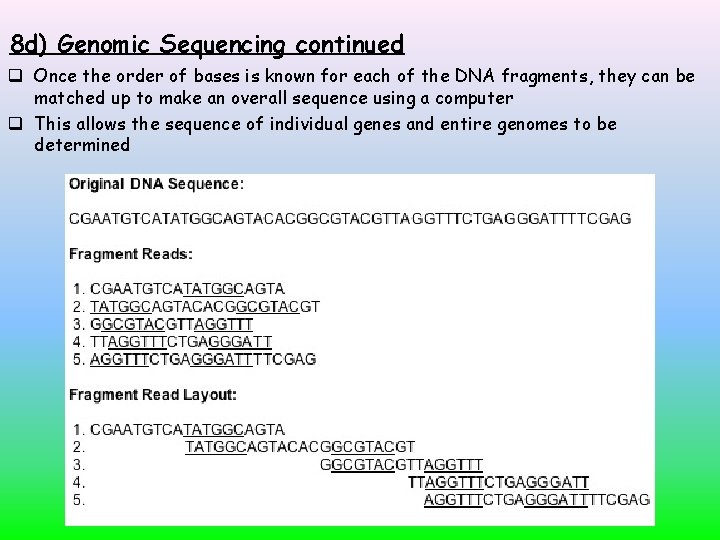
8 d) Genomic Sequencing continued Once the order of bases is known for each of the DNA fragments, they can be matched up to make an overall sequence using a computer This allows the sequence of individual genes and entire genomes to be determined
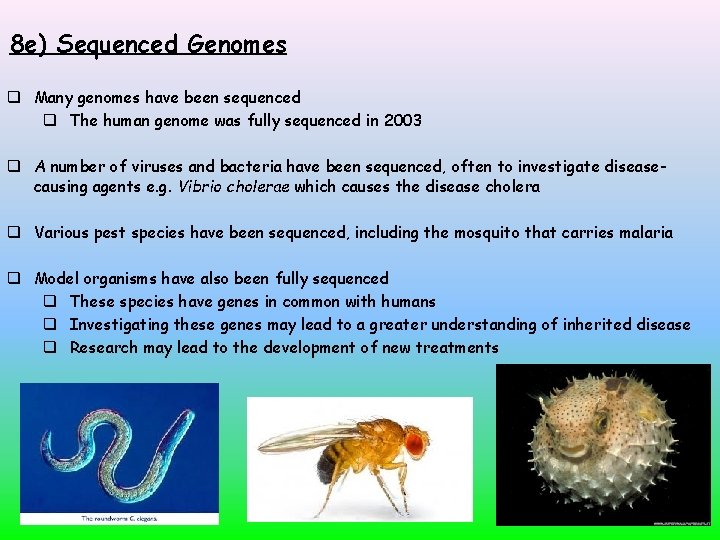
8 e) Sequenced Genomes Many genomes have been sequenced The human genome was fully sequenced in 2003 A number of viruses and bacteria have been sequenced, often to investigate diseasecausing agents e. g. Vibrio cholerae which causes the disease cholera Various pest species have been sequenced, including the mosquito that carries malaria Model organisms have also been fully sequenced These species have genes in common with humans Investigating these genes may lead to a greater understanding of inherited disease Research may lead to the development of new treatments
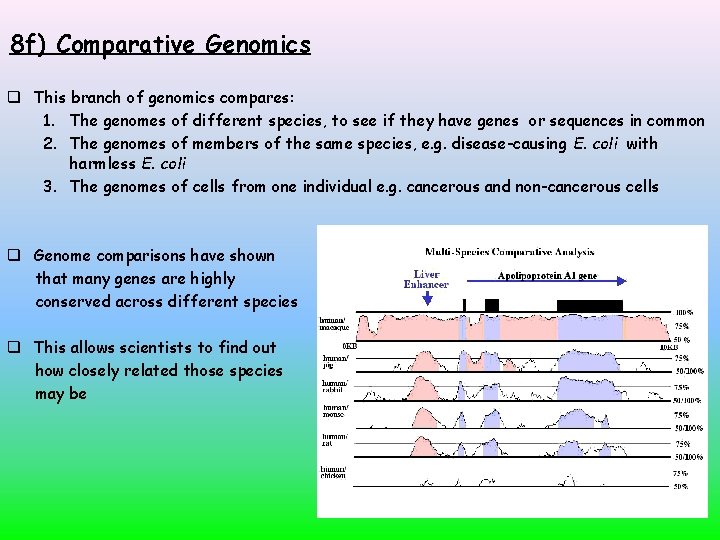
8 f) Comparative Genomics This branch of genomics compares: 1. The genomes of different species, to see if they have genes or sequences in common 2. The genomes of members of the same species, e. g. disease-causing E. coli with harmless E. coli 3. The genomes of cells from one individual e. g. cancerous and non-cancerous cells Genome comparisons have shown that many genes are highly conserved across different species This allows scientists to find out how closely related those species may be
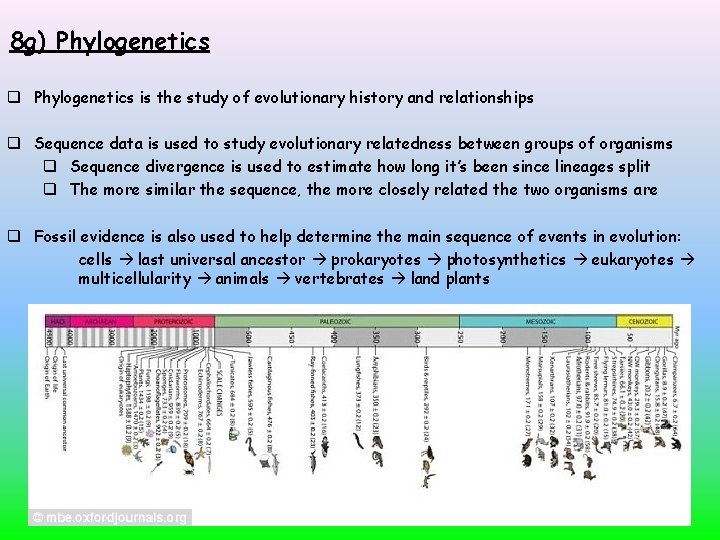
8 g) Phylogenetics is the study of evolutionary history and relationships Sequence data is used to study evolutionary relatedness between groups of organisms Sequence divergence is used to estimate how long it’s been since lineages split The more similar the sequence, the more closely related the two organisms are Fossil evidence is also used to help determine the main sequence of events in evolution: cells last universal ancestor prokaryotes photosynthetics eukaryotes multicellularity animals vertebrates land plants
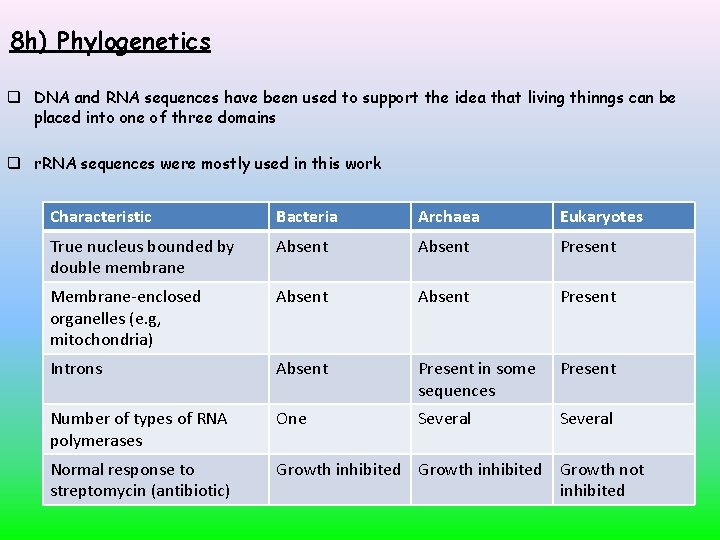
8 h) Phylogenetics DNA and RNA sequences have been used to support the idea that living thinngs can be placed into one of three domains r. RNA sequences were mostly used in this work Characteristic Bacteria Archaea Eukaryotes True nucleus bounded by double membrane Absent Present Membrane-enclosed organelles (e. g, mitochondria) Absent Present Introns Absent Present in some sequences Present Number of types of RNA polymerases One Several Normal response to streptomycin (antibiotic) Growth inhibited Growth not inhibited
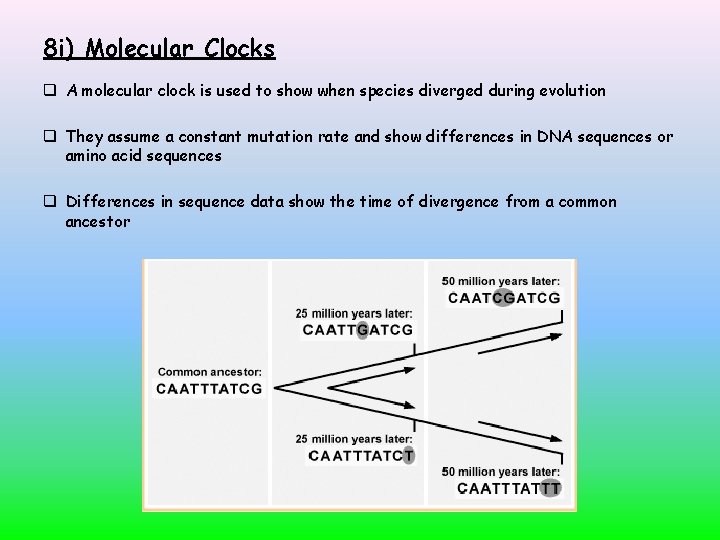
8 i) Molecular Clocks A molecular clock is used to show when species diverged during evolution They assume a constant mutation rate and show differences in DNA sequences or amino acid sequences Differences in sequence data show the time of divergence from a common ancestor
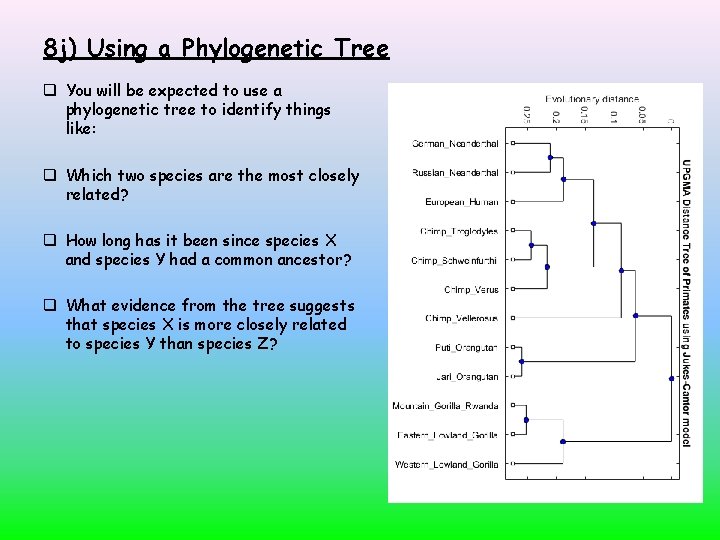
8 j) Using a Phylogenetic Tree You will be expected to use a phylogenetic tree to identify things like: Which two species are the most closely related? How long has it been since species X and species Y had a common ancestor? What evidence from the tree suggests that species X is more closely related to species Y than species Z?
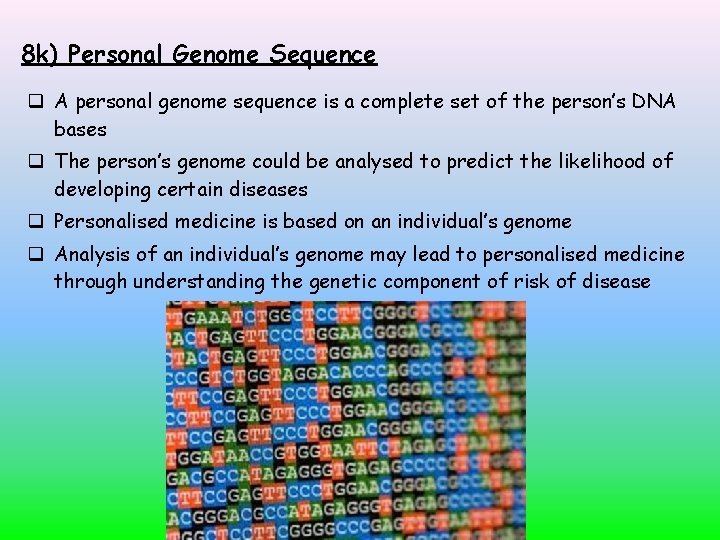
8 k) Personal Genome Sequence A personal genome sequence is a complete set of the person’s DNA bases The person’s genome could be analysed to predict the likelihood of developing certain diseases Personalised medicine is based on an individual’s genome Analysis of an individual’s genome may lead to personalised medicine through understanding the genetic component of risk of disease
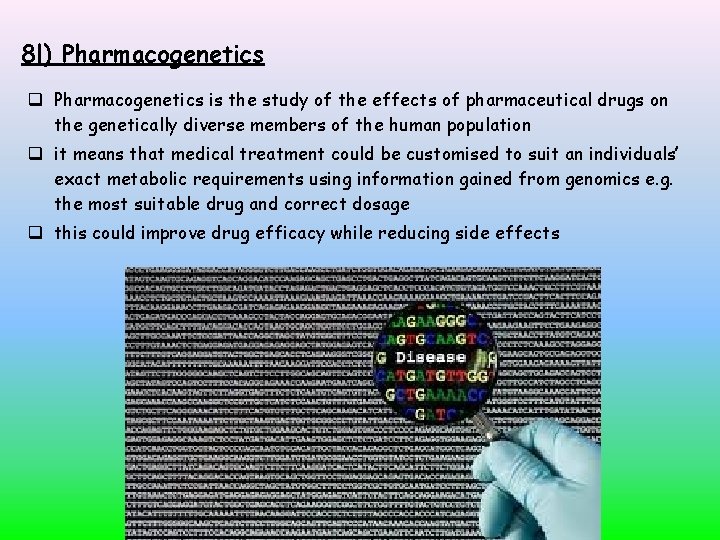
8 l) Pharmacogenetics is the study of the effects of pharmaceutical drugs on the genetically diverse members of the human population it means that medical treatment could be customised to suit an individuals’ exact metabolic requirements using information gained from genomics e. g. the most suitable drug and correct dosage this could improve drug efficacy while reducing side effects
DNA and the Genome Questions KEY AREA 8 – Genomic Sequencing 1. Testing Your Knowledge 1 P 101 Q 1 -4 2. Testing Your Knowledge 2 P 106 Q 1 -4 3. What You Should Know 4. Problem Solving 5. Quick Quiz P 106 -107 P 23 -26 Q 1 -8
- Slides: 15