
Higher Biology Unit 1 1 1 Structure of
Higher Biology Unit 1: 1. 1 Structure of DNA
Starter • Make a mind map of the key points you remember about DNA from Nat 5 biology in your jotter
Learning Intentions • Name the molecules in a DNA nucleotide and identify them in a diagram • Name the type of bond on the backbone of the DNA molecule • Give the names of the 4 DNA bases • Describe the base pairing rule for DNA bases
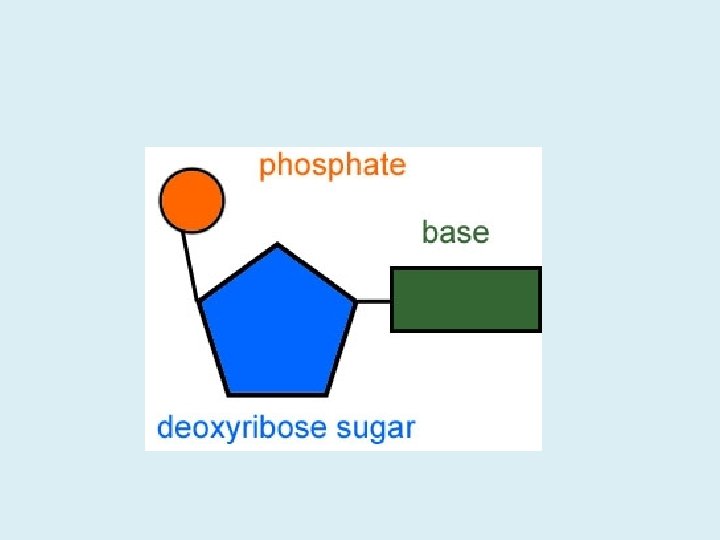
Deoxyribonucleic acid The DNA molecule is comprised of two chains of nucleotides. The nucleotides are comprised of deoxyribose sugar, a phosphate and a base.
• DNA stands for Deoxyribose Nucleic Acid. • It is as double stranded molecule made up of subunits called nucleotides. • Each nucleotide is made of 3 parts; - A base, a phosphate and a deoxyribose sugar.
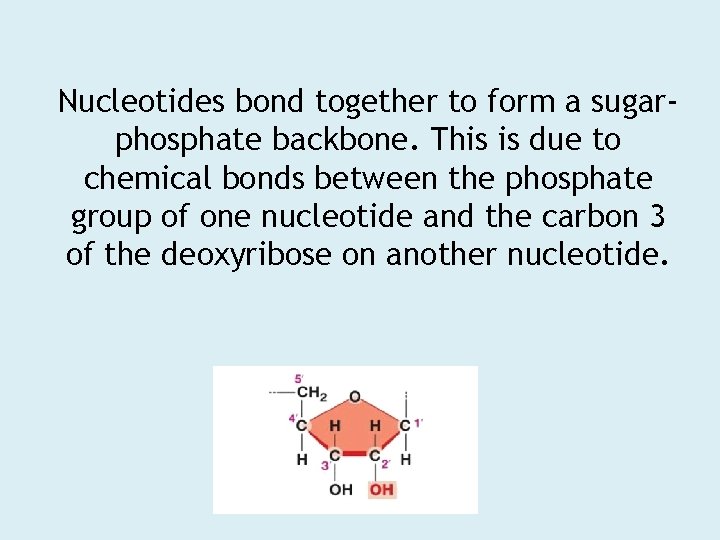
Nucleotides bond together to form a sugarphosphate backbone. This is due to chemical bonds between the phosphate group of one nucleotide and the carbon 3 of the deoxyribose on another nucleotide.
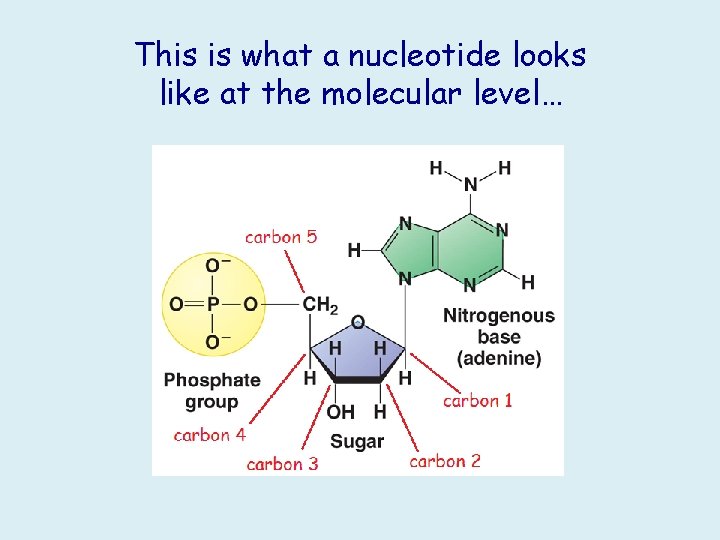
This is what a nucleotide looks like at the molecular level…
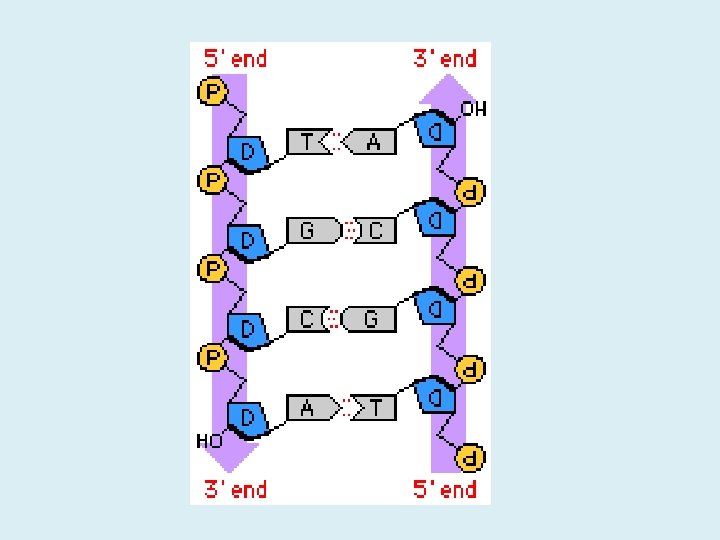
Nucleotides bond together to form a sugar-phosphate backbone. This is due to chemical bonds between the phosphate group of one nucleotide and the carbon 3 of the deoxyribose on the next nucleotide. The double helix is described as having two anti-parallel chains of nucleotides because one side goes from 5’ to 3’ (five prime to three prime) and the opposite side goes from 3’ to 5’.
The Code • There are 4 different types of base in DNA. • Thymine = T • Adenine = A • Guanine = G • Cytosine = C • They have complementary base pairing • T pairs with A • G pairs with C
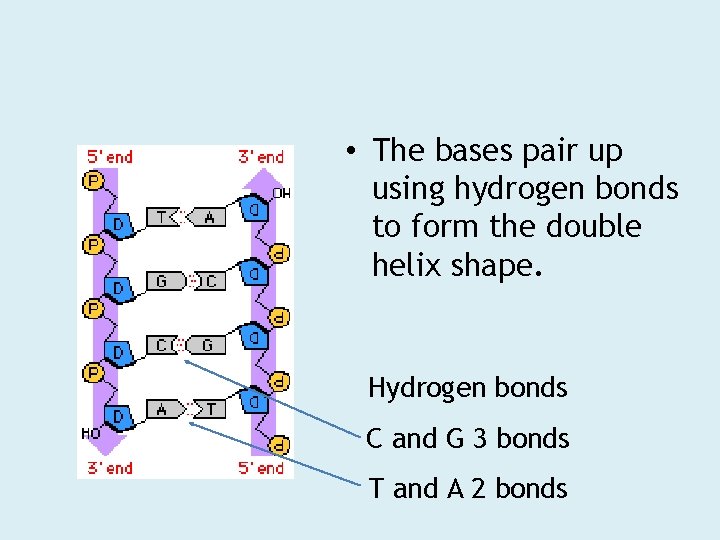
• The bases pair up using hydrogen bonds to form the double helix shape. Hydrogen bonds C and G 3 bonds T and A 2 bonds
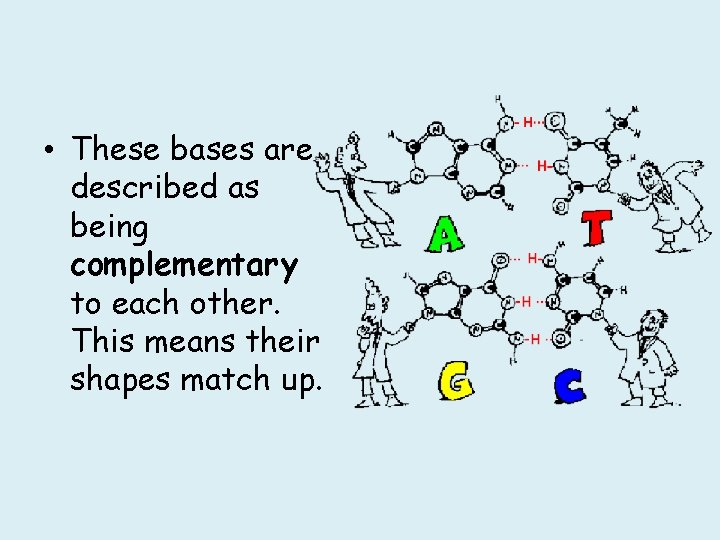
• These bases are described as being complementary to each other. This means their shapes match up.

https: //www. youtube. com/watch ? v=8 k. K 2 zwj. RV 0 M
- Slides: 14