
Higher Biology Structure of the Genome Da R
Higher Biology Structure of the Genome Da R G r M so d i v n
Structure of a Genome v The genome of an organism consists of the information in the DNA of its chromosomes. v There are genes which code for proteins. v However, there also sequences of DNA which don’t code for proteins. v These can be lengths of DNA with repeating sequences and, as yet, we are still unsure of the role of some of these. v However, we do now know what some of them do. 17 December 2021 G R Davidson Slide 2
Regulation of Transcription v. RNA polymerase needs the help of transcription factors to start transcription. v. Some of these are known as activators and are attached to non-coding sequences of DNA called regulators. v. When the DNA bends, the activator is brought into contact with the other transcription factors. 17 December 2021 G R Davidson 3
Regulation of Transcription v. The activator and other transcription factors now combine to form a molecular complex which triggers the start of transcription. v. In this way transcription is regulated by a sequence of non-protein-coding DNA bases. 17 December 2021 G R Davidson 4
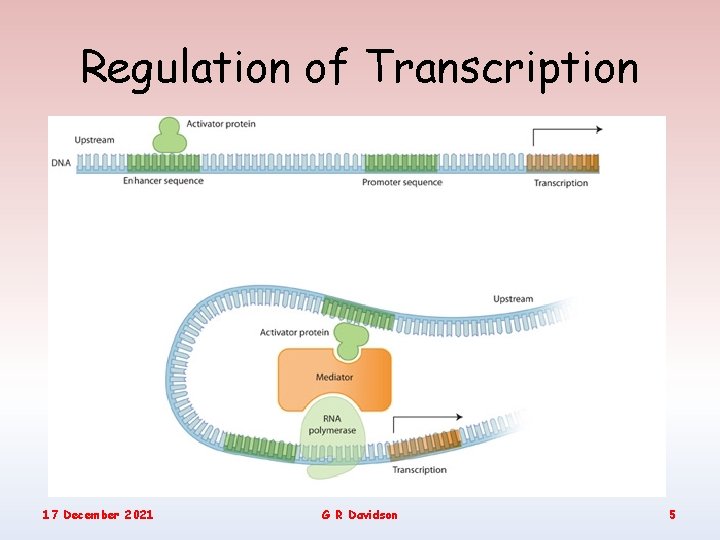
Regulation of Transcription 17 December 2021 G R Davidson 5
Transcription of non-translated RNA v. There are base sequences in the DNA which code for m. RNA, and this will be translated into a protein. v. There are, however, sequences which code for different types of RNA which do not code for proteins such as: Øt. RNA – transfer RNA Ør. RNA - ribosomal RNA ØRNA fragments 17 December 2021 G R Davidson 6
Protection v. Some of these non-protein-coding sequences form structures called telomeres. v. These protect important base sequences by being at the end of the chromosome and stopping fraying. 17 December 2021 G R Davidson 7
- Slides: 7